Table of Contents
There are festivals, and then there is Esala Perahera. Held every year in Kandy during July or August, this centuries-old Buddhist celebration is one of the most extraordinary events in all of Asia: a nightly procession of fire dancers, acrobats, drummers, and dozens of decorated elephants moving through the streets of the city to honour the Sacred Tooth Relic of the Buddha. Nothing fully prepares you for what it feels like to watch it in person.
But Esala Perahera is also one of those experiences where knowing what to expect makes all the difference. The festival runs for ten consecutive nights, and each night is longer and more elaborate than the last — which means the night you choose to go matters a great deal. The streets are closed off. The crowds are enormous. And once the procession begins, you are not going anywhere until it ends. This guide tells you everything you need to know: what the festival is, how it works, how long it lasts, and how to experience it comfortably without getting stranded in the dark at midnight.
In a Rush?
These are my Favourite Hotels for Esala Perahera in Kandy
⭐️⭐️⭐️ Kings Pavilion Kandy – Check prices and availability
⭐️⭐️ Adigar's Manor – Check prices and availability
⭐️ Mountbatten Bungalow – Check prices and availability
Esala Perahera at a Glance
Before you dive into the details: here are the most important facts about Esala Perahera at a glance. The rest of this guide explains everything in full — how the festival works, what to expect on the night, where to sit, and how to avoid the most common mistakes. But if you are short on time, this table gives you the essentials.
| Festival name | Esala Perahera (also: Kandy Perahera) |
|---|---|
| Location | Kandy, Sri Lanka |
| When | July–August (10 consecutive nights, exact dates shift each year) |
| Duration per night | Varies by night: first nights ~1–2 hours, final nights 4–6 hours |
| Street closures | Yes — the procession route is completely closed during the parade |
| Ticket required | Yes — grandstand seats are sold in advance. Free viewing from the street is possible but with very limited visibility |
| Elephants | Approximately 40–100 elaborately decorated elephants |
| Highlight night | The Randoli Perahera on the final nights — the longest and most spectacular |
| Best time to arrive | By 5:00–6:00pm for a good spot (parade usually starts 7:00–8:00pm) |
| Can you leave early? | Only if you're seated in a restaurant or hotel with a back exit off the parade route |
| Where to stay | Outside the city centre — hillside hotels 10–20 min away are strongly recommended |
What Is Esala Perahera? The Festival Explained
Esala Perahera is a Buddhist festival that has been celebrated in Kandy for over a thousand years. Its full name — the Esala Perahera of the Sacred Tooth Relic — tells you everything about what it is: a grand religious procession in honour of the Buddha's tooth, which is kept in the Temple of the Tooth (Sri Dalada Maligawa) in the heart of Kandy.
According to tradition, the tooth relic was brought to Sri Lanka in the 4th century CE and has been in Kandy since the 16th century. The relic is considered one of the most sacred objects in the Buddhist world, and the Esala Perahera is the festival that venerates it — a public act of devotion that has grown over the centuries into one of the largest and most elaborate religious processions in Asia.
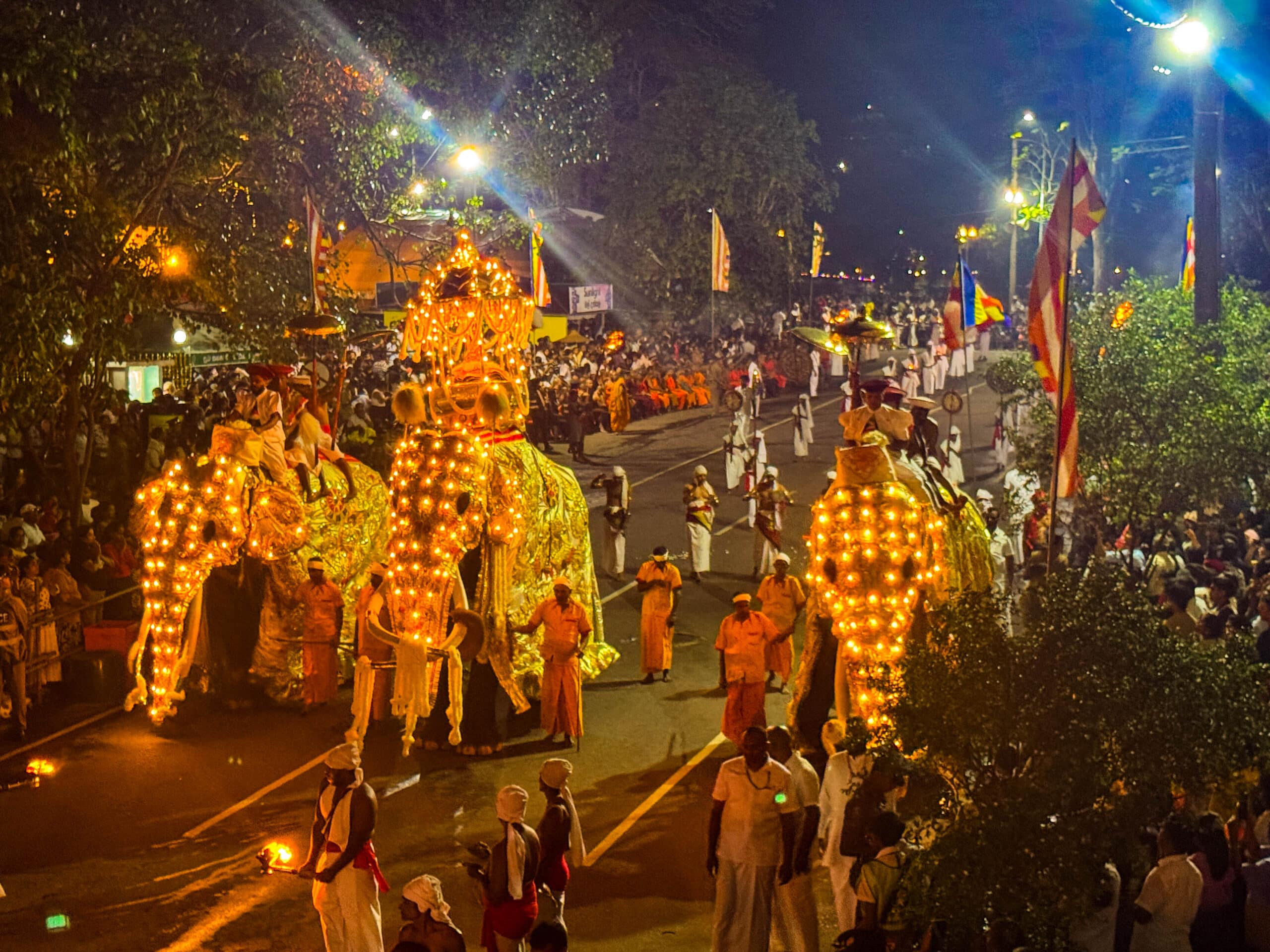
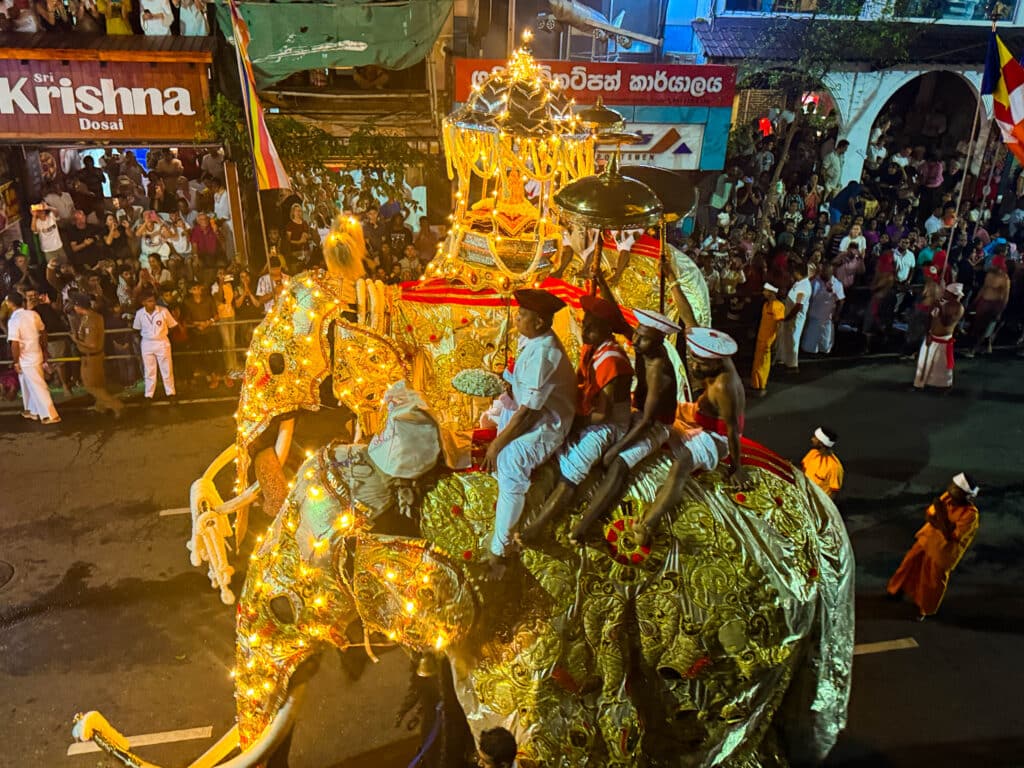
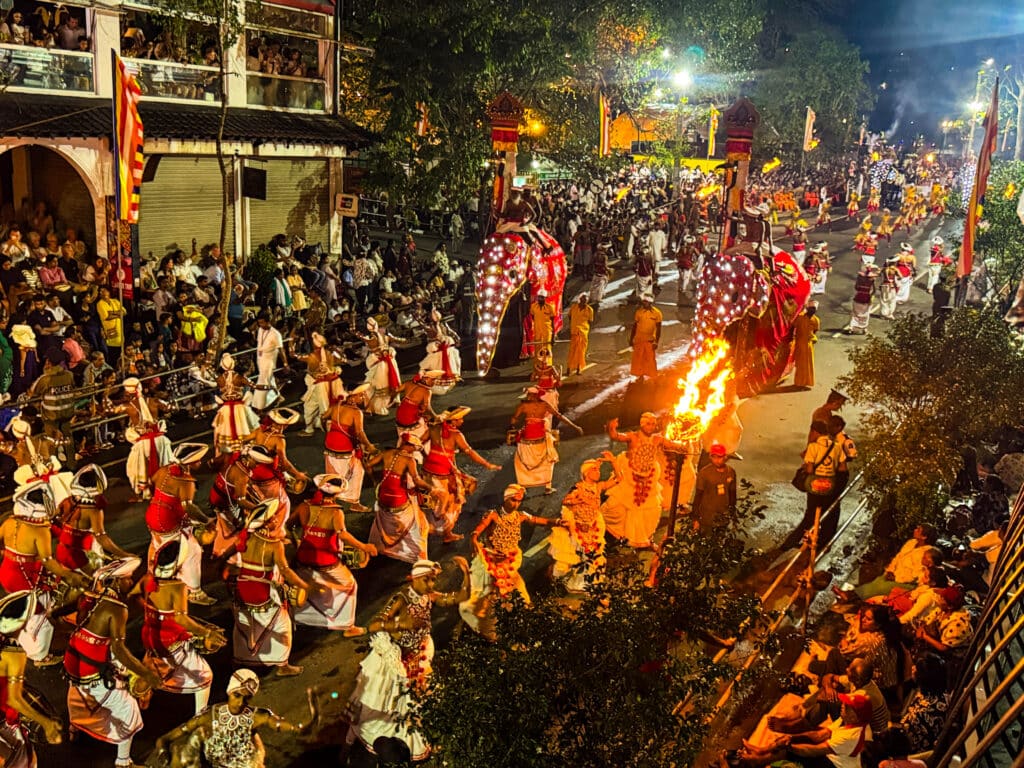
The festival takes its name from the Sinhalese month of Esala, which corresponds roughly to July or August in the Western calendar. Each night of the festival, a procession leaves the temple and moves through the streets of Kandy. The procession carries a replica of the tooth relic in an ornate golden casket, mounted on the back of the Maligawa Tusker — the most revered elephant of the procession. Hundreds of performers accompany the relic: Kandyan dancers, fire breathers, acrobats, drummers, musicians, whip crackers, and elaborately decorated elephants draped in brightly lit cloth costumes.
What makes Esala Perahera unlike any other festival is the combination of its religious sincerity and its sheer visual scale. This is not a performance put on for tourists. It is a living religious tradition, observed by millions of Sri Lankans, that you are invited to witness. That distinction matters when you are standing on the street watching it go by.
How the Festival Works: 10 Nights, Building to a Climax
This is the part that most travel guides gloss over, and the part that matters most if you are planning your visit around Esala Perahera.
The festival runs for exactly ten nights. It does not begin at full scale — it builds. The first few nights are relatively short, with the procession lasting perhaps an hour or two. Each successive night, the procession grows: more performers are added, the route becomes longer, and the number of elephants increases. By the final nights — particularly the Randoli Perahera on the last three nights — the procession can last four to six hours.
The five sections of the procession
The procession is divided into five separate sections, each representing one of the major temples associated with the festival: the Sri Dalada Maligawa (Temple of the Tooth) and four Devale temples dedicated to the gods Natha, Vishnu, Kataragama, and the goddess Pattini. Each section has its own set of elephants, dancers, and performers, and each follows a different chief elephant.
This is important to understand because it means the procession is far longer than it first appears. When the first section passes you and you think it is over, four more are still on their way. We experienced this firsthand: we assumed the festival was finishing around 9:15pm, only to discover we were barely halfway through. The procession continued until 11:15pm. Had we not understood the structure, we might have tried to leave — and found it impossible.
The Randoli Perahera
The most spectacular nights are the three Randoli Perahera evenings that close the festival. On these nights, a sixth element is added to the procession: the palanquins (randoli) of the four goddesses, carried in procession as an additional act of devotion. The Randoli Perahera nights are the longest, the most elaborate, and the most atmospheric. If you can only attend one night, make it one of these.
The Most Important Practical Tip: You Cannot Leave
This needs its own section, because it catches almost every first-time visitor off guard.
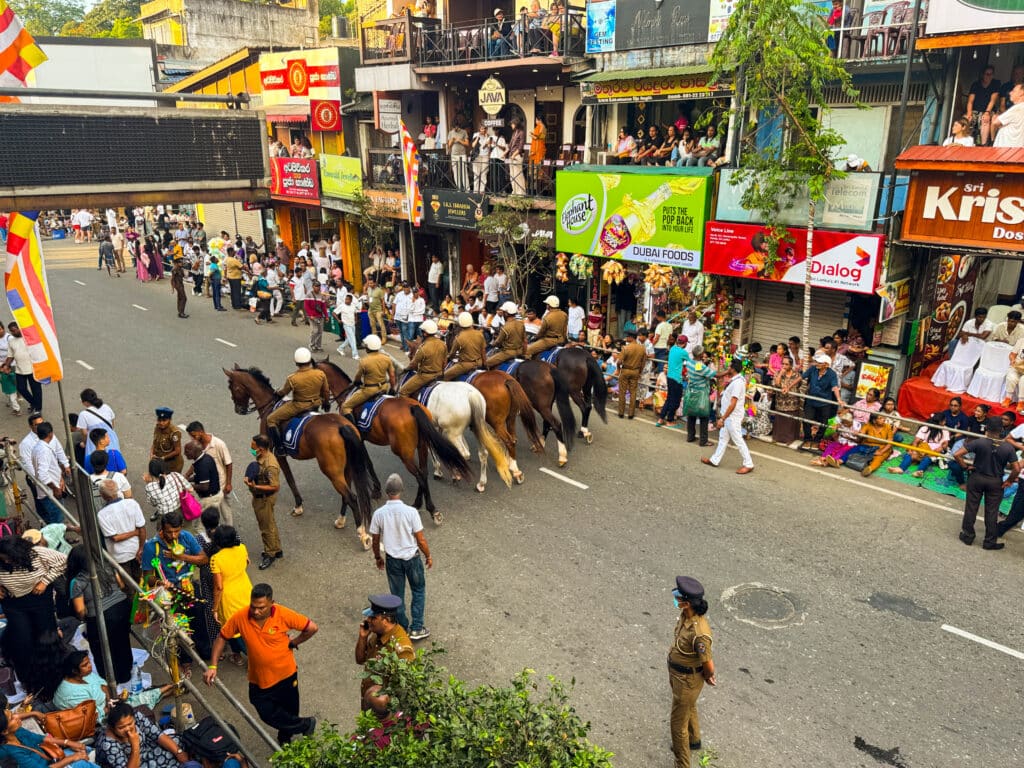
Once the procession begins, the streets along the route are completely closed. The crowds on either side of the road are packed tightly together, and there is no way to cross the procession or move through the crowd while the parade is passing. If you are standing on the street or sitting in a grandstand, you are there until the very end — or until the procession moves far enough away that the route reopens.
The only exception is if you are seated inside a hotel, restaurant, or café that has a back exit not on the procession route. In that case, you can slip out the back when you are ready to leave, without waiting for the parade to finish. When we were there, this was something we only found out about after the fact — and it would have changed how we planned the evening.
Our advice: before you book a viewing spot or restaurant along the route, ask explicitly whether they have a back exit. The better hotels and tour operators in Kandy know exactly which venues offer this — it is worth asking.
What to Expect on the Night: A Practical Walkthrough
Arriving early matters — but not too early. The procession usually begins around 7:15–8:00pm, but the streets around the route fill up well before that. We arrived at 5:00pm and had to wait until 7:15pm for things to start — earlier than necessary, though at that point the streets were still manageable. By the time the procession was approaching, the crowds had become so dense that moving through the streets at all was nearly impossible. If you have grandstand seats, your place is held and you have a little more flexibility — but still aim to be in position by around 6:00–6:30pm, because getting through the crowds later in the evening becomes genuinely difficult.
Grandstand seats vs street viewing. You have two options for watching the procession. Grandstand seats are set up along the main route and are the most comfortable way to watch — elevated, fixed, and with a clear sightline. You can buy them in advance through your hotel or a tour operator, but be aware that hotel prices tend to be significantly marked up. When we were there — one of the final nights, and therefore one of the longest — we could still buy tickets on the day from sellers along the street, at a noticeably lower price. We cannot say with certainty whether this is always the case, especially on the busiest Randoli Perahera nights, but it is worth knowing.
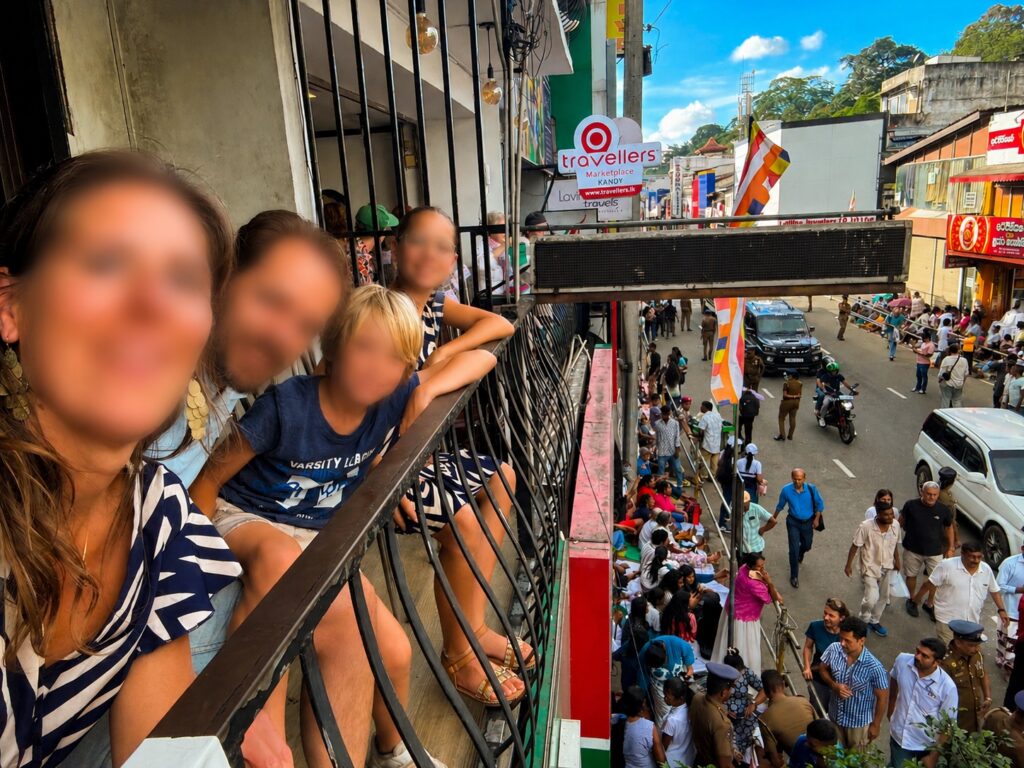
Street viewing is free, but it comes with a real trade-off: local people start claiming their spots from around 1:00pm onwards — hours before the procession begins. If free street viewing is your plan, you need to be there early and be prepared for a very long wait on the pavement. With a grandstand seat, your spot is guaranteed regardless of when you arrive, which gives you much more flexibility with your day.
What you will see. The procession opens with a series of Kandyan dancers in traditional costume — intricate footwork, layered skirts, and a rhythm driven by the drums and horns that never quite lets you settle. Then come the whip crackers, the fire performers, and then — unmistakably — the first elephants. Each elephant is covered entirely in a brightly lit decorative cloth, with coloured lights running along its body. There can be anywhere from 40 to over 100 elephants on the biggest nights, and each one walks in measured, careful steps as its mahout guides it through the streets.
The Maligawa Tusker — the elephant that carries the golden casket with the replica relic — is the emotional centrepiece of the procession. When this elephant passes, the crowd goes quiet in a way that feels different from everything else.
An honest note on the elephants. We want to be upfront about this, because it was something we felt when we were there. The elephants at Esala Perahera are chained at their legs and neck during parts of the festival. For some travellers, this is part of a complex tradition they can accept in context; for others, it may feel uncomfortable. We felt a mixture of awe and unease, and we think it is honest to name that rather than pretend it wasn't there. The elephant welfare situation at Perahera has been a topic of discussion in Sri Lanka for some years. It is something to be aware of when deciding whether and how to attend.
The Temple of the Tooth: Time Your Visit Carefully
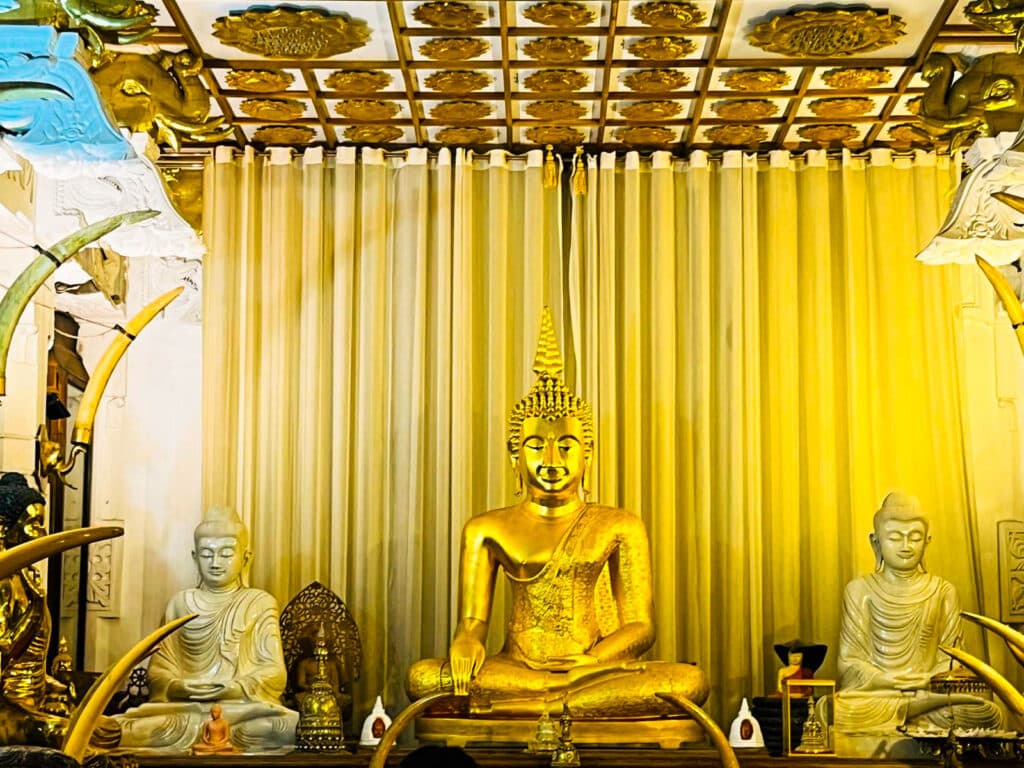
One practical note that is easy to miss: during Esala Perahera, the Temple of the Tooth — Sri Lanka's most visited religious site — operates on a heavily restricted schedule, and on certain days during the festival period, public visits are not possible at all.
When we were in Kandy during the festival, we were unable to visit the temple. This was a surprise. If visiting the Temple of the Tooth is important to you, either arrive in Kandy a day before the festival begins, or check the specific opening schedule in advance for the year you are visiting. Do not assume that being in Kandy during Esala Perahera automatically means you can visit the temple as well.
When Does Esala Perahera Take Place?
The exact dates of Esala Perahera shift each year because they are determined by the lunar calendar — specifically, the full moon of the month of Esala. The festival typically falls between mid-July and mid-August. In most years, the final and most spectacular nights (the Randoli Perahera) take place in early to mid-August.
To find the exact dates for the year you are travelling, check with the Sri Dalada Maligawa (Temple of the Tooth) directly or consult the Sri Lanka Tourism Promotion Bureau. Dates are usually confirmed several months in advance.
Where to Stay for Esala Perahera: 4 Hotels Outside the City
Staying in the centre of Kandy during Esala Perahera is not a good idea. The streets around the procession route are closed, traffic is chaotic, and the noise continues late into the night. The hotels closest to the route are also dramatically more expensive during the festival period — and the price does not always buy you what you think. We spoke to someone who had paid $1,000 for a single night at a hotel on the route, assuming that meant they could watch the procession from their room. They could not. They still had to buy grandstand tickets separately and stand outside with everyone else.
The better approach is to stay in a hillside hotel 10–20 minutes from the city by tuktuk. You get the peace and comfort you need after a long evening, you avoid the worst of the traffic, and you pay a fair price for a genuinely good hotel. These are the four we recommend across four price levels.
Kings Pavilion
Booking.com rating: 9.3 From $495/night for 2 | Breakfast included | $$$$
Kings Pavilion sits on the hillside above Kandy with sweeping views over the city and the surrounding hills. It is a colonial-style property with spacious rooms, a beautiful pool, and the kind of calm, unhurried atmosphere that makes the chaos of the festival feel very far away — even though the centre is only a short tuktuk ride down the hill. The Booking.com rating of 9.3 reflects consistently excellent service and a high standard of accommodation throughout. For the festival period, this is the most comfortable base in the area.
Adigar's Manor
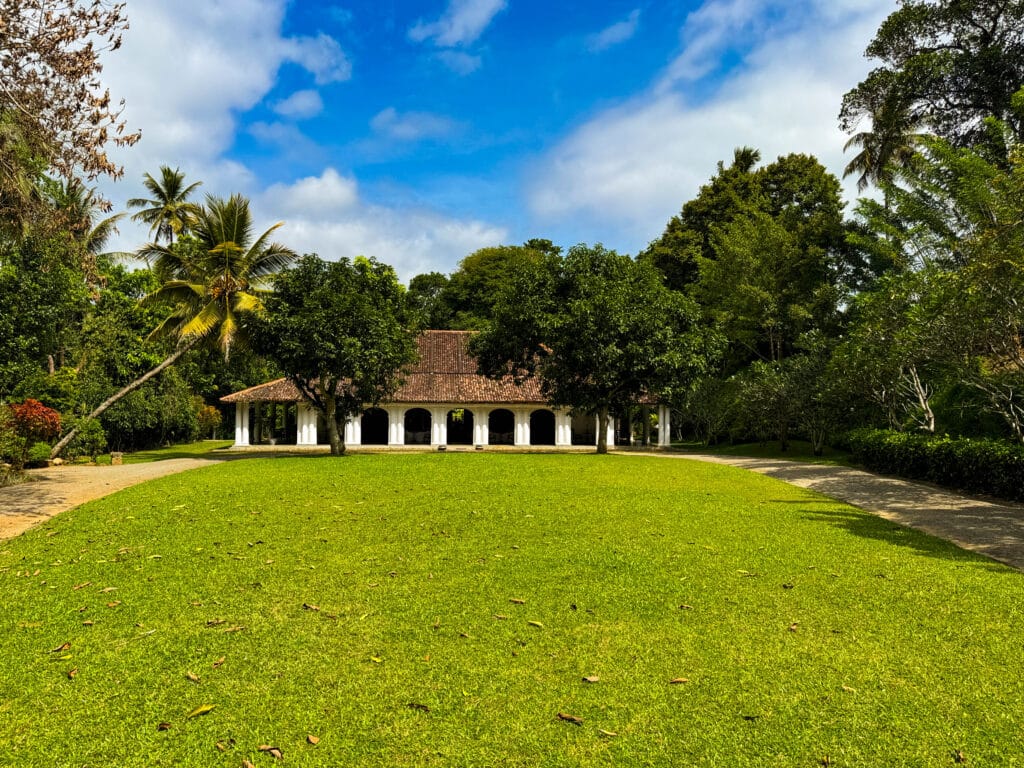
Booking.com rating: 9.1 From $385/night for 2 | Breakfast included | $$$$
We stayed at Adigar's Manor during Esala Perahera, and it remains one of our favourite hotels in all of Sri Lanka. It is a historic manor house set in a lush hillside garden, about 15 minutes from the city centre by tuktuk — close enough to reach the festival easily, far enough to sleep undisturbed. The welcome alone sets the tone: cold towels, fresh drinks, and a high tea so elaborate we lost count of the dishes. Our suite had an enormous round stone bath, a connecting room for the children, and the kind of comfortable formality that manages to feel completely relaxed at the same time.
The deer that roam the grounds are a genuine detail — we missed them, but the hotel mentioned them with evident pride. If you are looking for something with real character and genuine warmth, Adigar's Manor is difficult to beat at this price level.
Mountbatten Bungalow
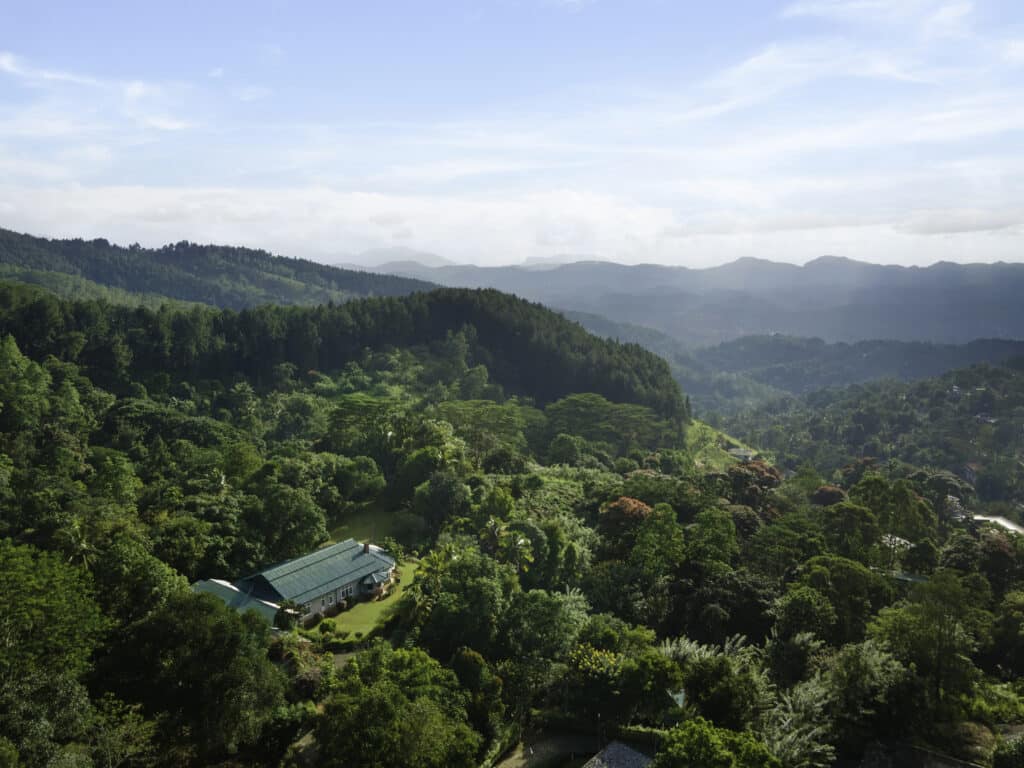
Booking.com rating: 9.2 From $250/night for 2 | Breakfast included | $$$
The Mountbatten Bungalow sits about 14 kilometres outside the city — the furthest of the four options — but its Booking.com rating of 9.2 speaks to a consistently strong experience. It is a colonial-era bungalow with a peaceful garden setting, well away from the festival crowds. The location works well if you have your own transport or are happy to arrange a tuktuk each evening, and the price point makes it an excellent choice if you want to stay somewhere genuinely comfortable without paying luxury prices.
Hebron Gardens House
Booking.com rating: 9.6 From $180/night for 2 | Breakfast included | $$$
At $180 per night with a Booking.com rating of 9.6 — the highest of the four options — Hebron Gardens House is the standout value pick for Esala Perahera. A rating that high reflects something that goes beyond comfortable rooms: it points to exceptional hospitality and an experience that regularly exceeds expectations. The gardens are the centrepiece of the property, and the bed and breakfast format means you start each morning with a proper meal before heading into the city. If budget matters but you are not willing to compromise on quality, this is where to stay.
Getting to the Festival from Your Hotel
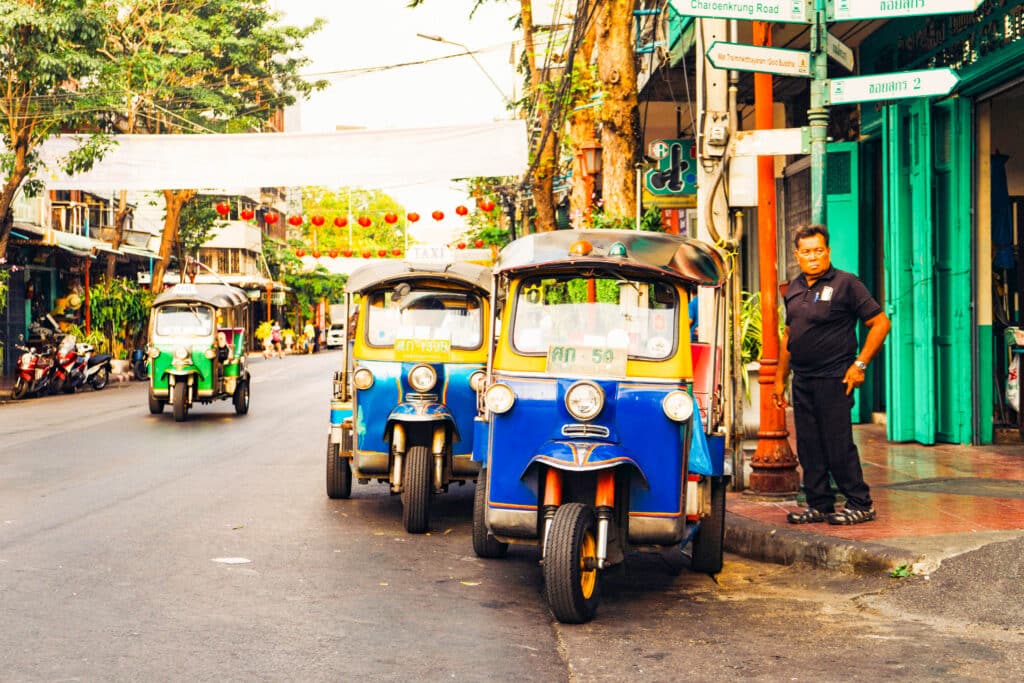
The easiest way to reach the procession route from any of these hillside hotels is by tuktuk. Most hotel staff can arrange this for you, and the drivers in Kandy are well used to navigating around the festival route. Agree a price before you leave — during Esala Perahera, rates are typically higher than usual, and it is worth settling on a figure for the return journey at the same time, since finding a tuktuk after midnight can be challenging.
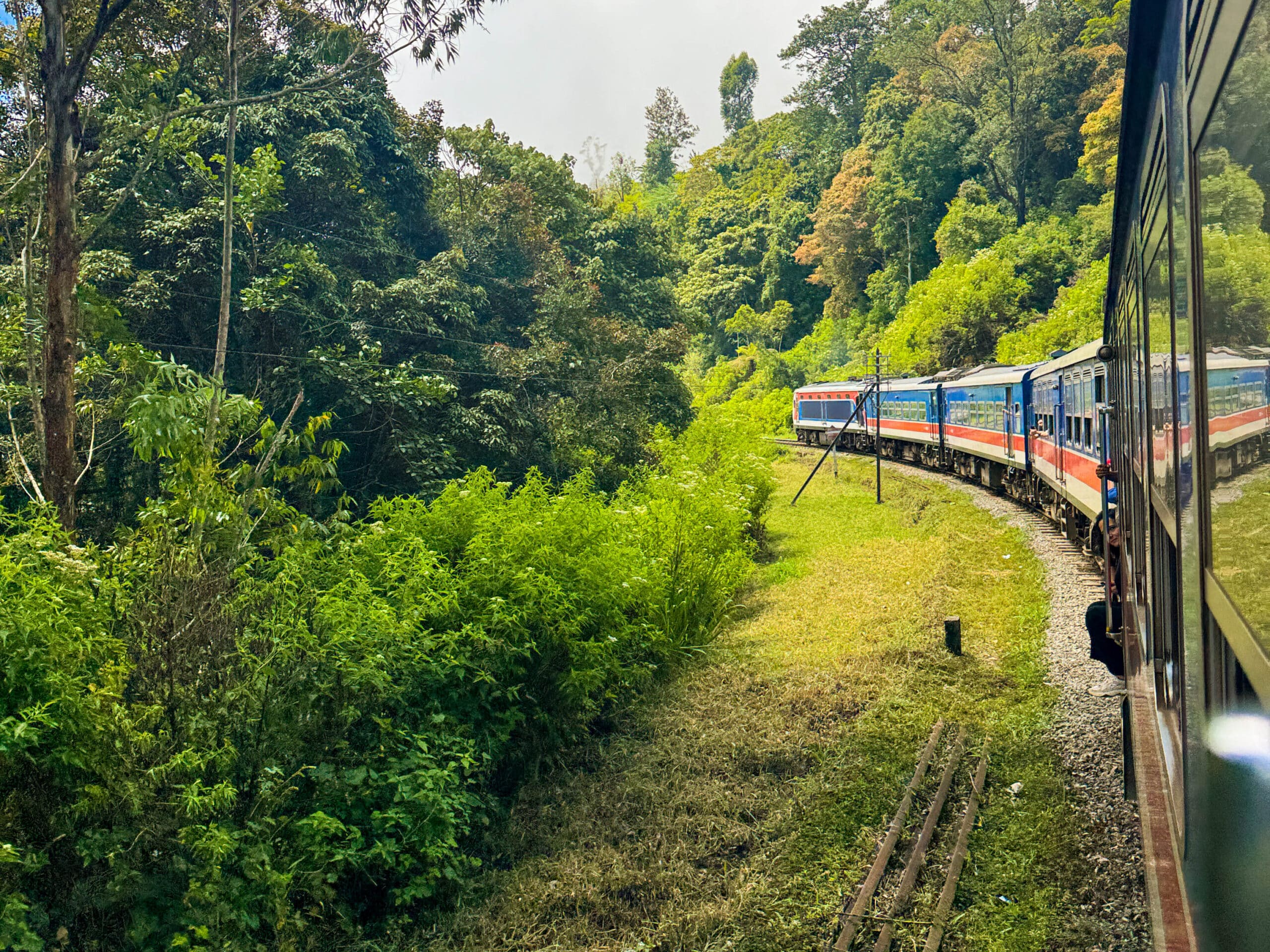
If you are arriving at Kandy by train from Ella — one of the great scenic rail journeys in Sri Lanka — bear in mind that Sri Lankan trains are notoriously unreliable for timing. Delays of an hour or more are common, and on some days trains run significantly late or not at all. If you are planning to attend Esala Perahera on a specific night, we strongly recommend arriving in Kandy a day earlier than you think you need to. Missing the festival because of a delayed train would be a frustrating way to end an otherwise brilliant journey. You can read everything about the route in our Ella travel guide.
Explore More of Kandy & the Hill Country
Esala Perahera is the centrepiece, but Kandy and the surrounding hill country have a great deal more to offer before and after the festival. For a full overview of everything the city has to offer, read our complete Kandy travel guide.
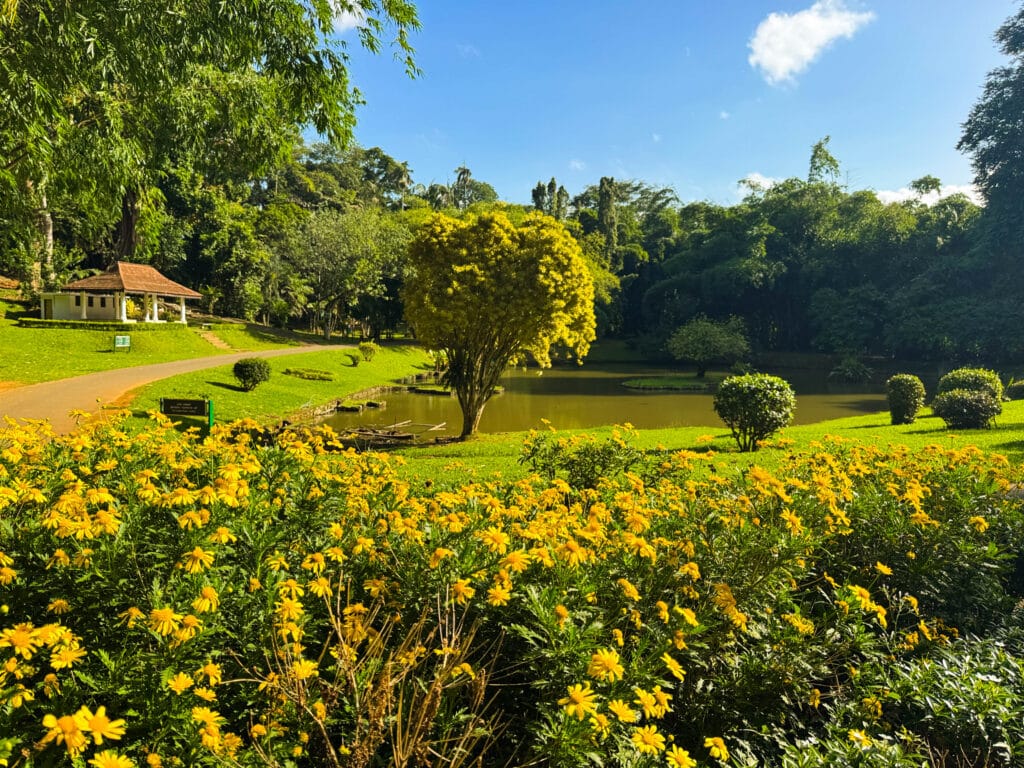
Royal Botanic Gardens: One of the finest botanical gardens in Asia, just outside the city. Allow two to three hours — it is beautifully maintained and genuinely peaceful.
Viewpoints over the city: Several hilltop lookouts give panoramic views over Kandy Lake and the city — a tuktuk driver will know them all.
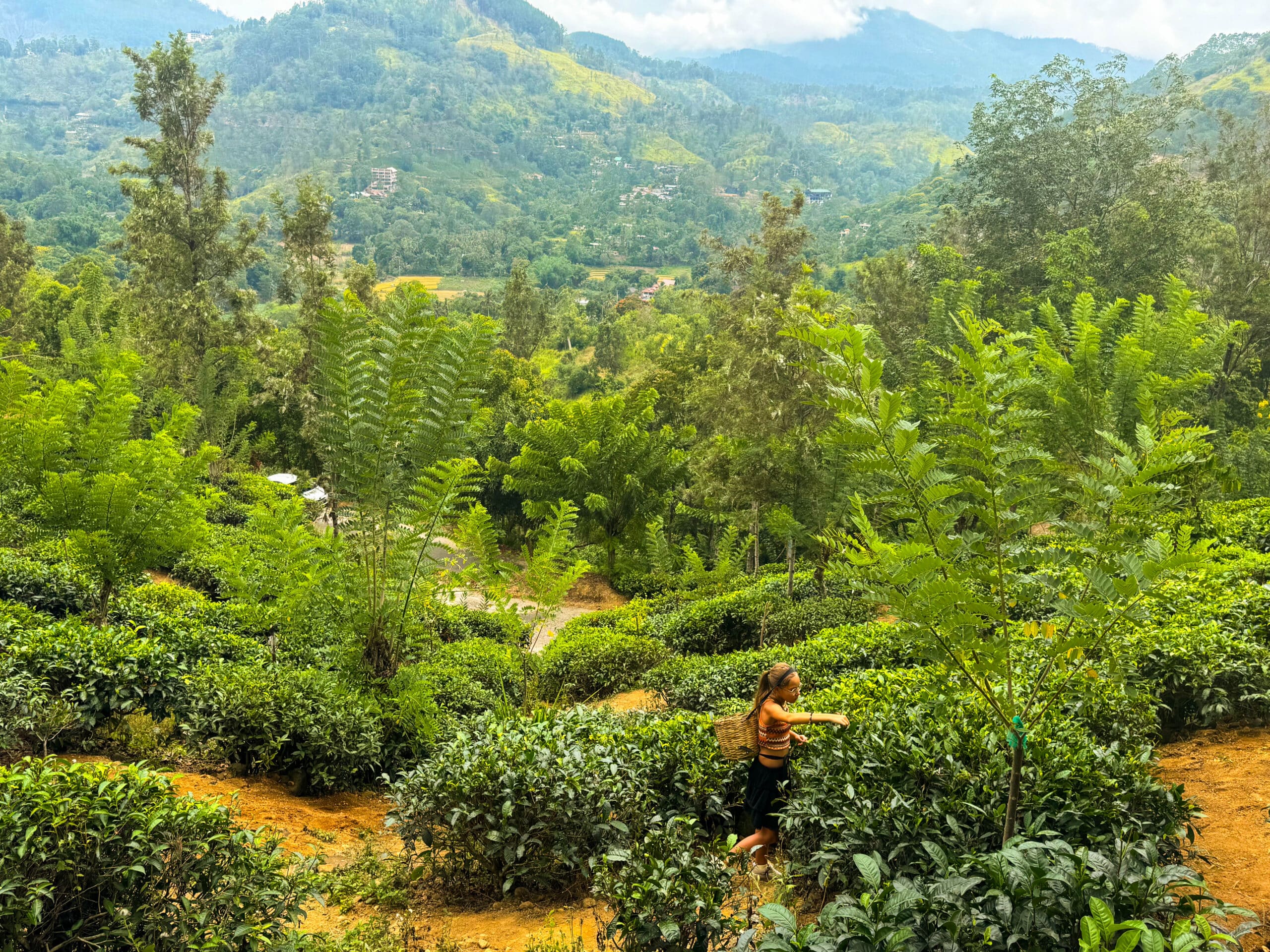
Day trip to a tea plantation: The road between Kandy and Nuwara Eliya passes through some of the most photogenic tea country in Sri Lanka. We stopped at the Labookellie Tea Plantation and found the factory tour and tea tasting genuinely interesting — not the tourist trap it could easily be. If you want to go deeper on this, take a look at our hill country travel guide.
Local market: Kandy's central market is lively and worth an hour of your time — a good place to pick up spices, batik fabric, and the kind of souvenirs that are actually useful.
Is It Worth It?
Yes — but on the right night, with realistic expectations.
Esala Perahera is genuinely one of the most extraordinary things you can witness in Sri Lanka, and probably one of the most extraordinary cultural events in Asia. The scale of it — the drums, the fire, the elephants moving through a crowd of thousands, the whole city shutting down for a religious procession that has been happening for a thousand years — is something that is very difficult to describe and even harder to forget.
But it is also a long evening, particularly on the final nights. The procession does not move quickly. The crowds are enormous and you cannot leave early without planning ahead. The elephant welfare question sits there alongside the spectacle. And if you choose a night too early in the ten-day run, you may find the procession shorter and less impressive than the photographs suggested.
Go on one of the Randoli Perahera nights. Book accommodation outside the city. Ask about the back exit before you settle in anywhere along the route. And if you are on the fence about the elephants — think about it beforehand, rather than only when you are standing in the street and the first one walks past.
🐘 Plan Your Sri Lanka Trip
🏨 Still looking for the right stay? Browse all hotels in Sri Lanka — free cancellation on most rooms.
✈️ Flights: Compare routes and prices for flights to Sri Lanka.
🚂 Getting around: Book train tickets in advance (the scenic routes sell out), or arrange a private driver, tuk tuk rental or rental car.
📱 Stay connected: Get a Sri Lanka eSIM from Airalo before you fly. We use Airalo ourselves on every trip.
🔒 Travel insurance: Don't skip travel insurance for Sri Lanka — medical costs for tourists add up fast.
🎟️ Tours & activities: Browse safaris, cooking classes and tours across Sri Lanka.
💳 Money: Avoid card fees abroad with a free Revolut account.
Some links on this page are affiliate links. Booking through them costs you nothing extra and helps us keep this site running — thank you!
Frequently Asked Questions
What is Esala Perahera and why is it celebrated?
Esala Perahera is a centuries-old Buddhist festival held annually in Kandy, Sri Lanka, in honour of the Sacred Tooth Relic of the Buddha, which is kept in the Temple of the Tooth. The festival takes the form of a grand nightly procession featuring Kandyan dancers, fire performers, acrobats, drummers, and dozens of decorated elephants. It is one of the oldest and largest religious processions in Asia, with roots going back over a thousand years, and remains a living act of devotion for millions of Sri Lankans.
How many nights does Esala Perahera last, and which night should I go?
The festival runs for ten consecutive nights. The first few nights are shorter and more modest; the procession grows in scale and length each night. The most spectacular are the final three nights — the Randoli Perahera — when the procession can last four to six hours. If you can only attend one night, aim for one of the Randoli Perahera evenings. Check the exact dates for your year of travel, as they shift annually based on the lunar calendar.
Can I leave during the procession if I want to?
Not easily. Once the procession begins, the streets along the route are completely closed and the crowds are dense on both sides. You cannot cross the route or move freely through the crowd while the parade is passing. The only practical exit is through a hotel, restaurant, or café along the route that has a back exit not on the procession side. If leaving before the end is important to you, book a seat or table in a venue that has this option and confirm it explicitly before you go.
Do I need to buy tickets in advance?
Grandstand seats along the procession route are sold in advance through hotels and tour operators, and this is the safest option for the final Randoli Perahera nights. That said, when we attended one of the last evenings of the festival, tickets were still available from street sellers on the day — and at a considerably lower price than what hotels charge. Whether that is always the case, particularly on the most popular nights, we cannot guarantee. Free street viewing is possible without any ticket, but local residents begin claiming their spots from around 1:00pm, so you would need to commit to a very long wait. A grandstand seat, however you buy it, saves you that. Many hotels — for example Adigar's Manor — can arrange grandstand seats.
Is the Temple of the Tooth open during Esala Perahera?
The temple operates on restricted hours during the festival period, and on some days public visits are not possible at all. Do not assume you can visit the temple during the festival without checking in advance. If visiting the Temple of the Tooth is a priority, arrive in Kandy at least one day before the festival begins, or verify the schedule for the specific dates you are travelling.
Where should I stay for Esala Perahera?
Stay outside the city centre. The streets near the procession route are closed, noisy, and chaotic during the festival, and hotels closest to the route are the most expensive. Hillside hotels 10–20 minutes from the centre by tuktuk offer much better value, a peaceful night's sleep, and easy access to the festival in the evenings. Kings Pavilion, Adigar's Manor, Mountbatten Bungalow, and Hebron Gardens House are all solid choices across different price levels. A hilltop option like Kings Pavilion Kandy keeps you away from the closed-off streets.
What time does the procession start, and when should I arrive?
The procession typically begins around 7:15–8:00pm, but the streets become very crowded well before that — to the point where moving through them at all becomes difficult. If you have grandstand seats, aim to be in place by 6:00–6:30pm. If you plan to watch from the street for free, local residents start claiming spots from around 1:00pm, so you would need to be there much earlier and prepared for a long wait. On the final Randoli Perahera nights, the procession can continue until 11:00pm or later, so plan your return journey accordingly. Staying close by helps — Mountbatten Bungalow is a quiet base for an early start.
Are the elephants well treated at Esala Perahera?
This is a question worth asking honestly. The elephants that participate in Esala Perahera are a fundamental part of the tradition, and many have been part of the festival for decades. At the same time, the conditions for some elephants — including the use of chains — have raised welfare concerns from animal rights organisations. This is a complex issue that touches on religion, tradition, and animal welfare simultaneously. We think every visitor should be aware of this aspect of the festival and make their own informed decision about how to engage with it.
Related Blogs
Other Activity Blogs
Top Things to Do in Sri Lanka: The Most Rewarding Experiences on the Island
Tea Plantation Tours in Sri Lanka: Best Areas & Stays
Kandy to Ella Train Ride: Best Seats, Stops & Hotels Along the Route
Best Beaches in Sri Lanka: A Guide by Coast & Season
Safari in Sri Lanka: The Best National Parks for Wildlife
Wilpattu Sri Lanka National Park: Sri Lanka's Largest Wilderness Sanctuary
Pidurangala Rock Hike: Sri Lanka's Best Sunrise Viewpoint
Other Sri Lanka Blogs
Kandy Sri Lanka: The Cultural Capital Known for Sacred Temples and Scenic Lake Views
Best Hotels in Sri Lanka: How to Choose Where to Stay — by Region & Value
Where to Stay in Sri Lanka: Best Hotels by Travel Style
Sri Lanka Regions Explained: How to Choose the Best Areas for Your Trip
Best Cities to Visit in Sri Lanka: A Practical Guide to Regions, Routes & City Bases
Sri Lanka Travel Itinerary: Custom Plans for Beach Lovers, City Explorers, and Wildlife Adventurers
Best Time to Visit Sri Lanka: Weather, Seasons & Travel Tips
Sri Lanka Weather by Month: What to Expect Each Season as a Traveller
Getting Around Sri Lanka: Ultimate Guide to Transport, Trains, Tuk-Tuks & Easy Trip Planning
Is Sri Lanka Expensive to Travel? Budget, Costs & Money-Saving Tips for Your Trip
Sri Lanka Travel Guide: Visa Requirements, Vaccination & Local Travel Tips