Table of Contents
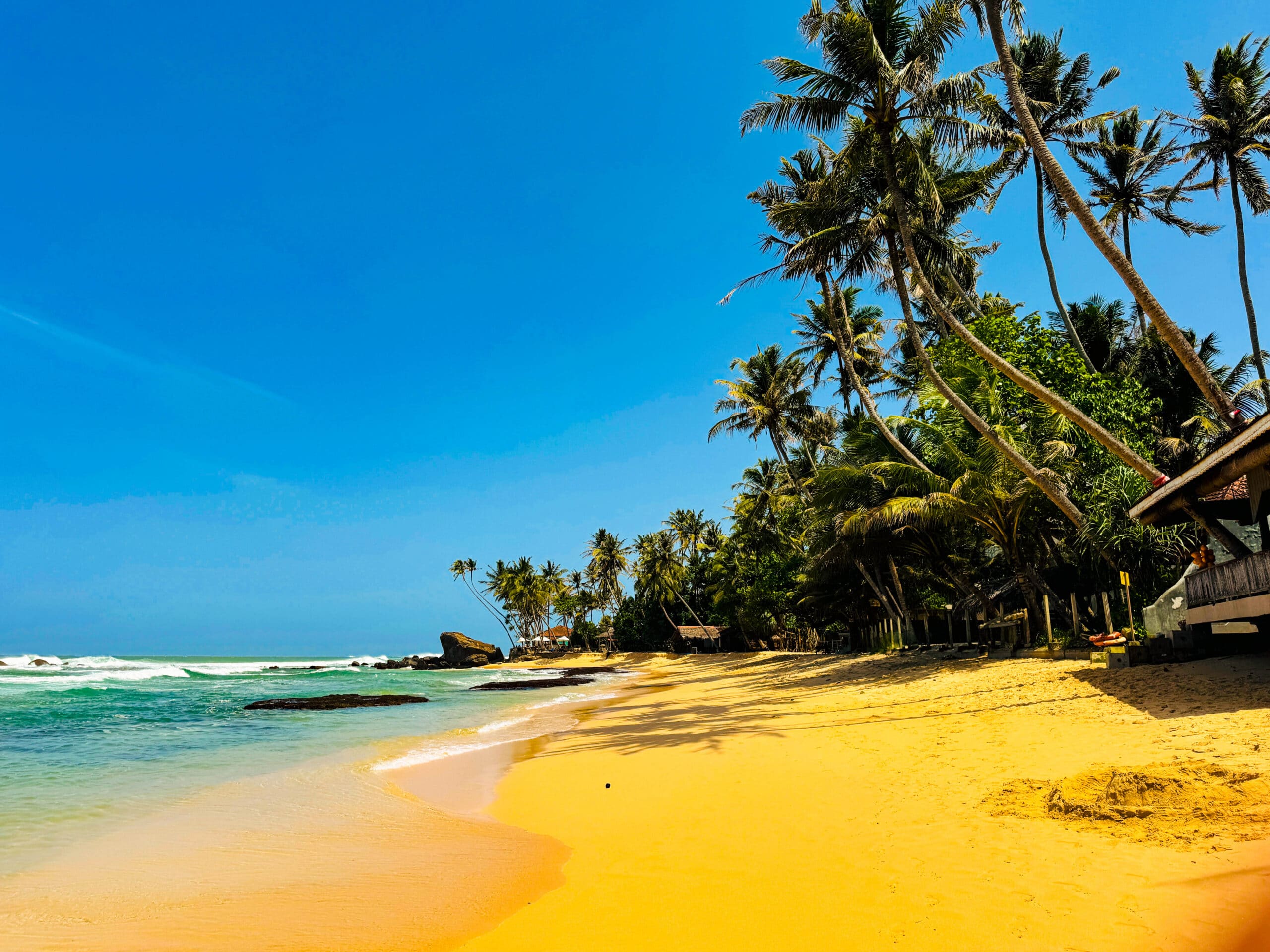
Sri Lanka is one of those rare destinations where the variety of experiences is almost hard to believe. In just a few weeks, you can watch elephants crossing a riverbed at dawn, sip freshly brewed tea while looking out over misty green hills, hike to a sunrise viewpoint above the clouds, and sit on a beach where sea turtles nest at night. The island is small enough to move between regions quickly, yet every part of it feels completely different.
What makes Sri Lanka particularly interesting is how easily different types of travel sit side by side. A single day can take you from a working tea factory to a centuries-old Buddhist temple, from a tuk-tuk city tour through a colonial Dutch fort to a clifftop restaurant with views over the Indian Ocean. It suits travellers who like a full itinerary as much as those who want to slow down and stay in one spot for a week.
This guide covers the best things to do in Sri Lanka — from wildlife safaris and iconic hikes to train rides, cooking classes, and whale watching. We have tried to include enough detail on each activity so you can decide what fits your travel style, not just what looks good in a photo.
In a Rush?
These are our Favourite Activities in Sri Lanka
- ⭐️⭐️⭐️ Wildlife Safari in Yala – Check prices and availability
- ⭐️⭐️ Scenic Train Ride: Ella to Kandy (or Nuwara Eliya to Ella) – Check prices and availability
- ⭐️ Pidurangala Rock Sunrise Hike – Check prices and availability
Top Things to do in Sri Lanka at a Glance
Sri Lanka covers a lot of ground for a small island. This overview shows the main activity categories, what they include, and what kind of traveller they suit best — so you can quickly see where to focus depending on your travel style and the time you have.
| Activity type | Includes | Best for | Effort level | Best season |
|---|---|---|---|---|
| Wildlife & safaris | Yala, Udawalawe, Wilpattu, Minneriya | Nature lovers, wildlife photographers | Low (jeep safari) | Year-round; Yala peak Dec–Apr; Minneriya Gathering Jul–Oct |
| Hikes & viewpoints | Pidurangala, Ella Rock, Little Adam's Peak, Lion Rock | Active travellers, sunrise chasers | Medium to high | Year-round; clearest skies Dec–Apr |
| Scenic train rides | Ella–Kandy, Nuwara Eliya–Ella | Slow travellers, scenery lovers | Low | Year-round; misty atmosphere Oct–Nov, clearer Dec–Apr |
| Beaches | South & East coast beaches | Beach lovers, surfers, snorkellers | Low | South coast: Nov–Apr; East coast: May–Sep |
| Surfing | Weligama, Arugam Bay, Hikkaduwa | Beginners to intermediate surfers | Medium | Weligama & Hikkaduwa: Nov–Apr; Arugam Bay: May–Oct |
| Temples & culture | Temple of the Tooth, Dambulla, Polonnaruwa, Anuradhapura | History lovers, culture seekers | Low | Year-round |
| City & fort tours | Galle Fort, Negombo tuk-tuk, Kandy | First-time visitors, half-day activities | Low | Year-round |
| Tea plantations | Ella, Nuwara Eliya, Hatton | Food lovers, scenery seekers | Low | Year-round; misty mornings add to the atmosphere |
| Activities in Ella | Zipline, swing, Nine Arch Bridge, waterfalls | All travellers, families | Low to medium | Year-round; waterfalls best after rain (Apr–Jun, Oct–Nov) |
| Cooking classes | Negombo, Ella, Galle, Mirissa | Food-focused travellers | Low | Year-round |
| Whale watching & snorkelling | Mirissa, Trincomalee | Marine life lovers | Low | Mirissa: Dec–Apr; Trincomalee: May–Sep |
Wildlife & Safaris
Sri Lanka has more wild elephants per square kilometre than almost anywhere else in Asia, and its national parks offer some of the most reliable large mammal sightings on the continent. A safari here is not a guarantee — wildlife is unpredictable — but the odds are genuinely good, particularly if you go in the right season and at the right time of day.
Yala National Park
Best for: Travellers hoping to see leopards, as well as elephants, crocodiles, and coastal birds
Not ideal for: Travellers who dislike busy parks or large vehicle numbers
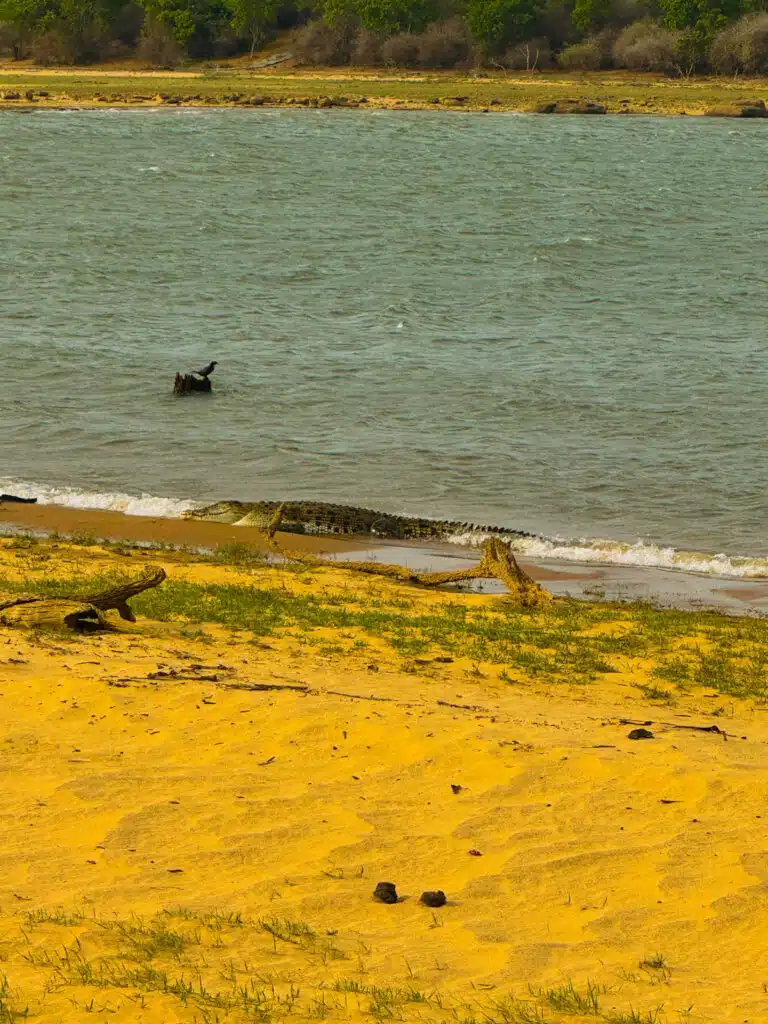
Yala is Sri Lanka's most famous safari destination, and for good reason: it has one of the highest densities of leopards in the world. Zone 1, which is the most visited section, offers morning and evening game drives through scrub forest, open grassland, and lagoon edges. Sightings of elephants, sloth bears, mugger crocodiles, peacocks, and monitor lizards are common. Leopard sightings are possible but never certain — the cats are elusive, and whether you see one depends partly on luck.
The trade-off at Yala is the number of jeeps. In peak season, popular sighting spots can get congested, with multiple vehicles grouped around a single animal. If you want a quieter experience, go for an early morning slot (gates open at 6am), choose a private jeep rather than joining a shared tour, or consider Zone 5, which is less visited but also has lower density of large animals.
Trade-offs to consider:
- Leopard sightings are not guaranteed, even in Zone 1
- Zone 1 can be crowded in peak season (December–April)
- Combined Yala + Udawalawe day tours from Ella are long (12+ hours) — good value but tiring
Best season: Yala is open year-round, but the dry season from December to April offers the best wildlife viewing — water sources are fewer, which draws animals into the open. The park partially closes in September for maintenance.
Morning or full day safaris give you the best chance of seeing active wildlife.
Where to stay: Wild Coast Tented Lodge is a Relais & Châteaux property set directly on the edge of the park — luxury tented villas with open-air bathrooms and the sounds of the bush at night. It is one of the few places in Sri Lanka where the safari experience extends beyond the jeep and into where you sleep.
Udawalawe National Park
Best for: Travellers who want reliable elephant sightings in open landscapes
Not ideal for: Those prioritising leopard sightings
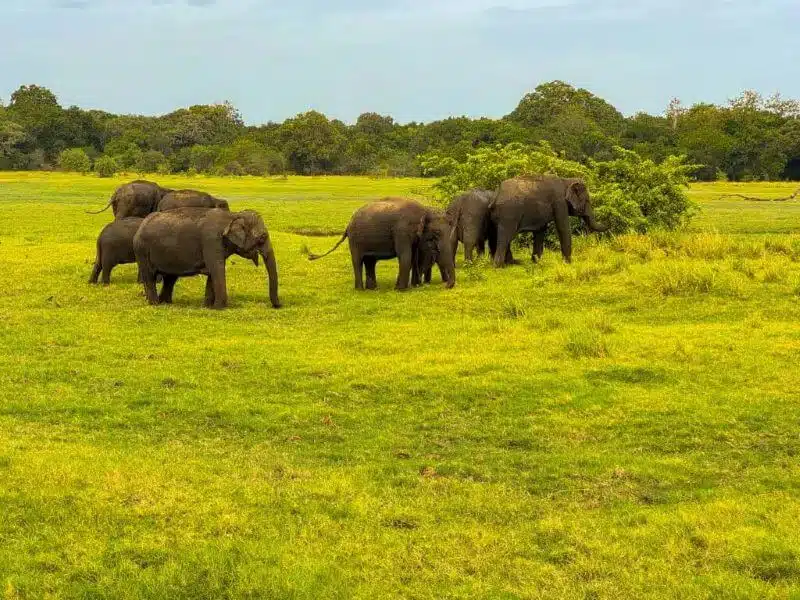
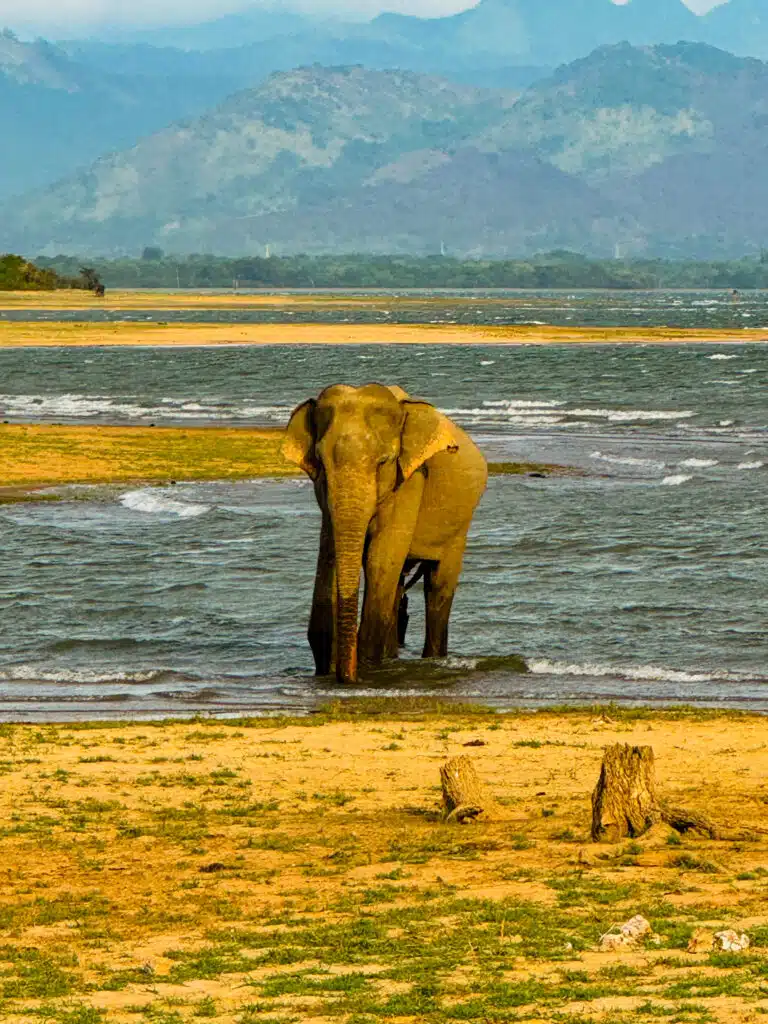
Udawalawe is arguably the best place in Sri Lanka for elephant watching. The park sits around a large reservoir, and the open savannah landscape means visibility is excellent — you often see herds of 20 or more elephants grazing or walking together. The terrain is easier to drive than Yala, there are fewer visitors, and sightings are consistent across most of the year.
The park is also home to the Elephant Transit Home, a rehabilitation centre for orphaned elephants. You can visit the feeding sessions (typically at 9am, noon, and 6pm), where young elephants are given milk. It is more of a welfare facility than a zoo, and watching the feeding is a calmer, more intimate experience than a jeep safari.
Trade-offs to consider:
- Elephant sightings are excellent, but big cat sightings are rare compared to Yala
- The landscape (open scrub, reservoir edges) has less dramatic scenery than Wilpattu
- Combined Udawalawe + Elephant Transit Home tours are the most popular format — allow 5–6 hours
Best season: Udawalawe is one of the few parks that is genuinely good year-round. Elephant sightings are consistent in all seasons, though the dry months (May–September) bring animals closer to the reservoir edges, making them easier to spot from a jeep.
From our own experience: We visited the Elephant Transit Home the afternoon before our morning safari, which turned out to be a good way to structure it — the feeding session gave the kids a close-up introduction before the open jeep experience. On the safari itself we counted around 15 elephants, including a few young ones close to the road. The open landscape means you can often spot them from a distance and watch for a while before driving closer.
Where to stay: Vimanra Udawalawe is a well-run lodge close to the park entrance with comfortable rooms and a pool — a good base for early morning and late afternoon safaris. We stayed here ourselves and found it well-organised and good value for the area.
Wilpattu National Park
Best for: Travellers who want a quieter, more forested safari experience
Not ideal for: Those who want open plains and reliable large herd sightings
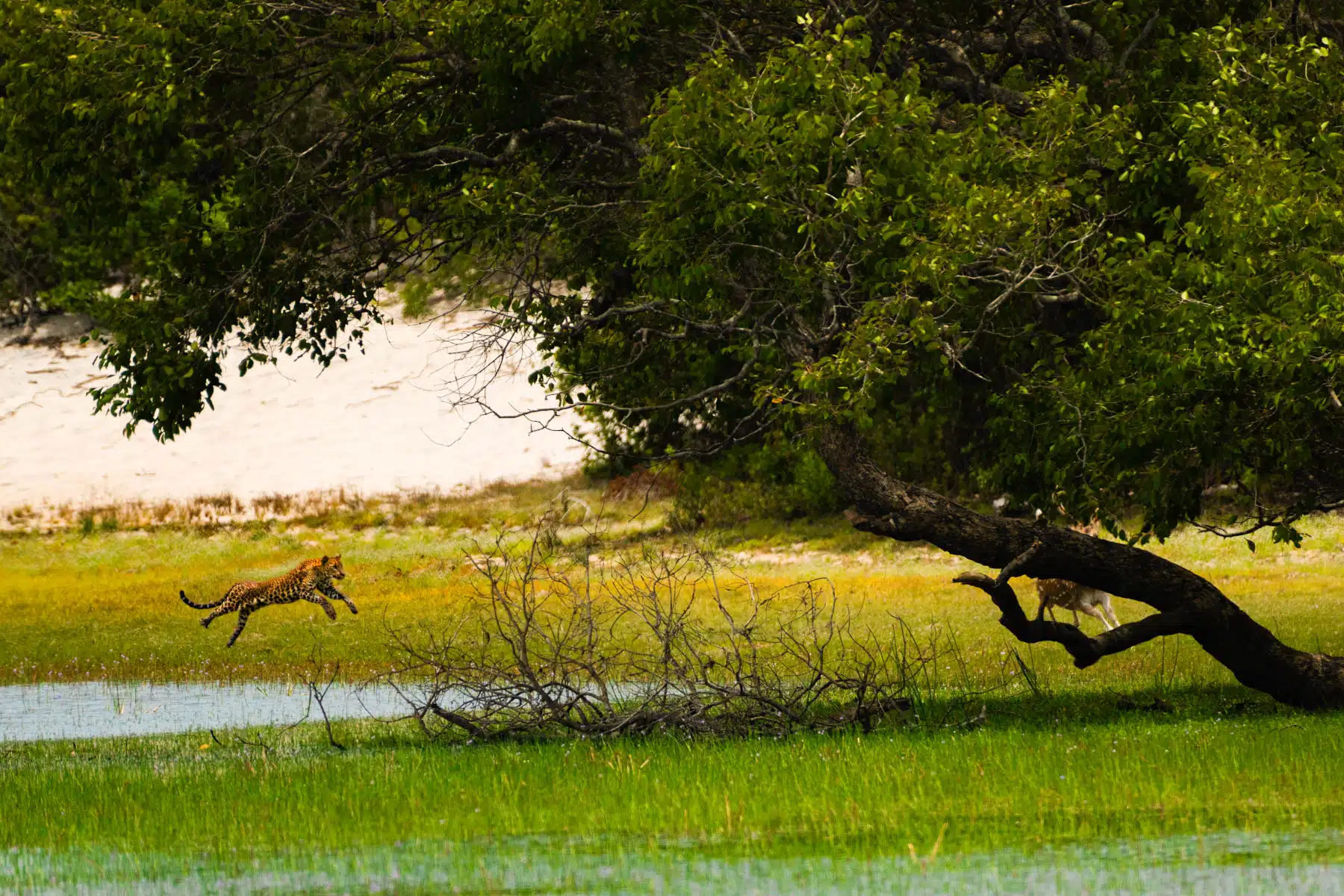
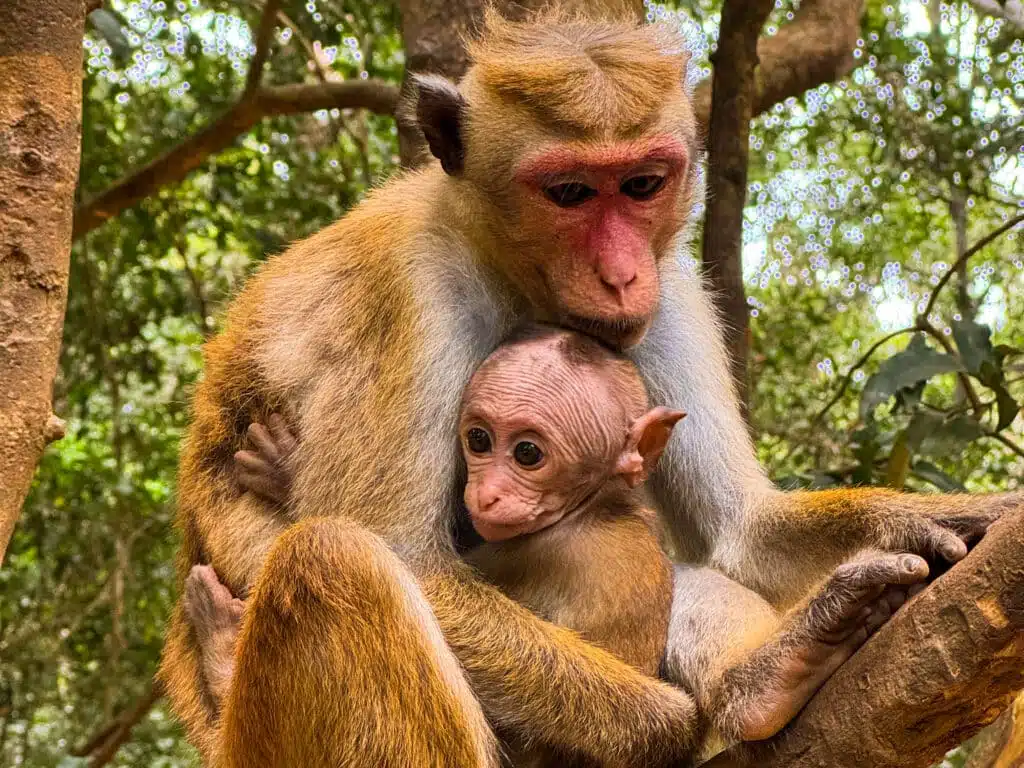
Wilpattu is Sri Lanka's largest national park and its least visited of the major four. It sits in the northwest, close to the ancient city of Anuradhapura, and the terrain is dense forest punctuated by natural lakes called villus — shallow, grassy waterholes where leopards and sloth bears come to drink. The atmosphere is noticeably different from Yala: quieter, denser, more unpredictable.
Wilpattu has a strong population of leopards and is considered a serious rival to Yala for big cat sightings, though the dense vegetation makes them harder to spot. Elephants, sloth bears, deer, crocodiles, and a huge variety of bird species are regularly seen. Because visitor numbers are lower, you rarely share a sighting spot with more than a few other vehicles.
Trade-offs to consider:
- The dense forest means visibility is lower than in Yala or Udawalawe
- Less infrastructure around the park than Yala — accommodation options are more limited
- The drive from Colombo or Negombo is around 3.5 hours — factor this into your itinerary
Best season: February to October is generally the best period for Wilpattu, with the dry months (May–September) bringing the most reliable sightings. The park can be temporarily closed during the northeast monsoon (November–January) — always check before planning a visit.
From our own experience: Wilpattu surprised us. The forest feels completely different from what you might expect of a safari park — much wilder and more enclosed, with the dense vegetation making every sighting feel like something you had to earn. On our drive we spotted a leopard, two elephants, a crocodile, mongoose, tortoises, and more birds of prey than we could count. The quietness of the park was a big part of the appeal — at no point did we feel like we were sharing it with a convoy of other jeeps.
Where to stay: Thamaravila Wilpattu is a luxury tented camp on the edge of the park with an intimate, immersive atmosphere — one of the better-positioned properties for Wilpattu safaris. We stayed here ourselves and the setting, with the forest directly around the camp, made for a genuinely memorable stay.
Read more about a safari in the guide Wilpattu Sri Lanka National Park guide.
Minneriya National Park
Experience type: Expert evaluation Best for: Visiting between July and October to witness the Gathering Not ideal for: Travellers outside peak gathering season — other parks offer more consistent wildlife
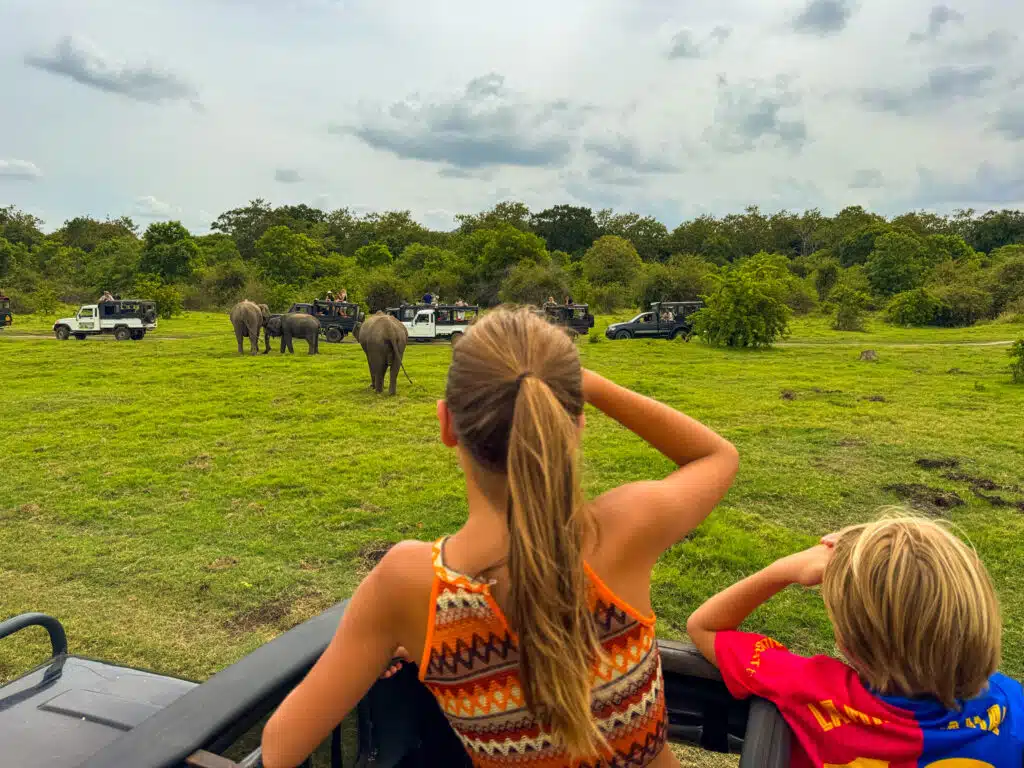
Minneriya is not on every itinerary, but between July and October it hosts one of the most impressive wildlife spectacles in Asia: the Gathering. Hundreds of elephants — sometimes over 300 at once — converge around the Minneriya reservoir as the water level drops and fresh grass becomes exposed. If your timing is right, this is a genuinely extraordinary experience, with large herds spread across the open tank edge as far as you can see.
Outside the July–October window, Minneriya is still worth a visit if you are based in Sigiriya, but wildlife density is lower. The park is also conveniently close to Sigiriya, making it easy to combine with a Lion Rock visit or a Pidurangala sunrise hike.
Trade-offs to consider:
- Outside July–October, elephant numbers drop significantly
- Kaudulla National Park (nearby) is an alternative in some months when Minneriya dries up
- Shared jeep tours from Sigiriya are widely available
Best season: July to October, with August and September typically the peak of the Gathering. Outside this window, Minneriya is worth visiting if you are already in Sigiriya, but it is not worth a special detour.
From our own experience: We visited during the Gathering and counted around 30 elephants around the reservoir — impressive, though we were told numbers can be much higher on some days. The trade-off is that it is not a quiet experience: there were quite a few other jeeps at the best viewpoints, which is something to be aware of if you are coming from the solitude of Wilpattu. That said, watching a large herd move across the open grassland towards the water is genuinely something you will not forget.
Where to stay: Habarana Sigiriya is centrally located between Minneriya, Sigiriya, and Dambulla — a practical base if you want to combine a Gathering safari with a Pidurangala sunrise or a cave temple visit in the same trip.
Hikes & Viewpoints
Sri Lanka's hill country offers some of the most rewarding hikes in South Asia — accessible enough for most fitness levels, spectacular enough to justify the early alarm.
Pidurangala Rock
Best for: Sunrise seekers, travellers visiting Sigiriya who want a less commercial viewpoint
Not ideal for: Those who prefer a maintained, signposted trail — this one is rougher
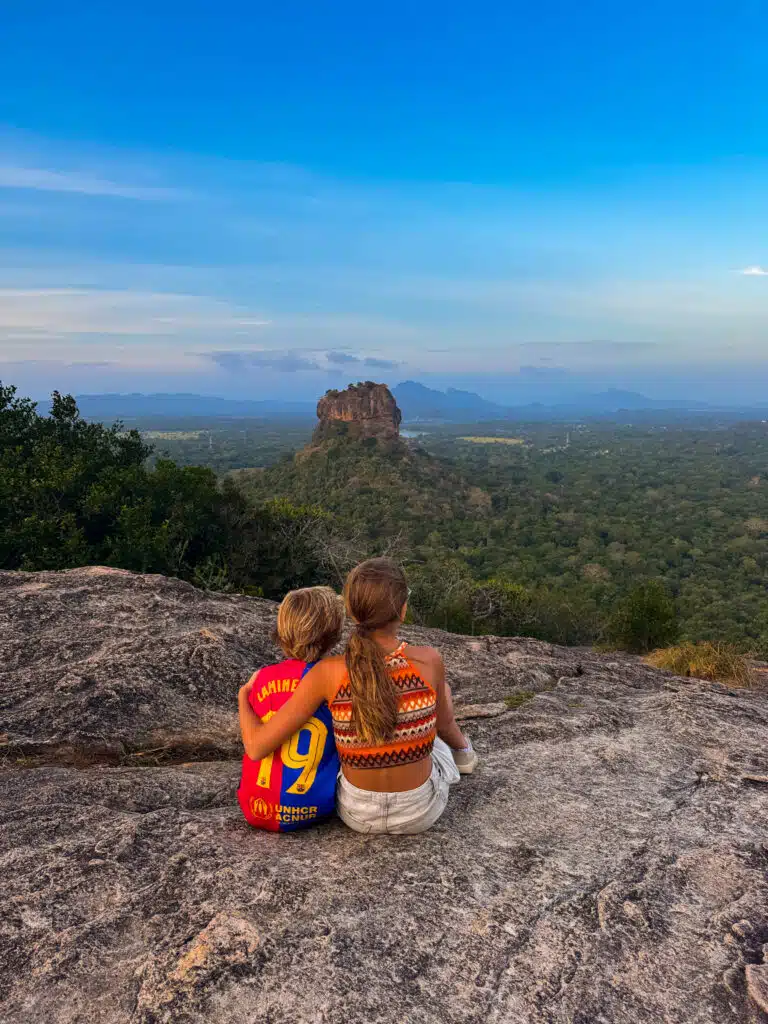
Pidurangala is the hike we recommend above Lion Rock (Sigiriya) if you have to choose one. The summit gives you a direct, unobstructed view of Sigiriya Rock — one of the most photographed scenes in Sri Lanka — as well as panoramic views over jungle, paddy fields, and distant hills. The hike takes 30–40 minutes from the base, and the final section involves scrambling over large boulders. It is not a technical climb, but you do need good footwear and reasonable fitness.
The trail passes through a small Buddhist monastery at the base, where monks live and practice. Admission is modest, and the site feels quieter and more local than the highly developed Sigiriya Rock across the road.
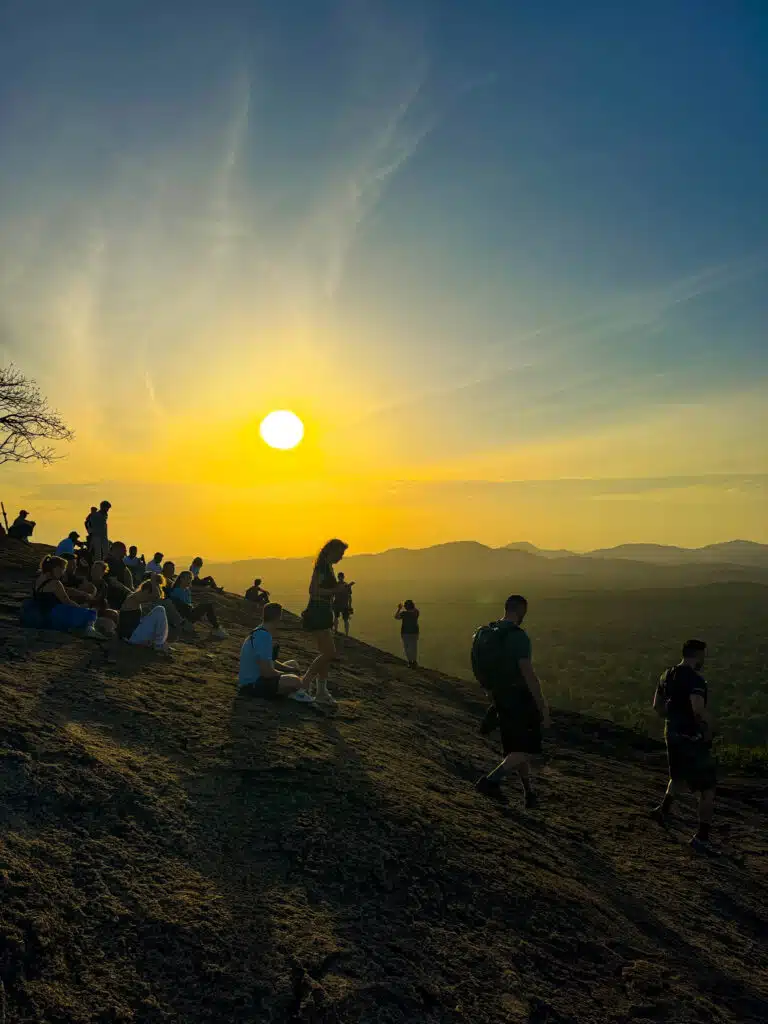
From our own experience: We arrived about 45 minutes before sunrise and the sky was already filling with other hikers by the time we reached the top — Pidurangala is popular, but the summit is large enough that it never felt overcrowded. The view of Sigiriya Rock with the first light hitting it is genuinely one of the best in Sri Lanka.
Best season: Year-round, but December to April gives the clearest skies and the sharpest views at sunrise. During the wetter months (May–June, October–November), morning mist can obscure the view — though it also creates a certain atmosphere. Avoid rainy mornings for the boulder scramble at the top.
Where to stay: Tree Trails Sigiriya is a treehouse-style property set in the jungle a short drive from Pidurangala — an unusual and peaceful place to stay in an area dominated by larger resort hotels. We stayed here ourselves and the combination of the forest setting and easy access to both Pidurangala and Sigiriya made it a highlight of our time in the Cultural Triangle.
Want to read more about the hike, check our guide Pidurangala Rock sunrise hike guide.
Lion Rock (Sigiriya)
Best for: History and archaeology lovers, travellers who want the full cultural experience
Not ideal for: Budget-conscious travellers — entrance fee is the highest in Sri Lanka for foreign tourists
Lion Rock — Sigiriya — is Sri Lanka's most visited historical site and a UNESCO World Heritage Site. The 5th-century rock fortress rises 200 metres above the surrounding jungle, and the climb involves ascending staircases, crossing a gallery of ancient frescoes, and passing through the famous Lion's Paw gate before reaching the summit with the ruins of a royal palace and sweeping 360° views.
The entrance fee for foreign tourists is significant (around $30 USD), which is what leads many travellers to choose Pidurangala as an alternative. That said, the historical site, the frescoes, and the engineering of the gardens around the base are genuinely impressive and worth it if ancient history is a priority for you.
Trade-offs to consider:
- Entrance fee is the highest in Sri Lanka for tourists
- The upper stairs can be congested during busy periods
- Pidurangala gives you a better view of Sigiriya itself — Sigiriya gives you the history
Best season: Year-round. The site is always open, but December to April is drier and more comfortable for the climb. Go early in the morning to avoid both the midday heat and the peak crowd hours.
Where to stay: Water Garden Sigiriya is a boutique property with beautifully landscaped gardens and a pool, set close to the rock. It is a step up from the standard accommodation in the area and suits travellers who want comfort and good food after a full day of sightseeing.
➡ If you want to know more about what else to do in Sigiriya, read our full guide Sigiriya Sri Lanka guide.
Little Adam's Peak, Ella
Best for: First-time hikers, families, travellers based in Ella who want an easy morning activity
Not ideal for: Experienced hikers looking for a challenge
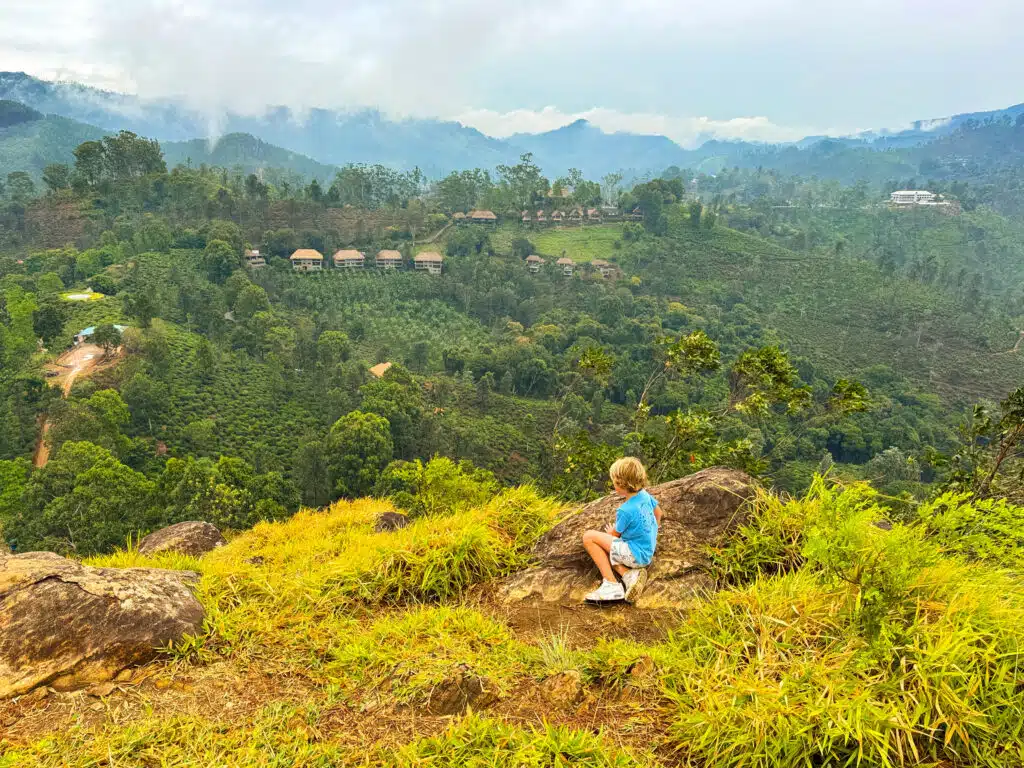
Little Adam's Peak is the most accessible hike in the Ella area — a well-maintained path through tea plantations that takes about 45 minutes to the top. The summit sits at around 1141 metres and gives views over the valley towards Ella Rock, the Nine Arch Bridge, and the surrounding tea-covered hills. It is a comfortable hike for all fitness levels, including families with older children.
The trail is popular and well-marked. You will pass through working tea plantations, and the morning light over the valley makes it a particularly rewarding early-start activity.
If you want a combined experience, zipline tours that start from the Little Adam's Peak area combine the hike with a zipline run down into the valley.
Best season: Year-round. The trail is accessible in all weather, though the views are clearest between December and April. On misty mornings in the wetter months, the valley disappears into cloud — which has its own appeal, but the panoramas are less dramatic.
From our own experience: We did this hike with the kids around 10 in the morning and had quite a bit of mist in the beginning— the valley below was mostly hidden. It did not matter much; the walk through the tea plantations was beautiful regardless, and the kids had no trouble with the path. If views are the priority, go earlier and hope for a clearer morning, but do not let a misty forecast put you off — the trail itself is worth it.
Ella Rock
Best for: More experienced hikers, travellers who want a fuller day out and fewer crowds
Not ideal for: Beginners or those with limited time in Ella
Ella Rock is the more challenging and less-signposted alternative to Little Adam's Peak. The hike takes 3–4 hours return, involves following the railway track out of town and then ascending through tea estates and forest to the rocky summit at 1041 metres. The views from the top are broader and wilder than Little Adam's Peak, with fewer people at the summit.
The trail is not clearly marked, and many travellers hire a local guide or join a guided hiking tour to avoid getting lost. The route crosses the train tracks multiple times, so it is important to check train schedules before you go.
Trade-offs to consider:
- No clear trail markings — easy to take a wrong turn without a guide
- Longer and more physically demanding than Little Adam's Peak
- Worth it for the views and the experience of hiking through working tea estates
Best season: Year-round, but December to April offers the best visibility from the summit. Avoid attempting the hike in heavy rain — the path becomes slippery and the train track crossings less safe.
Where to stay: 98 Acres Resort & Spa sits on a working tea estate above Ella with panoramic valley views — one of the better-positioned hotels for both Ella Rock and Little Adam's Peak, with the trails accessible directly from the property. If you want something more intimate, Nine Arch Lodge is a charming smaller property close to the bridge and the town centre; we stayed here ourselves and found it a warm, well-run base for exploring Ella.
The Scenic Train Ride: Ella to Kandy (and Nuwara Eliya to Ella)
Best for: Almost every type of traveller — this is one of the most iconic journeys in Asia
Not ideal for: Those who struggle in crowded or noisy environments on busy travel days
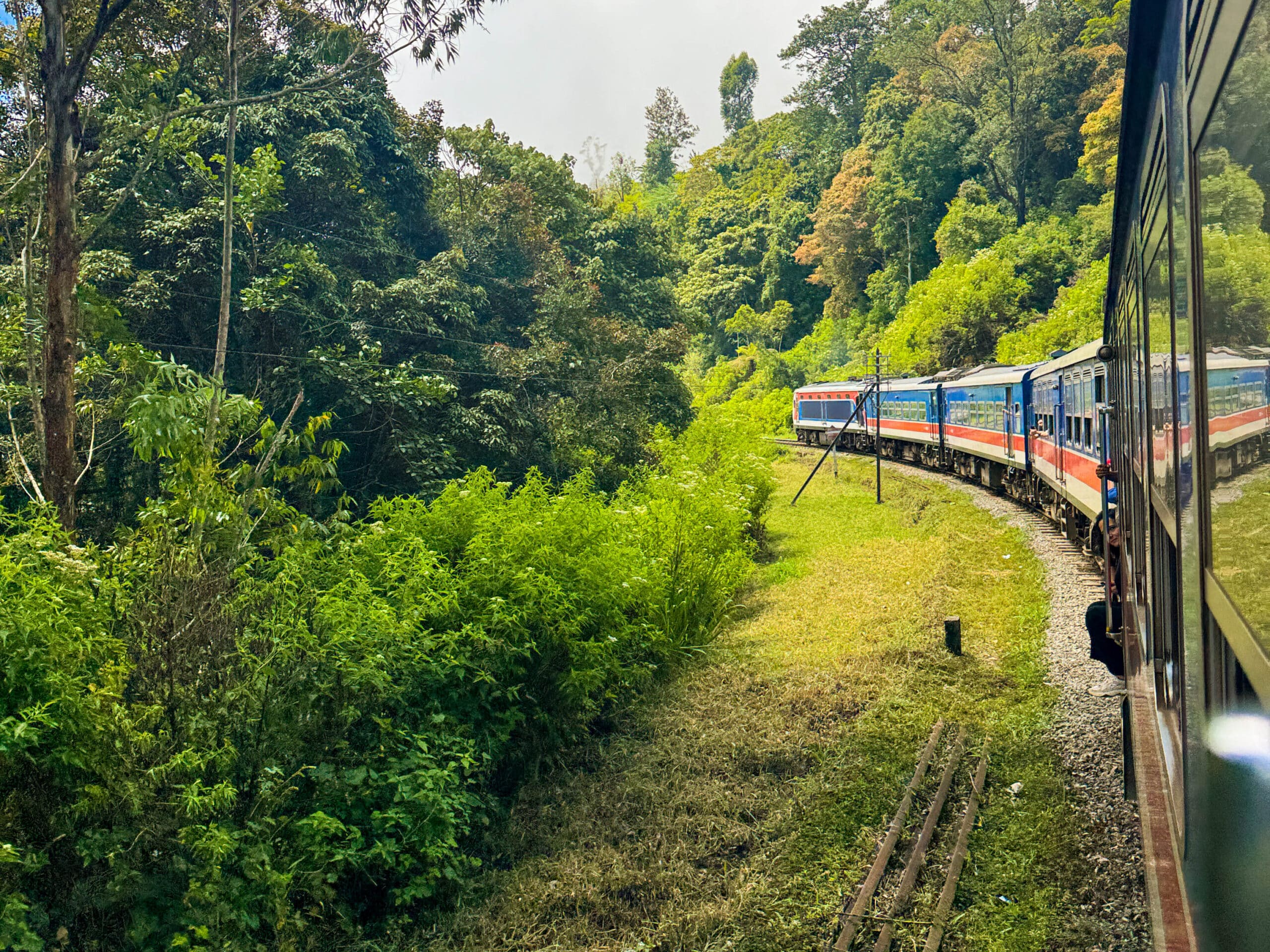
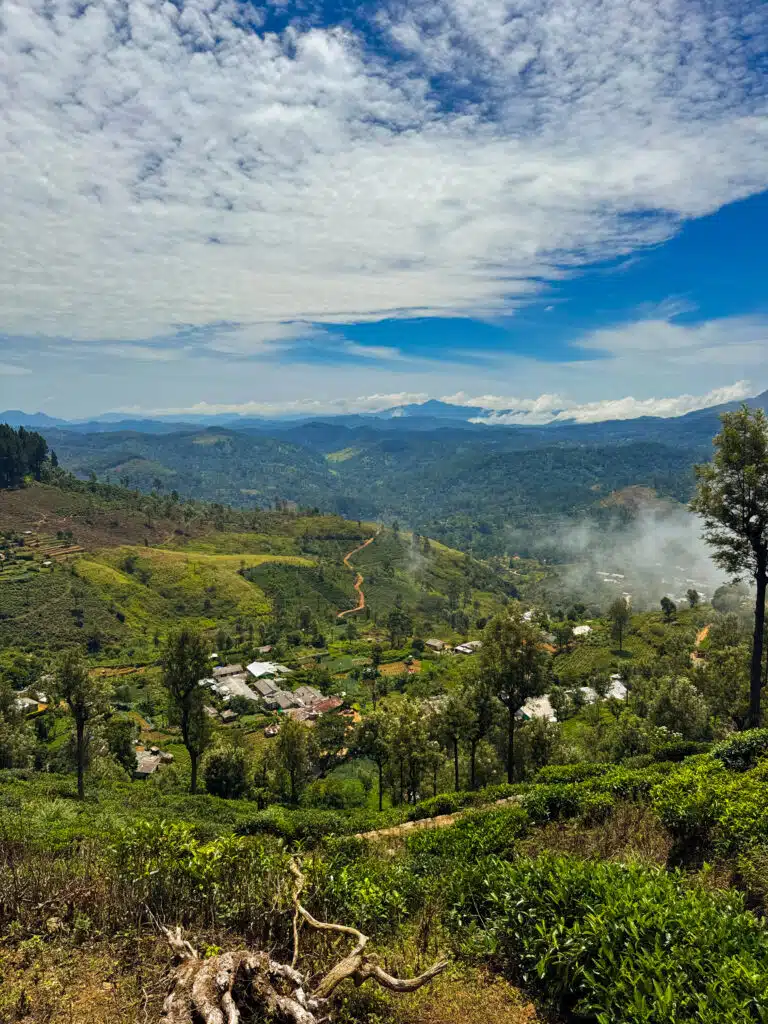
The train journey through Sri Lanka's hill country is regularly listed among the most scenic rail routes in the world, and it earns that reputation. The full route runs from Kandy to Badulla via Nuwara Eliya and Ella, and the section between Kandy and Ella — or even just the shorter stretch between Ella and Nuwara Eliya (Nanu Oya station) — passes through a landscape of misty mountains, waterfall-edged valleys, and endless tea estates.
The full Kandy–Ella section takes around 6–7 hours and passes through some of the most dramatic scenery. The Kandy to Ella direction is the most popular — most travellers do the journey this way as they move from the cultural capital into the hill country. You can also do it in reverse (Ella to Kandy), though this direction is slightly less common, so easier to book tickets for.
The shorter Ella–Nuwara Eliya section takes 3–4 hours and is often preferred by travellers with limited time. It still covers the most photogenic parts of the route. You alight at Nanu Oya station (about 8km from Nuwara Eliya town centre) and the journey passes through Demodara (where the Ella loop bridge is visible), Haputale, and up into the high hills.
Best season: The train runs year-round and is worth doing in any season. Between December and April, the skies tend to be clearer and the light sharper. In October and November, the mist and occasional rain create a moody, atmospheric journey — less photogenic, but with its own character. Avoid travelling on public holidays when trains are extremely crowded.
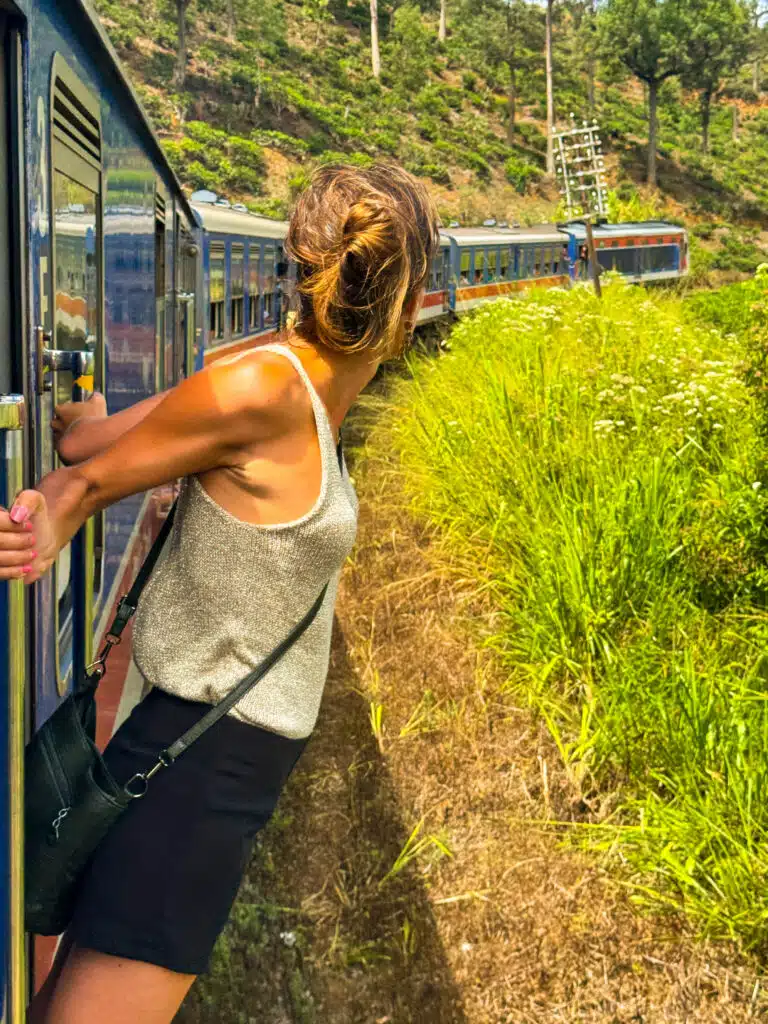
From our own experience: We bought standing tickets on the day because everything was already sold out — 2nd class, no seat. It turned out to be fine. We stood at the open door between carriages for almost the entire journey and barely noticed the absence of a seat. The views from the doorway in the morning light, with the mist still sitting in the valleys, were some of the best of the whole trip. In hindsight, the standing ticket might actually be the better option if you are comfortable with it — you get a completely unobstructed view the whole way.
Book your train tickets in advance through 12Go to secure seats, especially on the Ella–Kandy route.
Where to stay near Nuwara Eliya: Bluechip Leisure is a comfortable mid-range option in Nuwara Eliya town, convenient for the Nanu Oya train station and the surrounding tea estates — a practical base if you are joining or ending the train journey here.
Beaches in Sri Lanka
Best for: All types of beach travellers — the coasts are genuinely different from each other
Not ideal for: Travellers who come in the wrong season for their chosen coast — timing matters a lot
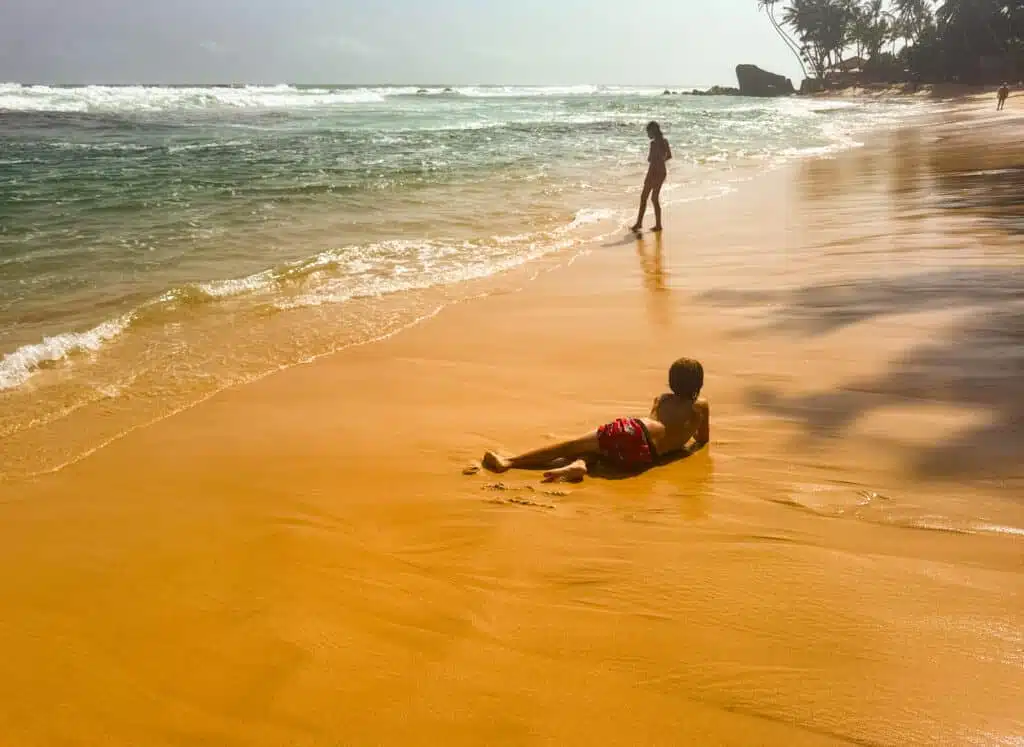
Sri Lanka has two distinct coastlines, and which one is best depends entirely on when you visit. The south and west coasts are the dry season from November to April — calm seas, good snorkelling, and reliable sunshine. The east coast has its own dry season from May to September — when the south is getting the rain, Trincomalee, Nilaveli, and Arugam Bay are at their best.
South coast highlights include Unawatuna (sheltered bay, good for swimming), Mirissa (whale watching, turtles, beach bars), Tangalle (quieter, more local beaches, dramatic rocky coves), Hiriketiya (horseshoe-shaped bay, popular with surfers and yogis), and Weligama (surf town, easy learner waves).
East coast highlights include Nilaveli (near Trincomalee, stunning long white sand beach, excellent snorkelling at Pigeon Island), Arugam Bay (Sri Lanka's surf capital, consistent right-hand point break), and Passikudah (calm, shallow lagoon beach, good for families and swimmers).
Trade-offs to consider:
- Coming at the wrong time for your chosen coast is a very common mistake — always check the monsoon calendar
- South coast beaches can be crowded in peak season (December–February)
- East coast requires more travel time from Colombo — factor in 6–8 hours by road or train
From our own experience: We stayed at Rockside Cabanas right on the Unawatuna bay, which turned out to be one of the better decisions of the trip — being at the beach before the day tours arrived made a real difference. The snorkelling with turtles in the early morning was one of the highlights of our time on the south coast. Unawatuna is a sheltered bay so the water is calm and clear, and the turtles come close to shore regularly.
Where to stay: For Unawatuna, Rockside Cabanas is a relaxed, well-located guesthouse steps from the beach — good value and an easy base for both swimming and day trips to Galle. On the east coast near Trincomalee, Regina Beach Bungalow is a small, beach-facing property well-suited to the area's quieter pace. For Arugam Bay, Jetwing Kottukal Beach House is one of the more polished options in the area — a step above the typical surf guesthouses, with direct beach access and good food.
Surfing in Sri Lanka
Best for: Beginner to intermediate surfers — Sri Lanka is particularly good for first-timers
Not ideal for: Advanced surfers looking for serious reef breaks (exceptions exist at Arugam Bay)
Sri Lanka offers some of the most accessible surfing in Asia. The waves are not enormous, the water is warm year-round, and there are good surf schools at every main beach town. There are three main surf destinations:
Weligama is the most popular spot for beginners. The long, gently sloping beach break produces consistent, manageable waves, and surf schools here are well-established. It is busier than other spots, but the infrastructure is good and lessons are easy to arrange.
Arugam Bay is Sri Lanka's best known surf destination. The main point break — Arugam Bay Point — is a consistent right-hander that works well for intermediate surfers. In peak season (June–September), it gets busy, but there are several secondary breaks around the bay for different ability levels. The town itself is relaxed and low-key, with a backpacker feel.
Hikkaduwa on the south coast is a longer-established surf town with reef and beach breaks suitable for intermediates. It is also good for snorkelling — the reef close to shore has decent coral and fish.
Seasonal note: Weligama and Hikkaduwa surf season is November to April. Arugam Bay season is May to October.
Where to stay: In Weligama, The Six Weligama is a well-positioned property close to the surf break — comfortable, straightforward, and a short walk from the main beach where most surf lessons take place.
Tea Plantations
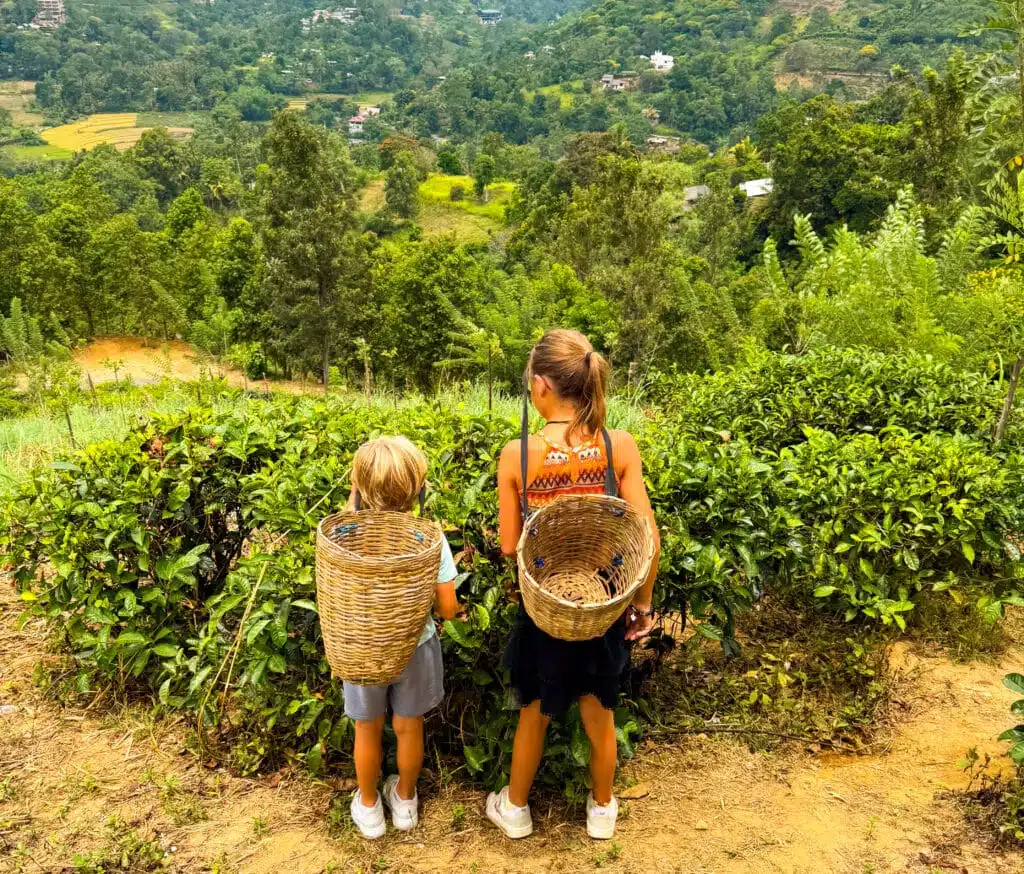
Best for: Travellers in the hill country — the landscape is as much the experience as the tea itself
Not ideal for: Travellers looking for an in-depth factory deep-dive — most tours are fairly brief
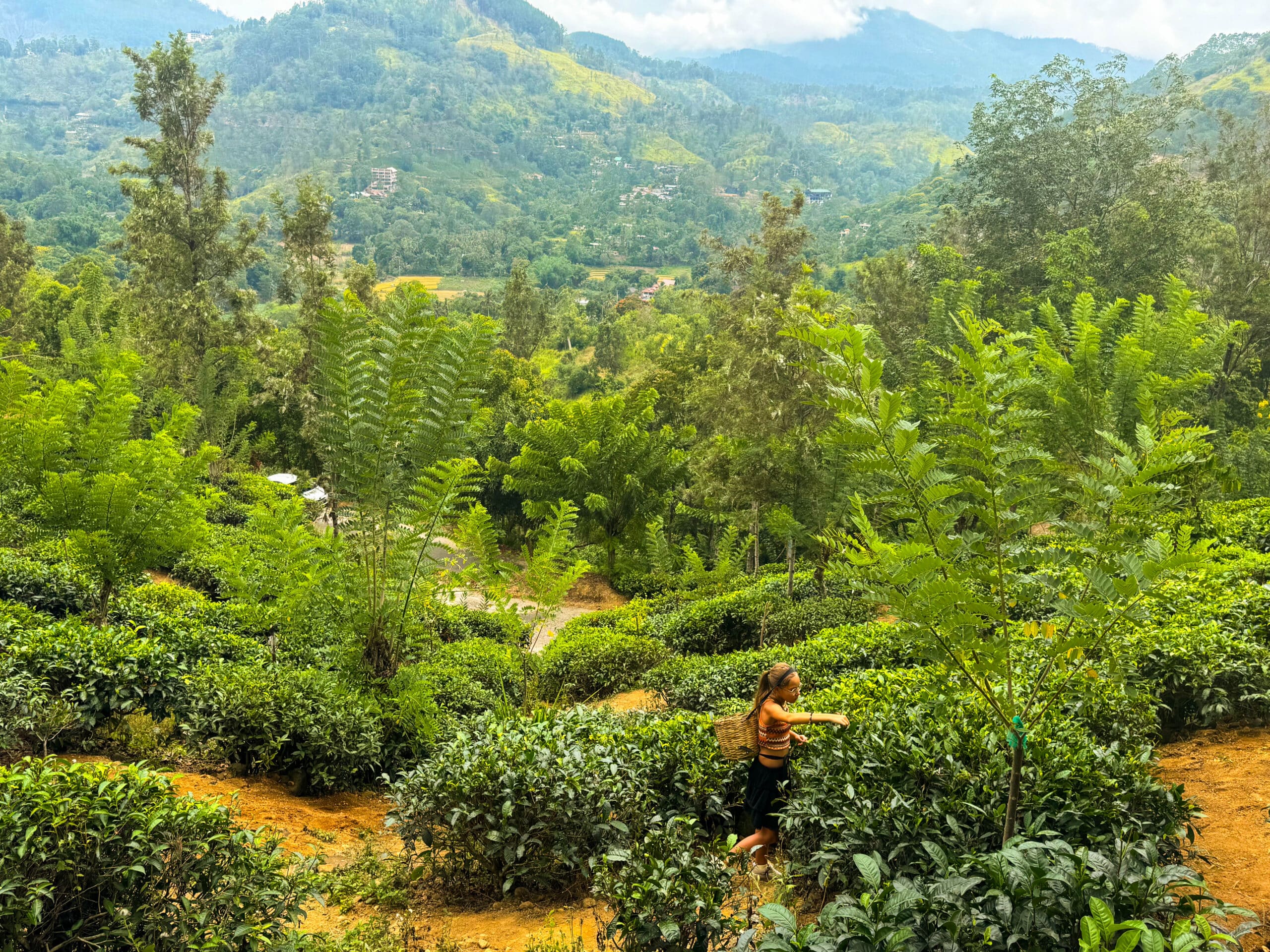
The hills around Nuwara Eliya, Ella, and Hatton are covered in tea plantations, and visiting a working estate is one of the things Sri Lanka genuinely does better than anywhere else. The combination of the rolling green landscape, the altitude, the mist, and the history of Ceylon tea makes a plantation visit feel substantial rather than touristy.
At most plantations, a guided tour shows you the picking process, the withering and rolling stages, oxidation, and the final drying and grading. Tamil tea pickers (mostly women) work the fields, and many tours include a short walk through the bushes to see the picking up close. The whole thing takes about an hour and finishes with a tasting.
Best areas for tea plantation visits:
- Nuwara Eliya — the hub of Sri Lankan tea production, highest altitude, most estate options, cooler temperatures
- Ella — Lipton's Seat and the Pedro Tea Estate are the most visited; Ella offers more of a day-trip format combining tea with scenery
- Hatton — slightly off the beaten track, home to Ceylon Tea Trails (a luxury bungalow stay set within an estate), good for a full immersive experience
Best season: Year-round. Tea is harvested continuously in Sri Lanka, so you will see the picking process and the factories running regardless of when you visit. The hill country is lushest and greenest during and just after the rains (May–June, October–November), though the mist can limit views on plantation walks. December to April offers clearer skies and easier travel conditions.
Where to stay: Ceylon Tea Trails in Hatton is the most immersive tea estate accommodation in Sri Lanka — a collection of restored colonial bungalows set within a working estate, with all meals included and guided plantation walks on the doorstep. It is the kind of stay that makes the whole tea region feel like more than a day trip.
City & Fort Tours
Sri Lanka has several towns and cities worth exploring properly, not just passing through. Here are the three that offer the most as dedicated half-day or full-day activities.
Galle Fort Walking Tour
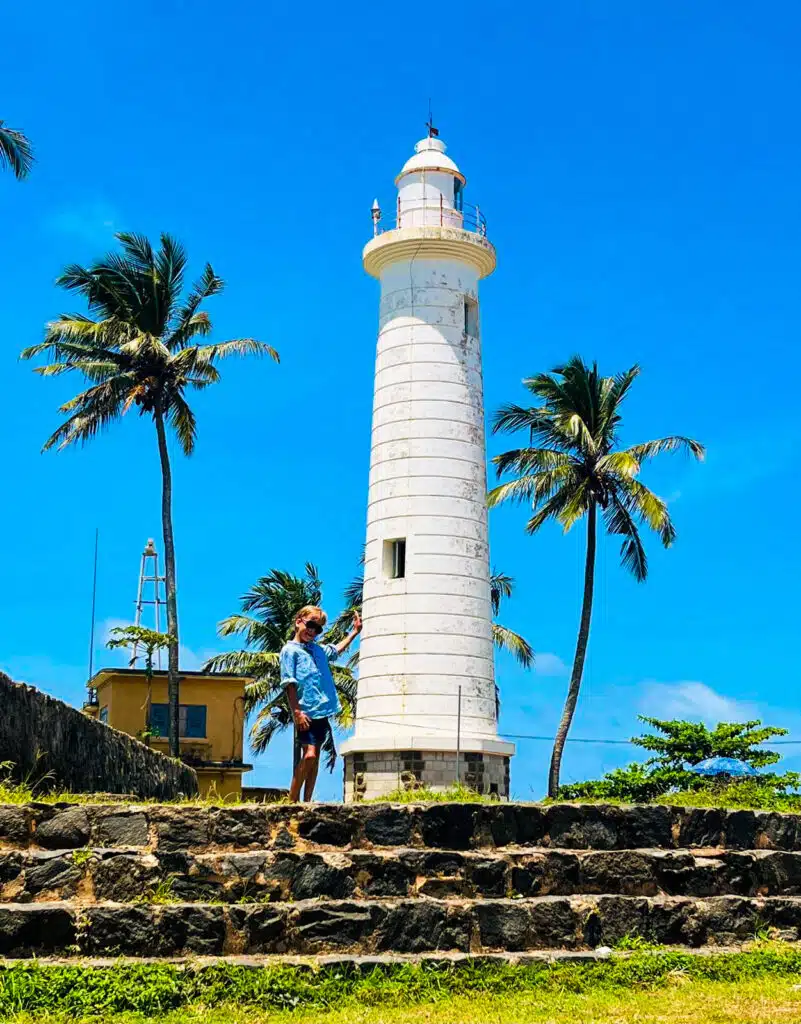
Best for: Travellers on the south coast, those interested in colonial history and boutique shopping
Not ideal for: Travellers who have no interest in history — the fort is the main event
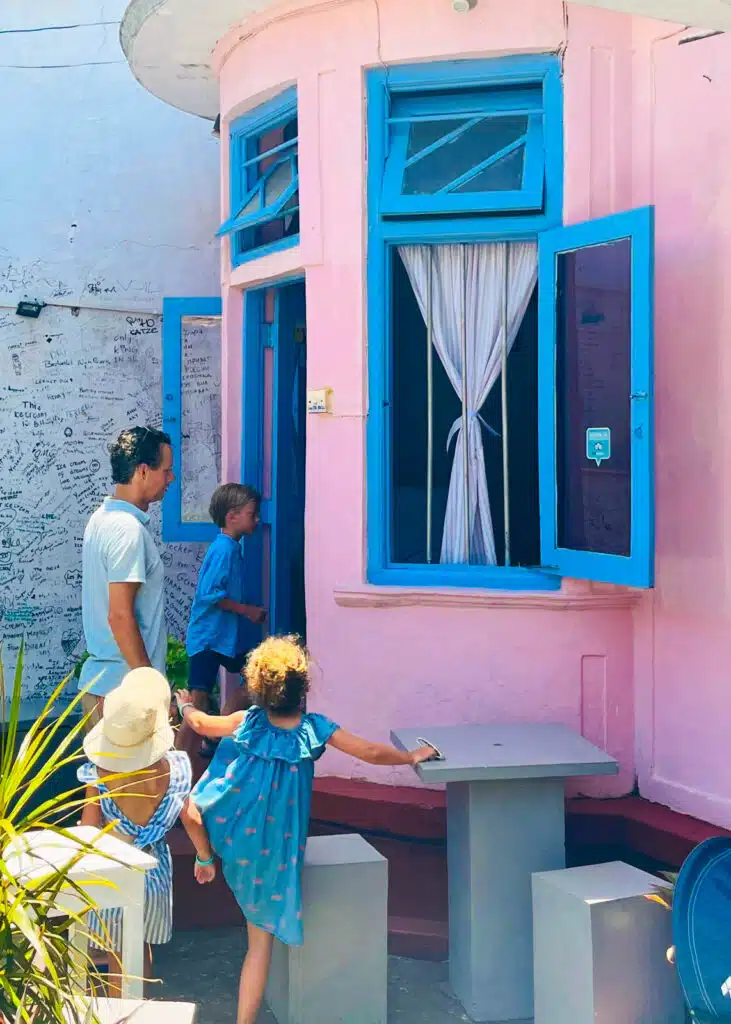
Galle Fort is one of the best preserved colonial towns in Asia. Built by the Portuguese in the 16th century and expanded by the Dutch in the 17th, the walled fort contains narrow cobblestone streets, Dutch-era churches, boutique hotels, independent restaurants, and art galleries — all within an area small enough to walk in two or three hours. A guided walking tour adds historical context that is easy to miss on your own.
The views from the ramparts over the Indian Ocean are particularly good at sunset. The fort is very walkable and can also be done independently with a good map.
Best season: November to April, when the south coast is in its dry season. The fort is open year-round, but visiting during the southwest monsoon (May–September) means occasional heavy downpours — not ideal for walking the ramparts or exploring the streets.
➡ For more things to do in Galle, check our full guide Galle Sri Lanka travel guide.
Where to stay: Fort Bazaar is a boutique hotel located inside the fort walls itself — staying here means you are a few minutes' walk from everything and can explore the ramparts early in the morning before the day visitors arrive. A well-restored property with good food and a rooftop terrace.
Negombo Tuk-Tuk City Tour
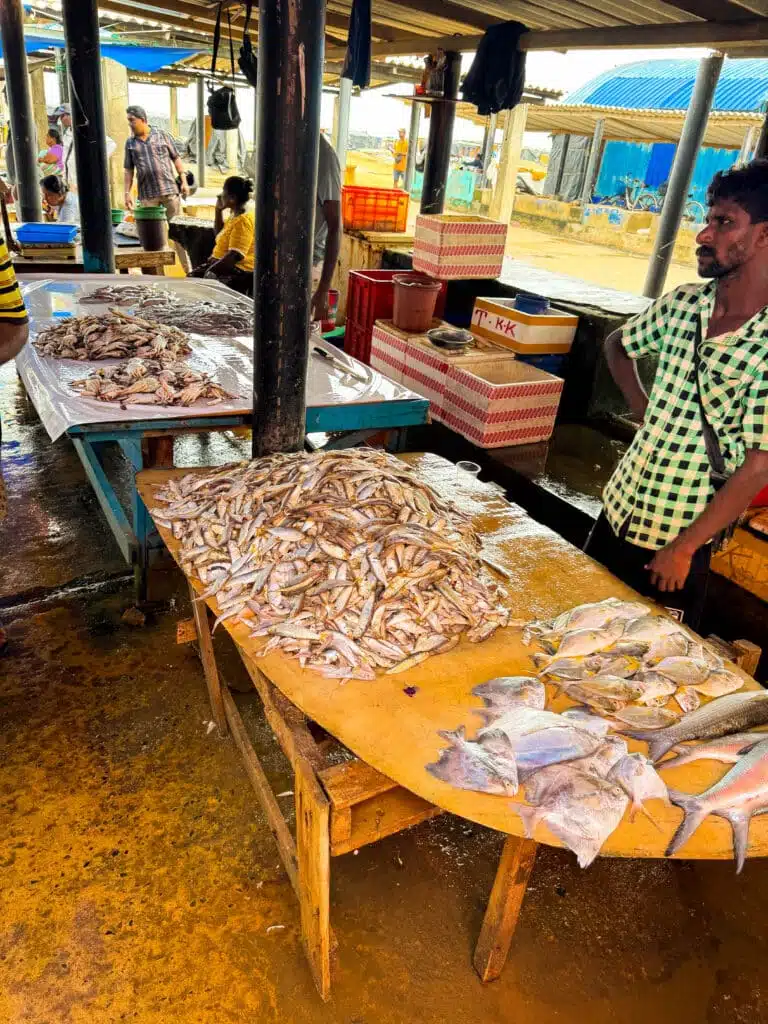
Best for: Travellers arriving or departing through Colombo airport, those with a day to fill near the airport
Not ideal for: Travellers with no time in the Negombo area
Negombo is the most common first or last stop in Sri Lanka given its proximity to Colombo's Bandaranaike Airport (about 8km). The town itself is not the most visited destination, but a tuk-tuk city tour gives a genuinely interesting introduction: fish market, Dutch canal, Catholic churches, lagoon boat safari, and local street food. It is a good low-key way to ease into or out of Sri Lanka without going straight to Colombo.
Best season: Year-round — Negombo works as a transit stop in any season and is less weather-dependent than beach or outdoor activity destinations.
➡ Read more about things to do in Negombo in your Negombo city guide.
Where to stay: Villa Shade is a quiet, well-run guesthouse in Negombo — a good value option for a first or last night near the airport, with enough comfort to start or end a trip on a calm note.
Kandy City Tour
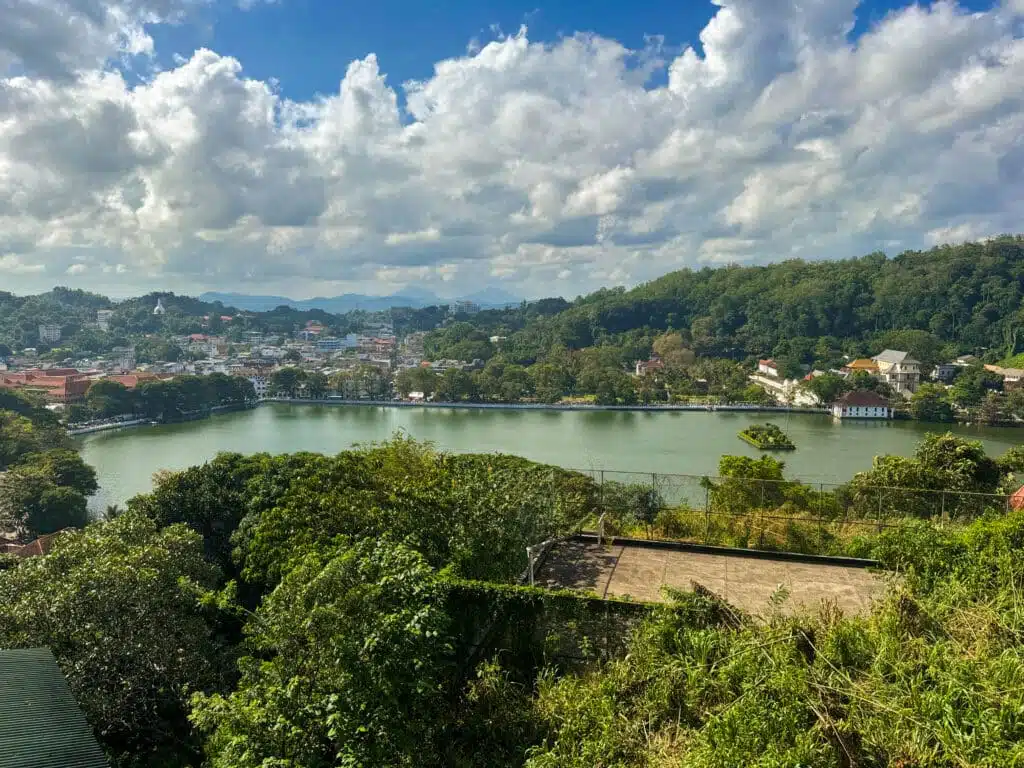
Best for: Travellers making the most of their time in Kandy between the temple and the train station
Not ideal for: Travellers with only a few hours — Kandy warrants at least a full day
Kandy is Sri Lanka's cultural capital, and a city tour can include the Temple of the Tooth, the Royal Botanical Gardens at Peradeniya, the lakeside promenade, local spice gardens, and the colourful Kandy market. Most tours also include a Kandyan cultural dance performance in the evening — a traditional show with fire dancing, acrobatics, and costumed performers.
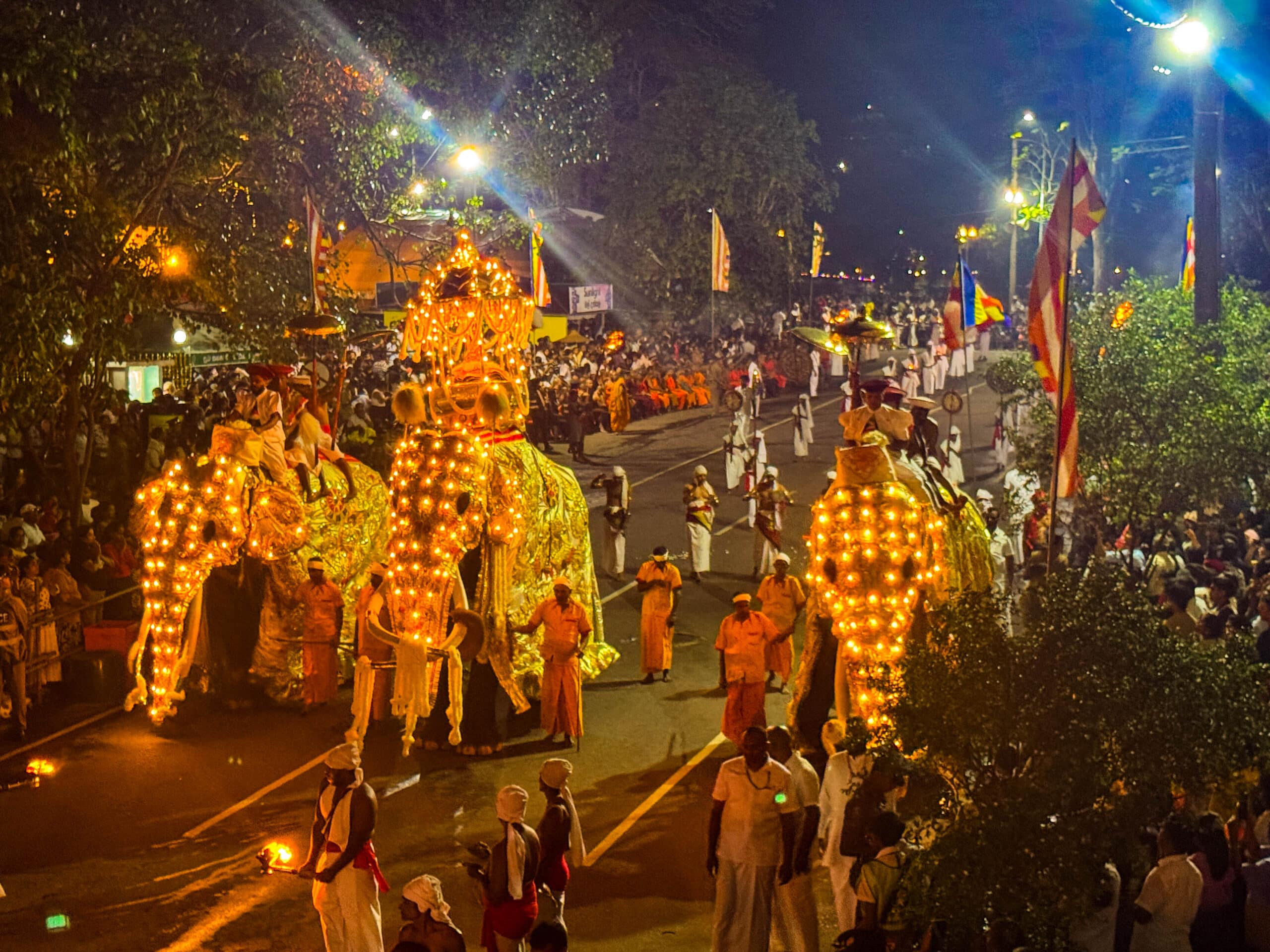
Best season: Year-round. Kandy is in the central highlands and has its own microclimate — drier than the coasts in many months. The Esala Perahera festival in July or August is one of the most spectacular events in Sri Lanka, with nightly processions of elephants, fire dancers, and drummers. If your dates align, it is worth planning around.
➡ For a full guide on Kandy, read our Kandy Sri Lanka travel guide.
Where to stay: The Glen Kandy is a peaceful hillside property with views over the surrounding hills — a good base for a day in Kandy that gives you somewhere calm to return to after a busy city itinerary.
Cooking Classes
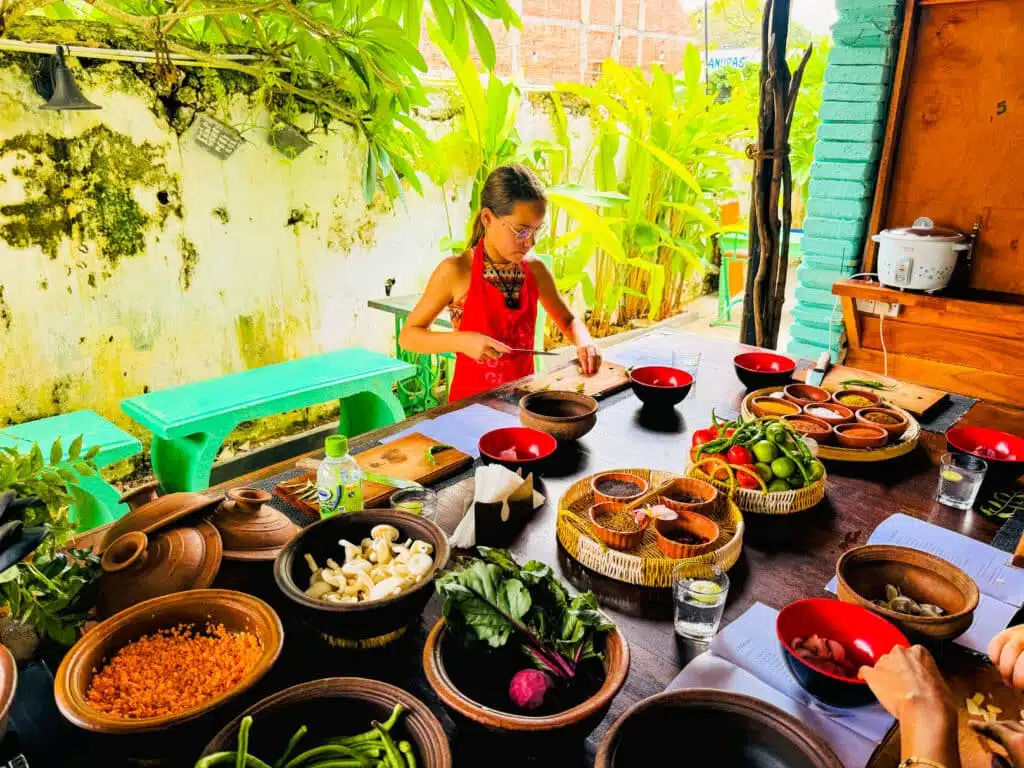
Best for: Food-curious travellers, anyone who wants a hands-on cultural experience
Not ideal for: Those with tight budgets — cooking classes are rarely the cheapest option on a menu
Sri Lankan cooking is distinct from Indian cuisine in ways that take most visitors by surprise: coconut milk is used heavily, the spice profiles are different, and the local rice and curry spreads are more elaborate than they might look. A cooking class is one of the best ways to understand the food culture beyond just eating it.
Classes typically involve a market visit, a tour of a home spice garden, and a 2–3 hour cooking session covering 4–6 dishes (dhal, coconut sambol, a fish or chicken curry, and a sweet). You eat what you cook, usually accompanied by the host family.
Cooking classes are available throughout Sri Lanka. Good options in several regions:
- Negombo — convenient for a first-day activity, includes market visit and local fish dishes
- Galle / South coast — often combined with a tour of the Galle Fort area
- Ella — smaller, more intimate classes in guesthouses and family homes
- Mirissa — often combined with a seafood focus
Things to Do in Ella
Ella deserves its own section because travellers often underestimate how much there is to do in and around this small hill town. Most people come for one or two nights and end up staying four or five.
Nine Arch Bridge
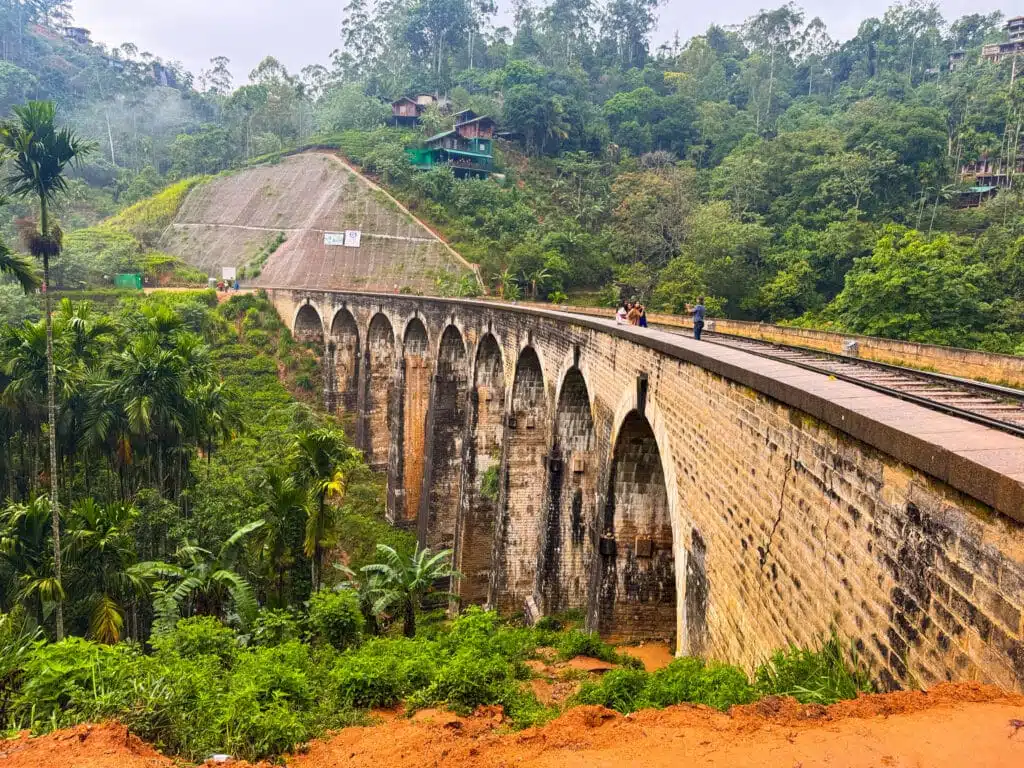
Best for: Photographers, train lovers, anyone passing through Ella
Not ideal for: Those expecting a full day out — this is a quick, beautiful stop
The Nine Arch Bridge is one of the most photographed structures in Sri Lanka — a colonial-era viaduct built from brick and stone (without steel, reportedly because materials were diverted to World War I). The bridge sits in the middle of tea plantations and jungle, and the best viewing point is a 10-minute walk from Ella town. Trains cross the bridge several times a day, and timing your visit for a crossing adds the most to the experience. Train schedules are available locally and online.
The Nine Arch Bridge is a short detour — it does not need more than an hour — and it naturally combines with a walk to Little Adam's Peak or the zipline.
Zipline and Sky Swing in Ella
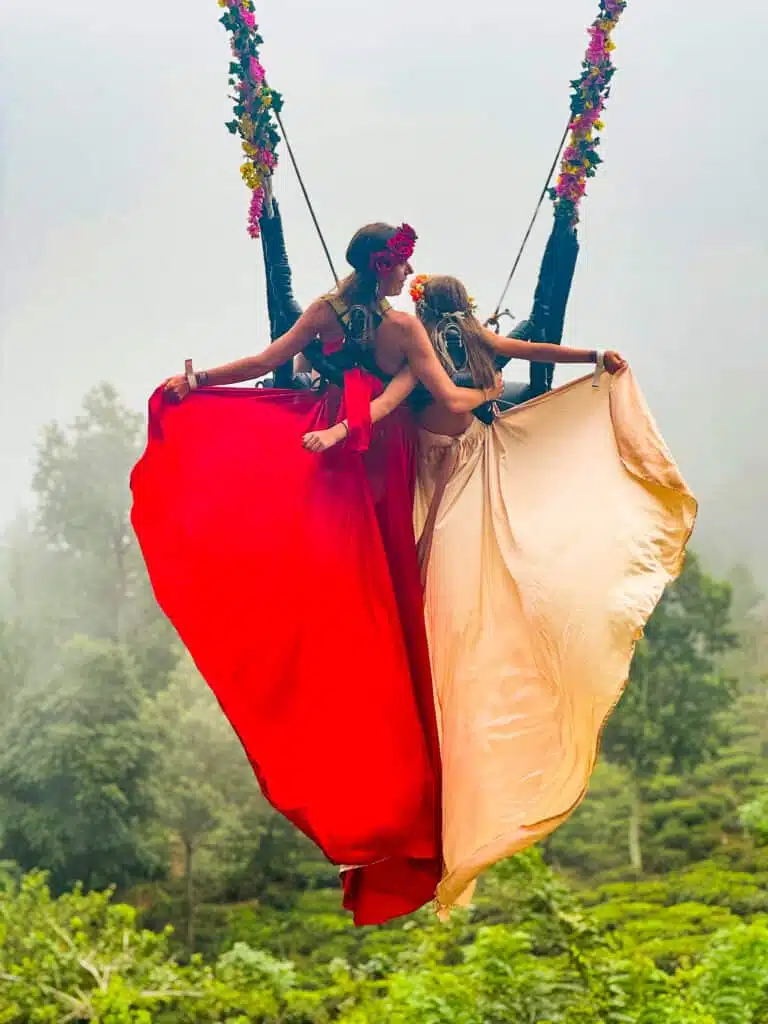
Best for: Travellers who want a short adrenaline activity with views
Not ideal for: Those who dislike heights
Both the zipline and the sky swing are part of Flying Ravana, an adventure park on the hillside above Ella. The zipline runs 300–400 metres over the valley, with views over the tea plantations and hills below. The zipline itself takes seconds, but the build-up — being harnessed and standing at the edge of the platform — is half the experience.
The sky swing is the one that produces the best photos. You are secured into a harness, pulled back, and released over the open valley. At the highest point of the arc, the drop below you is significant and the views stretch across the tea hills in every direction. It is over quickly, but the moment at the top — with the whole valley spread out below — is genuinely spectacular.
After the activities, the spot is worth lingering at. There is a pool bar with views over the same valley where you can have something to eat or drink while looking out over the hills — a good way to wind down after the adrenaline.
From our own experience: The swing is worth it for the photos alone. The viewpoint is open and unobstructed, and the light in the late afternoon makes for excellent shots. We recommend going in the second half of the day when the angle of the sun is better and the valley has more colour and depth.
Waterfalls Near Ella
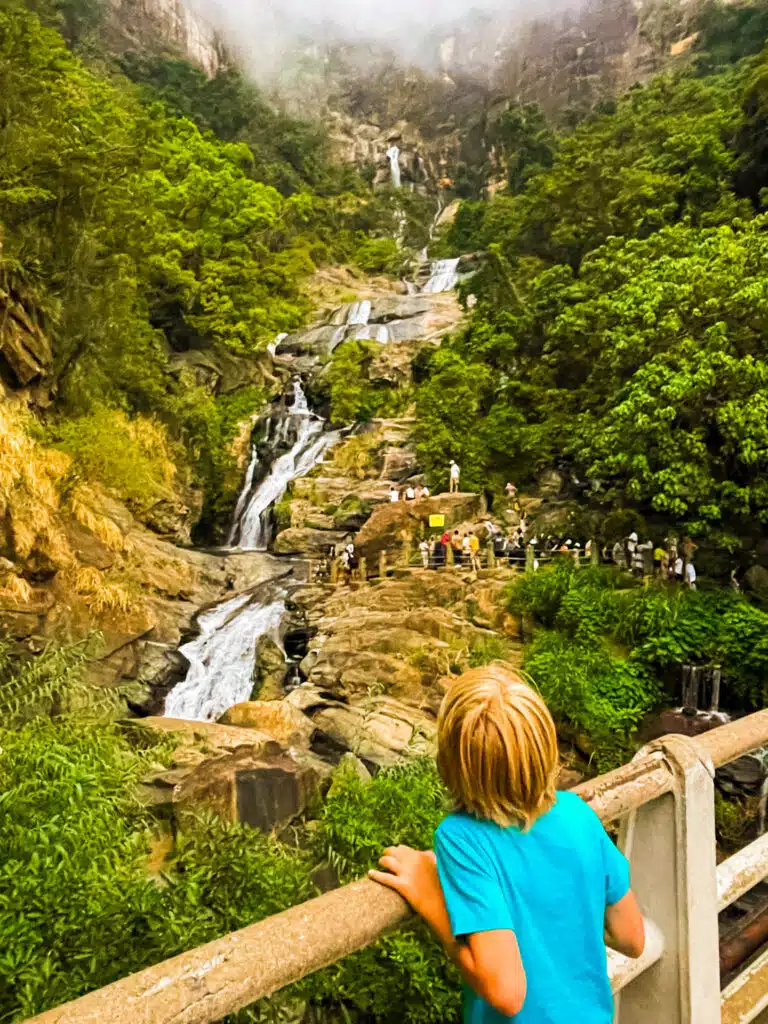
Ella and the surrounding hill country have several waterfalls within easy reach. The most popular is Diyaluma Falls, one of the highest waterfalls in Sri Lanka at 220 metres — a full-day excursion that includes pools above the falls suitable for swimming. Ravana Falls is directly on the main road into Ella and can be visited in 20 minutes. Bambarakanda Falls is further afield but among the most dramatic on the island.
Best season: April to June and October to November — the months just after the rains — when water volume is at its highest and the falls are most impressive. In the dry months, some smaller falls slow to a trickle, but Diyaluma and Ravana run year-round.
If you want to read all about the activities in Ella, check our full guide Ella Sri Lanka travel guide.
Where to stay: Nine Skies is a clifftop property above Ella with sweeping views over the valley — a good choice if you want to wake up to the landscape rather than the town. For a full overview of accommodation options in Ella across different budgets and styles, see our Ella Sri Lanka Hotels guide.
Temples & Ancient Cities
Sri Lanka's Cultural Triangle in the north-central region contains some of the most significant ancient sites in Asia. These are not quick visits — each site takes half a day to a full day to do justice to.
Temple of the Tooth, Kandy
Best for: Anyone visiting Kandy — this is the most sacred Buddhist temple in Sri Lanka
Not ideal for: Travellers with no interest in religious sites
Sri Dalada Maligawa — the Temple of the Tooth — houses a relic believed to be the tooth of the Buddha, and it is the most important Buddhist site on the island. The temple complex on the shores of Kandy Lake is architecturally striking, and the daily puja (worship ceremonies) at 6:30am, 9:30am, and 6:30pm are open to visitors. The atmosphere during puja, with incense, drums, and offerings, is unlike anything else in Sri Lanka.
Best season: Year-round. The temple is open daily and the puja ceremonies run regardless of season. If you visit during the Esala Perahera (July–August), the atmosphere around the temple and lake is extraordinary — but crowds and accommodation prices are both higher.
A guided tour adds considerably to the visit, explaining the historical context and the significance of the rituals.
Where to stay: Adigar's Manor is a characterful heritage property in Kandy with colonial-era architecture and a personal atmosphere — a fitting place to stay when visiting a city with this much history.
Dambulla Cave Temple
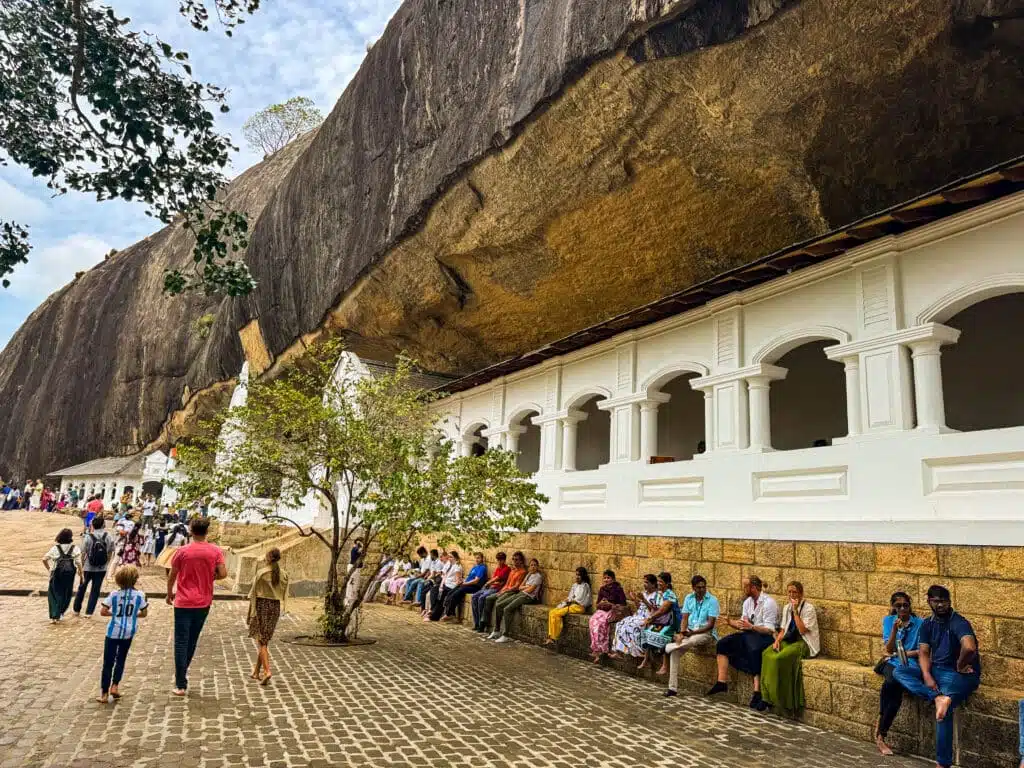
Best for: Travellers in the Cultural Triangle — this is one of Sri Lanka's most impressive temple sites
Not ideal for: Those who cannot manage the uphill walk to the caves
The Dambulla Cave Temple is a UNESCO World Heritage Site and the largest cave temple complex in Asia. The five caves contain over 150 Buddha statues and some of the most extensive cave paintings in the region — covering the ceilings and walls in a continuous sweep of colour. The site dates back to the 1st century BCE, with paintings added and restored through the centuries.
The site sits on a rocky outcrop above the town and requires a 15–20 minute uphill walk. Monkeys are everywhere — watch your belongings. Entry requires modest dress (shoulders and knees covered).
Best season: Year-round. The Cultural Triangle has a drier climate than the coasts, and the caves themselves are unaffected by weather. December to April is the most comfortable period for the uphill walk in terms of heat and rain.
Polonnaruwa & Anuradhapura
Best for: History-focused travellers with at least one full day per site
Not ideal for: Travellers who want quick stops — both sites are large and require time
Polonnaruwa is a 12th-century royal capital with well-preserved ruins including the Gal Vihara (four enormous rock-carved Buddha figures), the Royal Palace complex, and various temple ruins. It is smaller and more manageable than Anuradhapura, and the site can be covered by bicycle in a half day.
Anuradhapura is larger and older — a sacred city inhabited for over 1,000 years and home to some of the most important Buddhist sites in the world, including the Sri Maha Bodhi (a fig tree believed to be a cutting from the tree under which the Buddha attained enlightenment, planted in 288 BCE). The site is still an active place of worship, and the atmosphere here is distinctly different from the museum-like Polonnaruwa. Budget a full day for Anuradhapura.
Best season: Year-round, though the north-central region is most comfortable between December and April. Both sites are large and exposed — visiting in the midday heat of the dry season can be tiring. Start early and bring water.
Where to stay near Anuradhapura: Hummingbird Leisure Villa is a quiet, well-positioned guesthouse in Anuradhapura — a calm base for exploring the ancient city without staying in the busier town centre.
Whale Watching & Snorkelling
Whale Watching in Mirissa
Best for: Travellers on the south coast between November and April
Not ideal for: Those expecting guaranteed sightings — weather and whale movements vary
Mirissa is the most accessible place in Sri Lanka for whale watching, and the waters off the south coast are home to blue whales, sperm whales, and spinner dolphins. Blue whale sightings are possible between December and April; sperm whale sightings are more consistent year-round. Tours depart early (typically 6am) and last 3–5 hours.
Sightings are not guaranteed. On most days, dolphins are seen, and blue whale sightings are reported on the majority of trips during peak season — but weather can cancel departures and whales can be elusive. Go with realistic expectations.
Where to stay: Nisala Villas is a small, well-located property in Mirissa — close enough to the harbour to make the early morning whale watching departure easy, and a pleasant place to return to afterwards.
Whale Watching & Snorkelling in Trincomalee
Best for: Travellers on the east coast between May and September
Not ideal for: Those visiting outside the east coast dry season
Trincomalee on the east coast offers excellent marine life experiences during the summer months. Whale and dolphin watching is good from April to August, and Pigeon Island National Park — a short boat ride from Nilaveli beach — offers some of the best snorkelling in Sri Lanka with coral reefs and reef sharks. The clear, calm waters of Nilaveli make conditions particularly good for snorkelling.
Where to stay: Sandy Shores is a beachside property in Trincomalee with direct access to the water — a straightforward, well-located base for both whale watching departures and snorkelling trips to Pigeon Island.
Snorkelling in Mirissa and Unawatuna
For south coast snorkelling, Mirissa and Unawatuna are both good options during the November–April dry season. Unawatuna's sheltered bay has calm conditions and reef close to shore; Mirissa offers boat-based snorkelling trips that combine turtle encounters with reef exploration.
Where to stay near Unawatuna: Bellini Blue is a relaxed guesthouse right on the Unawatuna bay — a short walk from the reef and a good base for a few days of snorkelling, beach time, and day trips to Galle.
Final Thoughts on Things to Do in Sri Lanka
Sri Lanka's appeal as a travel destination comes from the density of good experiences in a small area. Within a two-week itinerary, you can move between mountains and coast, between ancient ruins and working ecosystems, between a tuk-tuk city tour and a predawn wildlife drive — without spending more than a few hours on the road between each.
The things to do in Sri Lanka we find most consistently rewarding are the ones that use the island's specific geography: the train journey through the tea hills, the safari parks that still have genuinely wild animal populations, the sunrise hikes that place you above the mist rather than walking through it. These are not experiences that can be replicated elsewhere on a modest budget.
Planning around the monsoon seasons is the most important practical decision you will make. Check which coast suits your travel dates, and structure your itinerary around that. For everything else — temple visits, cooking classes, train rides, the hill country — timing is less critical, and the experiences hold up across the year.
🐘 Plan Your Sri Lanka Trip
🏨 Still looking for the right stay? Browse all hotels in Sri Lanka — free cancellation on most rooms.
✈️ Flights: Compare routes and prices for flights to Sri Lanka.
🚂 Getting around: Book train tickets in advance (the scenic routes sell out), or arrange a private driver, tuk tuk rental or rental car.
📱 Stay connected: Get a Sri Lanka eSIM from Airalo before you fly. We use Airalo ourselves on every trip.
🔒 Travel insurance: Don't skip travel insurance for Sri Lanka — medical costs for tourists add up fast.
🎟️ Tours & activities: Browse safaris, cooking classes and tours across Sri Lanka.
💳 Money: Avoid card fees abroad with a free Revolut account.
Some links on this page are affiliate links. Booking through them costs you nothing extra and helps us keep this site running — thank you!
Frequently Asked Questions
What are the top things to do in Sri Lanka for first-time visitors?
The Kandy to Ella train ride, a wildlife safari in Yala or Udawalawe, Pidurangala Rock at sunrise, a walking tour of Galle Fort, and the Temple of the Tooth in Kandy cover the core range of experiences. Between these five activities, you get nature, history, scenery, culture, and a solid sense of how varied the island actually is. Most travellers find this combination alone fills a good two weeks.
How much time do I need in Sri Lanka to do most of these things?
Two weeks is a realistic minimum to cover the highlights without constantly rushing. That gives you enough time for the south coast, the hill country around Ella and Nuwara Eliya, the Cultural Triangle with Sigiriya, Dambulla, and Kandy, and a few days at the beach. Three weeks is more comfortable and allows you to add the east coast or slow down in the places you like most.
When is the best time to visit Sri Lanka?
It depends largely on which coast you want to visit. The south and west coasts are best from November to April, when the weather is dry and the sea is calm. The east coast — including Trincomalee and Arugam Bay — has its own dry season from May to September. The hill country is good year-round, though the mornings can be cool and misty in the wetter months.
Do I need to book safaris and train rides in advance?
Yes, especially for the Kandy to Ella train. Seats in 2nd class reserved carriages sell out weeks ahead in peak season (December to April), and attempting to travel without a reservation means standing in a crowded 3rd class carriage for six hours. Yala safaris should also be booked in advance during the high season. Wilpattu and Udawalawe have more flexibility, but advance booking is still worth doing.
Is surfing in Sri Lanka suitable for beginners?
Weligama is one of the more forgiving spots for first-time surfers in Asia. The beach break is consistent and manageable, surf schools are well-established, and instructors are used to working with complete beginners. Arugam Bay and Hikkaduwa have better waves but suit those with some prior experience. The water is warm year-round, which makes learning more comfortable than in cooler surf destinations.
Which national park is best for seeing elephants?
Udawalawe is the most reliable option for large elephant sightings — herds of 20 or more are common, and the open landscape makes them easy to spot from the jeep. If you visit between July and October, Minneriya's Gathering offers something on a completely different scale, with hundreds of elephants around the reservoir at once. Yala has elephants too, but its reputation is primarily built on leopard sightings.
Is the Nine Arch Bridge worth visiting?
Yes, though it works best as a short stop rather than a standalone half-day activity. The bridge is a 10-minute walk from Ella town, and the viewing point is easy to reach. The payoff is a genuinely beautiful scene — especially when a train crosses, which happens several times a day. It combines naturally with Little Adam's Peak or a walk towards Flying Ravana, making it easy to fit into a fuller morning.
Can I combine Sri Lanka and the Maldives in one trip?
Yes, and it is a very popular combination. Most travellers fly from Colombo's Bandaranaike Airport to Malé, which takes around 1.5 hours and is served by several airlines. The two destinations complement each other well — Sri Lanka offers variety and activity, the Maldives offers stillness and ocean. Many travellers spend 10 to 14 days in Sri Lanka and then add 5 to 7 nights in the Maldives at the end.
Related Blogs
Other Activities Blogs
Tea Plantation Tours in Sri Lanka: Best Areas & Stays
Kandy to Ella Train Ride: Best Seats, Stops & Hotels Along the Route
Best Beaches in Sri Lanka: A Guide by Coast & Season
Esala Perahera Festival in Kandy: What It Is, How It Works & Where to Stay
Safari in Sri Lanka: The Best National Parks for Wildlife
Pidurangala Rock Hike: Sri Lanka’s Best Sunrise Viewpoint Opposite Sigiriya
Other Sri Lanka Blogs
Best Hotels in Sri Lanka: How to Choose Where to Stay — by Region & Value
Where to Stay in Sri Lanka: Best Hotels by Travel Style
Sri Lanka Travel Itinerary: Custom Plans for Beach Lovers, City Explorers, and Wildlife Adventurers
Sri Lanka Regions Explained: How to Choose the Best Areas for Your Trip
Best Cities to Visit in Sri Lanka: A Practical Guide to Regions, Routes & City Bases
Best Time to Visit Sri Lanka: Weather, Seasons & Travel Tips
Sri Lanka Weather by Month: What to Expect Each Season as a Traveller
Getting Around Sri Lanka: Ultimate Guide to Transport, Trains, Tuk-Tuks & Easy Trip Planning
Is Sri Lanka Expensive to Travel? Budget, Costs & Money-Saving Tips for Your Trip
Sri Lanka Travel Guide: Visa Requirements, Vaccination & Local Travel Tips