


Table of Contents
There’s a stillness in Wilpattu Sri Lanka that feels different from anywhere else on the island. No lines of jeeps. No engines idling around a single sighting. Just forest, open villus reflecting the sky, and the quiet sense that something might move in the trees at any moment.
As the largest national park in the country, Wilpattu Sri Lanka offers space — not only in scale, but in atmosphere. It’s where leopard encounters feel unhurried, where sloth bear season shapes travel plans, and where a safari can stretch deeper than expected. We arrived thinking half a day would be enough. It wasn’t.
This guide walks you through what makes Wilpattu unique, the wildlife you can realistically expect, when to visit, how to plan your safari properly, and where to stay — so you can decide if this is the right wilderness chapter for your Sri Lanka itinerary.
In a Rush?
These are my Favourite Hotels in Wilpattu
- ⭐ ⭐⭐ Taru Villas – Wilpattu → Click here for rates & availability
- ⭐ ⭐ Thamaravila – Wilpattu → Click here for rates & availability
- ⭐ The Backwaters Lodge – Wilpattu → Click here for rates & availability
Wilpattu Sri Lanka at a Glance
If you’re quickly comparing safari options in Sri Lanka, this overview gives you the key facts about Wilpattu National Park — from wildlife highlights to jeep regulations and best visiting months.
| Category | Details |
|---|---|
| Location | Northwest Sri Lanka, near Anuradhapura |
| Park Size | Approx. 1,300 km² (largest national park in Sri Lanka) |
| Famous For | Leopards, sloth bears, villus (natural lakes) |
| Jeep Limit | 150 jeeps per day (strictly regulated) |
| Best Time to Visit | May – September (dry season) |
| Sloth Bear Season | May – July (palu fruit season) |
| Safari Duration | 4-hour half-day or full-day safaris |
| Typical Safari Cost | $70–$150 per person |
| Nearest Cultural Site | Anuradhapura (approx. 1 hour) |
| Ideal For | Travellers seeking a quiet, uncrowded safari |
If you already know you want to include Wilpattu in your itinerary, you can secure your jeep in advance with this full-day Wilpattu safari with experienced naturalist guides — especially recommended during the dry season when spots fill quickly.
Why Wilpattu Sri Lanka Is the Island’s Premier Wilderness Safari
Travellers often compare Wilpattu vs. Yala, especially when comparing Sri Lanka safari options. Yala is famous for its high leopard visibility—but also for heavy traffic, queues, and crowded sightings. In contrast, Wilpattu Sri Lanka offers the opposite: a vast, quiet, and truly wild safari landscape, where encounters feel intimate and unhurried.
Its dry-zone forest, dotted with villus and open glades, allows wildlife to roam freely across an untouched wilderness.
If you want a safari that feels remote, authentic, and deeply connected to the land, Wilpattu Sri Lanka is often the better choice—especially for travellers seeking a quieter alternative to Yala.

Jeep Regulations: Why Wilpattu Feels Truly Uncrowded
One of the biggest advantages of a safari in Wilpattu Sri Lanka is the strict regulation on the number of jeeps allowed inside the park each day. As of 2025, only 150 jeeps per day are permitted to enter. This limit preserves the park’s peaceful atmosphere and prevents the congestion seen in other popular safari destinations.
For comparison (including park size):
- Wilpattu National Park: 150 jeeps per day — park size: approx. 1,300 km²
- Udawalawe National Park: around 400 jeeps per day — park size: approx. 300 km²
- Yala National Park: up to 500 jeeps per day — park size: approx. 1,000 km²
This regulation is one of the key reasons Wilpattu remains the preferred choice for travellers seeking a quiet, truly wild safari. Instead of crowded sightings and lines of vehicles, you experience space, stillness, and uninterrupted wildlife encounters—something increasingly rare in Sri Lanka’s safari landscape.
If you’re considering elephant-focused safaris instead, see our complete Udawalawe Safari Guide.
Why this matters
Fewer jeeps mean:
- More ethical and respectful wildlife viewing
- Better chances of solitary sightings
- No rush or competition during encounters
- A far more immersive wilderness experience
This is one of the many reasons why, when comparing Wilpattu vs Yala, many travellers choose Wilpattu for a more authentic Sri Lanka safari experience.
The Villus: Wilpattu’s Unique Ecosystem
The signature feature of this park is its villus—natural, sand-rimmed lakes that form shallow basins across the landscape. These lakes are the lifeline of the ecosystem, especially in the dry season.
They attract leopards, elephants, water buffalo, crocodiles, storks, eagles, and countless smaller mammals and reptiles. The stillness of a villu is almost cinematic, making this one of the best spots in Sri Lanka for nature photography.

The Big Three: Wildlife to Spot in Wilpattu National Park
Before diving into each animal, it’s worth knowing why these three species stand out. Wilpattu Sri Lanka is home to an extraordinary mix of predators, rare mammals, and large grazing animals—all thriving in an environment shaped by solitude, dense forest, and the lifeline of the villus. These “Big Three” are the park’s main attractions, and spotting even one of them can turn a safari into an unforgettable experience. With the right timing and a bit of patience, you might even encounter all three in a single day. Strong, action-focused sightings are what make Wilpattu feel so raw and untamed, giving travellers moments they’ll replay long after the safari ends.
The Elusive Sri Lankan Leopard
The park is known for having one of the highest leopard densities in the country. Sightings are likely, especially in the early morning around the villus or during the late afternoon when leopards patrol the open tracks. Because the park is so vast and quiet, every encounter feels almost cinematic—your jeep may sit in complete stillness for long stretches before a leopard suddenly appears at the edge of a villu or crosses the sandy track just meters ahead.
While Yala’s Block 1 has famously visible leopards, Wilpattu Sri Lanka offers a different experience—a sighting that feels earned, shaped by silence, patience, and the raw atmosphere of the largest national park in Sri Lanka. Instead of crowds gathering around a single sighting, leopards here often emerge in complete solitude, stepping out of the forest shadows or resting under low branches with no other jeeps in sight.
We experienced exactly that on our own full-day safari. At a small villu where leopards had been seen on the previous days, the deer nearby suddenly grew restless — and moments later a leopard broke from the tree line and chased a large male deer straight across the clearing. The deer escaped, but watching an actual hunt unfold just ahead of us, with no other jeep in sight, was the kind of raw, unscripted moment Wilpattu is made for.

The Endangered Sri Lankan Sloth Bear
If you dream of seeing the island’s rare Sri Lankan sloth bear, this park is one of the best places in the country to do so. These shaggy, black bears are most visible during the palu season (May–July), when the forest fills with ripe palu fruit and the bears wander between the villus in search of their favourite food.
During this period, sightings become far more frequent—often in broad daylight—and many wildlife enthusiasts plan their entire trip around this seasonal highlight. The combination of fewer crowds, quiet forest trails, and the raw wilderness of Wilpattu Sri Lanka makes these encounters feel even more special.
Elephant Herds, Water Buffalo & Crocodiles
While the famous Asian elephant is more abundant in other regions, the park still hosts small herds, often seen near the villus where water and shade draw wildlife throughout the day. Alongside the elephants, you’ll spot impressive water buffalo, crocodiles basking on the banks, spotted deer, wild boar, jackals, and a rich variety of aquatic life that thrives in the park’s quiet, undisturbed environment.
Birdwatchers will also love the range of waders and waterfowl attracted to the villus, making this part of Wilpattu Sri Lanka especially rewarding for those who enjoy observing birdlife up close.

Planning Your Wilpattu Safari: When, Where & How to Book
Before you head into the details of timings, seasons, and booking tips, it’s helpful to know that planning a safari here is slightly different from planning one in Yala or Udawalawe. Wilpattu’s sheer size, quieter atmosphere, and regulated jeep entry mean that logistics matter more here—especially for first-time travellers.
Best Time to Visit Wilpattu: Dry vs. Wet Season
The dry season (May–September) is the optimal time for wildlife sightings. The forest is less dense, and animals gather around the villus, making it easier to spot leopards, bears, and elephants.
The wet season (October–December) transforms the park into a lush, green landscape. It’s slightly quieter, and birdwatchers especially enjoy this time.
For a broader seasonal overview across the island, read our Best Time to Visit Sri Lanka Guide.

Safari Options: Morning, Afternoon, or Full Day?
Morning safaris (6:00–10:00) are ideal for predators, when the light is soft and animals are still active. Afternoon safaris (14:00–18:00) are quieter and peaceful, with a lovely golden hour over the villus.
But if you want the best experience, choose a full-day safari—and we say this from personal experience. We originally booked a morning safari, thinking four hours would be enough. But around 8:00 AM, completely absorbed by the stillness and the wildlife activity, we realised we didn’t want the experience to end. With a bit of luck and the help of our amazing guides, we managed to extend our tour on the spot.
This turned out to be the best decision we made. A full day allowed us to venture much deeper into Wilpattu Sri Lanka, far beyond the areas most half-day tours reach. The deeper we went, the wilder and more untouched the park became—and the more we saw. From unexpected leopard moments to herds of deer and endless birdlife, the variety was incredible.
Explore available Wilpattu safari experiences below and secure your preferred time slot in advance, especially during peak dry season months.
And even with children, a full day was absolutely manageable. Our kids (7 and 10) loved every moment—so much so that when the clock hit 17:00, they were genuinely disappointed we had to leave.
Typical costs:
- Half-day safari (with driver/guide — self-driving is not allowed in Wilpattu): USD $70–$90 per person
- Full-day: USD $130–$150 per person
- Park entrance fees: most of the times included in the safari price

Where to Stay: Accommodation & Accessibility
Wilpattu offers a surprisingly wide range of places to stay, from nature-immersed boutique villas to luxury tented camps and comfortable mid-range lodges. Most accommodations are located around the Hunuwilagama entrance, making it easy to join early-morning safaris. Because this park is quieter and more spread out than parks like Yala or Udawalawe, staying close to the park gate saves time and ensures you reach the best wildlife areas early.
Below is a curated selection of stays near Wilpattu—each with a short description, approximate pricing for two people, and what makes them special.
Thamaravila (Luxury – Anuradhapura area)
A stay at Thamaravila is ideal if you’re looking for eco-luxury surrounded by total privacy.

Rating (Booking.com): 9.0
Price per night for 2: $600
Why stay here: A stunning eco-luxury property built entirely from natural materials, offering spacious villas, serene gardens, and exceptional privacy. What makes Thamaravila especially convenient is that stays are fully inclusive — including all meals (excluding drinks) and a professionally organised Wilpattu safari experience. This makes it an effortless choice if you want a seamless, high-quality wildlife stay without arranging separate tours.
This is where we stayed. If you love the idea of waking up to birdsong and heading straight out on game drives, check out our Thamaravila Wilpattu review, this is a boutique tented villa property designed around immersive safari experiences.
The Backwaters Lodge (Boutique – Wilpattu area)
The Backwaters Lodge is perfect for travellers who want a boutique stay close to nature.
Rating (Booking.com): 9.2
Price per night for 2: $100
Why stay here: Located right by a waterway with beautiful wildlife views, this lodge blends rustic charm with comfort. Guests love the calm setting, friendly staff, and early-morning birdlife.
Wilpattu Safari Resort (Budget – Near park entrance)
Wilpattu Safari Resort is a convenient option for those wanting to stay as close as possible to the park gate.
Rating (Booking.com): 9.0
Price per night for 2: $90
Why stay here: One of the closest accommodations to the gate. Spacious rooms, good food, and the convenience of being picked up for your safari right at the hotel.
Taru Villas (Luxury – Anuradhapura access)
Taru Villas is a stylish choice with spacious villas and a beautiful pool area for post-safari relaxation

Rating (Booking.com): 9.6
Price per night for 2: $1475
Why stay here: Stylish, modern villas ideal for travellers who want comfort and space. The pool area is a highlight, perfect for cooling down after a dusty safari.
Leopard Trails Wilpattu (Luxury Tented Camp – Premium)
For an unforgettable tented safari experience, Leopard Trails Wilpattu offers expert naturalists, gourmet dining, and luxury in the wild.

Rating (Booking.com): 8.4
Price per night for 2: $740
Why stay here: The most luxurious safari camp near Wilpattu Sri Lanka. Expect gourmet dining, expert naturalists, stunning tents, and top-tier safari experiences. Ideal for honeymooners or luxury adventure travellers.
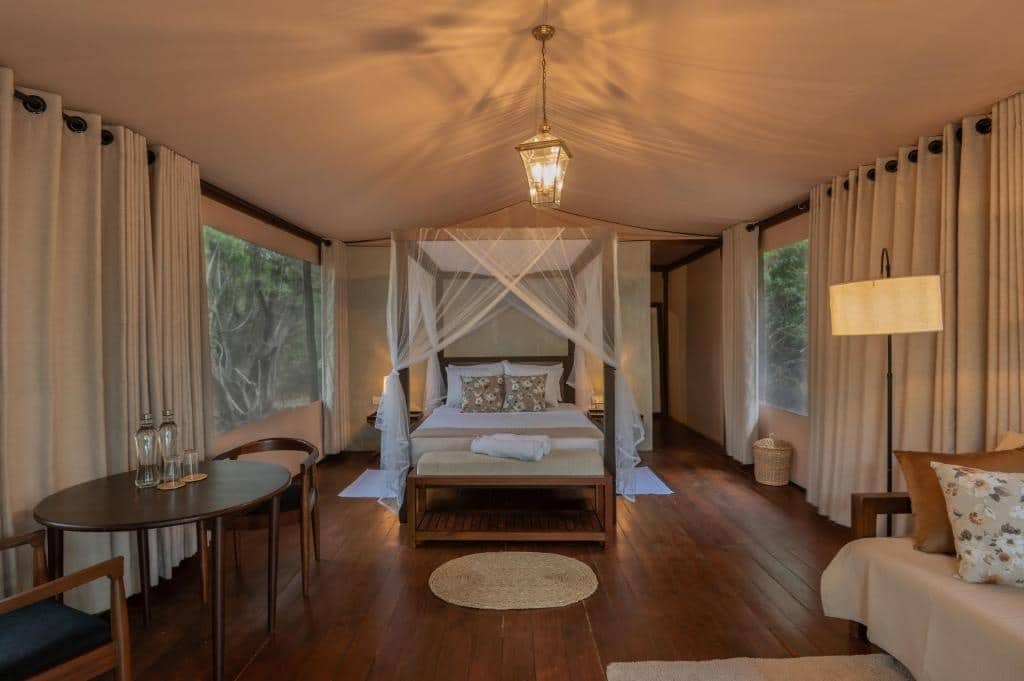
Wilds Wilpattu (Mid-Range & Nature-Focused)
Wilds Wilpattu is perfect for mid-range travellers who want a simple stay surrounded by pure nature.
Rating (Booking.com): 9.1
Price per night for 2: $180
Why stay here: A simple but charming eco-stay surrounded by pure nature. Perfect for mid-range travellers who still want to feel close to the wilderness.
Ceylon Resort Wilpattu (Budget – Puttalam side)
If you prefer a quiet, green setting, Ceylon Resort Wilpattu offers comfort and calm at a great price point.

Rating (Booking.com): 9.6
Price per night for 2: $85
Why stay here: A peaceful resort surrounded by lush greenery, offering modern rooms and a quiet atmosphere. Great value for couples or families looking for comfort without the high price tag.
To round off your trip planning, compare options across the island with this handpicked collection of the Best Hotels in Sri Lanka — by region, travel style & value, from boutique retreats to family-friendly resorts.
Best Safari Operators for Wilpattu: Who to Book With
Booking your safari with the right organisation makes a huge difference here. Because the park is vast and sightings rely heavily on a guide’s knowledge of the terrain, it’s worth choosing an operator with experienced trackers, well-maintained jeeps, and a strong ethical approach to wildlife viewing.
Below is a trusted recommendation based on consistent guest reviews and first-hand experiences.
Thamaravila Safari Experience
Even if you’re not staying at Thamaravila, their safari organisation is one of the most reliable and respected in the area.
- Guides: Highly trained naturalists with deep knowledge of Wilpattu’s behaviour patterns, migratory movements, and lesser-known viewing spots.
- Jeep quality: Comfortable, well-maintained jeeps designed for long full-day safaris.
- Ethical approach: They strictly follow wildlife-friendly practices and avoid crowding animals.
- Flexibility: Full-day and half-day safaris must be booked in advance. Last-minute changes are usually not possible, and our own experience was an exception thanks to another family cancelling their afternoon slot.
Many travellers praise Thamaravila for offering a smooth, professional, and personalised safari experience that feels unhurried and genuine—perfect for first-time visitors who want to experience Wilpattu Sri Lanka at its best. Instead of booking a standalone safari, many travellers choose to stay at Thamaravila Wilpattu, where safari experiences are seamlessly arranged as part of your stay — ideal if you want everything organised professionally and ethically.
You can also ask your accommodation to arrange a safari for you, but if you want reliability and expertise, Thamaravila is an excellent primary choice.

Combining Wilpattu with Your Sri Lanka Itinerary
If you’re exploring the Cultural Triangle, the park fits naturally into your route. From Anuradhapura, it’s less than an hour’s drive, making it an easy and logical next stop after visiting ancient cities. Because Wilpattu sits right at the edge of the Cultural Triangle, it’s one of the best places to add an authentic wilderness experience to your itinerary. The contrast between historic sites and raw nature makes this transition especially rewarding, and many travellers choose Wilpattu as the perfect bridge between culture and safari in Sri Lanka.
Wilpattu also fits beautifully into our 10 Days Sri Lanka Itinerary, where safari, culture, and beach time are carefully balanced for first-time travellers.
If you have more time, the 2 Week Sri Lanka Itinerary allows for a slower pace and deeper wildlife experiences.

Is Wilpattu Worth it?
Wilpattu Sri Lanka is absolutely worth it for travellers who value space, silence, and a more natural safari rhythm. Wildlife can be harder to spot than in busier parks, but that’s part of what defines the experience here. Sightings feel earned rather than staged, and the limited number of jeeps preserves a sense of true wilderness that is increasingly rare.
For us, Wilpattu Sri Lanka was the most memorable safari park on the island. It felt far less crowded, and when wildlife finally appeared, the moment was genuinely rewarding. We had an excellent guide who read the landscape beautifully. One thing we would strongly recommend: choose a full-day safari. Going deeper into the park made a noticeable difference and significantly increased our chances of varied sightings.
🐘 Plan Your Sri Lanka Trip
🏨 Still looking for the right stay? Browse all hotels in Sri Lanka — free cancellation on most rooms.
✈️ Flights: Compare routes and prices for flights to Sri Lanka.
🚂 Getting around: Book train tickets in advance (the scenic routes sell out), or arrange a private driver, tuk tuk rental or rental car.
📱 Stay connected: Get a Sri Lanka eSIM from Airalo before you fly. We use Airalo ourselves on every trip.
🔒 Travel insurance: Don't skip travel insurance for Sri Lanka — medical costs for tourists add up fast.
🎟️ Tours & activities: Browse safaris, cooking classes and tours across Sri Lanka.
💳 Money: Avoid card fees abroad with a free Revolut account.
Some links on this page are affiliate links. Booking through them costs you nothing extra and helps us keep this site running — thank you!
Frequently Asked Questions Wilpattu Sri Lanka
Is Wilpattu Sri Lanka better than Yala for a safari?
Wilpattu Sri Lanka is ideal if you prefer a quieter, more spacious safari experience. While Yala is known for high leopard visibility, it can feel busy. Wilpattu limits jeep numbers and covers a vast area, creating a more immersive wilderness atmosphere. Sightings may require patience, but encounters often feel more private and natural.
What wildlife can you see in Wilpattu Sri Lanka?
Wilpattu Sri Lanka is famous for Sri Lankan leopards and endangered sloth bears, particularly during the palu fruit season (May–July). You may also see elephants, water buffalo, crocodiles, spotted deer, jackals, and rich birdlife around the villus. The mix of forest and open lakes supports diverse wildlife throughout the year.
When is the best time to visit Wilpattu Sri Lanka?
The best time to visit Wilpattu Sri Lanka is during the dry season from May to September. Wildlife gathers around the villus, vegetation is thinner, and sightings are generally easier. The wetter months from October to December bring lush scenery and fewer visitors, which can be appealing for birdwatchers and photographers.
How much does a safari in Wilpattu Sri Lanka cost?
A half-day safari in Wilpattu Sri Lanka typically costs between USD $70–$90 per person, while a full-day safari ranges from USD $130–$150. Prices usually include a driver and guide, as self-driving is not permitted. Full-day safaris offer greater flexibility and access to deeper areas of the park. You can book a Wilpattu safari online in advance to secure your preferred time slot in peak season.
How long should you spend in Wilpattu Sri Lanka?
Most travellers spend one night and take either a half-day or full-day safari. If wildlife is a key focus, staying two nights allows for multiple game drives and better chances of varied sightings. A full-day safari provides a more comprehensive experience of Wilpattu Sri Lanka’s vast landscape. Staying at an all-inclusive lodge such as Thamaravila Wilpattu, which arranges its own game drives, makes early starts effortless.
Can Wilpattu Sri Lanka be combined with the Cultural Triangle?
Yes, Wilpattu Sri Lanka fits naturally into a Cultural Triangle itinerary. The park is located about an hour from Anuradhapura, making it an easy addition after exploring ancient sites. Many travellers use Wilpattu as a transition between cultural highlights and other regions such as the hill country or the coast.
Related Blogs
Other Sri Lanka Activities
Pidurangala Rock Hike: Sri Lanka's Best Sunrise Viewpoint
Safari in Sri Lanka: The Best National Parks for Wildlife
Best Beaches in Sri Lanka: A Guide by Coast & Season
Tea Plantation Tours in Sri Lanka: Best Areas & Stays
Kandy to Ella Train Ride: Best Seats, Stops & Hotels Along the Route
Esala Perahera Festival in Kandy: What It Is, How It Works & Where to Stay
Other Sri Lanka Blogs
Best Hotels in Sri Lanka: How to Choose Where to Stay
Where to Stay in Sri Lanka: Best Hotels by Travel Style
Sri Lanka Regions Explained: How to Choose the Best Areas for Your Trip
Best Cities to Visit in Sri Lanka: A Practical Guide to Regions, Routes & City Bases
Sri Lanka Travel Itinerary: Custom Plans for Beach Lovers, City Explorers, and Wildlife Adventurers
Top Things to Do in Sri Lanka: The Most Rewarding Experiences on the Island
Best Time to Visit Sri Lanka: Weather, Seasons & Travel Tips
Sri Lanka Weather by Month: What to Expect Each Season as a Traveller
Getting Around Sri Lanka: Ultimate Guide to Transport, Trains, Tuk-Tuks & Easy Trip Planning
Is Sri Lanka Expensive to Travel? Budget, Costs & Money-Saving Tips for Your Trip
Sri Lanka Travel Guide: Visa Requirements, Vaccination & Local Travel Tips

