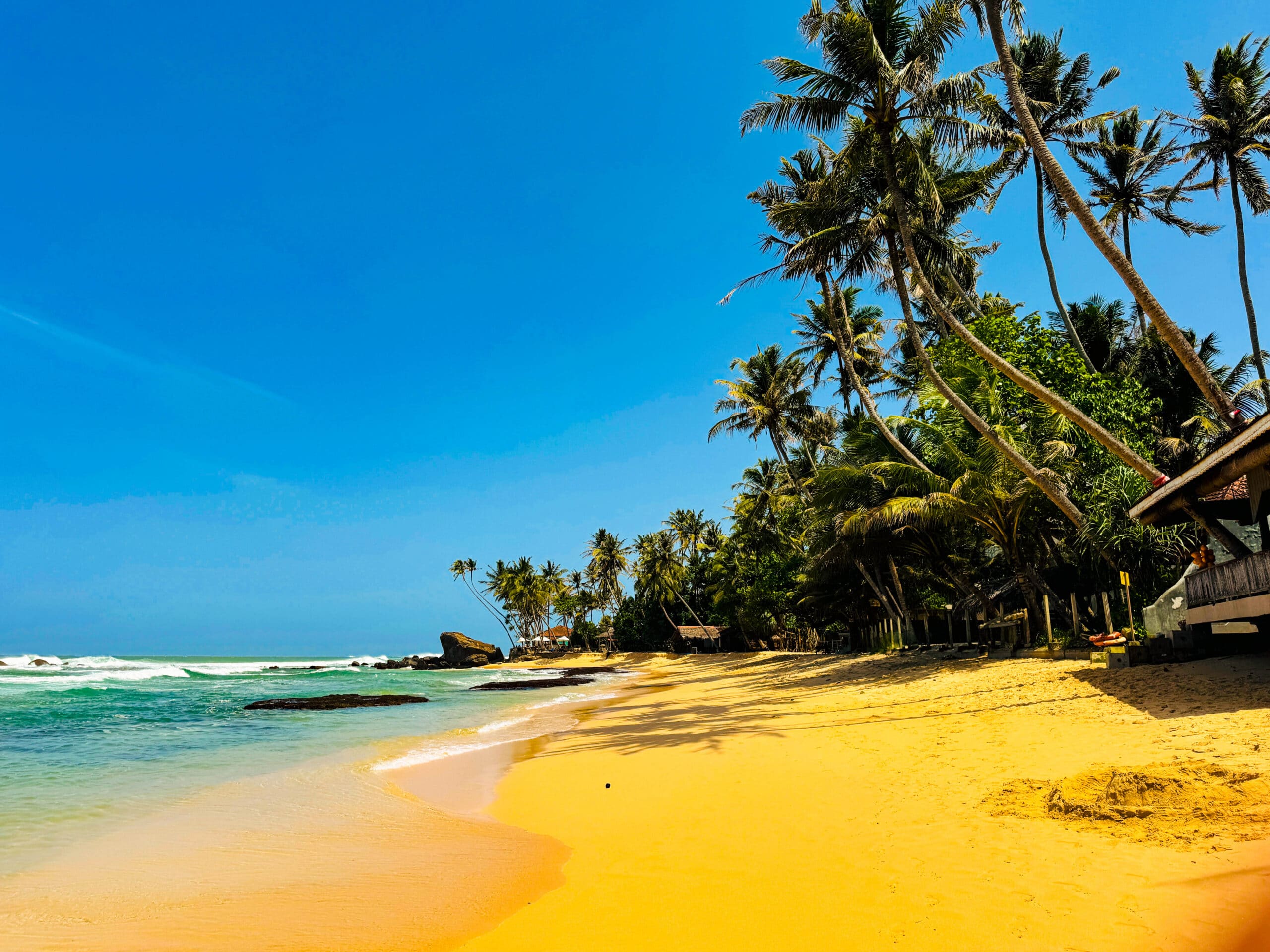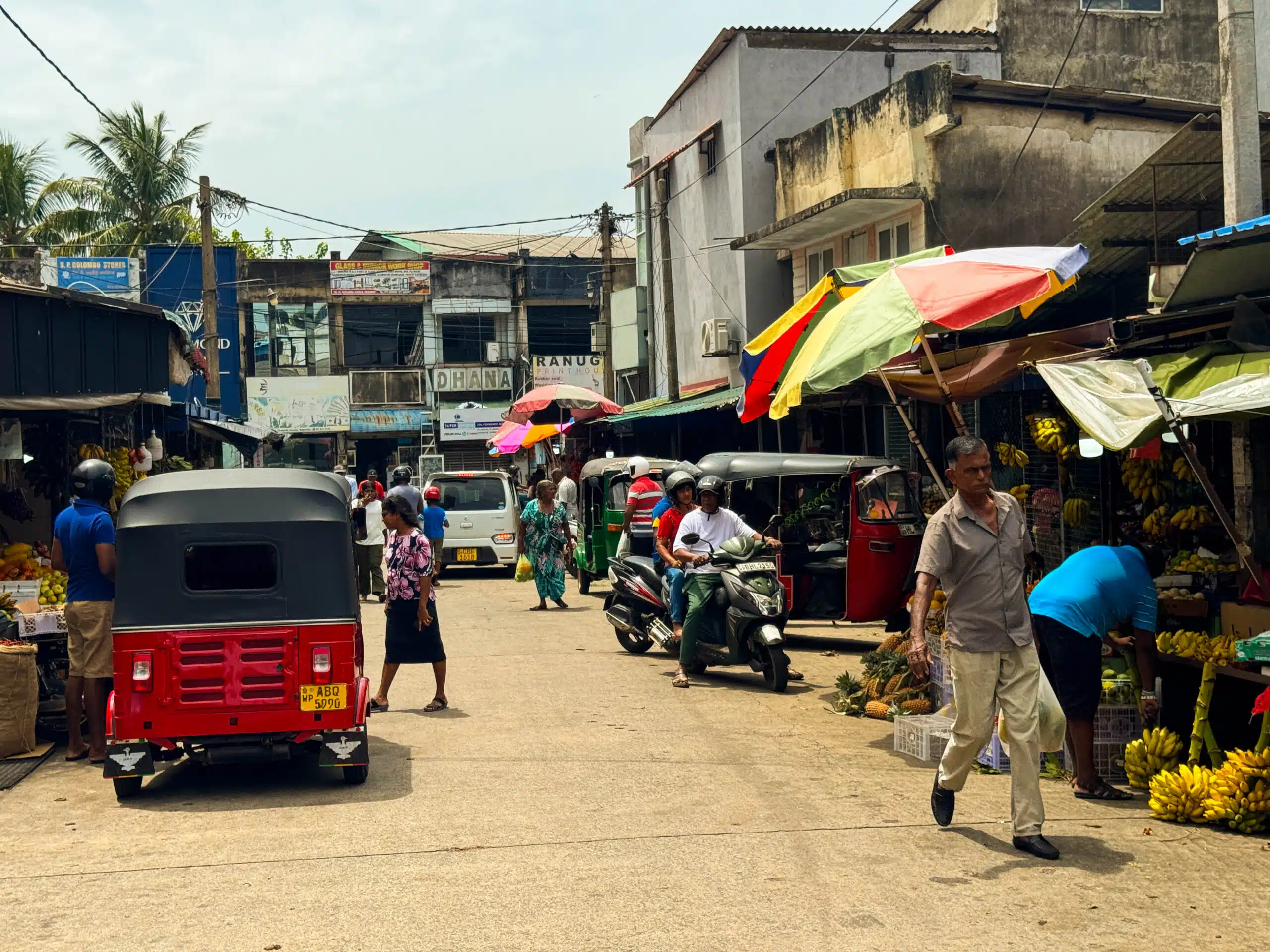
Table of Contents
Most Sri Lanka trips begin and end here — and most travellers give the west coast less time than it deserves. You land at Bandaranaike International Airport, settle into a hotel near the coast, and spend the next twelve days heading somewhere else entirely. Then you come back for one more night before the flight home. That’s the typical pattern. What it misses is what the Sri Lanka west coast actually is: a canal town with Dutch colonial history, a proper city with architecture worth seeking out, and a coastline that — unlike the south and east — operates as a year-round arrival point rather than a seasonal beach destination.
This is not the part of the trip where you swim in turquoise water or climb ancient rock fortresses. The west coast plays a different role: it orients you, transitions you, and gives Sri Lanka’s contrasts somewhere to breathe. Get it right — choose the right base, give it a little more time than feels necessary — and it sets the tone for everything that follows.
In a Rush?
These are my Favourite Hotels on the Sri Lanka West Coast
⭐️⭐️⭐️ The Wallawwa – Check prices and availability
⭐️⭐️ Dickman Resort – Check prices and availability
⭐️ Villa Shade – Check prices and availability
Sri Lanka West Coast at a Glance
The west coast works differently from every other region in Sri Lanka. Rather than building an itinerary around it, most travellers use it as a bookend — one night on arrival, one on departure, or a short city stop in between. The table below gives you the essentials before diving deeper.
| Best time to visit | Year-round — the west coast functions as a gateway in all seasons |
|---|---|
| Main bases | Negombo, Colombo |
| Top highlights | Dutch canals, Geoffrey Bawa architecture, Pettah market, Galle Face Green, fish market |
| Typical stay | 1–2 nights |
| Best for | First and last nights, travellers wanting urban contrast, design and architecture enthusiasts |
| Not ideal if… | You want beach swimming, wildlife, or nature — the south and east coasts do all of that better |
| Getting there | 10–15 min from airport to Negombo; 30–45 min to Colombo |
| Getting around | Tuk-tuks in Negombo; Grab ride-hailing app in Colombo |
Understanding the Sri Lanka West Coast
Before you choose your base, it helps to understand what this region actually is — and why it earns more attention than most travellers give it.
The Sri Lanka west coast runs from just north of Colombo down to the capital and beyond, but in practical travel terms it centres on two places: Negombo and Colombo. They’re about 35 kilometres apart, connected by a busy coastal road, and they serve completely different purposes within a Sri Lanka itinerary.
What unites them is the Indian Ocean on one side and the airport in the middle. Bandaranaike International Airport sits between the two cities — which is why both function as natural gateways. Most international flights arrive here, and almost all depart from the same point. The west coast, by geography, is where Sri Lanka begins and ends for the vast majority of visitors.
What most travellers don’t realise is that this region has real character worth exploring. The beach here isn’t Sri Lanka’s finest — the sea can be rough, the sand doesn’t match the south coast — but the west coast makes up for it elsewhere. Negombo has a Dutch colonial history written into its canals and churches. Colombo has architecture, food, markets and a pace of urban life that nowhere else on the island replicates. Both deserve more than a single rushed overnight.
Seasonality matters less here than anywhere else in Sri Lanka. Unlike the south coast (best December to April) or the east coast (best May to September), the west coast works year-round. Rain comes with the southwest monsoon from May onwards, but it arrives in afternoon showers rather than all-day downpours, and neither city’s main attractions are weather-dependent. This makes the west coast uniquely useful — it fits into any itinerary regardless of travel month.
One practical consideration shapes everything about this region: your flight time. If you arrive at midnight or depart at six in the morning, Negombo makes obvious sense — ten minutes from the terminal, no traffic, easy. If you have a full day either side of your itinerary, Colombo becomes worth the longer transfer. Understanding which scenario fits your trip determines almost everything about how you use the west coast.
Negombo: Canal Town & Easy Gateway
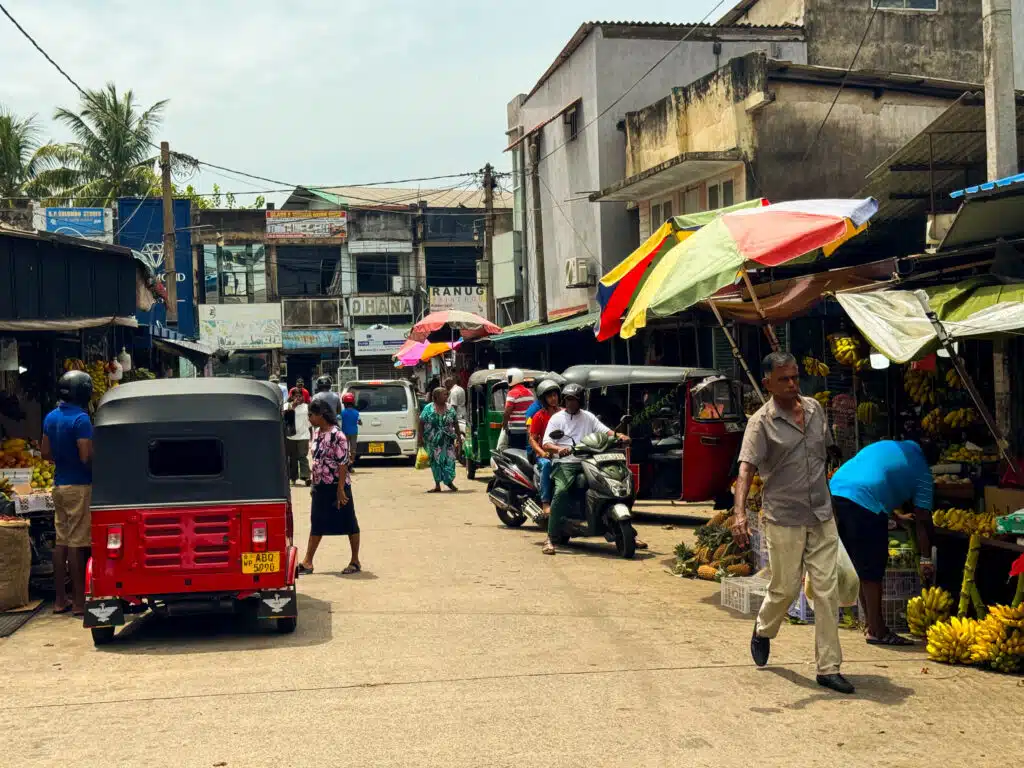
Negombo is the more relaxed of the two west coast bases — and for most travellers, the more practical choice for a first or last night. It sits just north of the airport, close enough that the transfer takes barely fifteen minutes, with a seafront, a canal system and a town centre that rewards a half-day of slow exploration.
The beach runs for several kilometres south of the town centre, but swimming here is not reliable — the sea tends to be rough, and most people use the beach for walks and sunsets rather than anything more active. That’s an honest caveat worth stating early. If you’re arriving from the Maldives expecting a continuation of turquoise waters, the Negombo beach will disappoint. If you approach it as what it actually is — a wide, windswept stretch with good late-afternoon light and occasional fishing boats — it earns its place.
What Negombo does exceptionally well is atmosphere. The Dutch canals that cut through the town are one of the most underrated features of the entire west coast — a network of waterways built during the colonial period, still in use today, lined with palms and local fishing boats. A morning on the canals, either by boat or on foot alongside the bank, shows a side of Sri Lanka that has nothing to do with temples or beaches. The fish market opens before dawn and operates at full volume until mid-morning — one of the most sensory-rich markets on the island, with catches from overnight boats being sorted, negotiated over and loaded onto waiting vehicles. The old Dutch fort ruins and the colonial church add some historical context to a town that shaped Sri Lanka’s early colonial narrative.
The restaurant scene is better than the town’s reputation suggests. There’s a strip of places near the beach road that covers seafood, rice and curry, and Western-friendly options, and enough variety that a two-night Negombo stay doesn’t feel culinarily repetitive. The town is also small enough to be genuinely walkable — an unusual quality on this island.
How travellers typically use Negombo
Most visitors spend one night in Negombo, either at the start or end of their trip. Those who discover it properly tend to wish they’d given it two. A good pattern for a first-night arrival: check in, walk the beach road at dusk, eat at a seafront restaurant, and leave the canal and market exploration for an early morning before heading inland.
What to see and do in Negombo
The Dutch Canals are the defining attraction — a boat tour through the waterways passes villages, fishing nets and birdlife, giving a perspective on the town that the beach road alone doesn’t provide. Book a Dutch Canals boat tour to cover the full network in a relaxed morning.
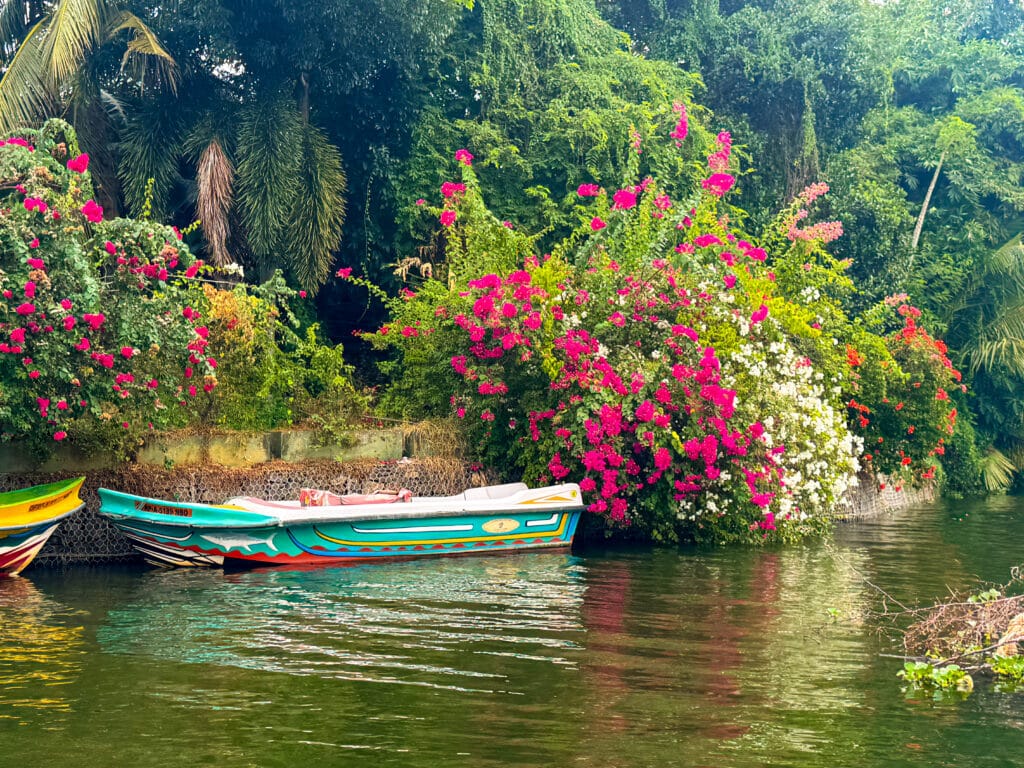
Negombo Fish Market is best visited before 7am, when the overnight catch is still arriving and the energy is at its peak. After 9am, most of the action has moved on. It’s a short tuk-tuk ride from the main hotel area and free to walk around.
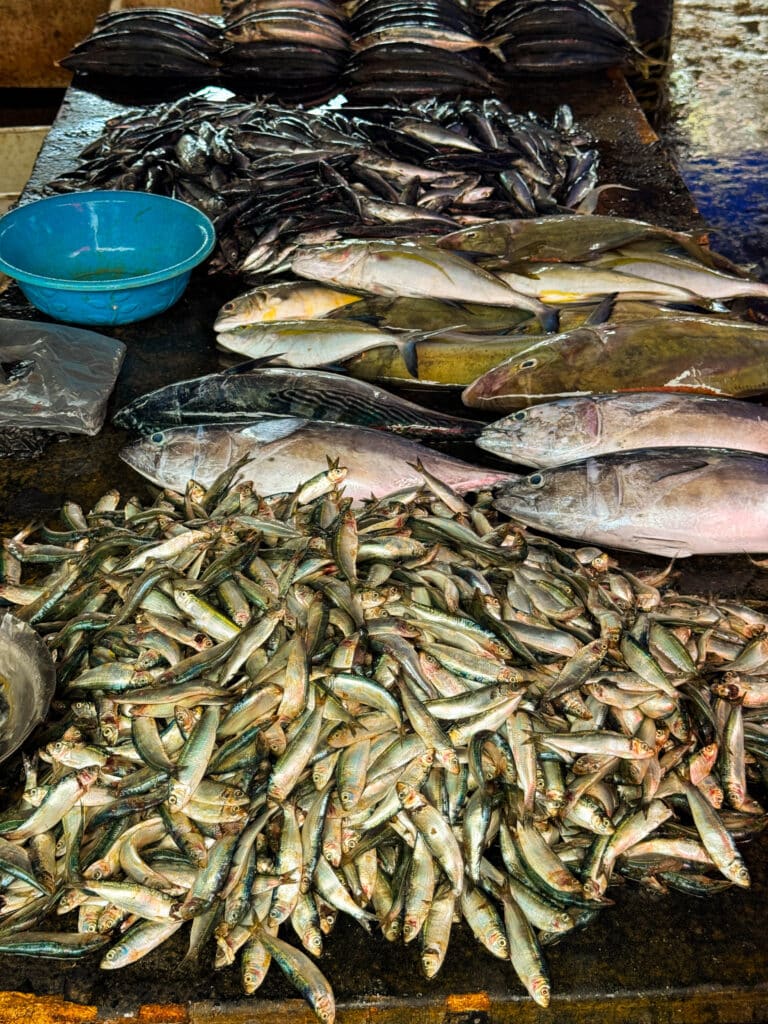
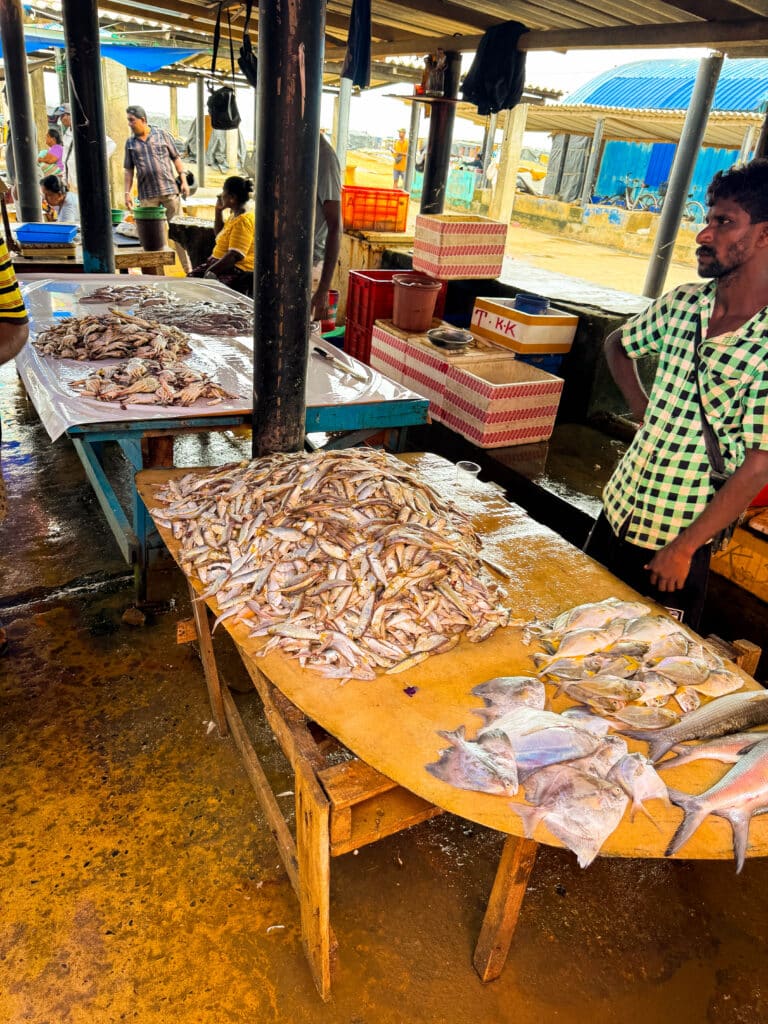
A tuk-tuk tour of Negombo covers the fish market, canal area, old Dutch fort, colonial church and the beach road in a couple of relaxed hours — practical for travellers who want to see the town without figuring out transport independently. Book a Negombo tuk-tuk tour.
Where to stay in Negombo
The Negombo hotel scene ranges from a beautifully restored colonial boutique property to outstanding-value guesthouses on the Dutch canals. For a deep dive into every option across all budgets, the best hotels in Colombo and Negombo guide covers the full picture.
$$$$ — The Wallawwa
Price per night for 2 in shoulder season: from USD 440 (BB) Booking.com rating: 9.3
The Wallawwa is the most distinctive hotel in the Negombo area — a 19th-century colonial manor house converted into a small boutique property with fewer than 20 rooms, a garden pool and service that feels personal rather than performative. It’s not a beach hotel, but for travellers who want a memorable first or last night rather than just a functional stopover, this is the one.
$$ — Villa Shade
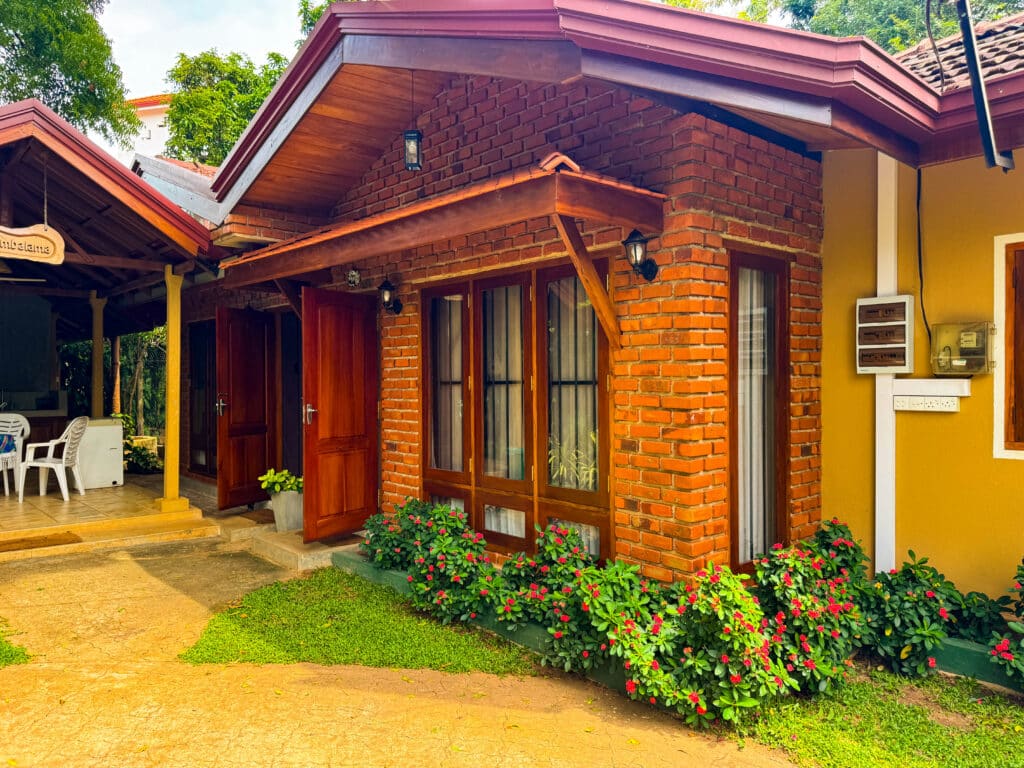
Price per night for 2 in shoulder season: from USD 90 (bed) Booking.com rating: 9.5
We stayed at Villa Shade on our very first night in Sri Lanka — arriving at 4:30am after a long-haul flight, exhausted, completely uncertain what to expect. Someone came to the gate immediately, showed us to the room, and had a drink waiting. That kind of welcome at that hour sets the tone for a whole trip. Villa Shade is a small, family-run guesthouse in a tropical garden with fruit trees and a pool — simple rooms, exceptional hospitality, and one of the most consistent recommendations we make for this part of the island.
Price per night for 2 in shoulder season: from USD 65 (BB) Booking.com rating: 9.8
A 9.8 rating at $65 per night is a number that makes you look twice. Dutch Canal Retreat is a small, personal guesthouse on the canals with canal views, breakfast included and the kind of hospitality that drives ratings this high. For budget-conscious travellers who still want real character, this is the one.
Colombo: Sri Lanka’s Urban Heartbeat
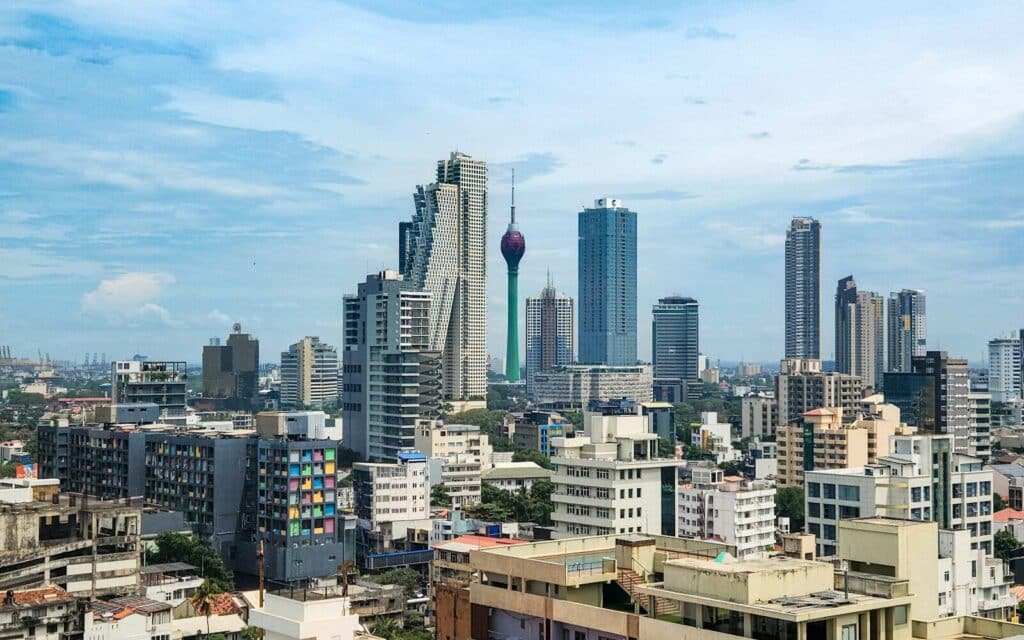
Colombo is a city that most Sri Lanka travellers experience through a taxi window — arriving from the airport, watching the skyline appear and then disappear as the road turns inland. What they miss is a city that genuinely rewards time: markets that have operated for generations, architecture shaped by one of Asia’s great 20th-century designers, a food scene that moves faster than almost anywhere else on the island, and neighbourhoods that shift in character from block to block.
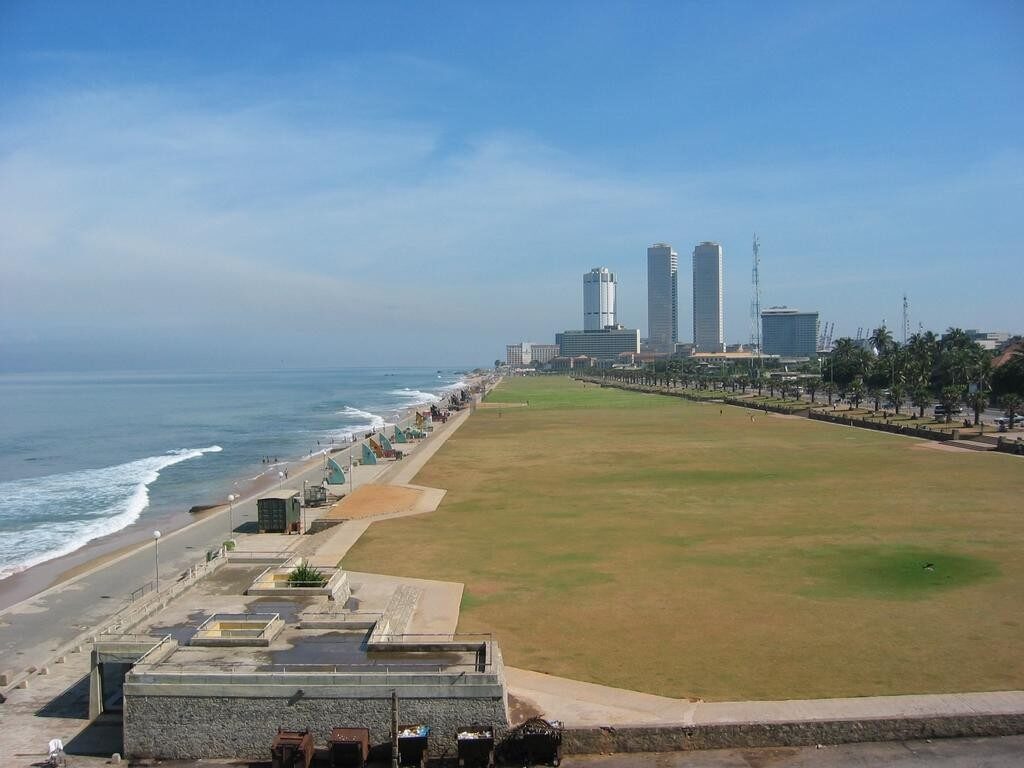
The city is built along the coast, with the Indian Ocean to the west and a sprawl of residential and commercial districts stretching east. The most visited and most walkable area is Colombo 7 — the Cinnamon Gardens neighbourhood, where tree-lined streets pass colonial mansions, boutique restaurants and the residences of ambassadors and ministers. A few kilometres north, Pettah is everything Colombo 7 is not: loud, crowded, dense with commerce, and one of the most genuinely alive market areas in South Asia. Galle Face Green, the long seafront esplanade between the two, is where the city breathes — families walking in the evenings, kite sellers setting up, the city skyline catching the last light behind you.
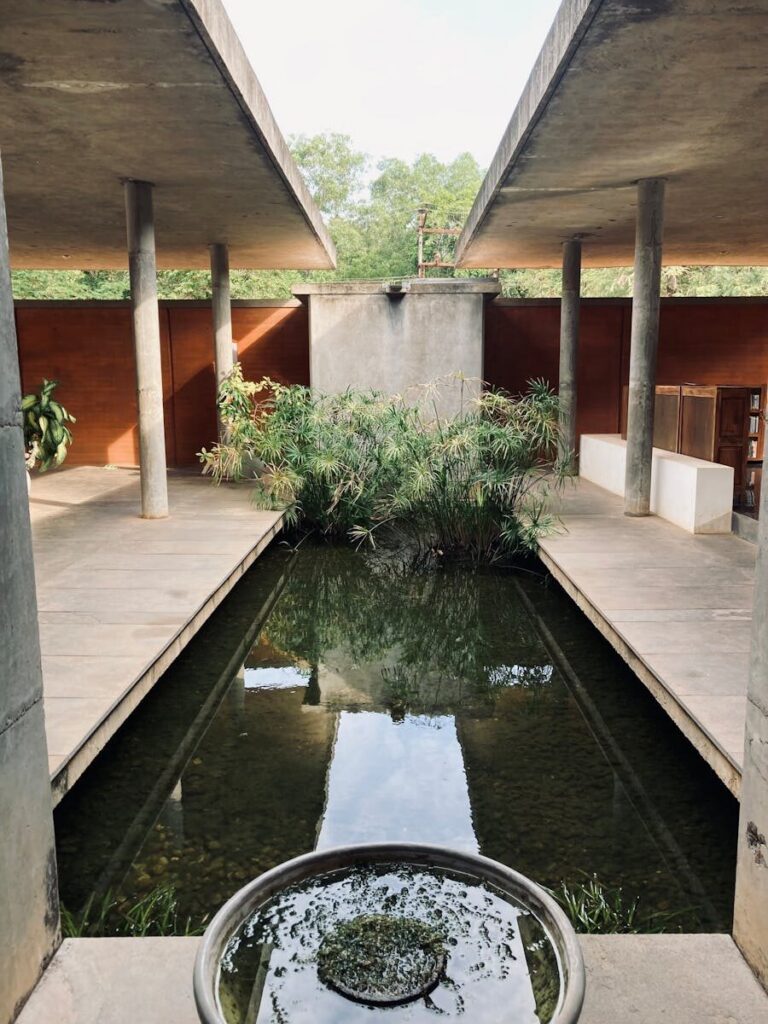
The Geoffrey Bawa connection gives Colombo a design dimension that surprises most visitors. Bawa — widely considered the greatest Asian architect of the 20th century — spent decades in the city and shaped many of its most significant buildings. His private home at 33rd Lane in Colombo 3 now operates as a boutique hotel with just a handful of rooms: one of the most extraordinary places to stay in all of Sri Lanka. The architecture trail that connects his home to his public commissions and his hotels along the coast adds genuine depth to a Colombo visit that a single overnight doesn’t touch.
Colombo is also, simply, good for eating. The Colombo 7 restaurant scene is one of the strongest on the island — small, ambitious restaurants that draw on both Sri Lankan tradition and a cosmopolitan city’s appetite for variety. A slow evening here, walking between restaurants rather than rushing to a single reservation, is one of the most enjoyable ways to spend time in any Sri Lankan city.
How travellers typically use Colombo
Most travellers pass through Colombo on arrival or departure. Those who stay longer — two nights, occasionally three — tend to come away with a very different impression of Sri Lanka as a whole. The city provides context that the beaches and temples and hill stations don’t: a modern, complex, ambitious country that exists alongside the postcard landscapes.
For itinerary purposes, Colombo works best with one dedicated day — enough to walk the fort area and Pettah in the morning, take lunch in Colombo 7, and spend the evening on Galle Face Green. Two days allows for the Bawa trail, proper market exploration and the kind of slow neighbourhood walking that reveals the city’s real character.
What to see and do in Colombo
The Geoffrey Bawa Architecture Trail is the most rewarding way to understand Colombo’s design heritage. It begins at his private home on 33rd Lane — now a hotel — and extends to his public commissions and the hotels he designed along the west coast. Even a few hours of this adds a dimension to Colombo that most transit visitors completely miss.
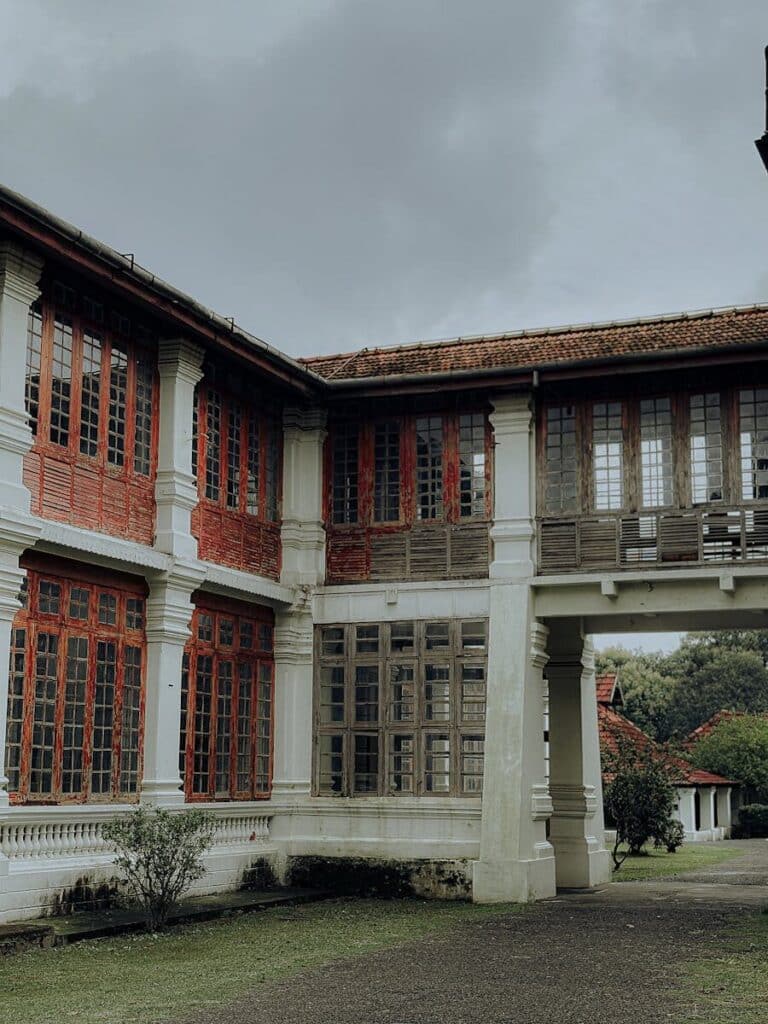
Pettah Market is a full sensory experience — blocks of specialist stalls selling spices, textiles, hardware, electronics and street food in a market that has operated continuously for generations. Go in the morning before the heat and crowds peak. It requires no planning: walk in from the Central Bus Stand end and follow the crowds.
Galle Face Green is the city’s main public space — a long coastal esplanade where Colombo families walk, fly kites and eat street food from vendors who set up as the afternoon cools. The views back toward the Colombo skyline at dusk are consistently good.
The Colombo Fort area mixes colonial-era buildings with the modern financial district in a way that captures the city’s layered history. The old Cargills building, the Colombo Lighthouse, and the Dutch Period Museum all sit within walking distance of each other.
Book a Colombo tuk-tuk tour to cover the main areas in a single efficient morning, with a local guide who knows which stops are worth the time.
Where to stay in Colombo
Colombo’s hotel range runs from one of the most architecturally significant small hotels in Asia to well-rated city guesthouses at very accessible prices. The best hotels in Colombo and Negombo guide covers all options in depth. The three below represent the clearest choices across price tiers.
$$$$ — Geoffrey Bawa’s Home
Price per night for 2 in shoulder season: from USD 370 (BB) Booking.com rating: 9.8
Geoffrey Bawa’s private home at 33rd Lane — the house he lived in and expanded for decades — now operates as a boutique hotel with just a handful of rooms. Staying here means sleeping inside one of the most significant architectural spaces in Asia. The 9.8 Booking.com rating is one of the highest of any hotel in Sri Lanka. It is not a conventional hotel experience. It is a piece of living history.
$$$ — ITC Ratnadipa
Price per night for 2 in shoulder season: from USD 210 (BB) Booking.com rating: 9.0
Colombo’s most significant new waterfront hotel — a full-service property with multiple restaurants, spa, pool and sea views from the upper floors. The 9.0 rating is strong for a large city hotel. It suits travellers who want consistent quality and full facilities rather than boutique character.
$ — Villa Vikasa
Price per night for 2 in shoulder season: from USD 70 (bed) Booking.com rating: 9.9
A 9.9 rating at $70 per night is the kind of number that stops you scrolling. Villa Vikasa is a small Colombo guesthouse where the hospitality is clearly exceptional — the reviews say the same thing across hundreds of stays. For budget travellers who still want quality, this is the strongest pick in the city.
Negombo or Colombo: How to Choose Your Base
The choice between Negombo and Colombo is less about preference and more about logistics — and once you understand the practical differences, it usually becomes obvious.
Choose Negombo when:
- Your flight arrives or departs early morning — the 10-minute transfer saves real time and stress
- You’re jet-lagged and want a calm, easy landing without navigating city traffic
- You want one relaxed day exploring canals and the fish market before heading inland
- Your first destination is the Cultural Triangle or Hill Country — the road north from Negombo is straightforward
Choose Colombo when:
- You want to experience Sri Lanka’s capital properly, not just pass through it
- You’re interested in architecture, design, food or urban energy
- Your flight timing is flexible and you have a full day available
- You’re on a return trip and want to go beyond the classic tourist route
Choose both if your itinerary allows it. One night in Negombo on arrival and one night in Colombo before departure — or the reverse — gives you the full picture of how the west coast opens and closes a Sri Lanka trip. The two cities are connected by road and easily combined. Many travellers find that the Negombo arrival and Colombo departure pattern works particularly well: you ease in gently, then leave with the energy of the city still in your head.
Practical Information: Sri Lanka West Coast
Getting to and from the airport
Bandaranaike International Airport sits between Negombo and Colombo, which is what makes the west coast such a natural gateway. Negombo is 10–15 minutes by taxi; Colombo is 30–45 minutes depending on traffic — longer during peak hours. Pre-booked transfers are the most reliable option for arrivals, particularly late at night. Book your airport transfer via 12Go for a fixed price and a confirmed waiting driver.
Getting around
In Negombo, tuk-tuks cover most distances easily and cheaply — agree on a price before you get in. In Colombo, the Grab ride-hailing app is the most reliable way to get around: download it before you arrive to avoid relying on negotiated tuk-tuks in a city where prices for tourists can vary significantly. Traffic in Colombo is heavy between 4pm and 7pm — plan around it.
Best time to visit
The west coast can be visited year-round, which gives it a practical advantage over every other region in Sri Lanka. The southwest monsoon runs from roughly May to September and brings more frequent afternoon rain along the coast — but neither city’s main attractions are significantly weather-dependent. The fish market runs in any weather. The canals look beautiful in light rain. The Bawa trail is an indoor-outdoor experience in any season. December to April brings drier, more predictable conditions if you have a choice.
How the West Coast fits into a Sri Lanka itinerary
In the classic Sri Lanka route — west coast arrival, Cultural Triangle, Hill Country, south coast — the west coast sits at both ends of the journey as a practical bookend rather than a centrepiece. This is the most common pattern and it works well, particularly when the west coast stop is kept to one or two nights.
For travellers who want to understand how this region connects to the rest of the island, both the 10 Days Sri Lanka Itinerary and the 2 Week Sri Lanka Itinerary show exactly how Negombo and Colombo fit into the route with realistic travel times.
Final Thoughts on the Sri Lanka West Coast
The Sri Lanka west coast rarely makes anyone’s highlight reel — and that’s exactly why it keeps surprising people. You don’t come here for the beaches or the wildlife or the ancient ruins. You come because it’s where the plane lands, and because if you give it a little more time than the itinerary strictly demands, it shows you a side of Sri Lanka that the more celebrated regions don’t.
Negombo in the early morning, when the fish market is still busy and the canals are quiet and the light is just arriving over the town — that’s a Sri Lanka moment that most travellers miss entirely. Colombo at dusk, walking along Galle Face Green with the city skyline behind you and the Indian Ocean ahead — that’s another. The west coast earns its place in a Sri Lanka itinerary not despite being a gateway, but because of what a gateway, done properly, can feel like.
🐘 Plan Your Sri Lanka Trip
🏨 Still looking for the right stay? Browse all hotels in Sri Lanka — free cancellation on most rooms.
✈️ Flights: Compare routes and prices for flights to Sri Lanka.
🚂 Getting around: Book train tickets in advance (the scenic routes sell out), or arrange a private driver, tuk tuk rental or rental car.
📱 Stay connected: Get a Sri Lanka eSIM from Airalo before you fly. We use Airalo ourselves on every trip.
🔒 Travel insurance: Don't skip travel insurance for Sri Lanka — medical costs for tourists add up fast.
🎟️ Tours & activities: Browse safaris, cooking classes and tours across Sri Lanka.
💳 Money: Avoid card fees abroad with a free Revolut account.
Some links on this page are affiliate links. Booking through them costs you nothing extra and helps us keep this site running — thank you!
Frequently Asked Questions about Sri Lanka West Coast
Is Negombo or Colombo better for the first night in Sri Lanka?
For most travellers, Negombo is the easier first-night choice. It’s 10–15 minutes from the airport, calm and straightforward to navigate when you’re jet-lagged or arriving late. Colombo suits travellers who want a proper city experience from the start — better restaurants, more to see, a different energy entirely. If your flight arrives after 8pm or before 7am, Negombo makes more practical sense. If you land in the afternoon with a full evening available, Colombo is worth the longer transfer. In Negombo, The Wallawwa is a serene first-night base near the airport.
Is the Sri Lanka west coast worth more than one night?
Yes, particularly Colombo. One full day in the capital covers the Geoffrey Bawa home, Pettah market and Galle Face Green at a comfortable pace. Two days allows for the full architecture trail, proper neighbourhood exploration and the kind of slow city time that reveals Colombo’s real character. Negombo rewards two nights more than most travellers expect — a morning canal boat tour, the fish market before dawn, and a sunset beach walk add up to a genuinely memorable stay if you allow the time. In Colombo, ITC Ratnadipa is a strong central base for a full day.
Can you swim on the Sri Lanka west coast?
The west coast beach is not Sri Lanka’s best for swimming. The sea tends to be rough along this stretch, and conditions are inconsistent year-round. Most travellers use the Negombo beach for walks, sunsets and atmosphere rather than swimming. If beach swimming is a priority, the south coast (December to April) or east coast (May to September) are both significantly better suited.
What is there to do in Negombo besides the beach?
More than most travellers expect. The Dutch canal system is worth a proper morning — either by boat or walking alongside the bank. The fish market opens before dawn and operates at full volume until mid-morning, with catches from overnight boats being sorted and sold. The old fort ruins and the colonial Dutch church add historical context. A tuk-tuk tour of the town covers all of this in a couple of relaxed hours and is easy to arrange through any hotel.
How far in advance should I book hotels on the Sri Lanka west coast?
For the smaller boutique properties — Geoffrey Bawa’s Home in particular, which has only a handful of rooms — booking two to three months ahead is advisable during peak season (December to March). Mid-range hotels in Negombo tend to have more availability, but well-rated properties like Villa Shade and Dutch Canal Retreat can fill quickly. Outside peak months, a few weeks’ notice is usually sufficient. Geoffrey Bawa’s Home on 33rd Lane in particular books out well ahead.
Does the Sri Lanka west coast work for families?
Negombo works well for families as a one-night arrival or departure stop — it’s calm, simple to navigate and some hotels like Villa Shade have pools and garden space that work well with children. Colombo is manageable with older children who can handle the pace and crowds of the Pettah market, but it’s a busy, traffic-heavy city that requires more energy than most gateway stops. For a short stay, Negombo is the easier family choice.
Related Blogs
Other Region Blogs
Sri Lanka Regions Explained: How to Choose the Best Areas for Your Trip
Sri Lanka Cultural Triangle: Ancient Cities, Temples & Where to Stay
Sri Lanka Hill Country: Tea Plantations, Train Rides & Cool Climate Escapes
Sri Lanka South Coast: Beaches, Surf Towns & Coastal Travel
Sri Lanka East Coast: Best Beaches, Bases & When to Go
Northern Sri Lanka: Culture, Travel & What to Expect
Other Sri Lanka Blogs
Best Hotels in Sri Lanka: How to Choose Where to Stay — by Region & Value
Where to Stay in Sri Lanka: Best Hotels by Travel Style
Best Cities to Visit in Sri Lanka: A Practical Guide to Regions, Routes & City Bases
Sri Lanka Travel Itinerary: Custom Plans for Beach Lovers, City Explorers, and Wildlife Adventurers
Top Things to Do in Sri Lanka: The Most Rewarding Experiences on the Island
Best Time to Visit Sri Lanka: Weather, Seasons & Travel Tips
Sri Lanka Weather by Month: What to Expect Each Season as a Traveller
Getting Around Sri Lanka: Ultimate Guide to Transport, Trains, Tuk-Tuks & Easy Trip Planning
Is Sri Lanka Expensive to Travel? Budget, Costs & Money-Saving Tips for Your Trip
Sri Lanka Travel Guide: Visa Requirements, Vaccination & Local Travel Tips