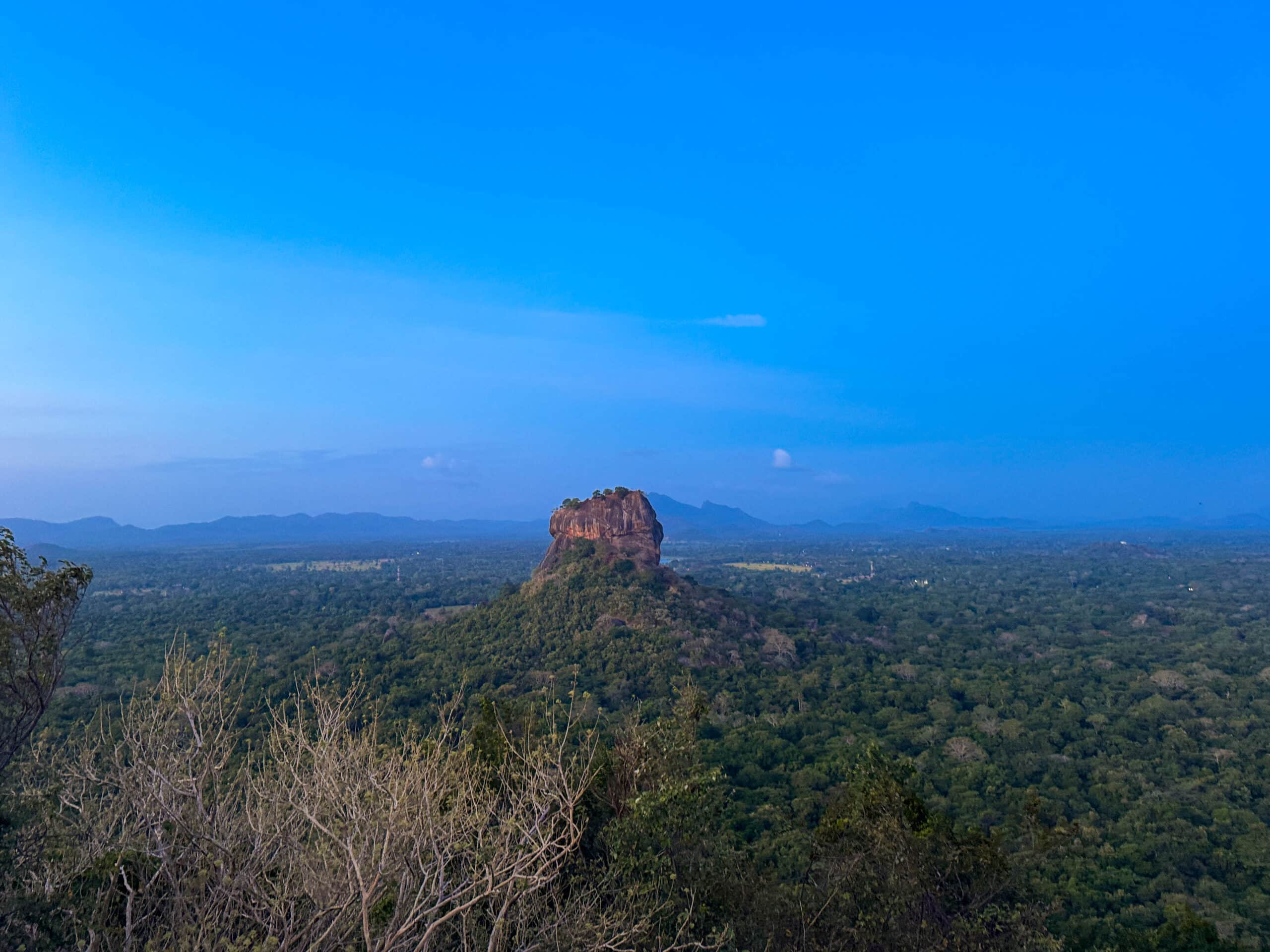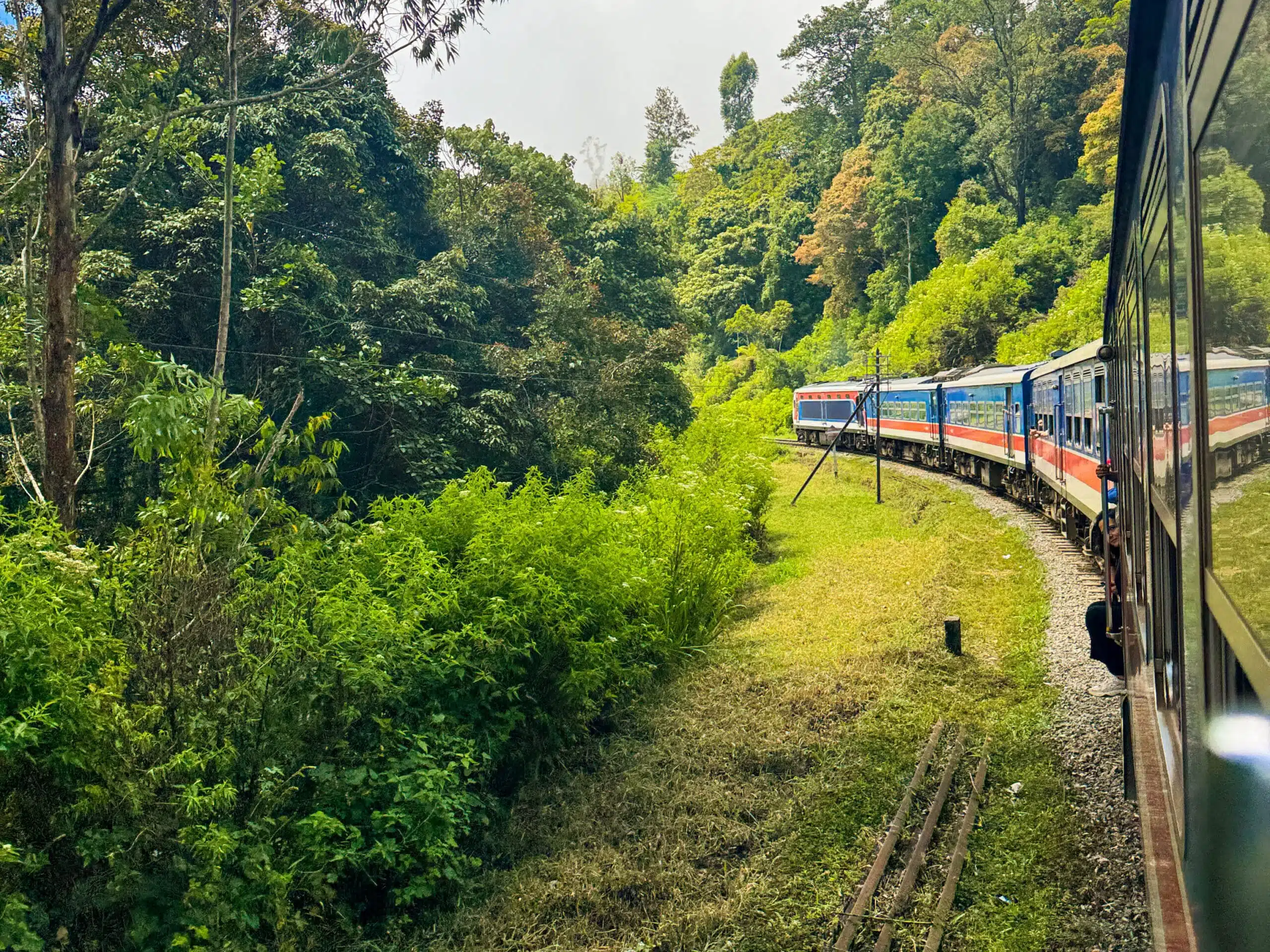
Table of Contents
Sri Lanka’s cities are less about skylines and more about setting. A lakeside temple town, a misty hill base wrapped in tea plantations, a coastal fort shaped by colonial history, a quiet wildlife gateway at the edge of the bush — each place carries a distinct rhythm.
Understanding the best cities to visit in Sri Lanka is not about chasing highlights, but about choosing the right bases. Some towns work as soft landings. Others are made for slow mornings, early temple visits, or beach days shaped by the season. This guide looks beyond attractions and focuses on atmosphere, pace, and who each place truly suits — so your route feels intentional rather than rushed.
In a Rush?
These are my Favourite Hotels in Sri Lanka
- ⭐️⭐️⭐️ 98 Achres Resort & Spa – Ella – Check Prices and Availability
- ⭐️⭐️ Rockside Cabanas – Unawatuna – Check Prices and Availability
- ⭐️ Tree Trails – Sigiriya – Check Prices and Availability
At a Glance: Sri Lanka’s Best Travel Bases (by Region & Travel Style)
Sri Lanka offers many different places to stay, each suited to a specific type of experience. This overview helps you quickly see what each city or area is best known for, where it is located, and who it suits best — so you can decide where to spend your time before diving into the details below.
| City / Area | Region | Best known for | Type of base | Best for |
|---|---|---|---|---|
| Negombo | West Coast | Easy arrival, beach, lagoon | Arrival / departure base | First nights, families, easy start |
| Colombo | West Coast | Capital city, food scene, city life | Urban stop | Short stays, city explorers |
| Sigiriya | Cultural Triangle | Rock fortress, heritage sites | Cultural base | History, first-timers |
| Anuradhapura | Cultural Triangle | Ancient capitals, sacred sites | Cultural base | Culture-focused travellers |
| Kandy | Central Highlands | Temples, traditions, hill-country gateway | Cultural hub | Culture, train journeys |
| Nuwara Eliya | Central Highlands | Tea plantations, cool climate | Scenic hill base | Tea country, slower pace |
| Ella | Central Highlands | Views, hikes, backpacker vibe | Nature and activity base | Hiking, social travellers |
| Udawalawe | Southern Sri Lanka (inland) | Elephants, open safaris | Wildlife stop | Short safaris, families |
| Yala | South-East Coast | Leopards, diverse wildlife | Wildlife stop | Safari-focused travellers |
| Wilpattu | North-West | Quiet safaris, natural lakes | Wildlife stop | Fewer crowds, nature lovers |
| Mirissa / Weligama | South Coast | Beaches, surfing, whales | Beach base | Relaxed beach time |
| Galle | South Coast | Historic fort, colonial architecture | Cultural coastal stop | Culture and food lovers |
| Unawatuna | South Coast | Calm swimming bays, turtles | Beach base | Swimming, families |
| Trincomalee | East Coast | Calm seas, snorkelling, whales | Seasonal beach base | Summer travel |
| Arugam Bay | East Coast | Surfing, yoga, backpacker scene | Surf base | Surfers, slow travel |
| Jaffna | Northern Sri Lanka | Tamil culture, temples, local life | Cultural base | Off-the-beaten-path travel |
How to Choose the Best Cities to Visit in Sri Lanka (by Travel Style)
When planning a trip, many travellers start by researching the best cities to visit in Sri Lanka based on season and travel style. Below you’ll find Sri Lanka’s most important cities and travel hubs, grouped by region. These are places travellers commonly choose as bases during their trip — whether for culture, nature, beaches, or wildlife — and where it makes sense to stay longer than just a brief stop.
Each city is described at a practical level: what kind of place it is, what you typically do there, who it suits best, and when it’s most enjoyable to visit. This makes it easier to compare places within the same region and decide which cities belong in your route — and which ones you can skip.
West Coast & Arrival Cities
For most travellers, the west coast is where a trip to Sri Lanka begins — and often ends. Negombo and Colombo are not destinations you visit for their sights alone, but arrival cities that play a practical role in the first or last days of a journey.
In this section, we look at Negombo and Colombo as places to land, adjust, recover from a long flight, or wrap up a trip before departure. The focus is on what staying here feels like, how much time makes sense, and which type of traveller benefits most from using these cities as a base — rather than on ticking off attractions.
Both cities sit on the west coast, close to the international airport, yet they offer very different experiences. Understanding the difference helps you decide whether to stay overnight, spend a full day, or move on immediately to another part of the country.
Negombo
What kind of place is this?
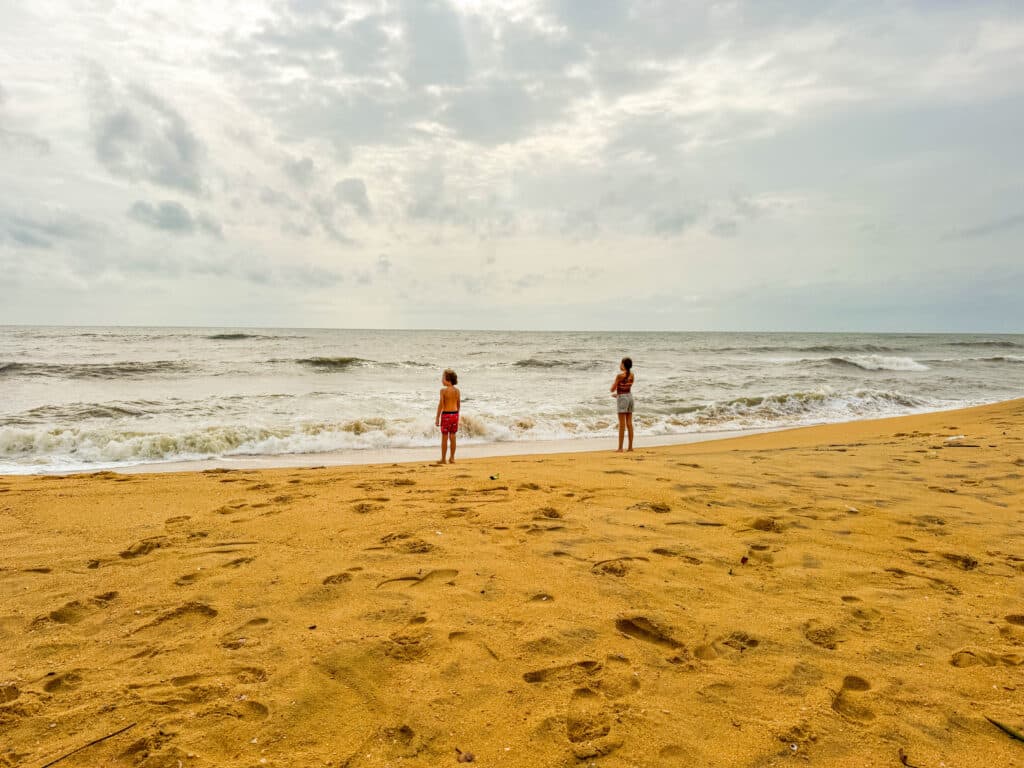
Negombo is a laid-back coastal town on Sri Lanka’s west coast, best known as a soft landing point after arrival or a calm place to end a trip. It’s close to the international airport and feels noticeably slower and more local than Colombo, with a mix of beach life, fishing culture, and everyday Sri Lankan routines.
What do you typically do here?
Most travellers use Negombo to rest after a long flight, adjust to the climate and time zone, and ease into the country. Activities here are deliberately low-key and easy to fit into a short stay.
Many travellers choose a short tuk-tuk city tour to get their first feel for Sri Lanka, combining local neighbourhoods, markets, and everyday street life without the intensity of a big city. Others opt for a Dutch Canals boat tour, a relaxed way to explore Negombo’s lagoon and mangrove scenery.
For travellers interested in local food, a market visit combined with a cooking class offers a gentle introduction to Sri Lankan flavours and ingredients. Overall, Negombo is less about ticking off sights and more about slowing down before heading inland.
Where to stay
Villa Shade is a small, welcoming hotel set in greenery yet still close to the centre and beach. It works especially well as a comfortable first or last night near the airport. For a full breakdown, see our best hotels in Colombo & Negombo guide.
We stayed here ourselves and found it a really pleasant place to land — friendly hosts, a relaxed atmosphere, and a refreshing pool after travel.
Recommended activities in Negombo
Tuk-Tuk City Tour
A relaxed introduction to Negombo with a local driver, covering neighbourhoods, markets, and everyday street life. Ideal for your first day if you want to see more than just the beach without committing to a full sightseeing schedule.
Dutch Canals Boat Tour
A calm boat ride through Negombo’s historic canal system and surrounding lagoons, passing mangroves, birdlife, and fishing communities. Works well in the morning or late afternoon, especially after a long flight.
Cooking Class & Market Visit in Negombo
A hands-on introduction to Sri Lankan cuisine, starting with a local market visit followed by cooking traditional dishes. A good option if you want a cultural experience without travelling far on your first days.
Which region is it in?
Negombo is located on the West Coast, just north of Colombo and close to Bandaranaike International Airport.
Who is Negombo a good fit for?
- Travellers arriving late or departing early
- Families or first-time visitors who want a gentle start
- Anyone who prefers a calm beach town over a busy city
Who is it less suited to?
- Travellers looking for strong cultural highlights or nightlife
- Visitors wanting swimmable, postcard-perfect beaches
- Those short on time who prefer to head inland immediately
Best time to visit
Negombo can be visited year-round. The driest and most pleasant months are December to April, while the west coast sees more rain between May and September. Even in wetter months, Negombo works well for short stays due to its location and relaxed pace.
For a closer look at where to stay, what to do, and how to use Negombo as an arrival base, see our detailed Negombo city guide.
Colombo
What kind of place is this?
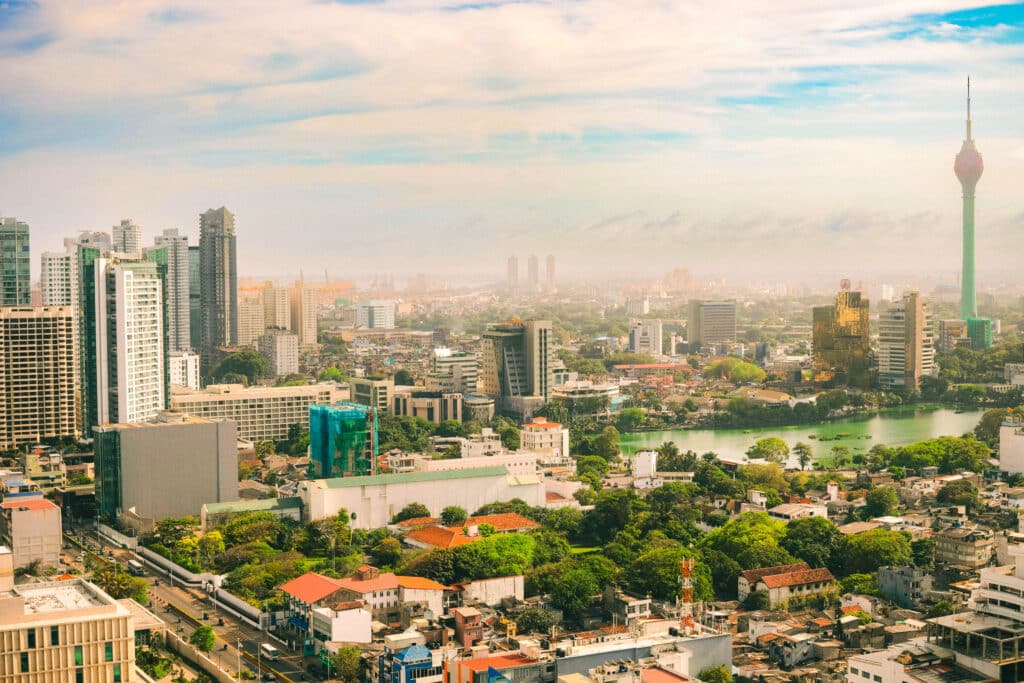
Colombo is Sri Lanka’s largest city and commercial capital. It’s busy, layered, and constantly moving — a mix of colonial architecture, modern high-rises, local neighbourhoods, temples, cafés, and a fast-growing food scene. Colombo is not a classic sightseeing destination, but a place to experience contemporary Sri Lankan city life.
What do you typically do here?
Travellers who stay in Colombo usually focus on food, neighbourhood exploration, and urban culture rather than major attractions. Popular experiences include guided walking or tuk-tuk tours through different districts, street food tastings, visiting temples and markets, and spending time in areas like Pettah, Cinnamon Gardens, or along Galle Face Green. Colombo works well for short stays where you want contrast after nature-heavy parts of the trip.
Where to stay
Geoffrey Bawa’s Home (Number 11) offers a unique stay inside the former residence of Sri Lanka’s most iconic architect. It suits travellers who appreciate design, atmosphere, and cultural depth over standard hotel comfort. For a full breakdown, see our best hotels in Colombo & Negombo guide.
Recommended activities in Colombo
Colombo Tuk-Tuk City Tour
A guided tuk-tuk tour through different neighbourhoods of Colombo, combining temples, markets, colonial streets, and everyday city life. A good option if you want context and local insight without navigating traffic on your own.
Colombo Express Food Tour (9+ Tastings)
A fast-paced introduction to Colombo’s food scene, sampling a wide range of local dishes and snacks in one evening. Ideal if you’re short on time but want to understand Sri Lankan cuisine beyond restaurants.
Which region is it in?
Colombo is located on the West Coast, south of Negombo and close to Bandaranaike International Airport.
Who is Colombo a good fit for?
- Travellers interested in food, city life, and local neighbourhoods
- Visitors who enjoy busy, authentic urban environments
- Those with an extra day at the start or end of their trip
Who is it less suited to?
- Travellers looking for a relaxed or scenic base
- Families with limited time
- Visitors who prefer quiet beach or nature-focused destinations
Best time to visit
Colombo can be visited year-round. The most comfortable period is December to April, with drier weather and lower humidity. The city sees more rain between May and September, but this rarely disrupts short stays or guided city experiences.
Cultural Triangle (Cultural Heartland)
The Cultural Triangle brings together several of Sri Lanka’s most important historic cities and travel bases. Rather than lively towns, the places in this region function mainly as starting points for visiting nearby heritage sites.
Staying here is less about city life and more about choosing the right base to explore ancient ruins, temples, and rock fortresses at a comfortable pace. Below, we focus on the key cities travellers use in the Cultural Triangle and what each base is best suited for.
Anuradhapura & Polonnaruwa
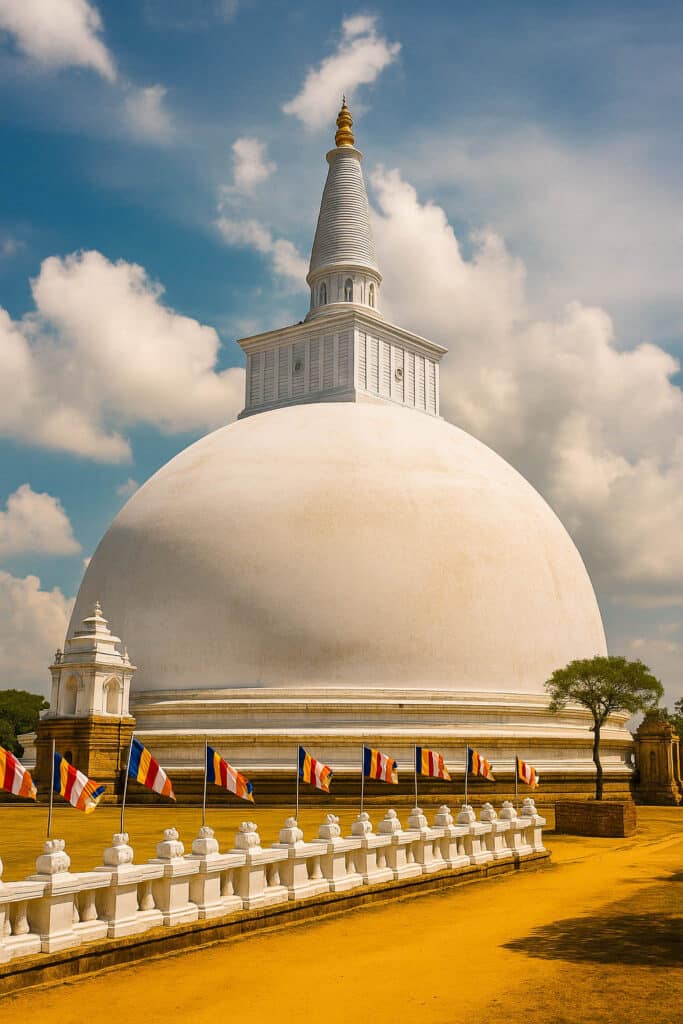
What kind of place is this?
Anuradhapura and Polonnaruwa are Sri Lanka’s two most important ancient capital cities. Today, they are not lively towns in the usual sense, but vast archaeological areas where temples, stupas, monasteries, and palace ruins are spread out over large distances.
Rather than choosing between them, many travellers see these cities as a combined cultural base, offering insight into different periods of Sri Lanka’s early civilisation.
What do you typically do here?
Time here is spent exploring historical sites, often by bicycle or with a guide. In Anuradhapura, the focus is on sacred Buddhist sites, ancient stupas, and pilgrimage areas still actively used today. Polonnaruwa offers a more compact experience, with well-preserved ruins, statues, and royal complexes that are easier to visit in half or full-day loops.
Visits usually start early to avoid heat and crowds, and days are structured around one main site rather than multiple short stops.
In practice, most travellers choose to stay in or near Anuradhapura, rather than Polonnaruwa. Anuradhapura offers a wider choice of accommodation and works better as a base for visiting both ancient cities. Polonnaruwa is usually explored as a day trip, either by car or as part of a guided visit.
Where to stay
Kalaa Kalaththewa Luxury Eco Resort is a peaceful eco-focused stay just outside Anuradhapura, surrounded by nature rather than city traffic. It works well for early starts to the ancient sites while returning to a quiet, restorative setting in the evening.
Recommended activities
Private City Tour of Anuradhapura
A private guided tour through Anuradhapura’s vast ancient city, focusing on the most important stupas, temples, and sacred sites. Ideal if you want context and historical explanation without navigating the area on your own.
Bike Tour of the Ancient City
Exploring Anuradhapura by bicycle is one of the most popular ways to experience the site. This guided bike tour covers large distances comfortably and allows you to move between ruins at a relaxed pace.
Ancient City Private Tour of Polonnaruwa
A private guided tour through the ancient city of Polonnaruwa, focusing on its well-preserved ruins, Buddha statues, palace complexes, and irrigation systems. This tour is well suited if you want historical context without exploring the vast site independently.
Which region is it in?
Both Anuradhapura and Polonnaruwa are located in the Cultural Triangle (Cultural Heartland) of Sri Lanka, in the north-central part of the island.
Who is this area a good fit for?
- Travellers interested in history, archaeology, and Buddhism
- Visitors who enjoy slow, immersive exploration
- Return travellers looking to go beyond surface-level highlights
- Those comfortable with early mornings and walking or cycling
Who is it less suited to?
- Travellers with very limited time
- Visitors seeking lively towns, cafés, or nightlife
- Families with young children who prefer short, compact visits
Best time to visit
The most comfortable time to visit Anuradhapura and Polonnaruwa is during the drier months from December to April, when rainfall is low. Visits are possible year-round, but midday heat can be intense, making early starts essential.
Sigiriya & Dambulla
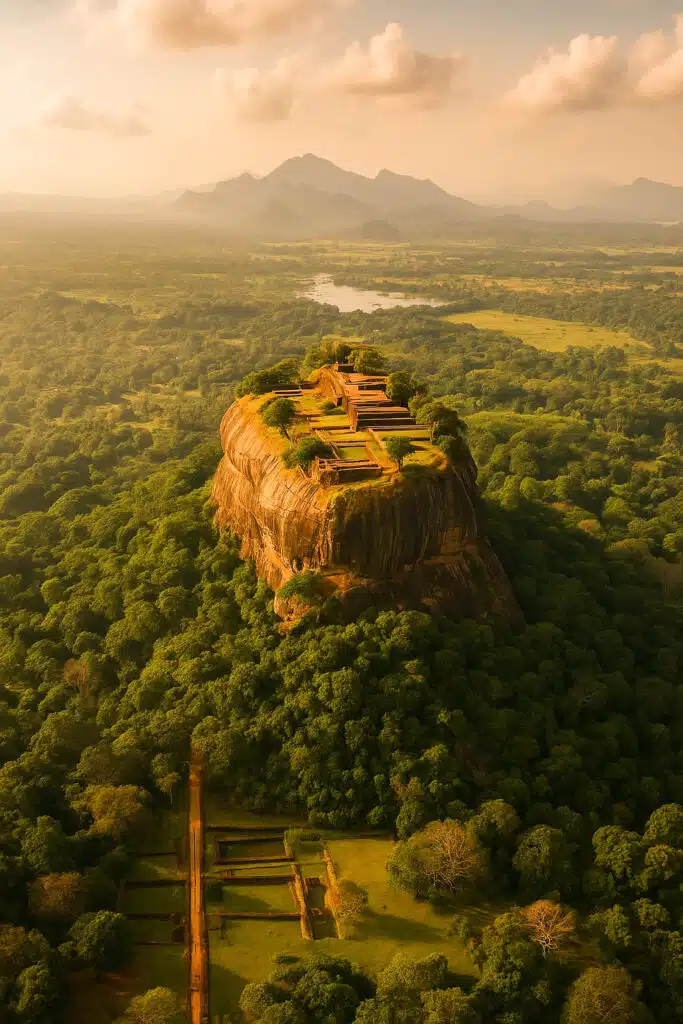
What kind of place is this?
Sigiriya and Dambulla form one of the most recognisable parts of Sri Lanka’s Cultural Triangle. Together, they are best understood as a heritage cluster rather than two separate cities. The focus here is on ancient sites and surrounding rural landscapes, not on city life or urban culture.
Sigiriya is known for its dramatic rock fortress and scenic setting, while Dambulla is centred around its extensive cave temple complex. Neither functions as a lively town; both are primarily used as bases for visiting nearby historical landmarks.
What do you typically do here?
Travellers come here to visit Sigiriya Lion Rock Fortress, hike Pidurangala Rock, and explore the Dambulla Cave Temples. Days usually revolve around one main site, with early starts to avoid heat and crowds. The area is also popular for village experiences, cycling through rural landscapes, and short nature walks between visits.
Most activities are calm and outdoors-focused, with evenings spent resting rather than going out.
In practice, most travellers choose to stay in or near Sigiriya, rather than Dambulla. Sigiriya offers a wider range of accommodation in a greener, more scenic setting and works better as a base for visiting both sites. Dambulla is typically visited as a short stop or day trip.
Where to stay
Water Garden Sigiriya is a spacious and design-led resort close to Lion Rock, offering privacy and calm after early morning climbs. It’s ideal if you want comfort and space while exploring the Cultural Triangle. For a full breakdown, see our best hotels in Sigiriya guide.
Recommended activities
Lion Rock & Dambulla Private Day Tour (Tuk-Tuk or Car)
A private day tour combining Sigiriya Lion Rock and the Dambulla Cave Temples, with transport by tuk-tuk or car depending on your preference. This option works well if you want to see both highlights in one organised day without arranging transport separately.
Sigiriya Village Tour
A calm, locally focused experience that gives insight into rural life around Sigiriya. The tour typically includes village roads, water reservoirs, and simple daily activities, offering a contrast to the major historical sites.
Which region is it in?
Sigiriya and Dambulla are located in the Cultural Triangle (Cultural Heartland) of Sri Lanka, in the north-central part of the island.
Who is this area a good fit for?
- Travellers interested in history and iconic landmarks
- Visitors who enjoy early mornings and structured sightseeing
- Couples and families looking for a calm, scenic base
- First-time travellers exploring the Cultural Triangle
Who is it less suited to?
- Travellers seeking nightlife or cafés within walking distance
- Visitors who prefer compact cities with everything close by
- Those uncomfortable with heat or early starts
Best time to visit
The most comfortable time to visit Sigiriya and Dambulla is during the drier months from December to April. Visits are possible year-round, but temperatures can be high, making sunrise climbs and early site visits the most enjoyable option.
If you’re planning time in the Cultural Triangle, our Sigiriya travel guide explains how to visit the rock fortress, nearby sites, and structure your stay.
Central Highlands
The Central Highlands form the cooler, greener heart of Sri Lanka. This region is defined by hill-country scenery, tea plantations, and winding roads rather than beaches or ancient ruins. Cities here are typically used as scenic bases, offering access to viewpoints, walks, and some of the country’s most famous train routes.
Staying in the Central Highlands is about pace and atmosphere. Travel days are slower, mornings cooler, and time is often spent outdoors rather than moving quickly between sights. Below, we focus on the key cities travellers choose as bases in this region and what each place is best suited for.
Kandy
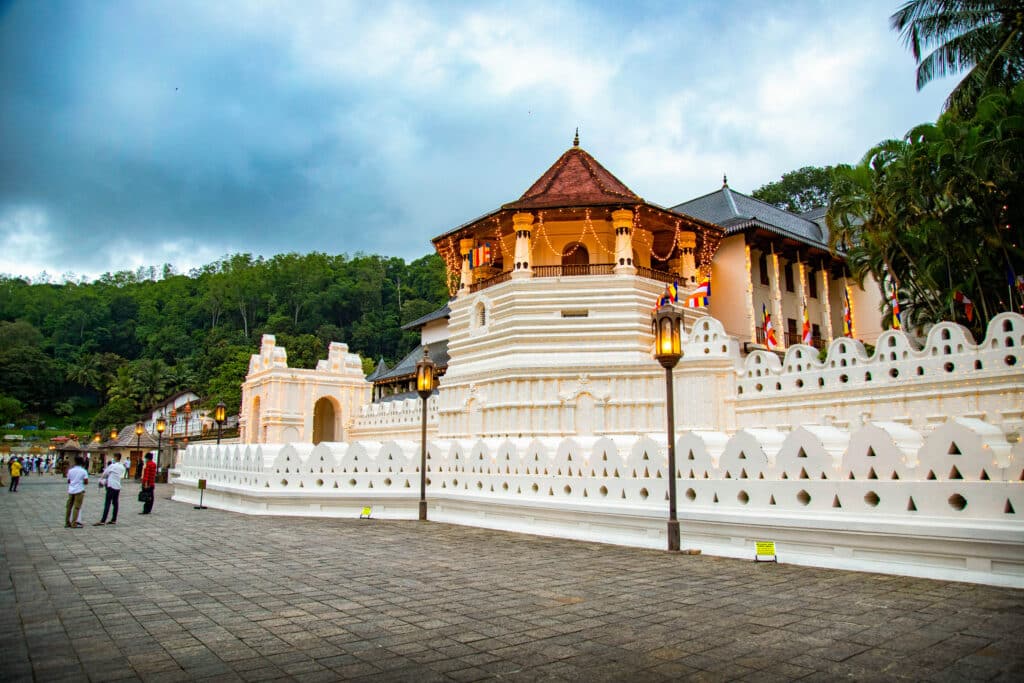
What kind of place is this?
Kandy is Sri Lanka’s cultural and spiritual capital. Set around a central lake and surrounded by hills, it feels noticeably different from coastal cities and rural heritage areas. Kandy is a working city, busy and local, but also deeply rooted in tradition and religious life.
Unlike smaller hill towns, Kandy has a strong urban rhythm, with markets, temples, traffic, and daily rituals all happening side by side.
What do you typically do here?
Travellers in Kandy focus on culture rather than nature. Typical activities include visiting the Temple of the Tooth, walking around Kandy Lake, exploring local markets, and attending traditional dance performances. The city is also the main starting point for the famous hill-country train journey, making it a key stop even for travellers who stay only briefly.
If you’re visiting in July or August, Kandy is also known for the Esala Perahera, one of Sri Lanka’s most important religious festivals. The city comes alive with evening processions featuring traditional dancers, drummers, and decorated elephants. Accommodation fills up quickly during this period, and travel planning requires a bit more flexibility, but it offers a rare insight into living cultural traditions.
Time in Kandy is usually structured around one or two cultural highlights rather than full days of sightseeing.
Where to stay
Adigar’s Manor is a charming heritage-style stay located slightly outside Kandy’s busy centre, offering a quieter base with character. For a full breakdown, see our best hotels in Kandy guide.
We stayed here ourselves and found it a really lovely place to unwind — beautifully set in the green hills, a great pool to cool off, and genuinely warm, welcoming hosts.
Recommended activities in Kandy
Kandy City Tour
A guided city tour covering Kandy’s main cultural landmarks, local neighbourhoods, and viewpoints. This is a practical way to explore the city if you’re short on time or prefer not to navigate traffic and distances on your own.
Temple of the Tooth – Ticket & Guided Visit
A guided visit to the Temple of the Tooth, including entrance tickets and background explanation of the rituals, history, and significance of this sacred site. Useful if you want context and structure, especially during busy visiting hours.
Which region is it in?
Kandy is located in Sri Lanka’s Central Highlands, acting as the main cultural and transport hub of the region.
Who is Kandy a good fit for?
- Travellers interested in culture, religion, and local life
- First-time visitors looking to understand Sri Lanka’s traditions
- Visitors planning to continue into the hill country by train
- Travellers who don’t mind a busy, lived-in city atmosphere
Who is it less suited to?
- Travellers seeking peace, nature, or scenic walks within the city
- Visitors who prefer small towns over urban environments
- Those sensitive to traffic and crowds
Best time to visit
Kandy can be visited year-round. The most comfortable months are January to April, when rainfall is lower. The city experiences more rain during the inter-monsoon periods, but this rarely disrupts short cultural visits.
To explore temples, markets, and cultural highlights in more detail, read our complete Kandy city guide.
Nuwara Eliya
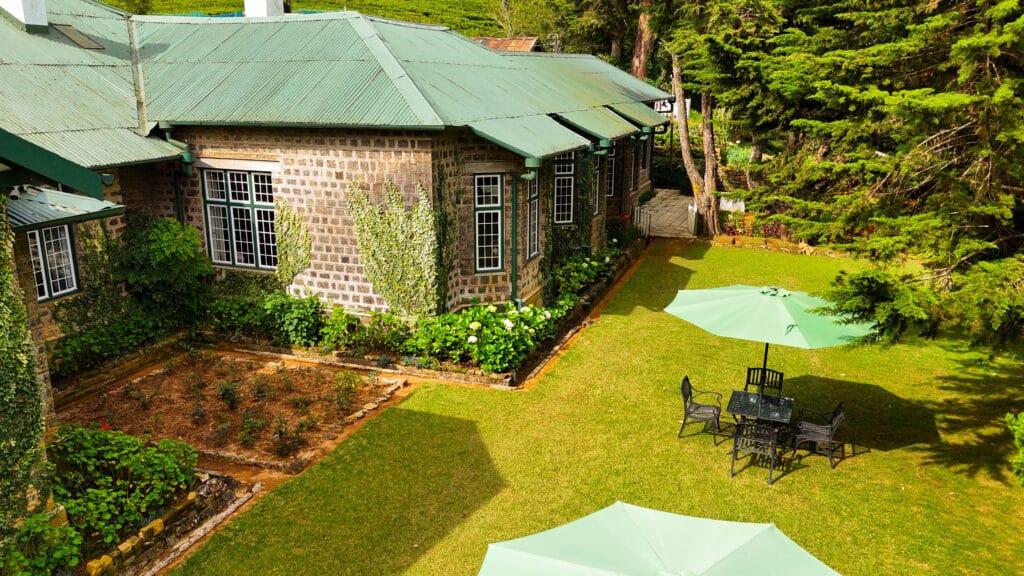
What kind of place is this?
Nuwara Eliya is a compact hill town in the heart of Sri Lanka’s tea country, often described as the country’s most distinctly colonial-feeling place. With its cooler temperatures, misty mornings, and surrounding tea estates, it feels very different from both Kandy and Ella. The town itself is small and functional, while the landscape around it is the main draw.
Nuwara Eliya works best as a scenic highland base rather than a lively destination.
What do you typically do here?
Travellers come to Nuwara Eliya for tea plantations, cooler weather, and gentle exploration. Typical activities include visiting a tea factory, walking around Gregory Lake, strolling through Victoria Park, and driving through the surrounding hills to viewpoints and waterfalls. Days here are slower and quieter, often shaped by weather and short outings rather than full schedules.
Nuwara Eliya is also a common stop between Kandy and Ella, breaking up the journey through the highlands.
Where to stay
Bluechip Leisure offers a cosy and practical base in Sri Lanka’s tea country, with easy access to estates and viewpoints.
We stayed here ourselves and found it a comfortable and convenient option — especially nice after cool, misty highland days.
Recommended activities in Nuwara Eliya
Horton Plains National Park – World’s End
A guided visit to Horton Plains National Park, including the early-morning walk to World’s End. This high-altitude plateau offers a very different landscape from the rest of Sri Lanka, with open grasslands, cloud forest, and sweeping escarpment views. Best done early to avoid clouds and crowds.
Tea Factory & Tea Plucking Tour
A hands-on introduction to Sri Lanka’s tea culture, combining a visit to a working tea factory with tea plucking on the surrounding estates. A good way to understand how the hill country landscape and tea industry are connected.
Which region is it in?
Nuwara Eliya is located in Sri Lanka’s Central Highlands, surrounded by tea estates and mountain scenery.
Who is Nuwara Eliya a good fit for?
- Travellers who enjoy cooler temperatures
- Visitors interested in tea culture and landscapes
- Couples and families looking for a calm, scenic base
- Those who prefer quiet evenings over nightlife
Who is it less suited to?
- Travellers seeking cafés, nightlife, or a social atmosphere
- Visitors expecting dramatic hikes or viewpoints within walking distance
- Those who dislike cold or damp weather
Best time to visit
The most pleasant months to visit Nuwara Eliya are January to April, when rainfall is lower and temperatures are mild. The town sees frequent rain from May to September, with misty conditions that can limit views but add to the atmosphere for some travellers. We visited Nuwara Eliya ourselves in August and experienced dry weather throughout our stay, showing how conditions can vary from year to year.
Our Nuwara Eliya travel guide covers tea estates, viewpoints, and how to plan a stay in Sri Lanka’s hill-country tea region.
Ella
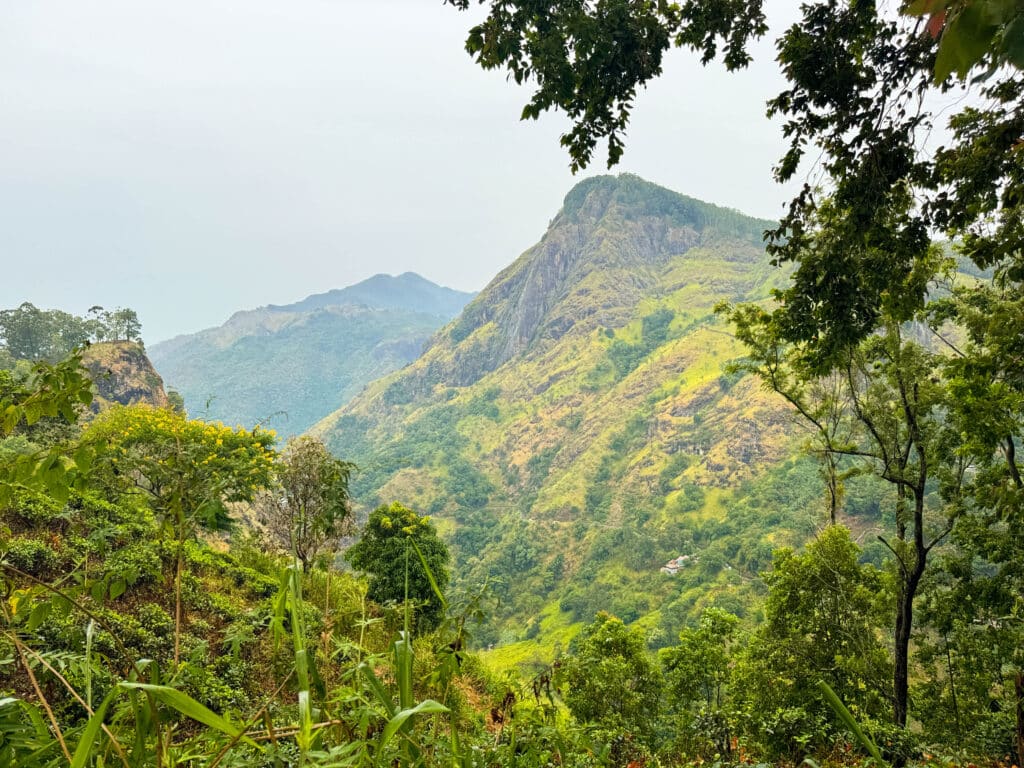
What kind of place is this?
Ella is a small mountain town in Sri Lanka’s hill country, best known for its scenery and relaxed, backpacker-friendly atmosphere. The town attracts a mix of independent travellers, hikers, and long-term backpackers, giving it a social but easygoing feel.
Compared to Nuwara Eliya, Ella feels younger, greener, and more informal, with guesthouses, cafés, and viewpoints clustered close together. The town itself is compact and walkable, surrounded by tea-covered hills, valleys, and forested peaks.
Ella functions as a scenic and activity-focused base, rather than a cultural or urban destination.
What do you typically do here?
Time in Ella is centred around nature and light adventure. Travellers hike to viewpoints such as Little Adam’s Peak or Ella Rock, visit waterfalls, and watch trains cross the iconic Nine Arch Bridge. Days are flexible and outdoors-focused, with cafés and viewpoints easily combined.
Evenings are relaxed, often spent dining in town or enjoying views over the hills rather than moving between sights.
Where to stay
Nine Arch Lodge is known for its direct views of the iconic Nine Arch Bridge, making it a strong choice for sunrise visits before the crowds arrive. For a full breakdown, see our best hotels in Ella guide.
We stayed here ourselves and genuinely loved it — the views are special, and the hospitality made it feel warm and personal.
or a broader comparison of the best areas, views, and value-for-money options, see our Ella Sri Lanka Hotels: Where to Stay for the Best Views, Location & Value guide. It breaks down which part of Ella suits different travel styles — whether you prioritise scenery, walkability, or a quieter hillside setting.
Recommended activities in Ella
Ella Highlights Day Tour: Ella Rock, Little Adam’s Peak & Nine Arch Bridge
A guided day tour covering Ella’s most iconic viewpoints and landmarks in one route. Ideal if you want to experience the highlights without planning multiple hikes or transport yourself.
Sri Lankan Cooking Class in Ella
A relaxed cooking experience focused on traditional Sri Lankan dishes, using local ingredients and techniques. A nice way to slow down after hiking days and connect with local food culture.
Diyaluma Waterfall Adventure with Local Guide & Lunch
A guided excursion to Diyaluma Falls, one of Sri Lanka’s most impressive waterfalls, including natural pools and viewpoints. This experience adds a more adventurous element to your stay in Ella.
Which region is it in?
Ella is located in Sri Lanka’s Central Highlands, along the southern edge of the hill country and on the scenic train route from Kandy and Nuwara Eliya.
Who is Ella a good fit for?
- Travellers who enjoy hiking and viewpoints
- Couples and solo travellers looking for a relaxed mountain base
- Visitors wanting a social but low-key atmosphere
- Those combining the hill country with the south coast
Who is it less suited to?
- Travellers seeking cultural depth or historic sites
- Visitors who prefer quiet, traditional towns
- Families looking for short, flat walking distances only
Best time to visit
Ella can be visited year-round, but the clearest views are usually during the drier months from January to April. Rain is more common from May to September, when trails can be muddy and cloud cover may limit viewpoints, though the landscape remains lush.
For hikes, viewpoints, and practical tips, our Ella travel guide goes deeper into what to do and how to pace your time here.
Wildlife Areas in Sri Lanka
Sri Lanka’s wildlife areas are not places you visit for city life or atmosphere, but functional bases for safari experiences. Accommodation is usually spread out near park entrances, and daily rhythms revolve around early-morning and afternoon game drives rather than sightseeing.
In this section, we focus on the main national parks travellers choose for safaris in Sri Lanka. Each park offers a different type of wildlife experience — from elephants in open landscapes to leopard tracking in denser terrain — and is located in a different part of the country. Choosing the right park depends on what you want to see, how much time you have, and how the park fits into your overall route.
Udawalawe
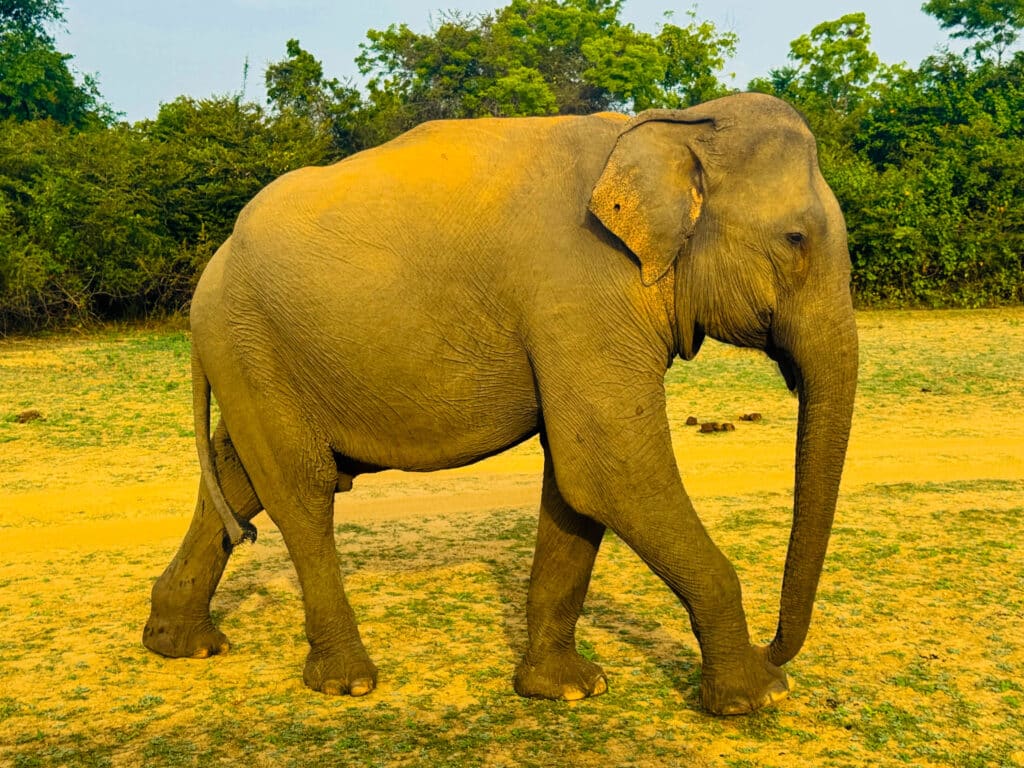
What kind of place is this?
Udawalawe is one of Sri Lanka’s most accessible and straightforward safari destinations. The area around the national park is rural and quiet, with lodges and guesthouses clustered close to the entrance rather than in a central town. Udawalawe works best as a short wildlife stop, often added between the Central Highlands and the south coast.
What do you typically do here?
Travellers visit Udawalawe almost exclusively for safari drives. The park’s open grasslands and reservoirs make wildlife easier to spot, especially elephants, which are present year-round. Safaris here feel relatively calm and predictable, making Udawalawe a popular choice for first-time safari visitors or families.
Most stays last one night, with either a morning or afternoon game drive.
Where to stay
Vimanra Udawalawe is a practical and comfortable safari lodge close to the park entrance, making early departures easy. For a full breakdown, see our best safari lodges in Sri Lanka guide.
We stayed here ourselves and found it a great overnight safari stop — spacious rooms, a pleasant pool, and surprisingly good food.
Recommended safaris in Udawalawe
Half-Day Safari in Udawalawe National Park
A half-day safari is the most common way to experience Udawalawe. The park’s open landscapes make wildlife easy to spot, with a high chance of seeing elephants alongside water buffalo, deer, and birdlife. Ideal if you want a straightforward safari without staying multiple nights.
Half-Day Safari + Elephant Transit Home Visit
This option combines a safari drive in Udawalawe National Park with a visit to the Elephant Transit Home, where orphaned elephants are rehabilitated before being released back into the wild. A good choice if you want to add an educational element to your wildlife stop.
Which region is it in?
Udawalawe is located in southern Sri Lanka, between the Central Highlands and the south coast.
Who is Udawalawe a good fit for?
- Travellers who want a high chance of seeing elephants
- Families and first-time safari visitors
- Those with limited time looking for a simple wildlife experience
Who is it less suited to?
- Travellers focused on rare predator sightings
- Visitors looking for a remote or rugged safari setting
Best time to visit
Udawalawe can be visited year-round. Wildlife viewing is often best during the drier months from May to September, when animals gather around water sources.
If wildlife is a key part of your trip, our Udawalawe guide explains safari options, timing, and how to plan a short wildlife stop.
Yala
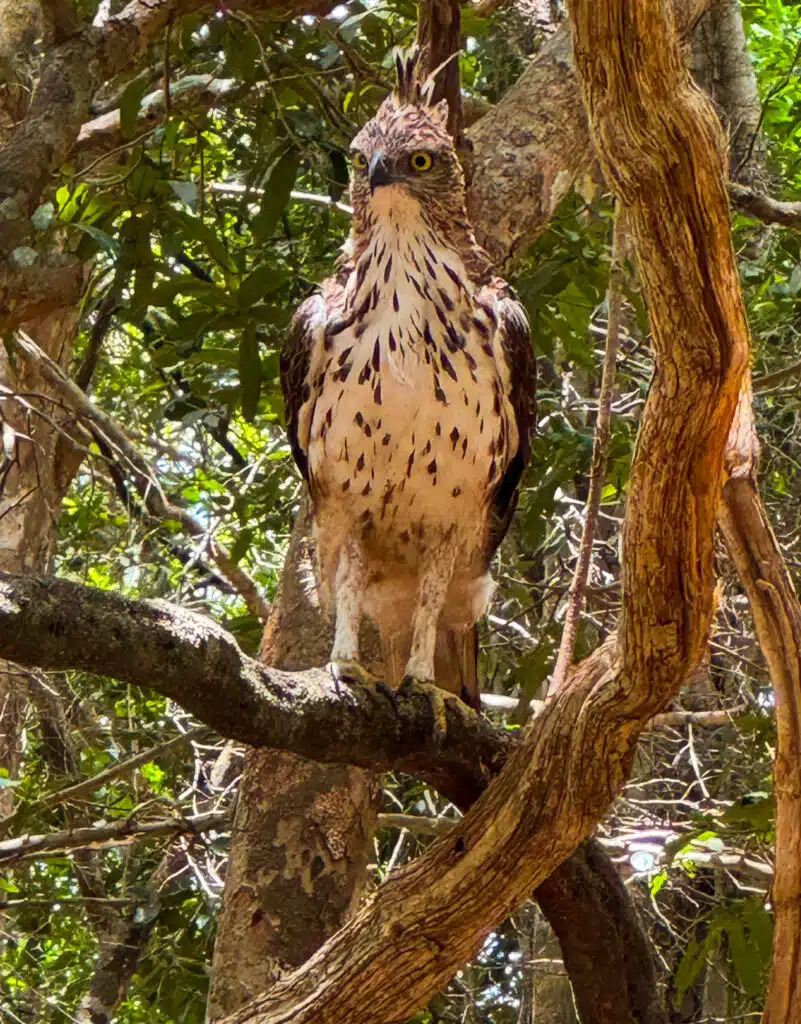
What kind of place is this?
Yala is Sri Lanka’s most famous national park and is best known for its high leopard density. The surrounding area is spread out, with accommodation located near different park entrances rather than in a single town. Yala functions as a wildlife gateway, not as a destination in itself.
What do you typically do here?
Travellers come to Yala for safari drives, usually one or two, scheduled early in the morning or late in the afternoon. In addition to leopards, the park is home to elephants, crocodiles, sloth bears, and a wide range of birdlife. Compared to Udawalawe, Yala safaris can feel busier, especially during peak season, but offer a more diverse wildlife experience.
Most visitors stay one or two nights, depending on how many game drives they want to do.
Where to stay
Wild Coast Tented Lodge (Relais & Châteaux) offers a high-end safari experience near Yala National Park, combining luxury tented suites with a true wilderness atmosphere. It’s ideal for travellers who want a refined safari stay without losing the sense of being in nature. For a full breakdown, see our best safari lodges in Sri Lanka guide.
Recommended safaris in Yala
Morning Safari in Yala National Park
A morning safari is the most popular way to explore Yala. Early hours offer cooler temperatures, better light, and higher chances of wildlife activity. In addition to elephants and birdlife, Yala is best known for its leopard population, making this a highlight for many visitors.
Private Safari in Yala National Park
A private safari gives you your own jeep and driver-guide, allowing for a more flexible and less rushed experience. This option is ideal if you want to spend more time at sightings, avoid busy vehicles, or travel as a family or small group.
Which region is it in?
Yala is located in south-eastern Sri Lanka, close to the southern coast and often combined with beach destinations such as Mirissa or Tangalle.
Who is Yala a good fit for?
- Travellers hoping to spot leopards
- Wildlife enthusiasts who don’t mind busier parks
- Visitors combining safari with south-coast beach time
Who is it less suited to?
- Travellers seeking quiet, low-traffic safari experiences
- Visitors short on time who prefer simpler logistics
Best time to visit
The best time to visit Yala is February to July, when wildlife sightings are more frequent due to lower water levels. Parts of the park may close during September and October for maintenance, so timing should be checked in advance.
Wilpattu
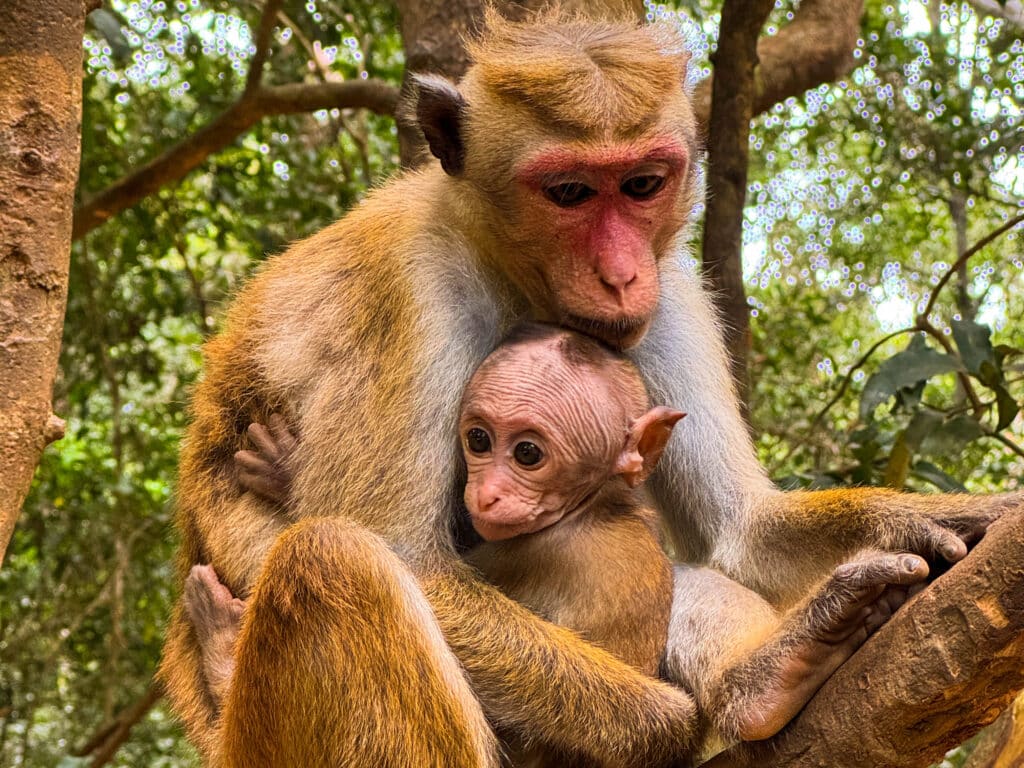
What kind of place is this?
Wilpattu is Sri Lanka’s largest national park and one of its most underrated wildlife destinations. The surrounding area is rural and undeveloped, with small lodges and guesthouses rather than towns or tourist centres. Wilpattu functions purely as a wildlife base, not as a place for sightseeing or nightlife.
What do you typically do here?
Travellers come to Wilpattu almost exclusively for safari drives. The park is known for its natural lakes (villus), open forest landscapes, and calm atmosphere. Wildlife sightings can include elephants, sloth bears, crocodiles, deer, and leopards. Compared to Yala, safaris here feel less crowded and more immersive.
Where to stay
Thamaravila near Wilpattu provides a calm and nature-focused base close to the park entrance, fitting the area’s quieter safari atmosphere. For a full breakdown, see our best safari lodges in Sri Lanka guide.
We stayed here ourselves and found it a genuinely peaceful place to slow down — friendly people and perfect for early safari mornings.
Recommended safari in Wilpattu
Half-Day or Full-DAy Private Safari in Wilpattu
A half-day private safari is ideal if you want to experience Wilpattu’s wildlife without committing to a full day in the park. With your own jeep and driver-guide, you explore the park at a relaxed pace, with time to stop at sightings and move through different areas depending on wildlife activity.
Which region is it in?
Wilpattu is located in Northern Sri Lanka, close to the north-west coast and bordering the Cultural Heartland.
Who is it a good fit for?
- Travellers who prioritise wildlife and nature
- Visitors looking for a quieter alternative to Yala
- Photographers and slow travellers
- Return visitors exploring less-visited areas
Who is it less suited to?
- Travellers with very limited time
- Families seeking short travel days and comfort-focused stays
- Visitors expecting resort-style accommodation
Best time to visit
The best time to visit Wilpattu is February to October, when wildlife gathers around water sources. The park typically closes during the peak monsoon season (November to January), so seasonal access should always be checked in advance.
For a quieter safari experience, our Wilpattu National Park guide covers what to expect, when to visit, and how it differs from other parks.
South Coast Sri Lanka
After exploring the Cultural Triangle, wildlife parks or the hill country, many travellers choose the south coast to slow the pace. This region is shaped by beach towns rather than cities, with places that function as coastal bases for swimming, surfing, food, and short excursions.
In this section, we focus on the main towns travellers choose along the south coast — what kind of beach experience each offers, who it suits best, and how they differ in atmosphere and pace.
Mirissa & Weligama
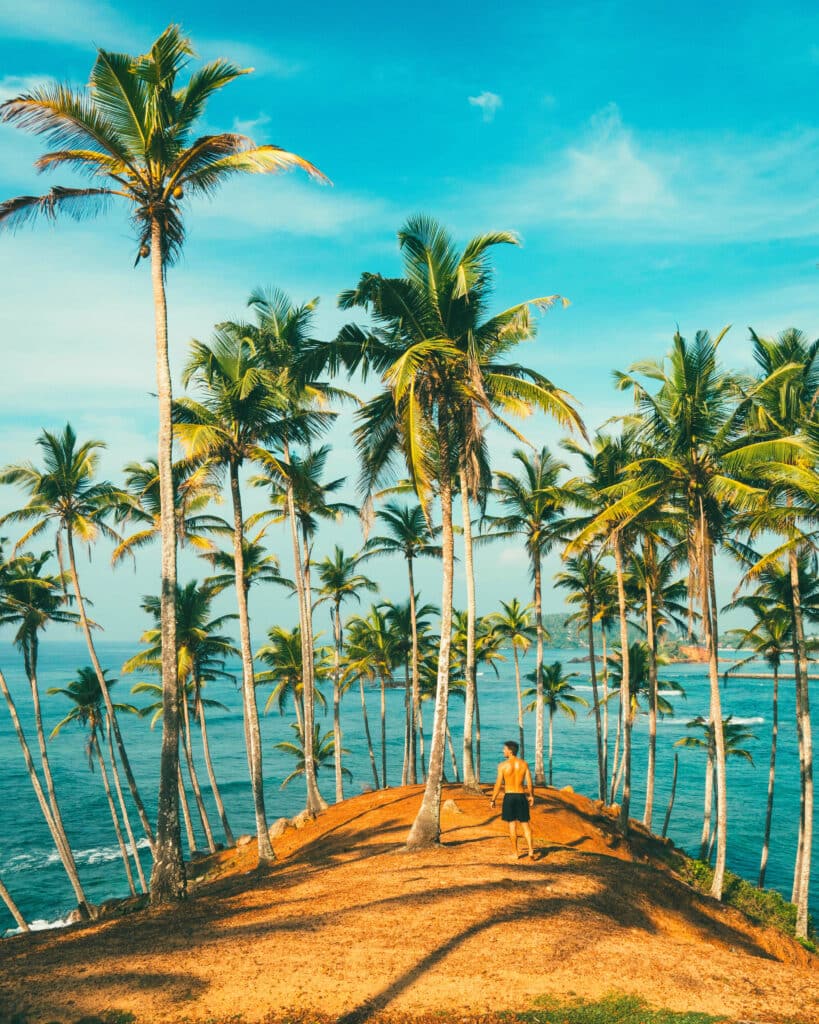
What kind of place is this?
Mirissa and Weligama are neighbouring beach towns on Sri Lanka’s south coast, often treated as one combined area. Together, they form a relaxed coastal base with a strong focus on the ocean, cafés, and laid-back travel rather than sightseeing.
Weligama feels slightly more spread out and surf-oriented, while Mirissa is more compact and social, with a mix of beach life and evening atmosphere.
What do you typically do here?
Time in Mirissa and Weligama revolves around the beach. Travellers swim, surf, relax in cafés, and take boat trips offshore. The area is also known for whale watching, particularly during the season, and for beginner-friendly surf conditions in Weligama.
Days are unstructured and flexible, often built around tides, waves, and sunset rather than fixed schedules.
Where to stay
The Six Weligama is a stylish boutique stay close to the surf beaches, offering comfort while remaining connected to the town’s relaxed coastal rhythm. For a full breakdown, see our best beach hotels in Sri Lanka guide.
Recommended activities in Mirissa & Weligama
Surf Lessons in Weligama
Weligama is one of the best places in Sri Lanka to learn how to surf, thanks to its long sandy bay and gentle waves. These surf lessons are suitable for beginners and focus on building confidence in the water, with guidance adapted to your level.
Whale Watching Tour in Mirissa
A boat tour off the coast of Mirissa to spot blue whales, sperm whales, and dolphins during the season. Mirissa is one of Sri Lanka’s best-known whale watching bases, with early-morning departures offering the highest chances of sightings.
Snorkelling with Turtles (Mirissa)
A coastal snorkelling experience in areas where sea turtles are often found close to shore. This activity works well as a relaxed ocean experience and is suitable for confident swimmers looking to explore marine life without venturing far offshore.
Which region is it in?
Mirissa and Weligama are located on Sri Lanka’s south coast, roughly two hours south of Galle.
Who is this area a good fit for?
- Travellers looking for relaxed beach time
- Surfers and beginner surfers
- Couples and solo travellers
- Visitors wanting a social but not party-heavy atmosphere
Who is it less suited to?
- Travellers seeking quiet, undeveloped beaches
- Families looking for very calm, shallow swimming bays only
- Visitors uninterested in beach or ocean activities
Best time to visit
The best time to visit Mirissa and Weligama is during the dry season from December to April, when seas are calm and weather is sunny. From May to September, the south coast sees heavier surf and rain, making swimming less ideal but still attractive for experienced surfers.
Galle & Unawatuna
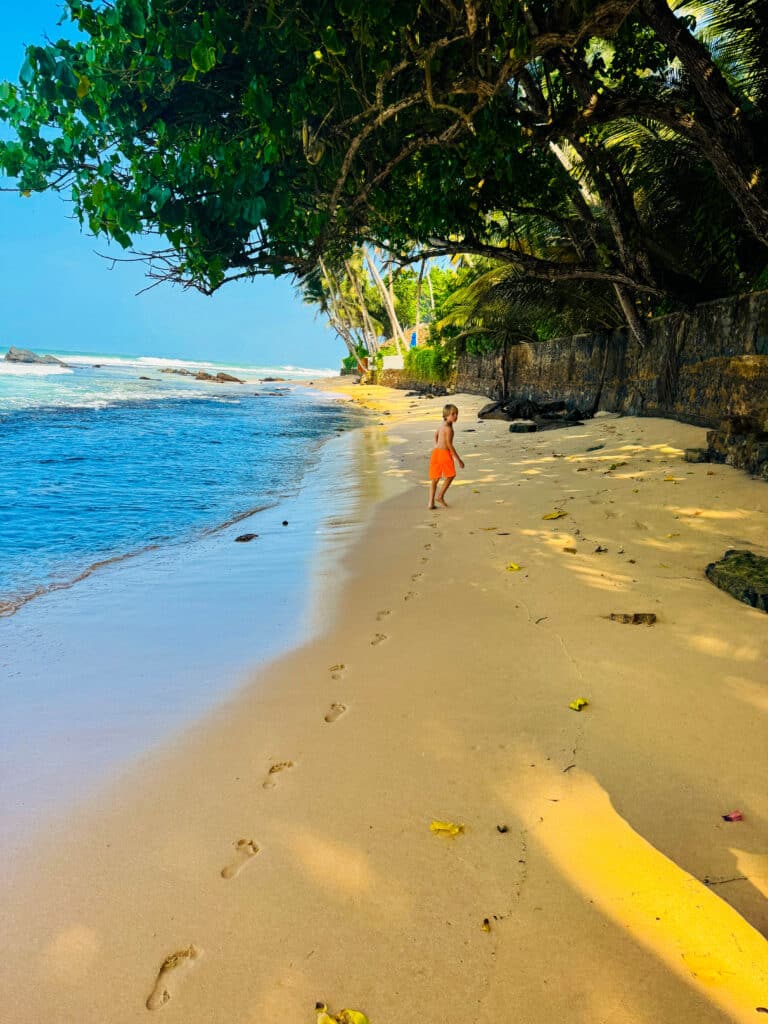
What kind of place is this?
Galle and Unawatuna are often combined as one south-coast base, but they offer two very different experiences. Galle is a historic coastal city centred around its fortified old town, while Unawatuna is a relaxed beach town just outside the city, known for swimming bays and an easygoing atmosphere.
Together, they work well as a base for travellers who want to combine culture and beaches without constantly moving accommodation.
What do you typically do here?
In Galle, time is spent wandering through the historic fort, walking along the ramparts, visiting small museums, galleries, and cafés, and watching sunset over the ocean. The pace is slow and walkable, with most highlights concentrated inside the fort walls.
Unawatuna is used primarily for beach time. Travellers swim in the calm bay, snorkel near the rocks, relax at beachfront cafés, and take short tuk-tuk rides between nearby beaches. Wijaya Beach, just outside the main bay, is particularly popular for spotting sea turtles close to shore, often without needing a boat.
In practice, most travellers stay in Unawatuna or nearby beach areas, rather than inside Galle Fort. Galle is usually explored on foot as a day visit, while Unawatuna works better as a beach base.
Where to stay
Rockside Cabanas is a laid-back beachside stay with a relaxed, tropical atmosphere close to Unawatuna’s calm swimming bays. For a full breakdown, see our best hotels in Galle guide.
We didn’t stay overnight, but we did eat here and the setting felt genuinely easy and inviting — the kind of place that matches the area’s relaxed vibe.
Recommended activities in Galle & Unawatuna
Galle Fort Walking Tour with a Resident
A guided walk through Galle Fort led by a local resident, focusing on everyday life, history, and hidden corners beyond the main streets. A good way to understand how the fort functions as a lived-in neighbourhood rather than just a historic site.
Galle Cooking Class
A hands-on cooking class inside or near Galle Fort, centred around traditional Sri Lankan dishes and local ingredients. This experience works well as a cultural activity after exploring the fort on foot.
Snorkelling in Unawatuna
A guided snorkelling experience along Unawatuna’s coastline, focusing on shallow reefs and marine life close to shore. This activity pairs well with calm sea conditions and is suitable for confident swimmers looking to explore underwater life without travelling far.
Which region is it in?
Galle and Unawatuna are located on Sri Lanka’s south coast, roughly two hours south of Colombo.
Who is this area a good fit for?
- Travellers wanting a mix of culture and beach time
- Couples and families looking for calm swimming bays
- Visitors who enjoy historic settings without large crowds
- Those ending their trip on the coast
Who is it less suited to?
- Travellers looking for surfing-focused beach towns
- Visitors seeking remote or undeveloped beaches
- Those who prefer lively nightlife or party scenes
Best time to visit
The best time to visit Galle and Unawatuna is during the dry season from December to April, when seas are calm and conditions are ideal for swimming and sightseeing. From May to September, the south coast experiences heavier rain and rougher seas, making beach conditions less predictable. But we were there in July and didn't have any rain at all.
To dive deeper into history, food, and daily life inside the fort, see our full Galle city guide.
Our Unawatuna beach guide explains the different bays, swimming conditions, and how to choose the right beach base.
East Coast Sri Lanka
Sri Lanka’s east coast has a very different rhythm from the south. During the right months, seas are calm, beaches are wide and uncrowded, and travel feels noticeably slower. Towns along the east coast work mainly as seasonal beach bases, chosen deliberately based on weather and travel timing.
This part of the country appeals especially to travellers who want space, warm water, and a more relaxed pace after busier routes elsewhere on the island.
Trincomalee
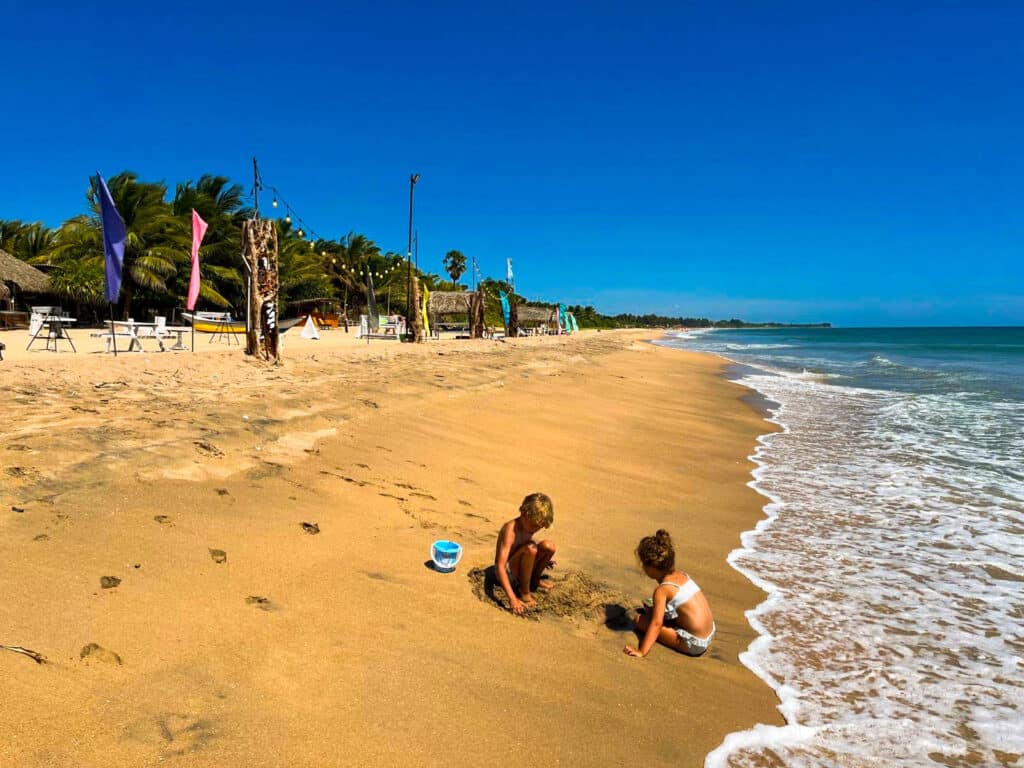
What kind of place is this?
Trincomalee is a coastal town on Sri Lanka’s east coast, best known for its natural harbour, long beaches, and calm seas during the summer months. Compared to south-coast towns, Trincomalee feels quieter, less developed, and more spread out.
The area is used as a relaxed beach base, with accommodation often located near beaches such as Nilaveli or Uppuveli rather than in the town centre itself.
What do you typically do here?
Travellers come to Trincomalee for swimming, snorkelling, and slow beach days. During the east-coast season, the calm sea conditions also make Trincomalee a base for whale and dolphin watching, with boat trips departing offshore. Short outings often include snorkelling just off the coast, visits to nearby temples, or relaxed time along the beach.
Evenings are generally quiet, focused on beachside dining rather than nightlife.
Where to stay
Regina Beach Bungalow is a simple and relaxed east-coast stay located close to calm seasonal beaches. It suits travellers who prioritise location and an informal, beach-first atmosphere. For a full breakdown, see our best beach hotels in Sri Lanka guide.
Recommended activities in Trincomalee
Whales & Dolphins Watching Tour
A boat tour off the coast of Trincomalee focused on spotting whales and dolphins during the east-coast season. Sea conditions here are often calmer than on the south coast, making this a good alternative base for marine wildlife experiences.
Snorkelling Tour in Trincomalee
A guided snorkelling trip to nearby reefs and coastal areas, offering clear water and marine life during the summer months. Suitable for confident swimmers looking to explore the underwater side of the east coast.
Which region is it in?
Trincomalee is located on Sri Lanka’s east coast, facing the Indian Ocean.
Who is Trincomalee a good fit for?
- Travellers visiting Sri Lanka between May and September
- Families and couples looking for calm swimming conditions
- Visitors who prefer quiet beach towns over busy resort areas
- Those combining culture with beach time
Who is it less suited to?
- Travellers visiting during the south-coast high season only
- Visitors looking for nightlife or social beach scenes
- Short stays without flexibility in travel dates
Best time to visit
The best time to visit Trincomalee is from May to September, when the east coast is dry and the sea is calm. Outside this period, weather conditions are less predictable.
Arugam Bay
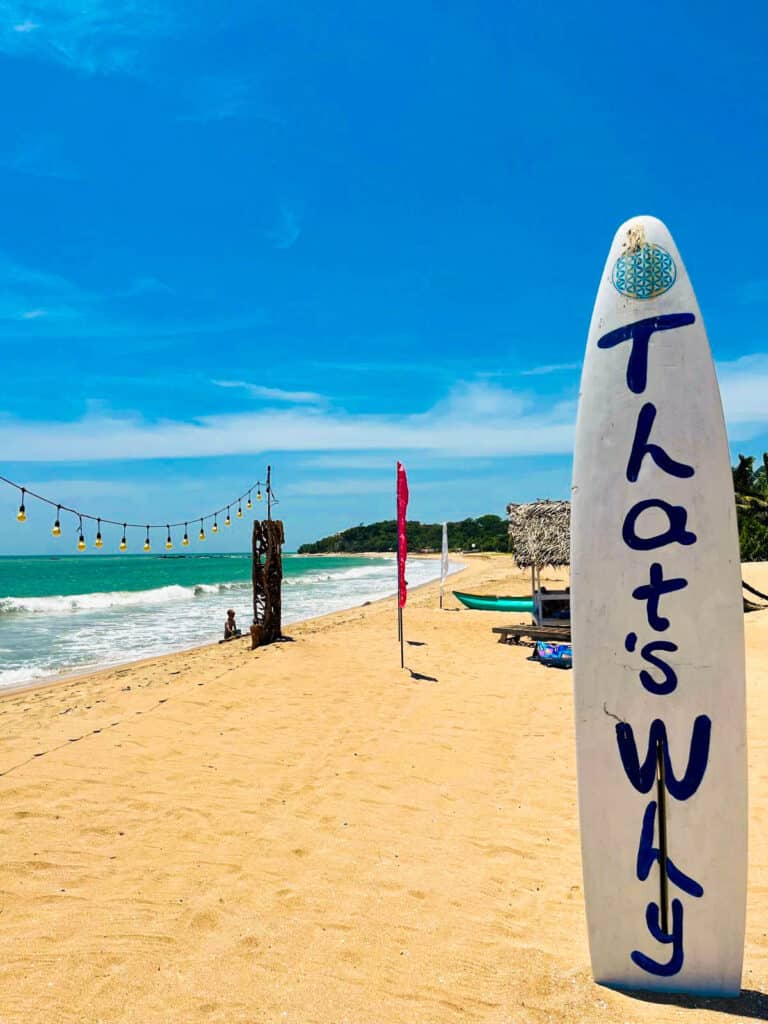
What kind of place is this?
Arugam Bay is a small surf town on the east coast, internationally known for its consistent waves and relaxed, backpacker-oriented atmosphere. The town itself is informal and low-rise, with guesthouses, cafés, and surf camps lining the main road.
Arugam Bay functions as a surf-focused beach base, rather than a general beach destination.
What do you typically do here?
Life in Arugam Bay revolves around surfing, slow mornings, and sunset gatherings. Travellers spend their days in the water, relaxing between sessions, or exploring nearby beaches and viewpoints. On non-surf days, yoga sessions, short scooter rides, and casual cafés shape the rhythm of the town.
The social scene is friendly and international, without the party-heavy feel of some other surf destinations.
Where to stay
Jetwing Kottukal Beach House offers a more refined base in Arugam Bay, combining coastal design with privacy and comfort. It works well for travellers mixing surf mornings with quieter, slower afternoons. For a full breakdown, see our best beach hotels in Sri Lanka guide.
Recommended activity in Arugam Bay
Surf Lessons in Arugam Bay
Surf lessons in Arugam Bay are ideal if you want to learn or improve your surfing skills in one of Sri Lanka’s best-known surf destinations. Lessons are tailored to conditions and experience level, making them suitable for beginners and intermediate surfers.
Yoga Class in Arugam Bay
A yoga class in Arugam Bay is a popular way to balance surf sessions and travel days. Classes focus on stretching, strength, and relaxation, and are suitable for all levels — from complete beginners to experienced practitioners.
Which region is it in?
Arugam Bay is located on Sri Lanka’s east coast, south of Trincomalee.
Who is Arugam Bay a good fit for?
- Surfers and surf learners
- Backpackers and long-term travellers
- Visitors looking for a social but laid-back beach town
- Those travelling Sri Lanka during the east-coast season
Who is it less suited to?
- Travellers uninterested in surfing or beach life
- Families looking for calm, shallow swimming bays
- Visitors seeking cultural or historic sites nearby
Best time to visit
Arugam Bay is best visited from May to September, when surf conditions are at their best and the town is most active. Outside this season, many businesses close and travel becomes quieter.
Northern Sri Lanka
Northern Sri Lanka feels very different from the rest of the country. Travel here is slower, less polished, and far less focused on classic sightseeing. Instead, this part of Sri Lanka appeals to travellers who are interested in wildlife, history, and places that still feel largely untouched by mass tourism.
In this section, we focus on key places in the north that work as bases for exploration rather than short stopovers. Expect quieter towns, longer drives, and a more local rhythm of travel — but also some of the most rewarding experiences for travellers willing to go a little off the beaten path.
Jaffna
What kind of place is this?
Jaffna is the cultural and historical heart of northern Sri Lanka. After decades of limited access, the city has reopened to travellers and feels markedly different from the rest of the country. Life here is slower, more traditional, and strongly shaped by Tamil culture, Hindu temples, and a deep local identity.
Jaffna is not polished or touristy. Instead, it offers insight into a side of Sri Lanka that many travellers never see.
What do you typically do here?
Time in Jaffna is spent exploring local culture rather than ticking off major sights. Travellers visit Hindu temples, wander through neighbourhoods, explore markets, and sample Jaffna’s distinct Tamil cuisine, which is known for bold flavours and spice blends. Popular day trips include nearby islands such as Delft Island or coastal areas north of the city.
Jaffna works best as a place to slow down, observe daily life, and understand Sri Lanka’s cultural diversity.
Where to stay
The Thinnai Hotel combines modern comfort with subtle northern Sri Lankan design influences, making it a practical base for exploring Jaffna’s temples, markets, and surrounding islands. The courtyard and pool offer welcome relief in the region’s dry heat.
Which region is it in?
Jaffna is located in Northern Sri Lanka, at the northern tip of the island.
Who is Jaffna a good fit for?
- Travellers interested in culture, history, and local life
- Visitors looking to explore beyond the classic tourist route
- Return travellers wanting a deeper understanding of Sri Lanka
- Food lovers curious about regional Tamil cuisine
Who is it less suited to?
- Travellers short on time
- Visitors looking for beaches, wildlife, or resort-style stays
- Those expecting a highly developed tourist infrastructure
Best time to visit
The best time to visit Jaffna is May to September, when the north is relatively dry and sunny. The region experiences heavier rainfall between October and January, which can affect travel comfort
How These Cities Are Commonly Combined
Understanding the best cities to visit in Sri Lanka helps you avoid unnecessary backtracking and choose bases that logically connect. Thanks to the country’s compact size, it’s possible to combine culture, hill country, wildlife, and beaches in a single trip without constant long travel days.
These routes show how the best cities to visit in Sri Lanka are commonly combined into realistic travel loops. They show how travellers typically link cities based on geography, travel time, and experience — while leaving room to adjust pace, skip sections, or swap coasts depending on the season.
10-Day Highlights Loop: A balanced route for first-time visitors who want variety without rushing.
Negombo → Sigiriya / Dambulla → Kandy → Ella → Udawalawe → Galle → Unawatuna
Combines cultural highlights, hill-country scenery, a short safari, and relaxed beach time. Travel days are manageable and flow naturally southwards. Udawalawe works well as a one-night wildlife stop between Ella and the coast.
For a detailed day-by-day plan with travel times and transport options, see our 10-day Sri Lanka itinerary.
14-Day Route A – East Coast & Summer Flow (May to September): Ideal for travellers visiting during the east-coast season who want calm seas and fewer crowds.
Galle / Unawatuna → Ella → Kandy → Sigiriya / Dambulla → Trincomalee → Negombo
Designed around seasonal weather patterns. Trincomalee fits logically after Sigiriya due to geography. Ends close to the international airport for an easy departure.
For a slower, day-by-day version including seasonal swaps and pacing advice, see our 2-week Sri Lanka itinerary.
14-Day Route B – South Coast & Winter Flow (December to April): A classic route for first-time travellers visiting during the south-coast high season.
Negombo → Sigiriya / Dambulla → Kandy → Ella → Yala → Mirissa or Weligama → Galle / Unawatuna
Follows a natural cultural-to-coast progression. Wildlife fits logically after the hill country. Beach time comes at the end when sea conditions are calmest.
For a complete breakdown with transport tips and realistic travel times, see our 2-week Sri Lanka itinerary.
7-Day Culture & Coast Route: A compact option for travellers with limited time who want depth rather than full island coverage.
Sigiriya → Kandy → Galle → Unawatuna
Focuses on cultural highlights and one relaxed beach base. Avoids long inland detours. Works well for shorter holidays or combined trips.
If you’re short on time, our 7 days Sri Lanka itinerary overview helps turn this into a clear and practical plan.
Getting Around Sri Lanka’s Cities and Regions
Once you’ve chosen which parts of Sri Lanka to visit, the next step is deciding how to move between them. While distances on the map may look short, travel times can vary significantly depending on road conditions, terrain, and transport choice.
In practice, most travellers combine different transport options depending on the route and pace of their trip.
Private driver
Hiring a private driver is the most practical and stress-free way to travel between Sri Lanka’s cities and regions. It allows you to move at your own pace, stop along the way, and avoid the complexity of coordinating trains, buses, or multiple transfers.
We travelled with a Sri Lanka Personal Tour Driver ourselves and found it to be one of the most comfortable and flexible ways to explore the country.
This option works especially well for families, longer itineraries, or travellers who want flexibility without constantly planning transport details.
Train travel
Train journeys are mainly used for scenic routes, rather than efficiency. The most famous stretch is between Kandy, Nuwara Eliya, and Ella, where slow travel is part of the experience. Trains are affordable and atmospheric, but delays and crowded carriages are common, especially in peak season.
Best for:
- Scenic hill-country travel
- Travellers with flexible schedules
- Short sections rather than full routes

Tuk-tuks and local transport
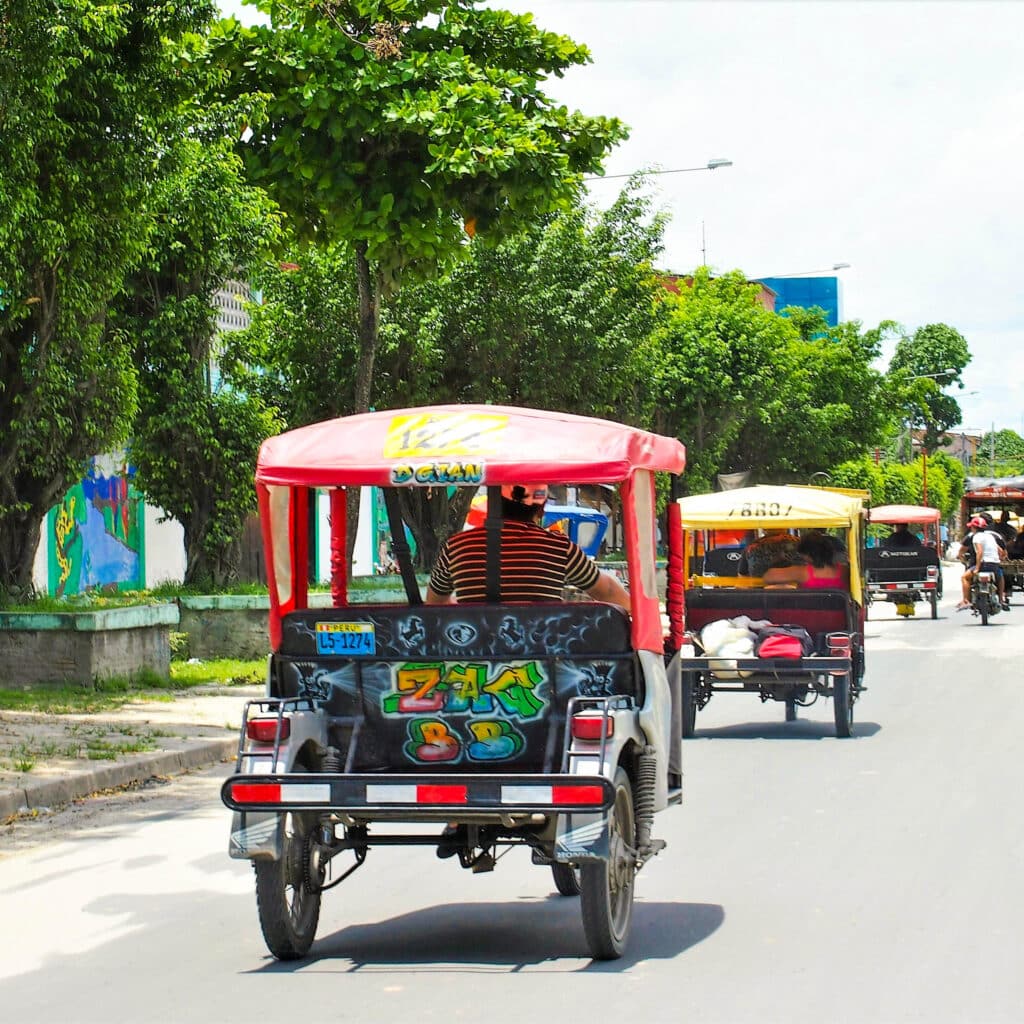
Tuk-tuks are mainly used within towns and beach areas, rather than for long distances. They’re ideal for short hops, beach hopping, food tours, or local sightseeing. For longer journeys, buses and shared transport exist, but they’re best suited to travellers with time and patience.
Best for:
- Short distances
- Exploring towns and beach areas
- Budget-focused or backpacker travel
In most itineraries, travellers rely on a mix of these options, choosing what fits each part of the journey rather than sticking to one method throughout.
For a detailed breakdown of transport options, realistic travel times, and when to choose a driver over trains, see our Getting Around Sri Lanka: Transport Options, Travel Times & Practical Tips guide. It explains what works best per region and helps you plan smoother travel days between Sri Lanka’s main cities and bases.
Final Thoughts on Best Cities of Sri Lanka
The best cities to visit in Sri Lanka are the ones that match your travel style, timing, and tolerance for movement. Not every base needs to be included, and not every region fits every season.
If you choose thoughtfully, Sri Lanka flows naturally — from cultural heartlands to cool highlands, from safari landscapes to coastal calm. If you’re looking for a realistic example of how these places connect, our 10-day Sri Lanka itinerary shows how to combine them into a balanced route with manageable travel days and the right seasonal flow.
🐘 Plan Your Sri Lanka Trip
🏨 Still looking for the right stay? Browse all hotels in Sri Lanka — free cancellation on most rooms.
✈️ Flights: Compare routes and prices for flights to Sri Lanka.
🚂 Getting around: Book train tickets in advance (the scenic routes sell out), or arrange a private driver, tuk tuk rental or rental car.
📱 Stay connected: Get a Sri Lanka eSIM from Airalo before you fly. We use Airalo ourselves on every trip.
🔒 Travel insurance: Don't skip travel insurance for Sri Lanka — medical costs for tourists add up fast.
🎟️ Tours & activities: Browse safaris, cooking classes and tours across Sri Lanka.
💳 Money: Avoid card fees abroad with a free Revolut account.
Some links on this page are affiliate links. Booking through them costs you nothing extra and helps us keep this site running — thank you!
Frequently Asked Questions About the Best Cities to Visit in Sri Lanka
Which are the best cities to visit in Sri Lanka for first-time travellers?
The best cities to visit in Sri Lanka depend on the experience you want most. Many first-timers combine a Cultural Triangle base like Sigiriya for heritage, Kandy for culture and train connections, Ella for hill-country scenery, and a south-coast base such as Galle/Unawatuna for an easy finish. Choose fewer bases and stay longer in each to keep travel days manageable and the route feeling relaxed.
Which city should I visit first in Sri Lanka: Negombo or Colombo?
Most travellers start in Negombo because it’s close to the airport and feels calmer after a long flight. It works well for a soft landing, a simple first meal, and an easy overnight before heading inland. Colombo suits travellers who actively want city life, food tours, or an urban contrast, but it’s not essential for most routes focused on nature, culture, and beaches. To skip the hassle after a long flight, you can pre-book an airport transfer to Negombo.
How long should a Sri Lanka itinerary be for first-time travellers?
For most first-time travellers, 10 to 14 days is ideal. This gives you enough time to combine the Cultural Triangle, the hill country, one wildlife park, and a beach base without constantly moving. With 10 days, you’ll need to choose one coast and keep travel days efficient. With 14 days, you can slow the pace and build a more balanced, relaxed route.
How do I choose the best cities to visit in Sri Lanka based on season?
Season matters most for choosing your beach base. From December to April, the south and west coasts are usually the easiest fit for calm seas and beach time. From May to September, the east coast often has better conditions, making places like Trincomalee and Arugam Bay more appealing. Inland areas like the Cultural Triangle and hill country work year-round, with day-to-day variation.
Should I include Kandy, or can I skip it?
Kandy is worth including if you want culture, temples, markets, and a strong sense of everyday Sri Lankan life — and it’s also the main gateway for the scenic hill-country train route. You can skip it if your trip is very short, you prefer smaller towns, or you’re prioritising beaches and wildlife. Many routes use Kandy as a one- or two-night stop rather than a long stay.
Is it better to pick one coast, or can I combine the south and east in one trip?
If you’re visiting for 10 days, it’s usually better to pick one coast to avoid long drives and backtracking. With 14 days, combining coasts can work if it matches the season and you’re happy to allocate extra travel time. A practical approach is to anchor your route around two or three inland bases, then choose the coast that fits your travel months for the final stretch. If you want to combine areas that are far apart, hiring a private driver makes the longer transfers far easier.
Do I need a SIM card or eSIM for Sri Lanka?
Mobile data is cheap and reliable across Sri Lanka, and having it from the moment you land makes city-hopping far easier — for maps, checking train times and arranging tuk-tuks. The simplest option is to set up an eSIM for Sri Lanka before you fly, so you’re connected on arrival. Prefer a local SIM? You can also buy a Dialog or Mobitel SIM at Colombo airport.
Related Blogs
Other Cities & Destinations
Kandy Sri Lanka: The Cultural Capital Known for Sacred Temples and Scenic Lake Views
Sigiriya Sri Lanka: Complete Guide to Nature, Culture, Lion Rock & Village Life
Ella Sri Lanka: The Scenic Hill Town with Stunning Views and Adventure for All Travellers
Negombo City: A Coastal Charm Blending Culture and Beaches
Nuwara Eliya: Sri Lanka’s Cool Hill Station Rich in Tea Plantations and Colonial Elegance
Udawalawe: Sri Lanka’s Premier Wildlife Safari Hub Famous for Elephant Sightings
Unawatuna: Sri Lanka’s Tropical Paradise Known for Pristine Beaches and Vibrant Marine Life
Galle Sri Lanka: Explore the Historic Fort City’s Colonial Heritage and Coastal Vibes
Other Sri Lanka Blogs
Best Hotels in Sri Lanka: How to Choose Where to Stay
Where to Stay in Sri Lanka: Best Hotels by Travel Style
Sri Lanka Regions Explained: How to Choose the Best Areas for Your Trip
Sri Lanka Travel Itinerary: Custom Plans for Beach Lovers, City Explorers, and Wildlife Adventurers
Top Things to Do in Sri Lanka: The Most Rewarding Experiences on the Island
Best Time to Visit Sri Lanka: Weather, Seasons & Travel Tips
Sri Lanka Weather by Month: What to Expect Each Season as a Traveller
Getting Around Sri Lanka: Ultimate Guide to Transport, Trains, Tuk-Tuks & Easy Trip Planning
Is Sri Lanka Expensive to Travel? Budget, Costs & Money-Saving Tips for Your Trip
Sri Lanka Travel Guide: Visa Requirements, Vaccination & Local Travel Tips