Table of Contents
Sri Lanka's Cultural Triangle is where the island's history feels most alive. Rock fortresses rising from the dry plains, vast temple complexes that have drawn pilgrims for over two thousand years, ancient irrigation systems that once fed entire kingdoms — this region holds the kind of sights that take your breath away not just for their scale, but for the weight of everything they represent. It's the part of Sri Lanka that makes you stop, slow down, and really look.
Within a Sri Lanka itinerary, the Cultural Triangle most often comes early — connecting the west coast to the Hill Country in the classic south-focused route. But it works equally well later in a trip, particularly for travellers heading on to Trincomalee and the east coast, for whom the region sits as a natural midpoint between the mountains and the sea. However you sequence it, most travellers spend two or three nights here — and those who give it proper time come away with a much deeper understanding of the island they're exploring. This guide covers the four key bases within the Sri Lanka Cultural Triangle, which hotels to choose at every budget, what to do and when to go.
In a Rush?
These are my Favourite Hotels in the Cultural Triangle
⭐⭐⭐ Water Garden Sigiriya — Check prices and availability
⭐⭐ Sigiriya King's Resort — Check prices and availability
⭐ Tree Trails Sigiriya — Check prices and availability
Sri Lanka Cultural Triangle at a Glance
The Cultural Triangle covers the north-central plains of Sri Lanka and connects four main bases, each with a distinct character and role within the region. Here's what to expect at a glance.
| Best time to visit | Year-round; wildlife peaks July–October |
| Main bases | Sigiriya, Anuradhapura, Polonnaruwa, Dambulla |
| Top highlights | Sigiriya Lion Rock, Dambulla Cave Temples, Anuradhapura sacred city, Minneriya elephant gathering |
| Typical stay | 2–3 nights |
| Best for | First-time visitors, history lovers, wildlife in season |
| Not ideal if… | You want beach time, nightlife, or a slow tropical pace |
| Getting there | ~4 hours from Colombo by private driver; ~3.5 hours from Kandy |
| Getting around | Private driver recommended; tuk-tuks for short distances |
Understanding the Sri Lanka Cultural Triangle
Before diving into each base, it helps to understand what the Cultural Triangle actually is — and what it isn't.
The term “Cultural Triangle” refers to the north-central region of Sri Lanka roughly bounded by the three ancient capitals of Anuradhapura, Polonnaruwa and Kandy — hence the triangular shape. Over time, Sigiriya and Dambulla have become integral parts of how most travellers experience the region, and today they're often the main reason people come here at all.
What makes this region distinct from the rest of Sri Lanka is its pace and purpose. Days here are structured around early starts, temple rhythms and the dry heat of the plains. Unlike beach regions, where you settle into a hammock-friendly routine, the Cultural Triangle demands a little more intention. You come here to learn, to see, to be genuinely moved by the scale of what human hands built here over millennia.
The landscape plays into this too. The north-central plains are dry and flat, which means open skies, vast reservoirs catching the morning light, and wildlife moving freely in ways you simply don't see in the wetter south. From July to October, when the rains hold off and water levels drop, the elephants move toward the shrinking lakes — and what happens then at Minneriya is one of Sri Lanka's most spectacular natural events.
Most travellers base themselves in or around Sigiriya and explore the region from there. It's the most central, the most convenient, and home to the most iconic single sight in the country. But Anuradhapura deserves a dedicated visit, and the same is true for Polonnaruwa — even if only as a day trip. Dambulla works naturally as a stopping point between them.
Sigiriya: The Heart of the Cultural Triangle
If there's one image that defines the Sri Lanka Cultural Triangle for most visitors, it's Sigiriya. The ancient rock fortress rises nearly 200 metres from the surrounding plains, visible for kilometres in every direction, completely impossible to miss — and completely unlike anything else in Sri Lanka.
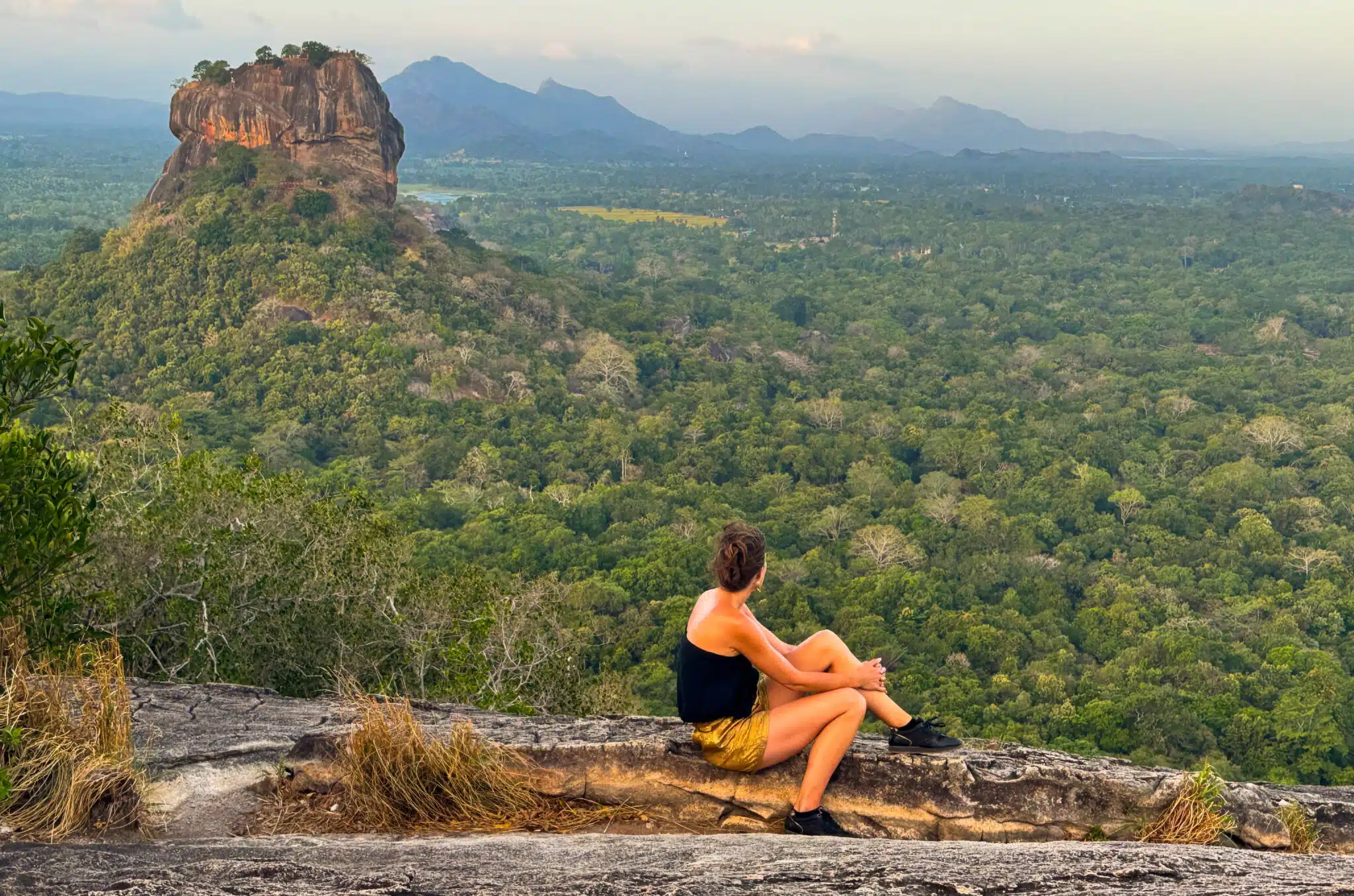
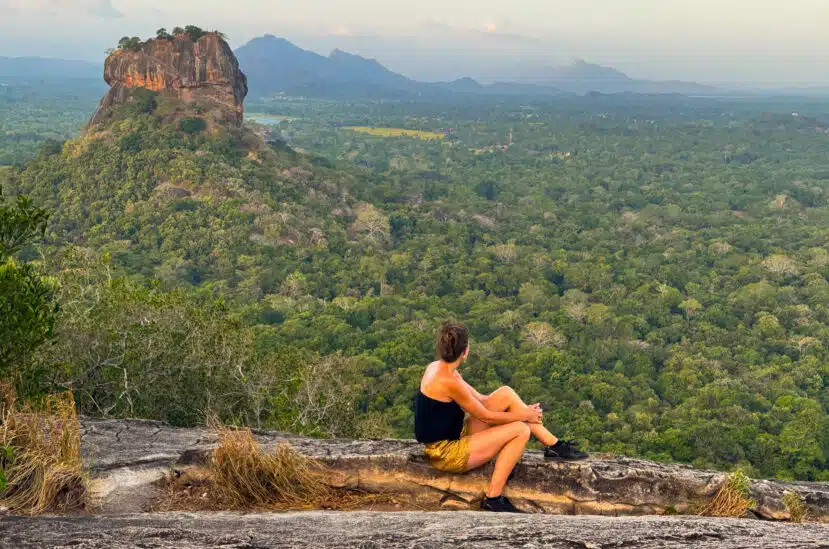
We stayed in the Sigiriya area ourselves, and it's the kind of place that keeps surprising you. We'd seen Lion Rock from a distance while hiking Pidurangala the morning we arrived — a silhouette against an orange sky — and even then, knowing what it was, the scale was hard to process.
What to see and do around Sigiriya
Sigiriya Lion Rock is the unmissable centrepiece — the 5th-century palace fortress built by King Kashyapa, complete with frescoes, water gardens and a summit with 360-degree views over the plains. Go early. The gates open at 7am and the difference between arriving at 7:15 and 9:30 is enormous: the crowds and the heat are both far more manageable in the early morning.
Pidurangala Rock sits just north of Sigiriya and offers the best possible view of Lion Rock from above. The hike takes about 45 minutes and the top rewards you with one of the most photographed panoramas in Sri Lanka — especially at sunrise. We went up at 5:45am and were almost alone on the summit. By the time we descended, the path was filling up fast. If you're choosing between the two for a sunrise experience, Pidurangala wins — but both are worth doing, ideally on different mornings. You can read the full story in our Pidurangala Rock guide.
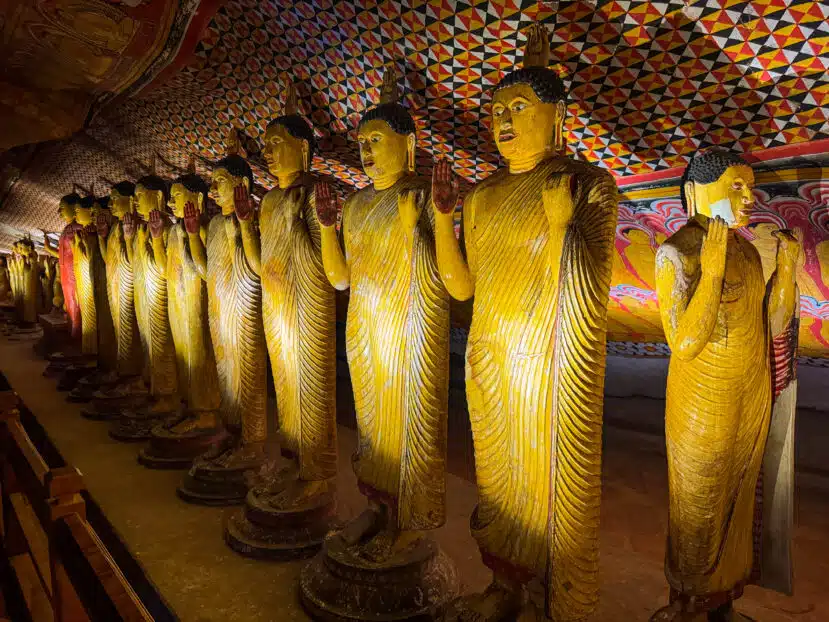
Dambulla Cave Temples are just 17 kilometres from Sigiriya and work perfectly as a combined day. Five cave temples carved into a vast rock outcrop contain hundreds of Buddha statues and centuries of painted murals — vivid, detailed and remarkably well-preserved. The site is still actively used for worship, which gives it an atmosphere that purely archaeological sites often lack. The combined Sigiriya and Dambulla day tour is an efficient way to cover both without arranging separate transport.
Minneriya National Park is only about 25 kilometres from Sigiriya and becomes unmissable between July and October, when thousands of elephants gather around the shrinking lake — an event known as The Gathering. Outside this window, it's worth doing as an activity but shouldn't be the reason you time your trip to the region. The half-day Minneriya safari from Sigiriya is easy to combine with an afternoon at one of the cultural sites.
Village tours and evening experiences fill the gaps well. The area around Sigiriya is dotted with farming villages, cycling paths and cooking classes that give genuine insight into rural Sri Lankan life beyond the ancient monuments. A Sigiriya village tour is one of the most consistently recommended activities in the area. For something more unusual, the night hike to find the rare Loris — a tiny nocturnal primate found in the forests here — offers a completely different experience after dark. And if you want to see the plains from above, a hot air balloon ride over Sigiriya at sunrise is one of the most extraordinary ways to experience this landscape.
Where to stay in Sigiriya
The Sigiriya area has excellent options at every price point. Because days start early here, staying close to the sites matters more than it does in most other regions of Sri Lanka.
$$$$ — Water Garden Sigiriya
- Price per night for 2 in shoulder season: from USD 650 (BB)
- Booking.com rating: 9.4
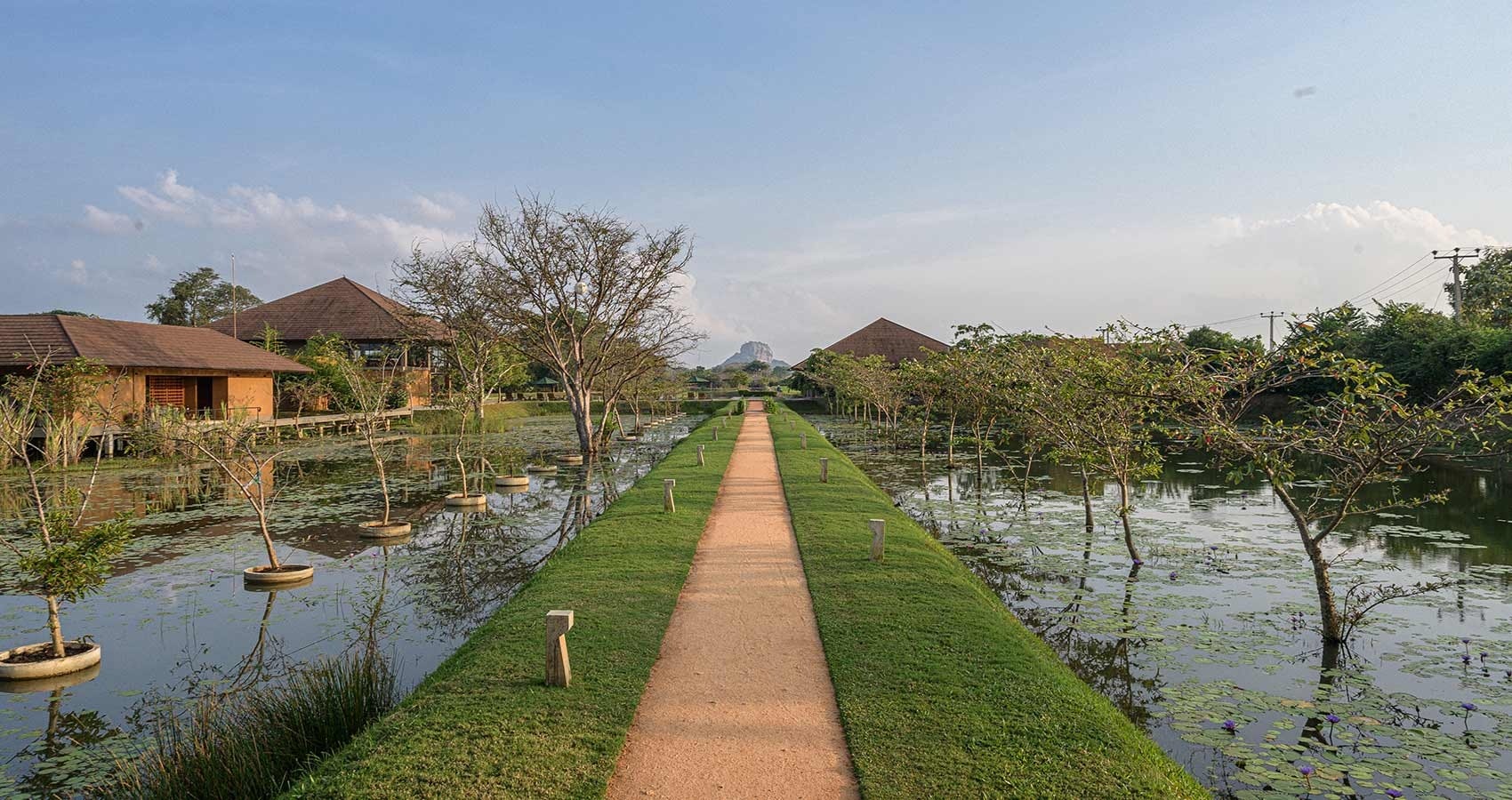
Water Garden Sigiriya is the most atmospheric luxury option in the area. Set in lush gardens with large private pool villas, it sits close enough to Lion Rock that you can see the fortress from parts of the property. After hot morning climbs, the gardens and pool feel genuinely restorative. It's the kind of place that earns its price not just in comfort but in setting.
$$$ — Sigiriya King's Resort
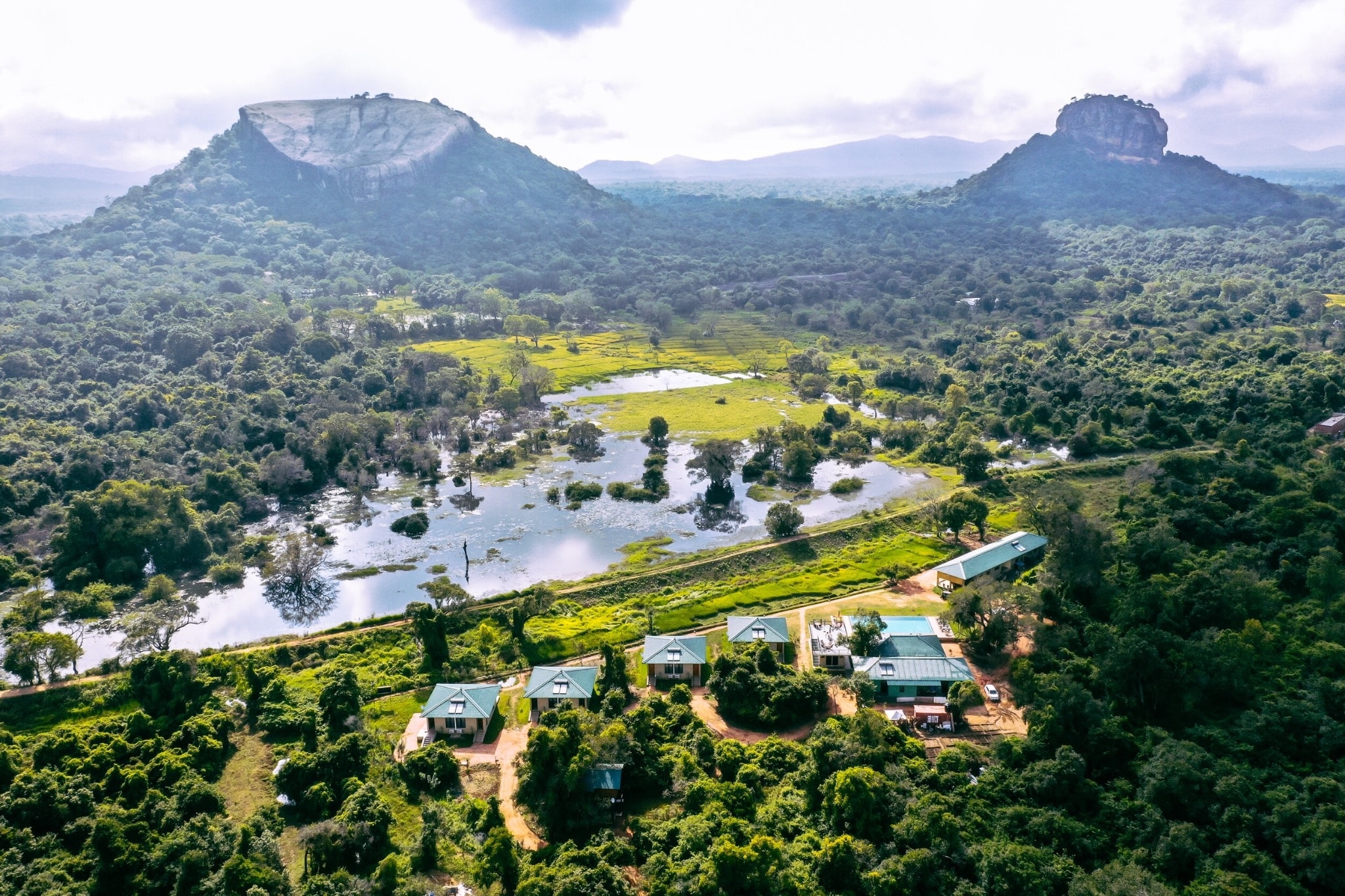
- Price per night for 2 in shoulder season: from USD 250 (BB)
- Booking.com rating: 9.5
A strong mid-range option with a pool and well-kept gardens, conveniently located for early departures to both Sigiriya and Dambulla. With a 9.5 rating it punches well above its price point and is consistently recommended for comfort and service.
$$ — Tree Trails Sigiriya
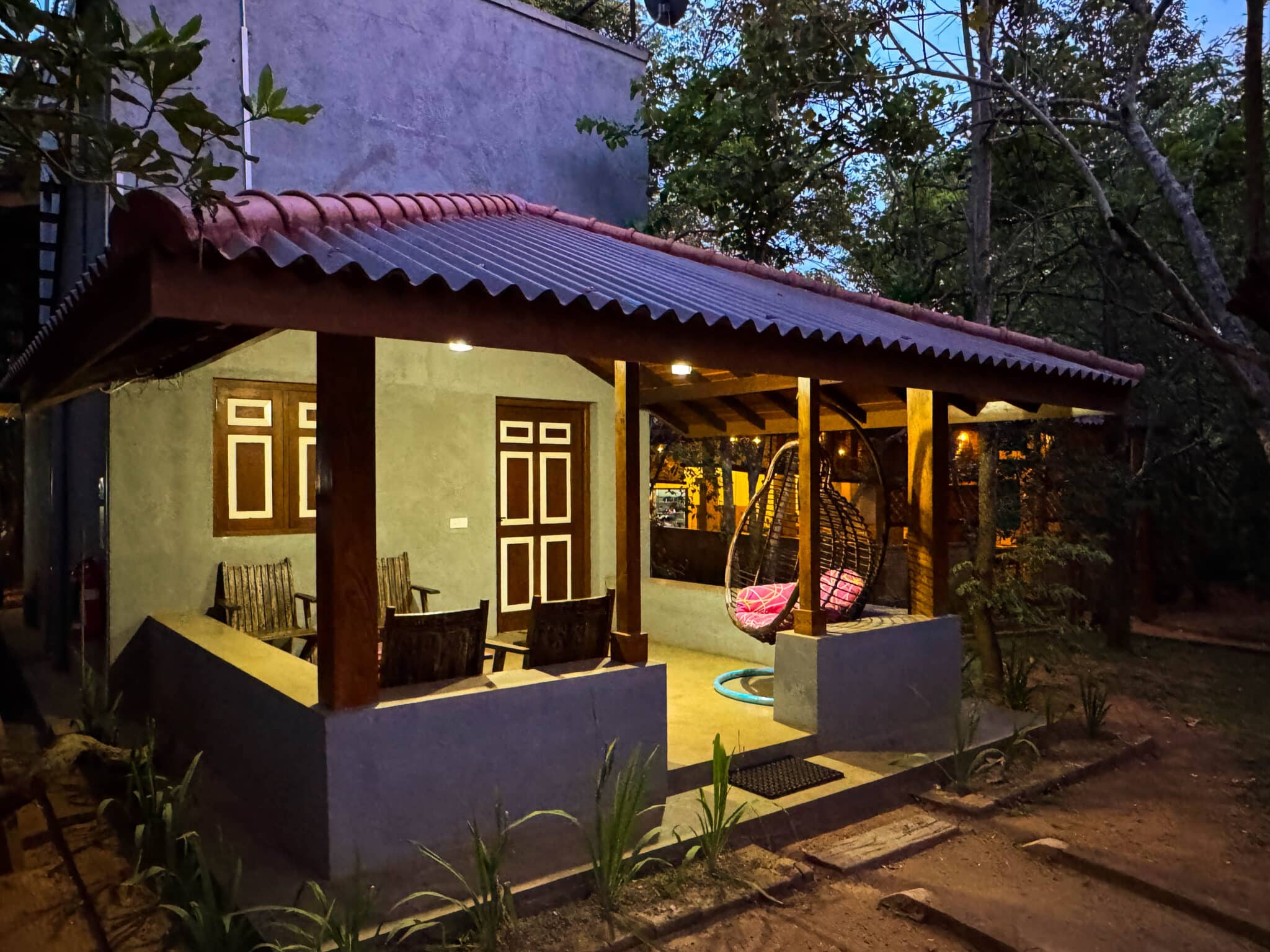
- Price per night for 2 in shoulder season: from USD 100 (BB)
- Booking.com rating: 9.5
Tree Trails was one of the standout value stays of our entire Sri Lanka trip. The treehouse-style bungalows sit in a garden setting at a very fair price, and the Booking.com rating of 9.5 reflects real quality: attentive staff, good breakfasts and a genuine warmth that makes the place feel like more than a budget hotel. If you're watching costs without wanting to sacrifice experience, this is the one to book.
Anuradhapura: Sri Lanka's Sacred Ancient Capital
Anuradhapura is unlike anywhere else in Sri Lanka. One of the oldest continuously inhabited cities in the world, it was the island's capital for over a thousand years and remains one of the most sacred Buddhist sites in Asia. Pilgrims still come here in their thousands. The temples, the stupas, the sacred Bodhi Tree — all of it is alive in a way that purely ruined sites rarely are.
Unlike Sigiriya, which you can absorb in a morning, Anuradhapura rewards time. The site is large — genuinely large — and spread out over several kilometres. The best approach is a full day, either on bicycle (the most atmospheric way to move between sites) or by tuk-tuk. Arriving from Sigiriya, the drive takes around 90 minutes and works well as a dedicated overnight stop rather than a rushed day trip.
What to see and do in Anuradhapura
Sri Maha Bodhi is arguably the most significant site in the entire city. The sacred fig tree here is said to be a cutting from the original tree under which the Buddha attained enlightenment, brought to Sri Lanka in 288 BC. It is the oldest historically documented tree in the world. Visiting on a poya day (full moon) — when white-clad pilgrims fill the temple grounds with offerings and chanting — is an experience that stays with you long after you leave.
Ruwanwelisaya Dagoba is the great white stupa that anchors the centre of the ancient city. Its scale is staggering up close, its whitewashed dome brilliant against the blue sky. The surrounding walk takes you past elephant statues, monk quarters and offering halls still in daily use.
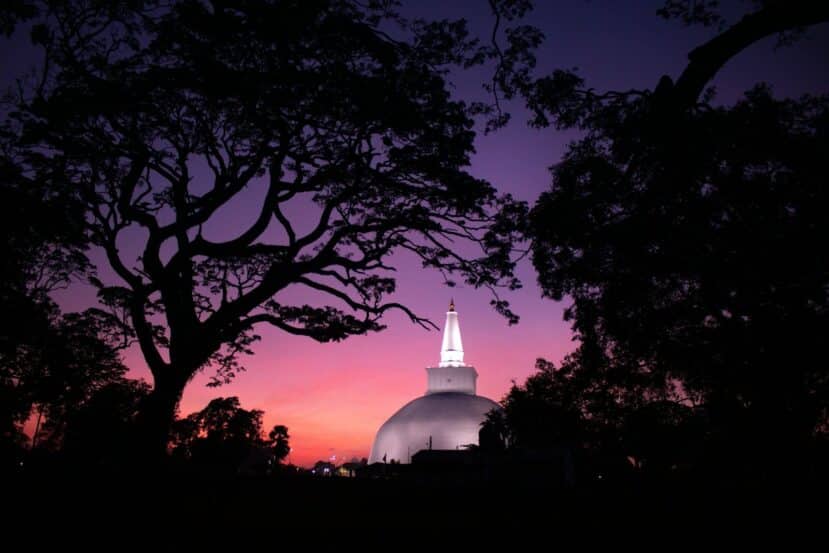
Jetavanaramaya was once the tallest brick structure in the ancient world. The stupa still dominates the skyline of the northern sector and is surrounded by archaeological ruins that give a vivid picture of how vast this city once was.
Abhayagiri Monastery complex covers a large area to the north and includes several significant stupas, pools and carved stonework. It's quieter than the central area and worth exploring for the sense of scale it gives you — this wasn't just a religious site, it was an entire functioning city.
Bicycle tour of the ancient city is the most rewarding way to experience Anuradhapura. The sites are spread over several kilometres but connected by wide, well-maintained paths. Hiring a bicycle from your guesthouse or at the entrance gives you freedom to move at your own pace and stop wherever something catches your attention. A guided bike tour adds context if you want to understand what you're seeing — or a private city tour works well if cycling in the heat isn't for you.
Where to stay in Anuradhapura
Accommodation in Anuradhapura is more limited than in Sigiriya, but there are strong options at different price levels.
$$$$ — Uga Ulagalla
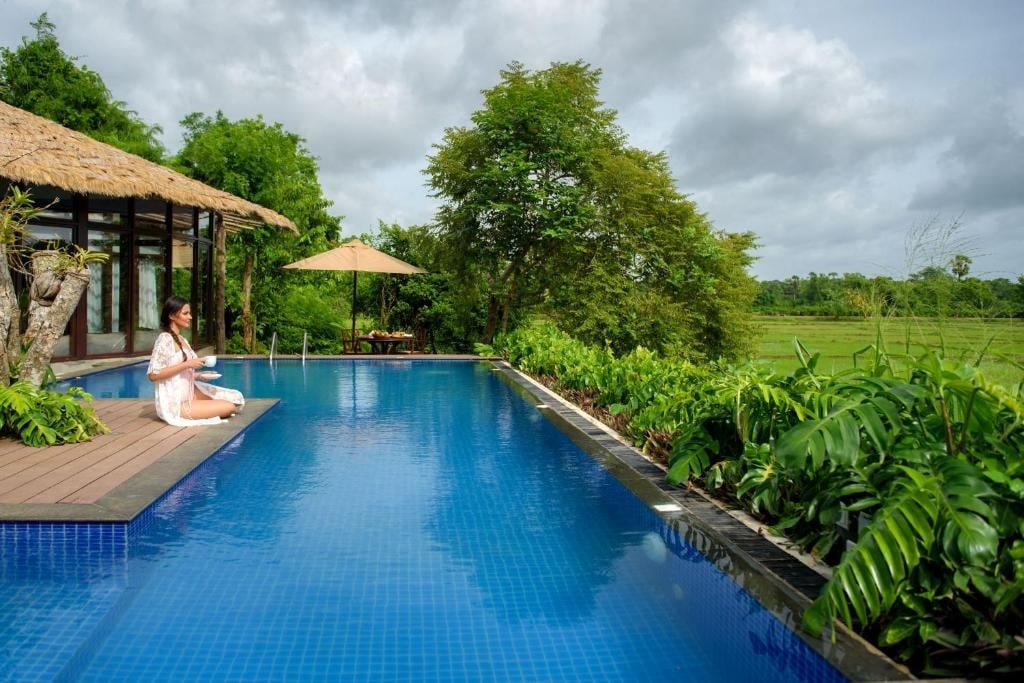
- Price per night for 2 in shoulder season: from USD 515 (BB)
- Booking.com rating: 9.6
Uga Ulagalla is exceptional — a rural luxury resort set on a 58-acre estate of paddy fields and forests, about 20 minutes from the ancient city. The property is built around a traditional Sri Lankan village aesthetic, with private pool villas, an infinity pool facing open countryside, and wildlife including elephants and peacocks on the estate itself. With a 9.6 rating it's one of the most consistently praised stays in the entire north-central region. It also appears in our romantic travel recommendations for good reason.
$$$ — Kalaa Kalaththewa Luxury Eco Resort
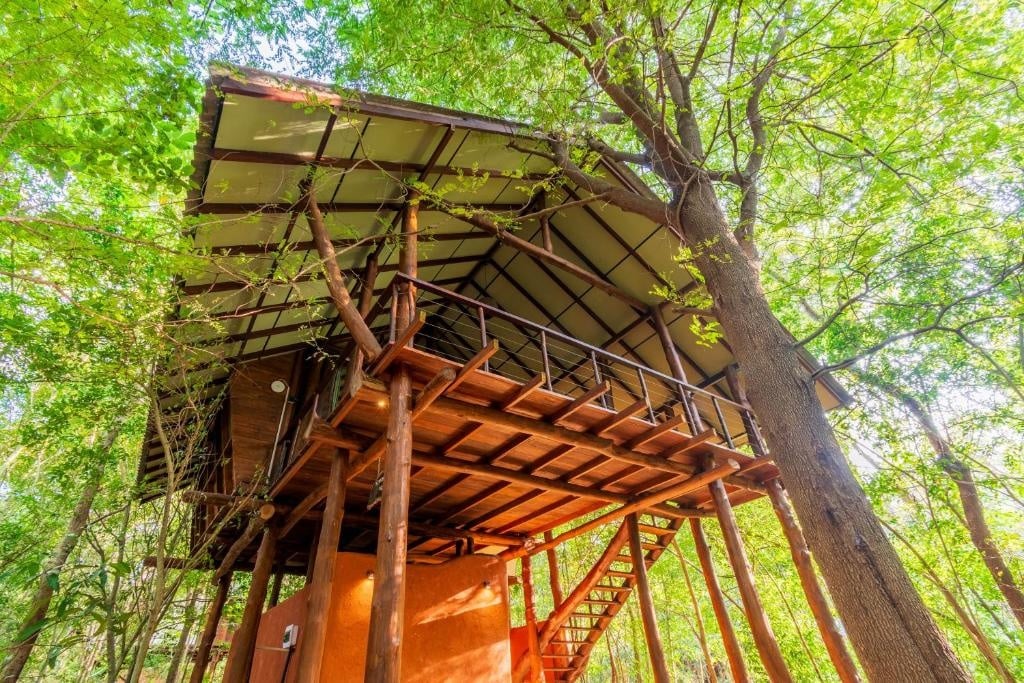
- Price per night for 2 in shoulder season: USD 95 (Bed)
- Booking.com rating: 9.0
A well-rated eco resort with a genuine sense of place, set away from the town centre with nature on all sides. It's a quieter, more intimate option than the big properties and works well for travellers who want something with character rather than just convenience.
$$ — Hummingbird Leisure Villa
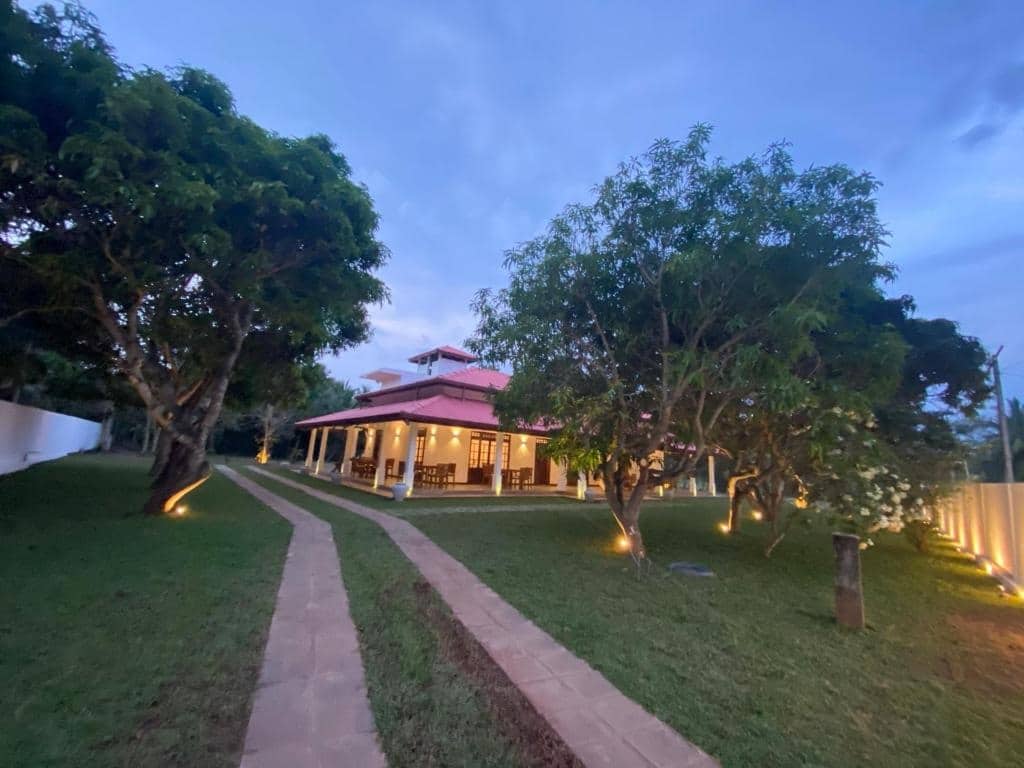
- Price per night for 2 in shoulder season: USD330 (B&B) Villa for 10 persons
- Booking.com rating: 9.0
A guesthouse-style stay with good ratings and a welcoming atmosphere that offers solid value in a city where mid-range options are limited. For a one-night stop before moving on to Sigiriya or Polonnaruwa, it's a practical and comfortable choice.
Polonnaruwa: Open Ruins & Bicycle Rides
Polonnaruwa is the Cultural Triangle base that most travellers underestimate — and the one that often ends up as their favourite. Where Anuradhapura is vast and spiritually charged, Polonnaruwa is more compact and archaeological in feel: a medieval city abandoned in the 12th century, its ruins now spread across a beautiful parkland that you can explore almost entirely by bicycle.
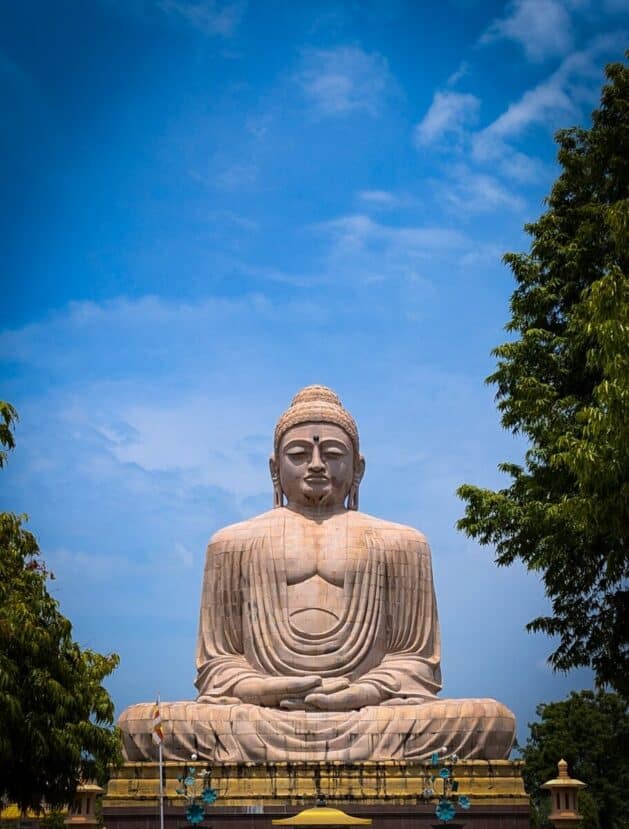
The centrepiece is the Gal Viharaya — four giant Buddha figures carved directly into a granite face, their expressions and scale stopping most visitors in their tracks. But the pleasure of Polonnaruwa is in the whole experience of cycling from ruin to ruin between palm trees and lotus-filled ponds, with remarkably few other visitors compared to Sigiriya.
What to see in Polonnaruwa
Gal Viharaya — the carved Buddha figures — is the undisputed highlight and one of the most remarkable pieces of rock sculpture in Asia. The standing Buddha alone is over 7 metres tall, and the reclining figure stretching 14 metres is carved with extraordinary detail and serenity.
The Royal Palace complex gives a strong sense of how the medieval city was laid out, with the foundations of King Parakramabahu's palace visible alongside audience halls, bathing pools and administrative buildings.
Parakrama Samudra — the vast ancient reservoir that surrounds the western edge of the city — was one of the great engineering achievements of medieval Sri Lanka and is still actively used for irrigation today. Watching the sun set behind the water from the edge of the ruins is one of the quieter pleasures of the region.
A private guided tour of the ancient city of Polonnaruwa is worth considering if you want context for what you're walking through — the site is rich in history that isn't always obvious from the ruins alone.
Dambulla: The Cave Temples & Natural Crossroads
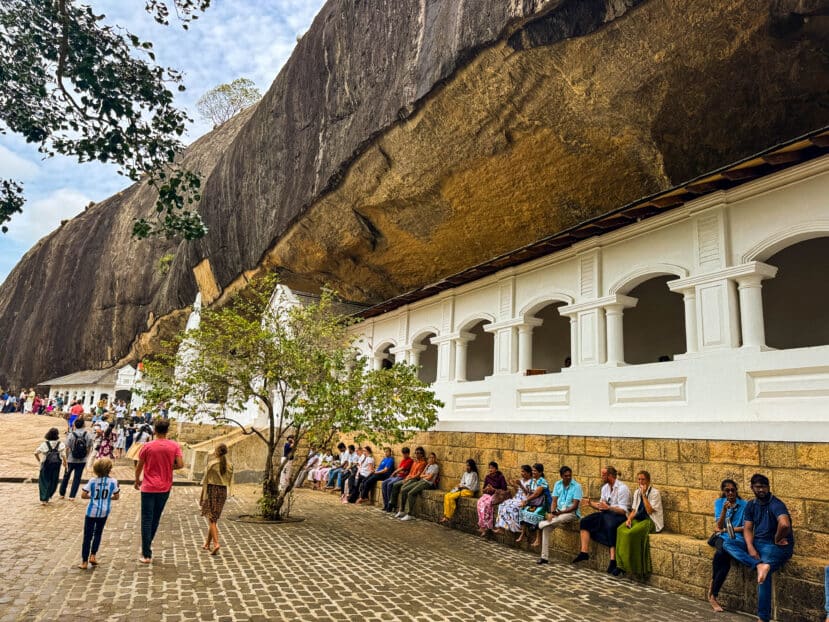
Dambulla is less a destination in its own right and more a natural crossroads within the Cultural Triangle — and a very rewarding one. The cave temples here are genuinely extraordinary: five caves cut into a dramatic rock outcrop, filled with more than 150 Buddha statues and painted from floor to ceiling with some of the most vivid Buddhist murals in Asia.
The temples are usually visited as part of a Sigiriya day (they're 17 kilometres apart and make a logical combination), but they deserve unhurried time. Give yourself at least two hours, go early before the heat builds, and dress respectfully. The site is still an active place of worship, and the atmosphere inside the caves — incense, candlelight, the sound of chanting from an adjacent hall — is completely different from anything else in the region.
The Heritance Kandalama hotel sits just outside Dambulla and is worth mentioning in its own right: Geoffrey Bawa's architectural masterpiece built directly into a rock face above a forest lake, it's one of the most impressive hotel buildings in Sri Lanka. Even if you're not staying here, knowing it exists gives you a sense of how extraordinary the landscape around Dambulla is.
Practical Information: Sri Lanka Cultural Triangle
Best time to visit
The Cultural Triangle can be visited year-round, but there are two practical considerations. The dry season (roughly May to October in this region) brings more reliable weather and, from July to October, spectacular wildlife activity at Minneriya. This is when The Gathering takes place and elephant numbers around the reservoir peak dramatically.
The wet season (November to April) brings occasional rainfall but rarely disrupts sightseeing significantly — the rain tends to arrive in short afternoon showers rather than all-day downpours. Sites remain open and visitor numbers are often lower.
For seasonal planning across the whole island, the Sri Lanka best time to visit guide breaks it down in full detail.
Getting to the Cultural Triangle
The most comfortable way to reach the Cultural Triangle is with a private driver. From Colombo's airport it's around 4 hours to Sigiriya; from Kandy it's closer to 3.5 hours. Because the region is best explored by moving between sites, having private transport for the duration of your stay makes a significant difference to how much you can see without stress.
We travelled throughout Sri Lanka with a driver from Sri Lanka Personal Tour Drivers and found it to be the most practical way to handle the Cultural Triangle — early starts, flexible timing and the ability to stop whenever something caught our eye. The getting around guide covers all transport options in more detail.
How to combine the Cultural Triangle with the rest of Sri Lanka
In most classic itineraries, the Cultural Triangle comes early — after one night near the airport in Negombo or Colombo, and before the Hill Country. The route flows naturally: west coast → Cultural Triangle → Kandy → Ella → south coast.
If you're planning a 10-day or 2-week trip, our itinerary guides show exactly how this region connects to the rest of the island. You can find day-by-day planning in the 10 Days Sri Lanka Itinerary and the 2 Week Sri Lanka Itinerary.
Final Thoughts on the Sri Lanka Cultural Triangle
The Sri Lanka Cultural Triangle is where the island's story begins. It doesn't have the beaches or the mountain scenery that tend to dominate travel photos — but it has something harder to describe: the feeling of standing at the top of a rock fortress that someone built here fifteen centuries ago, looking out over the same dry plains they looked over, with the same sharp light and the same vast silence.
That's what stays with you. Not a list of sites, but a sense of how deep the history runs here — and how alive it still is. The pilgrims at Anuradhapura, the chanting in the Dambulla caves, the monks walking the path around Ruwanwelisaya at dawn. The Cultural Triangle is extraordinary precisely because it hasn't been preserved behind glass. It's still in use.
If you're building your first Sri Lanka itinerary, consider putting this region near the start — it sets the tone for everything that follows and makes the rest of the island make more sense. But if your route takes you east toward Trincomalee, the Cultural Triangle works equally well as a midpoint, bridging the mountains and the sea.
🐘 Plan Your Sri Lanka Trip
🏨 Still looking for the right stay? Browse all hotels in Sri Lanka — free cancellation on most rooms.
✈️ Flights: Compare routes and prices for flights to Sri Lanka.
🚂 Getting around: Book train tickets in advance (the scenic routes sell out), or arrange a private driver, tuk tuk rental or rental car.
📱 Stay connected: Get a Sri Lanka eSIM from Airalo before you fly. We use Airalo ourselves on every trip.
🔒 Travel insurance: Don't skip travel insurance for Sri Lanka — medical costs for tourists add up fast.
🎟️ Tours & activities: Browse safaris, cooking classes and tours across Sri Lanka.
💳 Money: Avoid card fees abroad with a free Revolut account.
Some links on this page are affiliate links. Booking through them costs you nothing extra and helps us keep this site running — thank you!
Frequently Asked Questions: Sri Lanka Cultural Triangle
How many days do you need in the Sri Lanka Cultural Triangle?
Most travellers spend two to three nights in the Cultural Triangle, which is enough to visit Sigiriya, Dambulla and either Anuradhapura or Polonnaruwa. If you want to cover all four bases properly — including Anuradhapura as a dedicated overnight stop — plan for three to four nights. Rushing the region in one day is possible but means missing the early-morning magic that makes Sigiriya and Pidurangala genuinely special.
Is the Sri Lanka Cultural Triangle worth visiting?
Without question. The Cultural Triangle contains some of the most remarkable ancient sites in Asia, including Sigiriya Lion Rock, the sacred city of Anuradhapura and the Dambulla Cave Temples. For first-time visitors to Sri Lanka, this region provides historical and cultural context that makes the rest of the island far more meaningful. It's also genuinely beautiful, with dry-plains landscapes, vast reservoirs and wildlife that you won't find in the south. Comfortable bases like Water Garden Sigiriya make it easy to enjoy.
What is the best base for exploring the Sri Lanka Cultural Triangle?
Sigiriya is the most practical base for most travellers. It sits in the centre of the region, close to both Dambulla and Minneriya, and within day-trip distance of Polonnaruwa. Hotels here range from budget bungalows to high-end villas. Anuradhapura is worth a dedicated overnight stop if your itinerary allows — it's 90 minutes from Sigiriya and large enough to need a full day. Sigiriya is the most popular base — stays like Sigiriya King's Resort sit close to the main sites.
Can you visit Sigiriya and Dambulla in one day?
Yes, and it works well. Both sites are 17 kilometres apart and can be combined in a single well-planned day — visit Sigiriya at opening (7am) and Dambulla in the late morning or early afternoon. A guided combined tour from Sigiriya handles the logistics for you. The only caveat is energy: both sites involve climbing and time on your feet in the heat, so start early and pace yourself. Yes — especially from a Sigiriya base like Tree Trails Sigiriya.
When is the best time to visit Minneriya for The Gathering?
The Gathering at Minneriya — when large numbers of elephants congregate around the shrinking reservoir during the dry season — peaks between July and October. August and September are generally considered the best months, when numbers are highest and sightings most reliable. Outside this window, Minneriya still operates as a safari park but elephant numbers are far lower and less predictable.
Do you need a guide for Anuradhapura?
Not strictly, but a guide adds significant value here. Anuradhapura is vast and many of the ruins lack interpretive signage. A local guide or audio tour helps you understand the religious and historical significance of what you're seeing — and the layout, which can feel overwhelming without context. A bicycle tour with a guide is the most rewarding combination of freedom and explanation.
How do you get around the Sri Lanka Cultural Triangle?
A private driver is the most practical option for covering multiple bases and managing early morning starts. Tuk-tuks work well for short distances within towns. Within Polonnaruwa and Anuradhapura, bicycle rental is the most enjoyable way to explore the sites — both cities are flat and the ruins are spread over large areas that are best navigated on two wheels.
Related Blogs
More Region Blogs
Sri Lanka Regions Explained: How to Choose the Best Areas for Your Trip
Sri Lanka Hill Country: Tea Plantations, Train Rides & Cool Climate Escapes
Sri Lanka South Coast: Beaches, Surf Towns & Coastal Travel
Sri Lanka East Coast: Best Beaches, Bases & When to Go
Northern Sri Lanka: Culture, Travel & What to Expect
Sri Lanka West Coast: Colombo, Negombo & Your Gateway to the Island
Other Sri Lanka Blogs
Best Time to Visit Sri Lanka: Weather, Seasons & Travel Tips
Getting Around Sri Lanka: Ultimate Guide to Transport, Trains, Tuk-Tuks & Easy Trip Planning
Is Sri Lanka Expensive to Travel? Budget, Costs & Money-Saving Tips for Your Trip
Sri Lanka Weather by Month: What to Expect Each Season as a Traveller
Sri Lanka Travel Guide: Visa Requirements, Vaccination & Local Travel Tips
Sri Lanka Travel Itinerary: Custom Plans for Beach Lovers, City Explorers, and Wildlife Adventurers
Best Cities to Visit in Sri Lanka: A Practical Guide to Regions, Routes & City Bases
Best Hotels in Sri Lanka: How to choose where to stay — by region & value
Where to Stay in Sri Lanka: Best Hotels by Travel Style
Top Things to Do in Sri Lanka: The Most Rewarding Experiences on the Island