Table of Contents
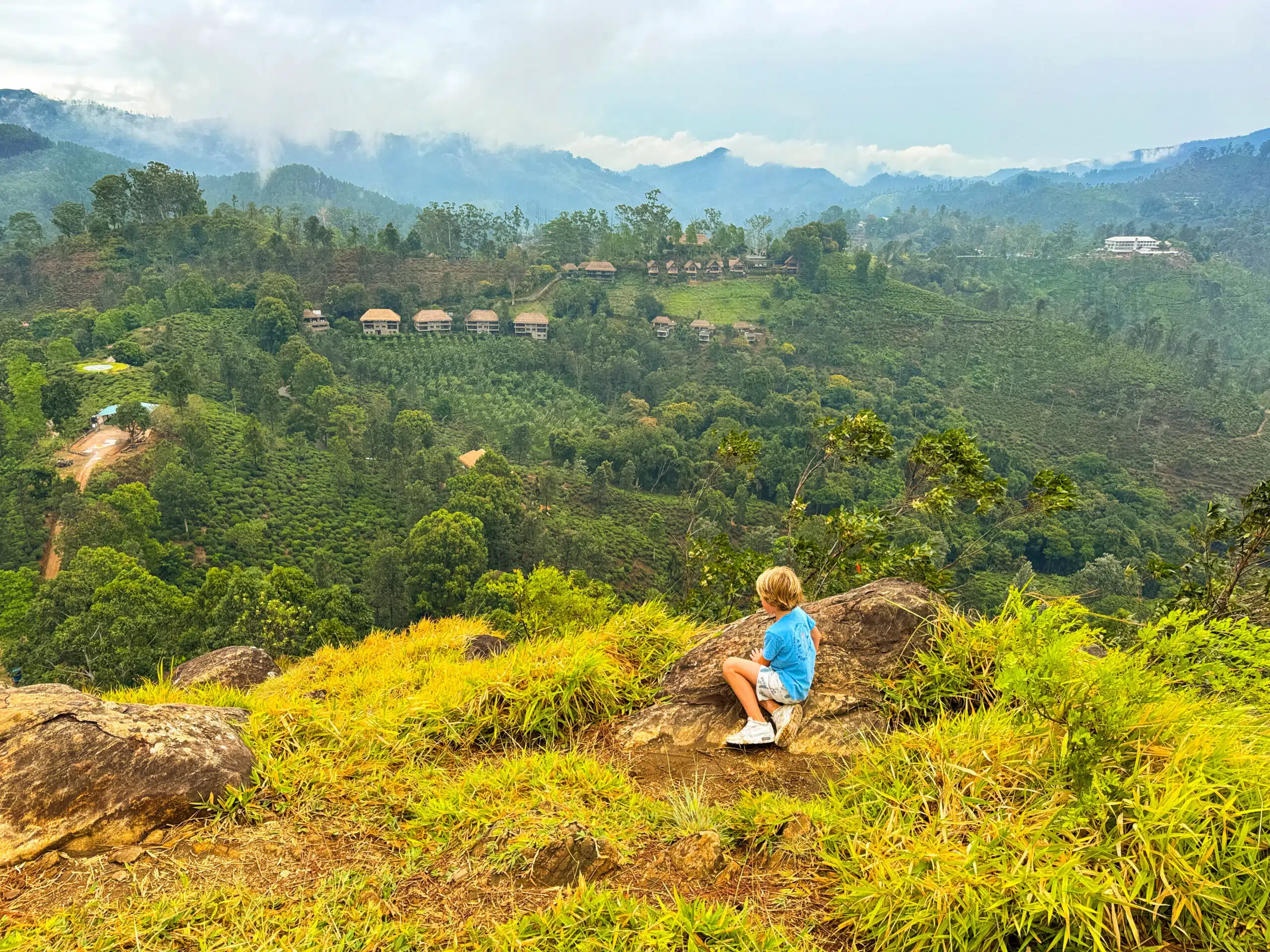
Sri Lanka’s Hill Country is where the island changes completely. The air cools, the roads begin to wind, and suddenly the landscape is nothing but rolling green tea estates stretching as far as you can see. Waterfalls appear around corners. Trains inch through valleys shrouded in mist. The pace slows down in a way that feels almost involuntary — as if the mountains themselves are asking you to stop rushing and simply look.
Within a Sri Lanka itinerary, the Hill Country sits at a natural midpoint: most often between the Cultural Triangle and the south coast, but equally rewarding as a finale before heading home. However you reach it, most travellers spend two to four nights here — and almost all of them say it was the part of the trip that surprised them most. This guide covers the three key bases in the Sri Lanka Hill Country, the best hotels at every budget, what to do and when to go.
In a Rush?
These are my Favourite Hotels in the Sri Lanka Hill Country
⭐️⭐️⭐️ Adigar’s Manor, Kandy – Check prices and availability
⭐️⭐️ Bluechip Leisure, Nuwara Eliya – Check prices and availability
⭐️ Nine Arch Lodge, Ella – Check prices and availability
Sri Lanka Hill Country at a Glance
The Hill Country covers the central highlands of Sri Lanka — a cooler, greener world of tea estates, colonial towns and mountain railways. Here’s what to expect at a glance.
| Best time to visit | Year-round; drier from December to April |
|---|---|
| Main bases | Kandy, Ella, Nuwara Eliya |
| Top highlights | Kandy–Ella train ride, Nine Arch Bridge, tea plantation tours, Little Adam’s Peak, Horton Plains |
| Typical stay | 2–4 nights |
| Best for | Slow travellers, scenery lovers, anyone who wants a break from the heat |
| Not ideal if… | You want beach time, reliable sunshine, or fast-paced sightseeing |
| Getting there | Kandy is ~3 hours from Colombo by train or private driver; Ella is ~6 hours from Colombo |
| Getting around | Train between bases; private driver for flexibility; tuk-tuks locally |
Understanding the Sri Lanka Hill Country
Before you choose your bases, it helps to understand what the Hill Country actually is — and how it differs from the rest of Sri Lanka.
The term Hill Country refers broadly to the central highlands: the elevated interior of the island where altitude brings cooler temperatures, misty mornings and the rolling tea estates that define this region’s identity. It’s an area shaped more by landscape than by individual landmarks — and that’s precisely what makes it special. You don’t come here to tick off a list of sites. You come here to slow down.
What makes the Hill Country distinct is pace. Unlike the Cultural Triangle, where early starts and heat create a purposeful rhythm, the Hill Country moves at the speed of a mountain train: unhurried, scenic, occasionally mist-bound. The roads wind. Journeys take longer than the map suggests. And that’s fine — because the journey is often the point.
Tea estates define this region visually and economically. The British planted them in the 19th century, and today they stretch across the hillsides in every shade of green, broken only by the occasional waterfall or the smoke from a factory chimney. Visiting a working tea plantation — picking a few leaves, watching the processing, drinking a freshly brewed cup at altitude — gives the landscape a dimension beyond scenery.
The train is the other defining feature of the Hill Country experience. The railway line from Kandy to Ella, passing through Nuwara Eliya and curving through tunnels and across viaducts, is widely considered one of the most scenic rail journeys in Asia. Choosing to travel between bases by train rather than private car changes the experience entirely: slower, more social, and often more memorable than anything you see at a destination itself.
Most travellers enter the Hill Country via Kandy, move through either Nuwara Eliya or Ella (rarely both, unless time allows), and exit toward the south coast. But the region also works in reverse, and it connects naturally to the east coast for travellers heading that way. Understanding which bases to prioritise — rather than trying to squeeze in all three — is the key to enjoying the Hill Country without feeling rushed.
Kandy: The Cultural Gateway to the Hill Country
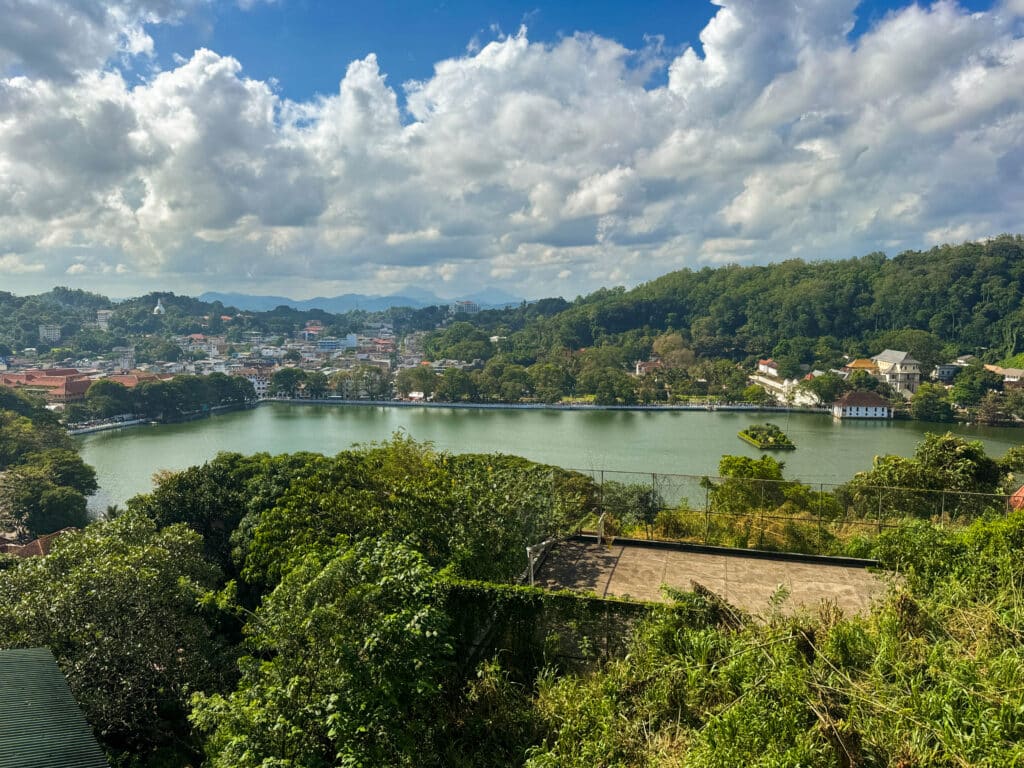
Kandy is the Hill Country’s entry point — and also the most culturally layered of its three main bases. Sitting at around 500 metres above sea level, it’s the last major city before the road begins to climb in earnest. For most travellers, Kandy serves a dual purpose: it’s both a destination in its own right and a transition point between the lowlands and the higher hills.
The city sits around an artificial lake — built by the last Kandyan king in the early 19th century — and is surrounded by forested hills that give it a natural amphitheatre quality. It’s significantly cooler than Colombo or the coast, but still warm enough to feel like lowland Sri Lanka. That balance makes it a natural one-to-two-night stop before ascending further.
When we stayed at Adigar’s Manor just outside the city centre, the contrast with the coast was immediate. After days of heat and sea air, the cooler hillside evenings and the sound of temple bells drifting up from the city below felt like a genuine reset.
What to see and do around Kandy
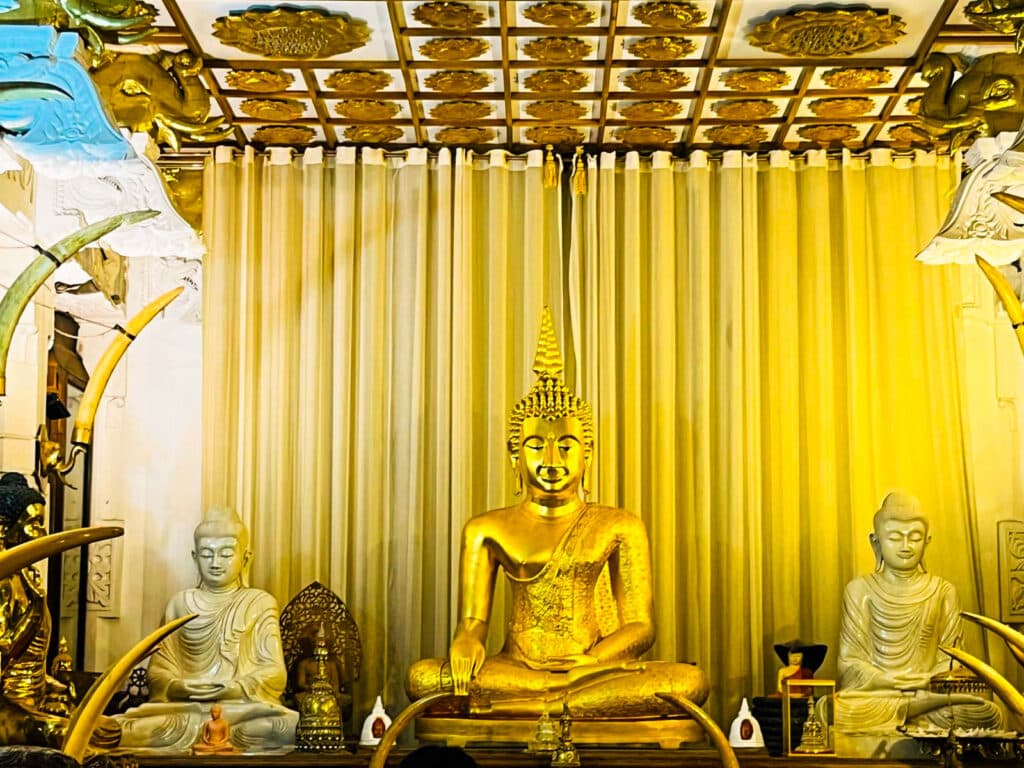
The Temple of the Sacred Tooth Relic is Kandy’s most important site and one of the most sacred Buddhist temples in Asia. It houses what is believed to be a tooth relic of the Buddha, brought to Sri Lanka in the 4th century. The temple is still very much alive — multiple puja ceremonies take place daily, with drumming, chanting and offerings that create an atmosphere nothing like a purely tourist site. A guided visit to the Temple of the Tooth adds context that’s easy to miss without local knowledge.
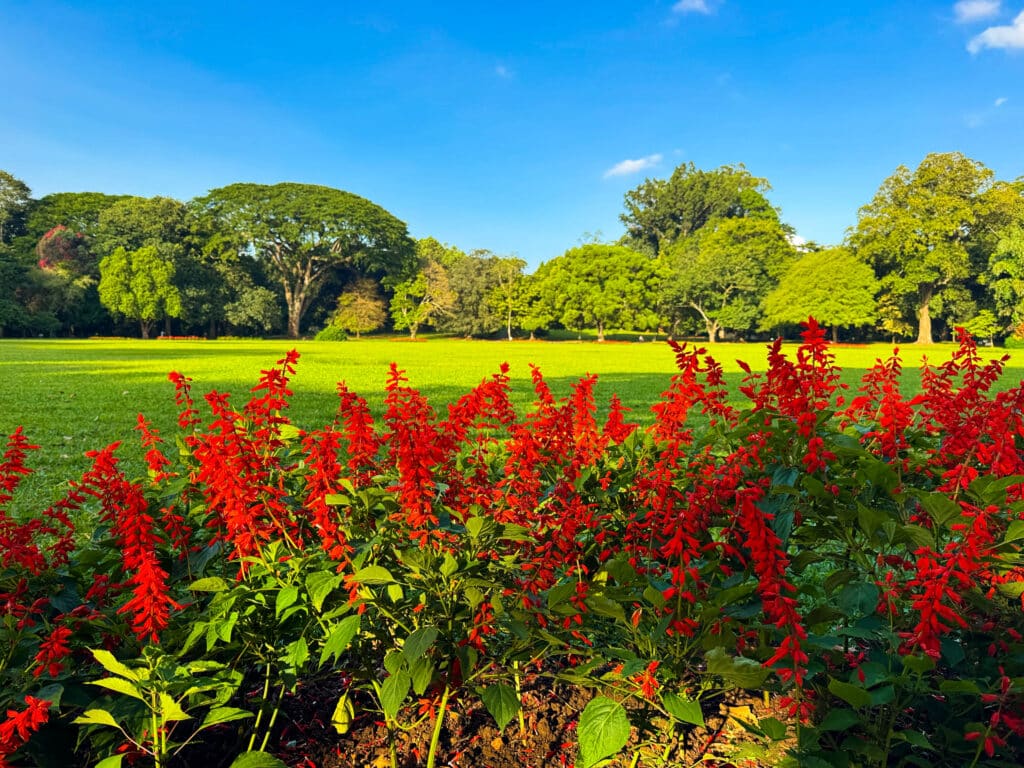
Peradeniya Botanical Gardens are one of the finest colonial-era botanical gardens in Asia, covering over 60 hectares of the Mahaweli River bend just outside the city. The giant Javan fig trees alone are worth the visit — their canopies stretch wide enough to shade several hundred square metres. Go on a weekday morning for the best atmosphere.
A cooking class in Kandy is one of the most consistently enjoyable activities in the region and a good way to understand the spice-driven cuisine of the Hill Country area. A Kandy cooking class typically includes a market visit and hands-on preparation of local dishes.
The Ambuluwawa Tower — a spiralling meditation tower rising from a forested hilltop about 20 kilometres from Kandy — is one of the region’s more unusual attractions. The views over the surrounding hills are remarkable, particularly in the morning before cloud cover builds. The Ambuluwawa Tower tour is easy to combine with a Kandy city tour.
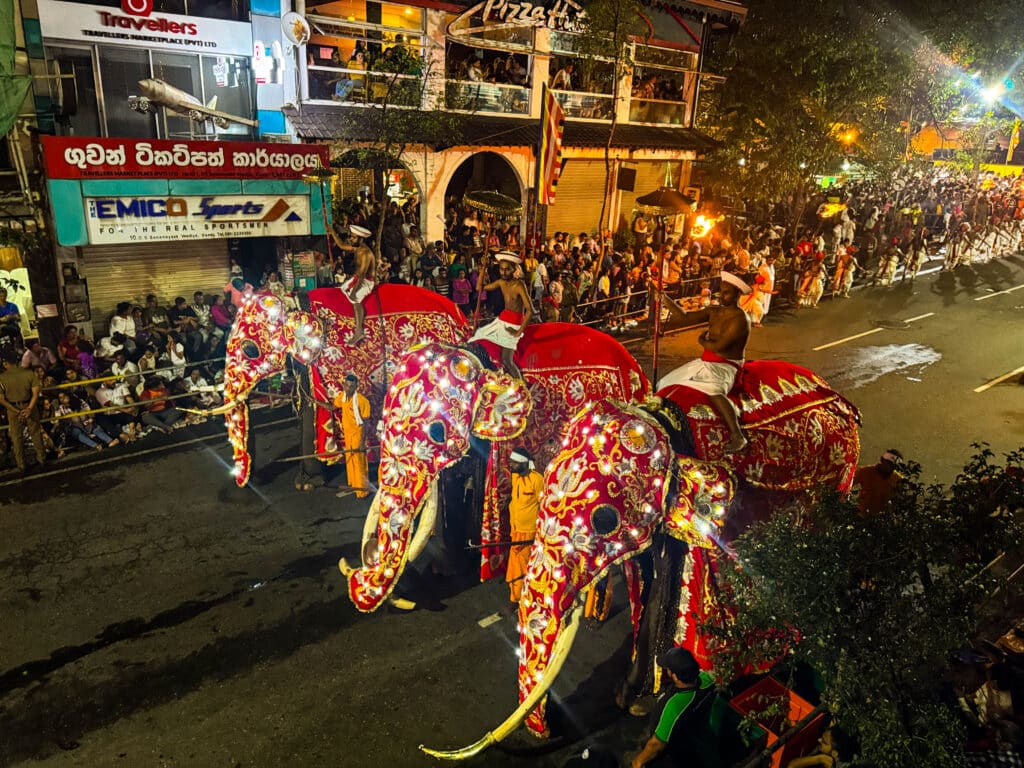
The Esala Perahera is Kandy’s great annual festival, typically held over ten nights in July or August. Decorated elephants, traditional dancers, drummers and fire performers parade through the streets in one of the most spectacular cultural events in South Asia. If your dates overlap with the Perahera, the city becomes a completely different place — extraordinary and worth planning around.
Where to stay in Kandy
Kandy’s accommodation is spread across a wide area. Some of the best hotels sit in the hills surrounding the city rather than in the centre itself, which keeps them quieter while still giving easy access to the main sights. For a deeper look at all the options, our best hotels in Kandy guide covers the full range by area and budget.
$$$$ — Adigar’s Manor
Price per night for 2 in shoulder season: from USD 385 (BB) Booking.com rating: 9.1
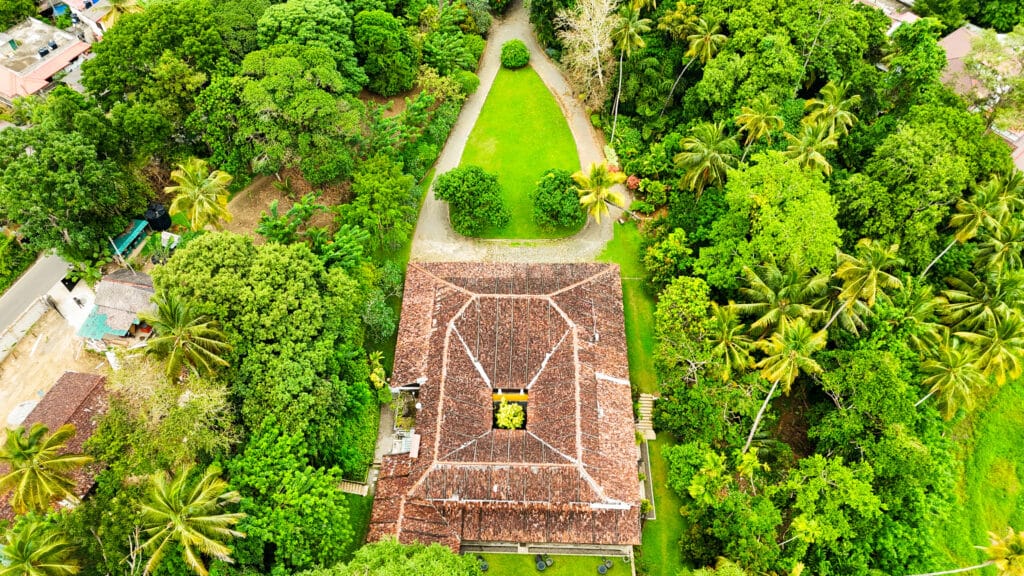
We stayed at Adigar’s Manor ourselves and it’s one of the most special hotels in Sri Lanka — a beautifully restored colonial manor house on a hillside about 15 minutes from the city centre. The rooms feel personal rather than hotel-standard, the garden views are extraordinary, and the hosts bring a warmth that you don’t find in larger properties. It also appears in our best hotels selection for Sri Lanka for exactly these reasons.
$$$ — Hebron Gardens House
Price per night for 2 in shoulder season: from USD 180 (BB) Booking.com rating: 9.6
A highly rated garden retreat that punches well above its price. At 9.6 on Booking.com, Hebron Gardens delivers genuine quality at a very reasonable rate — lush grounds, well-kept rooms and a warmth of hospitality that guests consistently highlight.
$ — Roberosia
Price per night for 2 in shoulder season: from USD 65 (BB) Booking.com rating: 9.7
Roberosia is a guest house-style stay with an extraordinary rating of 9.7 at a very low price point. For budget travellers who value quality and personal service over amenities, this is the one to book in Kandy. Breakfast is included, the hosts are praised across reviews, and the location works well as a base for exploring.
Ella: The Relaxed Heart of the Hill Country
If the Hill Country has a base that travellers fall in love with and don’t want to leave, it’s Ella. A small town perched at around 1,000 metres in the southern highlands, it combines spectacular viewpoints, an unhurried café culture and easy hiking trails in a way that few places in Sri Lanka can match. Days in Ella have a natural rhythm: an early morning at the Nine Arch Bridge while the mist is still low, a hike before the midday heat builds, lunch in town, and perhaps a massage in the afternoon.
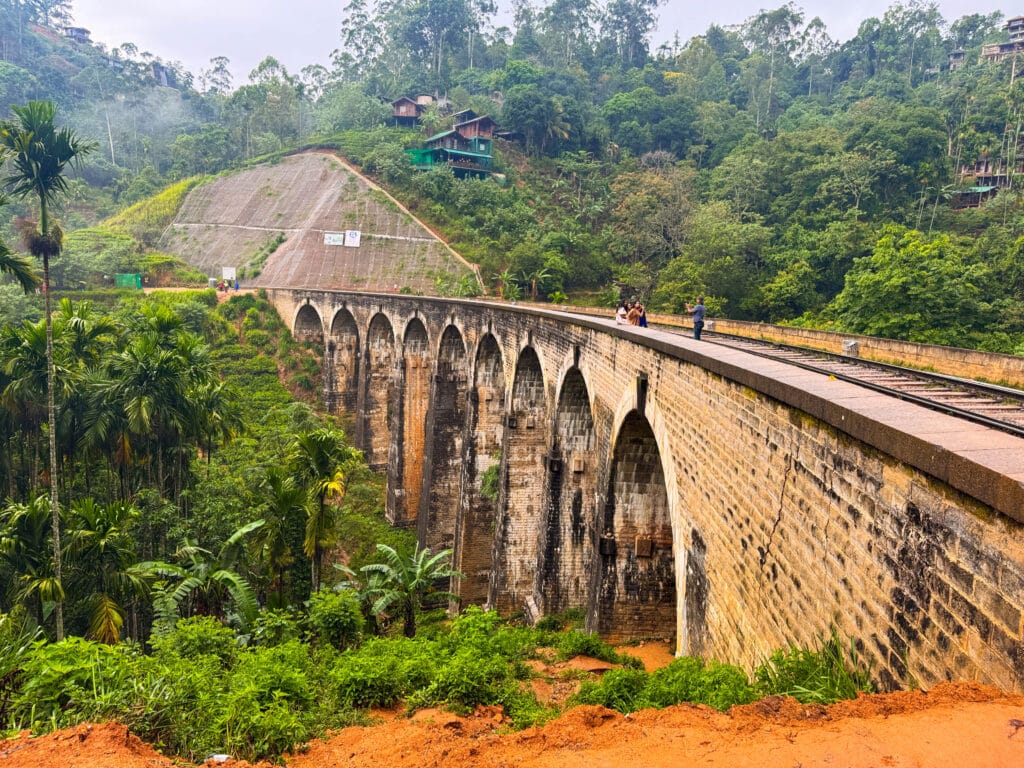
We stayed at Nine Arch Lodge, a modest guesthouse directly facing the famous bridge. The room was basic — we knew that going in — but the moment the sky cleared and the bridge appeared right there in front of the window, framed by jungle and tea, all of that completely stopped mattering. That view from the room is something I still think about.
What to see and do around Ella
The Nine Arch Bridge is Ella’s most iconic sight — a colonial-era viaduct made entirely of stone and brick, surrounded by jungle and tea estates, with trains crossing several times a day. The best time to visit is early morning: we went at 7:30am on our second morning and had the bridge almost to ourselves. The first morning we’d tried at 9:30am and found it crowded. Go early, go before 8am, and if timing works out, wait for a train to come through — the moment when it curves into view over the arches is unforgettable.
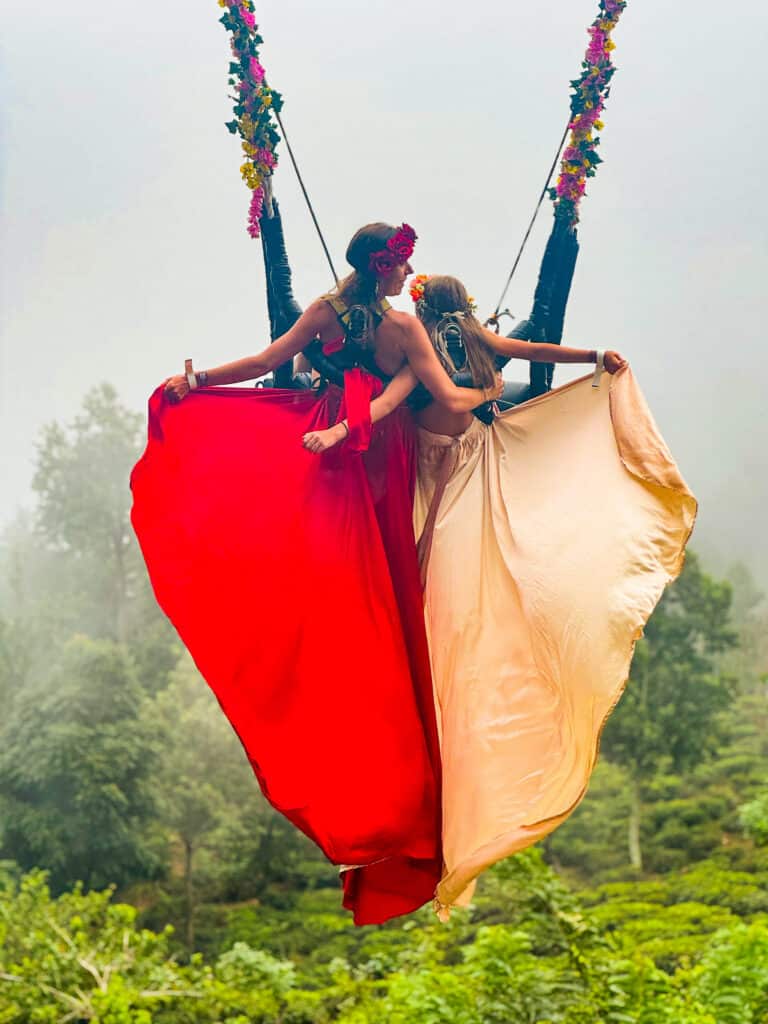
Little Adam’s Peak is the most accessible hike from Ella and genuinely rewards the effort. The trail begins just outside town, passes the Ravana Pool Club and Ella Swing on the way up, and reaches a summit with 360-degree views over the surrounding valleys and tea estates. We walked the whole route ourselves — the swing was closed in the mist on the way up but open on the way down, so we waited (about 30–45 minutes for the wristband paperwork, if I’m honest) and did it in pairs. With the swing wristband you also get access to Ravana Pool Club, which we walked through before heading to lunch lower down at Cafe Eden. The whole morning is a great half-day out.
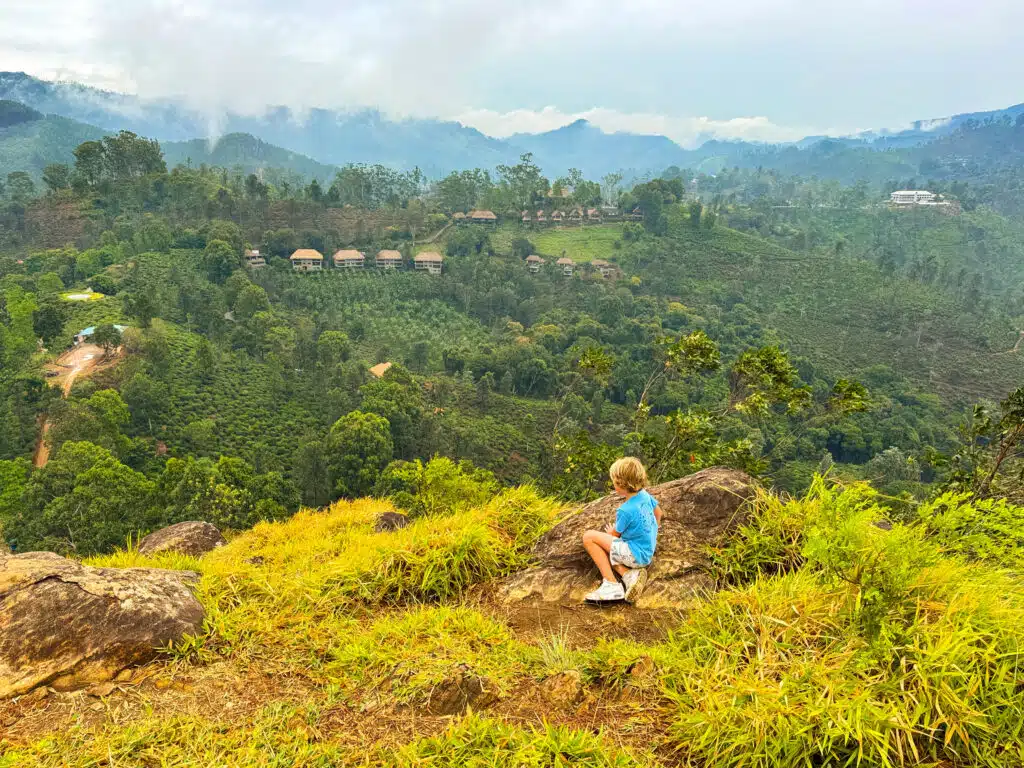
A guided day tour covering Ella Rock, Little Adam’s Peak and the Nine Arch Bridge is useful if you want to navigate without figuring out the trail logistics yourself.
Tea plantation visits are a natural part of the Ella experience. The hills around town are covered in working estates, and most offer tours that explain the full process from leaf to cup. We visited Halpe Tea Plantation and tried picking leaves ourselves — harder than it looks, especially with the basket strapped to your back. The factory tour was closed that day (it was a Saturday and the machines weren’t running), but the tea tasting and the landscape alone made it worthwhile. The Ceylon Tea Plantation and Factory Tour from Ella is a well-organised way to combine both.
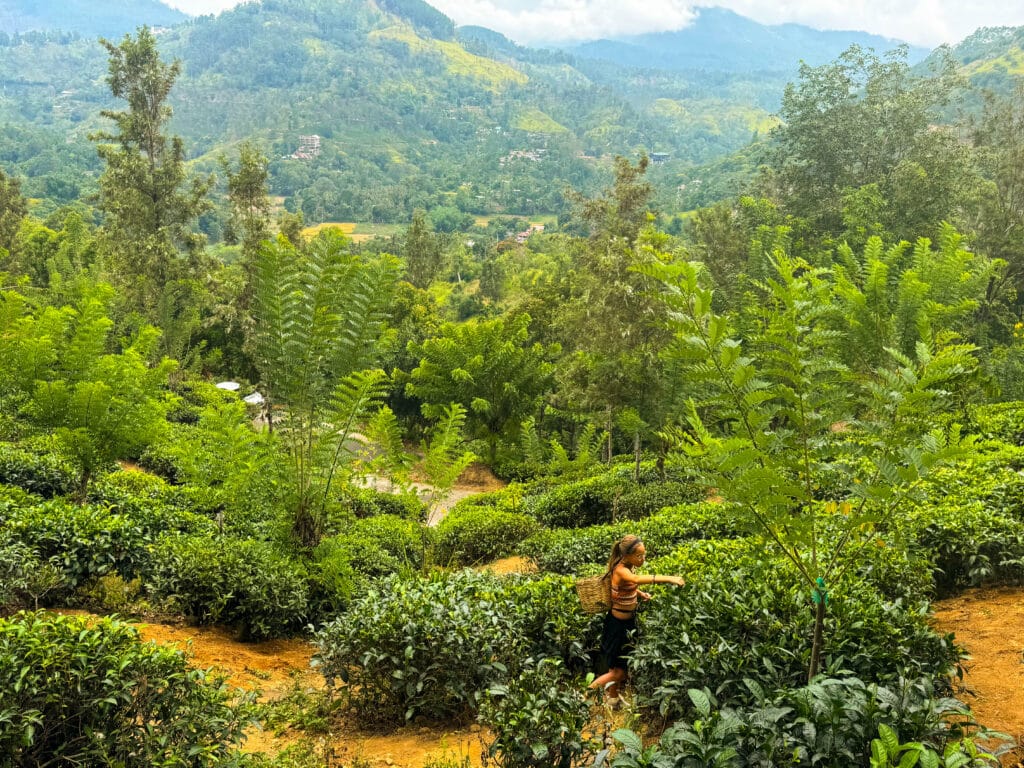
Ella Rock is the more challenging hike — longer, steeper and less clearly marked than Little Adam’s Peak, but offering bigger rewards for those who make it. The Ella Rock hiking tour with a guide is strongly recommended here, as the trail forks and locals don’t always agree on the route.
Diyaluma Falls — one of Sri Lanka’s highest waterfalls, about 45 kilometres from Ella — makes an excellent day trip and is often combined with a dip in the natural pools above the main falls. The Diyaluma Waterfall Adventure handles the transport and guiding.
The Lipton’s Seat tea estate near Haputale is one of the most atmospheric tea landscape experiences in the region — a viewpoint that Thomas Lipton himself reportedly used to survey his estate. The Lipton Tea Plantation tour from Ella typically includes the drive up and a factory visit on the way.
Where to stay in Ella
Ella’s accommodation ranges from budget guesthouses with dramatic views to high-end retreats deep in the tea hills. Many of the best stays sit slightly outside the town itself, trading walkability for scenery. For the full picture, our Ella hotels guide covers all options by budget.
$$$$ — Nine Skies
Price per night for 2 in shoulder season: from USD 745 (all-inclusive) Booking.com rating: 9.5
Nine Skies is not in Ella itself — it’s at Demodara, a short drive away, surrounded entirely by tea estates with no town noise and views in every direction. The all-inclusive rate covers meals and a level of experience that feels genuinely extraordinary: private infinity pool, personalised service and the kind of absolute quiet that you don’t realise you’ve been craving until you’re in it. One of the most special stays in all of Sri Lanka.
$$$ — Living Heritage Koslanda
Price per night for 2 in shoulder season: from USD 285 (BB) Booking.com rating: 9.3
Living Heritage sits between Ella and the tea country around Koslanda — not quite in either world, which turns out to be exactly the point. The property is built into a working tea estate, with rooms that look directly out over the plantation. At USD 285 with breakfast, it offers an unusually complete Hill Country experience at a mid-range price. It appears in both our luxury and boutique hotel selections.
$ — Nine Arch Lodge
Price per night for 2 in shoulder season: from USD 40 (BB) Booking.com rating: 8.9
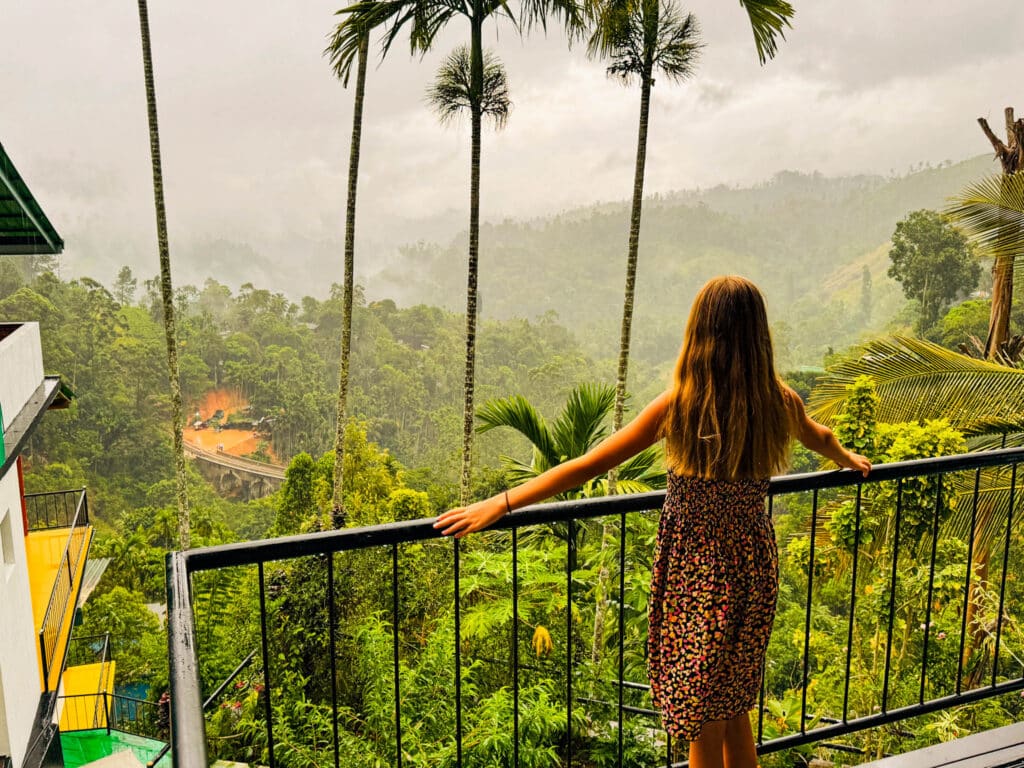
This is where we stayed, and the reason is simple: the view. Nine Arch Lodge sits directly facing the bridge, and if you get the right room, you wake up to the viaduct framed in jungle every morning. The hotel itself is basic — the comfort is modest and the facilities are simple — but Udhay and the team are wonderfully warm, and no amount of four-star polish can replicate looking up from your coffee and watching a train curve across a 100-year-old stone arch. Book for the experience, not the room.
Nuwara Eliya: Colonial Cool in the High Country
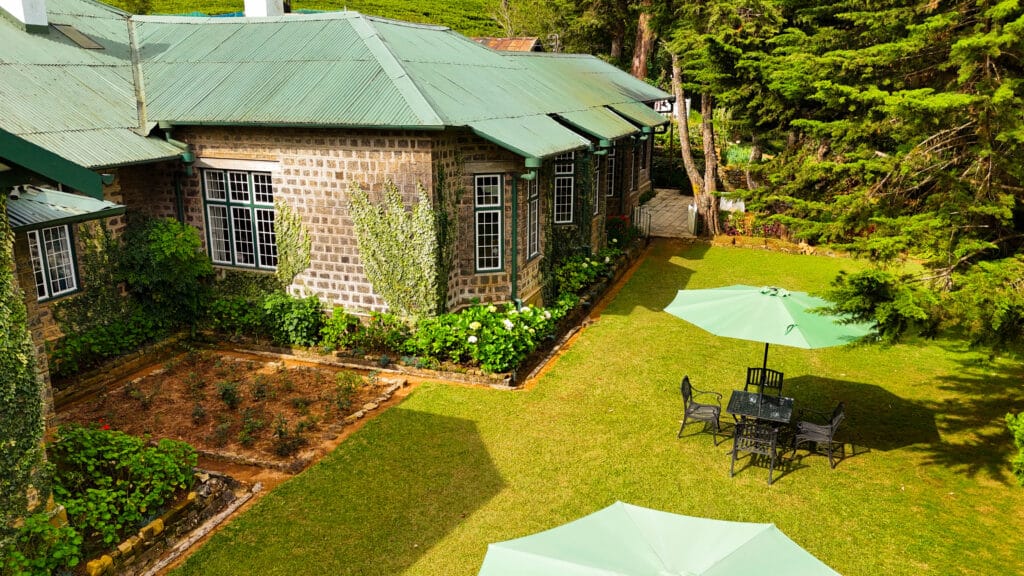
Nuwara Eliya sits at nearly 1,900 metres — the highest of the Hill Country’s main bases — and the altitude makes itself felt immediately. Even in the middle of the day, there’s a freshness in the air that feels nothing like coastal Sri Lanka. In the mornings and evenings, you’ll want a layer. The British called it Little England, built colonial bungalows and a racecourse, planted roses and laid out a golf course — and traces of all of that still remain, giving the town a slightly surreal, distinctly un-tropical quality.
For most travellers, Nuwara Eliya works best as a stop on the train journey between Kandy and Ella rather than as a standalone destination. But it deserves at least one full day, and the tea estates surrounding it are among the most scenic in Sri Lanka.
What to see and do around Nuwara Eliya
Horton Plains National Park is the most significant natural attraction near Nuwara Eliya and one of the most dramatic landscapes in Sri Lanka. The plateau sits at over 2,000 metres and is home to World’s End — a sheer cliff dropping around 800 metres to the lowlands below. The view on a clear morning is extraordinary; cloud typically rolls in by late morning, so arriving at first light is essential. The Horton’s Plain NP to World’s End tour handles the early transport and timing.
Tea estate visits around Nuwara Eliya have a different character from those around Ella. At higher altitude, the tea grows more slowly and the flavour is different — these are the high-grown estates that produce some of Sri Lanka’s most prized Ceylon teas. The Tea Factory and Tea Plucking experience gives a hands-on understanding of the full process, from picking to cup, and works well as a morning activity before moving on.
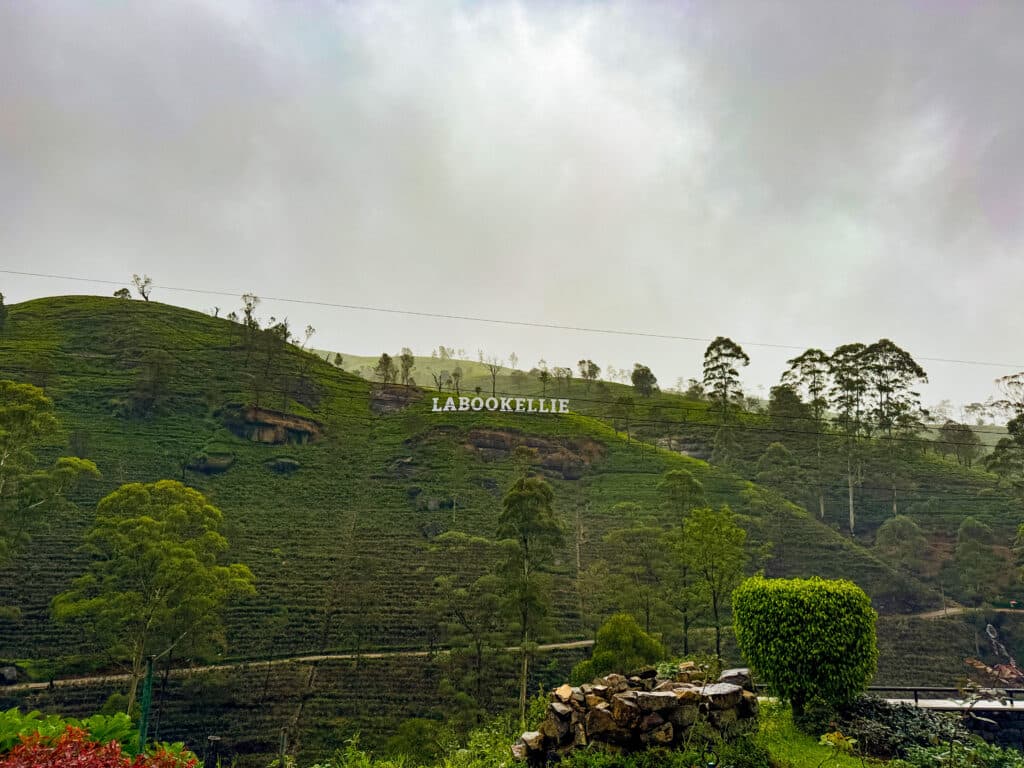
Gregory Lake sits at the edge of the town centre and provides a surprisingly pleasant hour or two of walking, cycling or boat hire. It’s relaxed rather than spectacular, but a good counterbalance to the more active parts of the Nuwara Eliya experience.
Horse riding in the hills above Nuwara Eliya is one of the region’s more unusual activities — a four-hour ride through tea estates and forest at altitude, with guides who know the trails well. The 4 Hour Horse Riding experience is worth booking in advance.
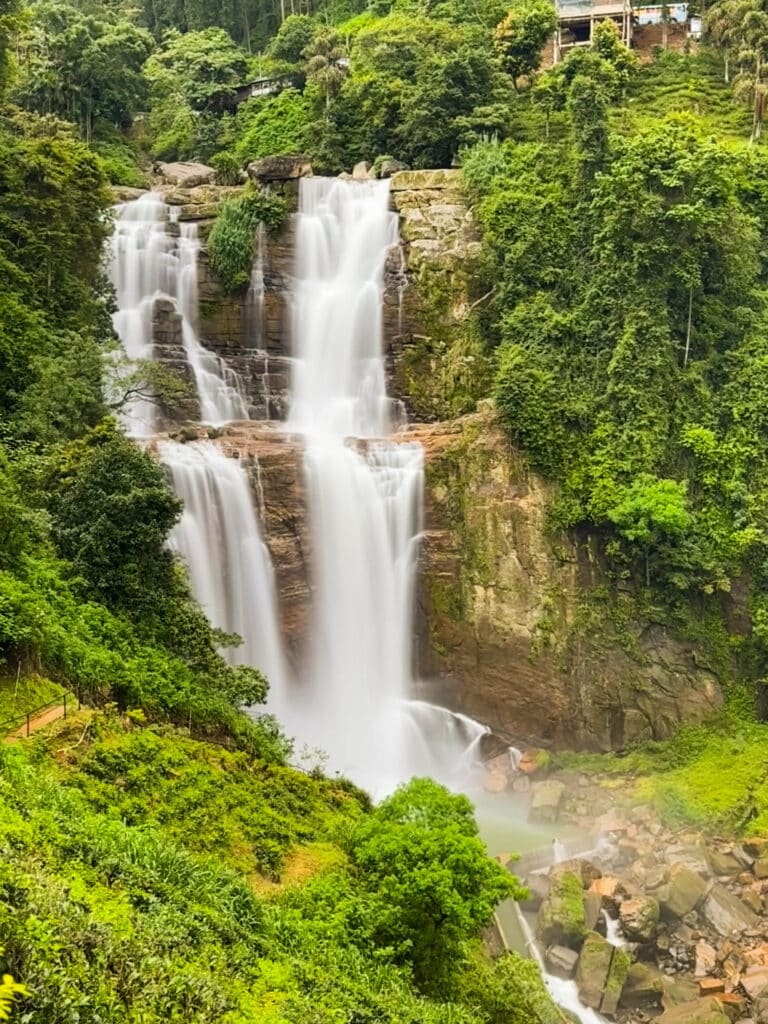
The Ramboda Waterfall is one of the most dramatic waterfalls in Sri Lanka, visible from the main road between Kandy and Nuwara Eliya. The Tour Tea Factory & Ramboda Waterfalls combines both in a practical day out.
Where to stay in Nuwara Eliya
Nuwara Eliya’s most characterful accommodation tends to be the colonial-era bungalows and planter’s houses that were built during the British period — many now converted into guesthouses and small hotels with original period detail. For the full range of options, see our Nuwara Eliya hotel guide.
$$$$ — Stafford Bungalow
Price per night for 2 in shoulder season: from USD 450 (BB) Booking.com rating: 9.6
A beautifully preserved colonial bungalow set in tea estate gardens, with period furnishings and a working fireplace for cooler evenings. The 9.6 rating reflects genuine quality at the top end: attentive service, excellent food and the feeling of staying in a piece of Hill Country history rather than a standard hotel room. It also appears in our tea plantation hotel guide.
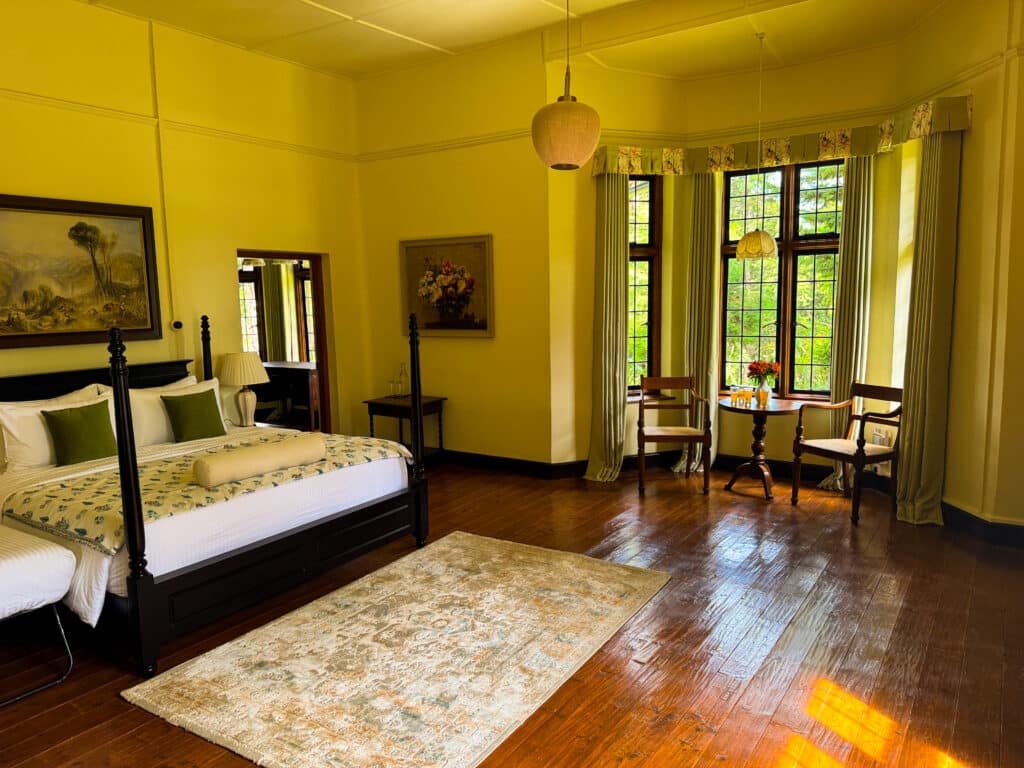
$$$ — Bluechip Leisure
Price per night for 2 in shoulder season: from USD 150 (BB) Booking.com rating: 9.5
A well-rated mid-range option in the colonial bungalow style, considerably more affordable than Stafford Bungalow but sharing some of the same character. At 9.5 and USD 150 with breakfast, it offers a strong balance of price and experience for travellers who want the Nuwara Eliya atmosphere without the luxury price tag.
$ — Appleton Villa
Price per night for 2 in shoulder season: from USD 55 (BB) Booking.com rating: 9.1
At USD 55 with breakfast and a 9.1 Booking.com rating, Appleton Villa is the clear budget pick in Nuwara Eliya. Simple, clean and welcoming — a practical base for early starts to Horton Plains or tea estate visits without needing to spend much.
The Train: How to Travel the Hill Country the Right Way
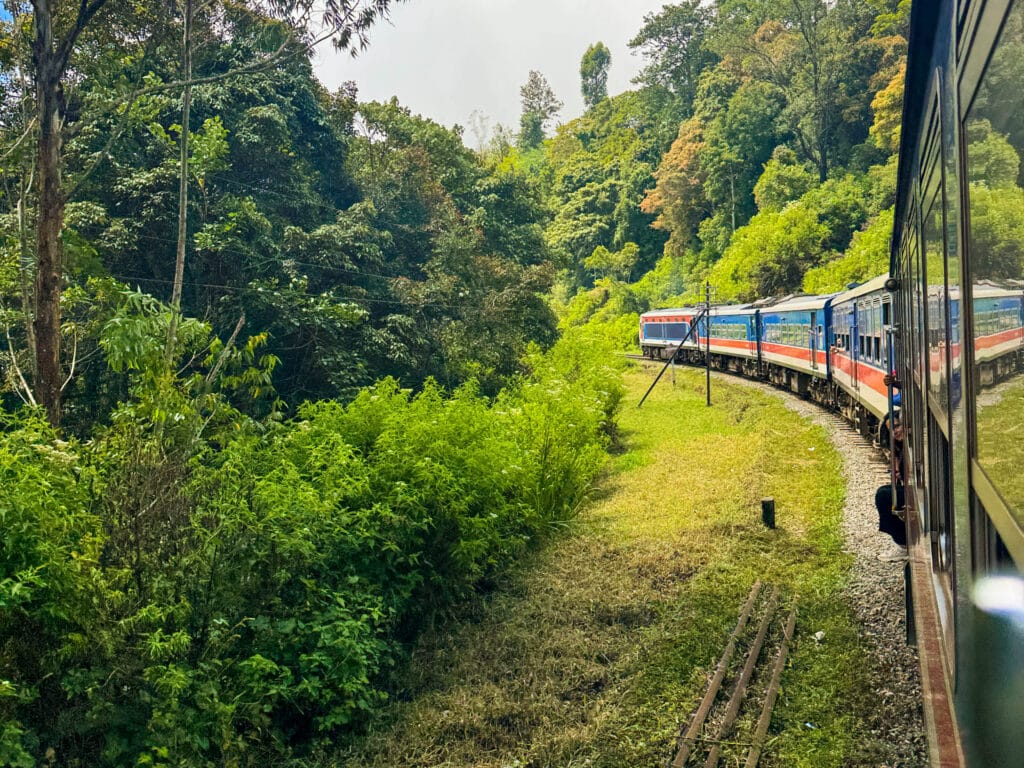
No guide to the Sri Lanka Hill Country would be complete without addressing the train — and specifically, the question of how to use it well.
The railway line from Kandy to Ella, passing through Hatton and Nuwara Eliya (Nanu Oya station), is one of the most famous scenic rail journeys in the world. Tunnels, viaducts, hairpin valleys, tea estates on every hillside, occasional waterfalls visible through the windows — it’s as much an experience as a transfer. We’ve written a full guide to the journey with practical tips on seats, timing and what to expect: Kandy to Ella Train Ride: The Complete Guide.
A few practical essentials: seats sell out quickly, particularly the unreserved second-class blue carriages. Book as early as possible through 12Go Asia. Kandy to Ella takes around six to seven hours; the stretch between Nanu Oya and Ella is the most dramatic. Many travellers take the train one way and a private driver the other for flexibility.
Also Worth Experiencing: The Hill Country Tea Estates
Tea is not just the backdrop to the Hill Country — it’s the reason this landscape exists the way it does. Beyond visiting a plantation on a day trip, there’s one property in the Hill Country that turns the tea estate experience into the entire stay.
$$$$ — Ceylon Tea Trails
Price per night for 2 in shoulder season: from USD 775 (all-inclusive) Booking.com rating: 9.5
Ceylon Tea Trails is one of the most celebrated stays in all of Sri Lanka — a collection of restored colonial planter’s bungalows set within an active tea estate near Hatton, with private butlers, all meals and activities included. The rate includes everything, and the experience justifies it: waking up inside a working tea estate, trout fishing in the reservoir, tea tastings in the afternoon light. It appears in both our luxury and romantic hotel selections, and for good reason — there is simply nowhere else in Sri Lanka quite like it.
Practical Information: Sri Lanka Hill Country
Best time to visit
The Hill Country can be visited year-round, which gives it an advantage over the coastal regions. In general, the period from December to April tends to bring drier, clearer conditions — better for long views from Horton Plains, clearer mornings at the Nine Arch Bridge and more reliable weather for hikes. From May onwards, the southwest monsoon brings more cloud and rain, particularly to the western slopes, but the Hill Country rarely shuts down entirely. Mist and short afternoon showers are part of the experience here.
For a full picture of Sri Lanka’s seasonal patterns, the Sri Lanka best time to visit guide breaks down each month across the whole island.
Getting to and around the Hill Country
Kandy is the most straightforward entry point. By train from Colombo it takes about three hours and the journey itself is pleasant. By private driver it’s a similar time but offers more flexibility.
Once in the Hill Country, the train is the most rewarding way to move between bases — particularly for the Kandy to Ella stretch. For day trips and local exploration, tuk-tuks work well. For early starts or routes not served by the railway, a private driver offers the most flexibility.
We used Sri Lanka Personal Tour Drivers throughout our trip and found the combination of train travel between Hill Country bases and private driving for day trips to be the most practical and enjoyable approach. Our driver knew exactly which stops were worth pulling over for.

How to combine the Hill Country with the rest of Sri Lanka
The Hill Country fits naturally between the Cultural Triangle and the south coast in most classic itineraries. The route flows geographically: west coast → Cultural Triangle → Kandy → Ella → south coast. If you’re heading to the east coast instead, Ella connects naturally toward Arugam Bay via Monaragala.
For day-by-day planning that shows how these regions connect, the 10 Days Sri Lanka Itinerary and 2 Week Sri Lanka Itinerary show the most common routing options with realistic travel times.
Final Thoughts on the Sri Lanka Hill Country
The Sri Lanka Hill Country is the part of the island that most travellers say they hadn’t expected to love as much as they did. You arrive thinking it’s a transition zone — a few nights between cultural sights and beach time — and then you find yourself at 7am watching a train cross a stone viaduct through wisps of mist, with tea estates stretching to the horizon and no particular reason to be anywhere else, and suddenly you understand why people extend their stays here.
That’s what the Hill Country does to you. It slows everything down in the best possible way. The Sri Lanka Hill Country doesn’t demand anything from you — no early alarm for a rock fortress, no heat-of-the-day temple climb. It just asks you to be there, to breathe the cooler air, to take the slow train, to drink the tea where it was grown.
If you’re building your first Sri Lanka itinerary, this region is the one to give breathing space to rather than squeezing between other stops. Two nights will always feel like not quite enough.
🐘 Plan Your Sri Lanka Trip
🏨 Still looking for the right stay? Browse all hotels in Sri Lanka — free cancellation on most rooms.
✈️ Flights: Compare routes and prices for flights to Sri Lanka.
🚂 Getting around: Book train tickets in advance (the scenic routes sell out), or arrange a private driver, tuk tuk rental or rental car.
📱 Stay connected: Get a Sri Lanka eSIM from Airalo before you fly. We use Airalo ourselves on every trip.
🔒 Travel insurance: Don't skip travel insurance for Sri Lanka — medical costs for tourists add up fast.
🎟️ Tours & activities: Browse safaris, cooking classes and tours across Sri Lanka.
💳 Money: Avoid card fees abroad with a free Revolut account.
Some links on this page are affiliate links. Booking through them costs you nothing extra and helps us keep this site running — thank you!
Frequently Asked Questions: Sri Lanka Hill Country
How many days do you need in the Sri Lanka Hill Country?
Most travellers spend two to four nights across one or two bases, which is enough to experience the Hill Country without rushing. If you’re covering Kandy, Ella and Nuwara Eliya, three bases across four nights is the minimum to feel settled — one night in Kandy, one in Nuwara Eliya, two in Ella. If you only have time for one base, Ella tends to be the most rewarding for first-time visitors, with the best combination of scenery, activities and atmosphere.
Is the Kandy to Ella train worth doing?
Without question — it’s one of the most scenic train journeys in Asia. The full route takes around six to seven hours and passes through tea estates, tunnels, viaducts and mountain valleys. Most travellers take it as a one-way journey (either direction works) and book seats as early as possible, as they sell out quickly. The second-class blue carriages with open doors are the most popular choice. Book through 12Go Asia to avoid navigating the Sri Lanka Railways website. You can book ahead via Kandy to Ella train tickets.
What is the best base in the Sri Lanka Hill Country?
For first-time visitors, Ella is the most rewarding single base — it offers the Nine Arch Bridge, accessible hiking, good café culture and a relaxed pace that the Hill Country is best experienced at. Kandy is the more culturally layered option, better for travellers interested in temples, festivals and a city feel. Nuwara Eliya suits those who want the colonial atmosphere, high-altitude tea estates and early starts to Horton Plains. Choose based on what you prioritise — or combine two if you have four or more nights. In Ella, Nine Skies is a lovely base.
What is the best time to visit Ella?
Ella is enjoyable year-round, but the clearest views and most reliable hiking conditions tend to fall between December and April. Morning mist is common throughout the year and is part of Ella’s character rather than a problem — the Nine Arch Bridge emerging from low cloud is one of the most photographed images in Sri Lanka. The main thing to avoid is heavy monsoon rainfall, which can make trails slippery and views difficult, though even then it rarely ruins a stay entirely.
Do you need a private driver in the Hill Country?
Not necessarily — the train handles the main routes well. But a private driver is invaluable for day trips, early morning starts to viewpoints and carrying luggage between bases that the train doesn’t serve directly. Many travellers combine both: train travel between Kandy and Ella, and a private driver for the surrounding attractions and onward connections. If you’re short on time or travelling with family, a driver throughout makes everything considerably smoother. If you would rather not rely on the train, a private driver in Sri Lanka gives full flexibility.
Can you visit both Ella and Nuwara Eliya on a short trip?
Yes, but it requires realistic planning. Ella and Nuwara Eliya are about three hours apart by train (Nanu Oya station). On a 10-day trip, you can comfortably cover Kandy (one night), Nuwara Eliya (one night) and Ella (two nights) in sequence. On a shorter trip, most travellers are better served by choosing one over the other. Ella generally wins for first-time visitors; Nuwara Eliya makes more sense if you’re specifically drawn to Horton Plains or the highest-altitude tea estates.
Is the Sri Lanka Hill Country good for families?
Yes, with the right expectations. Ella is particularly good for families: the Nine Arch Bridge, Little Adam’s Peak and the Ella Swing are all accessible for children, and the relaxed pace suits a mixed group well. Nuwara Eliya can work too, though Horton Plains requires an early start that younger children may find difficult. The train journey itself is a genuine highlight for kids — long enough to be an adventure, short enough not to become exhausting.
Related Blogs
Other Region Blogs
Sri Lanka Regions Explained: How to Choose the Best Areas for Your Trip
Sri Lanka Regions Explained: How to Choose the Best Areas for Your Trip
Sri Lanka Cultural Triangle: Ancient Cities, Temples & Where to Stay
Sri Lanka South Coast: Beaches, Surf Towns & Coastal Travel
Sri Lanka East Coast: Best Beaches, Bases & When to Go
Northern Sri Lanka: Culture, Travel & What to Expect
Sri Lanka West Coast: Colombo, Negombo & Your Gateway to the Island
Other Sri Lanka Blogs
Best Hotels in Sri Lanka: How to Choose Where to Stay — by Region & Value
Where to Stay in Sri Lanka: Best Hotels by Travel Style
Best Cities to Visit in Sri Lanka: A Practical Guide to Regions, Routes & City Bases
Sri Lanka Travel Itinerary: Custom Plans for Beach Lovers, City Explorers, and Wildlife Adventurers
Top Things to Do in Sri Lanka: The Most Rewarding Experiences on the Island
Best Time to Visit Sri Lanka: Weather, Seasons & Travel Tips
Sri Lanka Weather by Month: What to Expect Each Season as a Traveller
Getting Around Sri Lanka: Ultimate Guide to Transport, Trains, Tuk-Tuks & Easy Trip Planning
Is Sri Lanka Expensive to Travel? Budget, Costs & Money-Saving Tips for Your Trip
Sri Lanka Travel Guide: Visa Requirements, Vaccination & Local Travel Tips