Table of Contents
Kandy in Sri Lanka feels different from the coast the moment you arrive. The air is cooler, the hills close in gently around the lake, and daily life still revolves around ritual, rhythm, and tradition. This is not a beach stop or a quick photo opportunity — it’s a city where culture is lived rather than displayed.
As the island’s last royal capital and spiritual centre, Kandy carries a depth that reveals itself slowly. Morning temple ceremonies, evening light over the lake, forested viewpoints just beyond the centre — each layer adds context to the next. We’ve found that Kandy works best when approached with intention, not urgency.
This guide brings together what genuinely matters for visiting Kandy in Sri Lanka: the cultural core, the most worthwhile nature escapes, realistic day trips, and clear planning decisions around timing, transport, and where to stay. The aim is not to fill every hour, but to help you experience the city in a way that fits naturally into a wider Sri Lanka route.
In a Rush?
These are my Favourite Hotels in Kandy
- ⭐️⭐️⭐️ Santani Wellness Resort – Kandy – Check Prices and Availability
- ⭐️⭐️ Adigar's Manor – Kandy – Check Prices and Availability
- ⭐️ Clove Villa – Kandy – Check Prices and Availability
Kandy Travel Guide – At a Glance
This guide is designed to help you understand what Kandy has to offer at a glance before diving into the details. The overview below highlights the key themes, experiences, and planning elements covered in this article — from cultural landmarks and nature escapes to day trips and practical travel decisions.
| Section | What you’ll find |
|---|---|
| Cultural Highlights | The Temple of the Sacred Tooth Relic, National Museum, Kandy Lake and key religious sites |
| Nature and Viewpoints | Botanical gardens, forest walks, and panoramic viewpoints around the city |
| Cultural Experiences | Traditional Kandyan dance performances and major religious festivals |
| Day Trips | Easy excursions to Sigiriya, Pidurangala, Dambulla and nearby hilltop landmarks |
| Getting Around | Train routes, private drivers, and local transport options |
| Best Time to Visit | Seasonal insights, festival periods, and weather considerations |
| Where to Stay | Area-based advice with a first-hand stay example |
| Planning Tips | How many days to stay and how Kandy fits into a wider Sri Lanka route |

Why Kandy in Sri Lanka Is Worth Visiting
Kandy in Sri Lanka is recognised as a UNESCO World Heritage city largely because of its religious and historical significance. Home to the Temple of the Sacred Tooth Relic and centred around a calm, man-made lake, the city has long been a focal point of spiritual life on the island.
What makes Kandy stand out, however, goes beyond individual landmarks. As the last royal kingdom to fall under colonial rule, it developed largely on its own terms for centuries. Many traditions linked to court life, Buddhism, music, and dance were preserved here long after they had faded elsewhere, giving the city a depth and continuity that is still visible today.
A Brief Look at History: The Last Kingdom
Before the British took control in 1815, Kandy stood as Sri Lanka’s final stronghold. For centuries, the Kingdom of Kandy resisted Portuguese and Dutch influence, protected by its hill-country location, dense forests, and strategic mountain passes. While coastal regions were gradually overtaken, Kandy in Sri Lanka retained its own laws, court traditions, and religious identity.
The city also became a centre of diplomacy. Kandyan kings negotiated with European powers while safeguarding Buddhist heritage and artistic traditions. Many of the dances, rituals, and architectural styles still associated with Kandy originate from this period of independence and cultural confidence.
Even after British control was formalised through the Kandyan Convention, local customs remained firmly rooted — particularly those connected to Buddhism and the former royal court. This long continuity explains why Kandy in Sri Lanka continues to feel more traditional than many other cities on the island, with history still woven into temples, ceremonies, and everyday life around the lake.
The Sacred Heart of Kandy: Top Must-See Attractions
The city’s most important sights are closely tied to religion, ritual, and daily practice rather than sightseeing alone. The places below form the cultural core of Kandy and are best experienced with an understanding of their meaning, not rushed through as individual highlights.
Temple of the Sacred Tooth Relic (Sri Dalada Maligawa)

The Temple of the Sacred Tooth Relic is the most important Buddhist site in Sri Lanka and one of the main reasons travellers include Kandy in their itinerary. According to tradition, the temple houses a tooth of the Buddha, which makes it a living place of worship and pilgrimage rather than a purely historical monument.
To understand its significance, it’s best to visit during one of the daily rituals (pujas). Drumming, chanting, incense, and the steady movement of worshippers create an atmosphere that feels focused and deeply rooted in everyday religious practice — especially in the early morning or evening.
Inside the wider temple complex, you’ll encounter:
- intricately carved wooden details
- the golden casket said to protect the relic
- prayer halls used during daily pujas
- a steady flow of local worshippers alongside visitors
Practical etiquette
- Shoulders and knees must be covered
- Shoes must be removed before entering
- Expect queues and security checks, particularly at ritual times
Trade-off
This is not a quiet or contemplative stop in the traditional sightseeing sense. During peak hours and festival periods, the experience can feel crowded and structured. Travellers seeking architectural solitude or unrestricted movement may find it intense rather than tranquil.
A guided visit to the Temple of the Sacred Tooth Relic helps place what you’re seeing into a clearer religious and historical context. While independent visits are possible, a guide can explain the rituals, symbolism, and structure of the complex — especially useful if you’re unfamiliar with Buddhist practices or attending during a puja.
This option is most valuable for travellers who want deeper understanding rather than simply observing the space. Visitors seeking a quiet, self-paced experience may prefer to enter independently outside peak ritual times.
National Museum of Kandy
Located just steps from the Temple of the Sacred Tooth Relic, the National Museum is one of the easiest ways to add historical context to your visit. It focuses on the Kandyan period, with displays of royal regalia, ceremonial weapons, jewellery, documents, and everyday objects from court life.
The museum is compact and clearly laid out, making it a practical stop rather than a time-consuming one. Visiting shortly after the temple helps place what you’ve seen into a broader historical framework, especially around royal customs and governance.
Trade-off Travellers looking for large-scale exhibitions or highly interactive displays may find the museum modest. Its value lies in context and proximity, not in depth or spectacle.
Kandy Lake

Built in 1807, the lake forms a natural buffer between temples, streets, and surrounding hills. Rather than being a headline attraction, it acts as a natural buffer between temples, streets, and hills — a place where the pace immediately slows.
A walk along the Kandy Lake promenade takes around an hour and passes shaded trees, calm water, and views of the small island at its centre. It’s especially pleasant in the early morning or towards golden hour, when the light softens and the city feels less busy.
Look out for:
- the small island in the middle of the lake
- colonial-era buildings along the shoreline
- birds and monitor lizards near the water’s edge
Value logic Free, central, and easy to combine with nearby sights, Kandy Lake is one of the most cost-efficient experiences in Kandy in Sri Lanka. It works best as a connective walk between major attractions rather than a destination in itself.
A guided city tour is a practical option if you want to see Kandy’s main cultural sights in a short amount of time, without navigating transport or planning each stop yourself. Most tours include key landmarks such as the Temple of the Sacred Tooth Relic, Kandy Lake, and selected viewpoints, with added historical and cultural context along the way.
This works particularly well for first-time visitors or travellers with limited time, as it provides a clear overview of the city’s layout and significance in a single half-day. Those who prefer exploring independently or at a slower, unstructured pace may find a guided format less flexible.
Esala Perahera Festival

If you visit Kandy in Sri Lanka between late July and mid-August, you may experience the Esala Perahera — one of the most important religious festivals in the country. Held annually to honour the Sacred Tooth Relic, the festival brings nightly processions through the city featuring traditional drummers, Kandyan dancers, fire performers, and elaborately decorated elephants.
Rather than being a single event, the Esala Perahera unfolds over several nights, gradually building in scale and intensity. Streets fill with locals and pilgrims, rhythmic drumming echoes through the hills, and religious devotion blends with ceremony and spectacle. For many Sri Lankans, this is not a performance but an act of faith, which gives the festival its distinctive atmosphere.
Planning considerations
- This is the busiest period of the year in Kandy
- Accommodation prices rise sharply and availability is limited
- Roads close in the evenings and the city centre becomes crowded
Trade-off
The Esala Perahera is visually striking and culturally significant, but it is not a relaxed experience. Travellers who prefer quiet sightseeing or flexible evening plans may find the crowds and restrictions overwhelming. If you do plan to attend, booking accommodation well in advance and staying close to the centre makes the experience more manageable.
Kandyan Cultural Dance Show
Outside the Esala Perahera period, a Kandyan cultural dance show is the most accessible way to experience traditional music and dance in Kandy in Sri Lanka. Evening performances typically feature drumming, acrobatic movements, elaborate costumes, and a short fire-walking segment rooted in ritual tradition.
While the setting is clearly staged for visitors, the dances themselves are closely tied to Kandyan court traditions and religious ceremonies. For travellers who are not in Kandy during festival season, this offers useful cultural context and a glimpse into art forms that are otherwise only seen during major religious events.
Value logic Performances are short, affordable, and easy to fit into an evening after sightseeing. They work well as a substitute for the Esala Perahera when the festival is not taking place.
Trade-off This is a curated performance rather than a spontaneous cultural event. Travellers seeking the scale and intensity of a living religious festival may find the experience more observational than immersive.
If you’d rather book your key Kandy experiences in advance, these are the most relevant guided options.
Klook.comNature & Scenic Viewpoints Around Kandy
Kandy’s natural surroundings offer a clear contrast to its cultural core. Gentle hills, shaded paths, and elevated viewpoints create space to slow down, especially after visiting temples and museums. Nature around Kandy in Sri Lanka is not wild or remote, but easily accessible and well suited to short, restorative breaks between cultural sites.
Rather than requiring full-day excursions, most viewpoints and green spaces can be reached within minutes from the city, making them ideal additions to a short stay.
Royal Botanical Gardens Peradeniya

Located around 10 minutes from the city centre, the Royal Botanical Gardens in Peradeniya cover more than 60 hectares and showcase over 4,000 plant species. Long palm-lined avenues, orchid collections, and shaded bamboo groves make this one of the most relaxing places to visit near Kandy in Sri Lanka.
The gardens are easy to reach by tuk-tuk and work well as a half-day visit, particularly in the morning when temperatures are cooler.
Highlights
- Orchid House
- Giant Javan fig tree
- Suspension bridge
Trade-off Travellers looking for dramatic landscapes or hiking trails may find the gardens too manicured. Their appeal lies in scale, variety, and calm rather than adventure.
Bahirawakanda Vihara Buddha Statue

Rising high above Kandy, the Bahirawakanda Vihara Buddha Statue is one of the city’s most recognisable viewpoints. The statue stands over 26 metres tall, and the terrace surrounding it offers wide views across the lake, the city centre, and the green hills beyond.
The drive up the hill is short but steep, winding through local neighbourhoods before reaching the summit. Once at the top, you can walk around the base of the statue for a near-360-degree panorama. While the viewpoint works well in the early morning for softer light, sunset is the most popular time to visit, when the city gradually lights up below.
Value logic Easy to reach and requiring little time on site, Bahirawakanda works best as a short viewpoint stop rather than a long visit. It’s ideal to combine with a city walk or lake loop.
Trade-off At sunset, the viewpoint can feel busy and crowded, and the atmosphere is more observational than contemplative. Travellers seeking solitude or uninterrupted quiet may prefer visiting earlier in the day.
Udawatta Kele Sanctuary
Udawatta Kele is a quiet nature reserve on the edge of the city and offers a very different experience from Kandy’s cultural sites. Once a royal forest reserve, it now provides shaded walking paths, dense greenery, and a noticeable drop in noise levels just minutes from the city centre.
The sanctuary is well suited to birdwatching, gentle hiking, and slow forest walks. Narrow trails lead through thick vegetation, occasional clearings, and small viewpoints, creating a sense of distance from the busy streets below without requiring a full-day excursion.
Value logic Easy to access and low-key in nature, Udawatta Kele works best as a calm counterbalance to temple visits and city walks. It’s especially appealing during warmer hours of the day, when shade becomes a priority.
Trade-off Travellers expecting dramatic viewpoints, wildlife sightings, or clearly marked hiking routes may find the sanctuary understated. Its appeal lies in quiet immersion rather than spectacle.
Popular Day Trips from Kandy
Kandy in Sri Lanka is not only a destination in itself, but also a convenient base for exploring some of the island’s most important inland sights. Thanks to its central location, several iconic landmarks can be reached on a day trip without changing accommodation — though travel times are longer than they may look on the map.
The options below work best if you have an extra day in your itinerary and are comfortable with an early start.
Ambuluwawa Tower
Ambuluwawa Tower sits atop a lush hill about an hour’s drive from Kandy and is best known for its narrow, spiralling staircase and wide, uninterrupted views. The climb itself is adventurous rather than technical, and once at the top, you’re rewarded with 360-degree panoramas over forests, valleys, and small mountain villages.
Travel time from Kandy: approximately 1 hour by car (depending on traffic and road conditions).
The area around the tower is relatively quiet and green, making it a refreshing half-day escape from the city. Because of the exposed staircase, Ambuluwawa is best suited to travellers who are comfortable with heights.
Value logic
A short but memorable excursion that combines light adventure with sweeping views, without committing to a full day on the road.
Trade-off
The climb can feel intimidating, and the experience depends heavily on weather conditions. On cloudy days, visibility may be limited.
An organised tour to Ambuluwawa Tower simplifies logistics for one of the more unusual viewpoints near Kandy. Transport, timing, and access are handled in advance, which is useful given the hilltop location and the narrow approach roads leading to the site.
This option suits travellers who want to combine light adventure with panoramic views without arranging a private driver themselves. Those comfortable organising transport independently or sensitive to heights may prefer visiting without a structured tour.
Sigiriya Lion Rock & Pidurangala Rock
Sigiriya — often referred to as Lion Rock — is one of Sri Lanka’s most recognisable landmarks. Rising dramatically from the surrounding plains, the ancient rock fortress is known for its frescoes, landscaped gardens, and panoramic views from the summit. Visiting Sigiriya from Kandy is possible as a long day trip, though it requires an early departure.
Travel time from Kandy: approximately 2.5 hours each way by car.
The climb up Lion Rock follows a well-maintained route of staircases and walkways, passing the famous frescoes and the Lion’s Paws before reaching the top. From the summit, views stretch across jungle and farmland, highlighting the site’s former strategic importance.
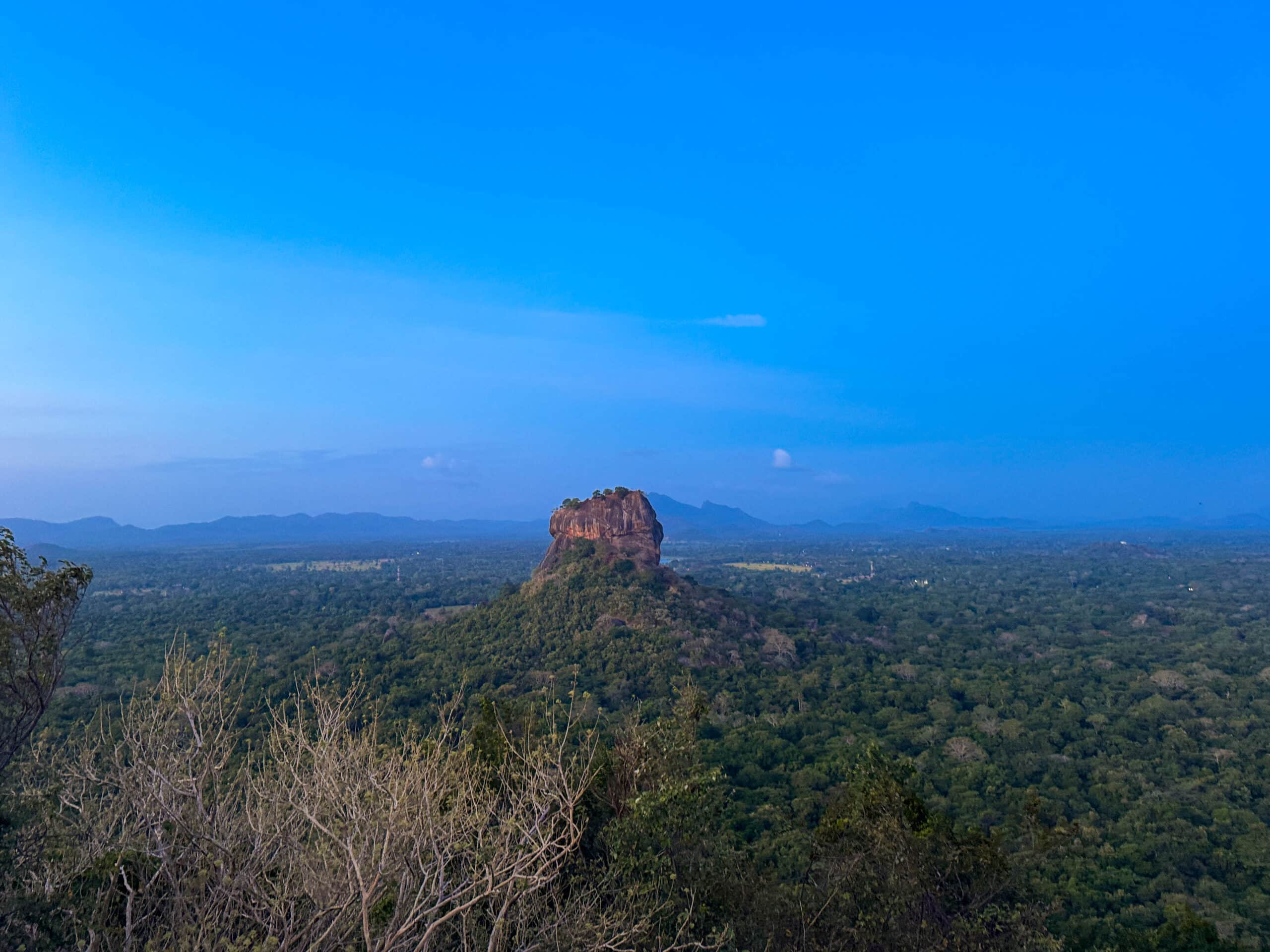
Just nearby lies Pidurangala Rock, which offers a very different experience — and one we’ve visited ourselves. The climb is shorter but more rugged, involving some scrambling near the top. From the summit, you’re rewarded with wide, unobstructed views towards Lion Rock itself, making it a favourite for sunrise and photography.

Together, Sigiriya and Pidurangala offer two contrasting perspectives on the same landscape: one rooted in history and structure, the other in raw scenery and simplicity.
Value logic
Combining Lion Rock and Pidurangala gives you both cultural depth and scenic impact in a single day, without changing accommodation in Kandy in Sri Lanka.
Trade-off
This is a demanding day trip with long travel times (around 2.5 hours each way). Lion Rock can feel busy, while Pidurangala requires a reasonable level of fitness and comfort with uneven terrain. Travellers who prefer a slower pace may enjoy these sites more as part of an onward route rather than a single-day excursion.
Dambulla Cave Temple

The Dambulla Cave Temple offers a calmer alternative for travellers who want to explore the Cultural Triangle without a strenuous climb. Set within a series of cave chambers, the complex features hundreds of Buddha statues and richly painted murals that date back centuries.
Travel time from Kandy: approximately 2 to 2.5 hours by car.
The ascent to the caves is relatively short and manageable, and once inside, the focus is on atmosphere and detail rather than panoramic views. Dambulla works particularly well for travellers interested in religious art and interior spaces.
Value logic
Dambulla is well suited to a cultural day trip from Kandy for travellers who prioritise history and atmosphere over physical challenge.
Trade-off
While historically significant, Dambulla lacks the dramatic visual impact of Lion Rock or Pidurangala. Travellers seeking sweeping views or iconic photography moments may find it less striking.
Essential Kandy Travel Planning
Once you’ve decided what you want to see and do, the next step is turning that into a realistic plan. While the city itself is compact, choices around timing, transport, and where to stay have a noticeable impact on how relaxed your visit feels.
This section focuses on the practical decisions that matter most when visiting Kandy: how many days are worth allocating, how to get in and around the city, the best time to visit, and where to stay depending on your travel style. The aim is not to over-plan, but to help you make informed choices that fit naturally into a wider Sri Lanka itinerary.
How Many Days Do You Need?
For most itineraries, Kandy in Sri Lanka works best as a cultural transition point between the coast and the Hill Country. Most travellers need 1 to 2 days to experience Kandy in a balanced way. While the city itself is compact, its main sights are spread out enough that pacing plays an important role in how relaxed your visit feels.
1 day in Kandy works well if you’re short on time or using the city as a stop between destinations. In a single day, you can comfortably visit the Temple of the Sacred Tooth Relic, walk around Kandy Lake, and include one nearby viewpoint such as the Bahirawakanda Buddha. This option works best if you arrive early in the day or stay overnight.
2 days in Kandy allows for a slower, more comfortable rhythm. With an extra day, you can add the Royal Botanical Gardens, attend a Kandyan cultural dance show in the evening, or spend more time exploring quieter corners of the city without rushing between sights. This suits travellers who want to balance cultural highlights with short nature breaks.
If you’re building a route, this 10 Days Sri Lanka Itinerary shows where Kandy fits best without rushed travel days.
If you’re visiting during the Esala Perahera period (late July to mid-August), allowing an additional night is strongly recommended. The evening processions take up much of the night and significantly affect traffic and movement in the city, making a longer stay far more relaxed.
Getting In and Around Kandy
Getting to and around Kandy in Sri Lanka is relatively straightforward, but your choice of transport has a clear impact on comfort, timing, and flexibility. While the city itself is compact, several key sights sit just outside the centre, making short drives unavoidable.
Below are the most practical ways to reach Kandy and move around once you’re there.
The Scenic Train
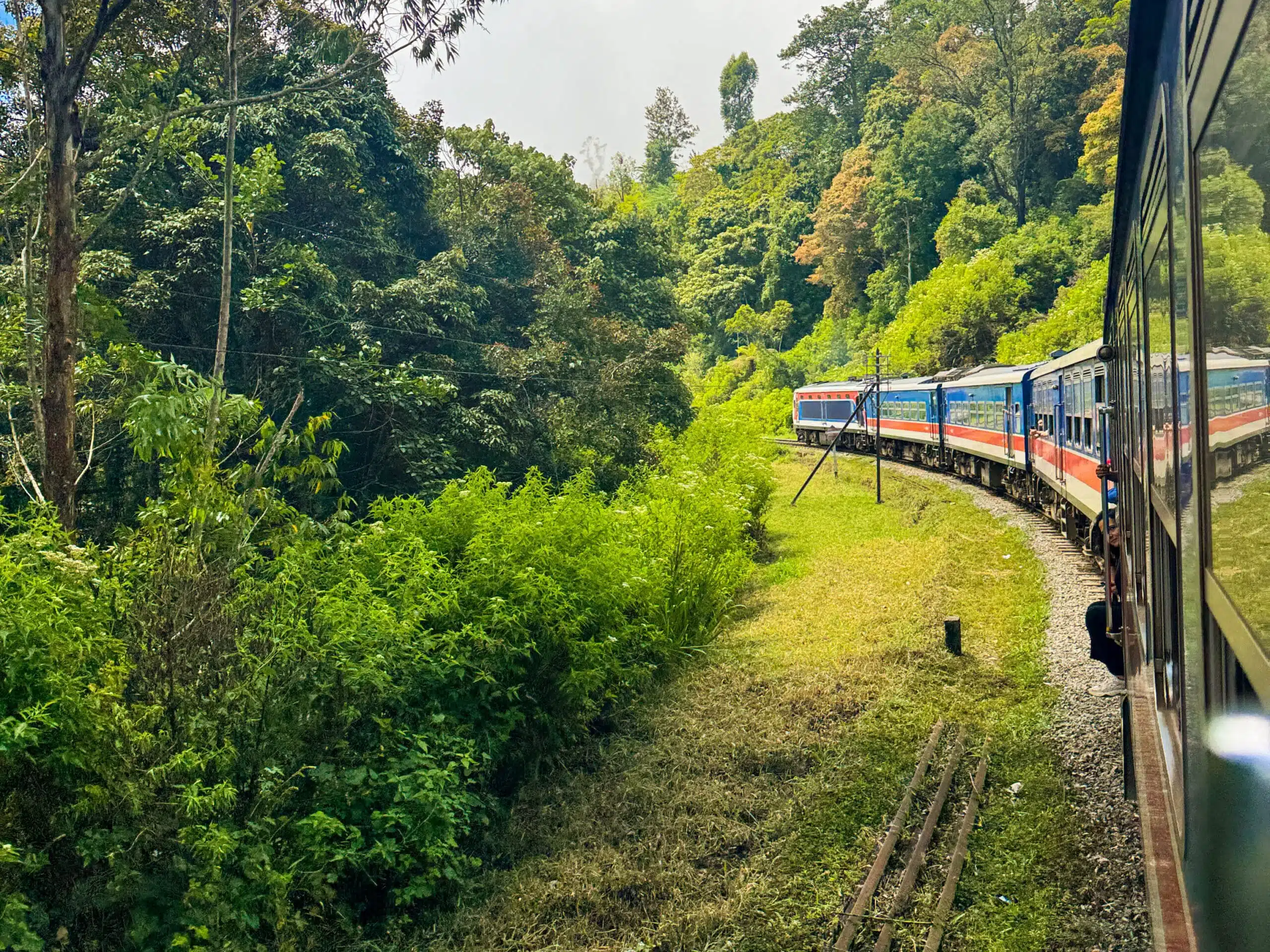
The train journey to Kandy — particularly from Ella or Nuwara Eliya — is one of the most scenic rail routes in Sri Lanka. Tea plantations, misty valleys, and forested hills gradually unfold along the way. As you approach Kandy, the landscape becomes denser and greener, marking the transition into the central highlands.
This route is especially popular with travellers continuing on to or from Ella, combining scenery with a relaxed travel pace.
Trade-off
Train schedules are fixed and delays are common. Comfort levels vary by class, and luggage space can be limited during busy periods.
Many travellers combine Kandy in Sri Lanka with Ella, using the scenic train route as a natural transition into the Hill Country. If you’re continuing south by rail, our guide to Ella Sri Lanka: The Scenic Hill Town with Stunning Views and Adventure for All Travellers explains what to expect once you arrive, from viewpoints and waterfalls to relaxed cafés.

Private Driver
Hiring a private driver is one of the most flexible ways to reach Kandy, either as a single transfer or as part of a longer Sri Lanka itinerary. Many travellers choose this option for the journey from Colombo, the airport, or the Cultural Triangle, especially when travelling with luggage, children, or limited time.
A private driver allows you to choose departure times, make stops along the way, and avoid the unpredictability of public transport. It’s also a common choice for travellers who prefer door-to-door comfort or who plan to include Kandy as one stop within a broader route through the island.
Value logic
Higher upfront cost, but greater comfort, flexibility, and time control — particularly valuable if Kandy is part of a longer, multi-stop journey.
Trade-off
Less scenic than the train on some routes and more expensive than public transport, especially for solo travellers.
During our own trip, we travelled with Sri Lanka Personal Tour Driver, which we found especially reliable for longer inland routes and flexible stopovers between destinations like Kandy and the Cultural Triangle.
Local Transport in Kandy
Once in the city, most travellers in Kandy rely on a combination of short walks and quick rides.
- PickMe or Bolt – The most transparent option, with prices fixed in advance. Ideal for short trips between the lake, viewpoints, and the botanical gardens.
- Tuk-tuks – Widely available and useful for hilltop locations like the Bahirawakanda Buddha. Always agree on the fare beforehand, as meters are rarely used.
- Walking – The area around Kandy Lake, the Temple of the Sacred Tooth Relic, the museum, and the city centre is largely walkable, with shaded paths and reasonable pavements.
Practical tip
Avoid accepting the first tuk-tuk offer near the train station or major viewpoints. Walking a short distance usually results in more reasonable pricing.
Best Time to Visit Kandy
The best time to visit Kandy in Sri Lanka is generally between December and April, when rainfall is lower and days are more predictable. Thanks to its inland location and slightly higher elevation, Kandy tends to be cooler and less humid than the coast, making it comfortable to explore year-round.
That said, seasonality in Kandy is closely tied to cultural events as well as weather. During July and August, the city hosts the Esala Perahera — one of Sri Lanka’s most important religious festivals. While this period offers a unique cultural experience, it also brings larger crowds, higher accommodation prices, and evening road closures that affect how easily you can move around the city.
Outside peak festival season, Kandy feels calmer and more evenly paced. Shoulder months can still work well, particularly if you’re comfortable with occasional rain and prefer fewer visitors at major sights.
While these months are generally the most stable for visiting Kandy, weather patterns vary across the island. For a broader seasonal overview and regional differences, our Best Time to Visit Sri Lanka guide explains how conditions change between the Hill Country, coast, and Cultural Triangle.
Where to Stay in Kandy
Choosing where to stay in Kandy has a noticeable impact on how relaxed your visit feels. While the city itself is compact, accommodation options broadly fall into two location categories — city centre or just outside the centre — and within those, comfort level and atmosphere vary significantly. For a full breakdown, see our best hotels in Kandy guide.
Staying in the City Centre – Best for Walkability & Short Visits
Staying in the city centre works best for short stays and first-time visitors. You’ll be within walking distance of Kandy Lake, the Temple of the Sacred Tooth Relic, cafés, museums, and shops.
The main trade-off is noise and limited space, particularly during busy periods and festival season.
Budget-Friendly & Central – Raj Residencies
Raj Residencies offers simple, clean rooms in a practical location close to the lake and temple area. It’s a good choice if you’re staying one night, travelling on a tighter budget, or prioritising convenience over views and facilities.
Staying Just Outside the Centre – Best for Calm & Views
Accommodation slightly above or outside the city centre offers a noticeably quieter setting. You’ll typically gain more space, greenery, and elevated views — usually requiring short tuk-tuk rides into town.
This category suits travellers who prefer a slower rhythm and more privacy.
Relaxed Hillside Stay – Adigar’s Manor

We stayed at Adigar’s Manor, located slightly above the city. The setting feels noticeably quieter than the centre, with cooler air, more privacy, and open views over the surrounding greenery. The property offers generous space, a swimming pool, and a relaxed atmosphere, while still being close enough to reach central Kandy by tuk-tuk when needed.
If you’d like a more detailed breakdown of the rooms, setting, and who this stay works best for, you can read our full Adigar’s Manor review.
A Stylish Boutique Stay Just Outside the Centre
Boutique Value – Clove Villa
Clove Villa is a small, stylish boutique hotel about ten minutes from the centre of Kandy, known for its elegant design, personalised service and peaceful setting. It’s a great-value choice if you want comfort and character close to the city while still enjoying a calm, relaxed retreat.
Luxury Hillside Comfort – Elevated but Close to Town
For travellers who want upscale comfort without sacrificing proximity to the city, a boutique hillside hotel is often the best balance.
Luxury Boutique – Kings Pavilion
Kings Pavilion offers spacious suites, panoramic hill views, and a peaceful atmosphere just a short drive from the centre. It’s ideal for couples or travellers who want more privacy and refined comfort while still exploring Kandy during the day.
Ultra-Relaxed Wellness Escape – A Destination in Itself
If your focus is not only sightseeing but also slowing down completely, a wellness retreat outside Kandy provides a very different experience from a city stay.
Ultra-Luxury Retreat – Santani Wellness Resort
Santani sits high in the hills with minimalist architecture and sweeping valley views. With its wellness programmes, spa facilities, and quiet setting, it suits travellers looking to combine cultural exploration with restorative downtime. This option works particularly well at the beginning or end of a Sri Lanka itinerary.
Is Kandy Worth Visiting?
Kandy in Sri Lanka suits travellers who want more than surface-level sightseeing — those who appreciate context, ritual, and a slower shift in pace between coast and highlands. It works particularly well for first-time visitors building a balanced route, and for return travellers looking to understand the island beyond its beaches.
From here, the journey naturally continues. Whether you head deeper into the Hill Country by train, explore the Cultural Triangle on a longer loop, or begin winding south towards Ella, Kandy acts as a cultural anchor within your itinerary — a place that quietly shapes how the rest of Sri Lanka unfolds.
What to Book on Kandy
Everything worth booking on Kandy, all in one place:
🎟️ Half-day Kandy city tour (temple + viewpoints)
🎟️ Pidurangala
🎟️ Sigiriya + Dambulla day tour from Kandy
🎟️ Dambulla Cave Temple day trip from Kandy
🐘 Plan Your Sri Lanka Trip
🏨 Still looking for the right stay? Browse all hotels in Sri Lanka — free cancellation on most rooms.
✈️ Flights: Compare routes and prices for flights to Sri Lanka.
🚂 Getting around: Book train tickets in advance (the scenic routes sell out), or arrange a private driver, tuk tuk rental or rental car.
📱 Stay connected: Get a Sri Lanka eSIM from Airalo before you fly. We use Airalo ourselves on every trip.
🔒 Travel insurance: Don't skip travel insurance for Sri Lanka — medical costs for tourists add up fast.
🎟️ Tours & activities: Browse safaris, cooking classes and tours across Sri Lanka.
💳 Money: Avoid card fees abroad with a free Revolut account.
Some links on this page are affiliate links. Booking through them costs you nothing extra and helps us keep this site running — thank you!
Frequently Asked Questions about Kandy in Sri Lanka
How many days do you need in Kandy in Sri Lanka?
Most travellers find 1 to 2 days ideal. With one day, you can visit the Temple of the Sacred Tooth Relic, walk the Kandy Lake loop, and add a hilltop viewpoint. Two days gives you breathing room for the Royal Botanical Gardens, a gentle forest walk in Udawatta Kele, or an evening cultural dance show, without rushing between sights.
What is Kandy in Sri Lanka famous for?
Kandy in Sri Lanka is best known for the Temple of the Sacred Tooth Relic, one of the country’s most important Buddhist pilgrimage sites. It’s also famous as the last royal capital, with traditions linked to court life, music, and dance still visible today. The lake at the centre of the city adds to its slower, more reflective feel compared to coastal destinations.
Is Kandy worth visiting?
Yes — especially if you want cultural depth and a calmer rhythm in your route. Kandy in Sri Lanka offers a meaningful contrast to beaches, with living religious sites, walkable city moments around the lake, and easy access to viewpoints and green spaces. It also works well as a natural transition stop before heading deeper into the Hill Country.
When is the best time to visit Kandy?
December to April is usually the easiest window for sightseeing, with lower rainfall and comfortable temperatures for walking. July and August can be a standout time if you want to experience the Esala Perahera festival, but the city is busier and accommodation books out quickly. In shoulder months, expect occasional rain but fewer crowds.
How do you get to Kandy in Sri Lanka, and what’s the easiest way to get around?
Many travellers arrive by train (especially from the Hill Country) or by private driver from places like Colombo or the Cultural Triangle. Inside the city, a mix of walking and short rides works best. PickMe or Bolt can be useful for clear pricing, while tuk-tuks are convenient for viewpoints and gardens if you agree the fare upfront.
Should you stay overnight in Kandy, or visit as a day trip?
An overnight stay is the better choice for most people. It lets you see the temple during a morning or evening ritual, enjoy Kandy Lake at quieter times, and fit in a dance show without feeling squeezed. A day trip can work if your itinerary is tight, but you’ll spend more time moving than absorbing what makes Kandy special.
Do I need a SIM card or eSIM for Kandy and Sri Lanka?
Mobile data is cheap and reliable across Sri Lanka, and having it from arrival makes getting around Kandy easier — for maps, ride apps and checking train times. The simplest option is to set up an eSIM for Sri Lanka before you fly. Prefer a local SIM? You can buy a Dialog or Mobitel SIM at Colombo airport.
Related Blogs
Other Cities & Destinations
Best Cities to Visit in Sri Lanka: A Practical Guide to Regions, Routes & City Bases
Sigiriya Sri Lanka: Complete Guide to Nature, Culture, Lion Rock & Village Life
Ella Sri Lanka: The Scenic Hill Town with Stunning Views and Adventure for All Travellers
Negombo City: A Coastal Charm Blending Culture and Beaches
Nuwara Eliya: Sri Lanka’s Cool Hill Station Rich in Tea Plantations and Colonial Elegance
Udawalawe: Sri Lanka’s Premier Wildlife Safari Hub Famous for Elephant Sightings
Unawatuna: Sri Lanka’s Tropical Paradise Known for Pristine Beaches and Vibrant Marine Life
Galle Sri Lanka: Explore the Historic Fort City’s Colonial Heritage and Coastal Vibes
Other Sri Lanka Blogs
Best Hotels in Sri Lanka: How to Choose Where to Stay
Where to Stay in Sri Lanka: Best Hotels by Travel Style
Sri Lanka Regions Explained: How to Choose the Best Areas for Your Trip
Sri Lanka Travel Itinerary: Custom Plans for Beach Lovers, City Explorers, and Wildlife Adventurers
Top Things to Do in Sri Lanka: The Most Rewarding Experiences on the Island
Best Time to Visit Sri Lanka: Weather, Seasons & Travel Tips
Sri Lanka Weather by Month: What to Expect Each Season as a Traveller
Getting Around Sri Lanka: Ultimate Guide to Transport, Trains, Tuk-Tuks & Easy Trip Planning
Is Sri Lanka Expensive to Travel? Budget, Costs & Money-Saving Tips for Your Trip
Sri Lanka Travel Guide: Visa Requirements, Vaccination & Local Travel Tips