日本語
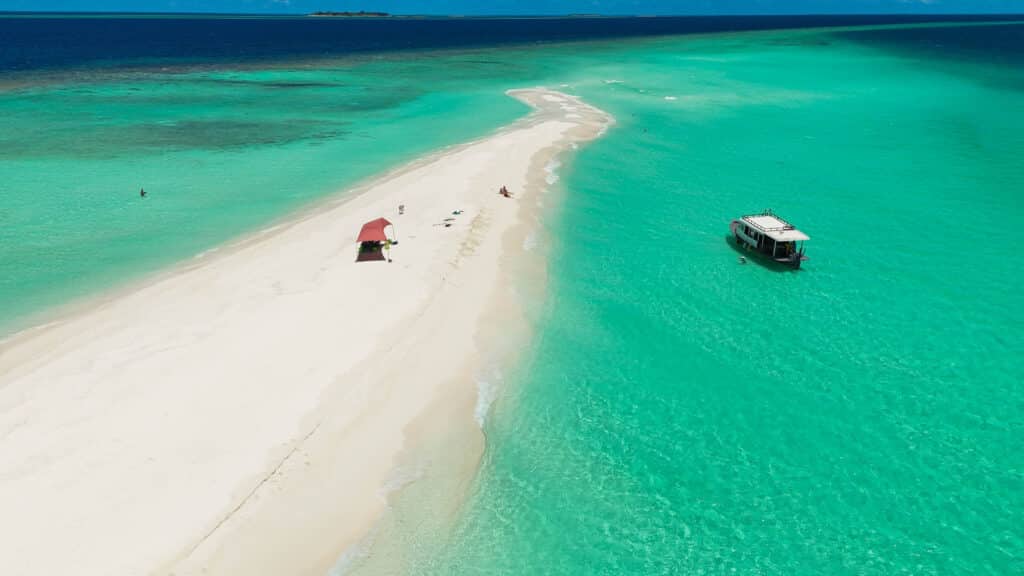
Table of Contents
A sandbank in the Maldives is a small, temporary patch of white coral sand with no vegetation, surrounded by shallow turquoise water. It appears at low tide and can shrink or disappear completely at high tide. Most people visit for 2 to 4 hours by speedboat or dhoni from local islands or resorts to swim, snorkel, have a picnic, or watch the sunset.
What is a sandbank in the Maldives?
A Maldives sandbank is a small bare mound of white coral sand that appears from the shallow lagoon at low tide. It is not attached to any island, completely bare with no vegetation, and constantly changes shape with the tide, current, and seasonal swell. That’s the postcard image you see on Instagram: a tiny strip of bright white sand surrounded by electric blue water.
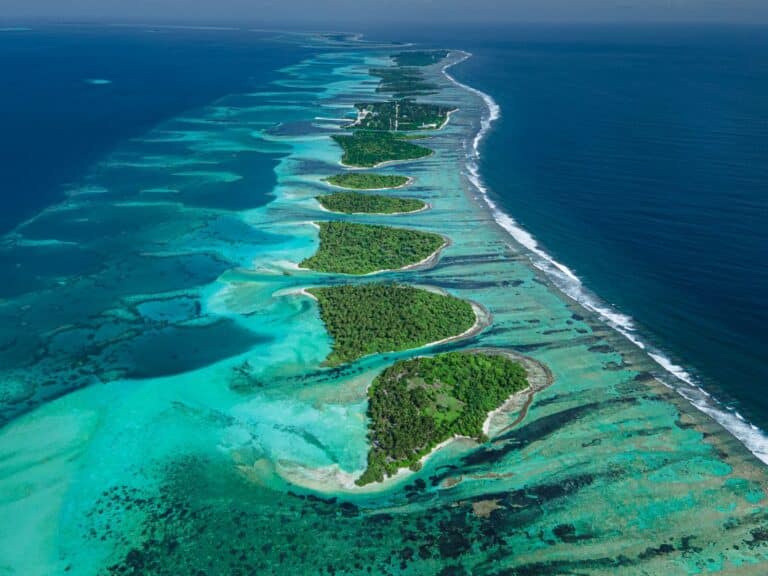
Sandbanks form slowly over time. Parrotfish eat coral skeletons and grind them into sand, which currents and waves transport into shallow reef flats. Over months or years, enough sand accumulates to break the surface at low tide. The sand is loose, and currents always move, so most sandbanks are ephemeral. They can appear, move, and disappear entirely.
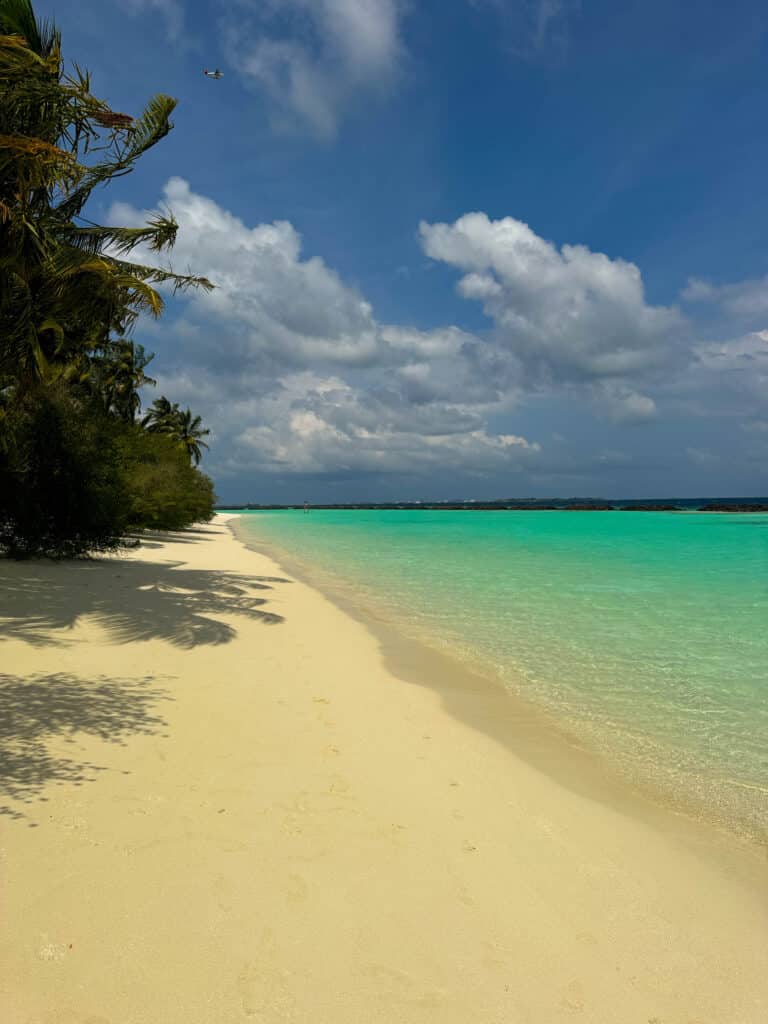
A proper sandbank differs from a sandbar (which links two islands or extends from the shore) and from a maintained resort beach. Sandbanks are unoccupied and unowned. You’ll typically find them in the lagoon of a nearby island or resort, which will tell you who can go. What makes them interesting is how quickly they change. The same spot can be a broad strip of sand at 9 am and underwater by 3 pm. That’s why timing is crucial for any sandbank trip in the Maldives.
How big is a Maldives sandbank?
Most sandbanks in the Maldives exposed at low tide range from 30 to 200m in length and 10 to 50m in width. These are approximate figures, as exposure varies dramatically between spring and neap tides. Large sandbanks like the Dhigurah sandspit in South Ari Atoll can be over 200m long at extreme low tide. Small resort sandbanks like Madivaru Finolhu in Rasdhoo Atoll may be as little as a 30m crescent at ordinary low tide.
Width changes more than length. A typical sandbank at low water offers a walkable strip about 15 to 30m wide between the waterlines. The dry walking area is often narrow as the edges are soft and wet. Few sandbanks are large enough to walk all the way around; most are long strips or crescents you can walk end to end in two or three minutes at a relaxed pace.

The exposed footprint varies enormously between spring tides (near new and full moon) and neap tides (first and last quarter).
At Madivaru Finolhu, spring low tides expose up to 180m in length and 30-40m in width, while neap low tides expose around 80m in length and 10-18m in width.
The Dhigurah sandspit in South Ari Atoll can be over 230m long and up to 45m wide at spring low tide, but at neap it is usually around 100-120m by 15-20m. Size varies month to month due to wind and currents, so check locally for current exposure.
The operator you book with can confirm the exposure you can expect on your visit day. For planning, remember a sandbank that looks like a generous bathtub 2 hours before low tide can look like a bathtub rim 2 hours after low tide.
Sandbank Adventures (Comparison Table)
Every sandbank visit in the Maldives falls into one of four main styles. You can quite easily work out which one you want prior to booking, and that will save you a lot of time and money. The table below shows the 2026 price ranges, what’s generally included, and which type of traveller each style is for.
| Travel style | Typical cost per person | Typical cost per couple | What is included | Best for |
|---|---|---|---|---|
| Shared local-island group tour | $25–$45 | $50–$90 | Speedboat or dhoni transfer, guide, water, basic snorkel gear, 1–2 hours on the sandbank | Budget travellers, solo travellers, backpackers |
| Private local-island setup | $40–$80 per person | $150–$300 | Private dhoni, custom timing, picnic setup, umbrella and mats, sometimes BBQ lunch | Couples, small families, photographers |
| Resort excursion | $70–$150 | $150–$500 | Speedboat transfer, curated picnic, resort staff, snorkel gear, sometimes sunset drinks | Resort guests, honeymooners, travellers wanting convenience |
| Luxury / all-inclusive private | $300–$1,000+ | $600–$2,000+ | Private yacht or seaplane, chef, photographer, proposal setup, champagne, overnight camping options | Honeymooners celebrating milestones, luxury travellers |
Prices as listed when this guide was last updated (26 Nov 2026); they change with the season and availability.
All quoted prices are averages from operator listings and guesthouse rate cards for the 2025-2026 season. They exclude the 17% TGST and 10% service charge (covered in the pricing section). The main cost difference between shared tours and private trips is timing flexibility. Private boats wait for your preferred tide window, while shared tours follow a fixed timetable.
Sandbank Maldives Adventures: What You Actually Do on One
A sandbank excursion isn’t just sitting on the beach. It’s a 2-4 hour window of activity timed around low tide. You swim in waist-deep turquoise water, sunbathe on dry white sand, and take many photos of the ocean views. Most operators offer other activities to keep you busy during that time.
- Swimming and floating: the lagoon around a sandbank is shallow and calm, one of the safest places in the Maldives to swim. You can walk 50 to 100m from the sand to knee depth on most sandbanks before reaching the reef drop-off.
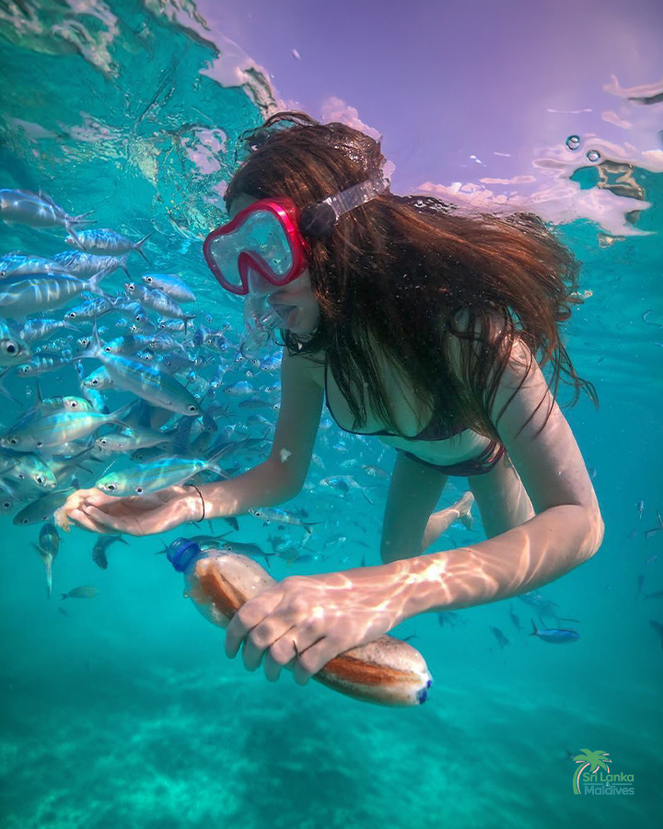
- Snorkelling the nearby reefs: the sandbanks are right on the edge of the reef flats, so a 10-15 minute boat ride will take you to a house reef, a channel, or a thila (a submerged reef pinnacle). Parrotfish and surgeonfish are the order of the day here, with turtles occasionally seen.
- Dolphin watching during the transfer: most of the half-day trips will pass through channels where spinner dolphins are common, and the guides will often stop the boat for a few minutes of dolphin watching.
- Sunrise breakfast and sunset drinks: a number of resorts will offer you a sandbank breakfast package (set up on the sand at sunrise) or a sunset drinks session with a small bar and seating. These are available as part of the resort excursion package.
- Candlelit dinners and proposal setups: Private sandbank dinners with a chef, a waiter, and lanterns are a standard honeymoon product at places like Niyama Private Islands and Soneva Fushi. You’re going to be paying the luxury tier for that.
- Overnight castaway camping: a few operators run overnight sandbank experiences with a tent or a very basic mattress, a fire and a light dinner. The sandbank has to be exposed overnight (only on certain dates in the dry season), and jet ski transfers to the sandbank are an add-on for the more adventurous couple.
Non-swimmers can join most sandbank trips comfortably as the water is shallow and lifejackets are available. The only real difficulty is the boat ride, which can be bumpy on the open sea on windy days.
Tides and Timing: When can you actually land on a sandbank?
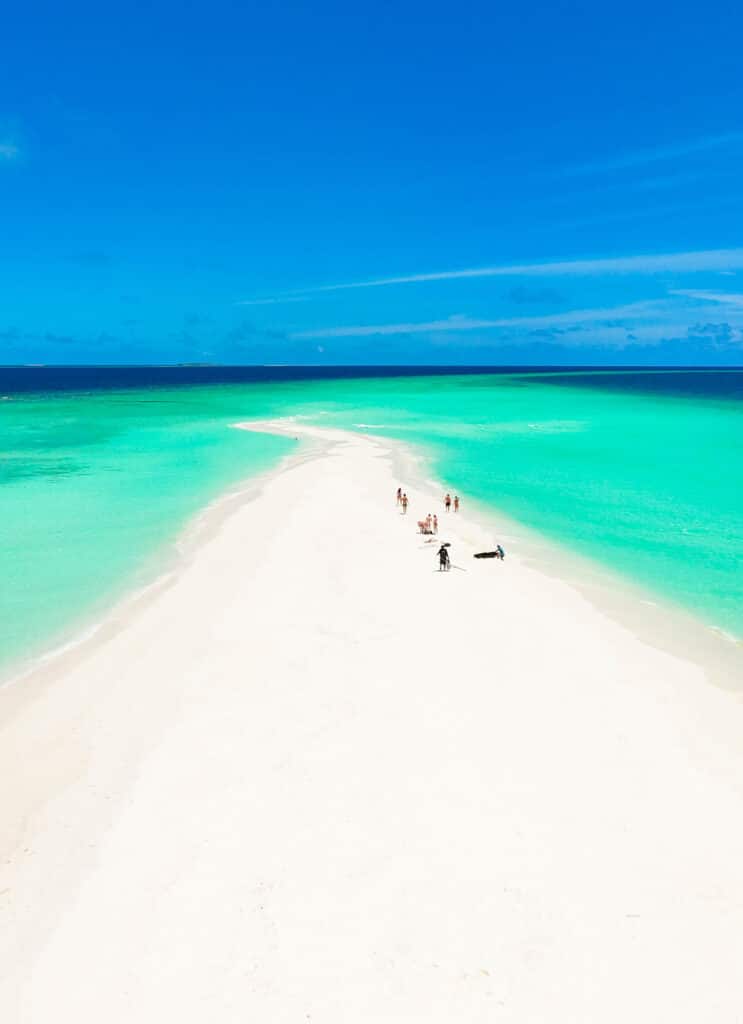
The critical planning point is the tide. Sandbanks are only fully exposed at low water, with a window of about 2 hours before and after the published low tide time for the nearest atoll. Outside this window, the sandbank may be underwater, reduced to a narrow strip, or inaccessible because the surrounding water is too shallow for the boat.
The amount of sand exposed varies with the lunar cycle. At new and full moon, spring tides have a larger tidal range, so the sandbank is more exposed at low tide and more submerged at high tide. At quarter moon, neap tides have a smaller range, and the sandbank may never be fully exposed even at low tide. To see as much sand as possible, book your excursion within 3 days of a new or full moon.
| Sandbank / location | Best tide window | Typical exposed duration | High-tide backup plan |
|---|---|---|---|
| Madivaru Finolhu, Rasdhoo Atoll | ±2h around low tide | 1.5–2h | Snorkel at Rasdhoo house reef or hammerhead dive site |
| Maafushi–Gulhi lagoon, Kaafu Atoll | ±2h around low tide | 1–2h | Dolphin-watching cruise |
| Dhigurah sandspit, South Ari Atoll | ±3h around low tide (long sandspit) | 2–3h | Whale shark snorkelling offshore |
| Fulidhoo–Vaavu Atoll sandbanks | ±2h around low tide | 1–1.5h | House reef snorkel at Fulidhoo |
| Hulhumalé–Malé sandbars | ±1h around low tide | 0.5–1h | Walking tour of Malé or Hulhumalé beach |
Check the tide chart for Malé or your atoll on your visit day. A simple rule: if low tide is at 11:00, get onto the sandbank by 09:30 and off by 13:00. The best times are morning or late afternoon low tides for temperature and light. The midday sun tends to flatten contrast, which makes sandbank photos less striking.
The best months to visit sandbanks are Nov to Apr when the dry NE monsoon brings calm seas and predictable tides. May to Oct is the worst time due to the SW monsoon with rough seas and rain. For a more comprehensive view on the best time to visit the Maldives, see our Best time to visit the Maldives guide.
The Best Sandbanks in the Maldives by Atoll (Map and Table)
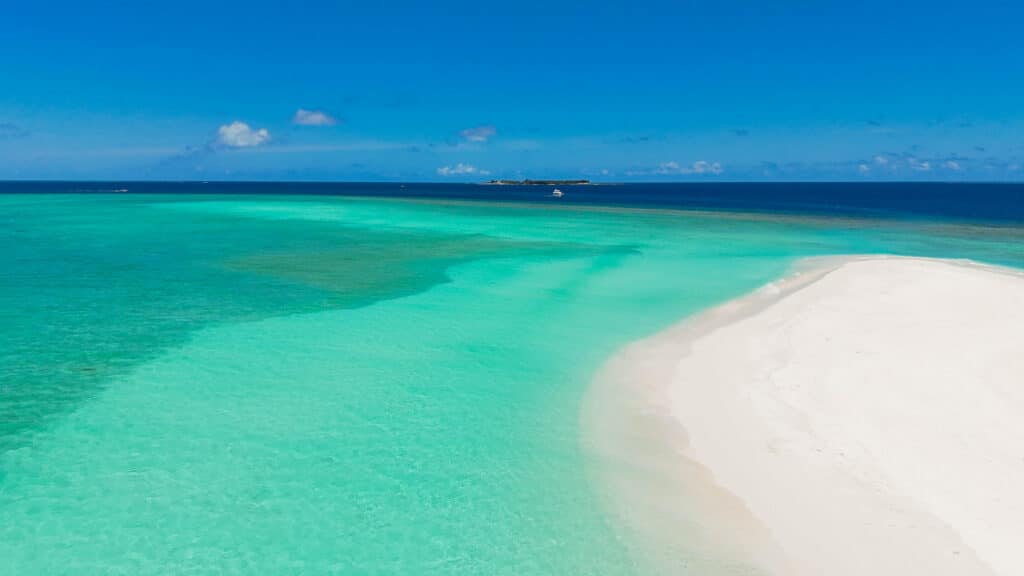
The Maldives has a number of sandbanks, though only a small proportion of these are actually used by operators. The table below lists the sandbanks that we have confirmed via the operators and the resort programmes. It includes the atoll, the nearest departure point, the tide dependence, and the access type.
| Sandbank name | Atoll | Nearest island / base | Description | Tide dependence | Access |
|---|---|---|---|---|---|
| Madivaru Finolhu | Rasdhoo Atoll | Rasdhoo | The iconic crescent sandbank, a 20-minute dhoni ride from Rasdhoo harbour | High – nearly disappears at high tide | Local guesthouse trips, private dhoni |
| Vaavu sandbanks (several unnamed near Fulidhoo) | Vaavu Atoll | Fulidhoo | Quiet, uncommercialised sandbanks in a shallow lagoon | Moderate | Local guesthouse trips |
| Dhigurah sandspit | South Ari Atoll | Dhigurah | Long sandspit that extends from the island tip at extreme low tide | Very high – usable window up to 3h | Walkable from island, or boat trip |
| Hanifaru Bay area sandbanks | Baa Atoll | Dharavandhoo | Sandbanks near the Hanifaru Bay manta ray sanctuary; combine with manta snorkelling | Moderate | Resort and local trips |
| Malé–Hulhumalé sandbars | Kaafu Atoll | Malé / Hulhumalé | Small sandbars reachable by speedboat in 30–45 minutes | Low – short exposure | Day-trip operators from Malé |
| Kuredu area sandbanks | Lhaviyani Atoll | Kuredu (resort) | Resort-run sandbank trips with picnic setup; sandflies reported near vegetation | Moderate | Resort excursion |
| Safari Island sandbank | South Ari Atoll | Safari Island (resort) | Sandbank trip from the resort; sandflies known on the vegetated edges | Moderate | Resort excursion |
| Niyama Private Islands sandbank | Dhaalu Atoll | Niyama resort | Private sandbank dining and photo sessions for guests | High | Resort-exclusive |
| Soneva Fushi sandbank | Baa Atoll | Soneva Fushi | Castaway-style sandbank picnic with barefoot luxury service | Moderate | Resort-exclusive |
| Vakkaru Maldives sandbank | Baa Atoll | Vakkaru resort | Sandbank breakfast and sunset drinks for guests | Moderate | Resort-exclusive |
| Milaidhoo sandbank | Baa Atoll | Milaidhoo resort | Intimate sandbank picnic, often combined with reef snorkelling | Moderate | Resort-exclusive |
| Four Seasons (Kuda Huraa) sandbank | Kaafu Atoll | Four Seasons Kuda Huraa | A private sandbank picnic option reached by speedboat | High | Resort-exclusive |
| Barceló Whale Lagoon sandbank | Baa Atoll | Barceló Whale Lagoon resort | Sandbank excursion with whale-lagoon snorkelling combined | Moderate | Resort-exclusive |
Sandbanks move with the seasons. A sandbank near Maafushi in December could have moved hundreds of metres by March. Always check with your operator to confirm the sandbank is exposed at the tide you plan to visit.
Rasdhoo and Madivaru Finolhu: The Classic Castaway Sandbank
Madivaru Finolhu is by far the most photographed sandbank in the Maldives. It has the perfect crescent shape, and the contrast between the white sand and deep blue lagoon water is sublime. As of early 2026, the transfer from Rasdhoo harbour takes 20-25 minutes by dhoni or about 12 minutes by speedboat.
Local operators have noted in recent months that the sandbank has moved slightly southeast due to seasonal currents. The crescent shape remains, though the eastern tip is narrower this year than in previous years. It is still the sandbank every guesthouse on the island visits by default, and the views remain iconic.
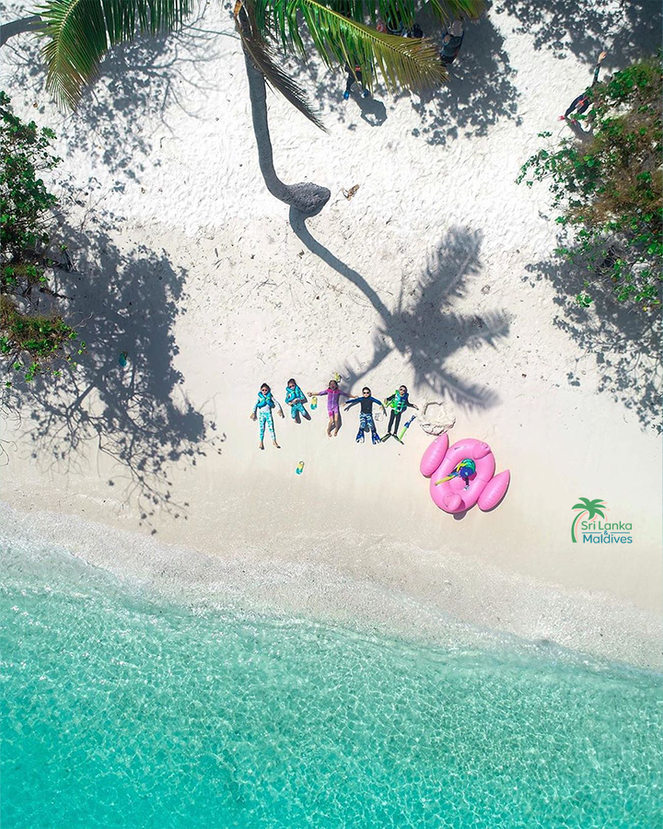
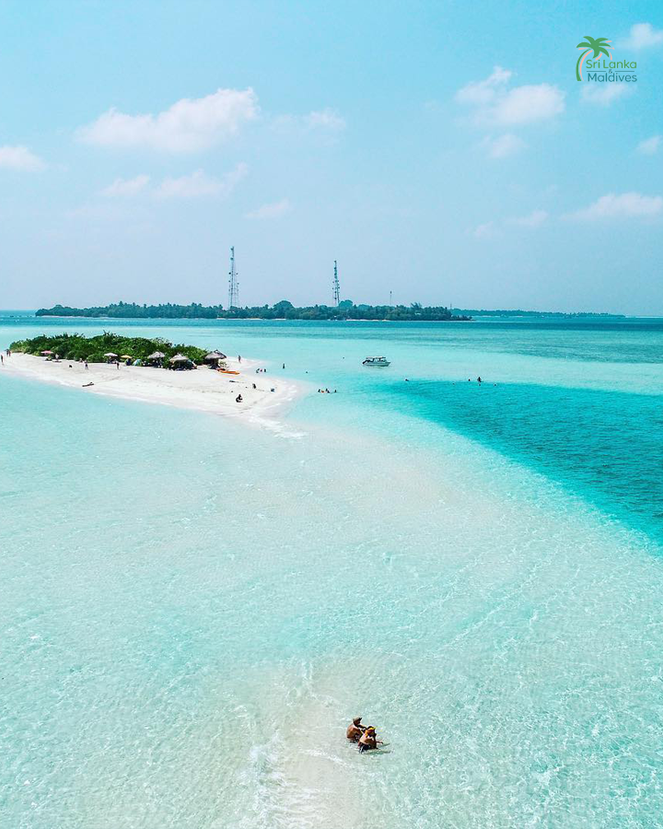
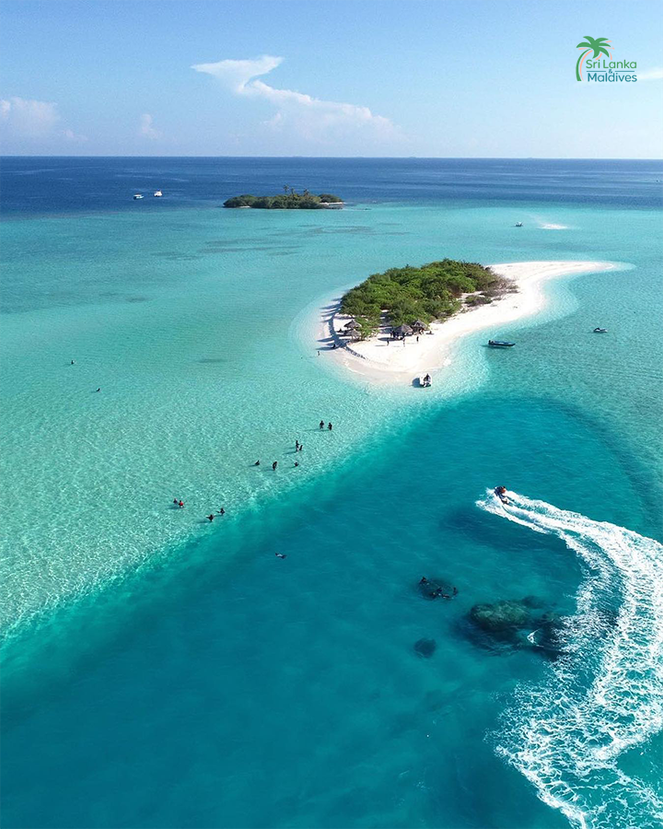
Guesthouses on Rasdhoo (Biosphere Inn, Acqua Blu, Rushkokaa) offer half-day picnic trips to the sandbank with a snorkel stop at a nearby reef. You pay the shared local island rate ($25-$45) if in a group, or can arrange a private dhoni for about $150 for two.
For the best photos, the classic shot is from the NE tip of the sandbank looking SW across the lagoon with Rasdhoo island in the background. The best light is during the golden hour before sunset, especially on afternoons with low tide when the sand is fully exposed, and the contrast between white sand and blue water is strong.
The golden hour in the early evening (16.30 to 18.00) is ideal as the sun is warm and gives definition. Try to go on a clear day and arrive at least 30 minutes before sunset to capture different light and reflections.
Rasdhoo is also a major hub for hammerhead shark diving. The same boat that takes you out to the sandbank can be chartered to take you diving in the Rasdhoo channel. The Rasdhoo diving and guesthouse guide has a section on how to combine a sandbank day with a dive.
Maafushi, Gulhi and Dhiffushi: The Easiest Sandbank Adventure from Malé
For those staying on a local island in Kaafu Atoll, sandbank trips from Maafushi, Gulhi, or Dhiffushi are most convenient since you are already on the island. Maafushi is the main hub with dozens of guesthouses running daily 3-4 hour excursions, including the sandbank, snorkelling, and dolphin watching. Speedboat transfers from Maafushi take 15-30 minutes to the sandbanks, while dhoni transfers take longer but cost less.
Gulhi and Dhiffushi are quieter alternatives with the same sandbank access. Trips from Gulhi are generally more laid-back and less commercial. Trips from Dhiffushi have the shortest transfer times. From Gulhi, boat transfers to the nearest sandbanks generally take 10-15 minutes by speedboat, depending on tide and exact sandbank.
From Dhiffushi, it’s even quicker (generally 5-10 minutes by speedboat), so you can reach the sandbank quickly and spend more time there. Most trips are half-day (morning or afternoon), with a full-day package including lunch on the sandbank.
This is also the easiest option for those arriving from Malé or Hulhumalé, as there are a number of day tour operators on GetYourGuide and Viator who run sandbank trips with hotel pickup from Malé hotels. The top 10 local islands in the Maldives guide will help you compare the various departure points.

How Much Does a Sandbank Adventure in the Maldives Cost in 2026? (Full Price Table with Taxes)
Sandbank trip prices in the Maldives fall into three categories: shared group tours from local islands, private charters from local islands, and resort or luxury experiences. The prices seem reasonable, but tax is added on top and can increase the total by a third.
Before taxes, expect these 2026 price bands:
| Travel style | Typical cost per person | Typical cost per couple | What is included | Best for |
|---|---|---|---|---|
| Shared local-island group tour | $25–$45 | $50–$90 | Speedboat or dhoni transfer, guide, water, basic snorkel gear, 1–2 hours on the sandbank | Budget travellers, solo travellers, backpackers |
| Private local-island setup | $40–$80 per person | $150–$300 | Private dhoni, custom timing, picnic setup, umbrella and mats, sometimes BBQ lunch | Couples, small families, photographers |
| Resort excursion | $70–$150 | $150–$500 | Speedboat transfer, curated picnic, resort staff, snorkel gear, sometimes sunset drinks | Resort guests, honeymooners, travellers wanting convenience |
| Luxury / all-inclusive private | $300–$1,000+ | $600–$2,000+ | Private yacht or seaplane, chef, photographer, proposal setup, champagne, overnight camping options | Honeymooners celebrating milestones, luxury travellers |
Here’s the reality of the taxes. The Maldives has a 17% Tourism Goods and Services Tax (TGST) on all tourist services, and most operators add a 10% service charge. That brings the total to about 27-29% more than the quoted price. A $35 shared tour would cost around $44-$45 per person, and a $400 luxury sandbank dinner about $510-$516 per couple.
Always ask the operator for a written quote breaking down tax and service charge. Many guesthouses include them in the online price, but resort excursions and third-party booking sites often show pre-tax prices. The planning worksheet in our Maldives travel costs guide shows how sandbank trips fit into your total trip budget.
Resort vs Local Island: Which Sandbank adventure should you choose?
The choice between a resort sandbank and a local island sandbank depends on three things: your budget, convenience, and the type of experience you want. The experience itself is the same in both cases (a shallow white sand strip in turquoise water), but the specifics differ.
Option 1: Resort-Organized Private Sandbank Excursions
Resort trips are properly curated experiences. You have a speedboat (or occasionally a seaplane for distant sandbanks) to get there, met by staff with umbrellas, cushions, a cooler of drinks, and often a hot or cold lunch.
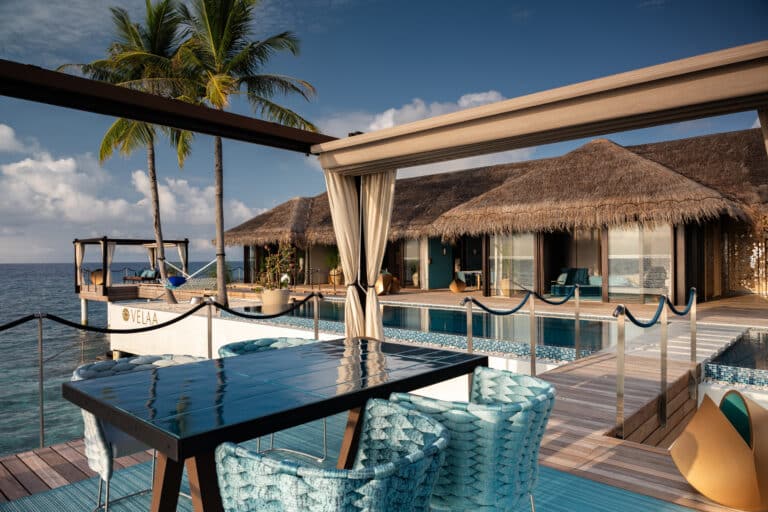
Resort excursions are more expensive but handle all the legwork. You tell the concierge what you want and when, and they take care of everything. Many luxury resorts have access to certain sandbanks just for their guests. The excursion aims to be a hassle-free, private, and comfortable experience.
Many luxury resorts design these as their signature experience, typically involving a private speedboat transfer and a picnic on a remote sandbank. That privacy is what honeymooners seek when choosing the resort route.
For example, Soneva Fushi in Baa Atoll is famous for its beautifully laid-out sandbank picnics where you arrive by boat to a fully set-up picnic with parasols, tables, and unobstructed views across the water.
Right down towards Malé, the Anantara Dhigu Maldives Resort has a very nice sandbank dining experience which is very much in demand with honeymooners and couples on special occasions.
At Hurawalhi Island Resort in Lhaviyani Atoll, you’re pretty much guaranteed to be near some of the most photogenic sandbanks in the atoll, so private sandbank visits are one of the highlights of a stay.
These resort-organised trips are all about the seamless, exclusive experience, and that’s why they’re still one of the most popular ways of getting to the sandbanks in the Maldives.
Typical inclusions:
- Private speedboat transfers
- Dedicated staff or butler service
- Curated picnic or multi-course dining setups
- Fixed time slots and structured programmes
Value logic
You pay for privacy, convenience, and an experience without any planning on your part.
Trade-offs
This option is much more expensive and offers less flexibility. For families or longer stays, the cost per hour is often higher than local island options.
Prices are normally in the region of $150 to $500+ per couple (depending on length of stay, setup, and resort category).
Booking the right resort is all about it. The best Maldives resorts per budget comparison will help you match a resort to your sandbank expectations.
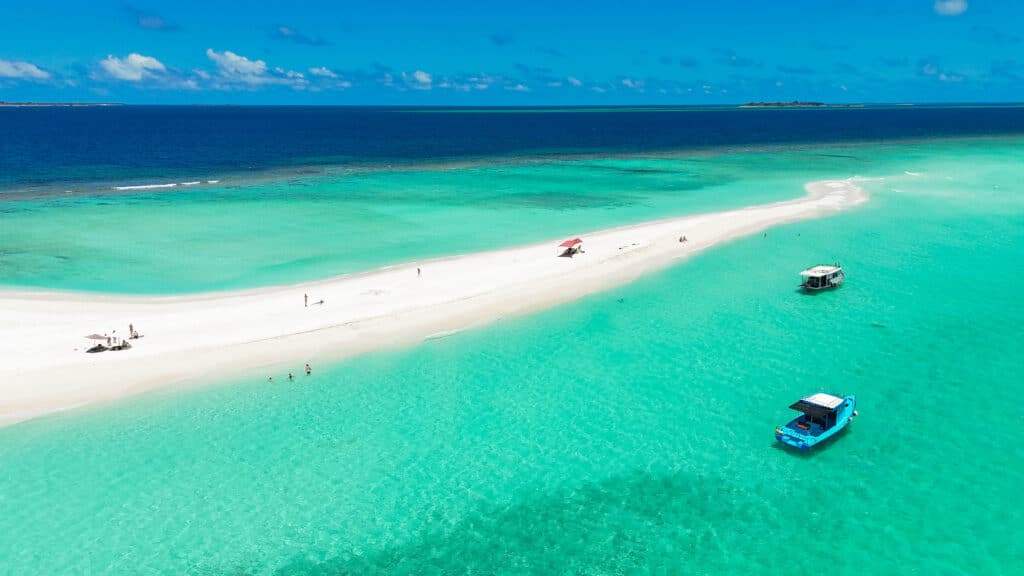
The All-Inclusive Sandbank Experience
Some high-end resorts include a sandbank excursion in their all-inclusive package or offer it at a reduced rate to guests. A few offer overnight sandbank camping with tents, soft lighting, and private dining. It’s expensive but one of the most exclusive ways to experience a sandbank during a Maldives holiday.
Not all resorts approach the sandbank experience the same way. Some focus on ultra-private, luxury experiences on remote sandbanks, while others include the sandbank in a wider all-inclusive program or offer specific sandbank experiences for honeymooners.
To help you pick the right resort according to your travel style, we’ve produced some detailed guides that go into the differences in depth:
– Best luxury resorts in the Maldives – private sandbanks, champagne picnics & exclusive setups
– Best all-inclusive resorts in the Maldives – sandbank excursions often included or discounted
– Best honeymoon resorts in the Maldives – romantic dinners, proposals & secluded sandbanks
Option 2: Local Island Guesthouse Sandbank Tours
Local island trips are more flexible and considerably cheaper. You arrange them through your guesthouse, either as part of a shared group or by chartering a private dhoni. The experience is less polished but more authentic. The boat trip is simpler, the picnic usually a packed lunch rather than a full meal, and you may share the sandbank with one or two other groups. In return, you save money, can go on your own terms, and benefit from your guide’s local knowledge.
| Factor | Resort trip | Local-island trip |
|---|---|---|
| Cost | $70–$150 per person, taxes on top | $25–$45 per person, taxes on top |
| Privacy | Often exclusive sandbank | Possibly shared with other guests |
| Logistics | Fully arranged by concierge | You coordinate with guesthouse |
| Food | Gourmet picnic or BBQ | Boxed or simple local lunch |
| Booking lead time | 1–3 days in advance | 1–2 days, or same-day in off-season |
For optimal planning, reserve sandbank excursions 2–3 days in advance during the high season (December to February), while local island trips should generally be booked 1–2 days ahead. Although same-day bookings may occasionally be available on weekdays, they are often unreliable, especially around busy periods such as Easter.
Couples visiting the Maldives for the first time should be aware of these booking timeframes to ensure availability and to consider the advantages and disadvantages of each option.
Choosing Your Atoll & Accommodation Style
Some islands are in a good position for sandbank trips as they’re next to large lagoons where sandbanks are common. Dharavandhoo in Baa Atoll, Dhigurah in South Ari Atoll and Thulusdhoo in North Malé Atoll are good examples where local guesthouses and dive centres regularly arrange sandbank trips.
Typical inclusions:
- Speedboat transport
- One or more snorkelling stops
- Simple lunch or BBQ on the sandbank
- Flexible timing, depending on tides and conditions
Value logic
This is the best value option, particularly if you’re looking to do a number of things on one trip.
Trade-offs
Group tours are less private and simpler to arrange. Private trips from local islands are often much cheaper than the average traveller expects.
Prices are generally $30-$100 per person for group tours, with private tours at a higher but still reasonable price. Differences can be considerable, especially for first-time visitors (e.g., dress code, excursions).
If you’re still deciding which option suits your travel style, our guide Local Islands in the Maldives vs Resorts: Key Differences and Top 10 Local Islands to consider covers it in detail.
What to Expect from a Group Sandbank Tour
Group sandbank tours are more social and less private but offer the classic sandbank experience. You’ll usually share the sandbank with others, which can be relaxed and informal, especially for solo travellers or couples wanting to save money.
Many people are surprised to find private sandbank trips from local islands are cheaper than expected. For families and small groups, the price difference from group tours can be minimal, and the experience is more flexible and personal.
If privacy, timing, or combining snorkelling with other activities matters, a private sandbank trip from a local island offers the best value and avoids steep resort prices.
Sandbank Adventure Maldives: A Timestamped Itinerary for a Half-Day Trip
A typical half-day sandbank trip from a local island depends on the tide. Here’s a realistic itinerary for a dhoni trip from a Maafushi guesthouse, starting at morning low tide. Times will vary based on the tide chart and distance to the sandbank.
| Time | Activity |
|---|---|
| 08:30 | Meet at the guesthouse reception or harbour; sign waiver; collect snorkel gear and life jackets |
| 09:00 | Boat departure, speedboat or dhoni; first 10–20 minutes are open water |
| 09:20 | Snorkel stop at a nearby house reef or channel; 30–40 minutes in the water |
| 10:15 | Arrive at the sandbank, anchor in the lagoon, wade ashore; guide sets up the umbrella and picnic spot |
| 10:30–12:30 | Free time on the sandbank, swimming, sunbathing, photography; the sand is at maximum exposure around this window |
| 12:45 | Lunch served on the sandbank (boxed or grilled fish) or on the boat if the tide is rising |
| 13:30 | Depart the sandbank; dolphin-watching stop on the way back if the pod is active |
| 14:30 | Return to the harbour; transfer back to the guesthouse |
The afternoon trip runs from about 14.00 to 17.30 and usually includes a sunset stop. Resort trips are shorter (2-3 hours) since transfers are quicker and pre-arranged. Keep in mind you’ll rarely spend more than two hours on the sandbank, so plan your photo and swim time accordingly.
Top Activities to Book on a Sandbank
Most sandbank visits in the Maldives are half-day trips, with experiences varying by travel style, from romantic private affairs to laid-back snorkelling stops. Whether booked via a resort or local island operator, the setting is similar: a beautiful strip of sand surrounded by shallow, clear water. In some atolls, the best sandbanks are just 10-30 minutes by boat.
Private picnic or lunch setup
One of the most popular sandbank experiences, especially for couples and honeymooners. Resorts often offer elegant tables with parasols, multi-course meals, and champagne or wine. Local island tours usually provide a simpler BBQ lunch. The setting does the work; you can’t go wrong with a simple meal on a sandbank.
Sunset sandbank visits with drinks.
Visiting a sandbank at sunset is a different experience. The light is soft, the seas calmer, and the colours gorgeous. It’s popular with photographers and couples. Resort trips usually include drinks and canapés, while local tours often include the sandbank as part of a sunset cruise.
Romantic dinners, proposals, and special setups
Sandbanks are ideal for proposals, anniversaries, and symbolic occasions. Private excursions can include flowers, lanterns, signage, and dedicated staff for a special moment in isolation. Mostly arranged by resorts, but some local operators offer simpler private versions.
Swimming, snorkelling, and unstructured free time
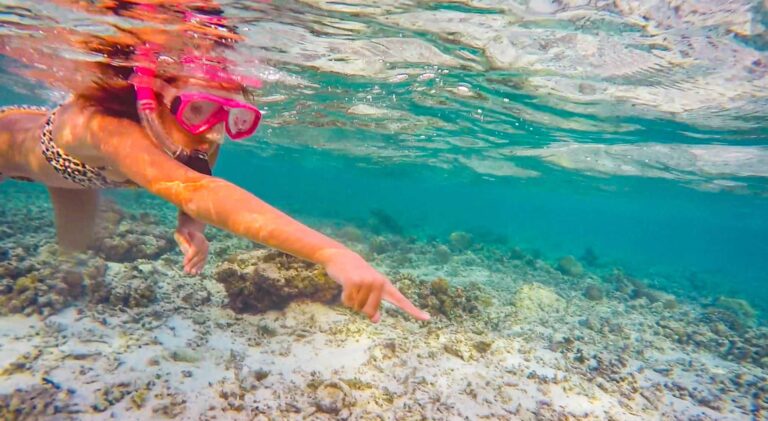
You don’t need a formal setup to visit a sandbank. Many visits include swimming, floating, snorkelling, and time to sit on the sand. The water around most sandbanks is shallow and calm, ideal for first-time snorkellers and families with young kids.
If you want a full day out rather than just an idea, choose a bookable sandbank excursion or combine it with snorkelling and island hopping. Some high-end resorts offer sunrise visits, jet skiing, and overnight sandbank camping. These are rare and expensive but worth knowing if you’re on a honeymoon or special occasion and want something unique.

But don’t worry, we’ve already found cheaper alternatives that still give you a similar experience here:
Swimming with sea turtles
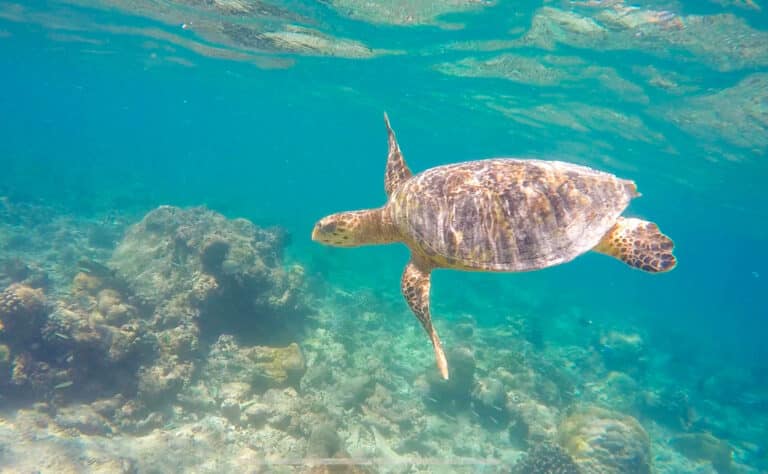
One popular and memorable combination is visiting a sandbank with swimming alongside sea turtles. Many turtle cleaning stations and feeding areas are next to reefs on the sandbanks, making it easy to do both in one trip. It’s ideal for families and first-time snorkellers since the water is shallow and conditions are gentle.
→ Swimming with Sea Turtles in the Maldives: Best Spots & Tips
Snorkelling on nearby reefs
Sandbank trips often include a stop at nearby house reefs or shallow coral gardens for snorkelling. The water is usually clear, lagoons calm, and access easy, making it a great add-on even for first-time snorkellers.
→ Snorkelling in the Maldives: Best Places & Marine Life
Our own sandbank experience near Dharavandhoo
We were on Dharavandhoo in Baa Atoll and took a local excursion to a nearby sandbank. It’s a good example of a sandbank experience from a local island. Many sandbanks in the Maldives are accessible, making it easy to include a sandbank visit in a snorkelling trip.
We combined the sandbank visit with turtle snorkelling, which was a good balance rather than a rushed visit. We began with about an hour snorkelling at a reef near the main site, swimming alongside turtles in calm, clear water. Then we transferred by speedboat to the sandbank.
Once there, we had 1.5 to 2 hours to enjoy the sandbank at our own pace: lying on soft white sand, swimming in the shallow lagoon, and snorkelling off the sandbank. No other groups were present, so it was just us, relaxed and natural, not staged.
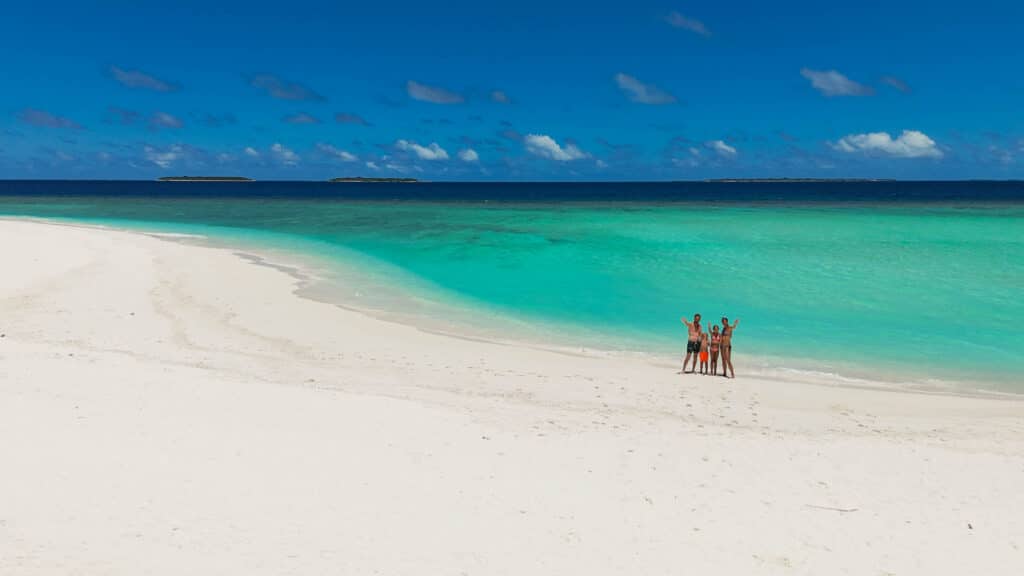
We arranged this trip locally via Biosphere Inn on Dharavandhoo, and it was relaxed and well-paced. It shows how easily sandbanks in the Maldives can be combined with marine life, especially if you’re on a local island near good reefs.
For anyone considering a similar trip, this is a good option for families, couples, and longer stays focused on value, flexibility, and combining activities rather than a high-end experience.
You can read our full island guide here: Dharavandhoo: Maldives’ best local island for authentic culture, budget stays and Hanifaru Bay adventures.
Safety, Children and Non-Swimmers: What to Know Before You Go
Sandbanks are very shallow and sheltered, so they are the safest of the natural swimming spots in the Maldives. The boat ride and the sun exposure do need some preparation, though. Lifejackets are available on all licensed excursion boats (though the range of sizes can be quite limited).
If you’re going with a kid, you’ll need to bring a lifejacket of the correct size or ask your guesthouse to have one reserved for you. Non-swimmers should obviously stay in the marked shallow area, as the sandbank lagoon is usually waist-deep for 50- 100 m. Still, the sandy bottom drops off very quickly at the reef edge, where the water often changes colour.

Sunlight is the main hazard. There’s no shade on a sandbank (no trees or structures), so a beach umbrella (provided by the operator) and SPF 50+ reef-safe sunscreen are essential. Reef shoes are recommended since you’ll walk over coral rubble and dead coral to reach the sandbank. Cuts on the reef can become infected, so rinse with fresh water and treat immediately. Bring water; the operator provides some, but about a litre per person for a 2-hour sandbank is a good rule.
For families with toddlers, the sandbank is ideal (ankle-deep water, warm and calm), but the boat ride can be rough on a windy day. Always ask your operator about the sea state before booking with young children.
Most guesthouses and resorts can tell you whether the conditions that day are suitable for a young family. Older kids (6+) can snorkel with an adult, though the house reef stop may have a stronger current. It’s worth checking with the guide about their staff-to-swimmer ratio.
Sandfly and Insect Protection on Maldivian Sandbanks
Sandflies (small biting midges, locally known as ‘no-see-ums’) are found on some sandbanks in the Maldives but not in all areas. They occur with plants and organic matter, so they are most prevalent on sandbanks next to vegetated islands or on the fringes of resort sandbanks with some plant growth. They are commonly reported on Kuredu and Safari Island sandbank trips where the sandbank is right against palm-lined shores. You won’t get sandfly activity on sandbanks far from any vegetation, e.g., Madivaru Finolhu in Rasdhoo Atoll, where there is nothing for them to hide in.
The risk is highest at dawn, dusk, and in the hour after a rain shower. If you are going on a sunset sandbank trip, apply a repellent with DEET (20–30%) or Icaridin (20%) before going. “Cactus Juice” is a locally available natural repellent some people find useful, though it doesn’t last as long as synthetic ones. You need to reapply after swimming.
For after-bite care, use an antihistamine cream or calamine lotion (sandfly bites can be very itchy for several days). If you are prone to allergies, also take an oral antihistamine. Wearing long sleeves at dawn and dusk helps only if you are on the sandbank then, which you won’t be. Most trips are from mid-morning to mid-afternoon when sandflies are least active.
Travel Advisory, Law and Etiquette for a Sandbank Adventure
The Maldives is very safe for tourists. Crime is extremely low, and the resort infrastructure is good. UK, US, and Australian travel advisories generally rate the Maldives as the lowest or second-lowest risk. The US State Department rates it Level 1 (exercise normal precautions) with a Level 2 for travel to northern atolls due to piracy in the Indian Ocean.
Since December 2025, the advisory also includes seasonal weather risks and potential civil demonstrations during elections. In reality, you only need common sense precautions for a sandbank trip.
Maldivian law mixes civil and Sharia law, and its application differs between local and resort islands. Alcohol is prohibited on inhabited islands (Maafushi, Rasdhoo, Dhigurah, etc.) but legal in resorts. You cannot take alcohol from a resort boat to a local island sandbank.
Dress codes are strict on inhabited islands but not on sandbanks, where swimwear is normal. During Ramadan, eating, drinking, and smoking in public on inhabited islands is prohibited from dawn to dusk. Sandbank trips continue, but lunch may be served on the boat away from the island.

Health risks are seasonal. Dengue and chikungunya are transmitted by day-biting mosquitoes on inhabited islands; the risk on open sandbanks is negligible. The current Zika risk in the Maldives is very low, but pregnant travellers should check the latest advice before travel.
The most important etiquette is environmental: do not walk on live coral at the reef edge, do not collect sand or shells, and take all your trash back to the boat. The Maldives is a Muslim country with environmental laws, and some local councils fine people for taking sand or marine souvenirs. More on photography and drone rules follows in the next section.
Drone, Photography and Sandbank Regulations in the Maldives
To fly a drone in the Maldives, you need a permit from the Maldives Civil Aviation Authority (CAA). You apply online; it takes about 10-14 working days to process. You must provide a copy of your passport, a clear description of where you intend to fly, and confirmation of your dates. As of 2026, the application fee for a tourist drone permit is 1,000 MVR (approx. USD 65) per permit, paid during the application.
The portal is at https://www.caa.gov.mv/drones/. Restricted zones exist around Velana International Airport (Malé) and military areas. Most sandbanks are outside these zones, so you are not in immediate danger of flying into a restricted zone, but you must have the permit with you when flying.
Resorts have their own drone policies and generally prohibit drones unless you have a permit from them before arrival. Most local islands follow the national rule, though your guesthouse may ask you to register your drone on arrival. It is practical to apply for your CAA drone permit at least two weeks before your trip and confirm the resort or guesthouse policy in writing.
You don’t need a permit to take photos with a normal camera, but there are etiquette rules. On inhabited islands, you must ask permission to photograph local people (especially women) as modesty is part of Maldivian culture. Sandbanks are uninhabited, so no permission is needed, but be careful not to include other tour groups in your photos since the space between groups is often just a few metres.
The classic sandbank shot with a boat in the lagoon is common among travel photographers and perfectly acceptable; no model release is required for landscape photography.
The final rule is you cannot take sand, shells, or coral home. Export of sand is banned, and coral is a protected marine resource. Luggage is routinely checked at Velana International for shells and sand, and you will be fined if found with any. In short, photograph it and leave it.
Sustainable Sandbank Visits: Leave No Trace and Coral Restoration
Sandbanks are delicate ecosystems in a constant balance between sediment accretion and current erosion. Their future depends entirely on the health of the coral reefs that generate the sand, so sustainable visitor behaviour is crucial to whether the sandbank you visit still exists in five years.
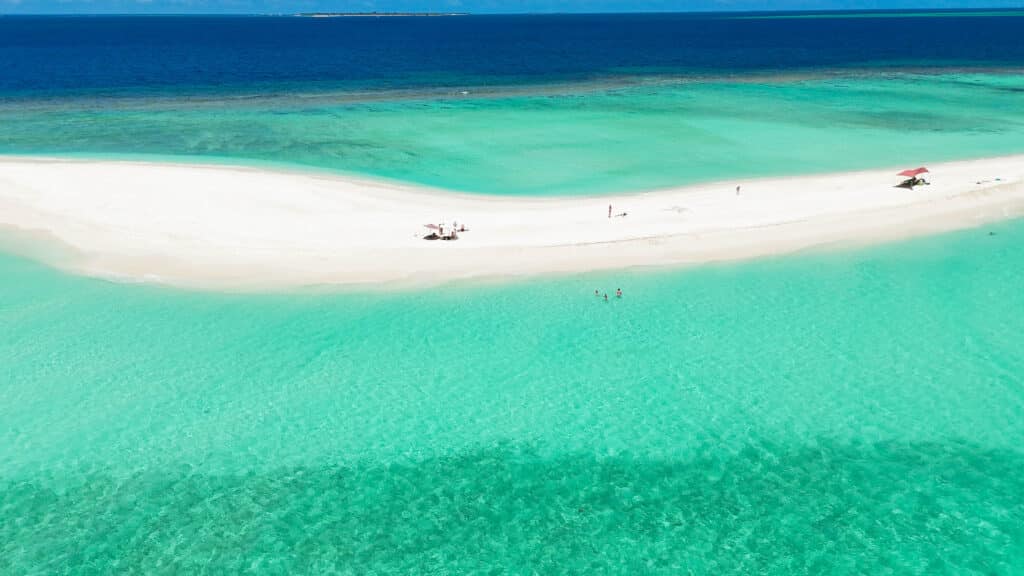
Follow Leave No Trace principles: take all your litter with you (including food waste), do not stand on or touch coral at the reef edge, and use reef-safe sunscreen (free of oxybenzone and octinoxate, which are banned in the Maldives). Do not take any souvenirs. Sand, shells, and coral fragments are part of the ecosystem, and removing them accelerates sandbank erosion.
Coral restoration is a real industry in the Maldives. Vakkaru, Four Seasons, and Soneva Fushi have coral nurseries where you can plant coral fragments. Several local guesthouses on Maafushi and Dhigurah partner with NGOs for reef monitoring. If you want to get involved, ask your operator if they participate in a restoration project; you may be able to book through one.
It is vital to choose responsible operators. A good guesthouse or resort will employ local guides, have approved lifejackets, and use tide charts to avoid reefs. Several local boat operators on Maafushi and Fulidhoo adhere to the Maldives Association for Tourism Industries (MATI) code of conduct, which includes environmental commitments.
To help you book confidently, we list some operators certified for environmental and safety standards: Kaani Tours (Maafushi), Arena Dhangethi (Dhangethi), Fulidhoo Dive and Water Sports (Fulidhoo), Acqua Blu Rasdhoo (Rasdhoo), and Secret Paradise Maldives (Malé-based, operating across multiple atolls).
Always check the operator’s current certification before booking, as memberships and certifications can change.
How to Book a Sandbank Adventure in the Maldives (Platforms and Operators)
A sandbank trip can be booked via three channels: third-party platforms, local guesthouses, and resort concierges. Each of these has different lead times, different cancellation policies, and different levels of price transparency.
Third-party platforms (GetYourGuide, Viator, etc.) offer sandbank trips from Malé, Maafushi, and other central atolls. These are pre-approved, have published prices, clear cancellation policies (usually free to cancel up to 24 hours before departure), and payment is held by the platform until the tour is complete. The downside is you pay the platform commission (which may be included in the price). These are the easiest options for those based in Malé or Hulhumalé who want a one-day trip.
Local guesthouses on Maafushi, Gulhi, Dhiffushi, Rasdhoo, Dharavandhoo, and Fulidhoo sell sandbank trips directly. If you are on a local island, book via your guesthouse, as operators (e.g., Kaani Palm Beach on Maafushi, Biosphere Inn on Rasdhoo, Acqua Blu on Rasdhoo) usually offer better rates to guests than walk-ins. Payment is by cash or bank transfer at the hotel desk. Cancelling within 24 hours generally means losing the full amount.
Resort concierges will do everything for you as a guest. Just let the concierge know your preferred date and time, and it will be added to your room bill. Cancellations up to 24 hours in advance are generally free, though this varies by property, so check at check-in.
Before paying for any sandbank trip, confirm in writing the tide time and expected sandbank exposure, the type of boat (speedboat or dhoni), what is included (snorkel gear, lunch, water, umbrella), the tax and service charge breakdown, and the exact cancellation policy. The legal requirements for entering the Maldives (the IMUGA form, etc.) are explained in our Maldives visa and IMUGA requirement guide, which is worth reading before you book.
Final Thoughts on Sandbanks in the Maldives
Few experiences encapsulate the Maldives as well as standing on a sandbank. You’re surrounded by water and the shifting blues of the sea. It’s a simple moment, but one you remember. It’s one of the purest expressions of the Maldives.
Whether on a private resort trip or visiting a relaxed island, sandbanks are often a highlight people remember long after they leave. They offer a great break after snorkelling, island exploring, and lagoon lounging.
If you’re planning your first trip to the Maldives or returning, understanding how sandbanks fit into your route can greatly improve your experience. From choosing the right atoll to combining your trip with marine encounters, a little planning can turn a short sandbank stop into one of the best parts of your trip.
Frequently Asked Questions about Sandbanks in the Maldives
What is a sandbank in the Maldives?
A sandbank is a small, temporary, vegetation-free island of white coral sand that comes up from the lagoon at low tide. It’s uninhabited, it’s a shifting thing, and it is completely submerged at high tide.
Can you visit a Maldives sandbank at high tide?
No, most of the sandbanks are submerged or just a narrow strip at high tide. You need to visit them within +/- 2 hours of low tide (your operator will check the tide chart for your atoll on the day of the trip to confirm this).
How much is a sandbank trip in the Maldives in 2026?
Shared local island tours are $25-$45 per person; private local arrangements from ~$150 total; resort excursions $70-$150 per person; luxury private experiences $300-$1000+ per couple. Add on 17% TGST and 10% service charge (roughly 27-29% on top of the quoted price).
Do we need to book the sandbanks in the Maldives in advance?
Yes, it’s worth booking in advance, especially in high season or if you want a private picnic, sunset trip, or family-only excursion. The best excursions can go off the rails quickly, especially through resorts. On local islands, you can sometimes book last minute, but planning gives you greater choice, timing, and flexibility.
Which atoll has the best sandbanks in the Maldives?
Rasdhoo Atoll (Madivaru Finolhu is the classic photographic sandbank), South Ari Atoll (Dhigurah sandspit), and Baa Atoll (the resort-exclusive sandbanks at Vakkaru, Milaidhoo, and Soneva Fushi) are the ones that stand out. Kaafu Atoll is the one that’s easiest to get to from Malé.
Can you go to the sandbanks in the Maldives from a local island?
Yes, several local islands offer access to sandbanks via guesthouses, dive centres, or local boat operators. The trip typically involves a speedboat and may include snorkelling, turtle watching, and a simple lunch. It’s one of the most cost-effective ways to experience sandbanks without booking a private resort.
How long are the typical sandbank trips?
Half-day trips last 3-4 hours including transfer time; full-day trips last 5-7 hours with lunch. Time on the sandbank is generally 1.5-2 hours, dictated by the tide window.
Are the sandbanks in the Maldives safe for children and non-swimmers?
Yes, the lagoon is shallow and calm, and lifejackets are available on licensed boats. The main issues are the sun, as there is no shade, and the boat transfer, which can be rough on windy days.
What is the best time of year for a sandbank adventure in the Maldives?
November to April offers calm seas and predictable tides. May to October is the wet season with rough seas and unreliable tide windows, making sandbank trips harder to schedule.
Are there sandflies on Maldivian sandbanks?
Sandflies are present on sandbanks near vegetated islands, notably around Kuredu and Safari Island, and are active at dawn and dusk. Open sandbanks far from vegetation have little or no sandfly activity. Use DEET repellent for sunset trips.
Do I need a permit to fly a drone over a Maldives sandbank?
Yes. A drone permit from the Maldives Civil Aviation Authority is required for all drone flights, with a processing time of 10–14 working days. Resorts may also have their own drone restrictions on top of the national permit.
Are there any facilities on sandbanks?
No, sandbanks are natural, uninhabited stretches of sand with no permanent facilities like toilets, shops, or shade. Some resort trips may include temporary setups like parasols, seating, or a picnic table, but these are arranged by the operator and not part of the sandbank. It is best to arrive prepared.
Is it safe to go to the Maldives right now?
The Maldives is safe for tourists, with low crime and no active civil unrest. Your country’s advisory (UK, US, Australia) generally rates it a low-risk destination, with the only caution being a remote risk of piracy in northern atolls.
Can you bring sand home from the Maldives?
No. Exporting sand is prohibited by Maldivian customs law, and coral or shells are protected marine resources. These items may be confiscated during departure checks, and fines apply.
Do sandbanks in the Maldives disappear?
Yes, sandbanks are constantly reshaped by tides, currents, and monsoon seasons. A bank can grow, shrink, move, or vanish within months, and some appear only at low tide. That’s why chasing a specific named sandbank rarely works. Local guesthouses and resort boat crews track which banks look best at any moment, so trips are adjusted to wherever the sand is that week.
What is the largest sandbank in the Maldives?
The Dhigurah sandspit in South Ari Atoll is among the largest, extending over 200 metres at extreme low tide. Other large sandbanks exist near Baa Atoll and in the central Kaafu lagoon, but no official record is kept because sandbanks shift and disappear seasonally.
How do I book a sandbank adventure in the Maldives?
Book through GetYourGuide or Viator for trips from Malé, through your guesthouse on local islands (e.g., Kaani Palm Beach on Maafushi, Biosphere Inn on Rasdhoo), or through your resort concierge. Book 1–3 days ahead in high season and confirm the tide time and tax breakdown before paying.
Your next step: decide where you’ll stay, check the tide chart for your atoll on your arrival date, and message your guesthouse or resort concierge to book the sandbank trip for the day matching the low-tide window. For help choosing your base, start with the best local islands in the Maldives guide.
Related Blogs
Other Maldives Activities
Top Activities in Maldives: Snorkelling, Diving & Swimming with Manta Rays
Maldives Diving: Top Dive Sites, Marine Experiences & Tips for Every Diver
Manta Rays in Maldives: Best Places, Season & Ethical Snorkelling Guide
Swimming with Sea Turtles in Maldives: Best Spots & Tips
Whale Sharks in Maldives: Best Spots & Tours for Encounters
Snorkelling in Maldives: Best Places to Go & Marine Life
Liveaboard Diving Trips in Maldives: Explore Top Dive Sites & Underwater Life with Maldive Dreamers
Other Maldives Blogs
How to Choose a Maldives Resort: The Complete Decision Guide
Best Hotels on Local Islands in Maldives (By Budget): Complete Guide for 2026
How to Choose the Best Atoll in Maldives: A Complete Area & Stay Guide
Maldives Vacation: How to Plan Your Dream Island Escape for Adventure and Relaxation
Trip to Maldives: Essential Information on Islands, Visa, Vaccinations & Entry Requirements
Best Time to Go to Maldives: Weather, Climate & Seasonal Tips for Your Perfect Island Vacation
Best Hotel in Maldives Island: Top Luxury, Boutique & Affordable Stays for Every Traveller