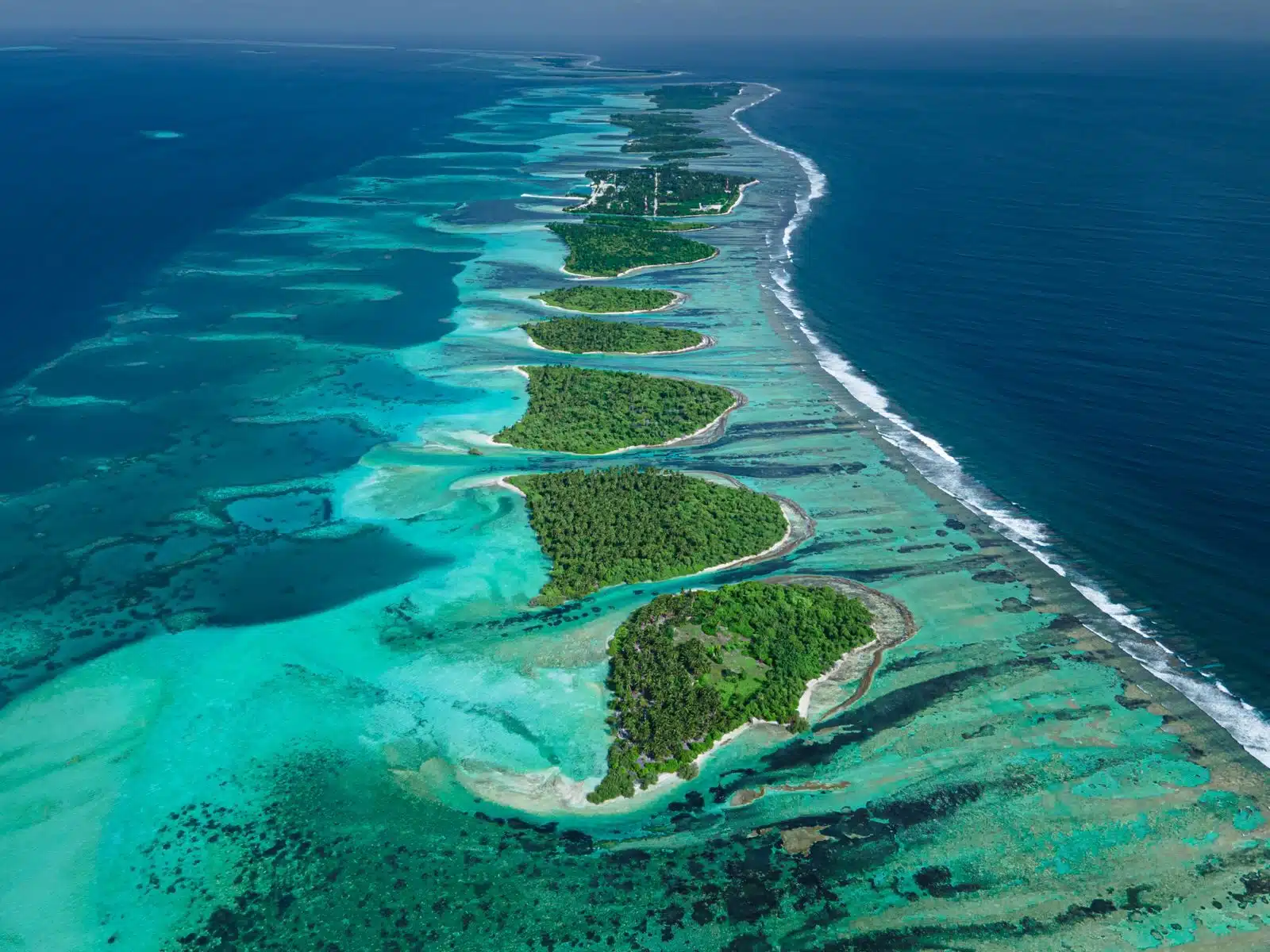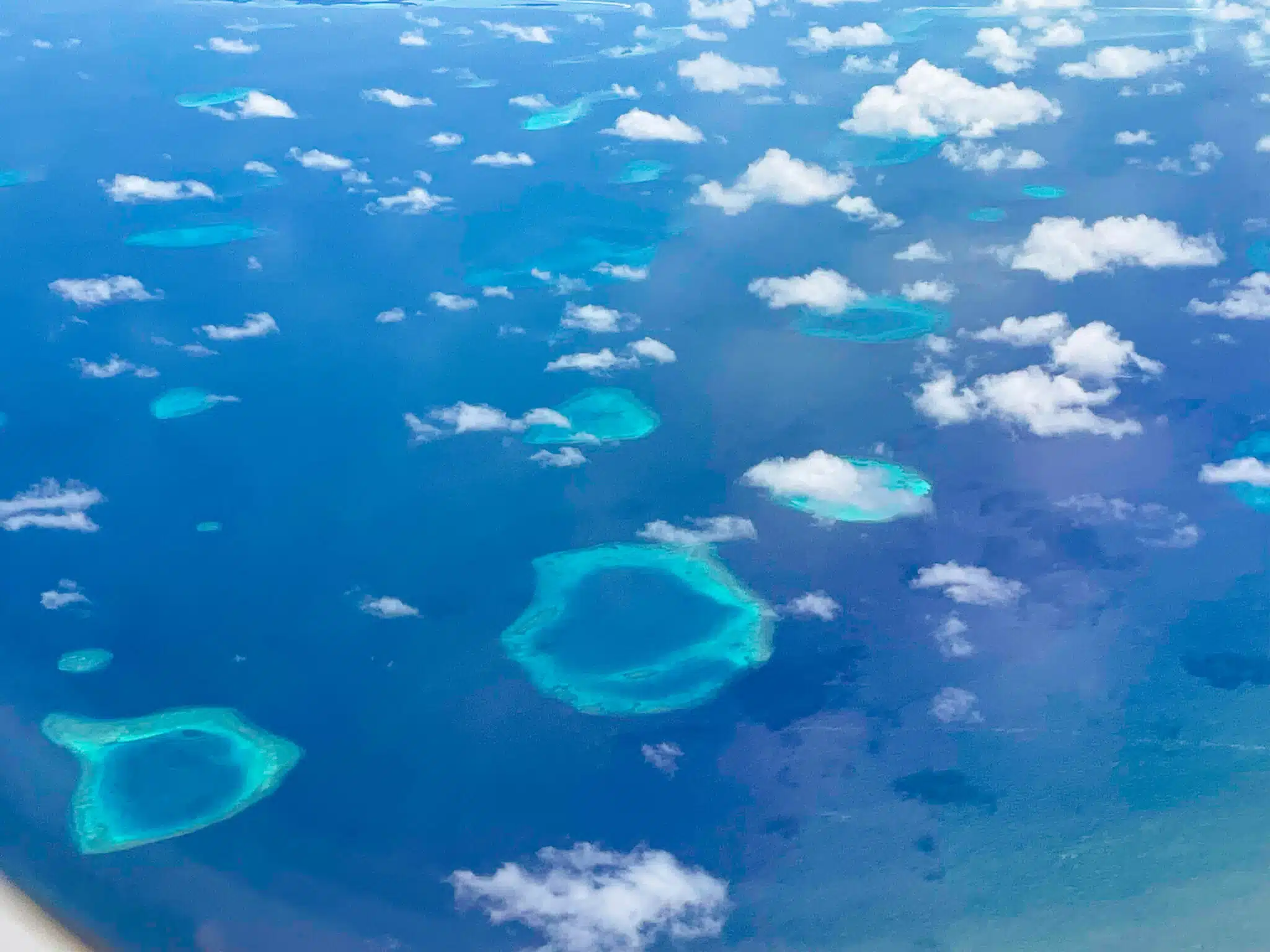
Picture a string of coral islands scattered across the Indian Ocean, each one rising just a metre or two above the waterline, wrapped in powder-white sand and surrounded by every shade of blue imaginable. That's the Maldives at its most elemental — and in the northern and central reaches of the archipelago, you'll find three atolls that offer something beautifully distinct from the busy resort corridors around Malé: Lhaviyani, Noonu, and Dhaalu. These are the atolls that reward travellers who look a little further afield, who want fewer crowds and more genuinely wild ocean encounters, and who don't mind the fact that paradise takes a seaplane or a domestic flight to reach.
This guide covers everything you need to plan a trip to these three atolls: what makes each one special, how to get there, all the resorts in our database, the local islands worth considering, and practical tips to make the most of your time here. Whether you're dreaming of an ultra-luxury overwater escape, a family adventure, or an authentic local island experience, you'll find a place in this trio that fits the bill.
In a Rush?
These are my Favourite Resorts in Lhaviyani, Noonu & Dhaalu
⭐⭐⭐ Kudadoo Maldives Private Island — Check prices and availability
⭐⭐ Kandima Maldives — Check prices and availability
⭐ Atmosphere Kanifushi Maldives — Check prices and availability
At a Glance: Lhaviyani, Noonu & Dhaalu Atolls
Three atolls, three distinct personalities — but all united by the same promise: untouched reefs, exceptional marine life, and a quieter side of the Maldives. Here's a quick overview before we dive deeper.
| Lhaviyani Atoll | Noonu Atoll | Dhaalu Atoll | |
|---|---|---|---|
| Location | ~120 km north of Malé | ~180–200 km NW of Malé | ~150 km SW of Malé |
| Also known as | Faadhippolhu Atoll | Southern Miladhunmadulu | Southern Nilandhe Atoll |
| Total islands | 54 | 71 | 56 |
| Inhabited islands | 5 | 13 | 7 |
| Transfer type | Seaplane (primary); domestic flight + speedboat option | Seaplane (primary); domestic flight via Maafaru Airport | Domestic flight + speedboat; seaplane option |
| Transfer time | 35–40 min seaplane | 40–45 min seaplane | 45 min domestic flight + 15–55 min speedboat |
| Best for | Divers, honeymooners, all-inclusive lovers | Honeymoons, ultra-luxury, privacy, pristine reefs | Active couples, lifestyle resort fans, cultural travellers |
| Not ideal for | Budget travellers, short 3-night stays | Budget travellers, families wanting a lively atmosphere | Ultra-luxury seekers who want the most exclusive properties |
| Resorts in this guide | 6 | 4 | 3 |
| Local islands | Yes — Naifaru and others | Yes — Manadhoo and others | Yes — Kudahuvadhoo and others |
| Best time to visit | November–April | November–April | November–April (diving); May–Nov (whale sharks) |
How Lhaviyani Atoll Maldives Works
Geography
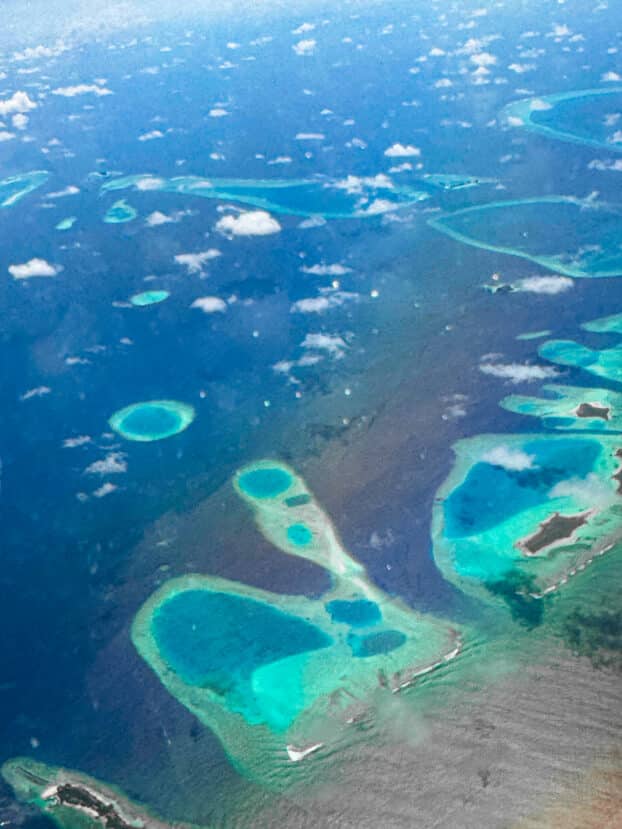
Lhaviyani Atoll (officially Faadhippolhu Atoll) stretches approximately 37 kilometres from north to south and sits around 120 kilometres north of Malé, making it one of the more accessible northern atolls while still offering the sense of remoteness that many travellers are looking for. The atoll contains 54 coral islands in total, of which only 5 are inhabited by local communities. The rest are either uninhabited or home to resort developments — and given that the atoll remains relatively less developed than the central atolls around Malé and Ari, much of it is still remarkably pristine. The largest inhabited island, Naifaru, sits in the northern part of the atoll and has a population of several thousand; nearby Hinnavaru is the second major community island. The atoll's geography is defined by its turquoise lagoons, coral walls, and a series of famous channel formations that have put it firmly on the radar of the global diving community. Lhaviyani is also known for its beautiful sandbanks — some of the most photogenic in the northern Maldives — and for being one of the best areas in the country to encounter sea turtles both above and below the water.
Getting There
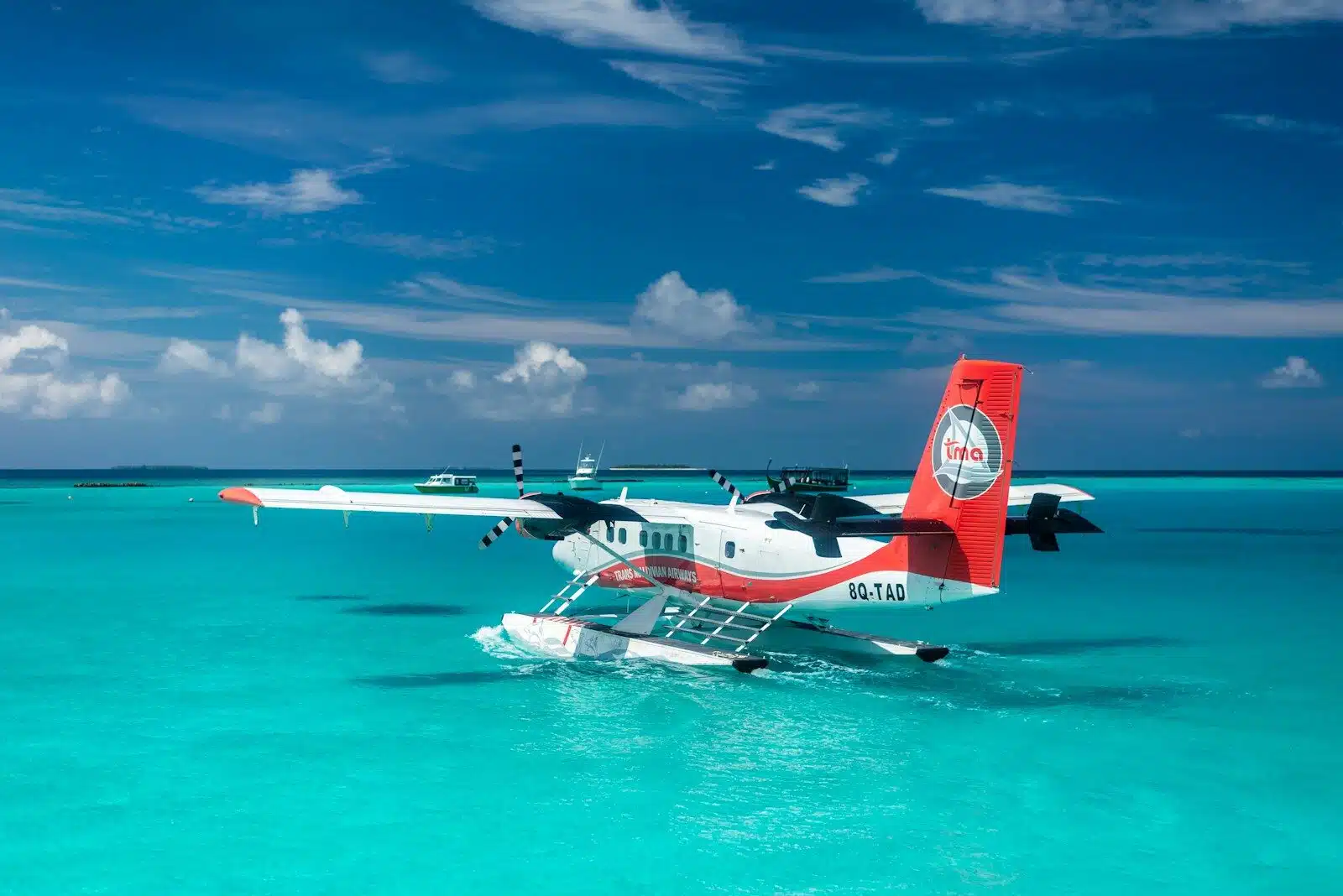
The primary way to reach Lhaviyani Atoll is by seaplane from Velana International Airport (MLE) in Malé. The flight takes around 35 to 40 minutes and is typically arranged by your resort — you'll be met at the airport, guided to the seaplane terminal, and transferred directly to your resort's jetty. One critical thing to know: seaplanes operate during daylight hours only, roughly 06:00 to 16:00. This means that if your international flight arrives in Malé late in the evening, you'll need to spend the night near the airport before continuing the next morning. Plan your international arrival accordingly, or build in a transit night in Hulhumale — which has the added bonus of letting you explore Malé if you've never been.
An alternative for some resorts is the domestic flight + speedboat combination: a short domestic flight from Velana to Madivaru Airport in Lhaviyani, followed by a brief speedboat transfer to your resort. This route operates more flexibly in terms of timing. Transfer costs via seaplane typically run in the range of $350–$500 per person one way.
Marine Life and Diving
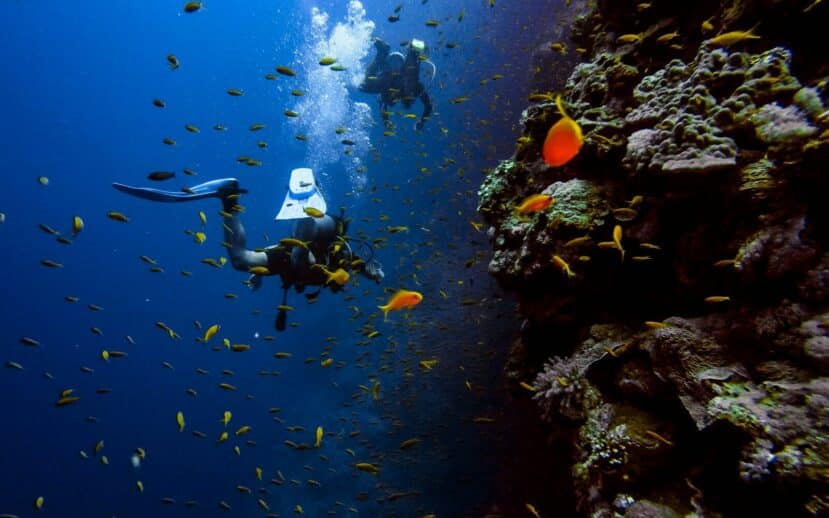
Lhaviyani is one of the Maldives' most celebrated diving destinations, and its reputation is entirely deserved. The atoll is home to legendary dive sites including Kuredu Express — a famous channel dive where strong currents carry you past grey reef sharks, eagle rays, and schooling fish — and The Shipyard, a wreck dive featuring two sunken vessels now teeming with marine life. Visibility in the atoll regularly exceeds 30 metres during the dry season, and the coral health here is exceptional compared to more heavily trafficked atolls. Reef sharks are commonplace, manta rays pass through seasonally, and sea turtles are an especially notable feature of Lhaviyani's underwater world — the atoll is considered one of the best places in the Maldives to dive and snorkel with turtles, and Naifaru island even runs a turtle rescue and rehabilitation centre. For snorkellers, the house reefs at several of the atoll's resorts are excellent, particularly at Komandoo and Kudadoo. Lhaviyani is also home to the world's largest all-glass underwater restaurant — 5.8 Undersea at Hurawalhi — giving non-divers a spectacular way to experience the atoll's underwater world.
Above-Water Character
Above the surface, Lhaviyani has a calm, unhurried energy. This isn't an atoll defined by its nightlife or social scene; it's defined by space, nature, and the kind of quiet that only exists when you're surrounded by ocean for miles in every direction. The beaches here are excellent — long, white, and uncrowded — and the lush vegetation on the resort islands gives them a tropical jungle quality that feels markedly different from some of the sandier, flatter atolls further south. Because the atoll has fewer resorts than the central and southern atolls, you won't feel like part of a tourist conveyor belt here. Days tend to revolve around the reef, the beach, and the infinity pool.
Resort Landscape
Lhaviyani hosts a well-curated selection of resorts across different price points and styles, from ultra-exclusive private islands to well-priced all-inclusive properties. The atoll is a strong choice for couples — particularly those prioritising diving, overwater villas, or adults-only seclusion — as well as families who want a luxury all-inclusive experience with good activities and plenty of space. What's notably absent here is the budget guesthouse infrastructure that you'd find in, say, South Malé Atoll or North Ari Atoll. This is a resort atoll, with a small but growing local island tourism scene on Naifaru.
Best for / Not Ideal For
Lhaviyani is best for divers and snorkelling enthusiasts, honeymooners seeking seclusion, couples wanting a premium all-inclusive experience, and anyone prepared to invest a bit more in the journey to access genuinely less crowded reefs. It's not ideal for travellers on tight budgets, those wanting a lively multi-resort social scene, or anyone on a very short trip of 3 nights or fewer — the seaplane logistics make short stays relatively expensive and logistically awkward.
Resorts in Lhaviyani Atoll
Atmosphere Kanifushi Maldives
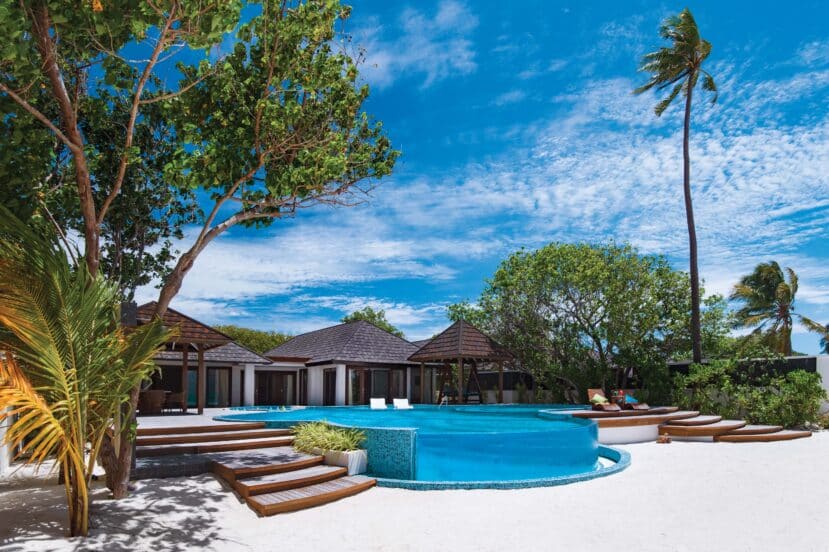
One of the finest luxury all-inclusive resorts in the northern Maldives, Atmosphere Kanifushi covers a large natural island with spacious villas spread across the beach and ocean. The premium all-inclusive concept here is genuinely comprehensive — activities, dining, and most experiences are included — making it a predictable-cost option in an atoll where individual costs can add up fast. Ideal for couples and families who want comfort, variety, and value in one package.
📍 Seaplane 35 min | 💰 $3,700 based on AI for 3 nights (2p, incl. transfer) | ⭐ Rating 9.4
Hurawalhi Island Resort
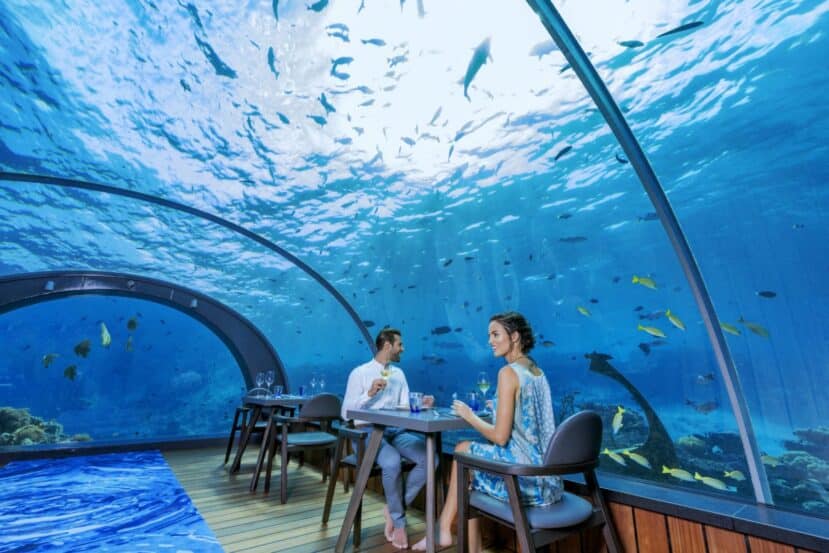
Hurawalhi is one of Lhaviyani's most iconic resort addresses — an adults-only luxury island known worldwide for the 5.8 Undersea Restaurant, the largest all-glass underwater restaurant on the planet, where you dine six metres below the surface surrounded by the reef and its residents. Beyond the headline attraction, Hurawalhi offers contemporary overwater villas, strong snorkelling from the house reef, and a romantic atmosphere that makes it one of the top honeymoon choices in the atoll. If you're after the definitive Lhaviyani special-occasion experience, this is it.
📍 Seaplane 40 min | 💰 From $4,500 based on B&B for 3 nights (2p, incl. transfer) | ⭐ 9.5
Komandoo Island Resort
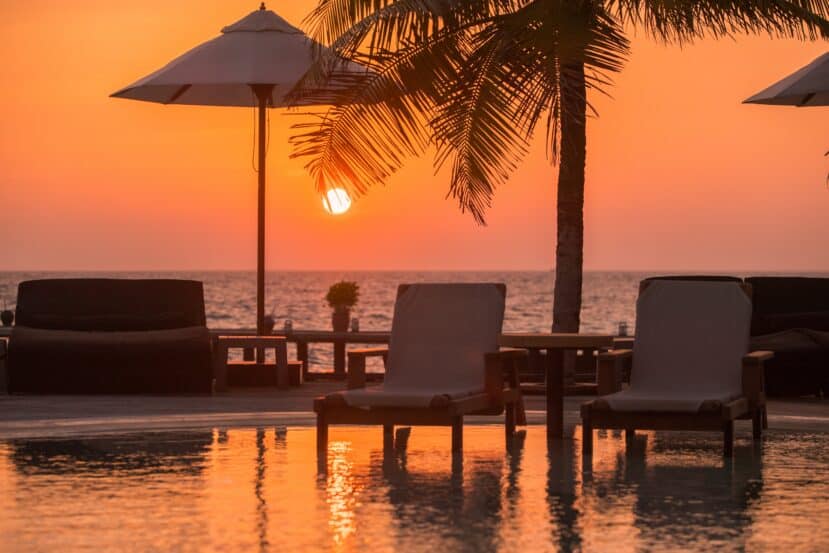
Komandoo is a small, adults-only island in the northern part of Lhaviyani with one of the atoll's best house reefs — great news for snorkellers who want to step off the beach and immediately find themselves in a thriving underwater world. The resort has a relaxed, romantic atmosphere with just a few dozen villas, and it's one of the better-value options in the luxury segment for couples who want privacy without the ultra-luxury price tag. Meals are full-board, and the intimate scale means service is attentive and unhurried.
📍 Seaplane 40 min | 💰 From $3,600 based on FB for 3 nights (2p, incl. transfer) | ⭐ 9.4
Kudadoo Maldives Private Island
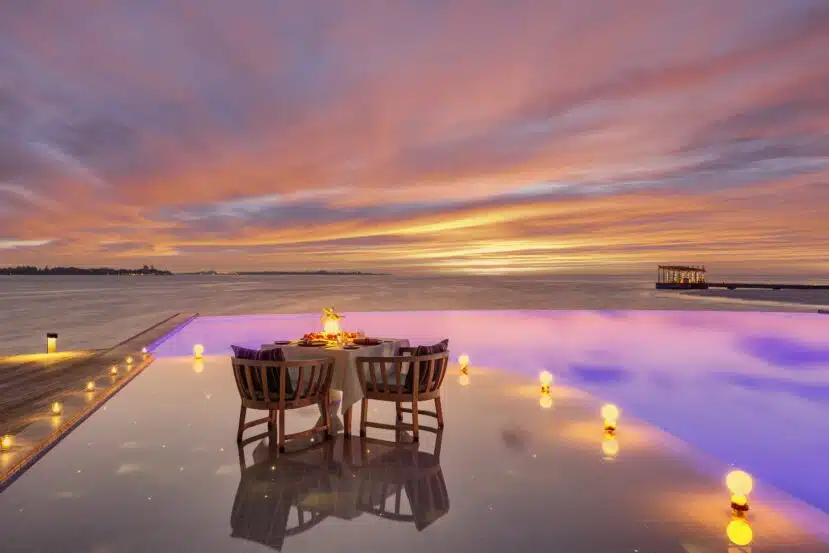
At the very top of the luxury spectrum, Kudadoo is a private island with just a handful of vast overwater residences and an “anything, anytime, anywhere” all-inclusive concept that lives up to its billing. The house reef is exceptional — rated excellent for both snorkelling and diving — and the level of personalised service is as close to having a private island as you can get without actually owning one. A bucket-list stay for couples or small groups of friends seeking complete privacy and world-class experiences.
📍 Seaplane 40 min | 💰 From $15,600 based in AI (full AI, incl activities, watersports, etc.) for 3 nights (2p, incl. transfer) | ⭐ 10
Meyyafushi Maldives
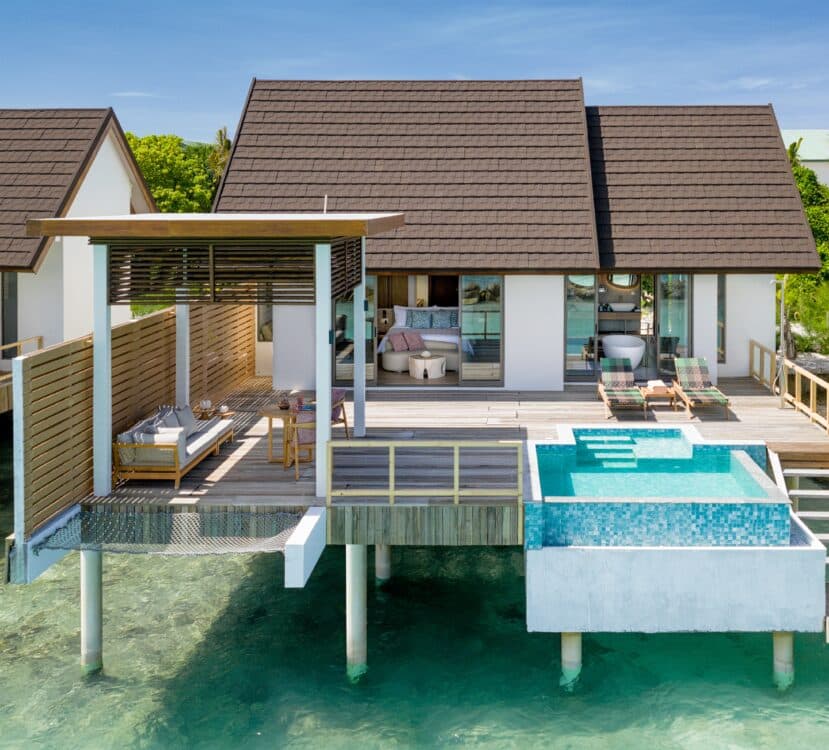
Meyyafushi is a newer mid-range property in Lhaviyani offering an all-inclusive concept at a more accessible price point than its neighbours. Overwater pool villas and beach options are available, the house reef is good, and the atmosphere is relaxed and family-friendly. A solid choice for couples or families who want to be in this beautiful atoll without the ultra-luxury price tag.
📍 Seaplane 40 min | 💰 From $7,000 based on AI for 3 nights (2p, incl. transfer) | ⭐ New property
Six Senses Kanuhura
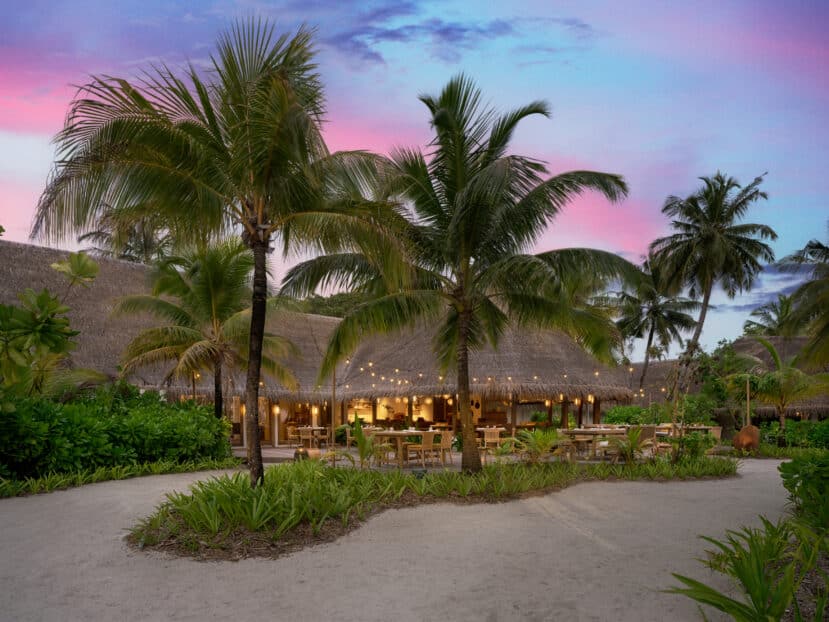
Six Senses Kanuhura occupies a large island in Lhaviyani known for its exceptional beaches — genuinely long, sweeping stretches of white sand that are unusual even by Maldivian standards. The Six Senses brand brings its characteristic focus on wellness, thoughtful dining, and sustainability to a resort that appeals equally to families, couples, and groups of friends. The dive and snorkel offering is good, though the house reef isn't among the atoll's strongest — so if world-class snorkelling is your priority, Komandoo or Kudadoo may serve you better.
📍 Seaplane 40 min | 💰 From $3,880 based on HB for 3 nights (2 p, transfer included) | ⭐ 9.7
How Noonu Atoll Works
Geography
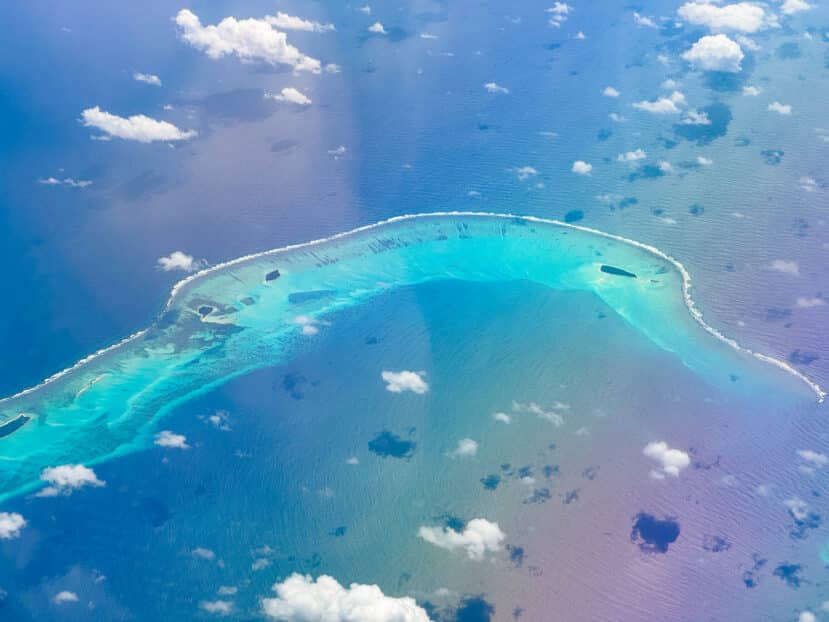
Noonu Atoll — officially Southern Miladhunmadulu Atoll — lies approximately 180 to 200 kilometres northwest of Malé, making it one of the more distant atolls in the main tourist circuit. It contains 71 coral islands, of which 13 are inhabited. What makes Noonu's geography striking is that its islands are more widely dispersed than in many other atolls, creating channels with milder currents and expansive lagoons that are ideal for water sports and underwater exploration. A notable addition to the atoll's infrastructure was the opening of Maafaru International Airport in 2019 — a small facility capable of handling private jets directly, which has made Noonu increasingly attractive to ultra-high-net-worth travellers who bypass Velana International Airport entirely.
Getting There
For most travellers, the journey to Noonu Atoll means a 40 to 45-minute seaplane ride from Velana International Airport — spectacular from the air, though as with all seaplane transfers in the Maldives, it operates in daylight hours only. Guests arriving late should plan an overnight in Malé or Hulhumale. For those coming by private jet or charter, Maafaru International Airport in Noonu provides a seamless door-to-door option. Transfer costs for the seaplane are in the range of $400 to $600 per person one way, and in the case of properties like Cheval Blanc Randheli, the resort operates its own branded seaplane fleet — both a luxury touch and a logistical convenience.
Marine Life and Diving
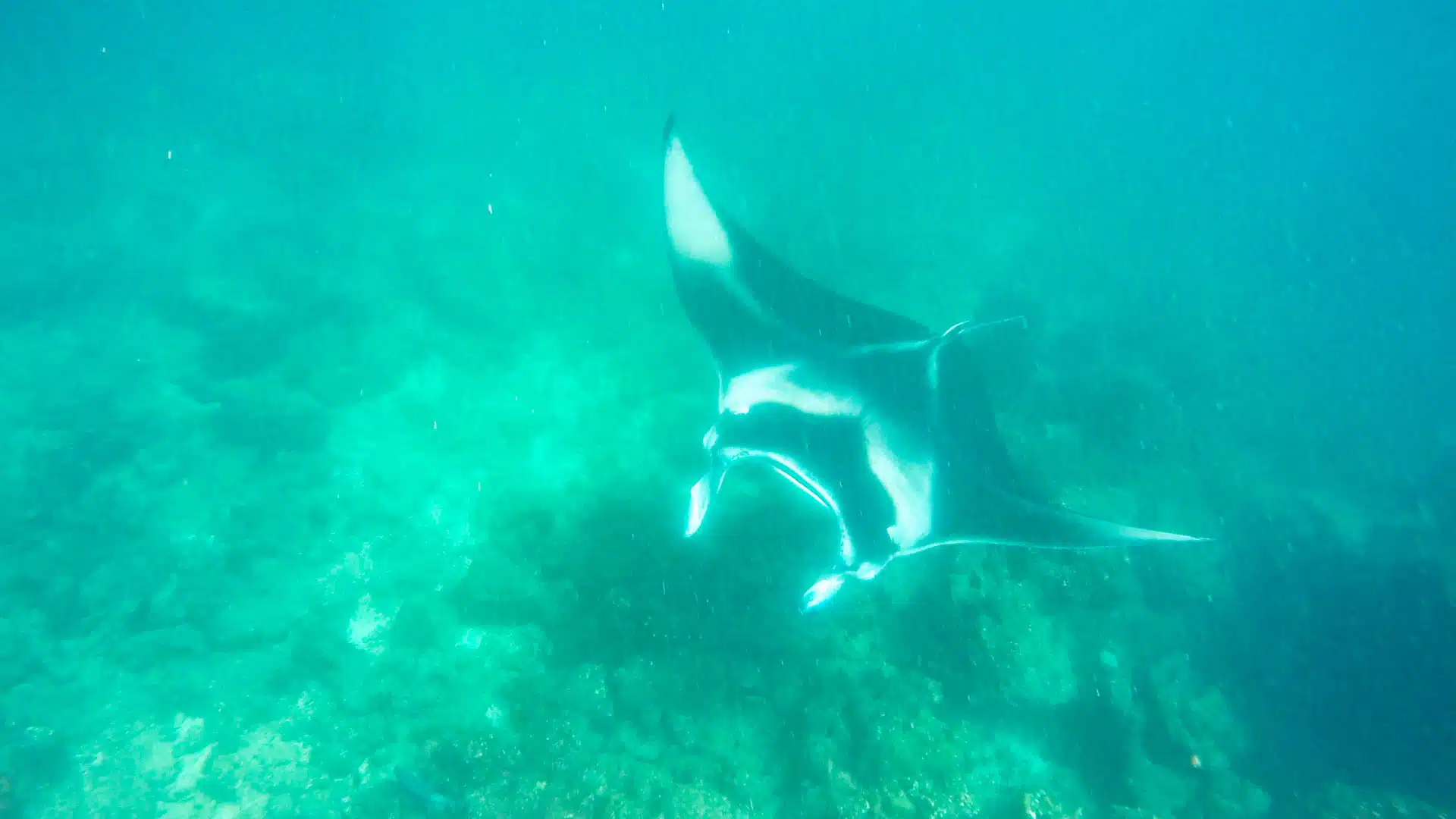
Noonu's underwater world is exceptional and, crucially, largely untouched by mass tourism. The atoll's famous dive sites include Orimas Thila, Christmas Tree Rock, and Manadhoo Beyru, all of which offer encounters with manta rays, reef sharks, eagle rays, and in season, whale sharks. The coral health in Noonu is notably strong — with coral coverage rates higher than the Maldives average, partly because the atoll's remote location limits visitor pressure. Spinner dolphins, snappers, fusiliers, and a rich soft coral landscape make snorkelling from resort jetties a genuine highlight here, and several sites are suitable for beginners while others (particularly the deeper outer reef walls) reward experienced divers. A proposed Edu Faru National Marine Park would further protect Noonu's marine ecosystem.
Above-Water Character
Noonu is the Maldives distilled to its most exclusive and serene. This is not a destination for travellers who want a lively resort atmosphere, multiple bar options, or lots of other tourists nearby. It's a destination for people who want complete privacy, absolute quiet, and the feeling of having discovered something genuinely special. Several of the resorts here — Soneva Jani in particular — are among the most architecturally and experientially ambitious in the world. The overwater villas at properties like Soneva Jani, with their retractable roofs and water slides directly into the lagoon, have become iconic images of Maldivian luxury. Stargazing is a real highlight here given the minimal light pollution, and several resorts have invested in dedicated astronomers and telescopes.
Resort Landscape
Noonu is synonymous with ultra-luxury. The atoll has been deliberately developed with a focus on exclusivity — there are fewer resorts here than in comparable atolls, and those that exist are almost uniformly at the very high end of the market. Soneva Jani, Velaa Private Island, Cheval Blanc Randheli, and Siyam World are the headline names. If you're honeymooning, celebrating a milestone, or simply want the most private and impressive Maldives experience money can buy, Noonu should be at the top of your list. It's also worth noting that Noonu has some local island accommodation options for budget-conscious travellers, particularly on Manadhoo and Fodhdhoo — though the infrastructure is limited compared to the guesthouse islands around Malé.
Best for / Not Ideal For
Noonu is best for honeymoon couples and high-budget travellers who want the most exclusive, private, and visually spectacular Maldives experience available. It's also surprisingly good for families who travel in the ultra-luxury segment — Soneva Jani has exceptional family facilities and Siyam World is an all-inclusive that caters strongly to families. It's not ideal for budget travellers, those looking for a casual local island guesthouse experience, or travellers who want the animated social atmosphere of a large resort complex.
Resorts in Noonu Atoll
Cheval Blanc Randheli
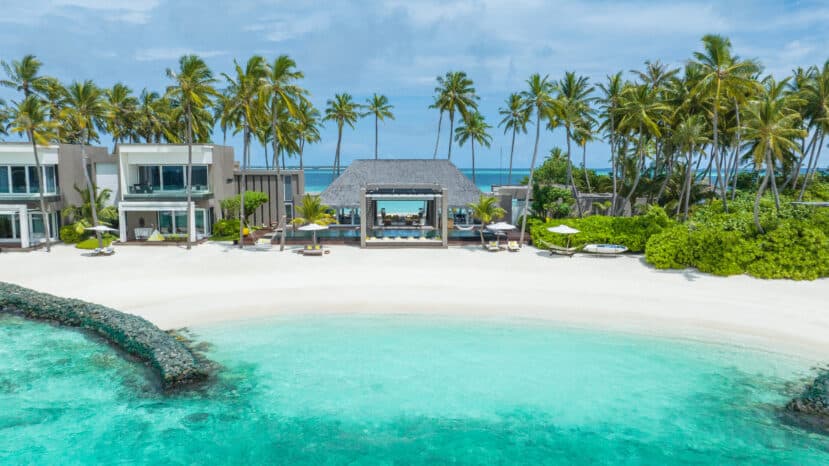
The LVMH-owned Cheval Blanc Randheli represents the pinnacle of French luxury in the Maldives — consistently rated a perfect 10 on Booking.com and boasting a privacy score that matches it. The resort's design villas, haute gastronomy, and deeply personalised service attract celebrities, heads of state, and anyone for whom only the absolute best will do. The house reef is good and snorkelling is excellent, while the serene atmosphere and 10/10 privacy rating make it a genuinely transformative experience for honeymoon couples. The branded seaplane adds an extra touch of theatre to the arrival experience.
📍 Seaplane 40 min | 💰 From $14,500 based on BB for 3 nights (2p, transfer included) | ⭐ 10
Siyam World Maldives
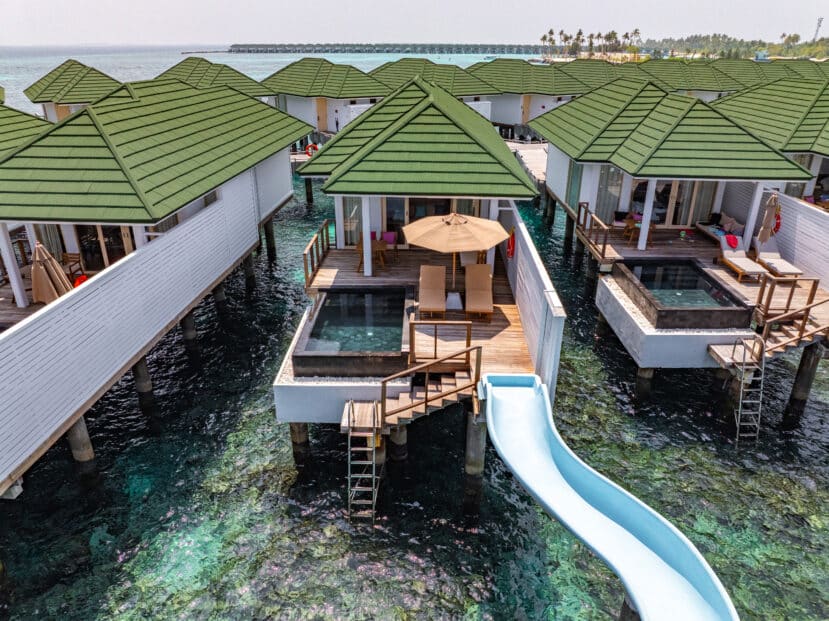
Siyam World brings an entirely different energy to Noonu — it's a large, activity-rich all-inclusive resort with more than 10 restaurants, overwater pool villas, and a lively family and couples atmosphere. One of its most distinctive features is a floating waterpark in the lagoon — a rarity even by Maldivian standards — which makes it especially appealing for families with older children and active travellers. It's the most accessible entry point to Noonu in terms of price, and a genuinely impressive property with excellent facilities. If you want to be in this remote and beautiful atoll but prefer a social, varied resort experience over solitude, Siyam World delivers.
📍 Seaplane 45 min or domestic + speedboat 60 min | 💰 From $3,600 based on FB for 3 nights (2p, incl. transfer) | ⭐ 9.3
Soneva Jani
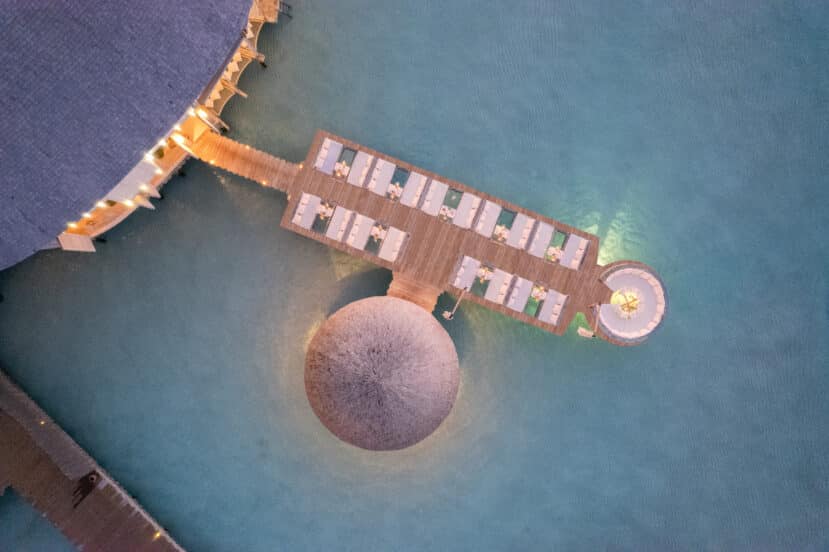
Soneva Jani is one of the most famous resorts in the Maldives — and it earns every bit of that reputation. Spread across five islands in Noonu Atoll, the resort's iconic overwater villas feature retractable roofs that open to the stars, private pools, and water slides into the lagoon. The dining is extraordinary — more than 10 restaurants and outlets, earning the resort a strong Foodie designation — and the children's facilities and family programming are among the best in the Maldives. The house reef is rated poor for snorkelling, so marine life encounters here are best enjoyed on excursions; the wider snorkelling excursions in Noonu's waters are excellent. Privacy is 8/10 and the overall scale of the resort means you never feel crowded, even when it's fully occupied.
📍 Seaplane 40–45 min | 💰 From $12,000 based on B&B per night (2p, incl transfer) | ⭐ 9.7
Sun Siyam Iru Fushi
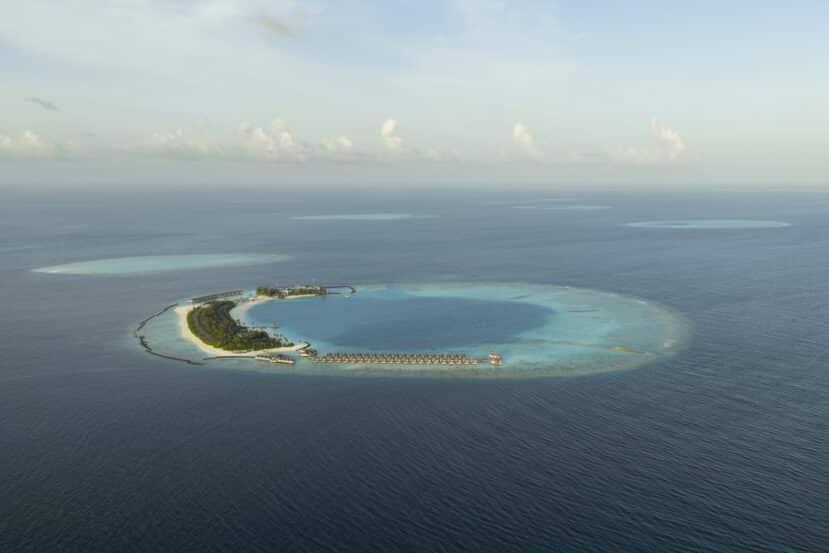
Sun Siyam Iru Fushi is a large all-inclusive luxury resort in Noonu Atoll spread across a generously sized natural island. The resort combines overwater villas with private pools, a wellness-focused spa, and an all-inclusive concept that covers dining and a broad activity programme. It has strong family appeal with a kids club from age 3, while couples are equally well catered for. A solid mid-to-upper luxury option for travellers who want to experience Noonu's remote atmosphere without committing to the ultra-luxury price points of its neighbours.
📍 Seaplane 45 min | 💰 $2,880 based on B&B for 3 nights (2p, incl. transfer) | ⭐ Rating TBC
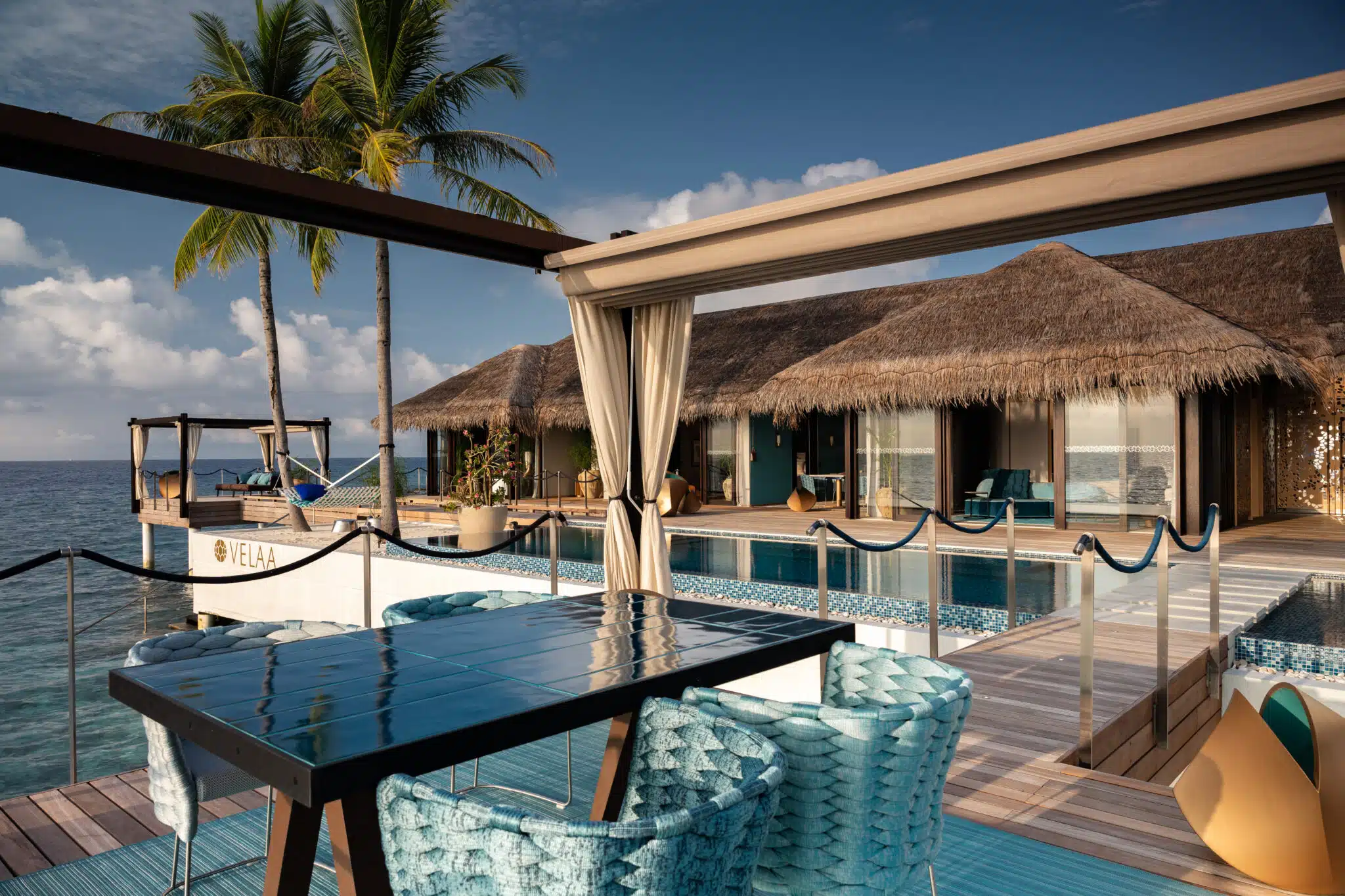
Velaa Private Island Maldives
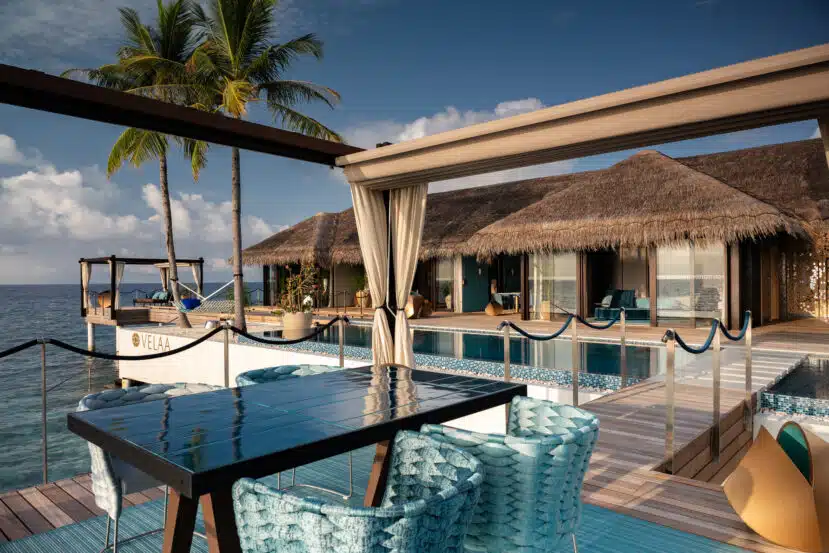
Velaa is one of the most exclusive resort addresses in the world — a private island with facilities that include a golf academy, a private submarine, fine dining across five restaurants, and what is widely considered to be one of the best spa and wellness programmes in the Indian Ocean. The house reef is good and snorkelling is excellent, and the resort's focus on bespoke experiences — private fishing, night diving, cooking classes — means that no two stays here are quite the same. For families or couples who want the absolute maximum from a Maldives trip, Velaa is an extraordinary choice.
📍 Seaplane 45 min | 💰 $12,800 based on B&B for 3 nights (2p, incl. transfer) | ⭐
How Dhaalu Atoll Works
Geography
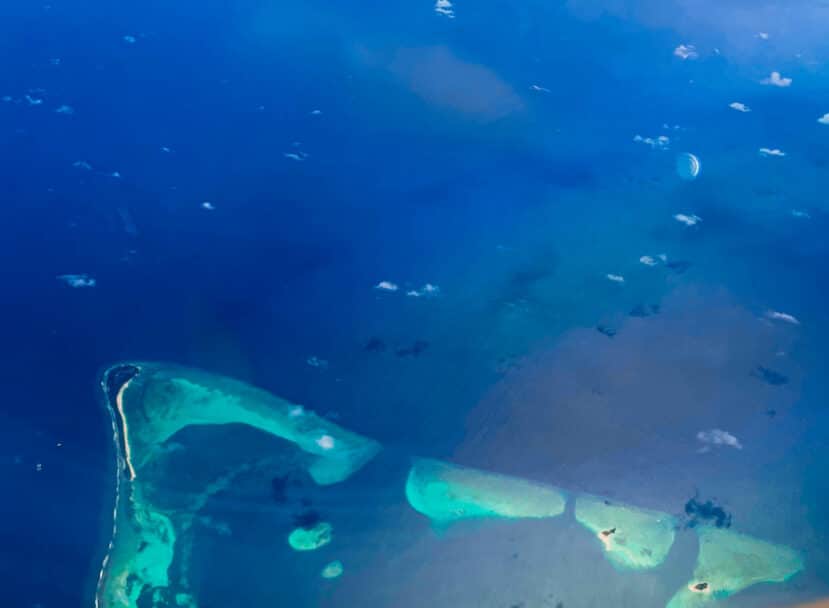
Dhaalu Atoll — also known as Southern Nilandhe Atoll — sits approximately 150 kilometres southwest of Malé in the central Maldives. It stretches 23 kilometres east to west and 38 kilometres north to south, encompassing 56 islands of which 7 are inhabited and several more are home to resort developments. Dhaalu is a compact, naturally sheltered atoll whose inner lagoons are consistently calm — ideal for swimming, snorkelling, and water sports — while the outer reef edges offer thrilling current-driven drift dives. The capital island, Kudahuvadhoo, is located at the atoll's southern tip and is home to Dhaalu Airport as well as some of the Maldives' most remarkable ancient Buddhist monuments.
Getting There
Reaching Dhaalu Atoll typically involves a 45-minute domestic flight from Velana International Airport to Dhaalu Airport on Kudahuvadhoo, followed by a 15 to 55-minute speedboat transfer to your resort. This route has the advantage of operating more flexibly around international flight schedules than pure seaplane transfers, though you'll still want to avoid very late arrivals that might leave you stranded in Malé overnight. Alternatively, most luxury resorts can arrange a direct 40-minute seaplane transfer from Malé, which skips the domestic flight entirely but at higher cost. Dhaalu's location in the central Maldives means it's genuinely remote without being as far as the southern atolls — a middle ground that makes it logistically manageable.
Marine Life and Diving
Dhaalu has excellent diving and snorkelling across the board, with popular sites including Kudarah Thila, Lion's Head, and a series of channel dives along the atoll's outer edges where you can encounter pelagic species, reef sharks, and in season, whale sharks. The whale shark season in Dhaalu runs roughly from May to November — notable because this is the wet season when most atolls are at their least glamorous weather-wise, meaning the marine life trade-off is a real one to consider when planning your trip. The atoll's reefs are in strong condition, with good coral coverage and excellent visibility during the dry season. Manta ray sightings at cleaning stations are regular and the diversity of fish life across the house reefs at both Kandima and Niyama is high.
Above-Water Character
Dhaalu sits between the wild luxury of Noonu and the more social, activity-driven vibe of large central atoll resorts. It's not as remote-feeling as Noonu, nor as crowded-feeling as some of the atolls closer to Malé. The atmosphere here tends toward the active and curious — Dhaalu rewards travellers who want to split their time between outstanding diving, cultural visits to local islands with genuine historical depth (the Buddhist ruins at Kudahuvadhoo are among the most significant archaeological sites in the Maldives), and the kind of creative resort programming that properties like Niyama and Kandima do particularly well. Niyama's two-island concept, which includes an underground nightclub and a treetop dining experience, signals the resort's intent to offer something beyond the standard Maldives formula.
Resort Landscape
Dhaalu is home to two resorts in our database — Kandima Maldives and Niyama Private Islands — and both are standout properties in very different ways. Kandima is one of the largest and most activity-rich resorts in the Maldives, with 10 restaurants, a go-kart circuit, and a lively social atmosphere that makes it one of the best family and group-of-friends destinations in the whole country. Niyama is the elevated counterpart — creative, design-led, and packed with unique experiences including an underwater restaurant and treetop dining. Together, they give Dhaalu an unusually broad appeal.
Best for / Not Ideal For
Dhaalu is best for active couples, friends groups, and families who want an exciting resort experience with strong diving access and the option to explore genuine local culture. It's an excellent choice for anyone who wants to dive during whale shark season (May–November) or who wants a more affordable entry into a well-developed, spacious resort without paying ultra-luxury prices. It's not ideal for travellers seeking extreme privacy or isolation — both Kandima and Niyama are large properties with social atmospheres — nor for the ultra-luxury set who will find Noonu or Baa Atoll more fitting.
Resorts in Dhaalu Atoll
Angsana Resort & Spa Maldives Velavaru
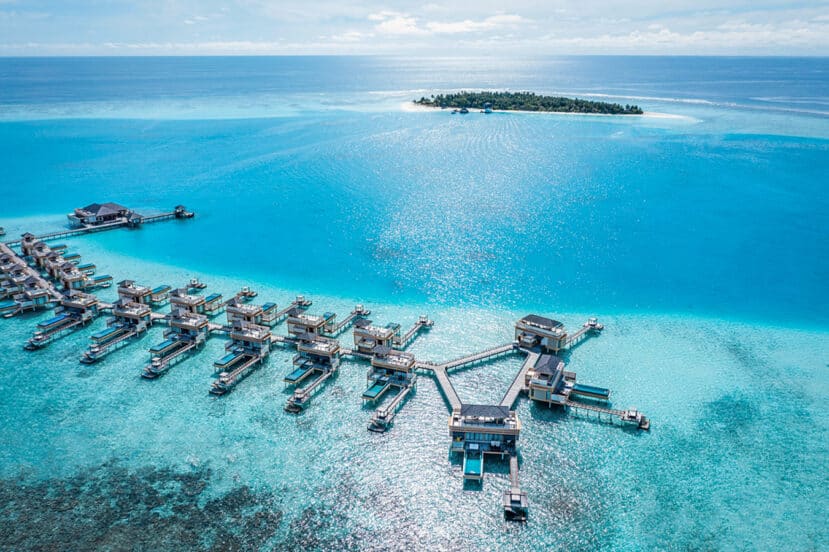
Angsana Velavaru is a Banyan Tree Group resort in Dhaalu with a genuinely distinctive feature: its “InOcean Villas” stand on stilts in the lagoon entirely separate from the main island, accessible only by boat. This gives a level of seclusion and drama that even dedicated overwater villa resorts rarely match. The beach and overwater accommodation covers a range of options, the spa is Banyan Tree-quality, and the setting in the lagoon makes it a particularly photogenic choice. Good for couples and families who want a spacious, relaxed luxury experience with something truly memorable about where they sleep.
📍 Seaplane 40 min | 💰 From $2,680 based on B&B for 3 nights (2p, incl. transfer) | ⭐ 9.0
Kandima Maldives
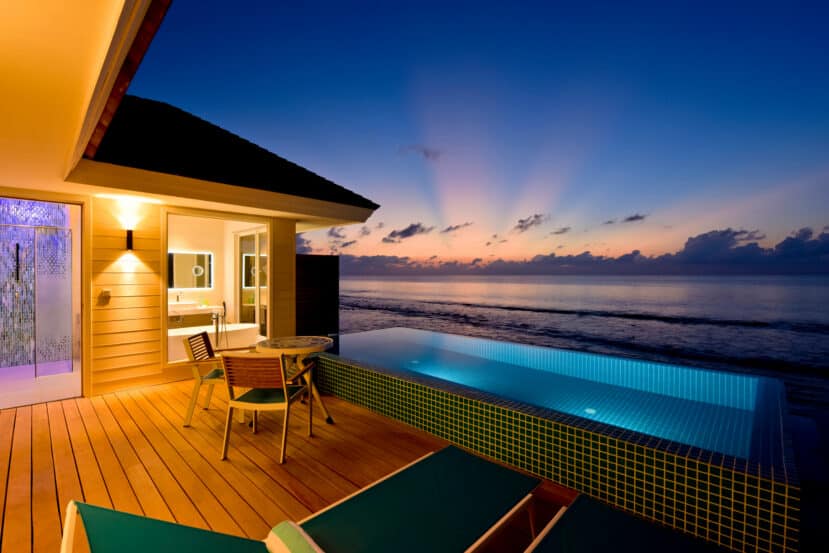
Kandima is one of the most ambitious resort concepts in the Maldives — a sprawling lifestyle property spanning nearly 3 kilometres of island, making it one of the longest resort islands in the entire country. With 10 restaurants, a professional go-kart circuit (the Maldives' first professional-grade asphalt e-kart track), a water sports centre, overwater villas, and a lively social beach club, it's the kind of resort where every member of a group or family finds something they love. Not the place for quiet seclusion, but an exceptional base for active travellers who want the full Maldives experience with maximum entertainment.
📍 Domestic flight + speedboat 45 min, or seaplane 40 min | 💰 From $1,720 based on B&B for 3 nights (2p, incl. transfer) | ⭐ 8.8
Niyama Maldives
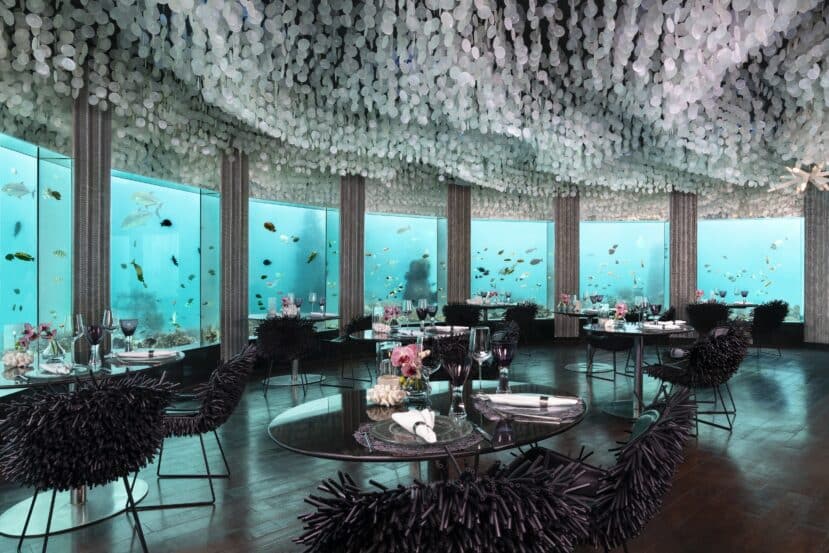
Niyama Private Islands spans two connected islands — Play and Chill — offering a dual-island experience unique in Dhaalu Atoll. The resort is known for its creative restaurant offering (9 in total, including an underwater restaurant), its wellness programme, and a genuine sense of artistic ambition that shows in everything from the architecture to the menus. Snorkelling from the house reef is excellent, and the dive centre takes guests to some of Dhaalu's best sites. Families with children are well catered for with Niyama's kids club covering ages 1 to 12.
📍 Seaplane 40 min or domestic + speedboat 55 min | 💰 $4,240 based on B&B for 3 nights (2p, incl. transfer) | ⭐ 9.6
Local Islands in Lhaviyani, Noonu & Dhaalu
Naifaru (Lhaviyani Atoll)
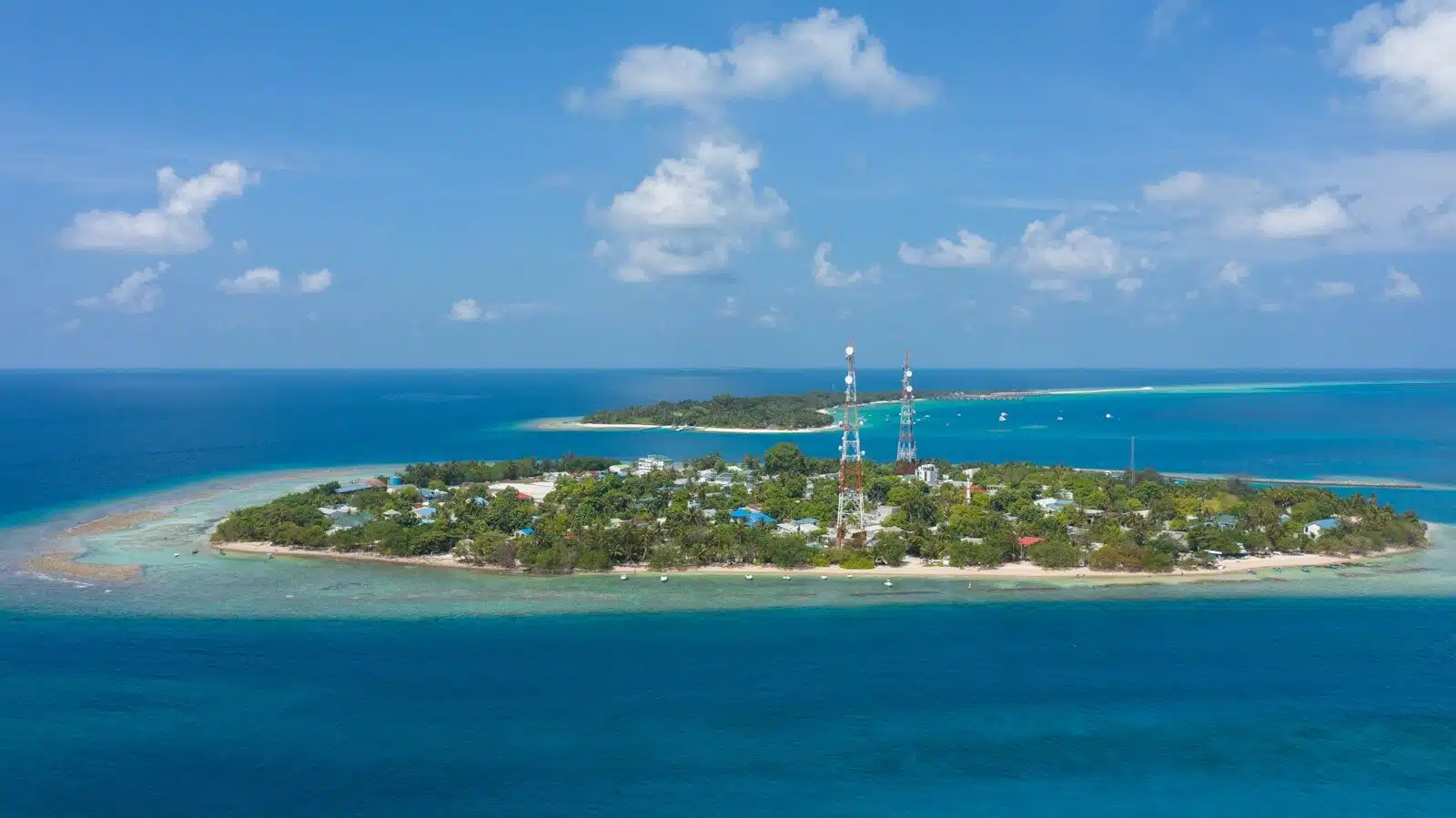
The largest inhabited island in Lhaviyani Atoll, Naifaru has a small but growing tourism infrastructure with a handful of guesthouses. It's a busier, more urban local island by Maldivian standards — full of small shops and a strong fishing culture that gives it an authenticity you won't find in the more tourist-polished local islands around Malé. One of Naifaru's most distinctive draws is its sea turtle rescue and rehabilitation centre, where injured turtles are treated before being released back into the wild — a genuinely special experience, and a reminder that Lhaviyani Atoll is considered one of the best atolls in the Maldives for turtle encounters. Transfers to Naifaru are via the regular domestic ferry service from Malé.
Hinnavaru (Lhaviyani Atoll)
The second major community island in Lhaviyani, Hinnavaru has a lively local atmosphere but relatively little beach of its own — much of the waterfront is built up. Travellers who base themselves here typically use it as a departure point for day trips to the surrounding uninhabited islands and sandbanks, which are among the most scenic in the atoll. A small number of guesthouses operate here, and the local fishing community is welcoming to visitors.
Kurendhoo (Lhaviyani Atoll)
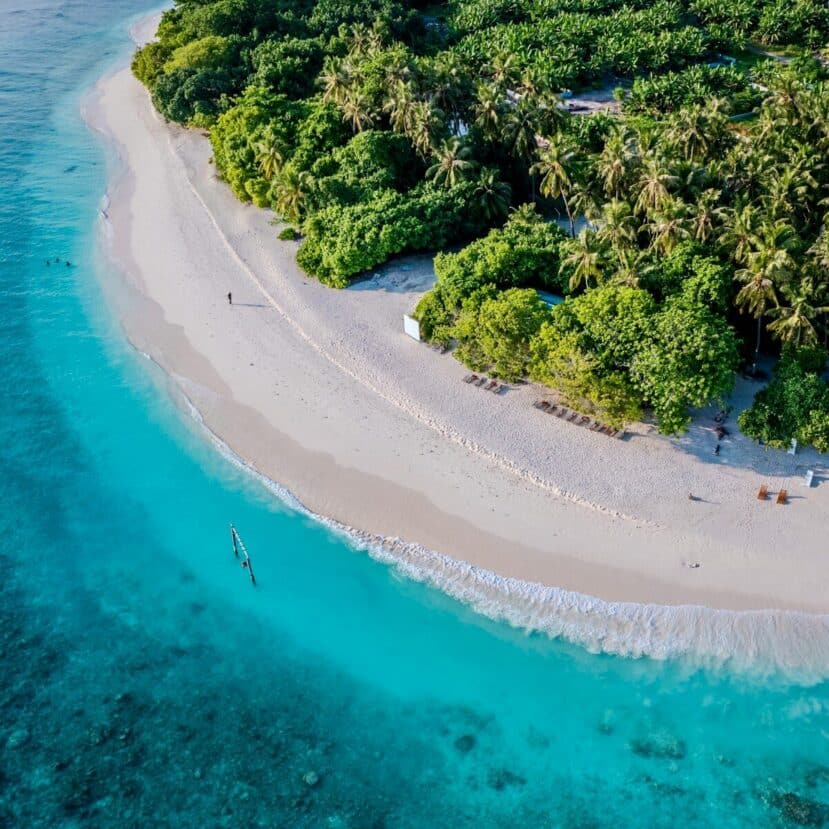
One of the quieter inhabited islands in Lhaviyani, Kurendhoo offers a more traditional and unhurried glimpse of Maldivian community life than the busier capitals Naifaru and Hinnavaru. Guesthouse accommodation is limited but exists, and the island is a good choice for travellers who want to experience an authentic village atmosphere without the tourist infrastructure of the more developed local islands further south.
Olhuvelifushi (Lhaviyani Atoll)
A real hidden gem in the southern part of Lhaviyani Atoll, Olhuvelifushi is one of those islands that rewards travellers who seek it out. It has a beautiful lagoon, a striking white beach, and a genuinely village-like quietude that contrasts sharply with the resort islands visible on the horizon. Tourism here is minimal — perfect for anyone who wants the stillness of a local island without the crowds that increasingly characterise more well-known guesthouse destinations.
Manadhoo (Noonu Atoll)
Manadhoo is the capital island of Noonu Atoll and the most accessible local island base in the atoll. The island has guesthouse accommodation at very affordable prices — a striking contrast to the ultra-luxury resorts elsewhere in Noonu — and serves as the main transport hub for the atoll, with regular speedboat services connecting to nearby islands. The old Friday mosque on Manadhoo is one of the cultural highlights of the atoll. For travellers who want to combine a local island experience with day excursions into Noonu's remarkable marine environment, Manadhoo is the most practical base.
Fodhdhoo (Noonu Atoll)
A quieter local island option in Noonu, Fodhdhoo has a relaxed pace, beautiful beaches, and small guesthouse accommodation. One of the more tranquil local island experiences in the northern Maldives — genuinely off the beaten track, with good access to snorkelling in the surrounding reefs.
Kendhoo (Noonu Atoll)
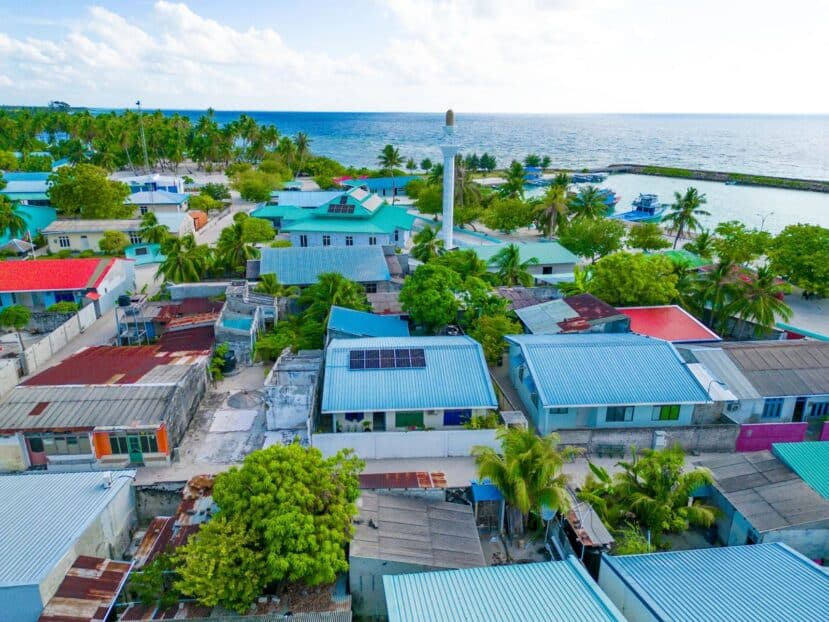
Kendhoo is known for its rich history and colourful houses, and has a particularly friendly and welcoming community. It's an authentic Maldivian island that hasn't been heavily shaped by tourism, which is part of its appeal. A good choice for travellers interested in local culture and everyday island life in the northern Maldives.
Landhoo (Noonu Atoll)
Landhoo is one of the most historically significant islands in Noonu Atoll, home to a Hawitta — an ancient Buddhist stupa mound that predates the Maldives' conversion to Islam in the 12th century. These archaeological remains are rare and genuinely fascinating, making Landhoo a worthwhile stop for culturally curious travellers visiting the atoll.
Velidhoo (Noonu Atoll)
One of the larger inhabited islands in Noonu, Velidhoo has an active local community and a selection of guesthouses, making it one of the more practical local island bases in the atoll. The beaches are attractive and the surrounding reefs offer good snorkelling.
Holhudhoo (Noonu Atoll)
Holhudhoo is a pretty island surrounded by good snorkel spots, and is popular with travellers who want to combine an authentic local island stay with easy access to underwater experiences. The community is welcoming, and the island has a traditional character that feels unspoiled.
Magoodhoo (Noonu Atoll)
Magoodhoo is perhaps the most unusual local island in Noonu — it houses a field station of an Italian university dedicated to marine research, giving the island a distinctly academic and international atmosphere alongside its local Maldivian community. Tourism here is very small-scale, but visitors are welcomed, and the marine environment around the island is outstanding precisely because it has been so carefully studied and protected. An ideal stop for ocean-minded travellers who want something genuinely different.
Lhohi (Noonu Atoll)
Lhohi is a lush, agricultural island with a strong focus on local food and farming — a rarity in the largely fishing-oriented Maldives. Almost no tourists make it here, which means that those who do are treated as genuinely special guests. If you're a pioneer traveller who wants to experience Noonu's local island life at its most unscripted, Lhohi rewards the effort.
Kudahuvadhoo (Dhaalu Atoll)
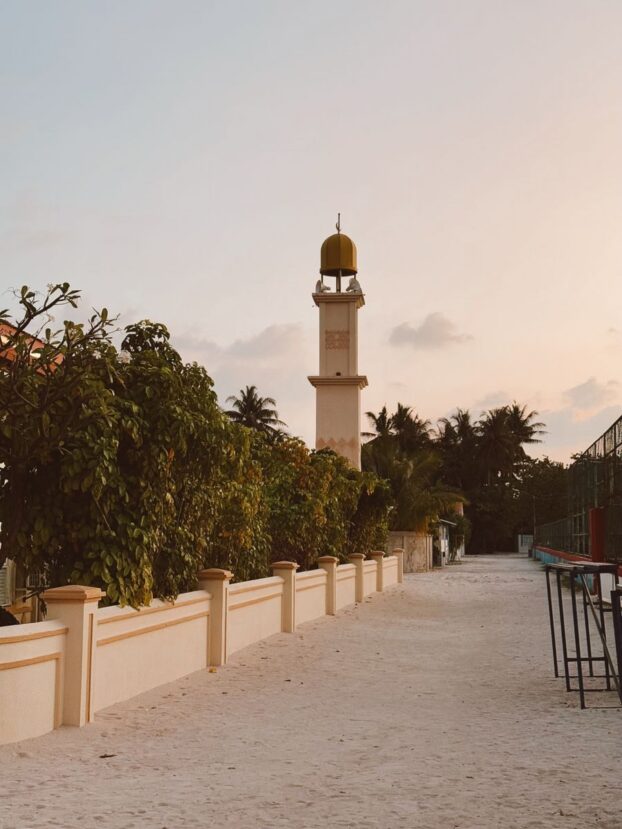
Kudahuvadhoo is the capital of Dhaalu Atoll and one of the most historically significant islands in the Maldives. The island is home to the Kudahuvadhoo Buddhist Stupa — thought to date from the 8th century and considered the oldest standing Buddhist monument in the Maldives — as well as a remarkable old mosque noted for the finest masonry in the country. Guesthouse accommodation is available here, and the island serves as the gateway to Dhaalu Atoll via the domestic airport. For history-minded travellers, a visit to Kudahuvadhoo adds real depth to a Dhaalu trip.
Rinbudhoo (Dhaalu Atoll)
Rinbudhoo is known throughout the Maldives as the “jewellers' island” — its residents have been crafting gold and silver jewellery for centuries, a tradition that is still very much alive today. A 300-year-old coral stone mosque adds to the island's heritage appeal. If you're interested in Maldivian craft traditions, Rinbudhoo is one of the most distinctive local islands in the country.
Meedhoo (Dhaalu Atoll)
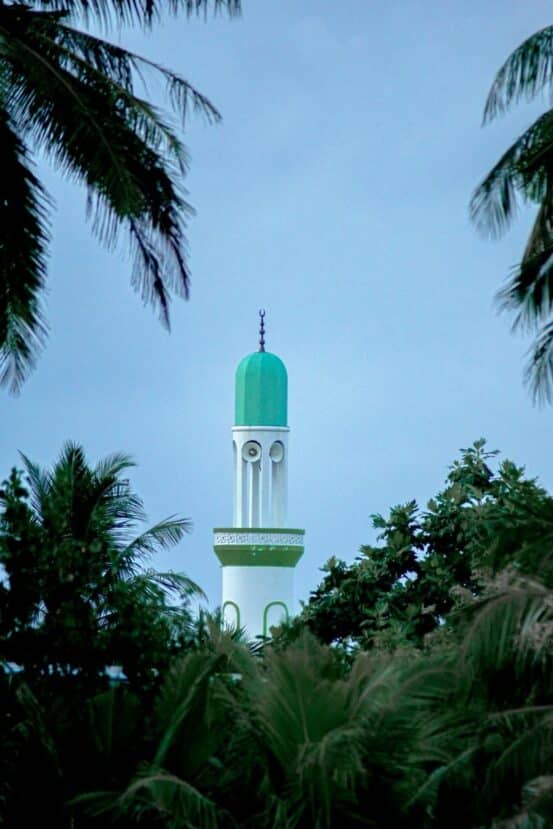
Meedhoo is Dhaalu's second-largest inhabited island, known for its beautiful beaches, rich marine life in the surrounding waters, and one of the oldest mosques in the Maldives. The Meedhoo Eco Centre is dedicated to preserving the local ecosystem and promoting sustainable tourism — making it an interesting stop for environmentally minded travellers. Local tourism is beginning to develop here, giving it a fresh, authentic character.
Hulhudheli (Dhaalu Atoll)
Hulhudheli has a strong fishing tradition and is increasingly welcoming small-scale tourism, with a handful of guesthouses beginning to establish themselves. It's an island where the local economy revolves around the sea, and where travellers get an honest glimpse of the working side of Maldivian island life.
Bandi-idhoo (Dhaalu Atoll)
Bandi-idhoo is one of Dhaalu's most unexpected gems — an agricultural island where bananas, papaya, and other fruits grow in the fertile soil, something that sets it apart from the reef-and-fish economy of most Maldivian islands. The house reef is reportedly good, and travellers who make it here are still rare enough to be warmly received as genuine guests rather than passing tourists. A perfect choice for anyone wanting to discover a corner of Dhaalu that very few visitors ever see.
Practical Tips for Lhaviyani Atoll Maldives and Beyond
Best Time to Visit
For all three atolls, the dry season runs from November to April, bringing calm seas, blue skies, excellent visibility (20–40 metres is typical), and the best conditions for snorkelling and diving. January and February are often the clearest and most settled months. The wet season (May–October) brings higher humidity, occasional heavy downpours (usually short-lived), and stronger swells — but also significantly lower prices. For Dhaalu Atoll specifically, May to November is actually the prime season for whale shark encounters at the atoll's cleaning stations, which creates an interesting trade-off: come in the dry season for ideal weather, or the wet season for whale sharks.
Manta ray sightings in Noonu Atoll are most reliable from December to April, when the northeast monsoon brings plankton-rich currents to the outer reefs. Lhaviyani is particularly good for diving year-round, though current conditions at sites like Kuredu Express are strongest and most exciting during the dry season.
If you're planning a short stay of fewer than 5 nights, note that the seaplane logistics to Lhaviyani and Noonu make very short trips less practical and proportionally more expensive. A minimum of 5 nights is generally recommended for these two atolls; Dhaalu's domestic flight option gives it slightly more flexibility.
Getting There
All three atolls are reached via Velana International Airport (MLE) in Malé. From there:
- Lhaviyani: Seaplane 35–40 minutes (primary route), or domestic flight to Madivaru + short speedboat. Seaplane operates daylight hours only — plan arrivals accordingly.
- Noonu: Seaplane 40–45 minutes (primary route), or via Maafaru International Airport for private jet arrivals. Seaplane operates daylight hours only.
- Dhaalu: Domestic flight 45 minutes to Dhaalu Airport (Kudahuvadhoo), then speedboat 15–55 minutes to your resort. Alternatively, seaplane 40 minutes for luxury resort transfers.
Transfer costs vary considerably by resort and booking channel, but budget roughly $350–$600 per person one way for seaplane, and $300–$500 per person return for domestic flight + speedboat combinations.
Tips & Good to Know
- Dress modestly on local islands: Bikinis and swimwear are not appropriate on inhabited islands. Cover up when visiting Naifaru, Manadhoo, or Kudahuvadhoo.
- Alcohol on local islands: Alcohol is not served or sold on inhabited islands in the Maldives. This applies to all local island accommodation. Only resort islands serve alcohol.
- Cash vs card: Resort islands are largely cashless; keep a small amount of US dollars for tips and local island purchases, where card acceptance is limited.
- Luggage on seaplanes: Weight limits on seaplanes are strictly enforced — typically 20–23 kg total. Soft-sided bags are required; hard-sided suitcases are not permitted. Excess luggage can usually be stored at your airport transit hotel.
- Combine atolls wisely: If you want to cover more than one atoll on a single trip, a combination of Lhaviyani or Noonu with a night or two at a local island in Baa or North Malé Atoll works well. Read our Baa & Raa Atoll Guide for more on the northern atoll combination options. For practical planning, our complete Maldives vacation planning guide covers everything from budgeting to booking sequence.
Final Thoughts on Lhaviyani Atoll Maldives and Its Neighbours
If you're weighing up where to stay in the Maldives and the usual suspects — North Malé, South Ari, Baa — feel a little too well-trodden for what you're after, then Lhaviyani Atoll Maldives, Noonu, and Dhaalu are three excellent reasons to look further. Each atoll offers something the busier central atolls can't quite match: Lhaviyani's world-class diving and spacious all-inclusive resorts, Noonu's breathtaking ultra-luxury and pristine marine ecosystem, and Dhaalu's creative resort programming and genuine historical culture on its local islands.
These are destinations for people who want to genuinely lose themselves in the Maldives — not just photograph it. The seaplane or domestic flight adds a sliver of effort to the journey, but that journey is itself part of the experience, and the reward on the other side is a reef, a beach, and a sky that feel like they belong to you alone.
🌴 Plan Your Maldives Trip
🏨 Still looking for the right stay? Browse all resorts in the Maldives or hotels & guesthouses on local islands — free cancellation on most rooms.
✈️ Flights: Compare routes and prices for flights to the Maldives.
📱 Stay connected: Skip the airport SIM queue — get a Maldives eSIM from Airalo before you fly. We use Airalo ourselves on every trip.
🔒 Travel insurance: Medical help in the Maldives often means evacuation by seaplane — don't skip travel insurance for the Maldives.
🤿 Tours & activities: Browse snorkelling trips, dolphin cruises and excursions across the Maldives, or check liveaboard diving trips.
💳 Money: Avoid card fees abroad with a free Revolut account.
Some links on this page are affiliate links. Booking through them costs you nothing extra and helps us keep this site running — thank you!
Frequently Asked Questions
Is Lhaviyani Atoll Maldives good for snorkelling?
Yes — Lhaviyani is one of the better atolls for snorkelling, particularly at resorts with strong house reefs like Komandoo and Kudadoo. The atoll is even better known for diving, with famous sites like Kuredu Express and The Shipyard attracting experienced divers from around the world. Visibility is consistently excellent during the dry season (November–April), and reef sharks and turtles are common sightings even from the beach. Non-divers who want a spectacular experience can book a table at the 5.8 Undersea restaurant at Hurawalhi and view the reef from a glass-walled room six metres below the surface. All-inclusive reef resorts like Atmosphere Kanifushi are great for snorkelling.
How do I get to Lhaviyani Atoll from Malé?
The most common way to reach Lhaviyani Atoll is by seaplane from Velana International Airport in Malé. The flight takes 35 to 40 minutes and is typically arranged by your resort. Seaplanes operate during daylight hours only (roughly 06:00 to 16:00), so plan your international arrival accordingly — guests arriving late in the evening will need to spend a night near Malé before continuing. An alternative is the domestic flight to Madivaru Airport in Lhaviyani, followed by a short speedboat to your resort.
What is special about Noonu Atoll?
Noonu Atoll is considered the pinnacle of ultra-luxury in the Maldives. It's home to some of the most famous and exclusive resorts in the world — Soneva Jani, Velaa Private Island, and Cheval Blanc Randheli — in an atoll that remains far less developed and crowded than central atolls. Noonu's remote location has preserved pristine coral reefs with coral coverage rates above the Maldives average, and the marine life here includes manta rays, whale sharks, guitar sharks, and leopard sharks. The minimal light pollution also makes stargazing extraordinary.
Is Dhaalu Atoll good for families?
Dhaalu Atoll is an excellent choice for families, particularly because of Kandima Maldives — one of the most activity-rich resorts in the Maldives, with facilities for all ages and 10 restaurants. Niyama Private Islands also has a kids club and excellent family programming. The domestic flight connection makes Dhaalu easier to combine with other atolls without being entirely dependent on daylight seaplane schedules, which is a practical advantage for families managing complex travel days. Playful island resorts like Kandima Maldives work well for families in Dhaalu.
Are there local islands in Lhaviyani, Noonu, or Dhaalu?
Yes — all three atolls have inhabited local islands where guesthouse accommodation is available. Naifaru and Hinnavaru are the main options in Lhaviyani; Manadhoo and Fodhdhoo in Noonu; and Kudahuvadhoo, Rinbudhoo, and Meedhoo in Dhaalu. The local island infrastructure in these atolls is less developed than what you'd find on Maafushi or Thulusdhoo near Malé, but for travellers wanting an authentic experience of Maldivian community life, all three offer genuine character. Note that alcohol is not served on any of these islands, and modest dress is required.
What is the best time to visit Lhaviyani Atoll Maldives?
November to April is the best time to visit Lhaviyani Atoll for the clearest weather, calmest seas, and best diving and snorkelling conditions. Visibility regularly exceeds 30 metres during this period. The wet season from May to October brings lower prices and occasional rain, but showers are usually brief and the diving remains good. For whale shark encounters specifically, the central atoll of Dhaalu is more reliable in the wet season; Lhaviyani is a year-round dive destination with no single marine life event that changes the seasonal calculus dramatically.
Can I combine Lhaviyani with another atoll in one trip?
Yes — combining Lhaviyani with a local island stay in Baa Atoll (for the manta ray experience at Hanifaru Bay) is one of the most popular northern Maldives itineraries, and it works well logistically. Similarly, pairing a resort stay in Noonu with a night or two on a local island near Malé gives you a taste of both the ultra-luxury resort world and the authentic local island experience. Most multi-atoll trips in this region work best over 10 nights or more, to justify the transfer logistics.
How much does it cost to travel to Lhaviyani Atoll?
Costs vary widely depending on your chosen resort. Budget roughly $350–$500 per person each way for seaplane transfers. Entry-level resort prices in Lhaviyani start around $400–$600 per room per night for mid-range properties like Meyyafushi, rising to $1,500+ per night for ultra-luxury options like Kudadoo. Adding seaplane transfers, activities, and dining, a couple should budget a minimum of $3,000–$4,000 for a 5-night trip at the more affordable end, and significantly more at the luxury end. If you want more information on budgeting for a Maldives trip in general, our guide on Maldives travel costs covers it in detail. At the top end, private-island stays like Kudadoo Maldives show how high it can go.
Related Blogs
Other Atoll Guides
How to Choose the Best Atoll in Maldives: A Complete Area & Stay Guide
North and South Malé Atoll Guide (Kaafu Atoll): Resorts, Local Islands & Everything You Need to Know
Baa Atoll Maldives: The Complete Guide to Baa and Raa Atoll
Southern Atolls Maldives: Your Complete Guide to Gaafu, Laamu, Thaa & Beyond
Other Maldives Blogs
How to Choose a Maldives Resort: The Complete Decision Guide
Best Hotels on Local Islands in Maldives (By Budget): Complete Guide for 2026
Top Activities in Maldives: Snorkelling, Diving & Swimming with Manta Rays
Liveaboard Diving Trips in Maldives: Explore Top Dive Sites & Underwater Life with Maldive Dreamers
Maldives Vacation: How to Plan Your Dream Island Escape for Adventure and Relaxation
Trip to Maldives: Essential Information on Islands, Visa, Vaccinations & Entry Requirements
Best Time to Go to Maldives: Weather, Climate & Seasonal Tips for Your Perfect Island Vacation
Best Hotel in Maldives Island: Top Luxury, Boutique & Affordable Stays for Every Traveller