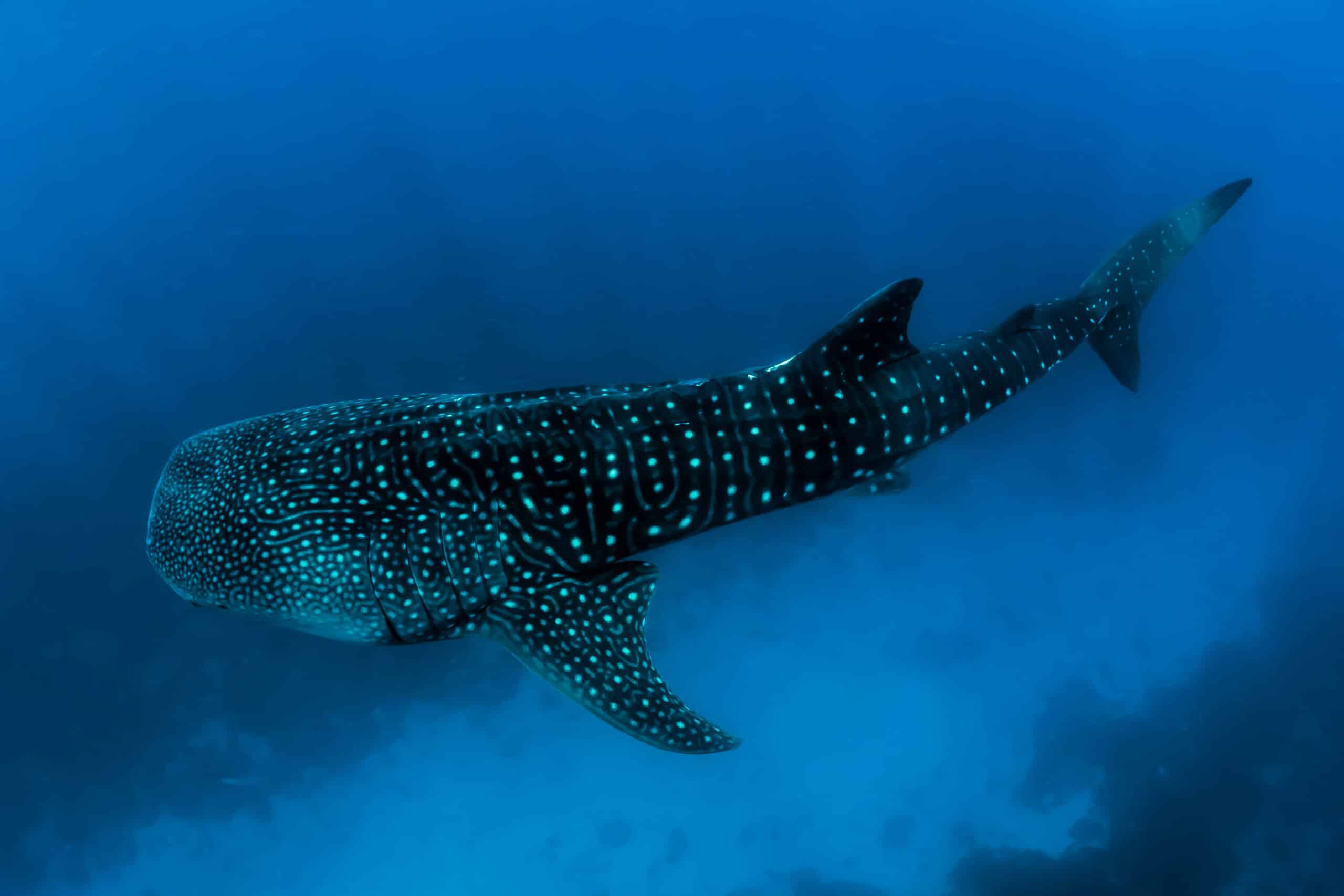
Table of Contents
Few marine encounters feel as effortless and surreal as watching manta rays glide silently through clear Maldivian water. In the right conditions, snorkellers can simply float at the surface while these enormous yet graceful animals move slowly below, feeding, circling, or visiting reef-side cleaning stations.
Manta rays in Maldives appear with a level of seasonal consistency that few destinations can match, but encounters still depend heavily on timing, currents, and choosing the right atoll. Some travellers arrive during peak plankton blooms and witness dozens of mantas feeding together, while others experience quieter moments with a single ray passing beneath them. Both can be equally memorable — but understanding how these encounters actually work makes a big difference when planning your trip.
From the famous feeding events in Hanifaru Bay to cleaning stations scattered across other atolls, this guide explores where manta rays are most reliably seen, how seasonality shapes sightings, and what snorkelling with these animals is truly like. Along the way, it also explains the practical choices travellers face — including where to stay, when to visit, and how to experience manta rays in a way that respects both the animals and the fragile marine environments they depend on.
In a Rush?
These are my Favourite Hotels for Swimming with Manta Rays
- ⭐️⭐️⭐️ Four Seasons Landaa Giraavaru – Resort – Check out Prices & availability
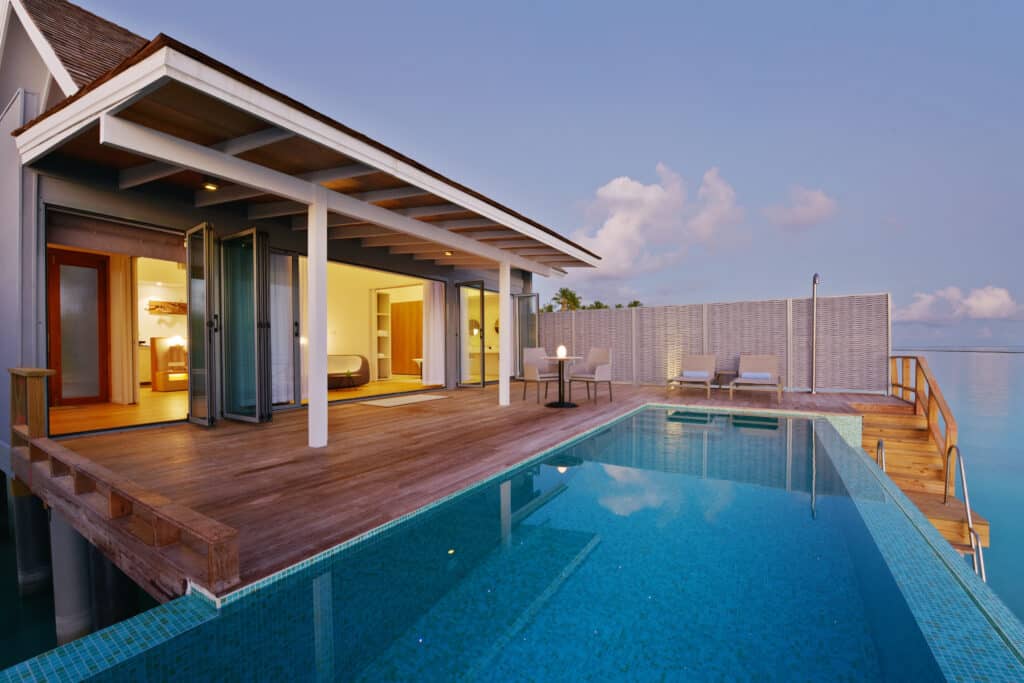
- ⭐️⭐️ Anantara Kihavah Maldives Villas – Resort – Check out Prices & availability
- ⭐️ Kiha Beach – Dharavandhoo – Check out Prices & availability
These guided manta ray snorkelling trips run in the atolls where sightings are most reliable during the season.
Manta Ray Encounters in the Maldives at a Glance
Not all manta ray encounters in the Maldives look the same. Location, season, and local conditions play a much bigger role than many travellers expect.
This short overview compares the most reliable atolls at a glance, showing where manta rays are typically seen, during which season, and what kind of encounter you can realistically expect. Use it as a starting point — the sections below explain why each atoll works the way it does and how to choose the option that best fits your trip.
| Atoll | Type of encounter | Best season | What to expect |
|---|---|---|---|
| Baa Atoll | Large feeding events (Hanifaru Bay) | Jul-Oct | High concentration, regulated snorkelling |
| North & South Male Atolls | Cleaning stations, reef edges | Jun-Sep | Small-scale, condition-dependent |
| Ari Atoll | Cleaning stations | May-Nov | Occasional sightings, usually combined with whale sharks |

Manta Rays in Maldives: Why This Is One of the World’s Best Destinations
The Maldives is widely regarded as one of the world’s best destinations to see manta rays — not because encounters are guaranteed, but because the conditions that make encounters possible are unusually strong and repeatable.
What sets the Maldives apart is the combination of geography, oceanography, and long-term marine protection. Seasonal monsoon currents push nutrient-rich plankton into specific atolls, creating predictable feeding and cleaning areas where manta rays return year after year. Instead of brief migratory appearances, many manta rays here are resident reef mantas that repeatedly visit the same locations depending on season and current direction.
One of the strongest indicators of this reliability is population data. The Maldives is home to the largest known population of reef manta rays (Mobula alfredi) in the world. Decades of photo-identification research suggest that several thousand individual mantas use Maldivian waters year-round, moving between atolls rather than migrating long distances. This resident behaviour makes sightings far more consistent than in destinations where mantas appear only briefly or offshore.
Another key difference is how manta rays are encountered. In many parts of the world, sightings are limited to deep dives or short boat-based encounters. In the Maldives, manta rays often feed just below the surface or visit shallow reef-side cleaning stations. This allows snorkellers to observe them calmly from above, without chasing, diving, or disturbing their natural behaviour. In places like Hanifaru Bay, snorkelling is the only activity allowed — a deliberate choice to reduce pressure on feeding animals.
Equally important is the Maldives’ approach to protection and management. Several of the most important manta ray sites are regulated or fully protected, with limits on boat numbers, snorkellers, time in the water, and behaviour. These rules are not designed to stage wildlife experiences, but to protect feeding and cleaning activity. In practice, this often supports calmer, more controlled encounters when conditions are right.
Taken together, these factors explain why manta ray encounters in the Maldives are considered among the best in the world.
Key reasons include:
- a large resident reef manta population
- seasonal plankton blooms that create repeatable hotspots
- shallow, surface-based encounters suitable for snorkelling
- strong protection measures at key sites
The result is not a guaranteed spectacle every day, but one of the highest probabilities globally of seeing manta rays behaving naturally — feeding, cleaning, and moving freely — when you travel to the right atoll in the right season.

Which Manta Rays Can You See in the Maldives?
Nearly all manta ray encounters in the Maldives involve reef manta rays (Mobula alfredi). These are large, slow-moving rays with wingspans of up to four to five metres that live permanently in Maldivian waters.
Because reef mantas often feed just below the surface or visit shallow reefs, they are ideally suited to snorkelling encounters. This behaviour is one of the main reasons the Maldives is so accessible for first-time snorkellers.
Oceanic manta rays (Mobula birostris) are significantly larger but only very rarely seen in the Maldives. Most travellers should plan their expectations around reef mantas, more predictable and better suited to low-impact snorkelling.
Best Places to See Manta Rays in Maldives
Manta rays are not evenly distributed across the Maldives. Encounters depend on seasonal currents, plankton concentration, and local geography, which is why choosing the right atoll matters more than choosing a specific tour or resort. Understanding where manta rays appear in the Maldives is one of the most important factors when planning a snorkelling trip focused on manta rays in Maldives. For a broader overview of where travellers typically stay, see our guide to Best Maldives Resorts by Budget: Top Affordable, Mid-Range & Luxury Island Escapes.
Below, you’ll find the most reliable regions to see manta rays in the Maldives, each with a clear decision logic, realistic expectations, and trade-offs.
Baa Atoll – Hanifaru Bay (UNESCO Biosphere Reserve)

Baa Atoll is the most famous place to see manta rays in the Maldives — and for good reason. Hanifaru Bay is one of the world’s most important manta ray feeding sites and the most consistent location for large-scale manta aggregations.
During the southwest monsoon, plankton-rich currents funnel into this shallow bay, creating feeding conditions that can attract dozens of manta rays at once. When conditions align, snorkellers float calmly at the surface while mantas perform slow barrel rolls beneath them.
Best season:
May to November, with peak activity usually between July and October
Why choose Baa Atoll
- Highest concentration of manta rays in the Maldives
- Surface-based feeding behaviour, ideal for snorkelling
- Strict regulation ensures ethical, low-impact encounters
Trade-offs
- Sightings depend on plankton conditions, not daily schedules
- Entry is regulated and time-limited
- Can feel busy during peak weeks (despite controls)
Best bases
- Local islands: Dharavandhoo (best value, closest access)
- Resorts: High-end resorts in Baa Atoll organise trips when conditions allow, but do not have exclusive access
👉 Best choice if manta rays are a primary reason for your Maldives trip and you’re travelling in peak season.
How a Hanifaru Bay session usually works
Access to Hanifaru Bay is strictly managed to protect feeding manta rays. Trips only run when conditions are right, based on plankton levels and ranger approval. This means there are no fixed schedules or guarantees — guides may wait offshore until the bay is officially opened.
When access is granted, everything happens quickly: a short briefing, a limited entry window, and a calm snorkelling session where participants float at the surface rather than actively swimming. These controls are designed to minimise disturbance and allow manta rays to feed naturally.
These excursions depart from nearby islands such as Dharavandhoo when conditions allow entry to Hanifaru Bay.
Klook.comBecause of its proximity to Hanifaru Bay, the local island of Dharavandhoo is one of the most practical bases during the manta ray season, offering frequent snorkelling trips at a significantly lower cost than nearby resorts. We’ve covered this option in detail in Dharavandhoo: Maldives’ Best Local Island for Authentic Culture, Budget Stays & Hanifaru Bay Adventures.

Resorts as a base
Several luxury resorts in Baa Atoll organise guided manta ray snorkelling trips to Hanifaru Bay when conditions allow. These excursions follow the same regulations as trips from local islands and are only possible when the bay is officially opened by park rangers.
Staying at a resort does not increase the chance of manta ray sightings, but it does offer a more comfortable and flexible base — especially for travellers who prefer private transfers, on-site marine teams, and a higher level of service around excursions.
Well-known resorts in Baa Atoll that regularly organise Hanifaru Bay trips include Anantara Kihavah Maldives Villas, Four Seasons Landaa Giraavaru, and The Nautilus Maldives. These resorts are featured in our curated guide to the Top 10 best luxury resorts in the Maldives, where we compare location, marine access, and overall value.
Good to know: manta ray trips from resorts are typically optional excursions and not included in the room rate. Availability always depends on season and daily plankton conditions.
Our experience snorkelling with manta rays in Hanifaru Bay
Snorkelling with manta rays in Hanifaru Bay was a clear reminder that wildlife encounters are never guaranteed — even in one of the world’s most famous manta hotspots. At our first stop, expectations were high, but the reality was underwhelming. There were only two or three manta rays in the area, and from where I was floating, I barely caught a glimpse of them.
Rather than ending the trip there, the guides suggested relocating based on changing plankton conditions. That decision made all the difference. At the second spot, the scene was completely different: around fifteen manta rays were feeding together just below the surface, moving slowly and calmly through the water.
It quickly became clear how different this experience was from other snorkelling encounters. Everyone remained at the surface, kept their distance, and observed quietly as the manta rays fed below. There was no interaction or encouragement — just waiting and watching what unfolded naturally.
That contrast — from seeing almost nothing to suddenly being surrounded by real feeding activity — perfectly captured what snorkelling with manta rays is really like. It’s unpredictable, timing-dependent, and never scripted. Compared to reef shark encounters, it felt less structured and more dependent on timing and conditions. An honest example of what swimming with manta rays in the Maldives can truly be like.

North & South Malé Atolls
The North and South Malé Atolls offer one of the most accessible ways to see manta rays in the Maldives, particularly for travellers staying close to Malé. Unlike Baa Atoll, encounters here usually take place at seasonal cleaning stations and reef edges, largely dependent on local currents rather than large-scale feeding events.
Best season:
Sightings are most likely during the southwest monsoon (May–November), when increased plankton levels draw manta rays closer to reef systems in this region. Chances are generally higher between June and September, though encounters remain highly dependent on daily conditions such as currents and visibility.
Compared to Baa Atoll, manta ray encounters in the Malé Atolls are typically:
- smaller in scale, often involving one or a few manta rays
- shorter and more variable in duration
- more sensitive to timing, currents, and water conditions
The main advantage of this region lies in logistics. Short speedboat transfers make it easy to join snorkelling trips without long travel days, which works well for shorter stays or travellers who prefer to keep plans flexible.
Why Choose the Malé Atolls
- Very easy access from Malé International Airport
- Short and relatively affordable speedboat transfers
- A good mix of marine life, including reef sharks, turtles, and house-reef snorkelling
Local Islands as a Base
Several local islands in the Malé Atolls organise manta ray snorkelling trips based on daily conditions rather than fixed schedules. Maafushi and Thulusdhoo are among the best-known options and are often used as a base during the right season. More context on choosing between these islands can be found in Top 10 Local Islands in the Maldives: The Best Inhabited Islands for Beaches, Snorkelling & Budget Stays.
From Maafushi and nearby islands, manta ray excursions run during the southwest monsoon when sightings are more likely.
Resorts as a Base
For travellers who prefer staying at a resort, manta ray snorkelling is usually offered as an optional excursion, not a guaranteed activity. In the North and South Malé Atolls, resorts with short transfer times and easy access to surrounding reefs are commonly used as a base when conditions are favourable. Budget-friendly examples include Kurumba Maldives, Hard Rock Hotel Maldives, and Adaaran Select Hudhuranfushi. These and similar options are covered in our dedicated guide to Budget Resorts in the Maldives.

Overall, the Malé Atolls are best viewed as a practical and flexible option rather than a guaranteed manta ray hotspot. Encounters are possible during the right season, but daily conditions always play a decisive role.
Ari Atoll – Cleaning Stations & Occasional Encounters
Ari Atoll is best known for whale sharks, but manta rays are also present — mainly around reef-side cleaning stations along the outer reef. Encounters here are generally calmer and more low-key than in Baa Atoll, with manta rays visiting cleaning stations individually or in small numbers rather than gathering for large feeding events.
Best season:
Manta ray sightings are most likely during the southwest monsoon (May–November). Encounters tend to be occasional and condition-dependent, and are usually smaller in scale than those seen in Baa Atoll.

Why Choose Ari Atoll
- Combines manta rays with strong chances of whale shark sightings
- Quieter, less crowded marine encounters
- Good visibility at outer-reef cleaning stations
Trade-offs
- Manta rays are not the primary draw of this region
- Sightings are less predictable and not concentrated in one hotspot
- Not ideal if manta rays are your main reason for visiting
Local Islands as a Base
The local island Dhigurah is one of the most established bases in Ari Atoll for marine excursions. While whale sharks are the main focus here, manta rays are occasionally seen at nearby cleaning stations during the right season. Dhigurah works best for travellers who want to combine different types of marine life rather than focus exclusively on manta rays. More context on choosing between local islands can be found in Top 10 Local Islands in the Maldives: The Best Inhabited Islands for Beaches, Snorkelling & Budget Stays.
From Dhigurah, marine excursions often combine whale shark searching with occasional manta ray encounters.
Resorts as a base
Several resorts in Ari Atoll organise manta ray snorkelling as an optional excursion, depending on daily conditions. In both North and South Ari Atoll, many of the resorts used as a base for these trips fall into the budget or mid-range category. Well-known examples include Kuramathi Maldives and Kandolhu Maldives, both featured in our guide to Best Maldives Resorts by Budget: Top Affordable, Mid-Range & Luxury Island Escapes.
Best Time to See Manta Rays in Maldives
Peak Manta Ray Season (May–November)
The most reliable period to see manta rays in the Maldives runs from May to November, during the southwest monsoon. In this season, shifting currents bring nutrient-rich plankton into specific parts of the atolls, creating the conditions manta rays rely on for feeding and cleaning.
What’s important to understand is that manta ray season in the Maldives is driven more by wind direction and current flow than by rainfall alone. During the southwest monsoon, prevailing winds push plankton towards the eastern sides of the atolls. This is why well-known feeding hotspots such as Hanifaru Bay, on the eastern edge of Baa Atoll, become particularly active in this period.
When the monsoon shifts between December and April, currents reverse and plankton tends to concentrate more on the western sides of the atolls. Manta rays adapt accordingly, appearing more often at reef-side cleaning stations rather than in large feeding bays. For a broader overview of how this affects travel planning, we cover this in more detail in Best Time to Go to Maldives: Weather, Climate & Seasonal Tips for Your Perfect Island Vacation.
How Seasonality Differs by Atoll
Although May to November is considered the main manta season, its impact varies by region:
- Baa Atoll: This period clearly marks the core manta season, with the most consistent feeding activity in Hanifaru Bay. The highest concentrations are typically seen between July and October, when plankton levels peak.
- North & South Malé Atolls: Manta rays are more likely during the southwest monsoon, but encounters remain small-scale and dependent on daily conditions rather than a fixed hotspot.
- Ari Atoll: Manta rays are mainly seen at cleaning stations. The same May–November window applies, but sightings are occasional and less concentrated than in Baa Atoll.
Peak months overall:
- July to October offer the highest likelihood of encounters
- August and September often provide the most consistent conditions, particularly in Baa Atoll
Seeing a single manta ray glide past in clear water can be just as memorable as witnessing larger aggregations — the experience depends more on timing and conditions than sheer numbers.

Outside Peak Season (December–April)
Outside the main season, large feeding events are uncommon, but manta rays can still be seen at cleaning stations, especially in Ari and the Malé Atolls. During this period, encounters are usually incidental rather than planned around a specific hotspot, with manta rays visiting reefs as part of their regular behaviour.
Sightings in these months are less predictable and strongly influenced by daily conditions such as currents and visibility. The trade-off is a quieter experience, often with fewer boats and snorkellers in the water, which some travellers prefer despite the lower likelihood of encounters.
Snorkelling vs Diving with Manta Rays
When planning a manta ray encounter in the Maldives, one of the most common questions is whether snorkelling or diving offers the better experience. While both are possible in certain locations, manta ray behaviour — combined with local regulations — means the experience differs from what many travellers initially expect.
What a Typical Manta Ray Snorkelling Trip Looks Like
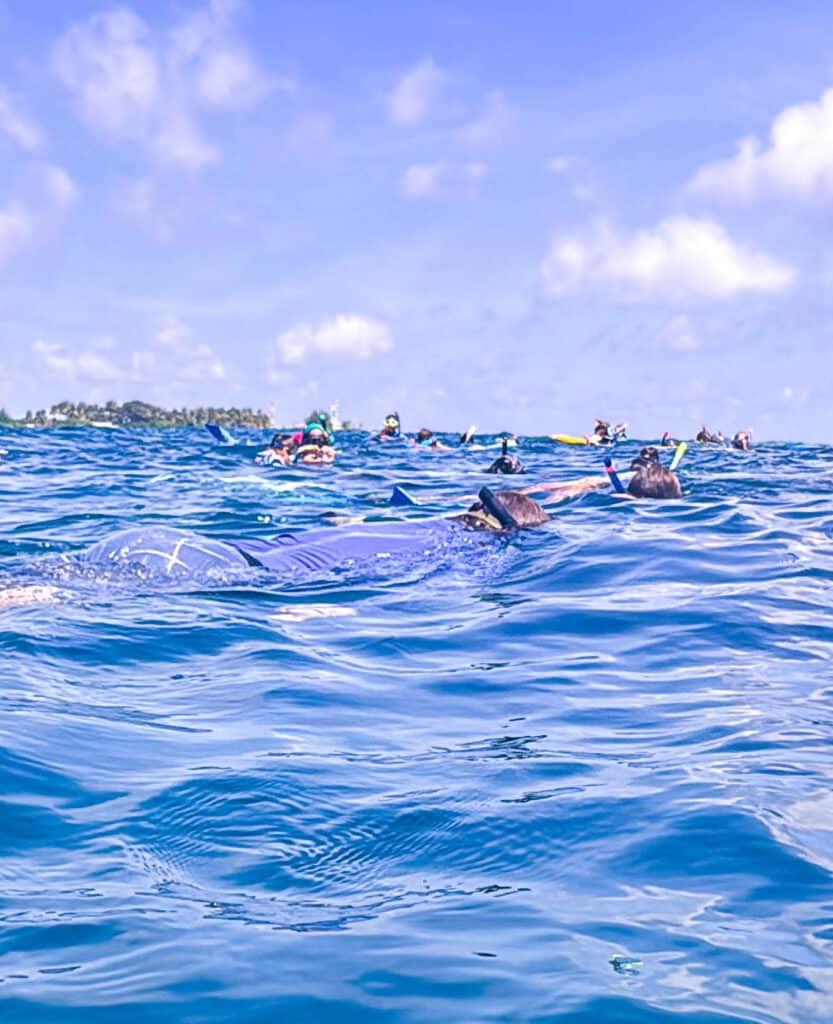
Most manta ray snorkelling trips involve a boat ride of around 20 to 60 minutes, depending on your base island and sea conditions. Once manta rays are located, snorkellers enter the water calmly and remain at the surface, usually for 30 to 45 minutes.
Encounters are passive rather than interactive. Snorkellers float, observe, and allow the manta rays to move freely below. On some days, only one or two manta rays may pass through briefly; on others, multiple rays may remain in the area for longer periods, particularly when feeding conditions are favourable. This variability is typical of manta ray encounters and reflects natural behaviour rather than structured activity.
In regulated areas, time in the water may be limited to reduce pressure on the animals. The emphasis is on quiet observation and minimal movement, with quality of the encounter taking priority over duration.
For travellers planning their trip around marine life encounters, joining a guided manta ray snorkelling excursion with local marine guides is usually the most reliable way to experience these animals responsibly.
Why Snorkelling Is Usually the Better Option
Most manta ray encounters in the Maldives take place close to the surface, where manta rays feed or move between cleaning stations. Snorkelling allows observers to stay above the animals, maintaining distance while still having a clear view of their natural behaviour.
In some locations, including Hanifaru Bay, snorkelling is the only permitted activity, specifically to minimise disturbance during feeding events. For most travellers, this makes snorkelling the most practical and appropriate way to encounter manta rays.
Key reasons snorkelling works well:
- No certification or prior experience required
- Longer and less intrusive viewing from the surface
- Suitable for beginners and confident swimmers
- Better aligned with how manta rays naturally feed and move
Diving with Manta Rays in Maldives
Diving with manta rays is possible at certain reef-side cleaning stations, where manta rays may circle slowly while being cleaned by reef fish. These encounters can be visually impressive, but they are generally less frequent and more location-dependent than snorkelling experiences.
Because manta rays spend much of their feeding time near the surface, diving does not necessarily increase encounter quality or reliability. For most first-time visitors, snorkelling offers a more accessible and realistic way to observe manta rays without interfering with their natural behaviour.
Travellers interested in deeper reef encounters can also explore our Maldives Diving: Top Dive Sites, Marine Experiences & Tips for Every Diver guide.
Responsible Swimming with Manta Rays in Maldives
Responsible behaviour is essential when swimming with manta rays, particularly in a destination as popular as the Maldives. Manta rays rely on specific feeding and cleaning conditions, and even small disturbances can affect how long they remain in an area.
Manta rays are especially sensitive to crowding and sudden movements. Calm, predictable behaviour helps reduce stress and allows the animals to continue feeding or cleaning without interruption. The goal is not interaction, but observation — staying out of the way and letting manta rays move naturally.
Guidelines for Ethical Snorkelling
When swimming with manta rays, the following rules should always be followed:
- Keep a minimum distance of 3–4 metres at all times
- Never touch, chase, or attempt to swim directly above manta rays
- Do not block their swimming path or surround them as a group
- Avoid flash photography, which can disorient the animals
- Float calmly at the surface and follow instructions from guides or marine staff
The Maldives plays an important role in global manta ray conservation. Organisations such as Manta Trust work closely with local authorities, resorts, and dive centres to study manta ray behaviour, identify individuals through photo identification, and protect critical habitats such as feeding bays and cleaning stations.
This research has directly shaped regulations in places like Hanifaru Bay, where visitor numbers, time in the water, and behaviour are strictly controlled. These measures are designed to protect feeding activity and reduce long-term pressure on manta rays, rather than to stage or enhance encounters.
Even outside protected areas, following the same principles is essential. Ethical snorkelling helps ensure that manta rays can continue to use these sites naturally — now and in the future.

What to Bring for Manta Ray Snorkelling
Manta ray snorkelling in the Maldives is generally relaxed and suitable for beginners, but having the right gear makes the experience more comfortable and helps you stay calm and unobtrusive in the water. Most encounters take place close to the surface, so specialised equipment is not required.
The focus should be on comfort, buoyancy, and minimal disturbance, rather than performance or speed.
Recommended essentials:
- Reef-safe sunscreen to avoid harming coral and marine life
- Rash guard or long-sleeve swimwear for sun protection and warmth
- Mask with good visibility for clear surface observation
- Snorkel fins to help with gentle movement and stable floating
- Underwater camera or GoPro (without flash) if you want to document the experience
Most snorkelling trips provide basic equipment, but bringing your own mask or fins can improve comfort and fit, especially if you plan to snorkel multiple times during your trip.
Final Thoughts on Swimming with Manta Rays in Maldives
Encounters with manta rays in Maldives are shaped less by fixed itineraries and more by understanding the rhythm of the ocean. Choosing the right atoll, travelling during the most favourable season, and approaching these animals with patience and respect can turn a simple snorkelling excursion into one of the most memorable wildlife moments of a trip.
For travellers who plan around marine life, manta rays in Maldives offer something rare: the chance to observe large wild animals behaving naturally in clear, shallow water without needing specialised skills or equipment. Whether that means drifting above feeding mantas in Hanifaru Bay or spotting a single ray gliding past a reef-side cleaning station, the experience often feels surprisingly calm and unscripted.
If manta rays are high on your Maldives wish list, the next step is choosing a base island or resort that aligns with the season and your travel style. With the right timing and expectations, these encounters can become a natural highlight of a wider Maldives journey filled with reefs, wildlife, and island exploration.
🌴 Plan Your Maldives Trip
🏨 Still looking for the right stay? Browse all resorts in the Maldives or hotels & guesthouses on local islands — free cancellation on most rooms.
✈️ Flights: Compare routes and prices for flights to the Maldives.
📱 Stay connected: Skip the airport SIM queue — get a Maldives eSIM from Airalo before you fly. We use Airalo ourselves on every trip.
🔒 Travel insurance: Medical help in the Maldives often means evacuation by seaplane — don't skip travel insurance for the Maldives.
🤿 Tours & activities: Browse snorkelling trips, dolphin cruises and excursions across the Maldives, or check liveaboard diving trips.
💳 Money: Avoid card fees abroad with a free Revolut account.
Some links on this page are affiliate links. Booking through them costs you nothing extra and helps us keep this site running — thank you!
Frequently Asked Questions about Manta Rays in Maldives
Is it safe to swim with manta rays in Maldives?
Yes, manta rays are gentle filter feeders and are not dangerous to humans. They do not have stingers and are known for calm, non-aggressive behaviour. Encounters are generally very safe when snorkellers keep a respectful distance, avoid chasing or touching the animals, and follow guide instructions. Responsible behaviour is important, both for your safety and for protecting the manta rays’ natural feeding or cleaning activity.
Are manta ray sightings guaranteed in Maldives?
No, manta ray sightings are never guaranteed. The Maldives is one of the best places in the world to see them, especially in Baa Atoll during the main season, but encounters still depend on plankton levels, currents, weather, and daily conditions. Some trips involve multiple sightings, while others are quieter. Planning around the right season improves your chances, but realistic expectations are always essential.
Can beginners snorkel with manta rays in Maldives, or do you need to be a strong swimmer?
Beginners can often snorkel with manta rays in Maldives, as most encounters take place at the surface rather than in deep diving conditions. You do not need to be an expert swimmer, but you should feel comfortable in open water and be able to float calmly for a while. Life vests are often available, and many tours are suitable for first-time snorkellers with basic water confidence.
Can children snorkel with manta rays in Maldives?
Yes, snorkelling with manta rays can be suitable for children, provided they are confident in the water and comfortable in open sea conditions. These trips usually involve floating calmly at the surface rather than active swimming, which can make them manageable for older or water-confident children. Suitability depends on sea conditions, visibility, and the child’s confidence on the day, so guides should always make the final assessment.
Can you dive with manta rays in Hanifaru Bay?
No, diving is not allowed in Hanifaru Bay. The site is strictly snorkelling-only in order to reduce pressure on feeding manta rays and protect the ecosystem. This means visitors observe from the surface rather than descending into the water column. If you want to dive with manta rays, reef-side cleaning stations in other atolls are a better option, although sightings there are usually more condition-dependent.
Are manta rays protected in the Maldives?
Yes, manta rays are protected in the Maldives, and disturbing, touching, or harming them is not allowed. In important sites such as Hanifaru Bay, access is strictly controlled, with rules on boat numbers, entry times, and behaviour in the water. These measures help protect feeding and cleaning activity while supporting long-term conservation. For travellers, this also means encounters tend to be more respectful and better managed.
What is the best time of day or season to see manta rays in Maldives?
The best season for manta rays in Maldives is generally from May to November, when plankton-rich currents create the right feeding conditions in key atolls such as Baa. There is no single best time of day, as sightings depend more on tides, currents, and plankton concentration than on the clock. Good operators adjust departures to local marine conditions rather than relying on a fixed daily schedule.
Related Blogs
Other Maldives Activities
Top Activities in Maldives: Snorkelling, Diving & Swimming with Manta Rays
Maldives Diving: Top Dive Sites, Marine Experiences & Tips for Every Diver
Swimming with Sea Turtles in Maldives: Best Spots & Tips
Sandbanks in Maldives: Unmissable Sandbank Adventures & Island Experiences
Whale Sharks in Maldives: Best Spots & Tours for Encounters
Snorkelling in Maldives: Best Places to Go & Marine Life
Liveaboard Diving Trips in Maldives: Explore Top Dive Sites & Underwater Life with Maldive Dreamers
Other Maldives Blogs
How to Choose a Maldives Resort: The Complete Decision Guide
Best Hotels on Local Islands in Maldives (By Budget): Complete Guide for 2026
How to Choose the Best Atoll in Maldives: A Complete Area & Stay Guide
Maldives Vacation: How to Plan Your Dream Island Escape for Adventure and Relaxation
Trip to Maldives: Essential Information on Islands, Visa, Vaccinations & Entry Requirements
Best Time to Go to Maldives: Weather, Climate & Seasonal Tips for Your Perfect Island Vacation
Best Hotel in Maldives Island: Top Luxury, Boutique & Affordable Stays for Every Traveller