Table of Contents
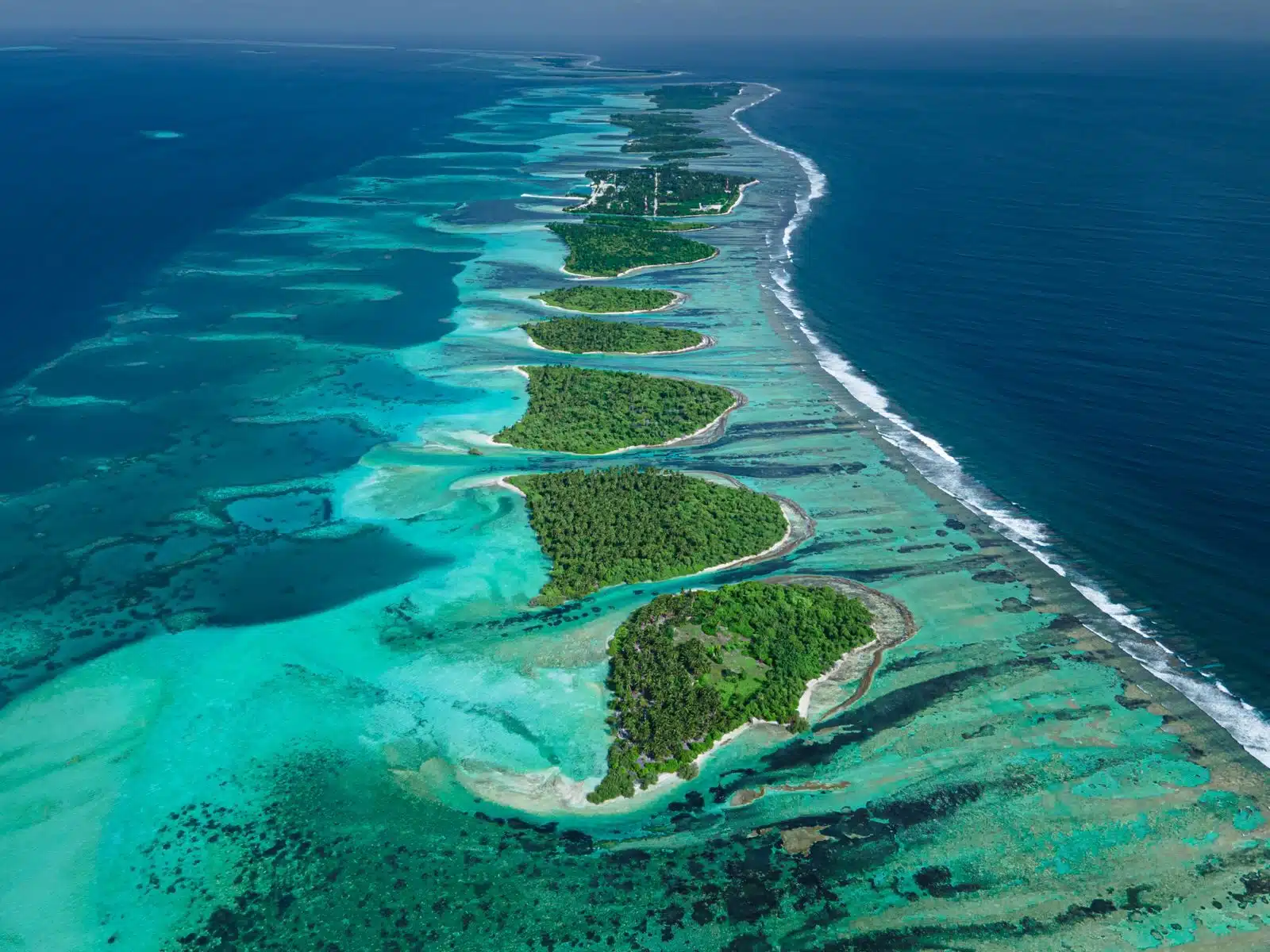
The Maldives with kids is one of those trips that sounds almost too magical to be true — white sand, warm turquoise water, and some of the most spectacular marine life on the planet. And then reality kicks in: two types of accommodation, completely different experiences, very different price tags, and a set of very real practical questions that simply don't matter when you're travelling as a couple. What does your toddler eat when there's no kids' menu at the beach restaurant? Which beaches are safe for small children to swim? And is the ferry transfer going to be a disaster?
This guide is specifically for families travelling to the Maldives with children. We've been there ourselves — with two kids aged 7 and 10 at the time, and a full week split between a resort (Kurumba Maldives), a local island (Dharavandhoo), and a second resort night (Hard Rock Hotel Maldives). Everything in this guide is based on that real experience, combined with extensive research. The short answer is: both can work brilliantly for families. But they suit very different ages, travel styles, and budgets — and understanding those differences is the whole point.
In a Rush?
These are my Favourite Resorts and Hotels with Kids
⭐⭐⭐ Hard Rock Hotel Maldives — Check prices and availability
⭐⭐ Kurumba Maldives — Check prices and availability
⭐ Kiha Beach Dharavandhoo — Check prices and availability
At a Glance: Resorts vs Local Islands for Families
Travelling Maldives with kids involves decisions that are specific to family travel. Here's how the two options compare on the criteria that matter most when you have children in tow:
| Resort | Local Island | |
|---|---|---|
| Price (week for family of 4) | $3,000–$15,000+ | $1,000–$3,000 |
| Beach safety | Private, calm, supervised | Bikini beach often unguarded; varies per island |
| Food for kids | Kids menus, room service, buffets | Local restaurants; limited children's options |
| Kids club | Yes (most mid-range and up; ages 4–12) | No |
| Alcohol available | Yes | No (Muslim island) |
| Transfer stress | Low (speedboat 10–45 min) | Moderate (speedboat 30 min–2 hrs, or public ferry up to 4 hrs) |
| Medical facilities | On-resort nurse/doctor | Basic or none; evacuation to Malé |
| Marine life access | Good (house reef, resort excursions) | Same tours available; significantly lower cost per excursion |
| Cultural exposure | Minimal | Real and genuine |
| Best age | All ages, especially under 8 | Best from age 7–8 upwards |
| Flexibility | High (everything on-island) | Moderate (book excursions in advance) |
Safety & Practicalities: What Families Actually Need to Know
Beach access and swimming safety
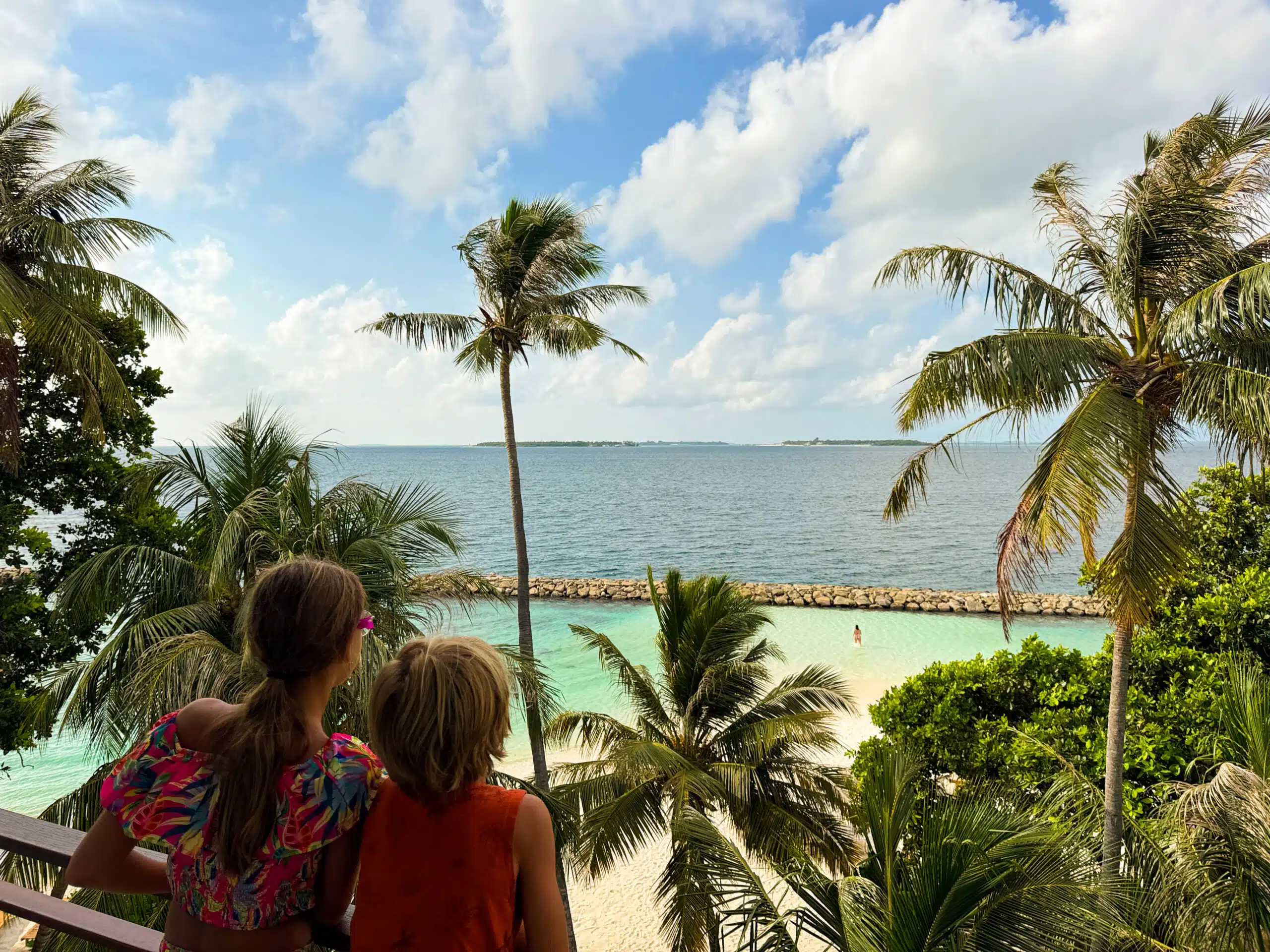
At resorts, the beach is yours. Most family resorts in the Maldives have calm lagoon areas specifically chosen for safe swimming, and the shallow sandy bottoms mean children can wade in confidently. Some resorts also have lifeguards, though this varies. There are no currents, no boats zooming past, and no shared use with the local community.
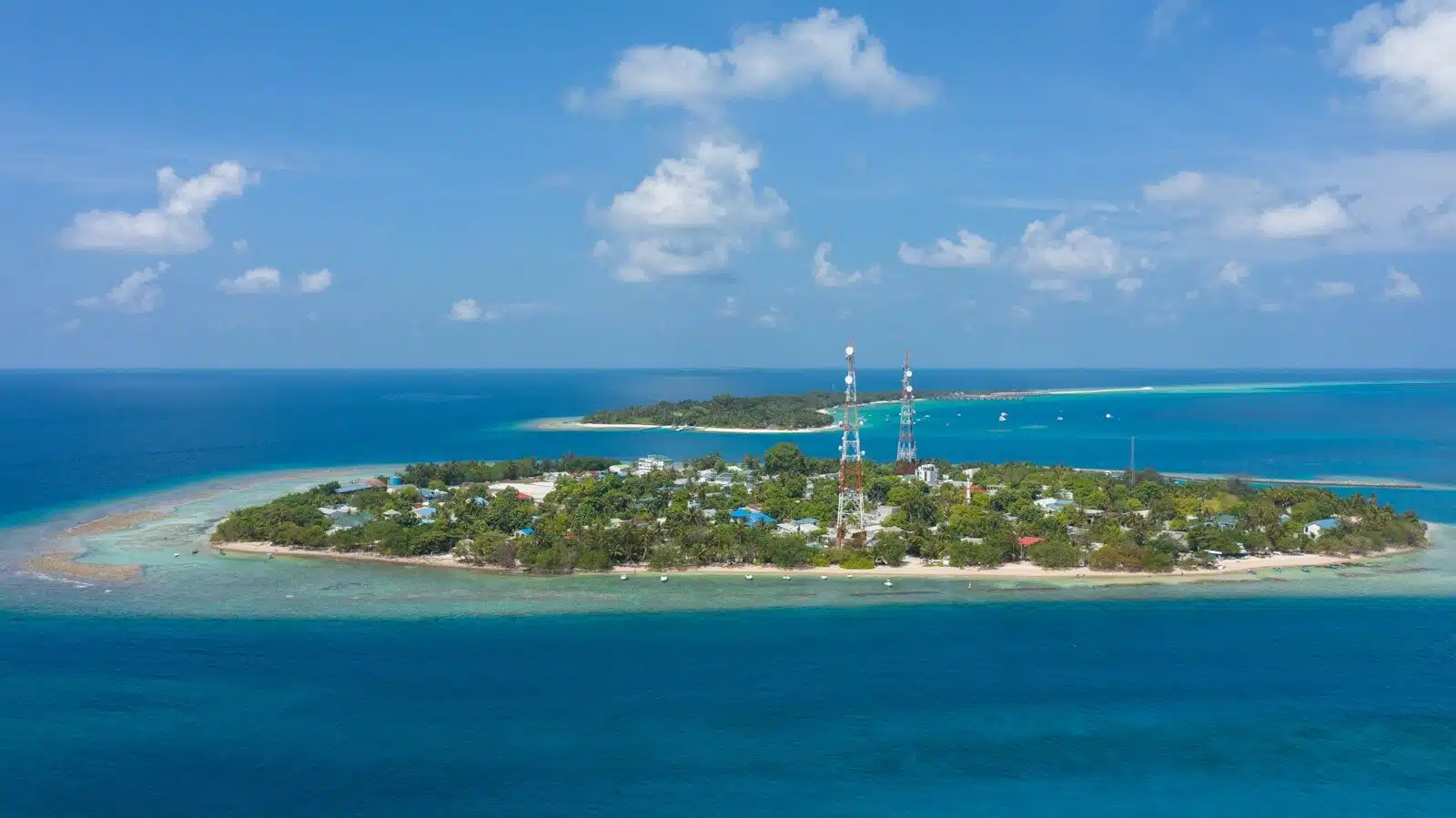
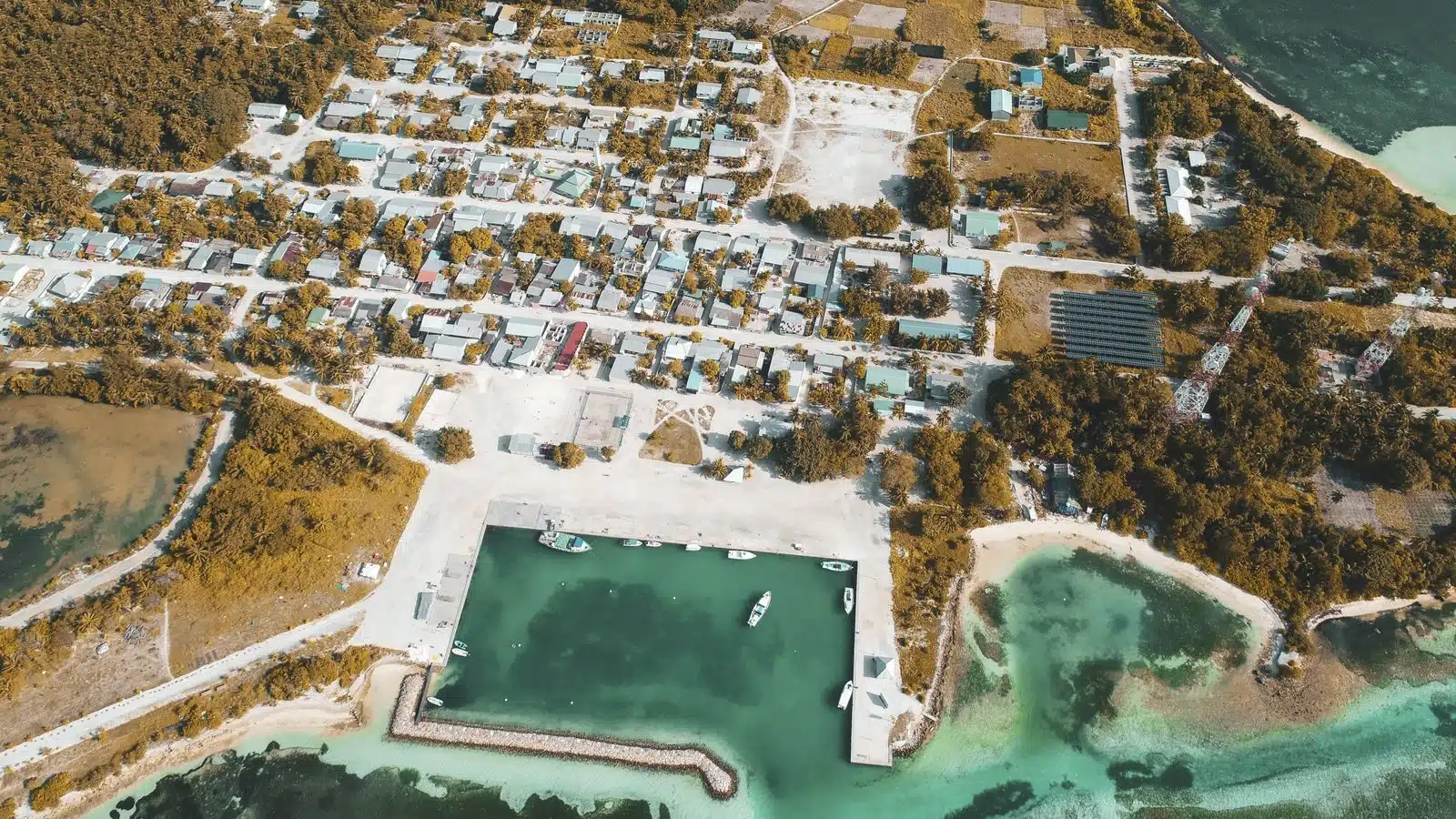
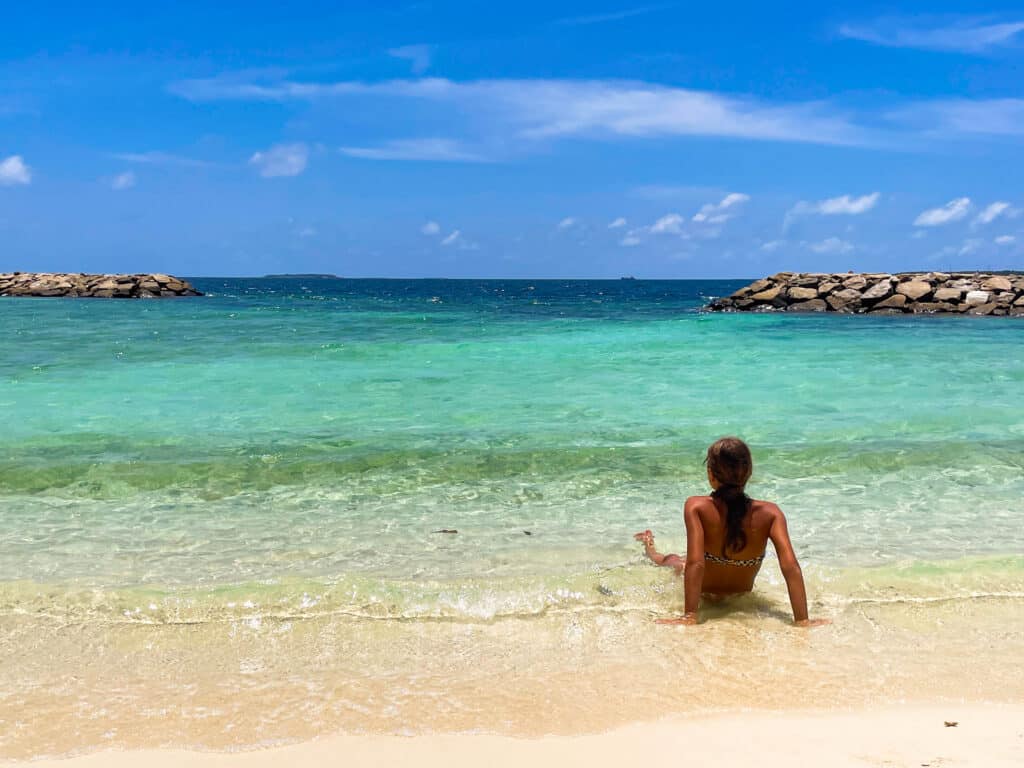
On local islands, the situation is more nuanced. Every inhabited local island has a designated “bikini beach” where tourists can swim in swimwear and children play freely. These are real beaches with beautiful water — but they are typically unguarded, and the depth and current can vary significantly by island and season. Dharavandhoo's bikini beach, for example, is calm and manageable. Other islands have bikini beaches with stronger currents or sharper drop-offs. Always research the specific island's beach conditions before booking with young children.
One key rule on local islands: outside the designated bikini beach area, swimwear is not appropriate out of respect for the local Muslim community. This is easy to manage with older children; with toddlers roaming freely, it requires more constant awareness.
Medical care
Resorts at the upper-mid and luxury level typically have a nurse or doctor on the island. This is a real practical consideration with small children — fevers, ear infections, and coral grazes happen. In an emergency, resorts also have direct evacuation procedures.
Local islands have limited or no medical facilities. The nearest clinic may be on a neighbouring island, and serious issues require a speedboat to Malé. This doesn't make local islands dangerous — the Maldives is a very safe destination — but it's worth knowing if you have children with specific health considerations or if you're travelling with very young babies.
Transfer reality
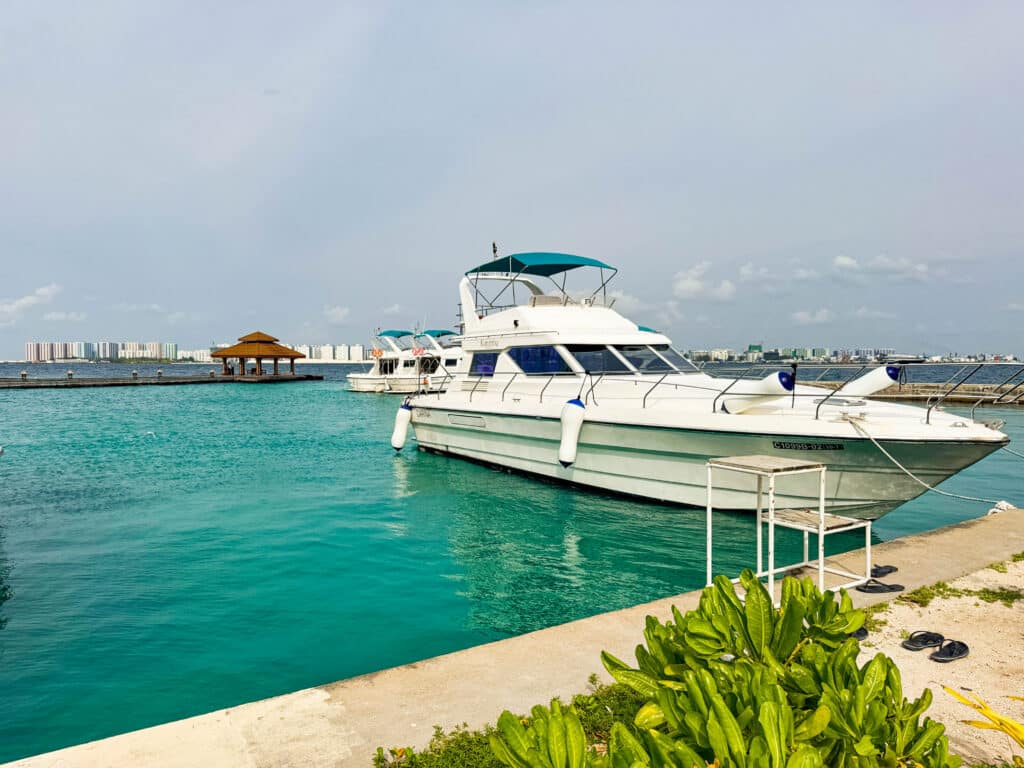
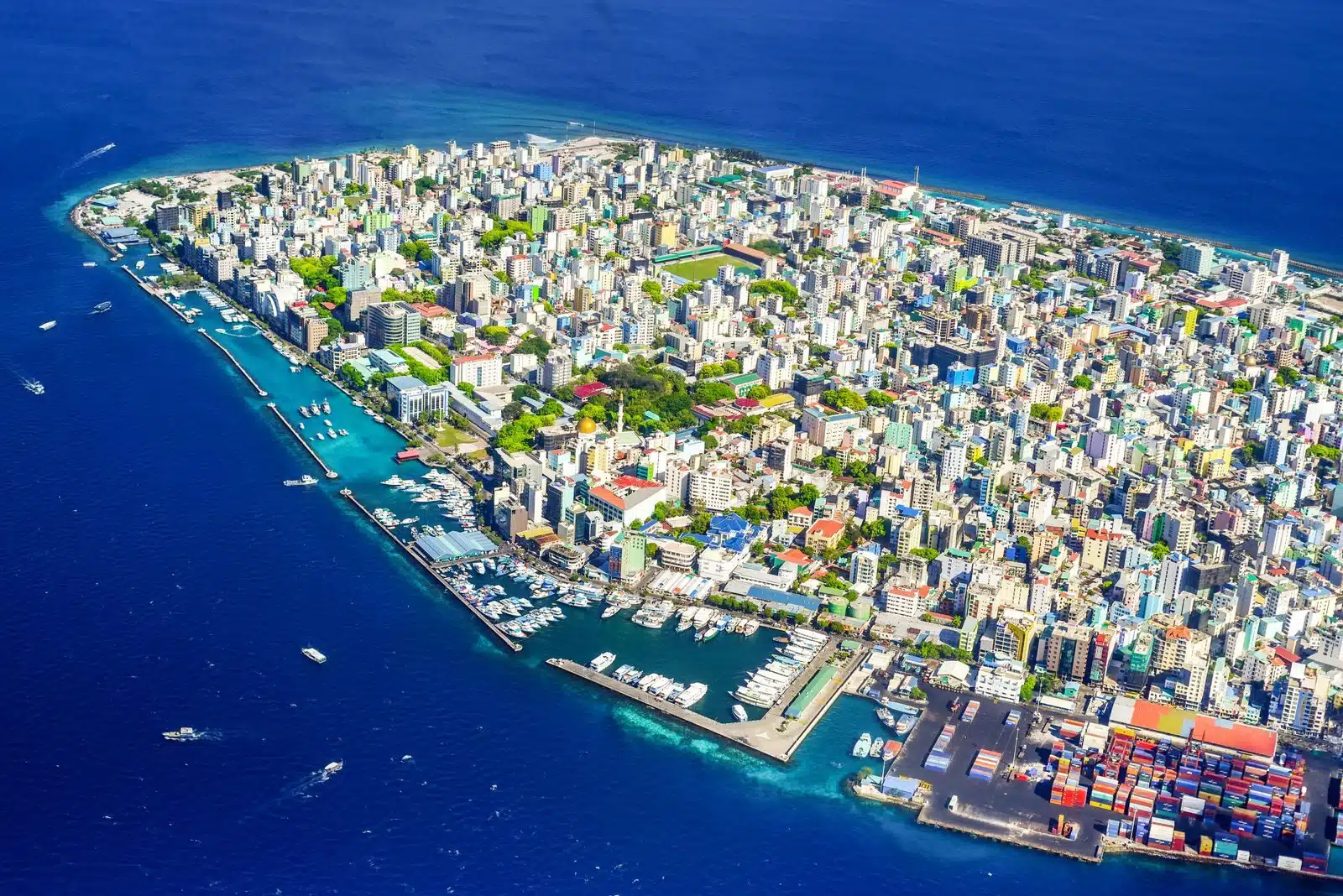
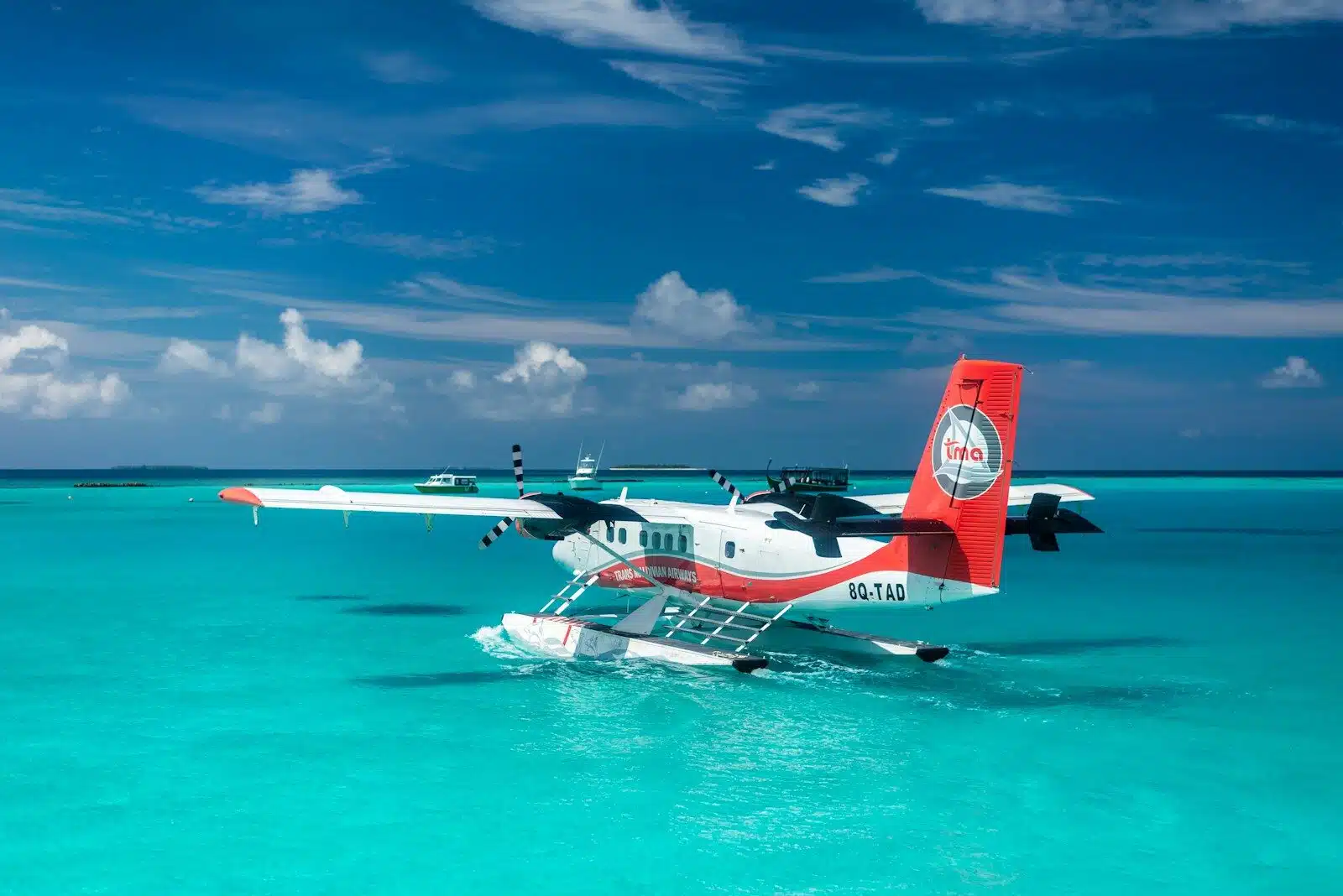
One of the biggest practical differences for families. Resort transfers, especially near Malé, are typically 10–45 minutes by speedboat — manageable even for babies and nervous travellers. More remote resorts require seaplanes or domestic flights, which add time and complexity but are generally smooth.
Local island ferries are a different experience. The government ferry to Dharavandhoo, for example, takes about 2 hours 15 minutes from Malé and costs around $50 per person one way. We travelled with our kids and managed — but the first hour was genuinely rough, and even with anti-nausea tablets, the motion was intense. The return journey was calmer but arrived three hours late due to technical issues. Ferry schedules are also limited: most islands have ferries only a few days a week, often not on Fridays. For families with babies or children prone to seasickness, private speedboat transfers to local islands are well worth the additional cost — the same journey typically takes 30–45 minutes instead of 2+ hours.
One practical tip that families often overlook: when travelling from a local island back to Malé for your onward flight, build in a buffer night. Boats — whether public ferry or private speedboat — can be delayed, cancelled, or rerouted due to weather or technical issues. Arriving back in Malé the morning of an international flight with children in tow is not a comfortable situation. An extra night in Hulhumale or near the airport removes that stress entirely. And if the timing works, that buffer night can double as a short resort stay — even one night at Kurumba Maldives or Hard Rock Hotel Maldives (both 10–15 minutes from the airport) makes for a memorable final night without a major extra cost.
Food & Dining: What Your Kids Will Actually Eat
At resorts
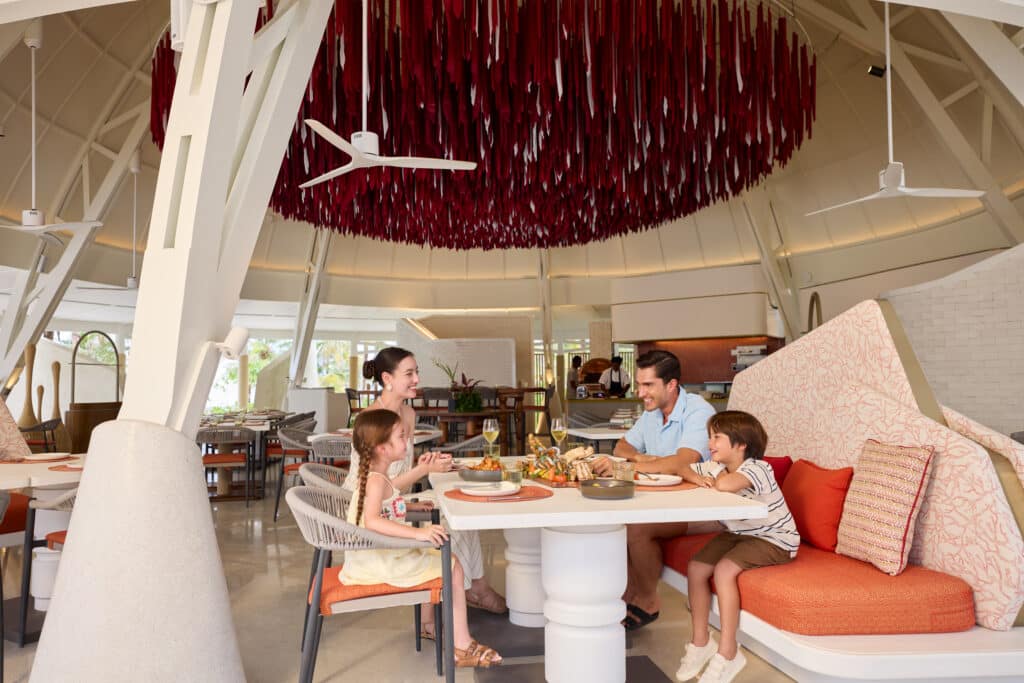
Resort food is generally excellent for families. Most mid-range and above resorts have dedicated children's menus at at least one restaurant, and many offer all-inclusive meal plans that take all the guesswork out of feeding children. Buffet restaurants are common and very family-friendly — kids can eat what they like, allergies are usually well-handled at larger properties, and breakfast in particular tends to be substantial.
At Kurumba Maldives, the lunch buffet was a genuine highlight — fresh, varied, well-presented, and a hit with the kids. The teppanyaki restaurant for dinner was pure theatre: chefs throwing eggs, fire shows, and performance cooking that kept the children captivated until well past bedtime. At Hard Rock Hotel Maldives, the kids' menu was included at lunch, and dinner at Ms Olive Oyl — a Mediterranean restaurant with feet-in-the-sand dining — offered plenty of choices for all ages.
The trade-off at resorts: restaurant prices are high, alcohol markups are steep if you're not on all-inclusive, and a family dinner at a mid-range resort restaurant will realistically cost $120–200 for four people without drinks. All-inclusive is worth seriously considering for families — it removes all pricing anxiety and lets everyone order without mental maths.
On local islands
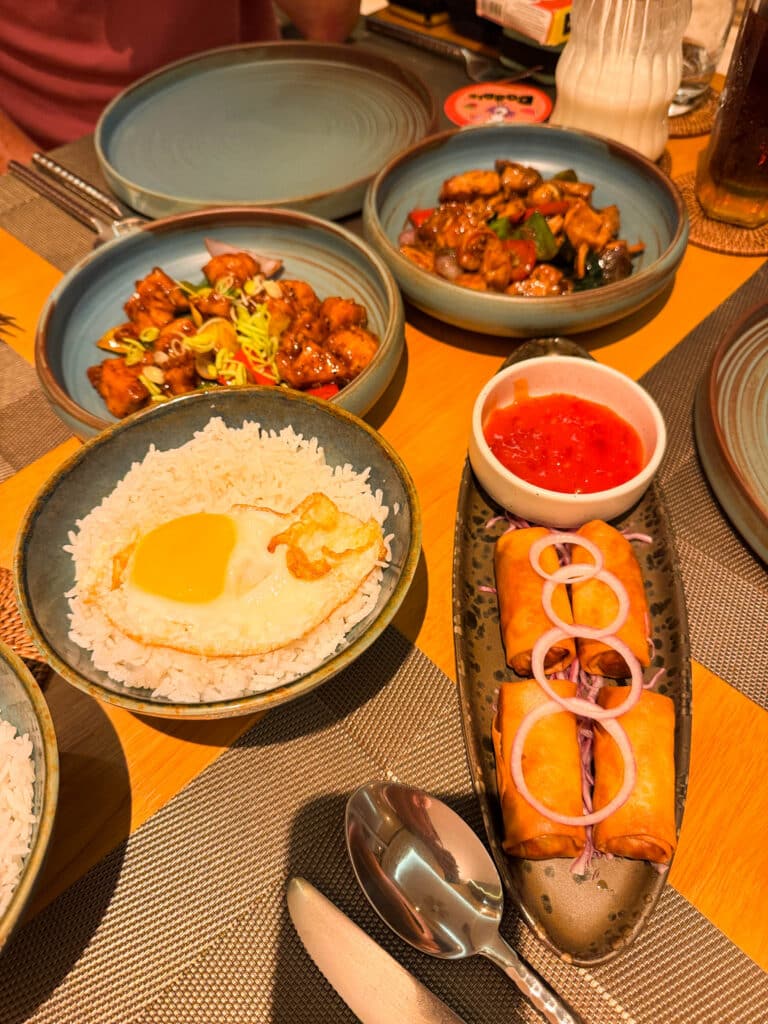
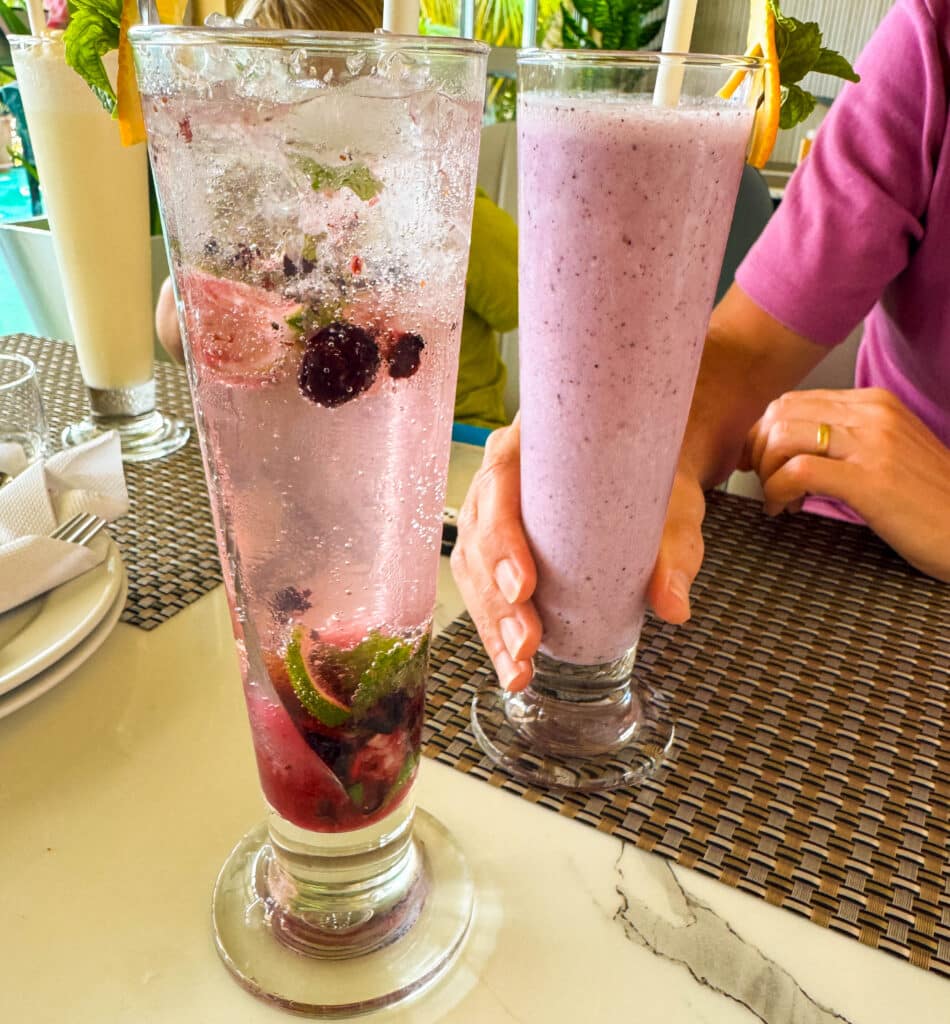
Local island restaurants are genuinely good — but they are designed for adults, not families. Most serve a mix of Maldivian cuisine, grilled fish, and simple international options. Kids who eat adventurously will be fine. Picky eaters may find the options limited, and children's menus essentially don't exist.
At Dharavandhoo, we ate at local restaurants throughout our stay and the food was authentic and affordable — a full meal per person for $15–25. Honey Bunny restaurant deserves a special mention: it overlooks the island's tiny airstrip, so planes take off and land just metres away while you eat. Our kids found this absolutely mesmerising and it became an unexpected mealtime highlight.
The practical reality: pack familiar snacks for the ferry and for evenings when restaurants close early. Supermarkets exist on inhabited islands and are good for basics, but don't expect to find children's cereals, specific dairy products, or allergen-labelled food.
Alcohol note: Local islands are dry. No beer with dinner, no wine on the beach. This is non-negotiable on any inhabited Maldivian island and should be a considered factor if it matters to you.
Activities & Marine Life: What Kids Will Remember Forever
The Maldives is one of the best places in the world for family marine experiences — and this is true whether you're staying at a resort or on a local island. The real difference isn't access to the experiences themselves, but price and proximity.
Resort marine life access
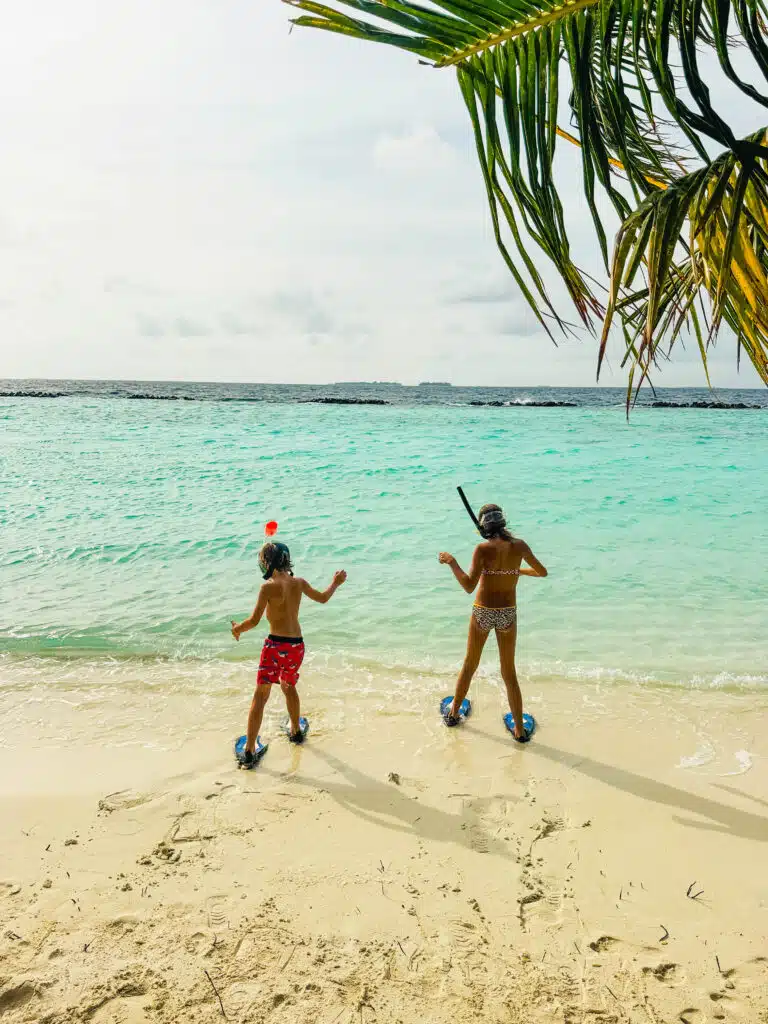
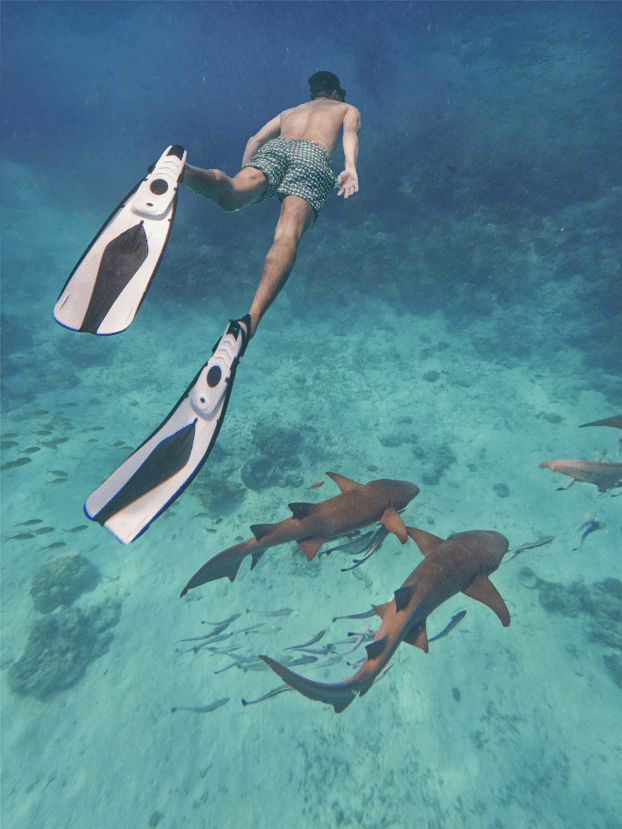
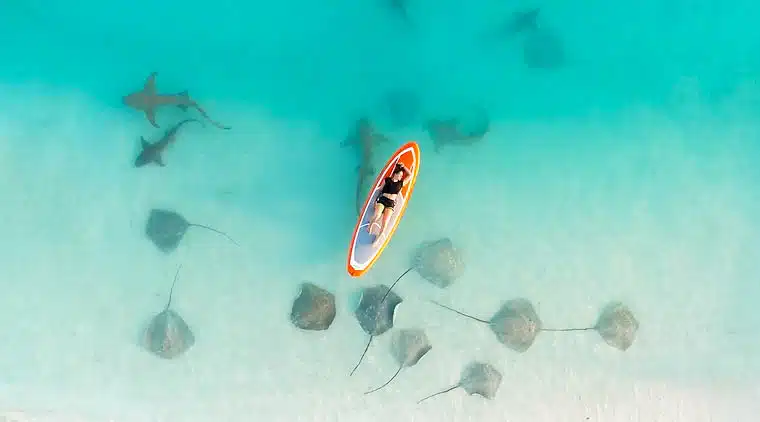
Resorts with good house reefs offer snorkelling directly from the beach or shore. At Kurumba, we snorkelled from the beach on our first morning and encountered reef fish, and on the last day came across a school of unicornfish and two reef sharks near the Japanese restaurant area — the kids were beyond excited. The dolphin sunset tour was one of the highlights of our entire trip: a group of spinner dolphins leaping around the boat as the sky turned orange.
Most resorts also offer guided snorkelling trips, manta ray excursions, glass-bottom boat tours, and diving. These are well-organised, safe, and easy to book — ideal for younger children and those new to snorkelling. The catch is price: resort-organised excursions typically cost 3 to 4 times what the same trip costs when booked locally on a guesthouse island.
Local island marine life access
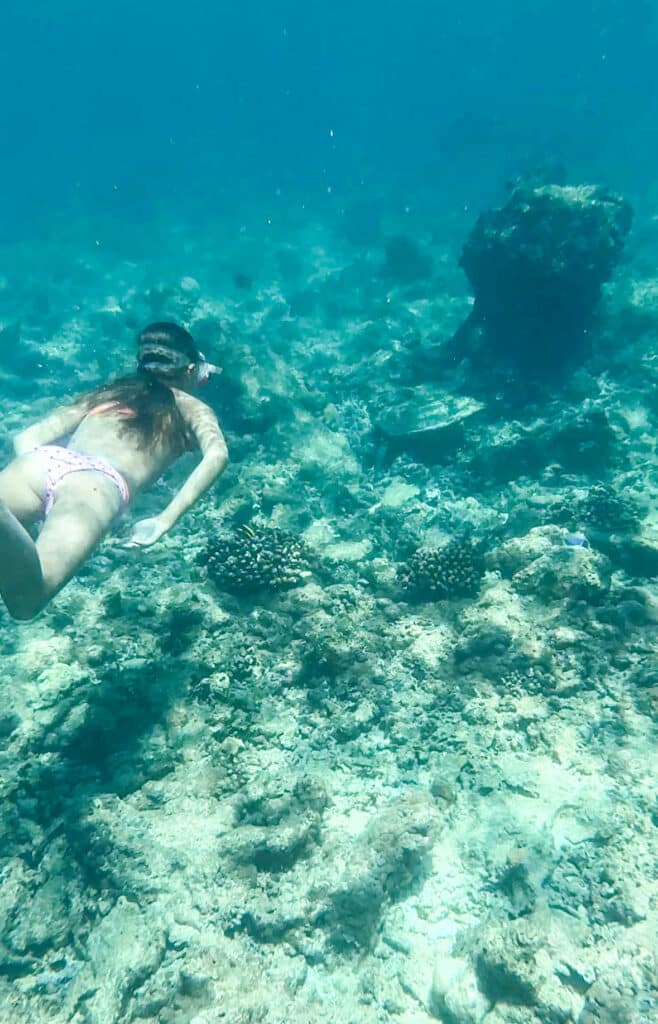
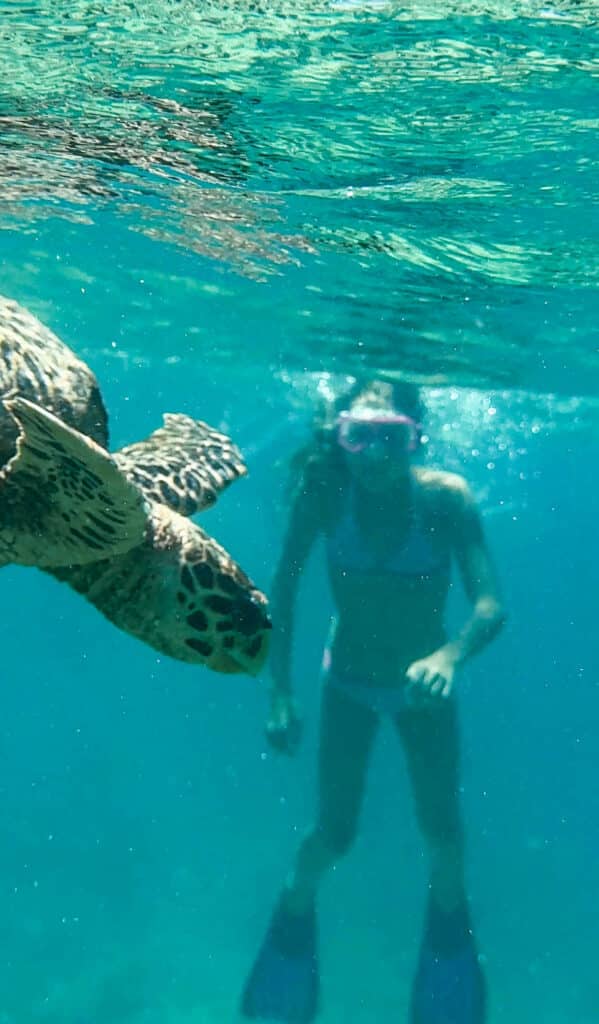
The marine life experiences available from local islands are the same ones resorts sell — but at a fraction of the cost. Manta ray trips, whale shark tours, turtle snorkelling, sandbank excursions: all bookable through local dive schools, typically for $40–80 per person versus $150–250+ at a resort.
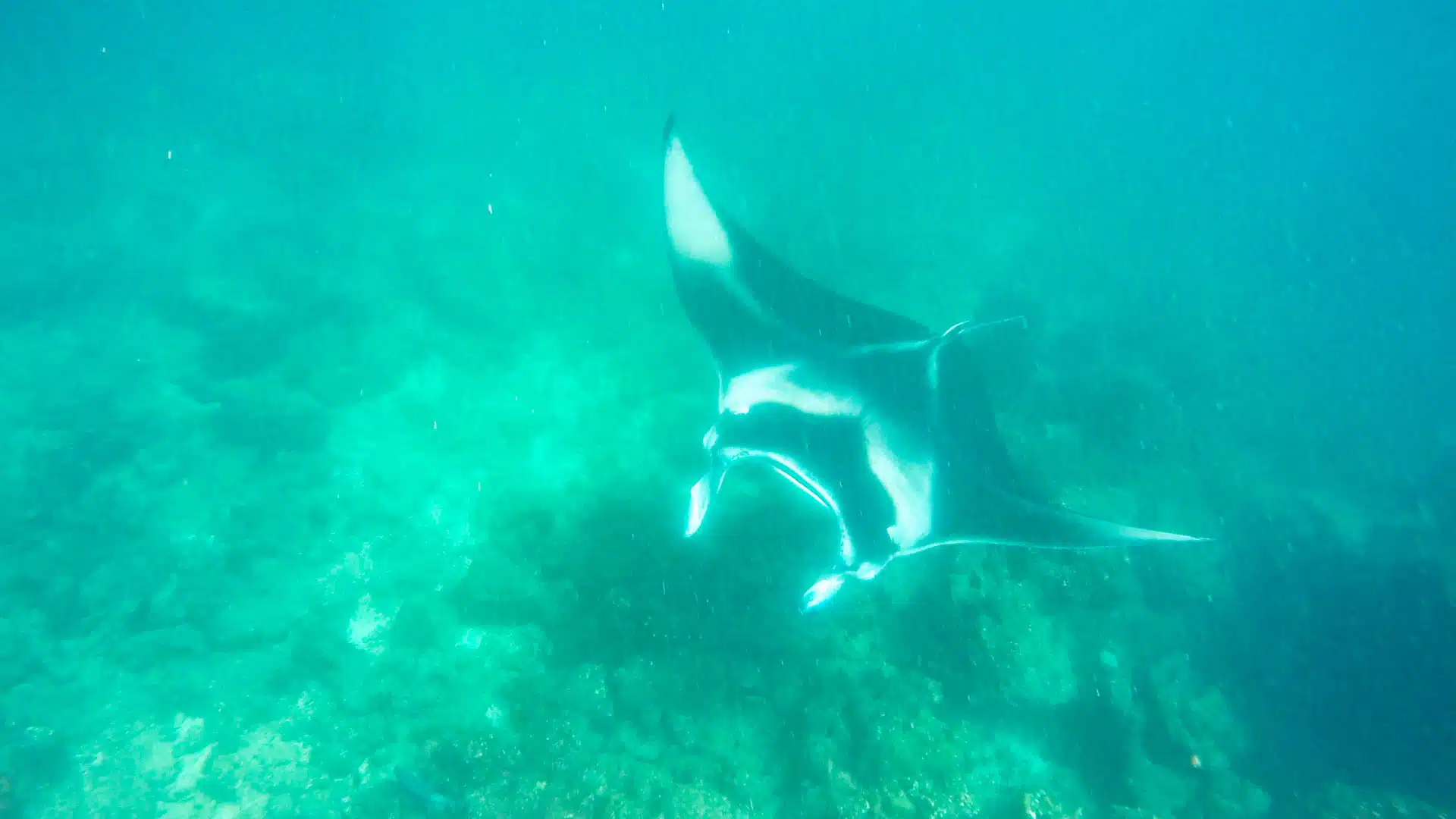
Dharavandhoo is in Baa Atoll, a UNESCO Biosphere Reserve and one of the best places in the world to see manta rays. We were called early one morning with a manta ray alert and were in the water within 15 minutes. The first spot was quiet, but the second had around 15 mantas gliding below us in the blue water. Our kids talked about it for days.
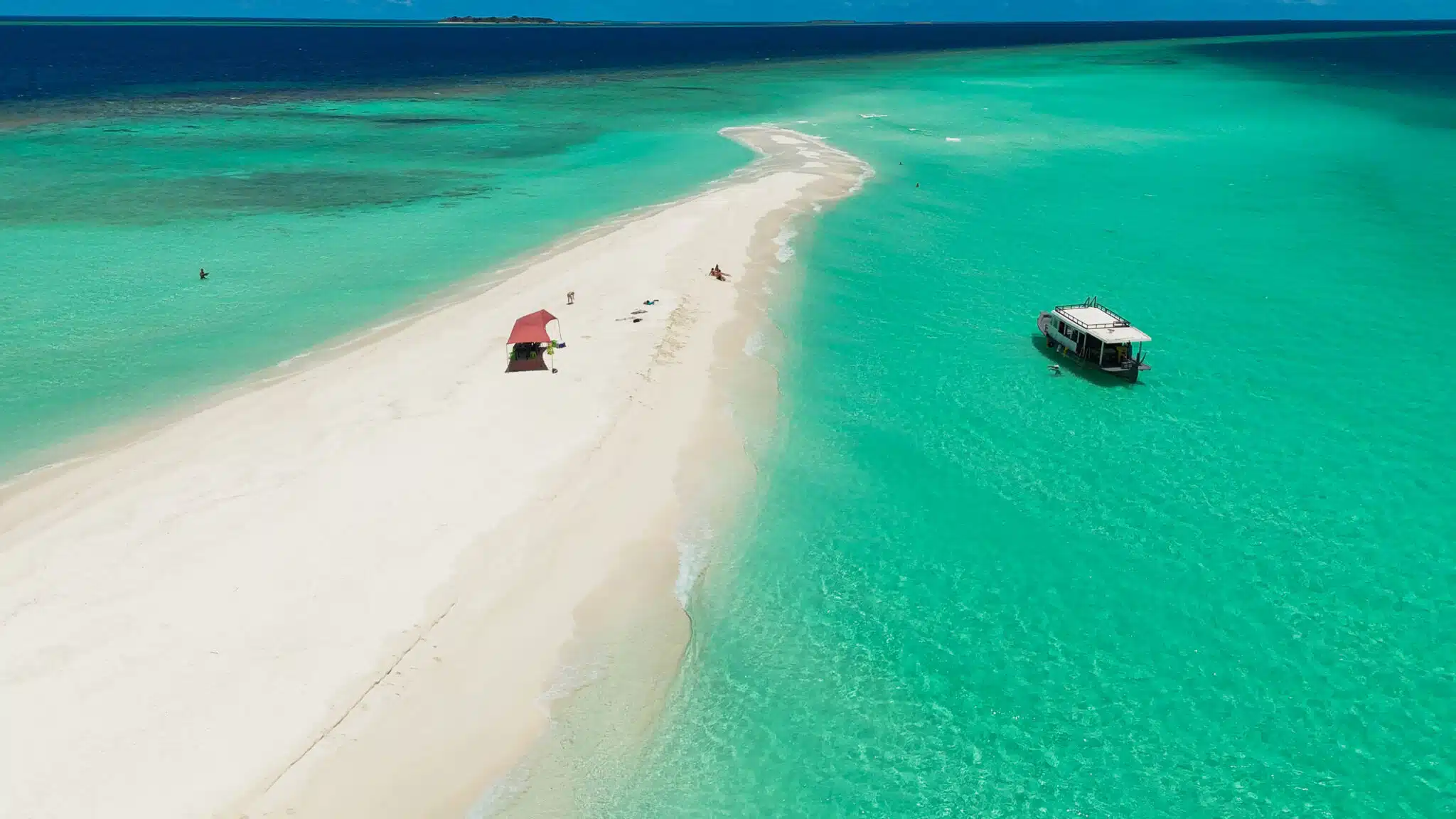
The turtle and sandbank excursion booked through the local dive school was equally unforgettable: snorkelling alongside multiple sea turtles at Turtle Reef, then to a private sandbank surrounded by nothing but ocean. We also spent multiple mornings waiting for whale shark alerts — we never saw the whale shark itself, which is an honest outcome worth including here. The tip we wish we'd known on arrival: night swimming with whale sharks was available every evening, and we only discovered this on our last day. Ask about this on your first morning, not your last.
For a good overview of what marine life to expect at different points during your trip, our Maldives activities guide covers snorkelling, manta rays, whale sharks and turtles in detail.
Activities by age
| Age group | Best resort activities | Best local island activities |
|---|---|---|
| Baby / toddler (0–3) | Shallow resort pool, beach play, glass boat | Not recommended for local islands |
| Young children (4–7) | Kids club, snorkelling from beach, dolphin tour | Beach play, snorkelling (calm conditions), beach excursion |
| School age (8–12) | Snorkelling, watersports, kayaking, kids club | Manta ray trips, turtle snorkelling, sandbanks, local market |
| Teenagers (13+) | Intro diving, watersports, surf | Diving, whale shark tours, boat trips, freedom to explore |
Kids Clubs: The Resort Advantage
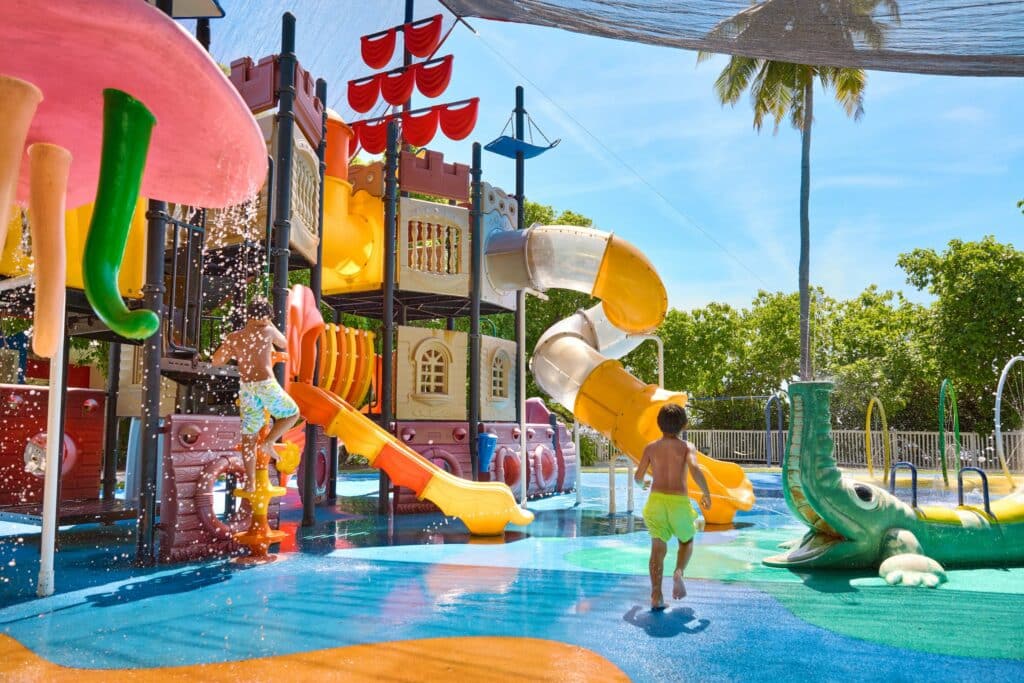
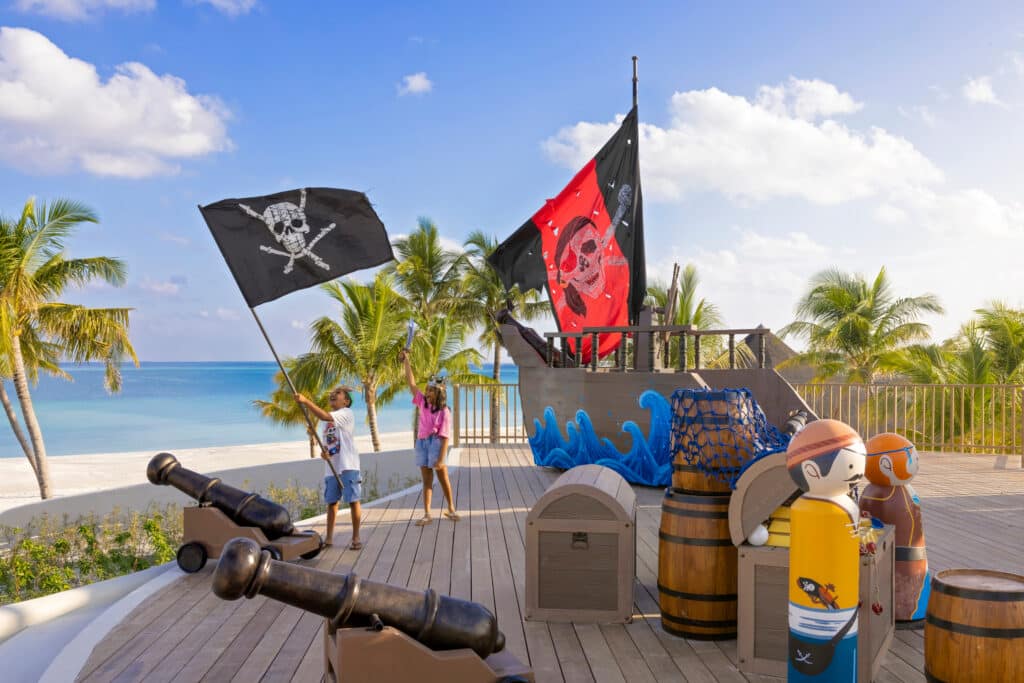
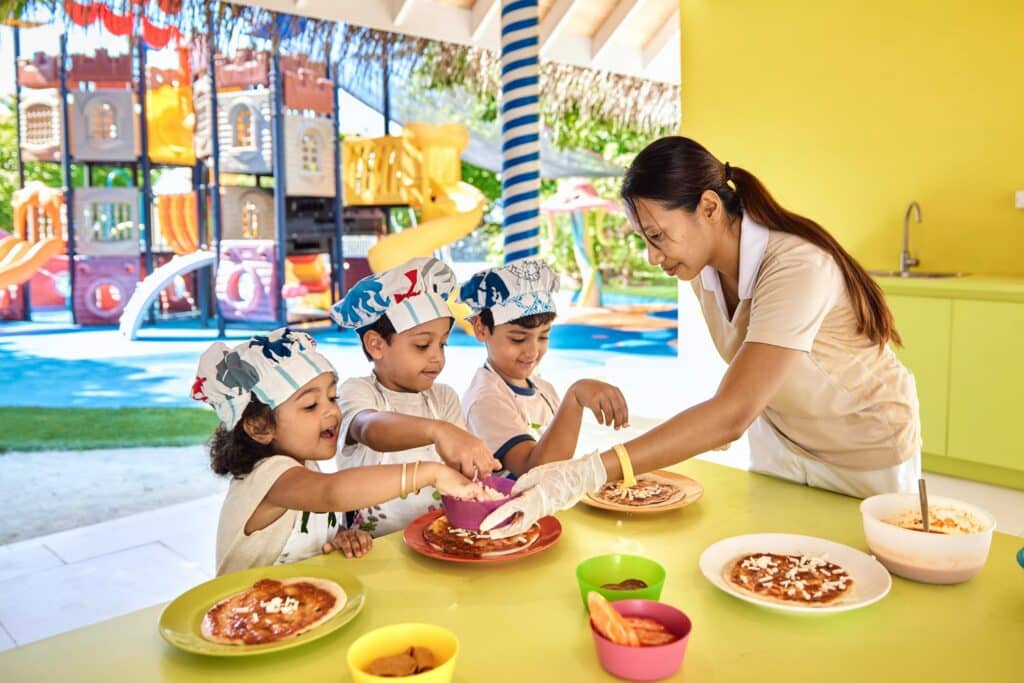
For families with children aged 4–12, the kids club at a well-run resort is genuinely transformative. It gives children their own space, activities, and peer group — and it gives parents an hour or two of actual holiday. The Majaa Kids Club at Kurumba runs crafts, sports, cooking workshops, and mini discos for ages 4–12. Our kids used it happily and independently, which gave us time to snorkel, have coffee, and actually relax.
Hard Rock Hotel Maldives also has a kids club, plus the added draw of a large main pool with a water slide that our children essentially refused to leave during lunch.
Local islands have no kids clubs. Children are welcome everywhere, but organised children's programming simply doesn't exist. This matters less for teenagers and independent older children, but for the 4–8 age range, the resort kids club is one of the clearest arguments for choosing a resort.
Maldives with Kids: Best Resorts for Families
Not all resorts are equal for families. These are the properties best suited to travelling with children, based on kids' facilities, beach conditions, ease of transfer, and overall family appeal:
For the most family-friendly experience near Malé:
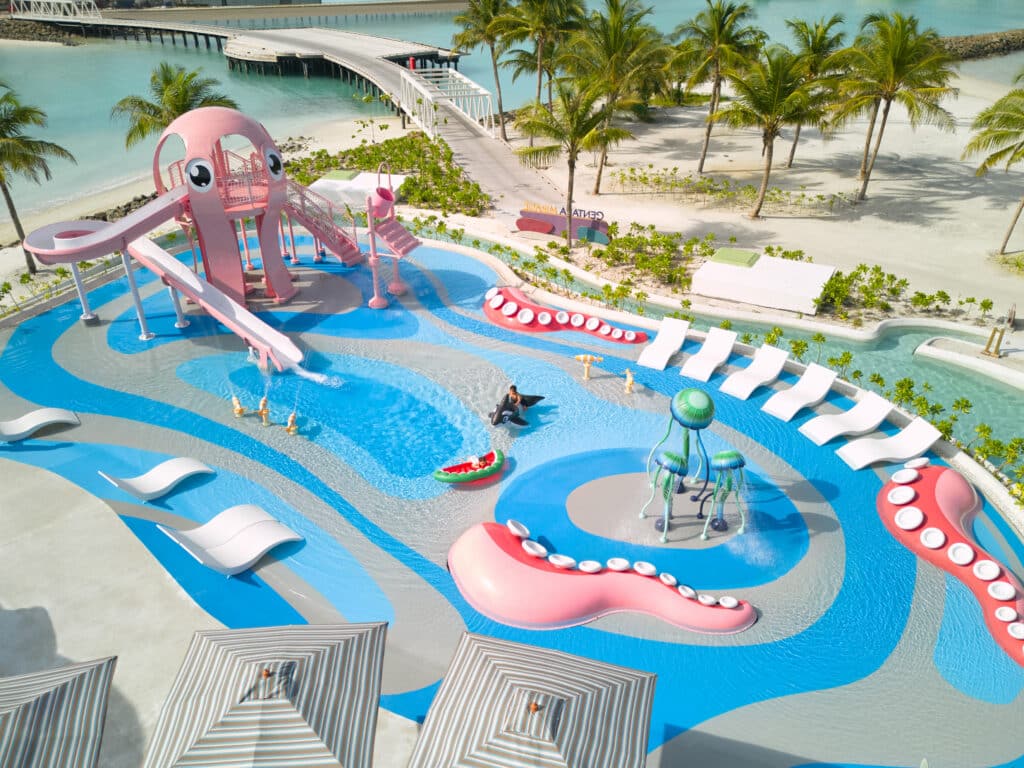
Centara Mirage Lagoon Maldives is arguably the most purpose-built family resort in the Maldives. Think water park slides, a lagoon pool designed for children, a dedicated kids club for ages 3–12, and an all-inclusive option that covers everything from snacks to activities. It's the resort equivalent of a children's dream holiday — and parents get the Maldivian setting to go with it. Rating: 9.5. Speedboat 40 minutes from Malé.
For a classic Maldives experience with kids:
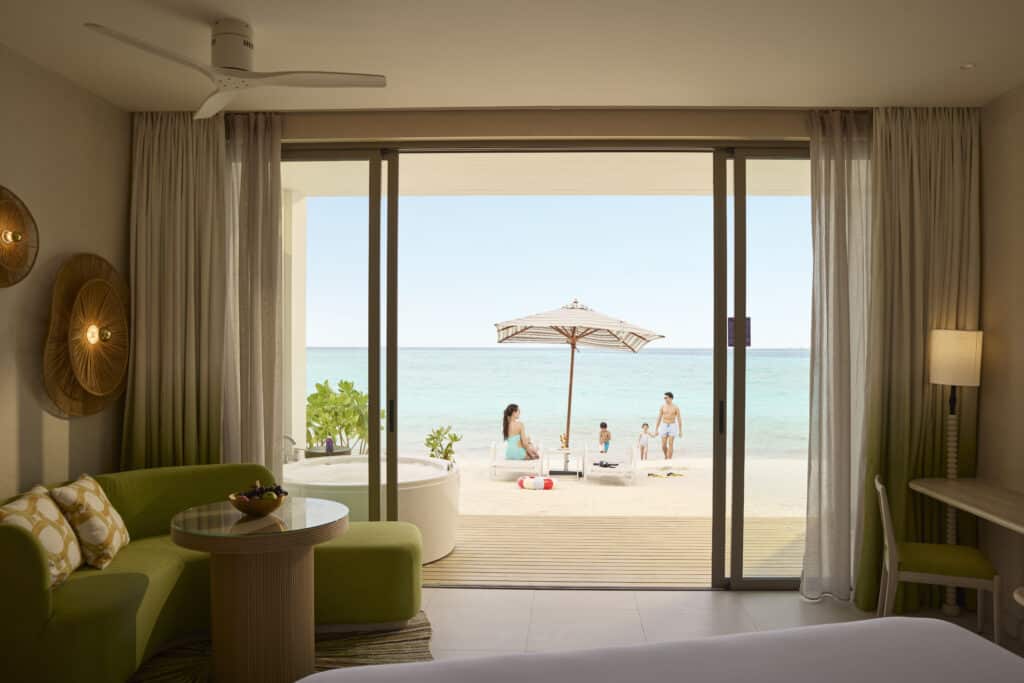
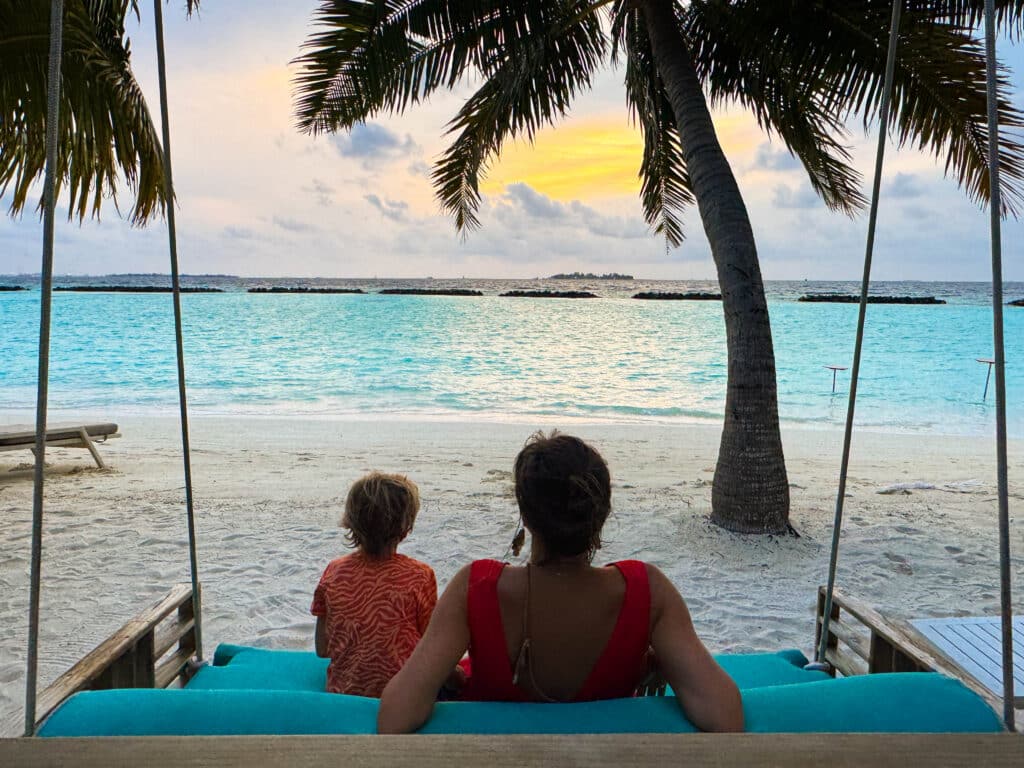
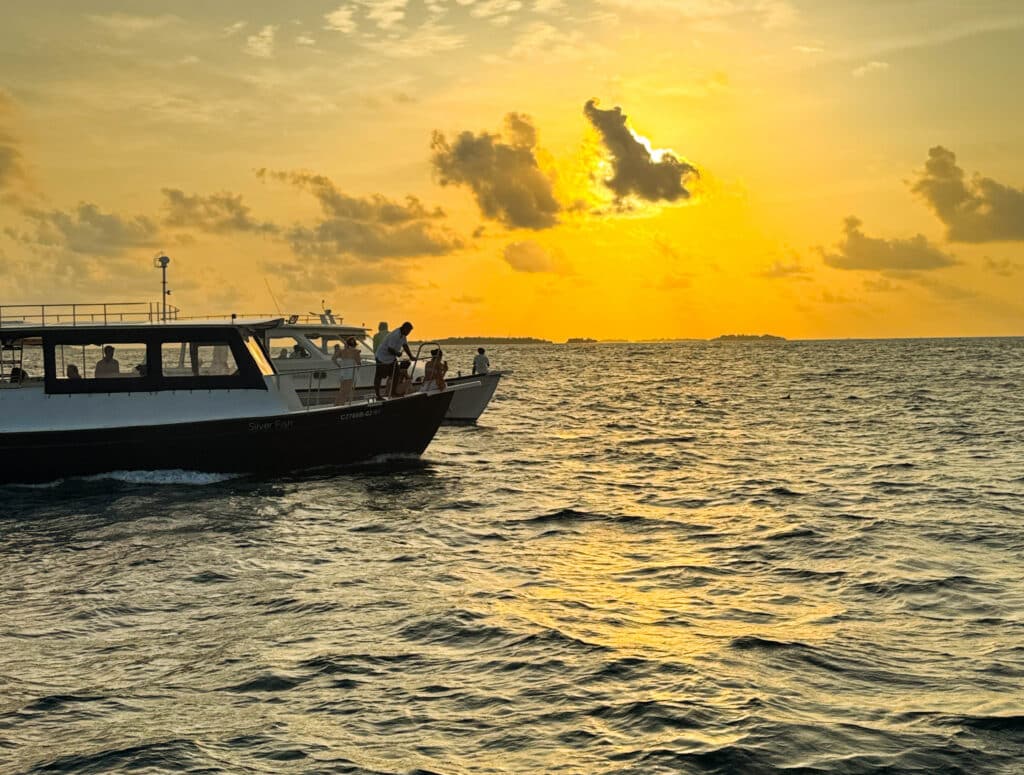
Kurumba Maldives — just 10 minutes from Malé by speedboat, making it the easiest family resort transfer in the islands. A lush, established island with 8 restaurants (including the teppanyaki dinner that became our personal trip highlight), Majaa Kids Club for ages 4–13, a good house reef, and a dolphin sunset tour that had our kids completely speechless. A brilliant first Maldives experience for families who want variety and comfort without a complicated journey. Rating: 9.0.
For energy, entertainment and fun:
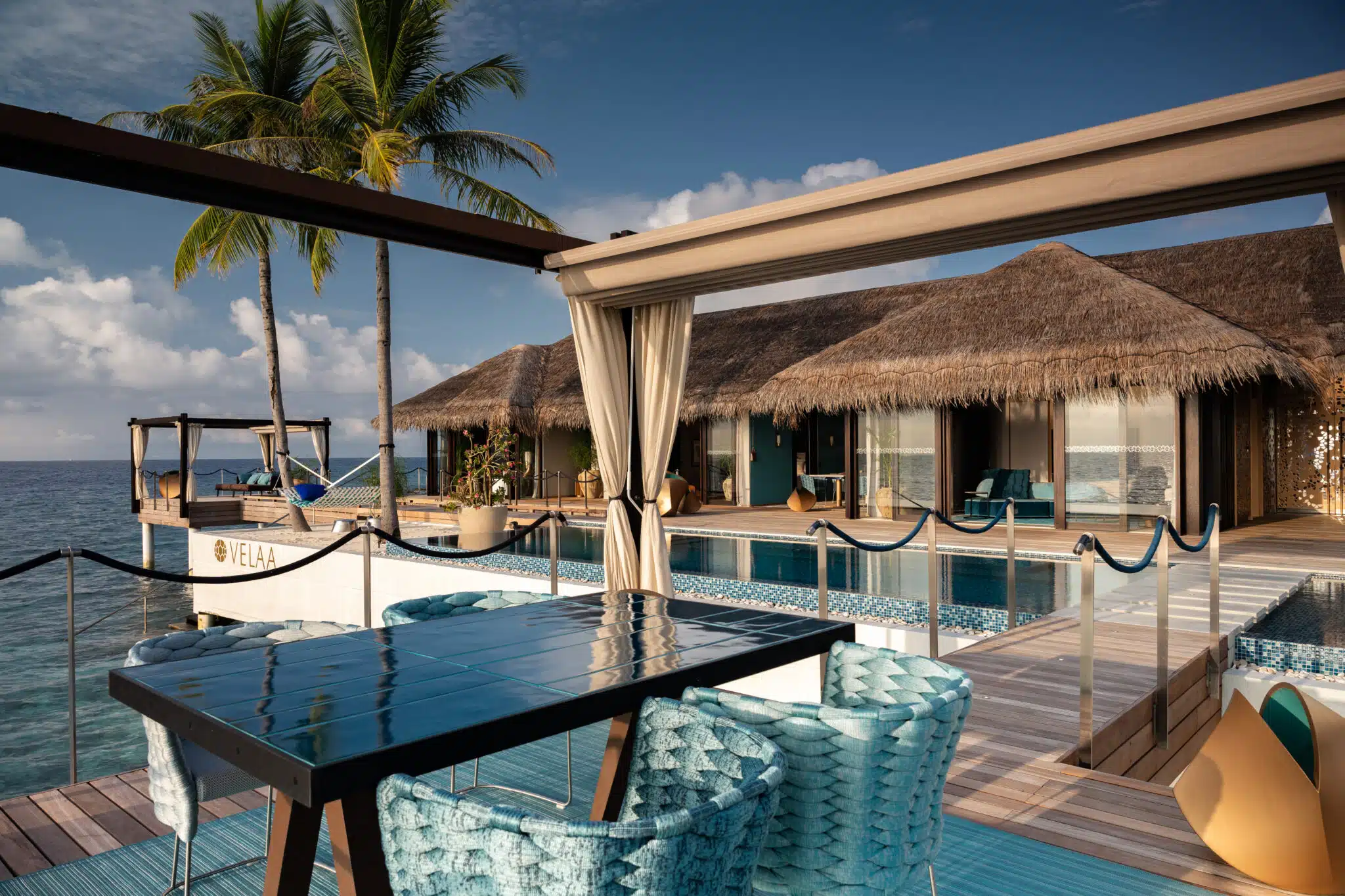
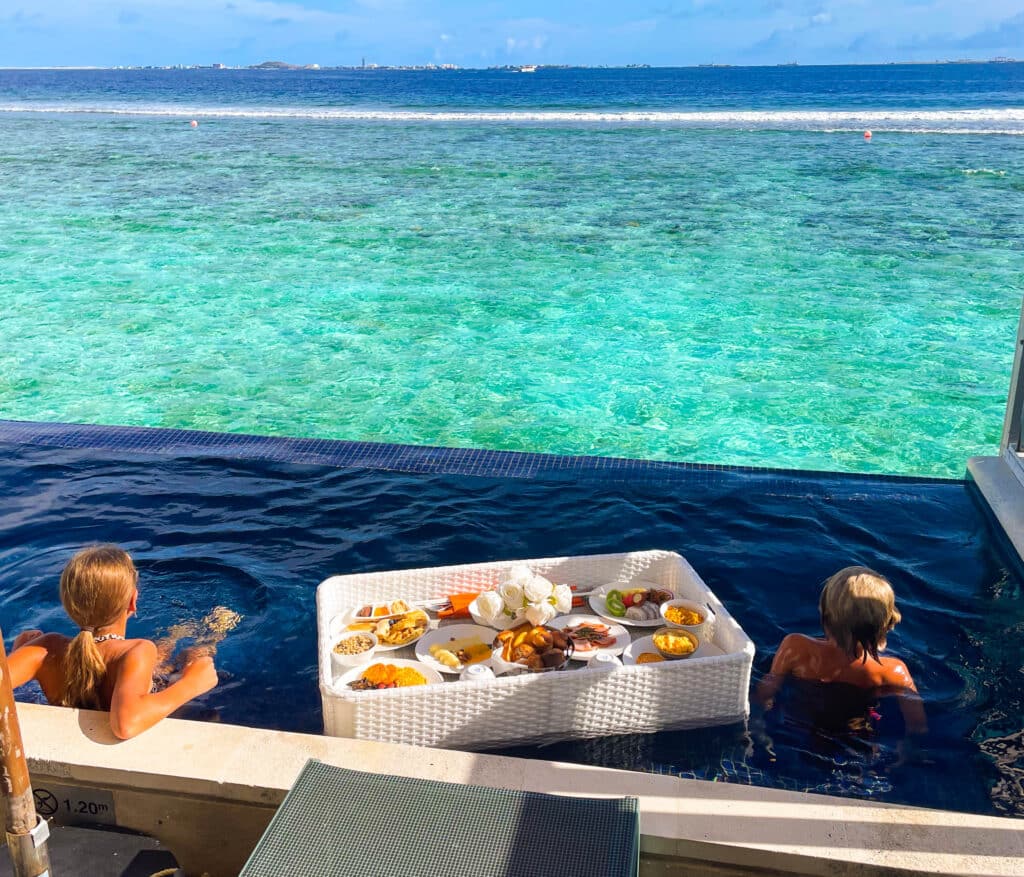
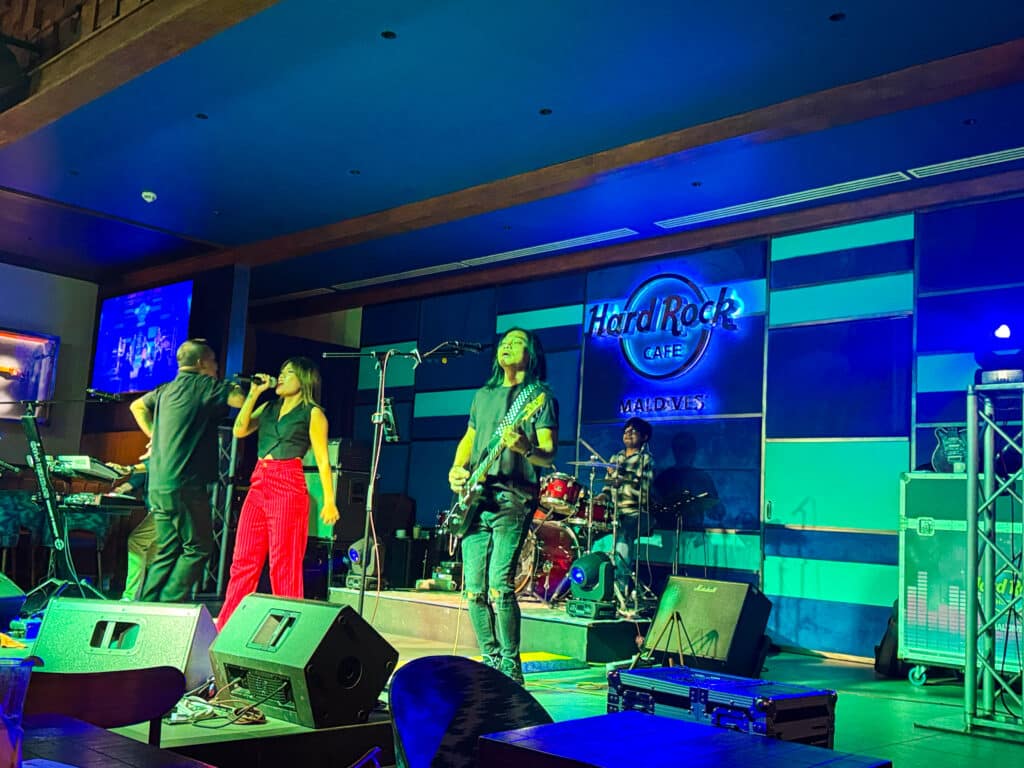
Hard Rock Hotel Maldives — music everywhere, a pool with a water slide the kids refused to leave, live DJ evenings, overwater villas with private pools, and kids often eat free. The night walk back along the illuminated bridge — with reef sharks and stingrays visible below — was an unexpected family highlight. And the floating breakfast in your overwater villa pool? The single most magical morning of our entire Maldives trip. Rating: 9.1. Speedboat 15 minutes from Malé.
For large-scale fun and all-inclusive:
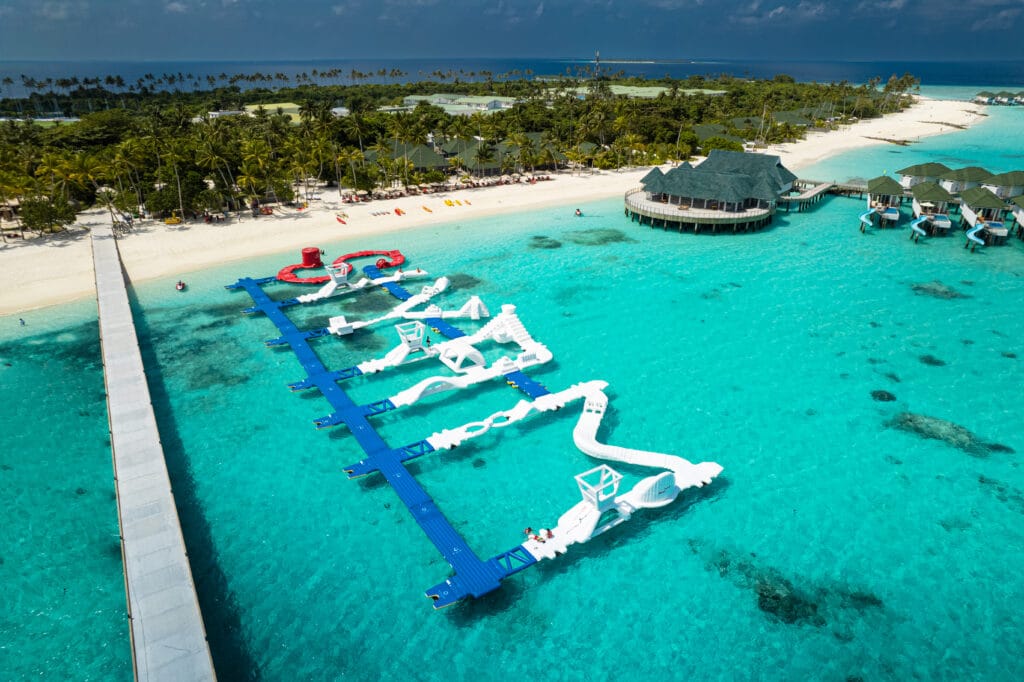
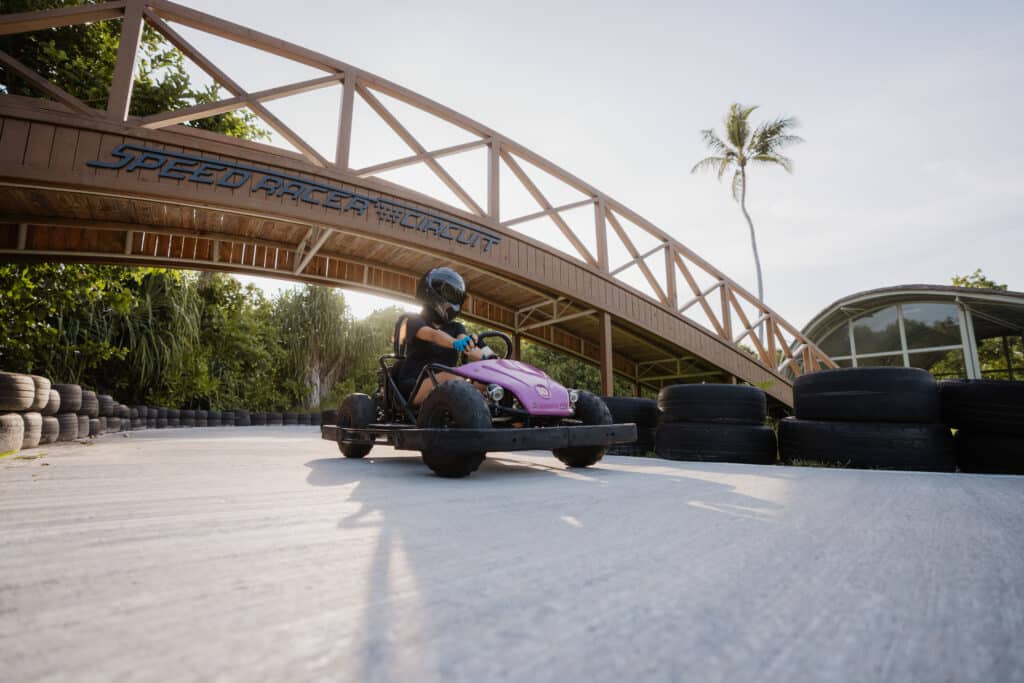
Siyam World Maldives — one of the largest resorts in the Maldives, with 10+ restaurants, a kids club (3–12), extensive watersports, and a full all-inclusive package. The resort has overwater villas, a large lagoon, and enough variety to keep children entertained for an entire week without leaving the island. For families who want maximum choice and entertainment in a single destination, Siyam World is hard to beat. Rating: 9.3. Located in Noonu Atoll (requires seaplane or domestic flight + speedboat).
For value with broad family appeal:
Kandima Maldives — a lively lifestyle resort with 10 restaurants, a kids club (4–12), watersports, and a relaxed, unpretentious atmosphere that suits families well. It's not ultra-luxury, but it delivers variety and energy at a lower price point than comparable resorts. Located in Dhaalu Atoll (domestic flight + speedboat), but worth the extra transfer for families who prioritise facilities over proximity to Malé. Rating: 8.8.

For a full overview of the best family resorts in the Maldives, we've put together a dedicated guide comparing the top options across all budgets.
Best Local Islands for Families
Not all local islands are equally suited to family travel. Key criteria: a safe, calm bikini beach; good access to marine life; reliable ferry or speedboat connections; and accommodation options that are comfortable enough for children.
Dharavandhoo (Baa Atoll) — Our personal top recommendation for families with children aged 7 and above. Exceptional manta ray snorkelling, calm bikini beach, turtle and sandbank excursions, whale sharks. The ferry is 2h15 and can be rough — consider a private transfer. Accommodation option: Kiha Beach, directly on the bikini beach. You can read the full Dharavandhoo guide here.
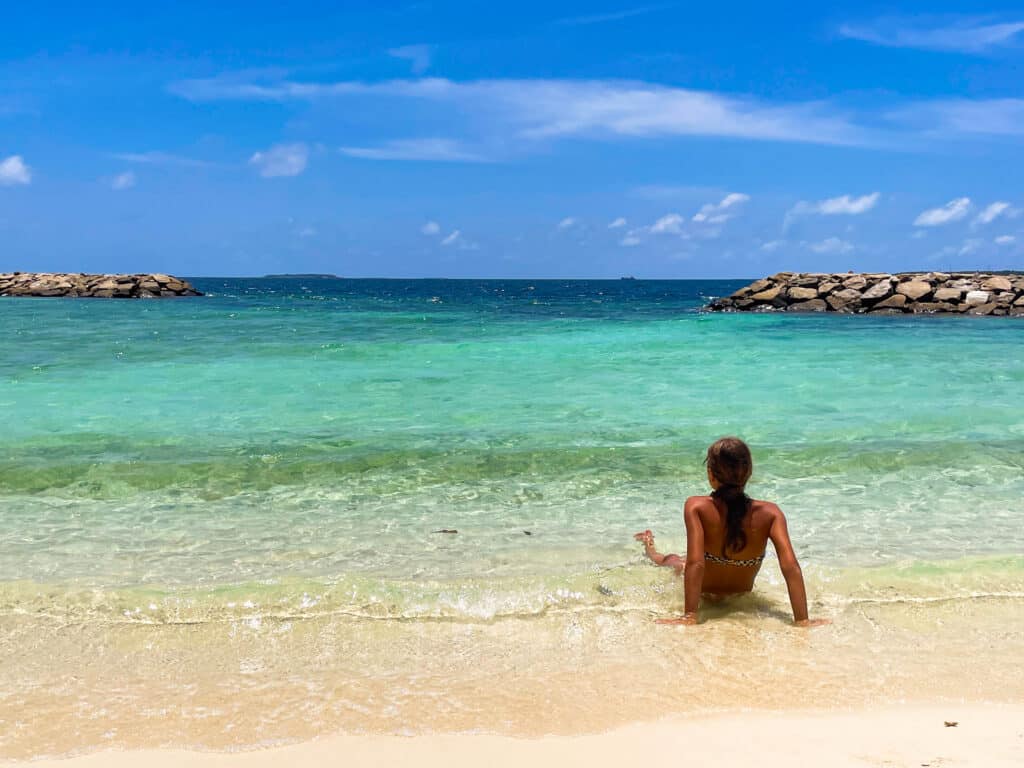
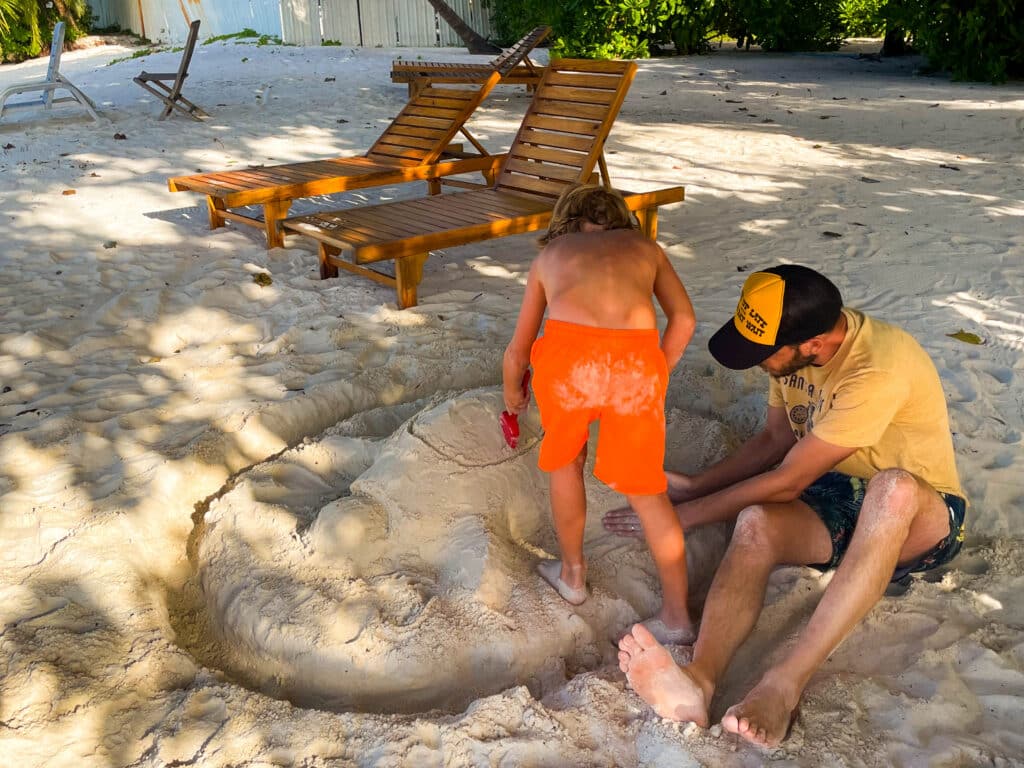
Maafushi (South Malé Atoll) — One of the most accessible and well-developed local islands in the Maldives, just 35–45 minutes from Malé by speedboat. Maafushi has a wide, well-maintained bikini beach that is calm and safe for children, a good range of guesthouses at different price points, and an excellent selection of excursions including manta ray snorkelling, sandbank trips, and turtle tours. It's also one of the few local islands where resort day trips are easy to organise — a great option if you want to give the kids a taste of resort life for a day. For families who want an accessible local island experience without a challenging transfer, Maafushi is the most straightforward choice. You can read here the full guide about local island Maafushi.
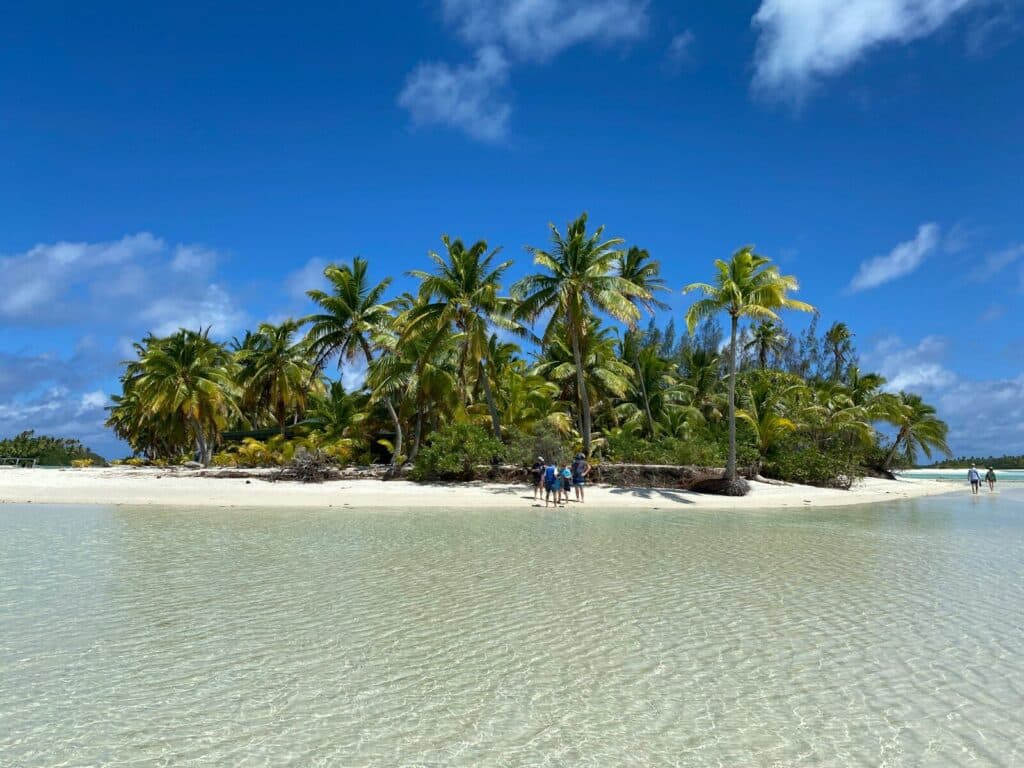
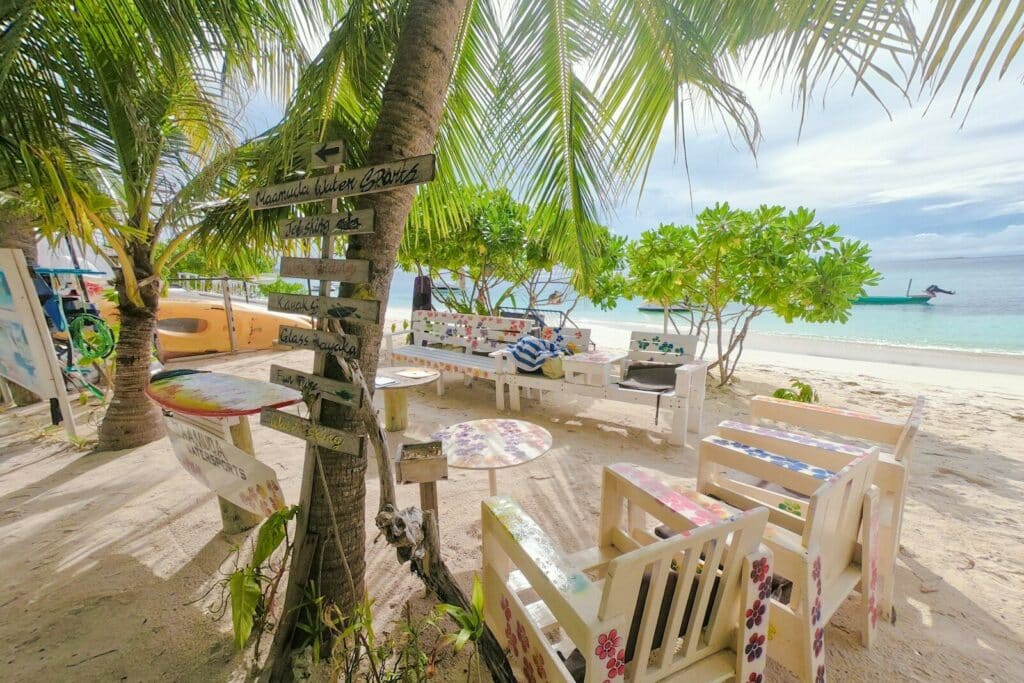
Thulusdhoo (North Malé Atoll) — About 35 minutes from Malé by speedboat, Thulusdhoo is a small, quiet island best known for its surf break but genuinely well-suited to families with older children. The bikini beach is calm and uncrowded, the island is compact enough to explore on foot in 20 minutes, and excursions to nearby reefs and sandbanks are easy to arrange. For families with teenagers or children aged 10+ who want a quieter, more authentic local island vibe without a long transfer, Thulusdhoo is an underrated option. Read here more about Thulusdhoo Maldives: The Best Local Island for Surfing, Budget Stays & Easy Island Life.
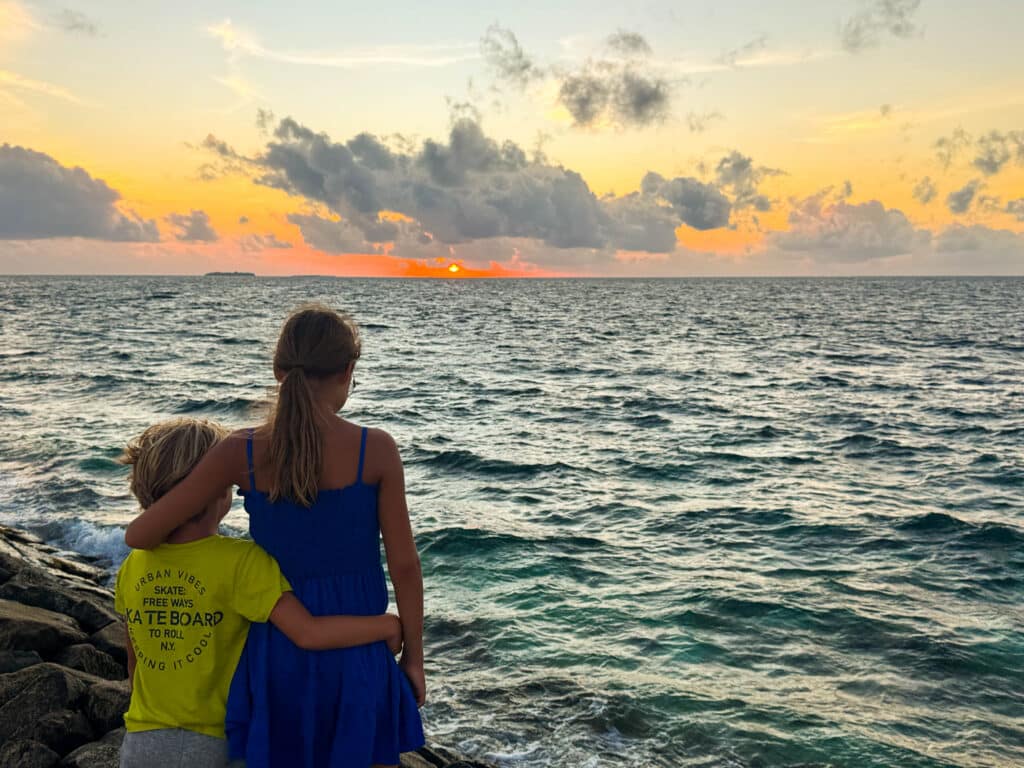
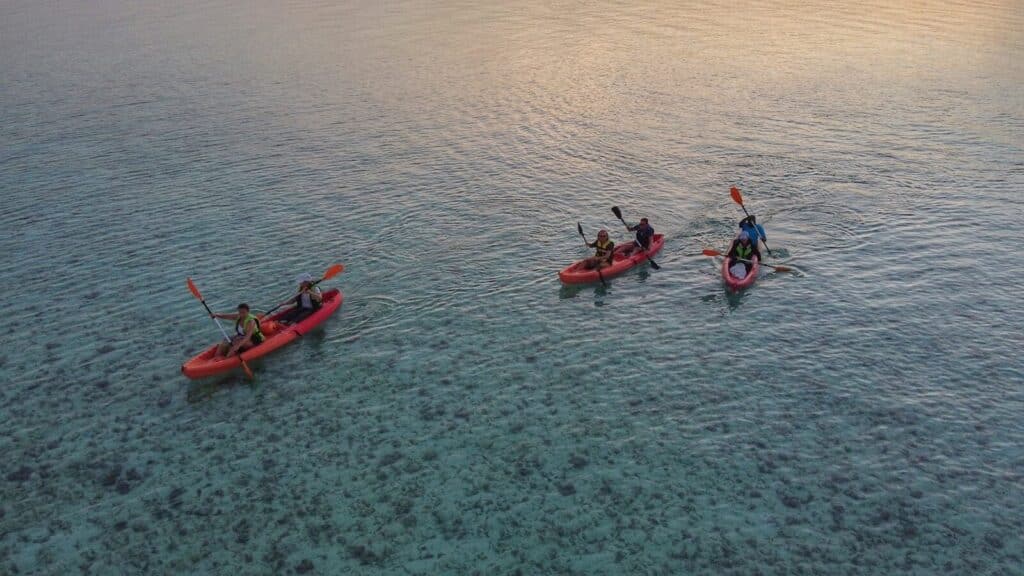
For a broader overview of the best local islands to visit, our Top 10 Local Islands guide walks through each island's strengths and who it suits best.
Budget Reality: What Maldives with Kids Actually Costs
Costs look different when you add children to the equation.
At resorts, children's policies vary significantly. Many resorts allow children under 12 to stay free in their parents' room, which can make the headline price per room more manageable. Kids' dining deals (eat free, or at significant discount) are common at mid-range family resorts. A week at a family-friendly mid-range resort for 2 adults + 2 children — including transfers, meals and basic activities — realistically starts from $4,000–$6,000. Higher-end resorts and those requiring seaplane transfers will push that figure considerably higher.
On local islands, the accommodation math works differently. Guesthouses typically sell rooms at a per-room rate, and most standard rooms sleep two adults comfortably. Families of four will generally need either two rooms or an explicitly labelled family room — not all guesthouses have the latter. That said, the overall cost is significantly lower: a week on a good local island for a family of four, covering accommodation, food at local restaurants, and 2–3 excursions, typically comes in at $1,500–$2,500. The excursions themselves (manta rays, turtles, sandbanks) are a fraction of what the same trips cost when booked through a resort, which makes a real difference to the total.
For a detailed breakdown of what a Maldives trip costs at different budget levels, the complete cost guide covers everything from budget guesthouses to ultra-luxury resorts.
The Verdict: Which Should You Choose?
The honest answer is that age matters more than almost any other factor.
Choose a resort if you're travelling with:
- Babies and toddlers (under 4) — the infrastructure, safety, and medical access are genuinely important
- Children aged 4–7 who will benefit from a kids club and structured resort activities
- First-time visitors to the Maldives who want a predictable, contained experience
- A family where the adults want proper rest alongside the activities
- Children with specific dietary needs or medical considerations
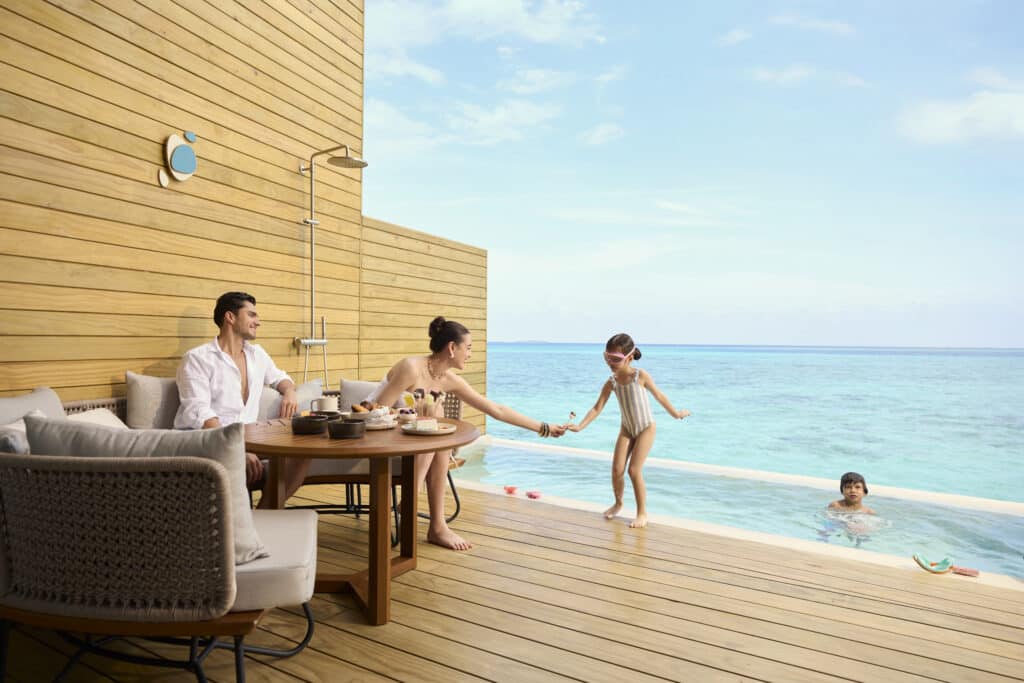
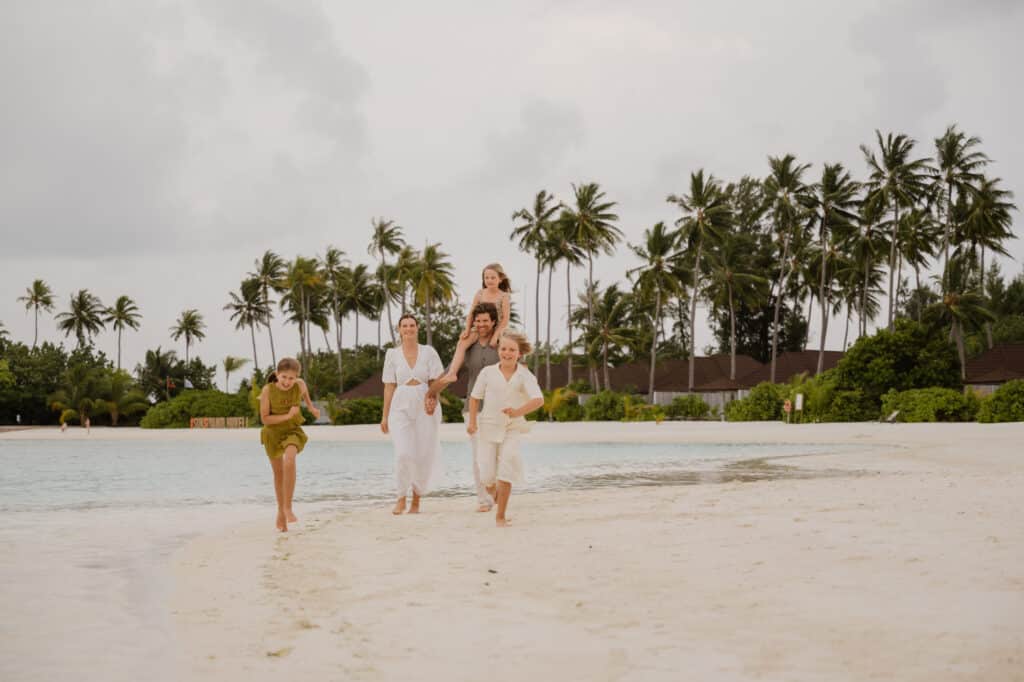
Choose a local island if you're travelling with:
- Children aged 8 and above who are confident swimmers and genuinely excited by real marine life encounters
- Teenagers — the freedom, independence and unscripted experience of a local island suits them well
- A family with an adventurous, flexible travel style
- A budget that makes a full resort week impossible without major compromise
- Children who are curious about other cultures and genuinely interested in how locals live
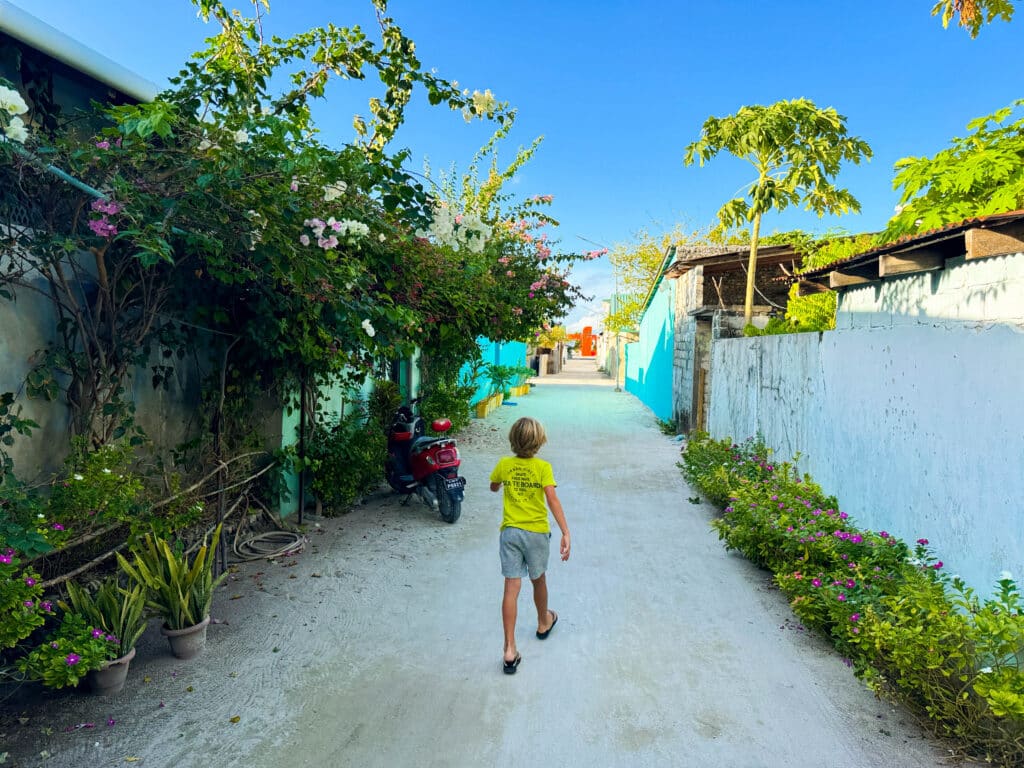
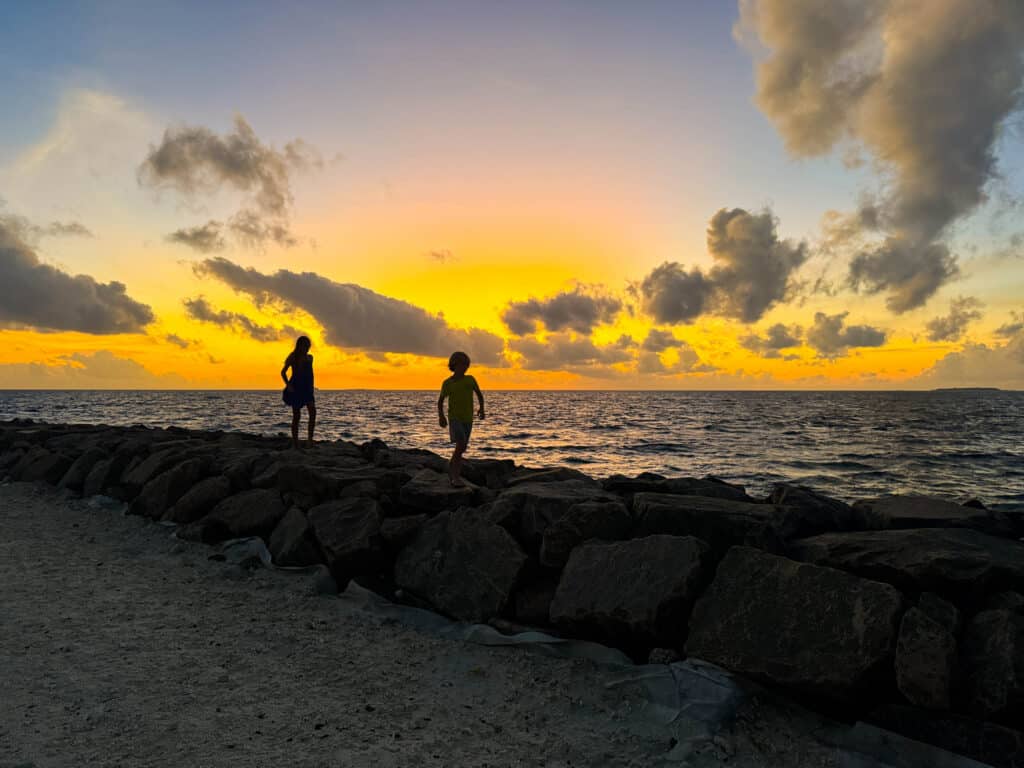
The best option: combine both. This is what we did, and it gave the children — and us — a genuinely complete Maldives experience. Two to three nights at a family resort near Malé for the soft landing, kids club time, and comfort; then three to four nights on a local island like Dharavandhoo for the manta rays, turtles, and authentic island life. The contrast between the two makes both more interesting.
Final Thoughts on Maldives with Kids
Travelling Maldives with kids is not the compromise some parents expect it to be. The marine life is accessible and awe-inspiring for children from a surprisingly young age, the water is warm and calm enough for confident family swimming, and the choice between resorts and local islands gives you real flexibility to shape a trip that fits your family's specific style and budget.
If we had to choose one over the other? We wouldn't. The combination of a resort and a local island gave our children two entirely different experiences — and both left marks they still talk about. The dolphin sunset tour at Kurumba. The floating breakfast watching dolphins from our Hard Rock villa pool. The 15 manta rays gliding beneath us at Dharavandhoo. The sandbank in the middle of the ocean where our kids ran barefoot and couldn't believe this was a real place.
Whatever you choose — resort, local island, or both — the Maldives delivers on its promise for families. Plan carefully for the ages and temperaments of your specific children, and you will not be disappointed.
🌴 Plan Your Maldives Trip
🏨 Still looking for the right stay? Browse all resorts in the Maldives or hotels & guesthouses on local islands — free cancellation on most rooms.
✈️ Flights: Compare routes and prices for flights to the Maldives.
📱 Stay connected: Skip the airport SIM queue — get a Maldives eSIM from Airalo before you fly. We use Airalo ourselves on every trip.
🔒 Travel insurance: Medical help in the Maldives often means evacuation by seaplane — don't skip travel insurance for the Maldives.
🤿 Tours & activities: Browse snorkelling trips, dolphin cruises and excursions across the Maldives, or check liveaboard diving trips.
💳 Money: Avoid card fees abroad with a free Revolut account.
Some links on this page are affiliate links. Booking through them costs you nothing extra and helps us keep this site running — thank you!
Frequently Asked Questions
Is the Maldives suitable for babies and toddlers?
Yes, but a resort is strongly recommended for very young children. Resorts offer calm, safe beaches, room service, on-site medical care, and baby-friendly facilities. Local islands can work for toddlers in calm conditions, but the ferry transfer, lack of medical facilities, and absence of structured childcare make them less practical. If you do take a toddler to a local island, book a private speedboat transfer and choose an island with a well-protected beach like Maafushi or Dharavandhoo. A family-friendly resort like Bandos Maldives, a short speedboat from Malé, makes travelling with little ones easy.
What age is best for travelling to the Maldives with kids?
Most families find the Maldives works best from around age 7–8 upwards, when children can comfortably snorkel and begin to genuinely engage with the marine life. That said, even younger children love the beach, the water, and the gentle warmth of the Maldivian environment. A resort trip with children as young as 4 or 5 can be magical — the kids club, the shallow lagoon swimming, and the dolphin tours all work beautifully at that age.
Are there kids clubs on local islands?
No. Kids clubs are a resort-only offering in the Maldives. Local islands have no organised children's programming. Children are warmly welcomed in local restaurants, beaches, and daily island life, but structured activities for kids don't exist. If your children are old enough to entertain themselves — reading, swimming, beach play — this is rarely a problem. For children aged 4–8, the absence of a kids club is one of the clearest reasons to prioritise a resort stay.
Can children snorkel on local islands?
Yes, and the snorkelling accessible from local islands is often exceptional. On Dharavandhoo, children can walk directly into the sea from the bikini beach and immediately encounter tropical fish. Organised excursions — manta rays, turtles, sandbanks — are suitable from around age 7–8 with a confident snorkeller. Always check sea conditions and use a life vest or float for less confident swimmers. The coral can be sharp, so reef shoes or fins are recommended for small children wading in. On Dharavandhoo, many families base themselves at a guesthouse like Kiha Beach, steps from the bikini beach.
Is the ferry transfer to local islands safe with children?
Generally yes, but it can be uncomfortable. Maldivian government ferries carry local families including children regularly, so safety is not the issue — but the open ocean crossing can be genuinely rough, particularly in the north-south swell between January and April. Children prone to seasickness should take medication in advance. For babies, toddlers, and anyone anxious at sea, a private speedboat transfer to the same island (3–4 times the ferry price, but 30–45 minutes vs 2+ hours) is well worth it.
Can families do a day trip to a resort from a local island?
Yes. Several local islands near Malé offer organised resort day trips, where you pay a day fee to access a resort's beach, pool, and restaurant. This is a great way to give children a kids club or water slide experience for one day without the full resort cost. From Maafushi in particular, resort day trips are easy to book. A near-Malé resort like Kurumba Maldives is within easy reach for one of these day-trip splurges.
Is the Maldives safe for children overall?
Yes — the Maldives is one of the safest destinations in the world for families. There is virtually no crime, no dangerous wildlife on land, and the sea conditions are calm for most of the year. The main practical risks are coral cuts (wear reef shoes), sun exposure (apply sunscreen multiple times per day — the equatorial sun is intense), and the remoteness of some islands if medical care is needed. Choose your island wisely for very young children and you'll find the Maldives is as close to a stress-free family destination as anywhere in the world.
Do Maldivian local islands welcome families with children?
Absolutely. Maldivian communities are warm and welcoming to visitors of all ages, and children are particularly well-received. Local people interact happily with children, and islands like Dharavandhoo have a genuine community atmosphere — a small park in the centre of the island that lights up in the evenings, for example, becomes a spontaneous gathering point for families. The key cultural awareness is dress code: swimwear is for the bikini beach only, and outside that area modest clothing is expected, including for older children.
Related Blogs
Other Maldives Travel Tips
Maldives Vacation: How to Plan Your Dream Island Escape for Adventure and Relaxation
Trip to Maldives: Essential Information on Islands, Visa, Vaccinations & Entry Requirements
Best Time to Go to Maldives: Weather, Climate & Seasonal Tips for Your Perfect Island Vacation
How Much Does it Cost to Travel to Maldives? Budgeting for Resorts, Local Islands & Activities
Maldives Culture & Religion: What Every Traveller Should Know Before Visiting Local Islands
Do You Need Vaccinations to Go to Maldives? Health and Safety Checklist for Travellers
Maldives Travel Visa Guide: Requirements, Process & Tips for Hassle-Free Entry
How to Plan a Trip to Maldives Like a Pro: Insider Tips for Easy Local Island Transfers
Is Maldives Worth the Money? Honest Comparison with Sri Lanka
Maldives Local Islands vs Resorts: What Should You Choose?
Other Maldives Blogs
How to Choose a Maldives Resort: The Complete Decision Guide
Best Maldives Resorts by Budget: Top Affordable, Mid-Range & Luxury Island Escapes
Best Hotels on Local Islands in Maldives (By Budget): Complete Guide for 2026
How to Choose the Best Atoll in Maldives: A Complete Area & Stay Guide
Top Activities in Maldives: Snorkelling, Diving & Swimming with Manta Rays
Best Hotel in Maldives Island: Top Luxury, Boutique & Affordable Stays for Every Traveller