Table of Contents
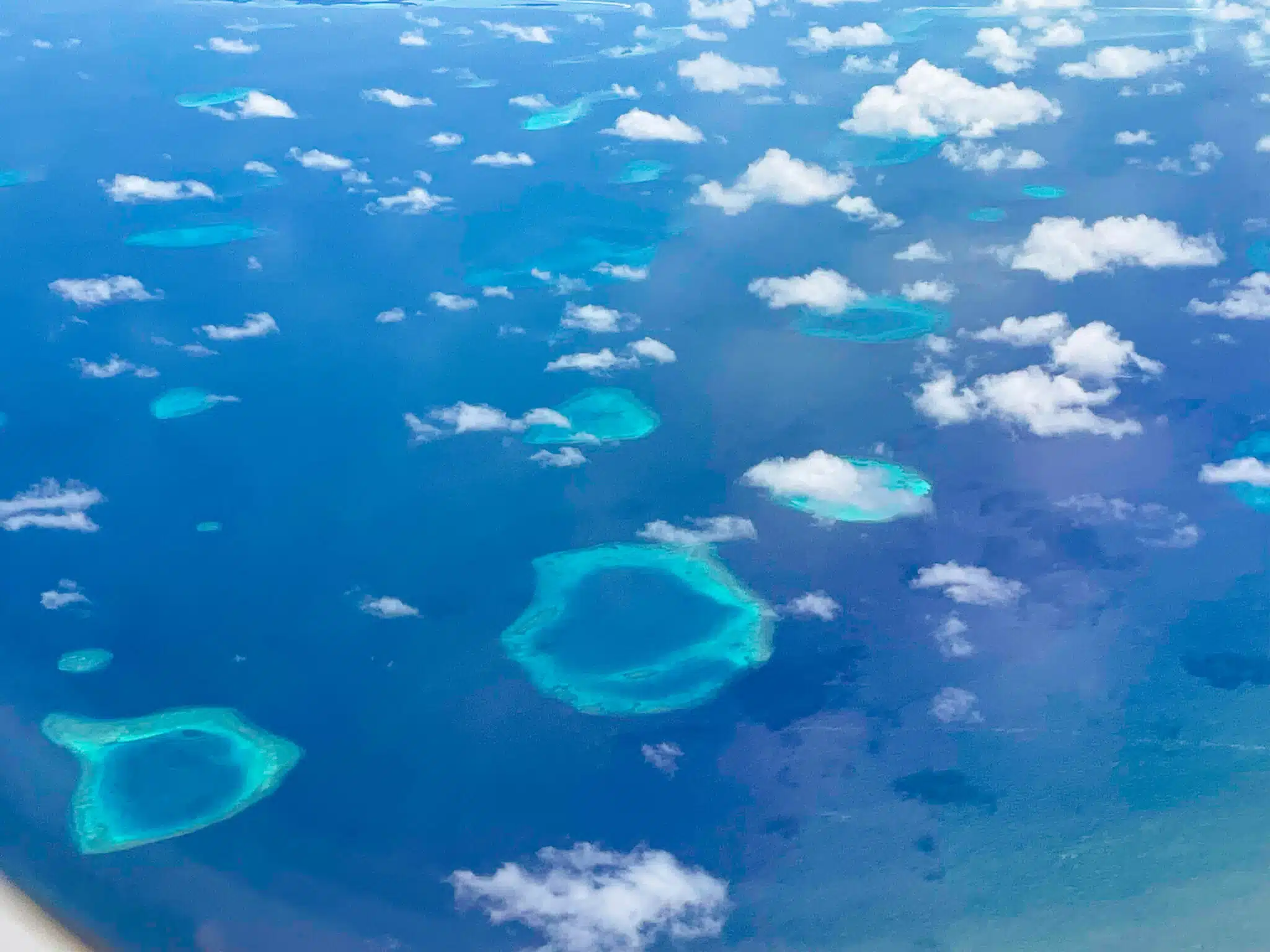
Planning a trip to the Maldives involves one decision that catches many first-time visitors off guard: how do you actually get from the airport to your island? Unlike most beach destinations, where a taxi or shuttle covers the journey, the Maldives is a nation of more than 1,000 coral islands scattered across 26 atolls — and your resort or guesthouse could be anywhere from 10 minutes to several hours from Malé. Understanding how to get around Maldives before you book can save you from expensive surprises and help you plan a smoother, more enjoyable trip.
This guide covers every transfer and transport option available in the Maldives — speedboats, seaplanes, domestic flights, public ferries, and the free transfer that waits on the other side of the airport — for both resort travellers and those staying on local islands. Whether you're hopping between islands, arriving late at night, or looking to save on transfer costs, you'll find everything you need here.
In a Rush?
These are my Favourite Maldives Resorts
⭐️⭐️⭐️ Kurumba Maldives – Check prices and availability
⭐️⭐️ Hard Rock Hotel Maldives – Check prices and availability
⭐️ Kiha Beach Maldives – Check prices and availability
At a Glance: Maldives Transport Options
| Transfer Type | Best For | Price indication | Daylight only? |
|---|---|---|---|
| Speedboat (resort) | Resorts in North/South Malé, Vaavu Atoll | US$100–200 return per person | No |
| Seaplane | Resorts in Baa, Lhaviyani, Ari, Noonu and further atolls | US$300–1,000 return per person | ✅ Yes |
| Domestic flight + speedboat | Resorts in far southern/northern atolls | US$200–600 return per person (flight + boat combined) | No |
| Public ferry | Local island travellers | US$5–30 one way per person | No |
| Private speedboat (local island) | Faster local island transfers, flexible timing | US$25–80 one way per person | No |
| Free shuttle (airport ↔ Malé) | Everyone arriving at Velana Airport | Free | No |
First Things First: Arriving at Velana International Airport
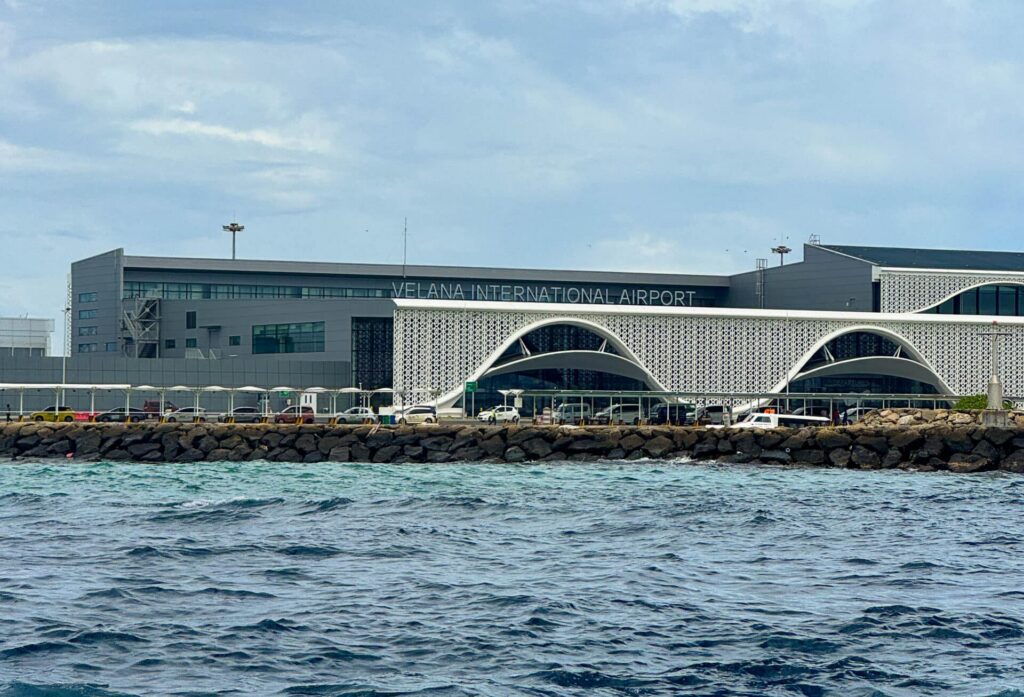
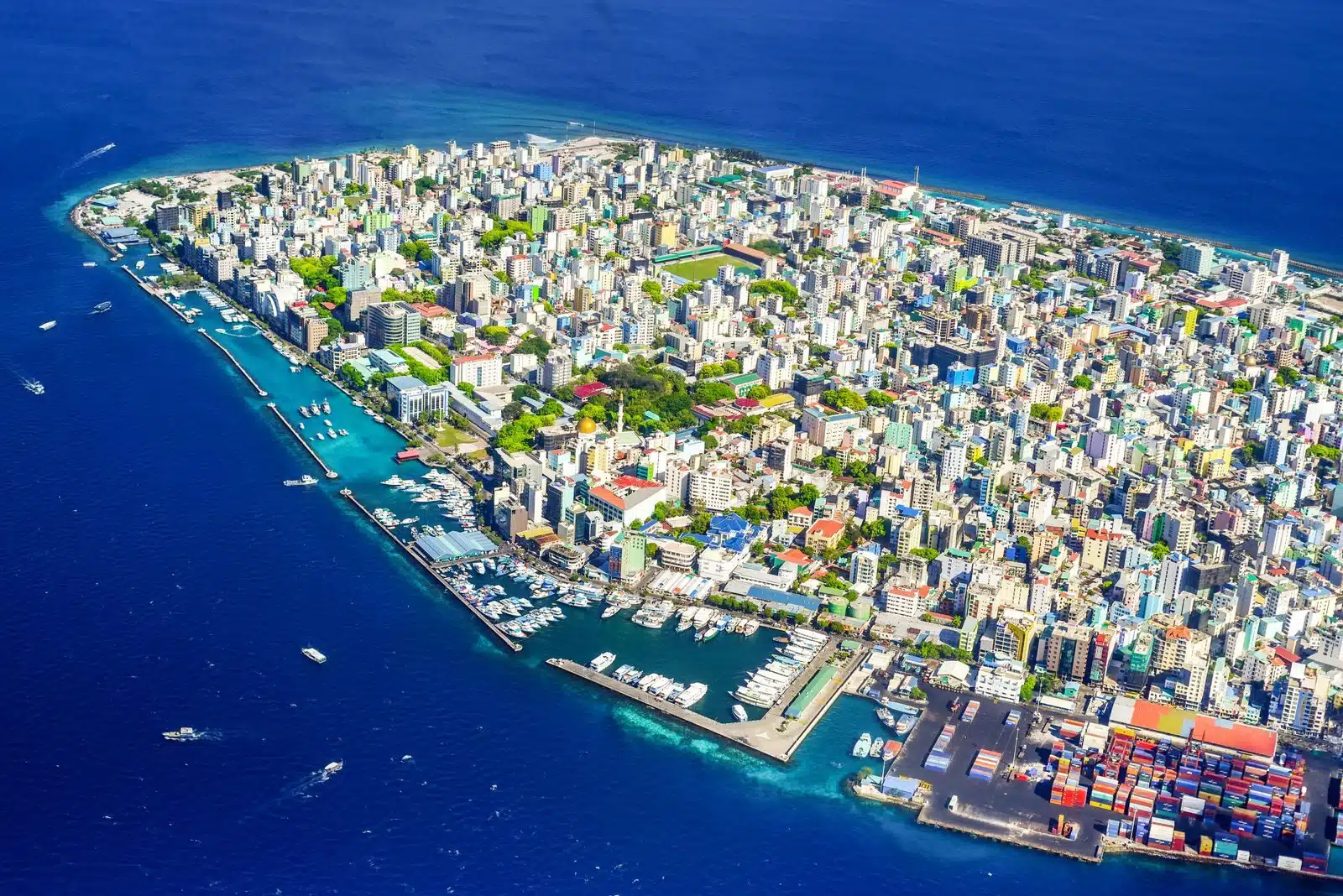
All international flights land at Velana International Airport (MLE), located on Hulhulé Island — a separate island from Malé itself. This is important to understand from the start: from the moment you land, you are already on a different island from the capital. To reach Malé, you take a free 10-minute ferry from the airport jetty. To reach your resort or guesthouse, you continue from Malé or directly from the airport depending on your transfer type.
The airport has three terminals you'll encounter:
International Terminal — where your flight arrives
Domestic Terminal — a 5-minute walk away, for inter-island flights
Seaplane Terminal — reached by a short bus transfer from the international terminal
After clearing customs and collecting your bags, you'll typically find resort representatives waiting with name signs. If you're staying at a resort, your transfer is almost always arranged in advance by the property — you simply follow their representative. If you're heading to a local island, you'll make your own way to the ferry terminal or your pre-booked speedboat pickup.
1. The Free Shuttle: Malé ↔ Airport
Before anything else, know this: getting between the airport and Malé is free and simple.
A public ferry (operated by MTCC) connects the airport jetty to the Malé ferry terminal in about 10 minutes. It runs frequently throughout the day and evening and costs nothing. There is also a bridge connecting Hulhulé Island to Hulhumalé — the newer, larger residential island — which you can cross by taxi or minibus.
If your onward transfer departs from Malé (many public ferries and some private speedboats do), this free shuttle is your first step. If your resort speedboat or seaplane departs directly from the airport jetty, you won't need it at all.
2. Speedboat Transfers (Resorts)
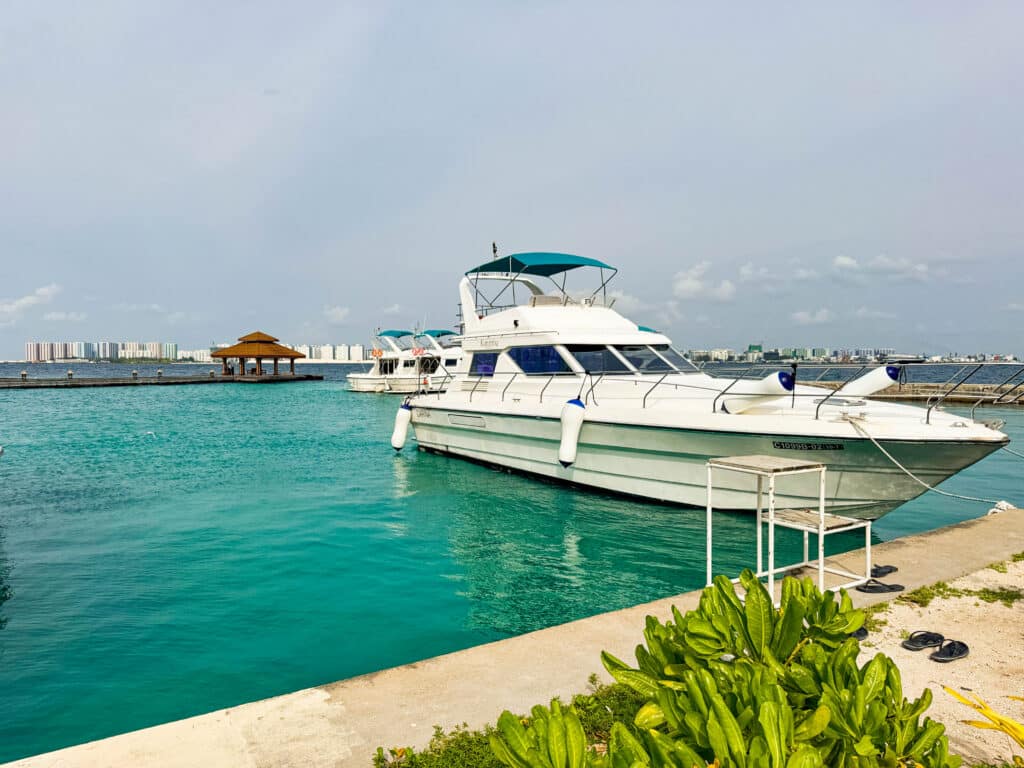
Best for: Resorts in North Malé Atoll, South Malé Atoll, Vaavu Atoll, and parts of Ari Atoll Cost: US$100–200 per person return (shared transfer) Journey time: 10 minutes (Kurumba) to 90 minutes (further atolls) Operates: Day and night
For resorts within roughly 60–90 minutes of Malé, a speedboat is your transfer. The resort arranges everything — you'll be met at the airport, escorted to the jetty, and taken directly to your island. No need to book separately.
Speedboat transfers are the most practical option for families, late-night arrivals, and anyone on a tighter transfer budget. The ride itself ranges from smooth to very rough depending on sea conditions and season. The southwest monsoon (May–November) brings choppier seas; the northeast monsoon season (December–April) tends to be calmer.
Tip for seasick-prone travellers: Sit toward the middle of the boat and take medication 30 minutes before departure if you know rough water is a concern.
I've experienced both ends of the speedboat spectrum: the 10-minute ride to Kurumba was effortless, and the short hop to Hard Rock Hotel took barely long enough to enjoy the sea breeze. The private speedboat to Dharavandhoo was a different story — more on that in the local island section below.
Well-known resort examples by speedboat:
- Kurumba Maldives — 10 minutes from Malé
- Bandos Maldives — 20 minutes
- Hard Rock Hotel Maldives / SAii Lagoon — 15 minutes
- Meeru Island Resort — 45 minutes
- One&Only Reethi Rah — 45–60 minutes
- Kuramathi Maldives — approximately 90 minutes (North Ari)
3. Seaplane Transfers (Resorts)
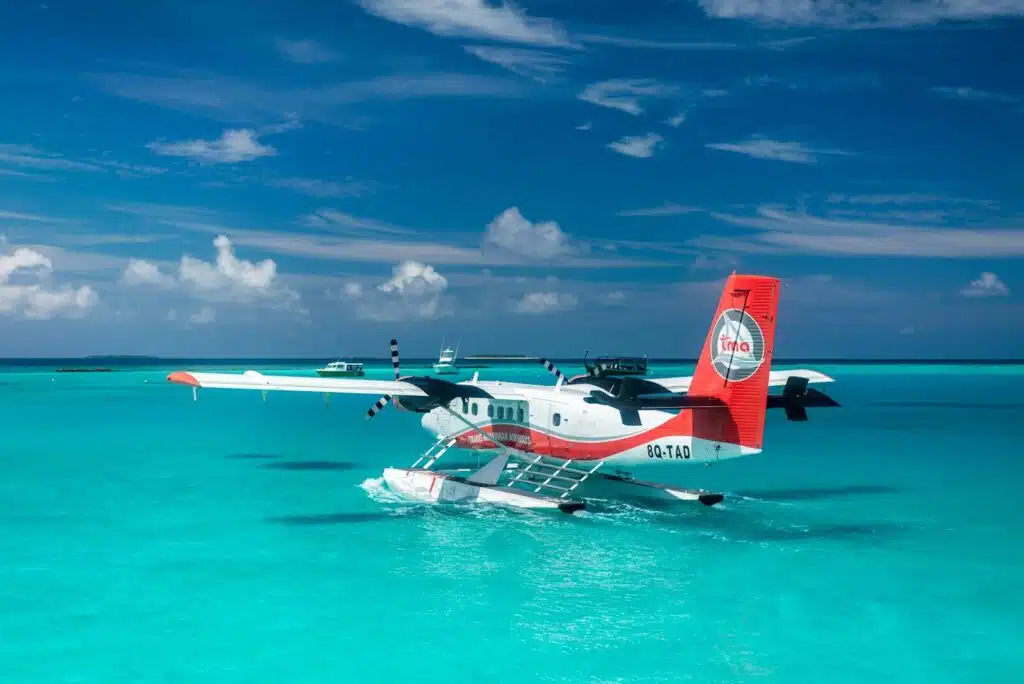
Best for: Resorts in Baa Atoll, Lhaviyani Atoll, Ari Atoll (many), Noonu Atoll, and other remote locations Cost: US$300–1,000 per person return (shared transfer); significantly more for private charter Journey time: 30–60 minutes in the air Operates: Daylight hours only (approximately 06:00–15:30)
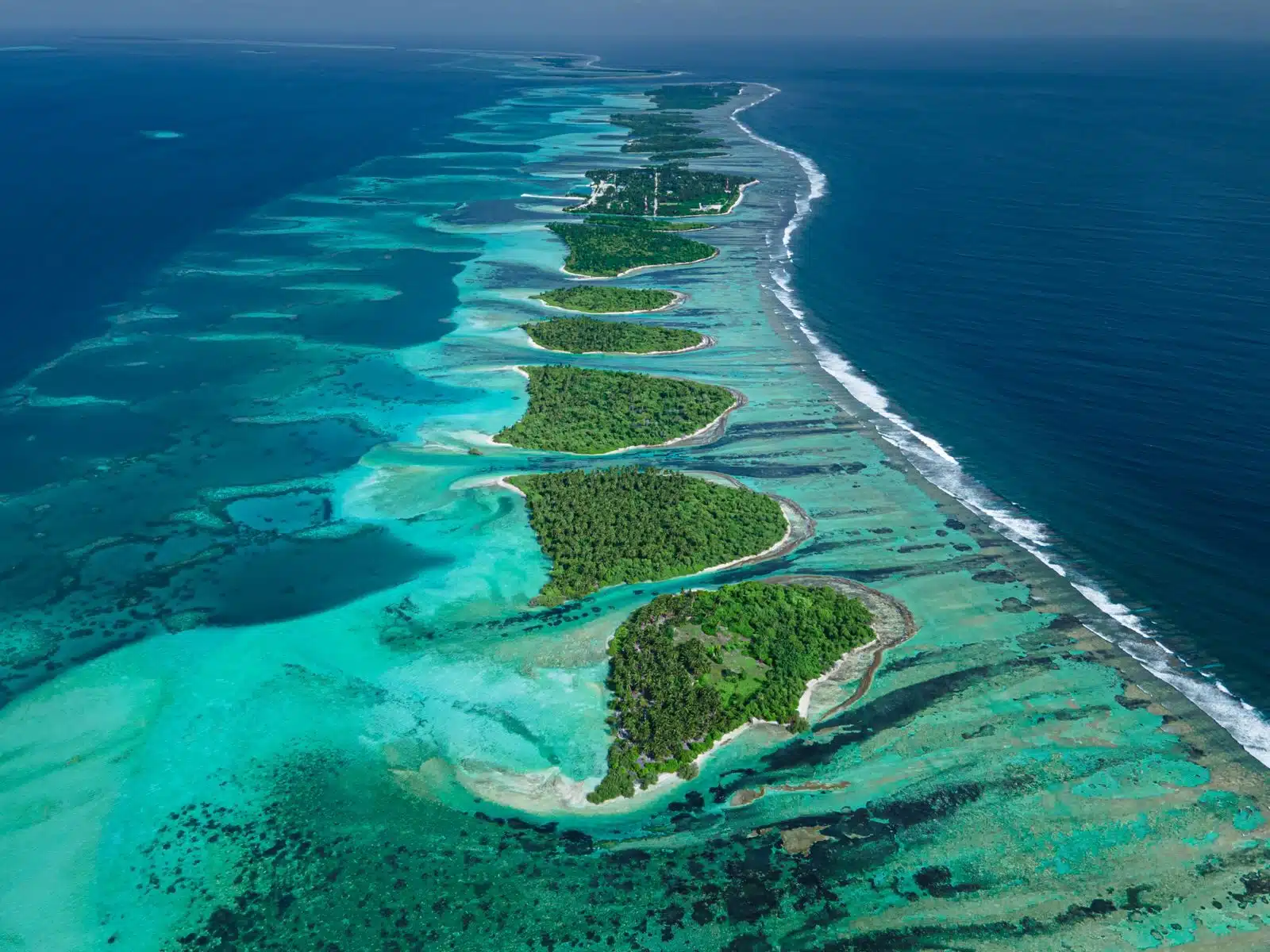
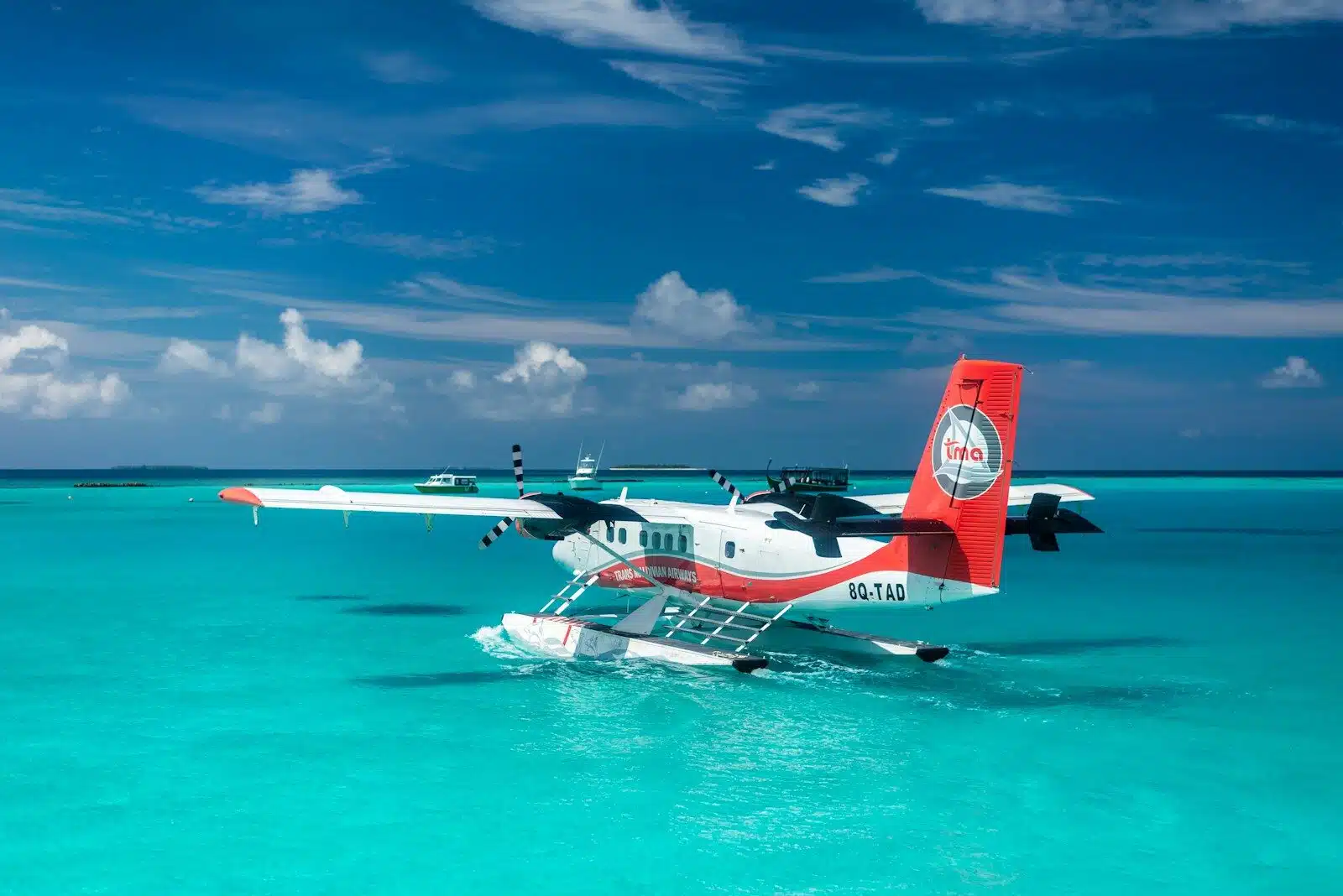
The seaplane transfer is one of the most iconic — and most expensive — parts of a Maldives resort holiday. Flying low over turquoise lagoons and coral atolls in a 15-seater Twin Otter is genuinely spectacular. For many travellers, it's a highlight of the trip in its own right.
The two main operators are Trans Maldivian Airways (TMA), the world's largest seaplane operator serving over 80 resorts, and Manta Air, which serves a smaller number of properties. Resorts work with one operator and arrange your booking once you provide your international flight details.
Important: transfer costs are almost never included in your room rate. When you see “complimentary seaplane transfer” mentioned by a resort, always read the fine print — the cost is usually bundled into a package rate rather than genuinely free. In many cases, the seaplane charge is added to your hotel bill separately after you've already booked. Always ask your resort or travel agent to confirm exactly how the transfer is billed before you finalise your booking.
The most important practical point about seaplanes: they only fly in daylight. If your international flight arrives after approximately 15:00, you will not be able to take a seaplane that day. This means building in a night near Malé or Hulhumalé — or choosing a speedboat resort — if your flight arrives in the evening. Many first-time visitors book a dream remote resort and only discover this constraint after the fact.
Other things to know:
- Waiting time can be 1–4 hours at the seaplane terminal, as flights are coordinated with other guests arriving on different flights. Many luxury resorts have private lounges; others use the public terminal.
- Baggage limits: 20kg checked luggage + 5kg hand luggage per person (25kg total). This is strictly enforced. Excess is charged at US$5 per kg plus taxes. Note: this is significantly less than most international flight allowances, so pack with this in mind.
- Children under 2 travel free without a separate seat (no additional baggage allowance either). Children under 12 often receive a 50% discount — check current transfer prices before booking.
- Luggage occasionally travels on a later flight when the plane is full; TMA will inform you in advance and provide a bag for essentials.
4. Domestic Flights + Speedboat (Resorts)
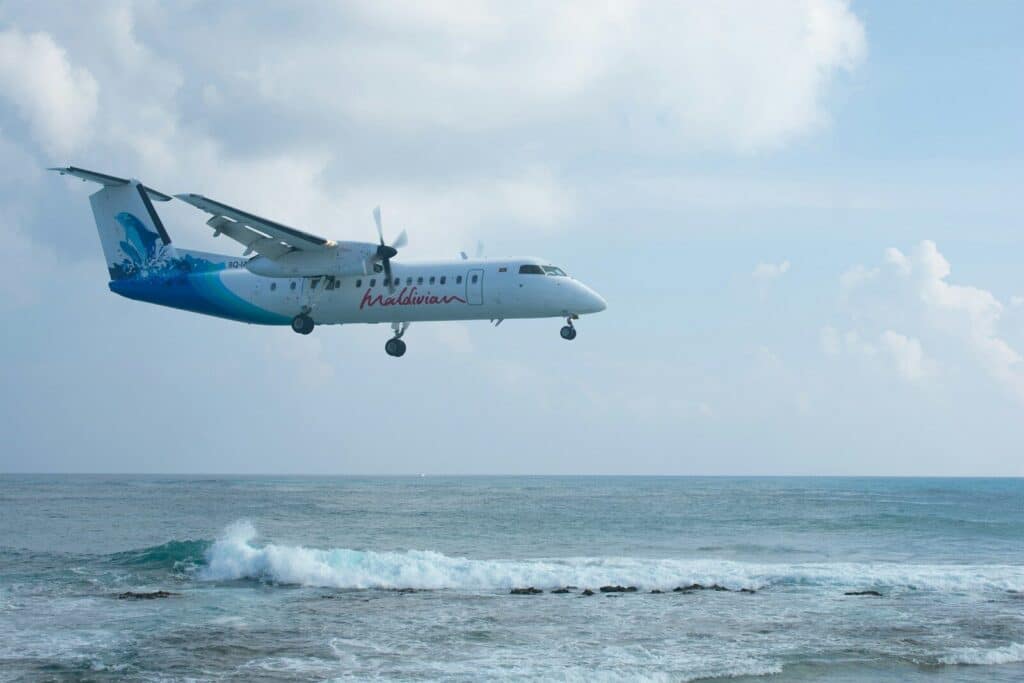
Best for: Resorts in far southern or northern atolls — Laamu, Addu, Gaafu Dhaalu, Haa Alifu, and others beyond seaplane range Cost: US$200–600 per person return, including the speedboat leg Journey time: 40–60 minutes by air, then 15–45 minutes by boat Operates: Day and night
Some of the Maldives' most remote resorts — Six Senses Laamu, Park Hyatt Hadahaa, Ayada Maldives — are too far for a seaplane and require a domestic flight from Malé followed by a short speedboat to the island. The national carrier Maldivian (and to a lesser extent Manta Air) operates these routes to 10+ domestic airports.
This option gives you greater flexibility with arrival times (domestic flights operate beyond seaplane hours) and can sometimes be cheaper than seaplanes for similar distances. The trade-off is a longer overall journey with two legs to coordinate. The price quoted (US$200–600 return per person) covers the complete journey — domestic flight plus the onward speedboat to the island.
5. Public Ferries — For Local Island Travellers
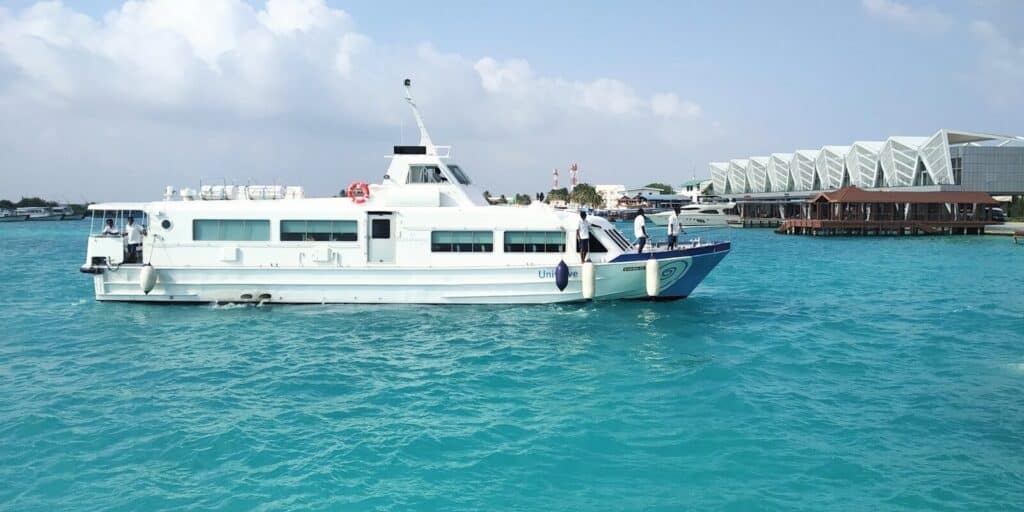
Best for: Budget travellers who have flexible timing and aren't in a rush Cost: US$5–30 one way per person depending on island Journey time: Roughly 3x longer than the same route by speedboat Operates: Fixed schedules, 3–4 times per week on most routes; never on Fridays
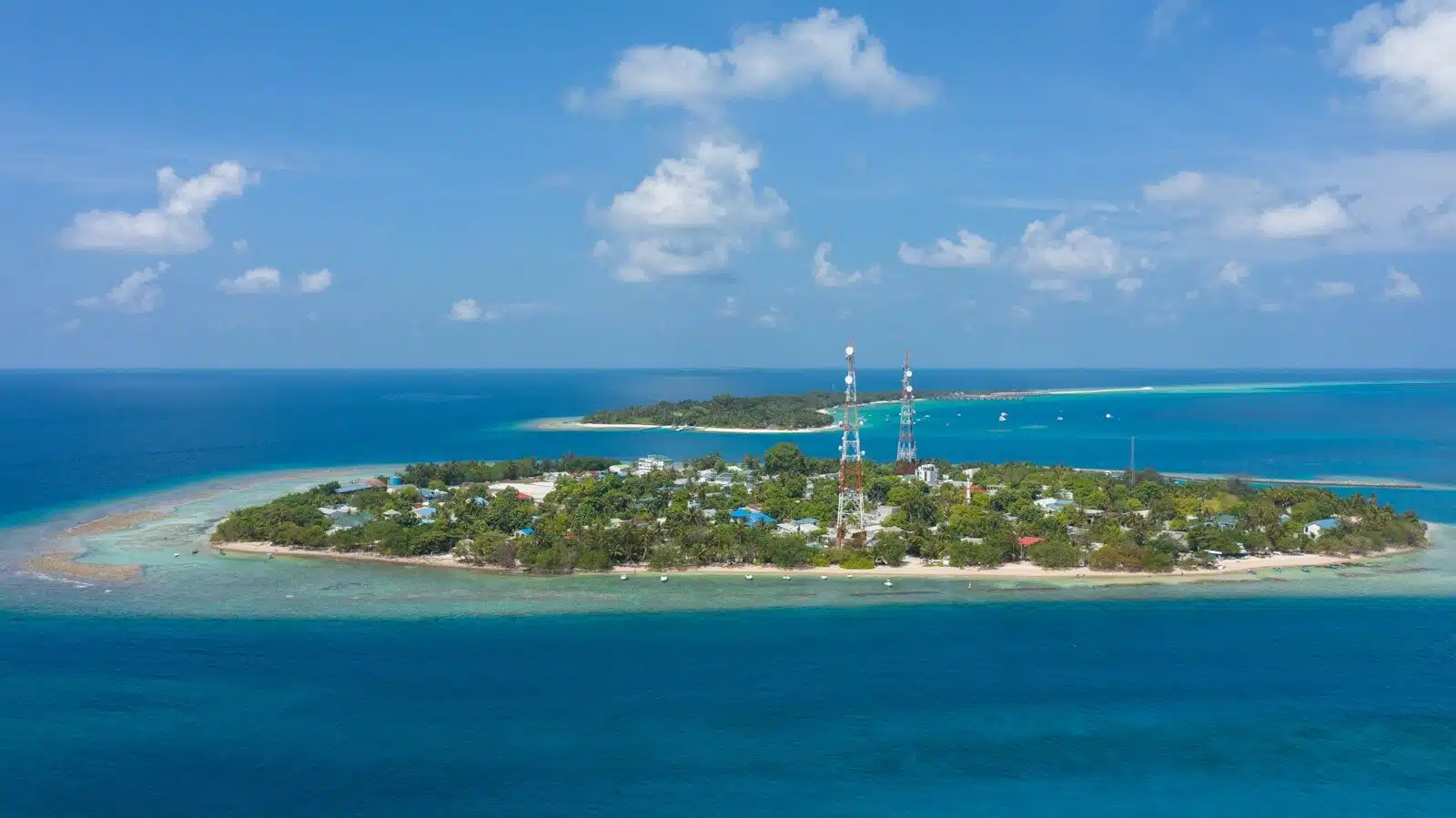
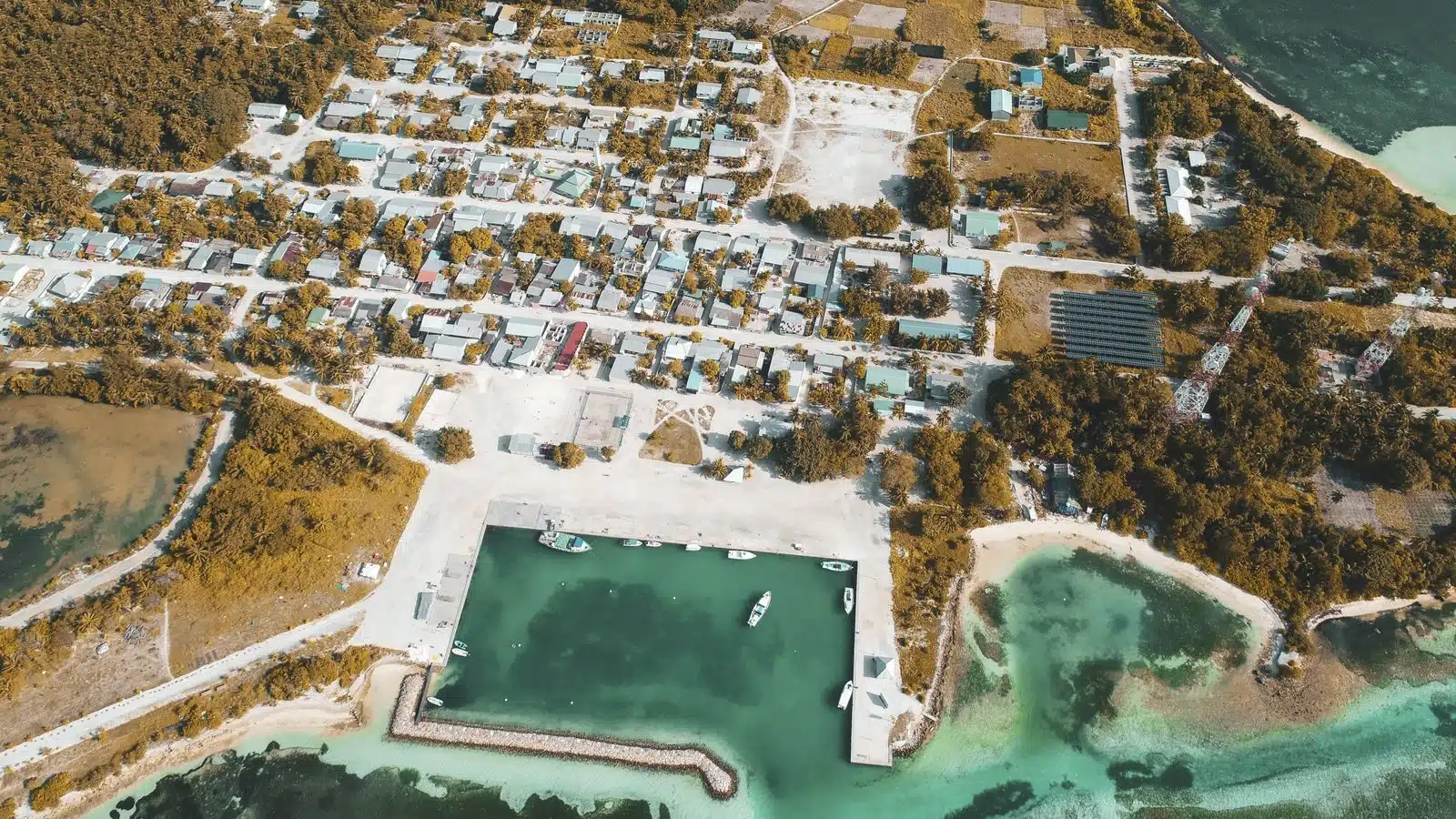
If you're staying on a local island, the public ferry (known locally as the dhoni) is your cheapest option. These government-run ferries are operated by MTCC and connect Malé to inhabited islands across North and South Malé Atoll, North Ari Atoll, and Vaavu Atoll. They carry locals, supplies, and an increasing number of budget travellers.
The trade-off is significant: ferries are slow — roughly three times slower than a speedboat on the same route — run on fixed schedules only 3–4 times per week on most routes, and never operate from Malé on Fridays. If your international flight arrives on a Thursday evening, you won't be able to take a public ferry until Saturday at the earliest.
A few other practical points:
- Ferries depart from the public ferry terminal in Malé city (not from the airport) — factor in the free airport shuttle to Malé first
- Tickets cannot be booked online; you buy them at the counter in Malé, or ask your guesthouse to reserve in advance (sometimes for a small fee)
- No air conditioning on board, but open sides make it bearable in the heat
- Sea sickness is a real possibility — ferries are slower and sit lower in the water than speedboats, making them more susceptible to swell
Important: Public ferries only serve local islands, never resorts. And not all local islands are on the ferry network — Dharavandhoo (Baa Atoll), for example, has no public ferry connection from Malé at all, as Baa Atoll is only served by inter-atoll ferries that don't connect to Malé.
Approximate Public Ferry Costs & Times (2026)
| Island | Atoll | Ferry cost (one way) | Approx. ferry time | Frequency |
|---|---|---|---|---|
| Gulhi | Kaafu | ~US$5 | ~1.5 hours | 3–4x per week, never Friday |
| Maafushi | Kaafu | ~US$5 | ~2 hours | 3–4x per week, never Friday |
| Dhiffushi | Kaafu | ~US$5 | ~1.5 hours | 3–4x per week, never Friday |
| Thulusdhoo | Kaafu | ~US$5 | ~1.5 hours | 3–4x per week, never Friday |
| Fulidhoo | Vaavu | ~US$10 | ~3.5 hours | 3x per week, never Friday |
| Rasdhoo | North Ari | ~US$15 | ~4 hours | 3–4x per week, never Friday |
| Ukulhas | North Ari | ~US$15 | ~4.5 hours | 3–4x per week, never Friday |
| Thoddoo | North Ari | ~US$15 | ~3 hours | 3–4x per week, never Friday |
Ferry prices and schedules are indicative for 2026 and subject to change. Always confirm the current schedule with your guesthouse before travel — cancellations due to weather are also common.
The honest verdict on public ferries: For most travellers on a time-limited holiday, the public ferry is better in theory than in practice. The 3–4x weekly schedule, Friday closure, and long journey times make it very hard to fit around typical international flight arrivals. It works best if you have a flexible schedule and at least 5–7 days on your island. For most others, the private speedboat is worth the extra cost.
6. Private Speedboats — For Local Island Travellers
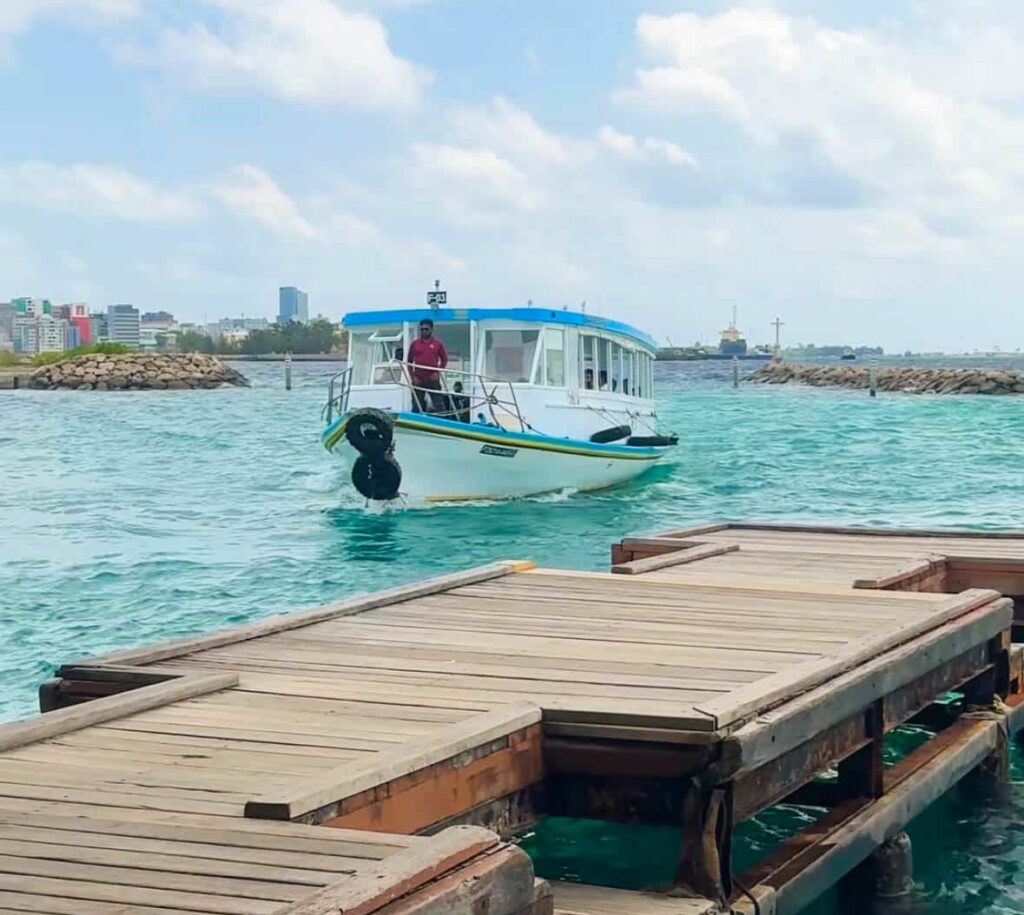
Best for: All local islands, especially those further from Malé; faster and more flexible than ferries Cost: US$25–80+ per person one way, depending on island and distance Journey time: 30 minutes to 2.5 hours depending on island Operates: Day and night (check with your guesthouse)
For most local island destinations, there are two transfer options from Malé: the slow, cheap public ferry (where it exists) or a private speedboat arranged through your guesthouse. Most local islands have both options available for nearby atolls; for islands further away or outside the public ferry network, the private speedboat is your only boat-based option.
The speedboat is faster, more comfortable, runs on your schedule rather than a fixed timetable, and isn't subject to Friday closures. For families with young children, anyone prone to seasickness, or travellers arriving at an inconvenient time, it's often the smarter choice even at the higher price.
Our transfer to Dharavandhoo in Baa Atoll was by private speedboat — around 2 hours 15 minutes at approximately US$60–80 per person one way. The first hour was genuinely rough: bouncing hard over waves, not for the faint-hearted. Anti-nausea tablets made a real difference. The return trip departed late, had a technical issue on board, made several unscheduled stops, and arrived three hours behind schedule — though the sea was calmer on the way back. It's the real Maldives travel experience. Just go in knowing what you're signing up for.
Some islands in North or South Ari Atoll (like Ukulhas, Rasdhoo, and Thoddoo) are too far for a comfortable speedboat journey from Malé and are also reachable by domestic flight — see the next section.
Approximate Private Speedboat Costs (2026)
| Island | Atoll | Approx. cost (one way, per person) | Journey time |
|---|---|---|---|
| Gulhi | Kaafu | US$25–35 | ±30 min |
| Dhiffushi | Kaafu | US$30–40 | 30–45 min |
| Maafushi | Kaafu | US$25–35 | 45–60 min |
| Thulusdhoo | Kaafu | US$30–40 | 30–60 min |
| Fulidhoo | Vaavu | US$60–75 | ±1h15 |
| Rasdhoo | North Ari | US$50–60 | ±1.5 hours |
| Ukulhas | North Ari | US$50–60 | 1.5–2 hours |
| Thoddoo | North Ari | US$55–60 | ±1 hour |
| Dhigurah | South Ari | US$70 | ±2–2.5 hours (or domestic flight — see section 7) |
| Dharavandhoo | Baa | US$60–80 | ±2h15 (or domestic flight — see section 7) |
Your guesthouse is the best source for current transfer prices — always ask them to arrange your transfer rather than trying to book independently.
7. Getting to Islands That Require a Domestic Flight
Some islands — both resorts and local guesthouses — are simply too far from Malé for a practical speedboat journey. In these cases, the route is a domestic flight from Velana Airport to a regional airport, followed by a short speedboat to your island.
For local island travellers, the main examples are:
Dhigurah (South Ari Atoll) — domestic flight to Maamigili Airport (VAM), then a short speedboat (~30 min flight + ~15 min boat)
Dharavandhoo (Baa Atoll) — domestic flight to Dharavandhoo Airport (DRV) with FlyMe, then a very short boat hop (~20 min flight + ~5 min boat). This is faster and more comfortable than the 2+ hour speedboat, though it adds cost.
For North Ari Atoll islands like Rasdhoo, Ukulhas and Thoddoo, it's worth comparing the speedboat (1–2 hours) against the domestic flight + short speedboat alternative — particularly if you're travelling in rough sea season or with young children.
Domestic flights are operated by Maldivian (the national airline) and Manta Air, with costs varying by route. FlyMe operates specifically to Dharavandhoo (DRV) and Maamigili (VAM, South Ari). Indicative one-way costs for the domestic flight + speedboat combined:
Dharavandhoo: US$110–140 per person one way (prices in 2026)
Dhigurah: US$180 per person one way (prices in 2026)
8. Getting Between Islands: Inter-Island Travel During Your Stay
One of the common questions for travellers considering a multi-island trip: can you move between islands easily once you're there?
The honest answer is: only within the same route.
Moving from one local island to another is only straightforward if both islands lie on the same public ferry or private speedboat route. If they're in different atolls, or on different ferry routes, you almost always have to return to Malé first and transfer there before continuing to your next island. In practice, this means island-hopping between different atolls takes the better part of a day — and adds significant cost in transfers.
The easiest multi-island moves are:
Within the same atoll — for example, moving between Maafushi and Gulhi (both in Kaafu Atoll) is generally manageable as they sit on the same or nearby routes.
Between North and South Ari Atoll local islands — sometimes possible via Maamigili domestic airport as a hub, but still requires planning.
For most travellers, the practical approach is to pick your islands carefully at the planning stage, rather than trying to hop between them once you arrive. A combination of one local island and one resort — or two local islands in the same atoll — tends to work smoothest logistically.
Between resorts: Even harder. Each private resort island is its own destination, and transfers between resorts typically route via Malé. Moving from one resort to another mid-trip almost always means returning to the seaplane terminal or speedboat jetty, spending time in Malé, and then taking a new transfer out.
Resort day trips from local islands: This is one of the smartest ways to experience both worlds without the logistics of a full multi-island itinerary. From islands like Maafushi, you can book a resort day trip — paying a day fee for access to a private resort's beach, pool, and restaurant — without committing to a multi-night stay. These are popular, affordable, and give you a taste of the overwater villa experience from a local island base.
9. Hulhumalé: The Practical Overnight Stop
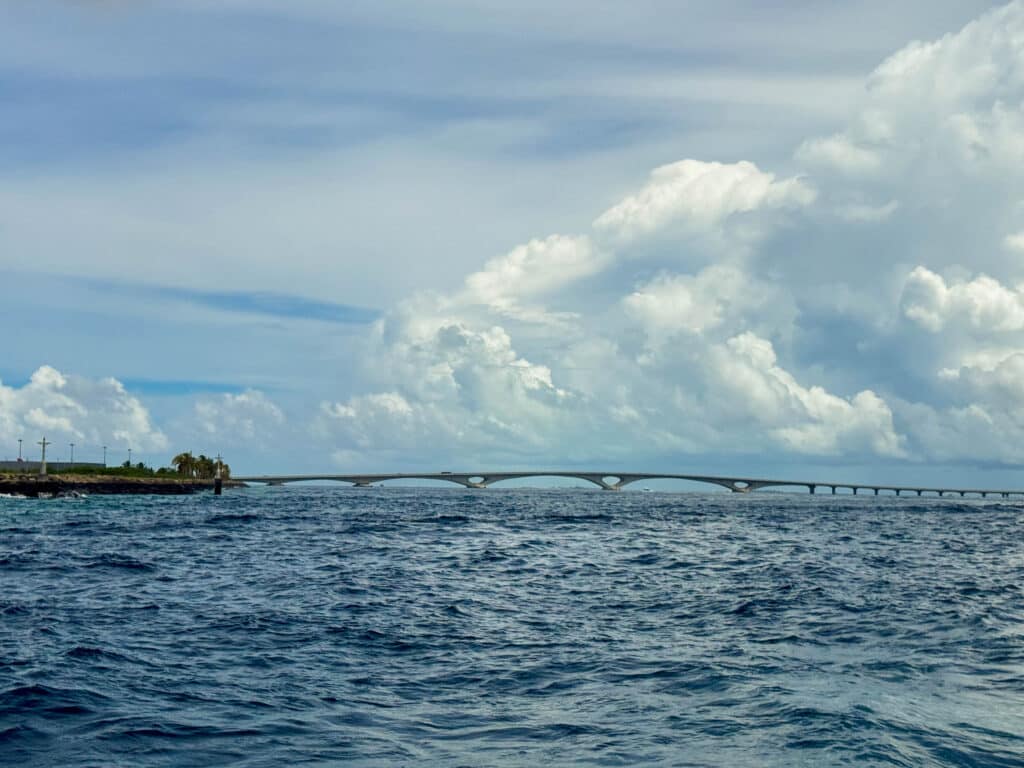
Hulhumalé is the large, modern island connected by road bridge to Hulhulé (where the airport sits). It's where a growing number of guesthouses are located, and it's the most practical overnight stop if:
Your international flight arrives too late for onward travel
Your seaplane departs early the next morning
Your ferry to your local island only departs during the day
We stayed at Reef Guest House in Hulhumalé on the night we arrived — our flight landed at 6:30pm, well past the time most boats depart. A night there before heading on made the whole journey feel manageable rather than rushed. The staff were genuinely warm and welcoming, which set exactly the right tone for what followed.
Practical Tips for Planning Your Maldives Transport
Research the transfer before you fall in love with the resort. The transfer type and cost should factor into which island you choose — especially when comparing a seaplane resort with a speedboat resort at similar room rates. A seaplane can add US$300–1,000 per person return to your total trip cost. Don't discover this after booking.
Transfer costs are almost never included. Even when a resort mentions “free transfers,” read the fine print. In most cases this means the cost is bundled into a package, not that it literally costs nothing. Always ask explicitly how the transfer is billed before confirming your booking.
Check your flight arrival time. If you're landing after 15:00, seaplanes aren't an option that day. Either choose a speedboat resort, or plan for a night near the airport.
Friday is a dead day for ferries. Public ferries never run from Malé on Fridays, and on most routes only 3–4 times per week anyway. If your schedule is tight, the private speedboat is the more reliable choice.
Let your guesthouse arrange your local island transfer. For local island stays, the simplest approach is to ask your guesthouse to sort your transfer. They know the current operators, schedules, and prices — and can often book you in faster than you can research it yourself.
Prepare for rough seas on longer speedboat routes. Speedboats in the Maldives can be genuinely rough, especially during the southwest monsoon (May–November). Anti-nausea tablets, sitting in the middle of the boat, and keeping your eyes on the horizon all help. For families with young children or anxious travellers, a domestic flight may be worth the extra cost over a long speedboat journey.
Final Thoughts on Getting Around the Maldives
Understanding how to get around Maldives before you book makes a real difference to your trip. The transfer type shapes your arrival day, your itinerary flexibility, and — if you're choosing between a seaplane resort and a speedboat resort — your total budget. A beautiful remote resort that looks affordable at the room rate can quickly become expensive once you add US$600–1,000 per person in seaplane transfers on top.
For local island travel, the public ferry is the authentic, affordable route — but go in with honest expectations about timing, Friday closures, and sea conditions. For most resort travellers, the whole transfer process is handled by the property, and the seaplane or speedboat becomes part of the experience rather than a logistical headache.
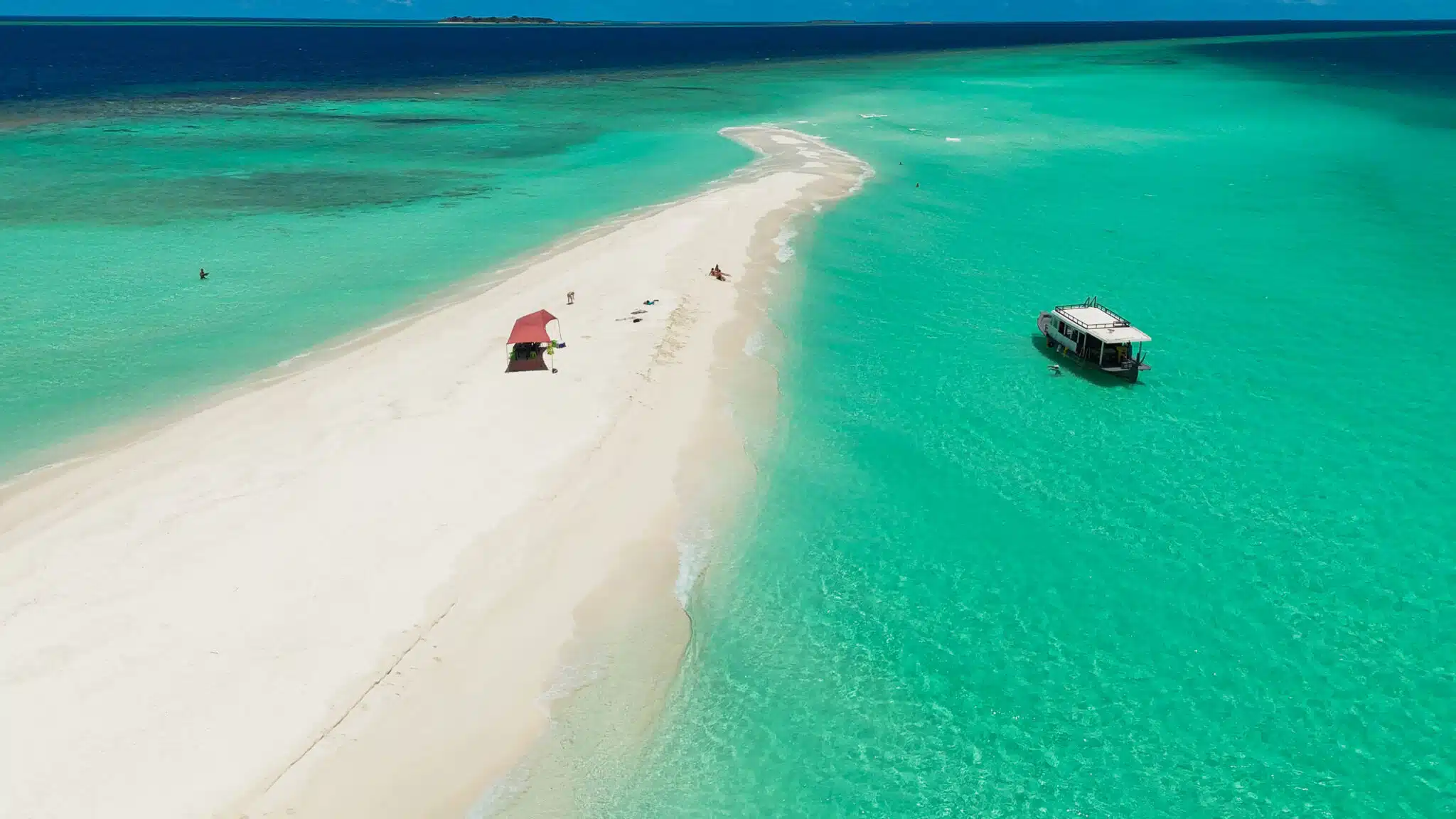
Wherever you end up in the Maldives, the moment you arrive at your island — whether by seaplane gliding over turquoise atolls, speedboat cutting through open ocean, or a slow public ferry pulling into a quiet jetty — it immediately makes sense why people keep coming back.
🌴 Plan Your Maldives Trip
🏨 Still looking for the right stay? Browse all resorts in the Maldives or hotels & guesthouses on local islands — free cancellation on most rooms.
✈️ Flights: Compare routes and prices for flights to the Maldives.
📱 Stay connected: Skip the airport SIM queue — get a Maldives eSIM from Airalo before you fly. We use Airalo ourselves on every trip.
🔒 Travel insurance: Medical help in the Maldives often means evacuation by seaplane — don't skip travel insurance for the Maldives.
🤿 Tours & activities: Browse snorkelling trips, dolphin cruises and excursions across the Maldives, or check liveaboard diving trips.
💳 Money: Avoid card fees abroad with a free Revolut account.
Some links on this page are affiliate links. Booking through them costs you nothing extra and helps us keep this site running — thank you!
Frequently Asked Questions: How to Get Around Maldives
How do you get from Malé airport to a resort in the Maldives?
It depends where your resort is. Resorts close to Malé — in North and South Malé Atoll or Emboodhoo Lagoon — use speedboats, typically 10 to 60 minutes. Resorts in more distant atolls like Baa, Ari, Lhaviyani, or Noonu usually require a seaplane lasting 30–60 minutes. The most remote resorts, in southern atolls like Laamu or Addu, use a domestic flight plus a short speedboat. Your resort arranges all of this once you share your flight details — you simply follow their representative on arrival. A close-in option like Kurumba Maldives is a quick speedboat from the airport.
How much does a seaplane transfer cost in the Maldives?
A shared seaplane transfer typically costs between US$300 and US$1,000 per person return, depending on the resort and distance. Remote atolls cost more. Transfer costs are almost never genuinely free — when a resort mentions complimentary transfers, the cost is usually bundled into a package rate. Always confirm exactly how the transfer is billed before finalising your booking. Private seaplane charters cost significantly more — from US$1,200 upward one way. Children under 12 generally receive a 50% discount; infants under 2 travel free without a separate seat. Resorts nearer Malé skip the seaplane entirely — Hard Rock Hotel Maldives is a short speedboat transfer.
What time do seaplanes stop flying in the Maldives?
Seaplanes operate only during daylight hours — roughly 06:00 to 15:30 local time, due to Maldivian aviation regulations. If your international flight arrives after approximately 15:00, you will not be able to take a seaplane that day. You'll need to overnight near the airport — in Malé, Hulhumalé, or an airport hotel — and continue to your resort the following morning. This is one of the most common planning mistakes for first-time visitors.
How do you get to a local island in the Maldives?
Local islands are reached by public ferry or private speedboat from Malé. Public ferries are inexpensive — around US$5–30 one way depending on the island — but slow (roughly three times slower than a speedboat), run only 3–4 times per week on most routes, and never operate on Fridays. Private speedboats are faster, more comfortable, and not restricted by the Friday closure or limited weekly schedule. For islands further away, like Dharavandhoo in Baa Atoll, there is no public ferry at all — a private speedboat or domestic flight is your only option. Your guesthouse can arrange the transfer on your behalf. On Dharavandhoo, Kiha Beach is an easy local-island base reached by speedboat or ferry.
Do ferries run every day in the Maldives?
No. Public ferries in the Maldives run only 3–4 times per week on most routes, and u003cstrongu003enever on Fridaysu003c/strongu003e — the first day of the Maldivian weekend. This makes the public ferry very hard to fit around typical international flight schedules. Always confirm the current timetable with your guesthouse well in advance, and factor in the possibility of weather-related cancellations on top of the limited schedule.
Can you island-hop between local islands in the Maldives?
You can, but only if the islands are on the same ferry or speedboat route. Moving between local islands in different atolls almost always requires returning to Malé first and transferring there. This makes cross-atoll island-hopping time-consuming and expensive. The easiest moves are within the same atoll. For most travellers, the practical approach is to plan your island combination at the booking stage rather than trying to move around freely once you're there.
What is the baggage limit on a seaplane in the Maldives?
The standard allowance is 20kg of checked luggage plus 5kg of hand luggage per person — 25kg total. This is strictly enforced. Excess is charged at US$5 per kg plus taxes. Note that this is significantly less than the allowance on most international flights, so pack accordingly. Some luxury resorts offer a higher allowance as part of their transfer arrangement — always check current transfer prices before booking in advance.
Is it possible to move between a resort and a local island during one trip?
Yes, and this combination is actually very popular. Most travellers route via Malé when switching between a resort and a local island. You can also book a resort day trip from certain local islands — particularly Maafushi — which lets you access a resort's beach, pool, and facilities for the day without an overnight stay. This is a great way to experience both sides of the Maldives without the full logistics of a two-resort itinerary.
Related Blogs
Other Practical Blogs
Trip to Maldives: Essential Information on Islands, Visa, Vaccinations & Entry Requirements
Best Time to Go to Maldives: Weather, Climate & Seasonal Tips for Your Perfect Island Vacation
Maldives Vacation: How to Plan Your Dream Island Escape for Adventure and Relaxation
How Much Does it Cost to Travel to Maldives? Budgeting for Resorts, Local Islands & Activities
Maldives Local Islands vs Resorts: What Should You Choose?
How to Plan a Trip to Maldives Like a Pro: Insider Tips for Easy Local Island Transfers
Maldives Culture & Religion: What Every Traveller Should Know Before Visiting Local Islands
Other Maldives Blogs
How to Choose a Maldives Resort: The Complete Decision Guide
Best Hotels on Local Islands in Maldives (By Budget): Complete Guide for 2026
How to Choose the Best Atoll in Maldives: A Complete Area & Stay Guide
Top Activities in Maldives: Snorkelling, Diving & Swimming with Manta Rays
Liveaboard Diving Trips in Maldives: Explore Top Dive Sites & Underwater Life with Maldive Dreamers
Maldives Vacation: How to Plan Your Dream Island Escape for Adventure and Relaxation
Best Hotel in Maldives Island: Top Luxury, Boutique & Affordable Stays for Every Traveller