Table of Contents
Few places in the Indian Ocean earn the word “extraordinary” as naturally as Baa Atoll Maldives. This is the atoll declared a UNESCO World Biosphere Reserve in 2011 — not as a formality, but because it shelters one of the most biodiverse reef systems in the world, and because Hanifaru Bay, a tiny funnel-shaped lagoon tucked along its southeastern edge, is home to the largest known aggregation of manta rays on the planet. During the southwest monsoon season, hundreds of rays — sometimes more than 200 in a single day — converge here in a swirling feeding frenzy unlike anything else you can witness in the ocean. Just to the north sits Raa Atoll: quieter, less visited, and defined by a sense of wide-open space and pristine untouched beauty that feels like the Maldives as it existed decades ago.
This guide covers everything you need to plan a trip to Baa Atoll and Raa Atoll — from all the resorts in both atolls and the famous local island of Dharavandhoo, to transfer logistics, manta ray season timing, and practical tips. Whether you're drawn by Hanifaru Bay, by the extraordinary resort lineup, or simply by the idea of a Maldives escape that feels genuinely remote, both these atolls deserve a place near the top of your shortlist.
In a Rush?
These are my Favourite Resorts and Hotels in Baa Atoll
⭐⭐⭐ Soneva Fushi — Check prices and availability
⭐⭐ Vakkaru Maldives — Check prices and availability
⭐ Dharavandhoo guesthouse via Kiha Beach — Check prices and availability
Baa Atoll and Raa Atoll at a Glance
These two northern atolls sit side by side on the Maldives map — Baa to the south, Raa directly above it — and while they share a similar remoteness and seaplane-dependent character, each has its own distinct personality. Here's a quick overview before we go deeper.
| Resort | Baa Atoll | Raa Atoll |
|---|---|---|
| Location | Northwest Maldives, ~120 km from Malé | Northwest Maldives, ~130–140 km from Malé |
| Transfer type | $1480 (but speedboat often included) incl BB | Seaplane (primary) or domestic flight to Ifuru + speedboat |
| Transfer time | Seaplane ~30–35 min | Seaplane ~40–45 min |
| Transfer cost (approx.) | $800–$1,700 pp return (resort-dependent) | $470–$850 pp return (resort-dependent) |
| Best for | Manta rays, UNESCO marine experiences, luxury honeymooners, snorkelling fanatics, families with strong marine interest | Ultra-luxury couples, design-led retreats, remote seclusion, authentic local island life |
| Not ideal for | Short stays under 4 nights (seaplane logistics), budget travellers | Short stays under 4 nights, budget travellers |
| # Resorts (in this guide) | 7 | 6 |
| Local islands | Yes — Dharavandhoo (main tourism island) | No established tourism infrastructure |
| Best time to visit | Year-round, but May–November for manta rays at Hanifaru Bay | November–April (dry season) for best weather |
| UNESCO status | Yes — Baa Atoll Biosphere Reserve (2011) | No |
How Baa Atoll Maldives Works
Geography and UNESCO Status
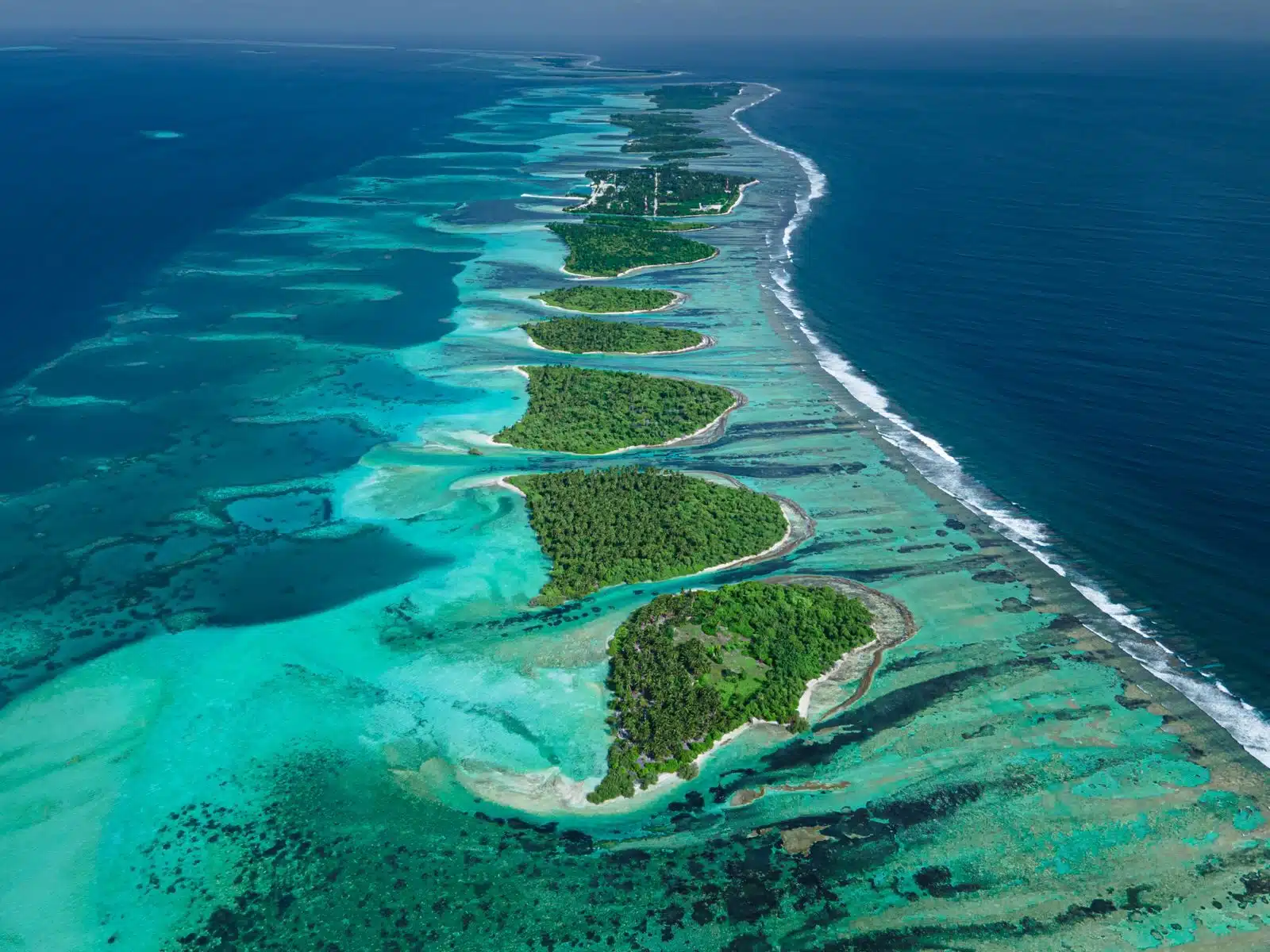
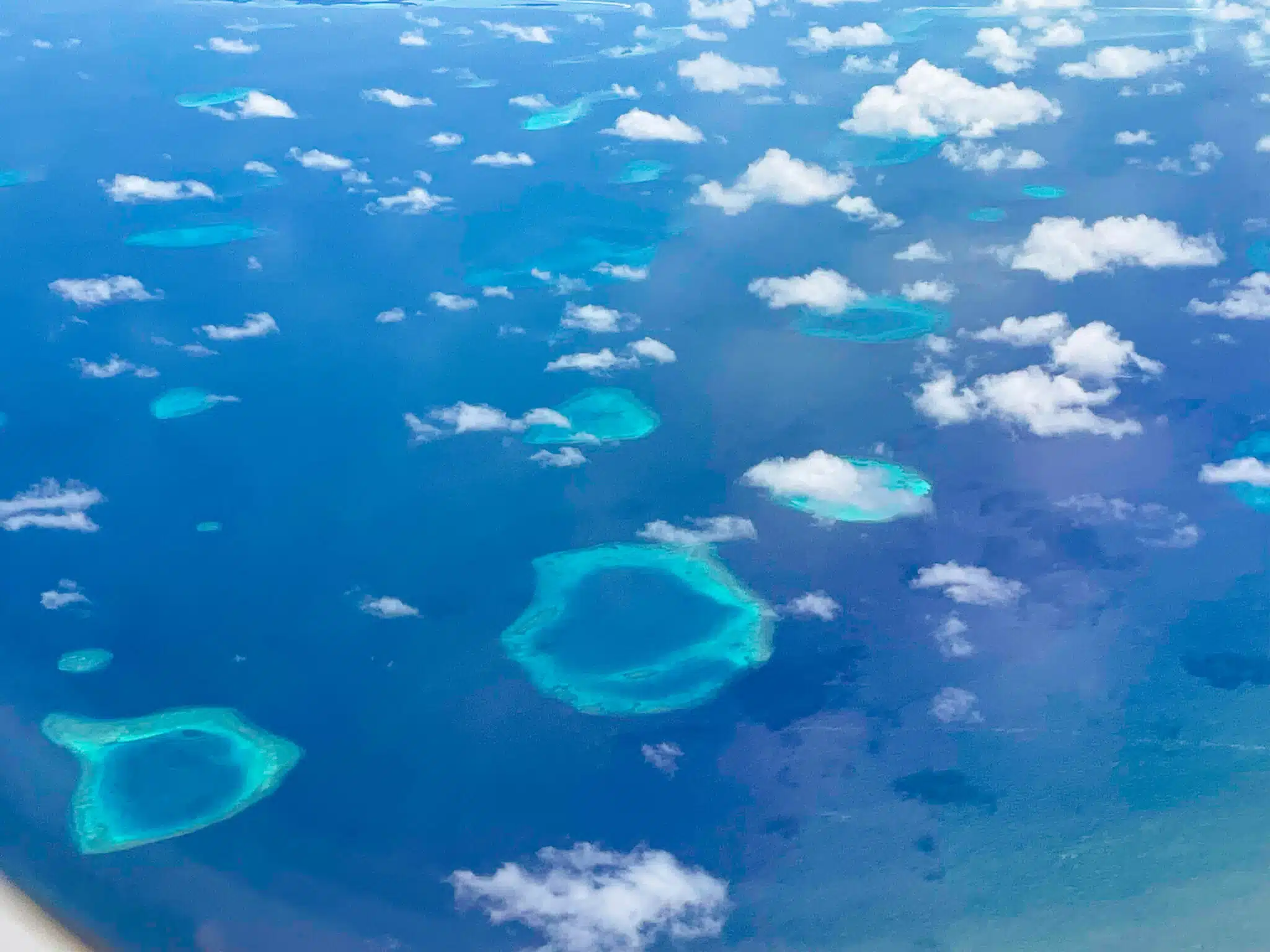
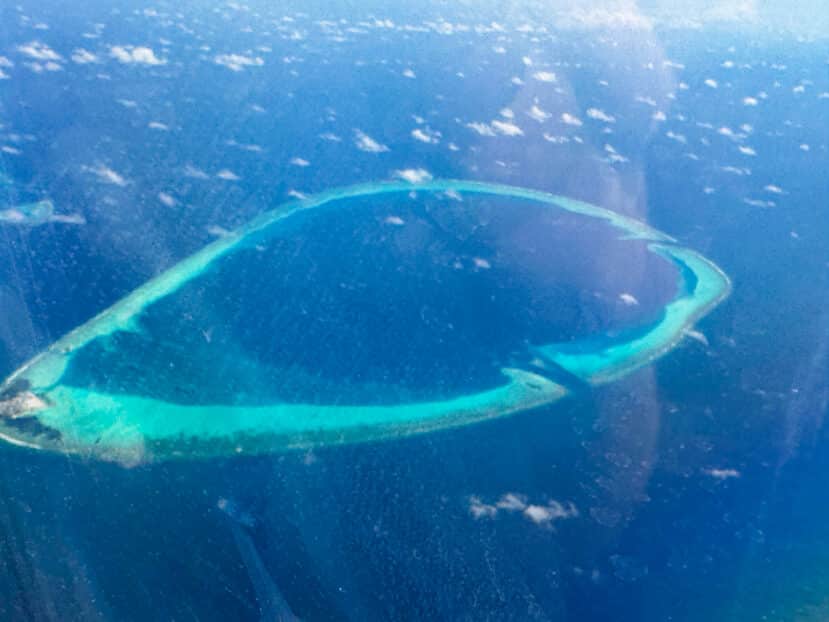
Baa Atoll sits roughly 120 kilometres northwest of Malé in the upper-central part of the Maldives archipelago. It contains around 75 islands — some inhabited, some home to resorts, many uninhabited sandbanks and reef formations drifting in shades of turquoise. The atoll forms a rough oval, with a deep outer reef channel on its eastern edge that creates the perfect oceanographic conditions for the phenomenon that made it famous.
In 2011, the Maldivian government and UNESCO awarded the entire atoll Biosphere Reserve status — the first in the Maldives. The designation recognises not only the richness of the reef ecosystem and the critical role Baa plays as a plankton transport hub between the western and eastern Indian Ocean, but also the atoll's long history of local communities living in sustainable relationship with the sea. More than 1,200 reef species have been documented here. The coral formations are among the most extensive in the Indian Ocean. And at the heart of it all, there is Hanifaru Bay.
Hanifaru Bay: The Manta Ray Capital of the World
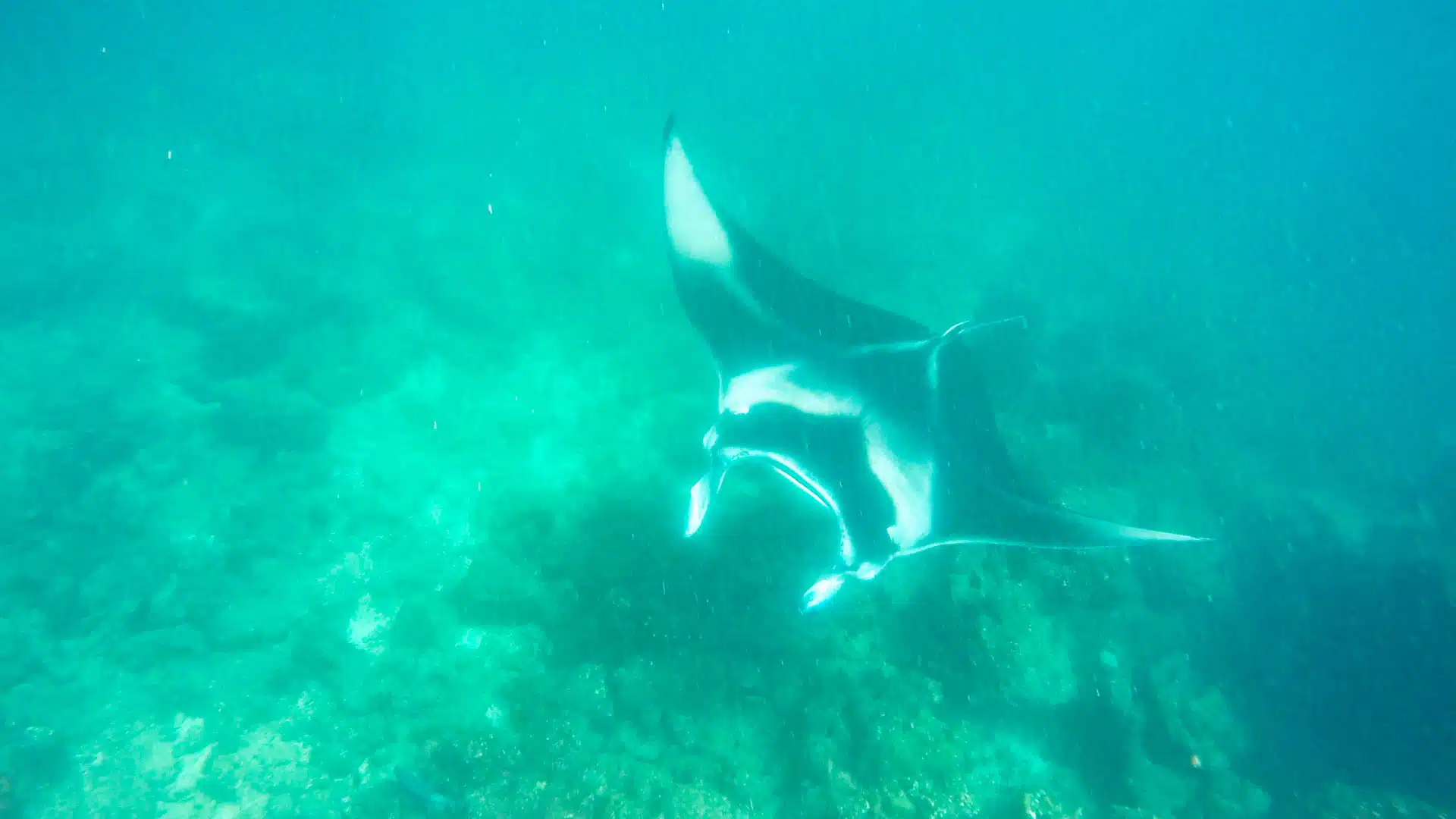
Hanifaru Bay is a small, funnel-shaped bay on the southeastern edge of Baa Atoll, about two kilometres from the local island of Dharavandhoo. What makes it extraordinary is the combination of its keyhole shape and its position along a deep-water channel: during the southwest monsoon (approximately May to November), strong lunar tides and monsoon currents push plankton-rich water from the depths directly into the bay, where the shape of the reef traps and concentrates it into a dense, irresistible feeding ground. The result is the largest documented manta ray aggregation in the world.
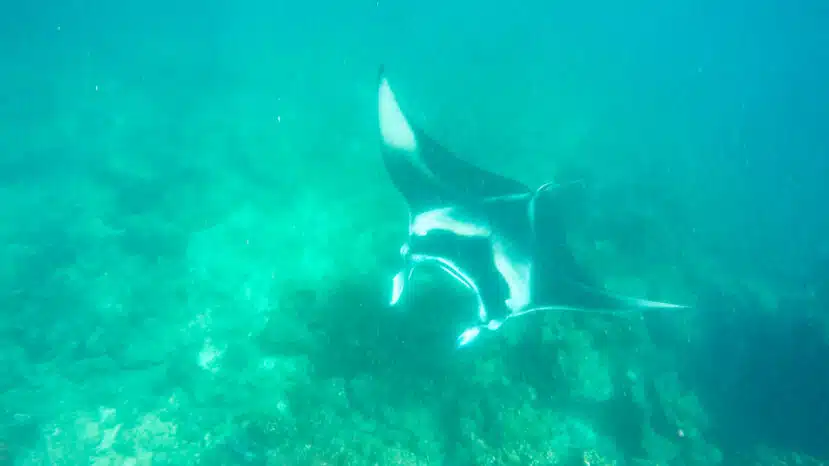
On a typical manta season day, you can expect to encounter 5–50 rays. On peak days — particularly around full and new moon phases — more than 200 have been counted in the bay simultaneously. Whale sharks are also regular visitors during the season, drawn by the same plankton bloom. The behaviour the rays exhibit here is unlike anything seen elsewhere: they form long chains of barrel-rolling, cyclone-feeding formations that marine biologists describe as among the most spectacular displays in the ocean. The Manta Trust has documented more than 1,800 individual reef manta rays at Hanifaru Bay over the past 15 years.
Hanifaru was declared a Marine Protected Area in 2009, and access is strictly regulated. Scuba diving is banned inside the bay to avoid disturbing feeding patterns. Snorkelling is permitted with a licensed guide only, in groups of up to ten visitors, for a maximum 45-minute session. A $20–30 conservation token is required per person, with all proceeds going to the Baa Atoll Conservation Fund. Access is arranged through resorts, guesthouses, or via taxi boat from Dharavandhoo.
Getting to Baa Atoll
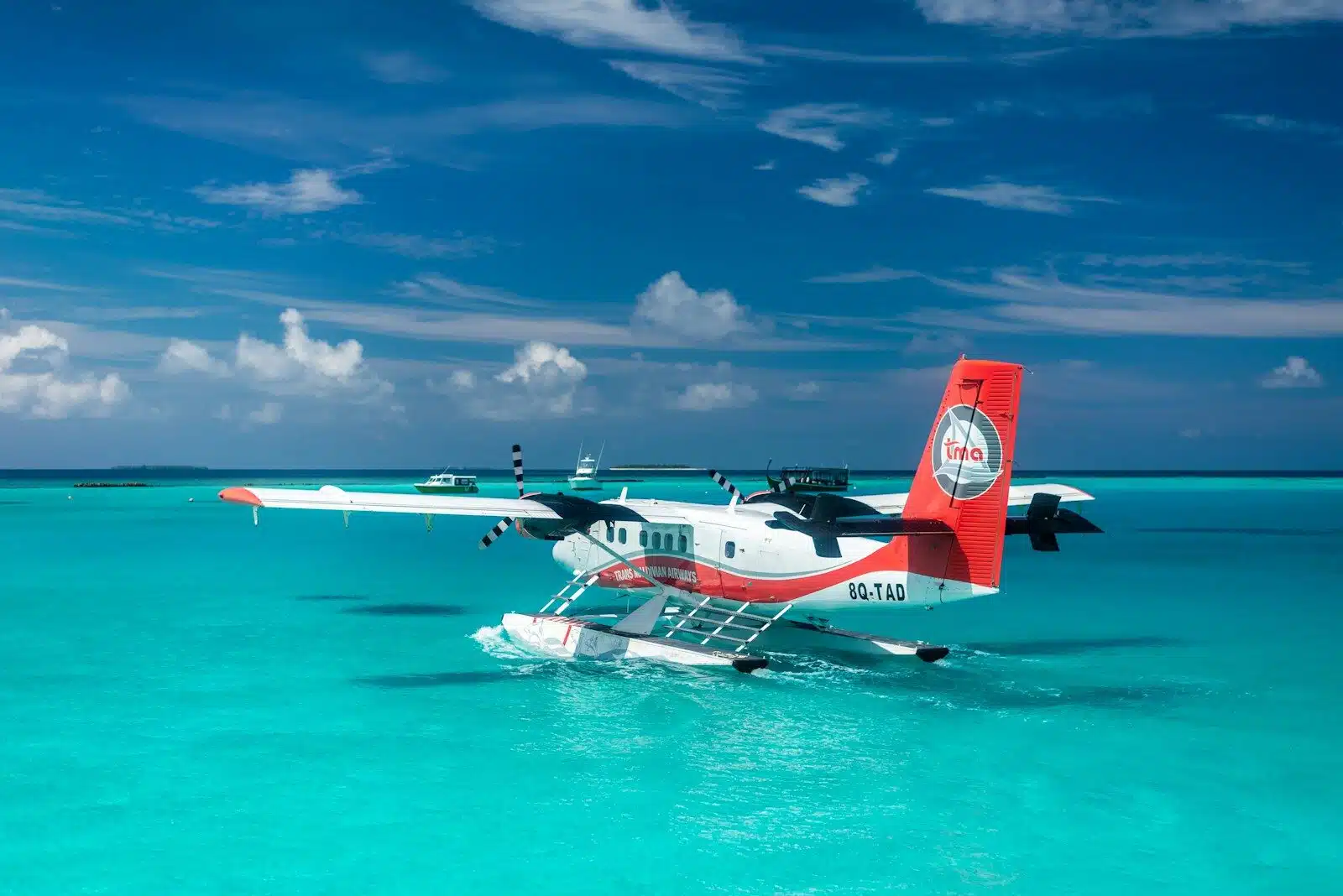
The primary way to reach Baa Atoll is by seaplane from Velana International Airport in Malé. The journey takes approximately 30–35 minutes and offers sweeping aerial views of the atoll's lagoons. Seaplanes operate only in daylight hours — typically 6am to 5pm — which means guests arriving on late international flights must spend a night in Malé or nearby before continuing. Budget approximately $800–$1,700 per person return, with exact costs varying by resort.
The alternative is a domestic flight to Dharavandhoo (Hanimaadhoo serves the broader north) followed by a speedboat transfer. This route takes considerably longer and is better suited to guests staying on the local island or at resorts offering this option. If you're staying at Dharavandhoo to experience Hanifaru Bay independently, the local ferry from Malé takes around 2 hours and 15 minutes. We've done this ourselves — the first hour can be rough on choppy days, so motion sickness tablets are a sensible precaution, but it's a genuinely affordable way to reach the atoll and experience the local island at its most authentic.
Marine Life, Above and Below the Surface
While Hanifaru Bay is the headline, the underwater world of Baa Atoll extends well beyond it. The house reefs at resorts here are among the strongest in the Maldives — several resorts sit metres from pristine coral gardens teeming with turtles, reef sharks, octopus, eagle rays and hundreds of tropical fish species. Dhigurah Corner and Horubadhoo Thila are well-known dive sites within the atoll, with manta ray cleaning stations active throughout the season. Even outside manta season, Baa Atoll offers exceptional snorkelling and diving year-round.
Character and Vibe
Baa Atoll is defined by a sense of ecological purpose alongside luxury. The resorts here attract guests who care about their marine experience — not just a beautiful pool and overwater villa, but a genuine connection with the ocean. Many properties have resident marine biologists, coral restoration programmes and dedicated conservation excursion guides. This isn't a party atoll or a buzzy social scene; it's a place where the most memorable moments happen underwater, or watching the sky over an untouched lagoon. For honeymooners, nature-focused families and anyone who rates marine encounters at the top of their Maldives wishlist, Baa Atoll is the destination.
Resorts in Baa Atoll
All six resorts below are located within the UNESCO Baa Atoll Biosphere Reserve, within seaplane or domestic-flight reach of Hanifaru Bay.
Anantara Kihavah Villas
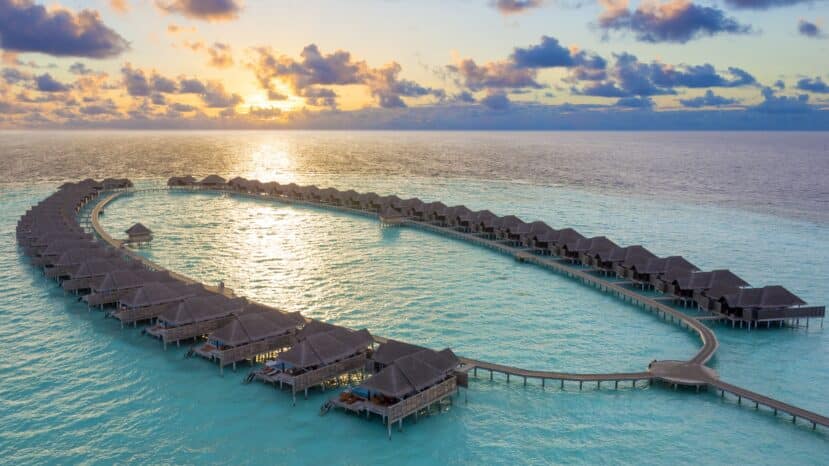
Anantara Kihavah is where Baa Atoll's luxury marine experience reaches its peak. The resort is famous for its SEA restaurant — an underwater dining room surrounded by the living reef — and for its exceptional house reef, which is rated among the best in the Maldives and accessible directly from the beach or your overwater villa. The resort also includes a telescope observatory for stargazing, one of the few in the Maldives. A dedicated marine biology team leads Hanifaru excursions during manta season. For honeymooners and couples who want both extraordinary underwater encounters and ultra-luxury design, Anantara Kihavah is hard to beat.
📍 Seaplane 35 min | 💰 From $6,300 based on HB for 3 nights (for 2, incl transfer) | ⭐ 9.5
Dusit Thani Maldives
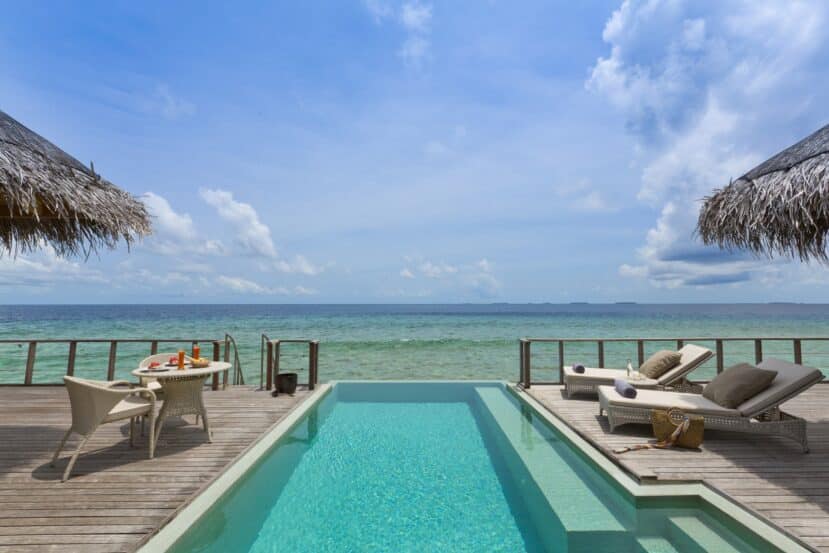
Dusit Thani sits on densely vegetated Mudhdhoo Island and brings a distinct Thai-influenced character to Baa Atoll — warm hospitality rooted in Thai heritage, paired with a lush tropical setting that feels more garden than typical resort. The house reef is rated excellent for both snorkelling and diving, the villas are spacious and private (8/10), and the Devarana Wellness spa occupies a series of treetop treatment pods among the palms. With a kids club, three restaurants and a broad meal plan range including AI, it works well for couples and families alike. Hanifaru Bay is accessible by boat during manta season.
📍 Seaplane 35 min or domestic flight | 💰 From $4,600 based on B&B for 3 nights (for 2, incl transfer) | ⭐ 9.4
Four Seasons Resort Maldives at Landaa Giraavaru
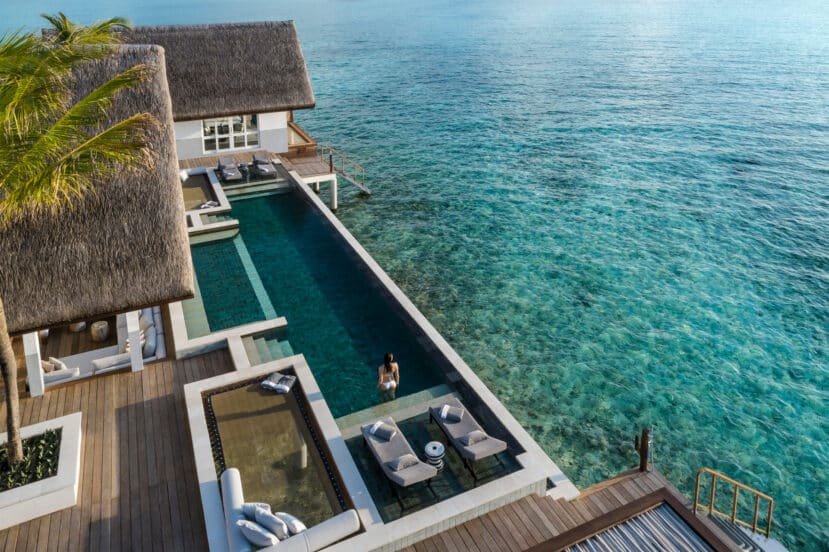
The Four Seasons Landaa Giraavaru is widely regarded as the best resort in Baa Atoll for serious manta ray encounters. The property operates its own research vessel in partnership with the Manta Trust, meaning guests can join properly-guided marine expeditions — not just tourist snorkel trips. The resort has one of the strongest wellness programmes in the Maldives, with an extensive Ayurvedic spa, and appeals equally to honeymooners and families. Beach pool villas start at $2,400/night, overwater at $2,500 — reflecting the resort's Four Seasons positioning.
📍 Seaplane 35 min | 💰 From $8,000 based on B&B for 3 nights (for 2, incl transfer)| ⭐ 8.9
Milaidhoo Island Maldives
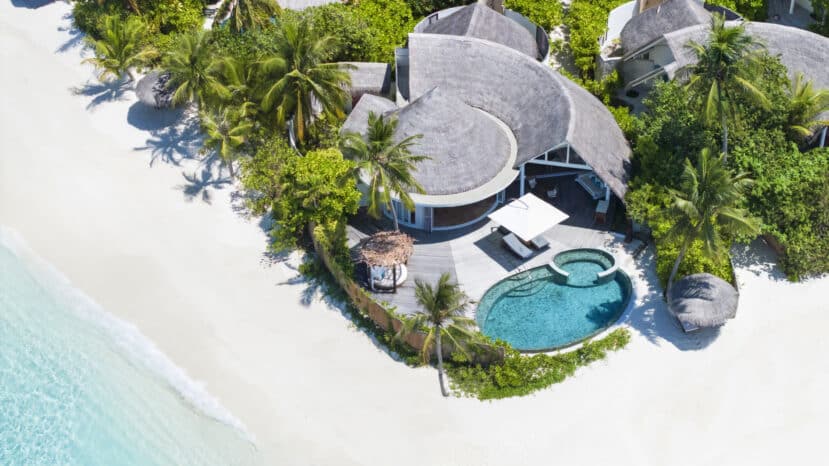
Milaidhoo is a boutique luxury resort and a favourite among guests who want genuine intimacy alongside exceptional house reef access. The island is small and refined, with just over two dozen villas — all either overwater or directly beach-facing — and a house reef that completely encircles the island and is rated excellent for both snorkelling and diving. The resort is oriented around couples, with no kids club, and its position within Baa Atoll puts Hanifaru Bay within easy reach. If you value a small, quiet resort over a large property with a social scene, Milaidhoo is one of the best choices in the Baa Atoll.
📍 Seaplane 35 min or domestic flight + speedboat | 💰 From $6,640 based on B&B for 3 nights (for 2, incl transfer) | ⭐ 8.8
Soneva Fushi
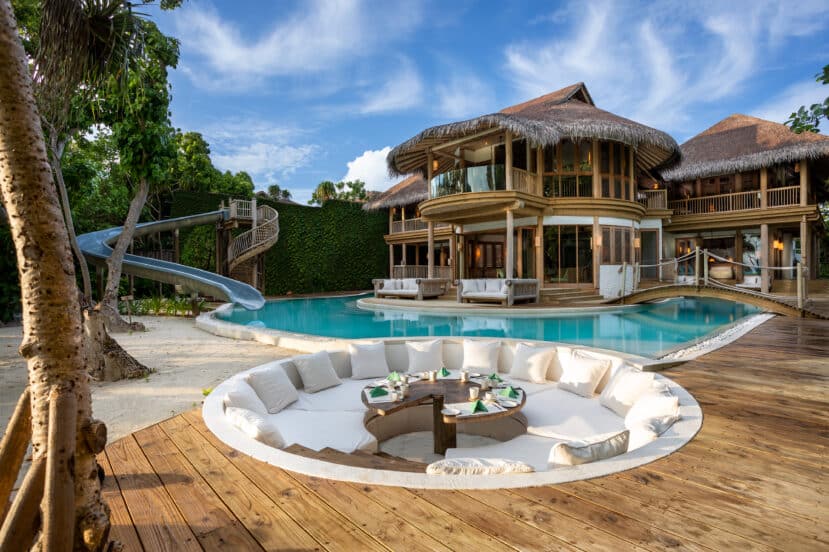
The original barefoot luxury resort — and still one of the most iconic in the Maldives. Soneva Fushi occupies a large, densely-vegetated island with extraordinary privacy: the massive crusoe villas sit hidden among tropical trees, and the philosophy of “no news, no shoes” has defined the Soneva brand since the 1990s. It's particularly loved by families and couples seeking space, sustainability and exceptional dining (10+ restaurants and bars). Hanifaru Bay is approximately a 30-minute seaplane away.
📍 Seaplane 30 min | 💰 From $15,600 based on B&B for 3 nights (for 2, incl transfer) | ⭐ 9.7
The Nautilus Maldives
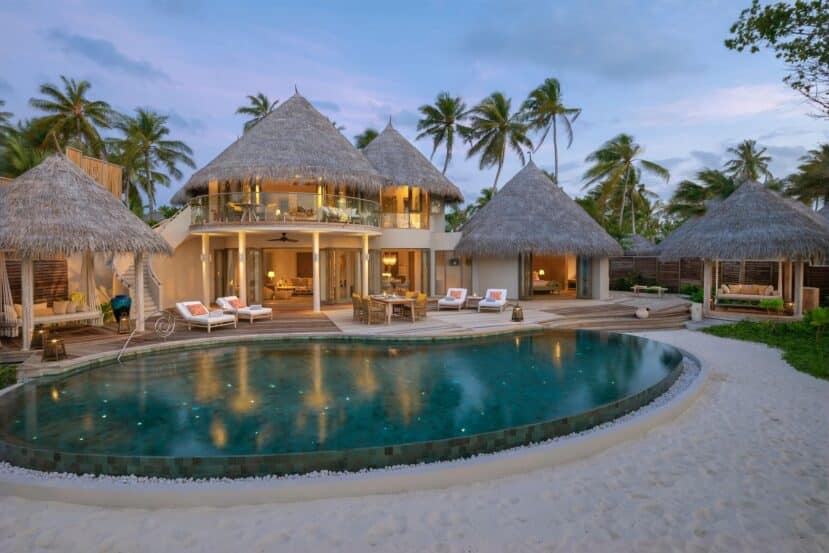
The Nautilus operates on a completely different model to most Maldives resorts: there are no set schedules, no fixed dining times and no standard programmes. Instead, everything is arranged personally — meals whenever you want, activities when the mood strikes, complete flexibility. The property has only a small number of large private houses and villas, creating an almost exclusive-buyout atmosphere even when fully occupied. Rated 9.8 on Booking.com and positioned firmly in the ultra-luxury tier. Transfer by private seaplane is expensive but in keeping with the experience.
📍 Seaplane 30 min | 💰 From $12,500 based on HB for 3 nights (for 2, incl transfer) | ⭐ 9.5
Vakkaru Maldives
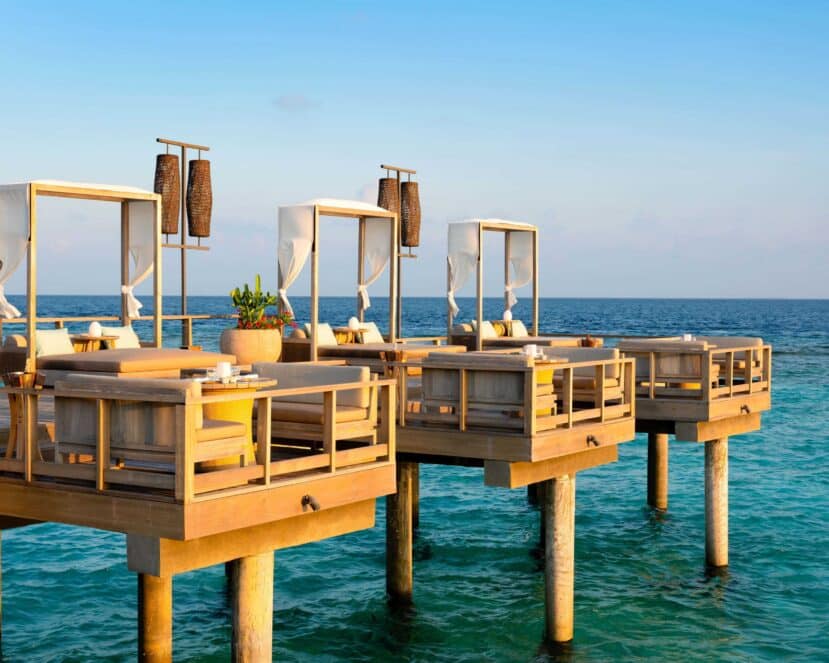
Vakkaru is a newer luxury resort in Baa Atoll with a strong reputation for combining refined elegance with genuine family friendliness. The island is large enough to feel spacious, the villas are beautifully designed and private, and the house reef delivers excellent snorkelling. Five restaurants, a strong spa programme, and a kids club for ages 3–12 make it one of the most complete resorts in the atoll. It sits comfortably alongside the other luxury options in Baa while feeling slightly more accessible than the true ultra-luxury outliers.
📍 Seaplane 30 min | 💰 From $5,500 based on HB for 3 nights (for 2, incl transfer) | ⭐ 9.8
Local Islands in Baa Atoll
Dharavandhoo
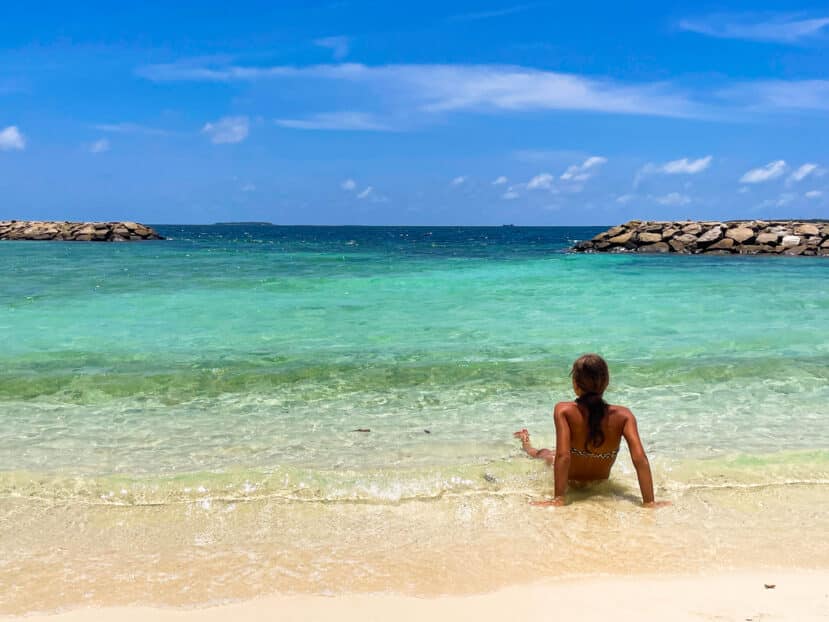
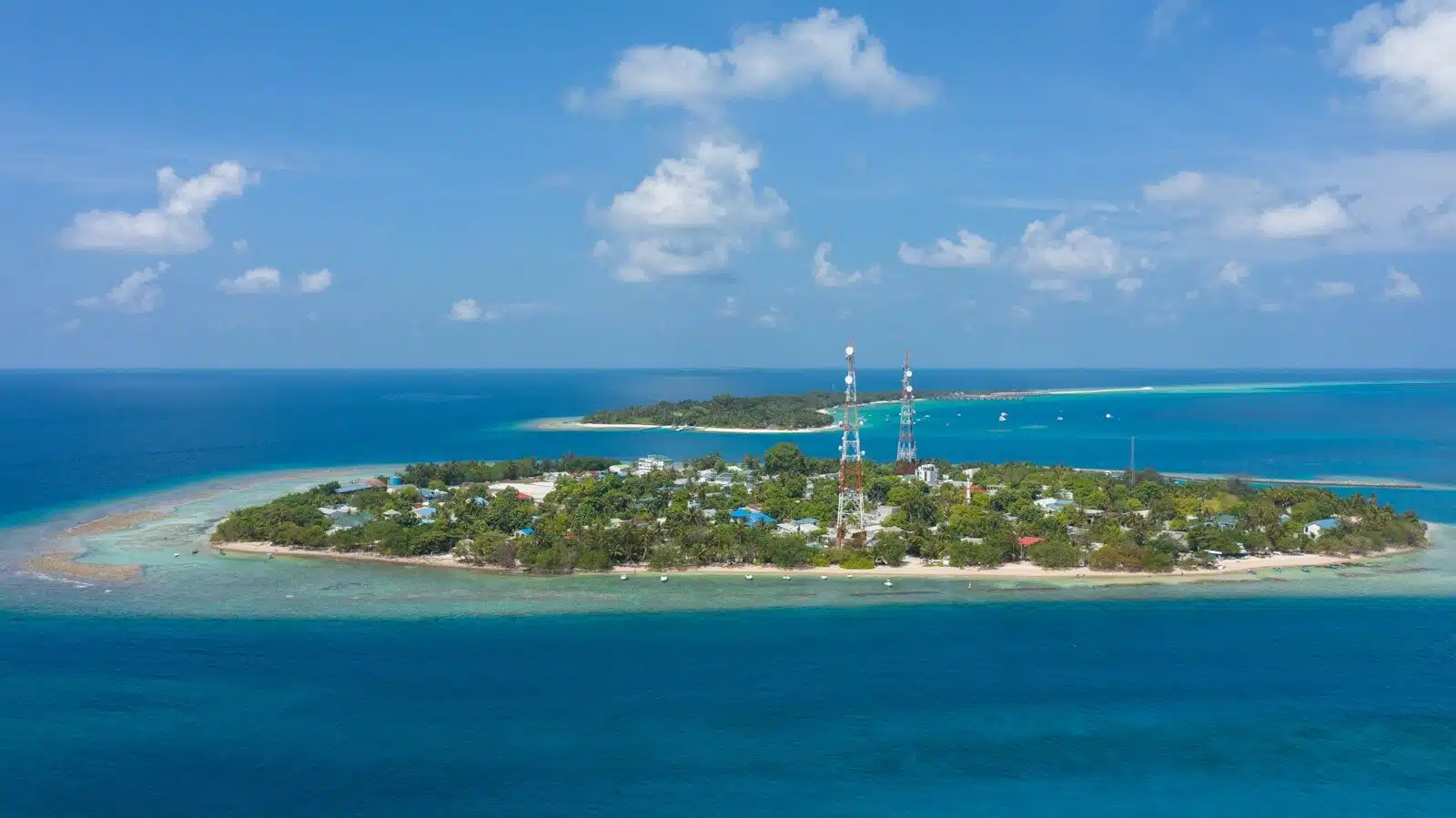
Dharavandhoo is the main local island in Baa Atoll and the natural base for experiencing Hanifaru Bay without a resort budget. The island is small, safe and genuinely quiet — we spent several days here with our family, and the combination of local ferry access, affordable guesthouses, and the sheer immediacy of the marine experiences on offer made it one of the highlights of our entire Maldives trip. The Hanifaru Bay visitor centre is here, and taxi boats to the bay depart regularly. Manta ray snorkelling trips, turtle reef excursions and sandbank visits can all be booked via guesthouses or local operators.
We were called early in the morning when the mantas were spotted — and within 15 minutes we were on a boat. The first spot was quiet, but the second brought us face-to-face with around 15 rays gliding in formation just below the surface. Our kids talked about it for days. Later that week, a turtle and sandbank excursion via Biosphere Inn added what became one of the most extraordinary moments of our Maldives trip: snorkelling alongside several turtles, then stepping onto a private sandbank surrounded by nothing but turquoise water in every direction.
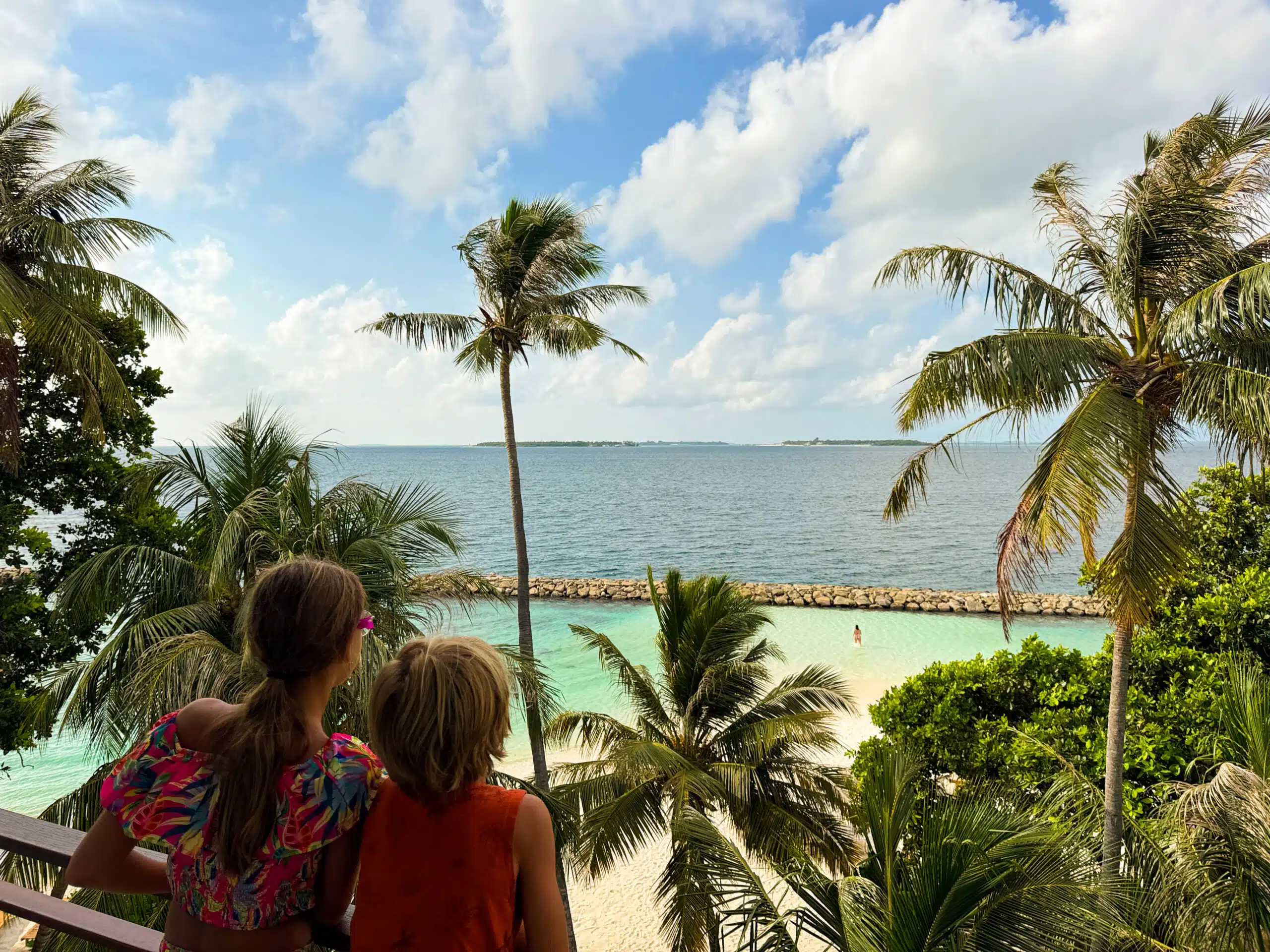
The local ferry from Malé takes around 2 hours 15 minutes. The sea can be rough for the first hour — anti-nausea tablets help. Bikini beach is directly in front of Kiha Beach guesthouse, which made it easy for our kids. Honey Bunny restaurant, overlooking the local airport runway, was a quirky and genuinely fun lunch spot. One tip we only discovered on our last evening: ask about whale shark night swims on arrival, not on day four.
Read our complete Dharavandhoo guide →
Maalhos
If Dharavandhoo is the practical, well-connected gateway to Hanifaru Bay, Maalhos is its quieter, more intimate alternative. The island is tiny — barely a kilometre in length with a population of around 700 — and significantly less developed than Dharavandhoo, which means it still has that unhurried local rhythm that many travellers come to the Maldives hoping to find. It lies about 15 minutes by boat from Hanifaru Bay, making it a perfectly viable base for manta season visits, with several guesthouses organising licensed Hanifaru trips, diving excursions and sandbank picnics. The house reef is solid for snorkelling, there's a designated bikini beach, and a dive school operates on the island. We seriously considered staying here ourselves before choosing Dharavandhoo for the airport connection — if you're arriving by ferry rather than domestic flight and you value quiet over convenience, Maalhos is worth a long look.
Fulhadhoo, Fehendhoo & Goidhoo
These three islands form their own small sub-atoll — known as Goidhoo Atoll or Horsburgh Atoll — just south of the main Baa Atoll ring, separated from it by a narrow channel. They're administratively part of Baa Atoll but geographically distinct, and collectively they offer some of the most beautiful and untouched local island scenery in the entire Maldives.
Fulhadhoo has a beach that ranks among the world's top 25 by some measures — 1.5 kilometres of powder-white sand along the western coast, with almost no development in sight. The island's eastern end holds a tiny village of around 250 people; the rest is jungle, palm trees and this extraordinary beach. Tourism infrastructure is modest but functional, with several guesthouses including the well-regarded Island Luxury Boutique Hotel. The beach's western side is bikini-permitted; the current near the western tip can be strong so snorkel with caution, but the northern reef is calm and excellent. Getting there typically involves a 90-minute public speedboat from Malé (via Goidhoo), or a domestic flight to Dharavandhoo plus a short onward transfer.
Fehendhoo, just 5–10 minutes by boat from Goidhoo, is one of the least-visited inhabited islands in Baa Atoll — fewer than 150 residents, a handful of guesthouses including the small luxury property Tropical Village, and an atmosphere that feels genuinely like stepping outside the modern world. The island is walkable end-to-end in 15 minutes. Its main snorkelling area sits on the northern end of the island. Hanifaru Bay is accessible as a day trip during manta season. If you want the most stripped-back, community-feel local island experience in Baa Atoll, Fehendhoo is the answer.
Goidhoo is the largest of the three and the usual entry point for the group, with the best ferry connections from Malé. Its defining feature is completely unexpected for the Maldives: two freshwater mangrove lakes in the interior of the island, shallow enough to wade through and home to large amphibian crabs that can be spotted along the shoreline at dusk. This is a genuine rarity in an archipelago with no rivers or mountains. Beyond the lakes, Goidhoo has an old Friday mosque dating back to the 1700s, farmland growing papayas and watermelons, and a reef suited to kitesurfing and windsurfing. Hanifaru Bay excursions are available. The island is more active and eco-tourism oriented than its quieter neighbours.
The three islands are often combined into multi-island itineraries — spending a few nights on each is one of the more distinctive ways to experience Baa Atoll beyond the resort circuit.
Kamadhoo
Kamadhoo sits on the northern arc of Baa Atoll and has quietly developed a reputation as the wellness island of the atoll — yoga retreats and holistic-focused guesthouses have established themselves here over the past decade, drawn by the island's calm, its beautiful beach and its location close to some of the atoll's best dive sites in the northern reef. It's a small, peaceful island with a fraction of the tourist footfall of Dharavandhoo, suited to travellers who want a meditative pace alongside excellent underwater access. Snorkelling directly from the beach is good, and boat excursions to the northern dive sites depart regularly.
Dhonfanu
Dhonfanu is one of the lesser-known gateways to Hanifaru Bay and deserves more attention than it typically gets. The island sits in close proximity to the bay itself — direct boat access is fast, and a dive school operates on the island for guests who want guided trips. What sets Dhonfanu apart from Dharavandhoo is its size and atmosphere: it's quieter, smaller, and retains a genuine local feeling even during manta season. The house reef is good for snorkelling. If you've done Dharavandhoo before and want the same Hanifaru access with a less visited, more relaxed setting, Dhonfanu is the natural next choice.
How Raa Atoll Works
Geography and Character
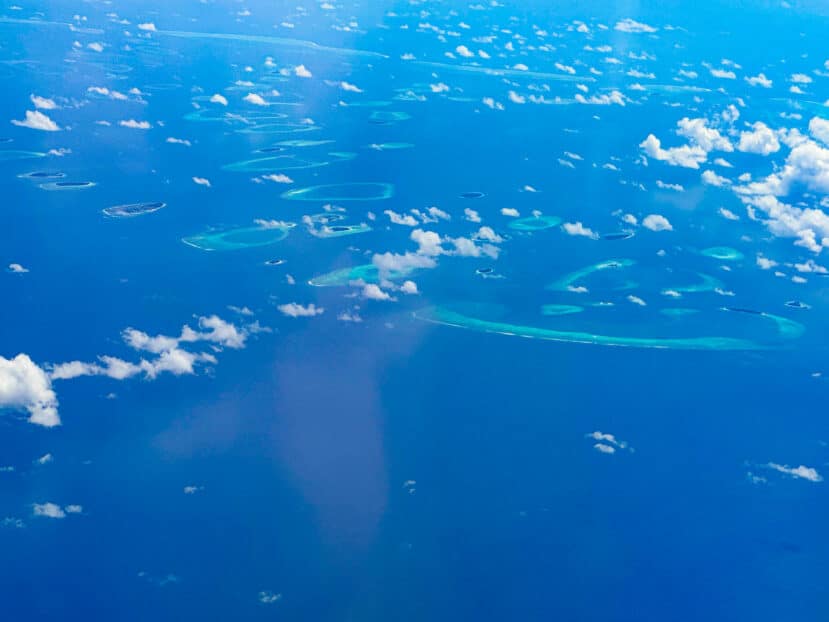
Raa Atoll lies directly north of Baa Atoll, approximately 130–140 kilometres from Malé, making it one of the more remote atolls accessible by seaplane within a reasonable flight time. Officially known as Northern Maalhosmadulu Atoll, it spans roughly 78 kilometres north to south and contains 88 islands — 15 of them inhabited, the rest either uninhabited or home to a small number of resort islands. The population across the atoll is around 25,000 people.
Where Baa Atoll is shaped by its UNESCO status and the draw of Hanifaru Bay, Raa is defined by a quieter, emptier kind of beauty. The islands here are long and slender, surrounded by unusually wide and shallow lagoons that turn a milky turquoise under the midday sun. From your villa, you won't see another island on the horizon — just open ocean. This is a deliberate, valuable kind of emptiness, and the resorts here have been built to complement it rather than compete with it.
Transfer to Raa Atoll
Raa Atoll is reached by seaplane from Velana International Airport in Malé — a journey of approximately 40–45 minutes. As with all seaplane transfers in the Maldives, flights operate only during daylight hours (roughly 6am–5pm), which makes late-arriving international flights an important logistical consideration. Plan for a night in Malé if your international connection lands in the evening.
The domestic airport at Ifuru Island in Raa Atoll also accepts flights from Malé, which some resorts use to offer a combined domestic flight plus speedboat route. Transfer costs by seaplane typically run approximately $470–$850 per person return, depending on the resort. The minimum recommended stay in Raa Atoll is five nights — both to justify the transfer cost and to have time to genuinely settle into the atoll's unhurried pace.
Marine Life in Raa Atoll
Raa Atoll does not have a Hanifaru Bay equivalent, but its marine life is genuinely exceptional and far less visited than the more central atolls. The outer reef features deep channels where manta rays and whale sharks pass on seasonal migrations. Dive sites including Madi Kandu, Maduvvari Thila and the caves of Vaadhoo offer reef sharks, turtles, schooling fish and vibrant coral formations that rival any in the Maldives. The house reefs at several resorts — particularly Furaveri (not in our database) and the IHG property — are rated among the finest in the north.
Raa Atoll is also noted for its bioluminescence: on moonless nights, the phytoplankton in the shallow lagoons creates a natural light show at the waterline, turning the shallows into what looks like a sea of stars. Vaadhoo Island in Raa Atoll is one of the most famous sites in the world for this phenomenon.
Character and Vibe
Raa Atoll is the destination for travellers who want the Maldives at its most expansive and uncluttered. The resort collection here skews heavily towards ultra-luxury and design-focused experiences — there are no budget options, and the properties that operate here have positioned themselves precisely because of the atoll's remoteness and the sense of complete privacy it provides. If you're planning a honeymoon and want somewhere that feels genuinely away from everything, or a wellness retreat where even the transfer feels like part of the escape, Raa is an exceptional choice.
Resorts in Raa Atoll
Emerald Maldives Resort & Spa
Emerald Maldives is the premium all-inclusive option in Raa Atoll — a strong choice for couples and families who prefer the simplicity of a single bill and unlimited dining. The resort operates a high-end all-inclusive concept with four restaurants, spacious beach and overwater villas, and a good house reef for snorkelling. It's one of the better-value luxury options in the atoll, particularly for families who appreciate inclusive pricing and a kids-friendly approach without sacrificing the Raa Atoll sense of space and remoteness.
📍 Seaplane 40 min | 💰 From $3,850 based on AI for 3 nights (for 2, incl transfer) | ⭐ 9.9
Ifuru Island Maldives
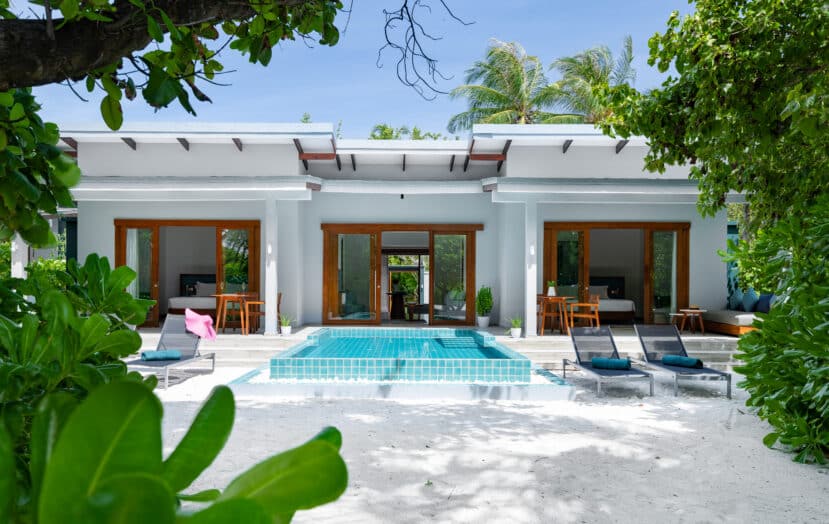
Ifuru Island occupies a different position in the Raa Atoll market: it's a lifestyle-focused, entertainment-rich resort that functions more like a social island than a private retreat. The unique feature is its domestic airport connection — accessible by a direct 45-minute flight from Malé, which makes transfers significantly cheaper than seaplane ($700 per couple return vs $800–$1,700+ for seaplane resorts). Six restaurants, a social atmosphere, and an all-inclusive option make Ifuru the accessible entry point to Raa Atoll for guests on a tighter budget or shorter trip timeline.
📍 Domestic flight 45 min | 💰 From $2,600 based on HB for 3 nights (for 2, incl transfer) | ⭐ 9.1
InterContinental Maldives Maamunagau
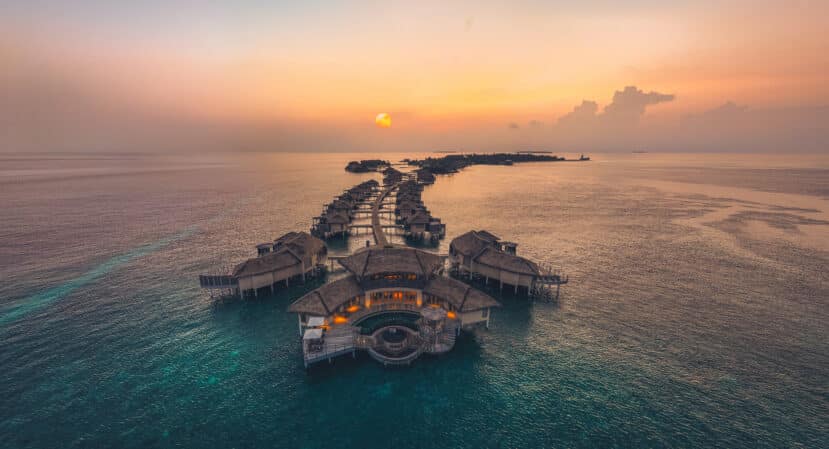
The InterContinental Maamunagau is one of the highest-rated resorts in Raa Atoll, with a 9.6 on Booking.com reflecting consistently strong service and guest satisfaction. The resort offers spacious pool villas (overwater from $1,330/night), six restaurants including the well-regarded Barracuda, and a kids club for families. Snorkelling from the house reef is rated excellent. It's the best-suited option in Raa Atoll for couples or families who want a high-end but complete resort experience — more balanced in its offering than the more specialist properties like Joali Being.
📍 Seaplane 35 min | 💰 From $4,600 based on HB for 3 nights (for 2, incl transfer) | ⭐ 9.7
Joali Being
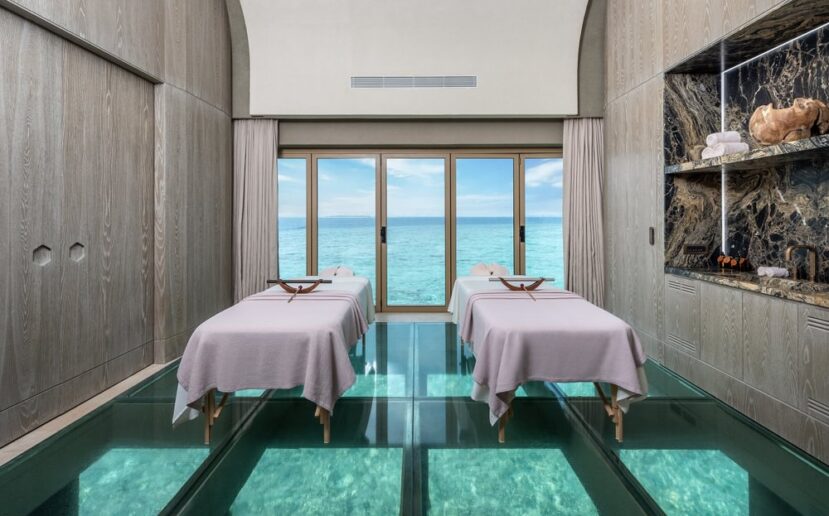
Joali Being is the sister property to Joali Muravandhoo, built on an entirely different philosophy. Where Joali is art and design, Joali Being is the most comprehensively wellness-focused resort in Raa Atoll — and one of the most serious wellness retreats in the Maldives as a whole. It operates as a transformative retreat for couples and solo travellers, with programming built around holistic healing, mindfulness and personalised spa treatments. No kids club; adults and couples only in orientation. Ocean pool villas start at $2,600/night. For anyone whose primary goal is a genuine reset, Joali Being makes a compelling case.
📍 Seaplane 40 min | 💰 From $12,200 based on HB for 3 nights (for 2, incl transfer) | ⭐ 9.4
Joali Muravandhoo
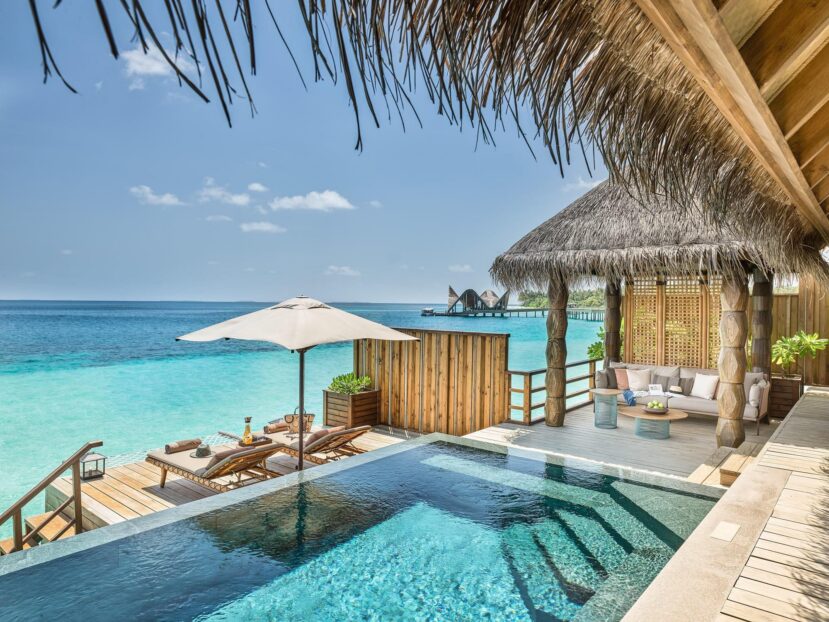
Joali is one of the most visually distinctive resorts in the Maldives — and possibly in any ocean. The entire island has been conceived as an immersive art gallery, with large-scale installations by international and Maldivian artists placed throughout the gardens, in the villas and even underwater. The 73 villas (beach and overwater) are spacious and beautifully designed, the five restaurants offer serious dining, and a dedicated kids club makes it one of the more family-friendly ultra-luxury resorts in the north. If you're drawn by the idea of art, design and luxury in an extraordinary natural setting, Joali is unlike anything else in the Maldives.
📍 Seaplane 40 min | 💰 From $13,000 based on HB for 3 nights (for 2, incl transfer) | ⭐ 8.2
You & Me Maldives
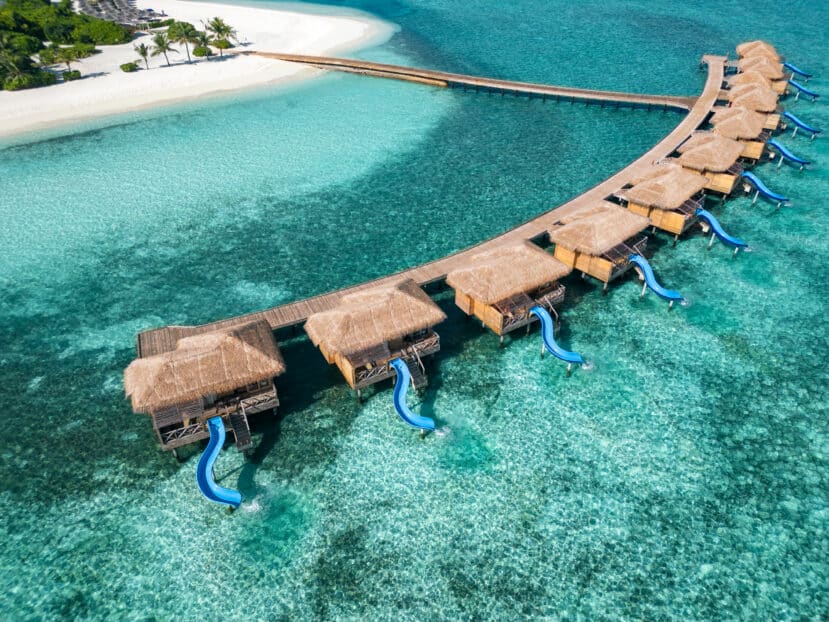
You & Me is the most romantic resort in Raa Atoll — an adults-only property that is, unusually, built entirely over the water. Every villa is overwater. The resort has five restaurants including an underwater dining room, and its design is distinctly modern and intimate. With a Booking.com score of 9.1 and a privacy rating of 8/10, it's one of the better-value luxury options in the north: overwater villas start at $590 room-only, which is low for the category. If your priority is a Maldives honeymoon with dramatic overwater design, underwater dining, and genuine adult-only seclusion, You & Me delivers all three.
📍 Seaplane 45 min or domestic flight | 💰 From $3,150 based on AI for 3 nights (for 2, incl transfer) | ⭐ 9.5
Local Islands in Raa Atoll
While Raa Atoll is primarily a resort destination, it has a small number of local islands worth knowing about — particularly for travellers who want to combine a resort stay with cultural day excursions, or who are drawn to specific natural phenomena.
Vaadhoo
Vaadhoo is the most famous local island in Raa Atoll, and for one reason that has nothing to do with beaches or snorkelling: the Sea of Stars. On moonless nights, the bioluminescent phytoplankton in the shallows of the island's eastern beach emit a vivid blue glow when disturbed by waves or footsteps, turning the waterline into what looks like a living mirror of the night sky above. The phenomenon is one of only a handful of reliable shore-accessible bioluminescent displays in the world, and it's free — no boat trip, no booking, just walking to the beach after dark. The best viewing is between June and October, timed with new moon phases when the sky is darkest. Vaadhoo is located at the southern tip of Raa Atoll and is reachable via domestic flight to Ifuru followed by a speedboat, or by arranging a day trip from one of the atoll's resorts. Beyond the bioluminescence, the island has solid snorkelling, kayaking and diving access, with 25+ documented dive sites in the surrounding reef.
Alifushi
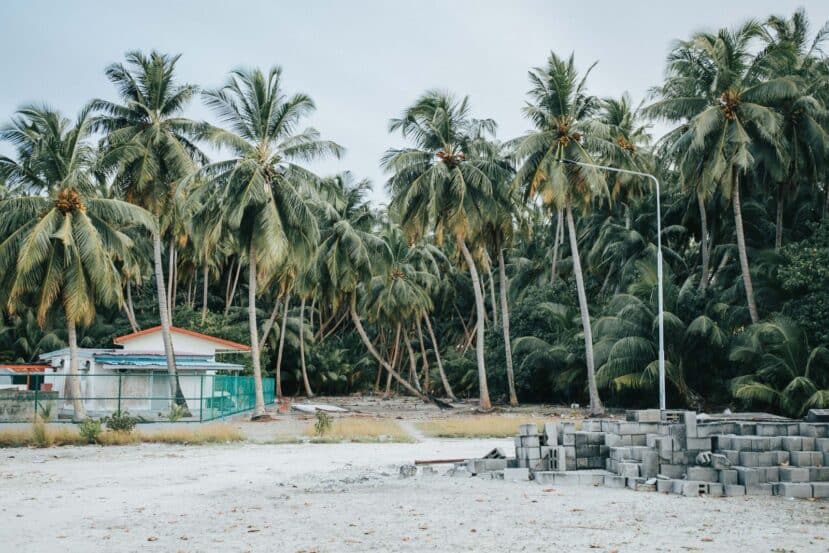
Alifushi holds a unique place in Maldivian cultural heritage: it is the primary centre for traditional dhoni boat building in the entire country. The dhoni — the graceful wooden vessel that has connected Maldivian islands for centuries and which you'll recognise from every resort transfer and dive trip — is built here by master carpenters using techniques passed down orally from generation to generation, with no formal blueprints. Each boat takes around 60 days to complete. Visiting Alifushi and watching craftsmen shape a hull entirely by eye and hand is one of the more genuinely fascinating cultural experiences in the Maldives, and a useful reminder that the country's identity extends well beyond its beaches and reefs. The island is located at the northern end of Raa Atoll, accessible via domestic flight to Ifuru or as a day excursion from nearby resorts.
Rasgetheemu
Rasgetheemu carries one of the most intriguing origin stories in the Maldives. Local legend holds that this is where a Sri Lankan princess and her consort — exiled from what is now Sri Lanka — first made landfall, centuries before the advent of Islam in the archipelago. Whether historically verifiable or not, the legend gives the island a significance that resonates in local culture, and the island's natural harbour is genuinely beautiful. For travellers interested in the pre-Islamic and early settlement history of the Maldives, Rasgetheemu is a compelling excursion from any resort in the central or northern part of Raa Atoll.
Ungoofaaru
Ungoofaaru is the administrative capital of Raa Atoll and one of the cleanest and best-maintained towns in the entire Maldivian north. It has a regional hospital, government offices and a level of infrastructure that makes it the most functional inhabited island in the atoll for travellers arriving independently. Guesthouses exist here, and the island is a reasonable base if you want to explore Raa Atoll at local prices rather than resort prices. Day trips to nearby resorts and dive sites can be arranged, and the island's boat-building heritage — shared with Alifushi — means there's a working boatyard worth visiting.
Practical Tips for Baa and Raa Atoll
Best Time to Visit
Baa Atoll is genuinely rewarding year-round, but the timing of your visit fundamentally changes the nature of the experience. From May to November — the southwest monsoon season — the plankton blooms that make Hanifaru Bay famous are active, and manta ray encounters are at their most spectacular. This is also when whale sharks are most regularly spotted both in the bay and elsewhere in the atoll. The trade-off is slightly rainier weather and sometimes rougher seas, though resorts here are experienced at managing around this.
From December to April, the northeast monsoon brings calmer, drier conditions — better for swimming and beach days — but manta rays are less concentrated. The atoll is still excellent for diving and snorkelling year-round; only the Hanifaru aggregations are seasonal.
Raa Atoll follows the standard Maldives dry-season calendar more closely, with November to April offering the most consistently calm and sunny weather. Marine life is excellent throughout the year.
For both atolls: stays of fewer than four nights are generally not worth the logistics and cost of a seaplane transfer. Five to seven nights is the recommended minimum.
Getting There: Step by Step
Fly into Velana International Airport (MLE) in Malé. From there:
- Seaplane: Book through your resort. Operates 6am–5pm daylight only. Baa Atoll: ~30–35 min, approximately $400–$850 per person one-way. Raa Atoll: ~40–45 min, approximately $470–$500 per person one-way. Late-arrival flights mean an overnight in Malé.
- Domestic flight to Dharavandhoo (Baa) followed by speedboat to resort: longer, but some resorts offer this as an option. Good for guests staying at Dharavandhoo guesthouse.
- Domestic flight to Ifuru Island (Raa): 45 minutes, available for Ifuru Island Maldives and some other resorts. Significantly cheaper than seaplane transfer.
- Local ferry (Baa only): Public ferry from Malé to Dharavandhoo runs most days (not Fridays), takes approximately 2h15. Around $50 per person one-way. Best for guests staying on Dharavandhoo independently.
Tips and Good to Know
- Book Hanifaru Bay access in advance: During peak manta season, slots fill quickly. Your resort or guesthouse will arrange tokens and guide permits, but confirm this during booking.
- Seaplane weight restrictions: Most seaplanes limit luggage to 20kg per person. Pack soft bags — rigid suitcases can't always be accommodated.
- Alcohol: Available at all resorts. Not available on local islands — Dharavandhoo is a dry island.
- Manta season vs weather: June–September brings the best manta concentrations but also the most cloud and occasional swells. Late May or October–November often offers a good compromise: solid manta sightings with more settled weather.
- Night arrival in Malé: If your flight lands after 5pm, plan for a night in Malé. Reef Guest House on Hulhumaale is a good, affordable option — friendly staff and a sensible base for a transit night.
Final Thoughts on Baa Atoll Maldives
There are atolls in the Maldives where beauty is the main event. Baa Atoll Maldives is somewhere the beauty comes with a purpose. The UNESCO Biosphere Reserve status, the world-record manta aggregations at Hanifaru Bay, the coral richness and the extraordinary variety of the resort experiences here make it one of the most complete and compelling destinations in the entire archipelago. Whether you're arriving by seaplane to an overwater villa at Anantara Kihavah or taking the local ferry to stay on Dharavandhoo and see the mantas from a wooden boat, the experience of this atoll will stay with you.
Raa Atoll adds a different dimension: quieter, starker, more remote. If the Maldives you're dreaming of is empty of everything except ocean, horizon and the occasional superlative resort, Raa delivers that without compromise.
Between them, these two northern atolls cover almost every kind of Maldives trip — from accessible local-island adventures to ultra-luxury design retreats to once-in-a-lifetime marine encounters. The journey to reach them takes a little planning, but the result is a Maldives that genuinely earns the word extraordinary.
🌴 Plan Your Maldives Trip
🏨 Still looking for the right stay? Browse all resorts in the Maldives or hotels & guesthouses on local islands — free cancellation on most rooms.
✈️ Flights: Compare routes and prices for flights to the Maldives.
📱 Stay connected: Skip the airport SIM queue — get a Maldives eSIM from Airalo before you fly. We use Airalo ourselves on every trip.
🔒 Travel insurance: Medical help in the Maldives often means evacuation by seaplane — don't skip travel insurance for the Maldives.
🤿 Tours & activities: Browse snorkelling trips, dolphin cruises and excursions across the Maldives, or check liveaboard diving trips.
💳 Money: Avoid card fees abroad with a free Revolut account.
Some links on this page are affiliate links. Booking through them costs you nothing extra and helps us keep this site running — thank you!
Frequently Asked Questions about Baa Atoll
Is Baa Atoll good for snorkelling?
Yes — Baa Atoll is one of the best atolls in the Maldives for snorkelling. Several resorts have excellent house reefs accessible directly from the beach or villa, and during manta season (May–November), Hanifaru Bay offers some of the most extraordinary snorkelling encounters on the planet. You don't need to be an experienced snorkeller to enjoy it — most encounters happen at or near the surface, and guides are always present to ensure the experience is safe and responsible. House-reef resorts like Vakkaru Maldives are a strong pick for snorkelling.
How far is Baa Atoll from Malé Airport?
Baa Atoll Maldives is approximately 120 kilometres from Malé, a distance covered by seaplane in around 30–35 minutes. The domestic flight to Dharavandhoo takes a similar amount of time but involves a connection and a speedboat leg. Budget around $400–$850 per person one-way for a seaplane transfer, depending on which resort you're staying at and whether the transfer is shared or private.
When is the best time to see manta rays in Baa Atoll?
Manta rays are present in Baa Atoll year-round, but the large feeding aggregations at Hanifaru Bay occur during the southwest monsoon from approximately May to November. Peak concentrations tend to coincide with full and new moon phases, when tidal movements concentrate plankton most strongly inside the bay. Historically, July through September sees the highest number of rays. A good day during this period can bring 50–200+ mantas; outside the season, encounters are possible but typically involve smaller numbers. Luxury bases near Hanifaru like Soneva Fushi put you close to the manta action.
Can I visit Hanifaru Bay from a local island?
Yes. Staying on Dharavandhoo — the main local island in Baa Atoll, just 2km from Hanifaru Bay — is one of the most affordable ways to experience the manta aggregations. Taxi boats depart from the island to the bay, and guesthouses or local operators can arrange certified guide permits. The Hanifaru Visitor Centre on Dharavandhoo sells the required conservation tokens ($20–30 per person per session). Budget guesthouses like Kiha Beach on Dharavandhoo run Hanifaru Bay trips in season.
What is the difference between Baa Atoll and Raa Atoll?
Both atolls are in the northern Maldives, accessible mainly by seaplane, and offer a remote, uncrowded experience very different from the busier central atolls. Baa Atoll is defined by its UNESCO Biosphere Reserve status and the world-famous manta ray aggregations at Hanifaru Bay — it's the destination if marine encounters are your priority. Raa Atoll sits directly north of Baa and has no Hanifaru equivalent, but it offers an even greater sense of seclusion, some of the most dramatic ultra-luxury design resorts in the Maldives, and a pristine marine environment that's less visited than Baa.
How long should I stay in Baa or Raa Atoll?
Given the seaplane transfer logistics and the remote location of both atolls, a minimum of five nights is strongly recommended. The seaplane costs and the time involved in getting there are significant — a two or three-night stay rarely does justice to what either atoll has to offer. Seven nights is the sweet spot for most travellers, giving you time to do multiple Hanifaru excursions (in Baa) or properly relax into the slower pace of the north.
Is Raa Atoll good for families?
Yes, several resorts in Raa Atoll are well-suited to families — particularly Joali Muravandhoo and Emerald Maldives, both of which offer kids clubs and family-oriented villas. The calm, shallow lagoons and the atoll's low resort density also make it a peaceful and easy destination for children. The main consideration for families is the seaplane transfer and the minimum stay length, both of which add cost. If that's not a concern, Raa Atoll delivers a beautifully uncrowded, nature-rich experience for families.
Are there local islands in Raa Atoll?
Yes, several. The most famous is Vaadhoo, renowned worldwide for its bioluminescent Sea of Stars phenomenon — one of the most spectacular free natural experiences in the Maldives, best seen on moonless nights between June and October. Alifushi is the national centre of traditional dhoni boat building, a fascinating cultural visit. Rasgetheemu has deep historical significance as the legendary landing place of the Maldives' earliest settlers. Ungoofaaru, the atoll capital, is the most practical base for independent travellers. That said, Raa Atoll's local island tourism infrastructure is less developed than Baa Atoll's — if a full local island stay is your priority, Dharavandhoo in Baa Atoll is the better choice.
Related Blogs
Other Atoll Guides
How to Choose the Best Atoll in Maldives: A Complete Area & Stay Guide
North and South Malé Atoll Guide (Kaafu Atoll): Resorts, Local Islands & Everything You Need to Know
Lhaviyani Atoll Maldives: A Complete Guide to Three Stunning Atolls
Southern Atolls Maldives: Your Complete Guide to Gaafu, Laamu, Thaa & Beyond
Other Maldives Blogs
How to Choose a Maldives Resort: The Complete Decision Guide
Best Hotels on Local Islands in Maldives (By Budget): Complete Guide for 2026
Top Activities in Maldives: Snorkelling, Diving & Swimming with Manta Rays
Liveaboard Diving Trips in Maldives: Explore Top Dive Sites & Underwater Life with Maldive Dreamers
Maldives Vacation: How to Plan Your Dream Island Escape for Adventure and Relaxation
Trip to Maldives: Essential Information on Islands, Visa, Vaccinations & Entry Requirements
Best Time to Go to Maldives: Weather, Climate & Seasonal Tips for Your Perfect Island Vacation
Best Hotel in Maldives Island: Top Luxury, Boutique & Affordable Stays for Every Traveller