Table of Contents
Galle Sri Lanka has a way of slowing you down. Behind its old stone walls, ocean views, colonial façades and everyday life blend into one compact, walkable setting. Just beyond the Fort, the south coast opens up with beaches, lagoons and relaxed seaside towns only minutes away.
This guide looks at how Galle truly fits into a Sri Lanka itinerary — not only what to see inside the Fort, but where to stay, how long to allow, which experiences are genuinely worth your time, and how to combine culture with coastline in a way that feels balanced and unhurried.
In a Rush?
These are my Favourite Hotels in Galle
- ⭐️⭐️⭐️ N077 Leyn Baan by the One Group of Hotels – Galle – Check Prices and Availability
- ⭐️⭐️ No 05 Middle Street – Galle – Check Prices and Availability
- ⭐️ Villa Opera House – Galle – Check Prices and Availability
Galle Sri Lanka at a Glance
This overview gives you a quick snapshot of what this guide covers and helps you decide how to plan your time in and around Galle — from historic sights inside the Fort to nature and coastal experiences just outside the walls.
| Section | What it covers | Best for |
|---|---|---|
| Galle Fort | Ramparts walk, historic streets, lighthouse and daily life inside the UNESCO-listed Fort | First-time visitors, culture lovers, families |
| Historic landmarks | Old Dutch Hospital, Dutch Reformed Church, Maritime Museum | History and architecture enthusiasts |
| Shopping and cafés | Boutiques, jewellery, linen, spices and cafés inside the Fort | Slow travellers, curated shopping |
| Beaches near Galle | Unawatuna, Wijaya Beach, Jungle Beach, Ahangama (day trips) | Swimming, sunsets, coastal escapes |
| Wildlife and nature | Koggala Lake boat safari, sea turtle centres, coastal wildlife | Families, nature-focused travellers |
| Food and cooking | Fort cafés, local street food, Sri Lankan cooking classes | Food-focused travellers |
| Where to stay | Staying inside Galle Fort vs along the coast | Route planning, short vs relaxed stays |
| Getting there and around | Train vs taxi, tuk-tuks, walking inside the Fort | First-time visitors, trip planning |
Galle Fort: Walking Through a UNESCO World Heritage Site
A visit to Galle isn’t complete without spending time inside the Fort. More than a historic site, it’s a living part of the city — a place where people still work, shop, worship and meet, all within centuries-old walls overlooking the Indian Ocean. Walking through Galle Fort gives you a real sense of how history and daily life blend together here.

The Essential Walk: Galle Fort Walls and Ramparts
The best way to experience Galle Fort is by walking its ramparts at an unhurried pace. The circular route along the walls offers sweeping ocean views and a constant breeze from the sea, making it one of the most enjoyable walks on Sri Lanka’s south coast.
Along the way, you’ll pass Point Utrecht Bastion, where the lighthouse rises above the shoreline, followed by Flag Rock Bastion, a popular gathering spot where locals and travellers watch cliff-jumpers dive into the waves below. Further on, Triton Bastion opens up wide views across the ocean — a quiet stretch that’s perfect for pausing, taking photos or simply watching the water roll in.
Late afternoon is a particularly pleasant time to walk the ramparts. The heat softens, the light becomes warmer, and the Fort slowly transitions from daytime sightseeing to evening strolls.

Colonial Architecture & Historic Landmarks
Inside the Fort, compact streets are lined with colonial-era buildings that reflect its Portuguese and Dutch past. A few landmarks are especially worth stepping into:
Old Dutch Hospital
One of the Fort’s most recognisable buildings, now home to cafés, restaurants and small shops. It’s a convenient place for a lunch break or a coffee between walks.
Dutch Reformed Church (De Groote Kerk)
One of the oldest Protestant churches in Sri Lanka, known for its simple exterior, historic gravestones and calm interior.
National Maritime Museum
Housed in a 17th-century warehouse, this museum focuses on Sri Lanka’s maritime history, with exhibits on shipwrecks, trade routes and marine life.
For families, the Fort is surprisingly engaging — wide open spaces, old cannons along the walls and short walking distances make it easy to explore at a relaxed pace.

A Shopper’s Paradise: Boutiques, Jewelry & Cafés
Galle Fort is one of the best places in southern Sri Lanka for browsing small, independently owned shops. Streets like Pedlar Street and Church Street are filled with boutiques selling thoughtfully made items rather than mass-produced souvenirs.
You’ll find:
- Hand-crafted jewellery
- Linen clothing and resort wear
- Colonial-style homeware
- Traditional lacework (beeralu)
- Locally sourced spices
Cafés are scattered throughout the Fort, making it easy to take breaks between wandering the streets. Whether you stop for a quick drink or sit down with the kids for something sweet, the Fort’s compact layout makes everything feel close and unhurried. This is a great place to pick up tasteful souvenirs and gifts.
If you want to understand Galle Fort beyond what you see on the surface, joining a walking tour with a local resident adds a completely different layer to the experience. Walking through the Fort with someone who actually lives here brings context to the streets, buildings and everyday routines — from hidden courtyards to stories you’d never pick up on your own.
This type of tour works especially well at the start of your visit. It helps you orient yourself inside the Fort, understand its colonial history, and notice details you’ll keep recognising as you explore further on your own.

Beyond the Walls: Top Things to Do in Galle City and Nearby
Once you step outside the Fort walls, Galle reveals a completely different rhythm. Historic streets make way for palm-lined roads, lagoons, wildlife-rich areas and some of the most varied coastal scenery on Sri Lanka’s south coast. Most of these places are just a short tuk-tuk ride away, making it easy to combine Fort life with nature and beach time.
If you’d like to see organised tours and experiences currently available in Galle, you can browse them below.
Klook.comCatch a Cricket Match at Galle International Stadium
Set right next to the Fort walls, Galle International Stadium is one of the most scenic cricket grounds in the world. When a match is on, the atmosphere is lively and unmistakably Sri Lankan — chants from the stands blend with ocean views in the background.
Even if you’re not a cricket expert, watching a game here offers a genuine glimpse into local culture. Matches usually last several hours, so this works best if you have a flexible afternoon or want to experience something distinctly local rather than ticking off another sight.
Beaches Near Galle: Where to Go
Galle itself isn’t a beach destination, but the surrounding coastline offers plenty of options depending on what you’re looking for. These beaches are best enjoyed as half-day or day trips from the Fort.
Unawatuna

Just a short ride from Galle, Unawatuna is the most popular beach base in the area. Calm water, relaxed cafés and easy swimming make it especially appealing for families. During our stay, early mornings here stood out — soft light, quiet water and a much slower pace than later in the day.
Ahangama
More spread out and noticeably quieter, Ahangama is known for its surf culture and long, open beaches. It suits travellers who enjoy wide coastal views, sunset walks and a less busy atmosphere. This is more of a place to spend a few hours rather than a quick stop.
Wijaya Beach

Protected by an offshore reef, Wijaya Beach offers calm, shallow water where sea turtles often swim close to shore. Early mornings are the best time to visit, when the water is still and the beach feels peaceful.
Jungle Beach
Tucked away behind a short forest walk, Jungle Beach feels secluded compared to the busier stretches of coast. Clear water and a sheltered bay make it a good spot for a quiet swim or light snorkelling.
Sea Turtle Hatcheries & Coastal Wildlife

Several sea turtle hatcheries are located near Galle, focusing on rescuing injured turtles and protecting hatchlings before releasing them back into the ocean. Visiting one can be an educational stop, especially when travelling with children.
Experiences vary depending on the centre, so it’s worth choosing smaller, conservation-focused facilities rather than large, crowded attractions. Expect a short visit rather than a long excursion.
Stilt Fishermen Along the Coast
Along parts of the southern coastline between Unawatuna and Ahangama, you’ll still see traditional stilt fishermen balancing on wooden poles set into shallow water. While the practice is less common than in the past, it remains one of the most recognisable images of Sri Lanka’s coast.
Today, many fishermen pose for photos for a small fee, and in some areas visitors can try sitting on a stilt themselves. It’s a brief but memorable stop if you’re passing through the area.
Boat Tour on Koggala Lake

A boat trip on Koggala Lake offers a completely different experience from the coast. Surrounded by mangroves and small islands, the lake feels calm and slow-paced — a welcome contrast to the busier beaches.
During our visit, we spotted birds resting in the trees, monitor lizards along the banks and monkeys jumping onto the boat, much to the kids’ delight. One of the highlights was stopping at a small cinnamon island, where a local family demonstrated how cinnamon is peeled and prepared by hand.

The tour is relaxed rather than action-packed, making it a good option for families or travellers looking for a gentle nature experience just outside Galle.

If you want to combine culture and nature in one relaxed outing, a city tour paired with a boat safari on Koggala Lake is an easy and well-balanced option. This type of tour usually starts with highlights around Galle, before slowing down on the lake — moving from historic streets to mangroves, wildlife and small islands in just one afternoon.
It works particularly well if you’re short on time or travelling with kids, as everything is organised in one smooth route without rushing between locations.
If you’d like to experience Koggala Lake without combining it with city sightseeing, this boat safari focuses purely on the lake itself. It’s a calm, unhurried experience that works well if you want to step away from the coast for a few hours and spend time in nature.
Where to Stay in Galle: Inside the Fort or Along the Coast?
Where you stay in Galle has a big impact on how the destination feels. The key decision is whether you want to sleep inside Galle Fort itself, or base yourself along the coast nearby. If you’re mapping out your overall route, our 10 Days Sri Lanka Itinerary: Explore Culture, Nature & Beaches at the Perfect Pace shows how Galle fits naturally between the hill country and the south coast. For a full breakdown of hotels, see our best hotels in Galle guide.
Staying inside the Fort means historic streets, everything within walking distance, and the unique atmosphere of waking up inside a UNESCO World Heritage Site. It suits travellers who enjoy culture, short walks, cafés, and evenings spent strolling along the ramparts.
Staying outside the Fort, especially around Unawatuna or Talpe, makes more sense if beach time is your priority. These areas offer more space, easier swimming beaches and a slower coastal rhythm, with Galle Fort just a short tuk-tuk ride away.
In this guide, we focus on staying inside Galle Fort, to give you a clear sense of what that experience is like. If you’re considering a beach base instead, we’ve covered the best areas and accommodations in detail in our dedicated Unawatuna guide.
Staying Inside Galle Fort: Recommended Stays by Budget
Below are three Fort-based stays — one per budget category — to help you picture what staying inside the walls looks like at different price levels.
Luxury
N077 Leyn Baan

A refined boutique hotel tucked away on a quieter Fort street, offering elegant interiors and a calm, private atmosphere. This is a strong choice if you want to experience Galle Fort at its most polished, with comfort and privacy taking priority over space.
Best for: couples or travellers seeking a high-end Fort experience
Trade-off: premium pricing for a compact, historic setting
Rating (Booking.com): 9.8
Price per night for 2 people: $1325 (in shoulder season 2026)
Mid-range

One of the most well-known boutique hotels inside the Fort, Fort Bazaar balances modern comfort with historic character. The central courtyard, on-site restaurant and walkable location make it an easy, well-rounded choice for a first stay in Galle.
Best for: travellers who want comfort, location and atmosphere in one place
Trade-off: less privacy than smaller boutique properties
Rating (Booking.com): 9.5
Price per night for 2 people: $260 (in shoulder season 2026)
Budget
No 05 Middle Street

A small, restored colonial home offering a simple but comfortable stay right in the heart of the Fort. Rooms are modest, but the location is excellent — ideal if you plan to spend most of your time exploring on foot.
Best for: travellers who value location over luxury
Trade-off: limited facilities and smaller rooms
Rating (Booking.com): 9.6
Price per night for 2 people: $85 (shoulder season 2026)
Considering a Beach Stay Instead?
If your trip is more about swimming, beach cafés and relaxed coastal days, staying outside the Fort is often the better choice. Areas like Unawatuna and Talpe are only about 20 minutes away by tuk-tuk and offer a very different pace.
Savouring the Flavours of Galle
Food in Galle reflects the city’s layered history and coastal setting. Inside the Fort, colonial-era buildings now house cafés and restaurants with a relaxed, international feel. Just outside the walls, local markets and street food stalls offer a glimpse into everyday Sri Lankan cooking — informal, flavourful and deeply rooted in daily life.
During our stay, what stood out most was how easy it is to move between these two worlds. One moment you’re sitting down for a quiet lunch inside a historic building, the next you’re watching kottu being chopped on a hot grill in the street. That contrast is very much part of Galle’s food scene.
Dining Inside the Fort: Dutch Hospital & Cafés
The Old Dutch Hospital is one of the most popular places to eat inside Galle Fort. The restored colonial building is now home to several restaurants and cafés, many with open courtyards or sea-facing terraces. It’s a comfortable spot for lunch, dinner or a long coffee break while exploring the Fort.
Menus here tend to mix Sri Lankan flavours with international dishes, making it an easy choice if you’re travelling with a group or family and want variety. Prices are higher than outside the Fort, but the setting and relaxed atmosphere make it a pleasant place to slow down.
Beyond the Dutch Hospital, smaller cafés and bakeries are scattered throughout the Fort. These are ideal for a quick drink, something sweet, or a light meal between walks along the ramparts.
Local Markets & Street Food Outside the Walls
Just beyond the Fort gates, the Galle market area feels noticeably more local and energetic. This is where everyday cooking takes centre stage, with food prepared quickly and eaten just as fast.
It’s a great place to try Sri Lankan comfort food such as:
- Kottu, freshly chopped on a hot grill
- Hoppers, often served with sambol or egg
- Fresh fruit juices and smoothies, made with seasonal fruit
A short walk through the market adds a different layer to your time in Galle and offers a glimpse into how locals eat on a daily basis.
Cooking Classes in Galle
Galle is one of the best places in Sri Lanka to join a cooking class, particularly inside the Fort where many local chefs host small, hands-on workshops.

We joined a cooking class in Galle Fort where we prepared six traditional dishes in about 1.5 hours. The focus was on everyday Sri Lankan meals — learning how spices are used, how curries are balanced, and how familiar ingredients come together in home-style cooking.
The class was relaxed and well-paced, making it suitable for families as well. If you enjoy understanding a destination through its food, this is a rewarding experience that adds depth to your stay in Galle.
If you’re interested in joining a cooking class during your stay, this small-group option inside Galle Fort is a practical and well-organised choice.
Practical Guide: How to Get to Galle & Get Around
Reaching Galle is straightforward, with most travellers arriving from Colombo or Negombo. Once you’re there, the compact size of Galle Fort makes it easy to explore on foot, while simple transport options connect you to nearby beaches and sights along the south coast.
Colombo or Negombo to Galle: Train or Road?
There are two main ways to travel to Galle: by coastal train or by road via the Southern Expressway (E01). The choice mainly depends on whether you value scenery or speed.
Coastal train
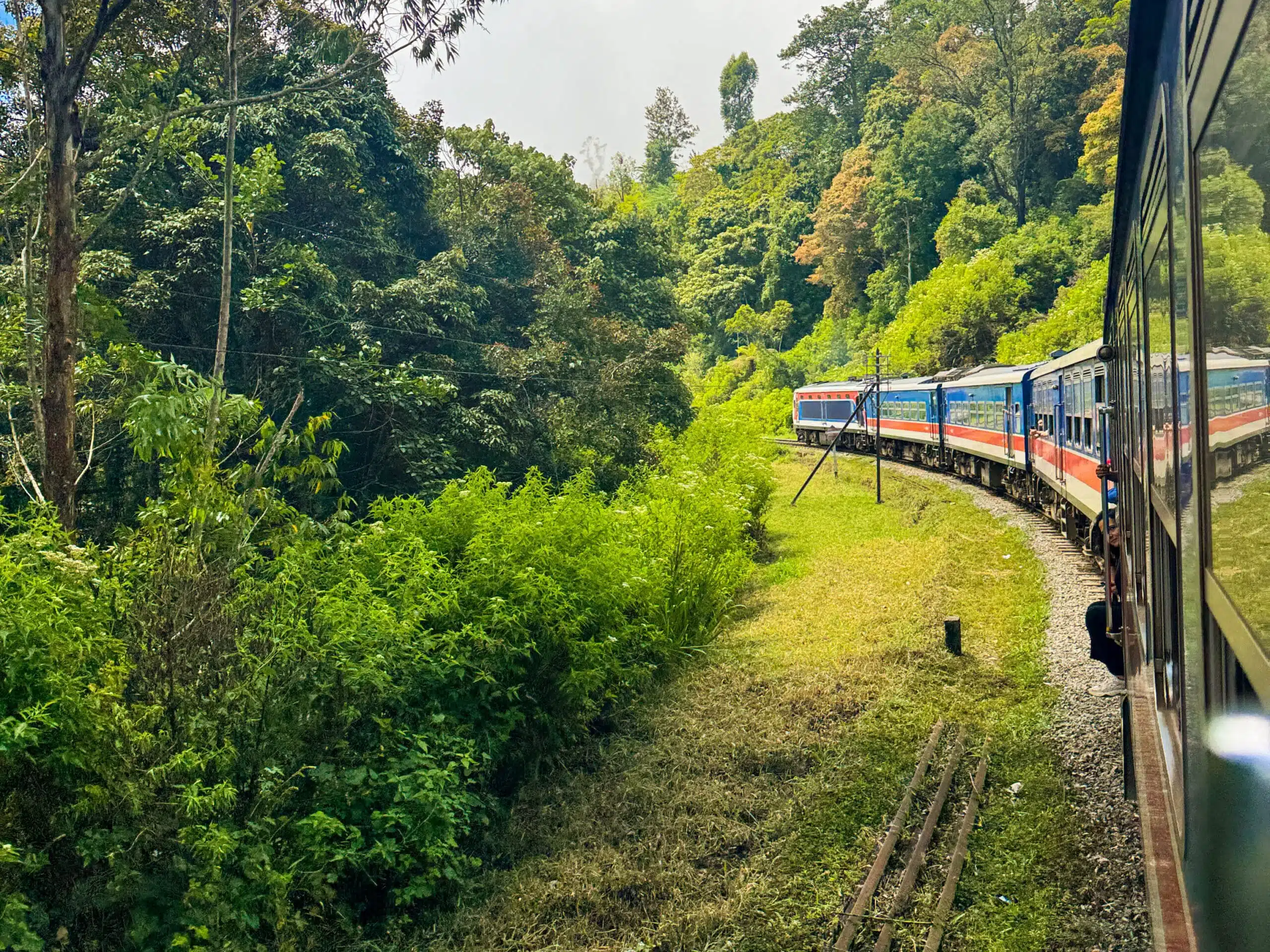
The coastal train runs close to the shoreline for much of the journey and is considered one of the most scenic train rides in Sri Lanka. It’s slow and can be busy, but it’s a memorable way to travel if you’re not in a rush and want to enjoy the views along the way.
Road transfer (taxi or private driver)
Taxis and private drivers use the Southern Expressway (E01), making this the fastest option to reach Galle — usually around 1.5 to 2 hours. This is the most practical choice if you’re travelling with luggage, with kids, or arriving after a long flight. It also offers flexibility to stop along the route if needed.
Hiring a private driver is one of the easiest ways to travel between destinations in Sri Lanka, especially if you’re combining Galle with places like Ella, Udawalawe or the Cultural Triangle. Distances can look short on the map, but winding roads and traffic often make journeys longer than expected.
During our own trip, we travelled around Sri Lanka with Sri Lanka Personal Tour Driver, and it made our route noticeably smoother. Having one reliable driver meant flexible departure times, comfortable transfers and the option to stop along the way whenever we wanted. For families or travellers who prefer door-to-door convenience, this is often the most relaxed way to move between regions.
If you want to compare train and taxi options — including schedules, prices and availability — you can check both in one place below.
For a full breakdown of trains, drivers and travel times across the island, read our Getting Around Sri Lanka: Ultimate Guide to Transport, Trains, Tuk-Tuks & Easy Trip Planning.

Getting Around Galle
Once you arrive, getting around Galle is simple and relaxed.
On foot (inside the Fort)
Galle Fort is best explored on foot. Streets are compact, distances are short, and most cafés, shops and landmarks are within easy walking distance. You won’t need any transport inside the Fort.
Tuk-tuk (outside the Fort)
For trips beyond the Fort walls, tuk-tuks are the most convenient option. They’re affordable, widely available and ideal for short rides to places like Unawatuna, Wijaya Beach or Jungle Beach. You can agree on a price beforehand or use ride-hailing apps for fixed fares.
Bicycle
If you enjoy slow travel, renting a bicycle is a pleasant way to explore the coastal roads around Galle. Early mornings and late afternoons are the most comfortable times to cycle, when traffic is lighter and temperatures are lower.
Is Galle Worth to Visit?
Yes — especially if you enjoy destinations where history and daily life exist side by side. Galle Sri Lanka offers a walkable UNESCO-listed Fort, good food, small boutiques and easy access to beaches and nature. It works well as a cultural pause along the south coast rather than a pure beach stop.
For us, the ideal combination was staying in Unawatuna and visiting Galle for the day. From there, we explored the Fort and joined a cooking workshop that was genuinely fun and very accessible with children. After wandering the streets in the heat, heading back to the beach felt like the perfect balance. Galle combined with the beach is, in our view, absolutely worth it.
What to Book on Galle
Everything worth booking on Galle, all in one place:
🏨 N077 Leyn Baan by the One Group of Hotels
🏨 T Bazaar
🎟️ Explore Galle Fort with a Local Guide
🎟️ Koggala Lake
🎟️ Explore Galle City & Koggala Lake in One Tour
🐘 Plan Your Sri Lanka Trip
🏨 Still looking for the right stay? Browse all hotels in Sri Lanka — free cancellation on most rooms.
✈️ Flights: Compare routes and prices for flights to Sri Lanka.
🚂 Getting around: Book train tickets in advance (the scenic routes sell out), or arrange a private driver, tuk tuk rental or rental car.
📱 Stay connected: Get a Sri Lanka eSIM from Airalo before you fly. We use Airalo ourselves on every trip.
🔒 Travel insurance: Don't skip travel insurance for Sri Lanka — medical costs for tourists add up fast.
🎟️ Tours & activities: Browse safaris, cooking classes and tours across Sri Lanka.
💳 Money: Avoid card fees abroad with a free Revolut account.
Some links on this page are affiliate links. Booking through them costs you nothing extra and helps us keep this site running — thank you!
Frequently Asked Questions About Galle
Is Galle Fort worth visiting?
Yes — Galle Fort is one of the best-preserved sea forts in Asia and offers much more than a single landmark visit. What makes it especially worthwhile is that it’s a living neighbourhood, with cafés, shops and daily life unfolding inside historic walls. You can walk the ramparts, explore quiet streets, and spend time near the lighthouse, all at a relaxed pace that suits both culture-focused travellers and casual visitors. A guided Galle Fort walking tour with a resident is a great way to bring its history to life.
How many days should I spend in Galle Sri Lanka?
One full day is enough to explore Galle Fort comfortably, including the ramparts, key sights and a meal inside the walls. If you also want to visit nearby beaches, join a cooking class or take a trip to Koggala Lake, two to three days allow for a much more relaxed experience. Galle is also often used as a convenient base for exploring Sri Lanka’s wider south coast. If you can, stay a night inside the walls — the Galle Fort Hotel is an atmospheric heritage option once the day-trippers leave.
Is Galle a good place for shopping?
Yes — Galle Fort is one of the best places in Sri Lanka for curated shopping. The Fort is known for its boutiques selling jewellery, spices, linen clothing and homeware, often in a calm and refined setting. Prices are generally higher than in local markets, but the quality and craftsmanship are consistently strong, making it a good place for thoughtful souvenirs or gifts.
How far is Galle Sri Lanka from Colombo?
Galle is about 125 km from Colombo. By taxi or private transfer via the Southern Expressway, the journey usually takes around 1.5 to 2 hours. The coastal train takes longer — roughly 3 to 3.5 hours — but offers scenic ocean views for much of the route. Many travellers also start from Negombo, which adds only a limited amount of extra travel time.
Is Galle Fort suitable for families with kids?
Yes — Galle Fort works well for families, especially for short stays. The Fort is compact, largely walkable and car-free in many areas, which makes it easy to explore with children. Wide ramparts, open spaces, old cannons and short walking distances keep it engaging without feeling overwhelming. Cafés and ice-cream stops are never far away, and activities like a cooking class or a relaxed walk at sunset fit naturally into a family-friendly pace.
Related Blogs
Other Cities & Destinations
Best Cities to Visit in Sri Lanka: A Practical Guide to Regions, Routes & City Bases
Kandy Sri Lanka: The Cultural Capital Known for Sacred Temples and Scenic Lake Views
Sigiriya Sri Lanka: Complete Guide to Nature, Culture, Lion Rock & Village Life
Ella Sri Lanka: The Scenic Hill Town with Stunning Views and Adventure for All Travellers
Negombo City: A Coastal Charm Blending Culture and Beaches
Nuwara Eliya: Sri Lanka’s Cool Hill Station Rich in Tea Plantations and Colonial Elegance
Udawalawe: Sri Lanka’s Premier Wildlife Safari Hub Famous for Elephant Sightings
Unawatuna: Sri Lanka’s Tropical Paradise Known for Pristine Beaches and Vibrant Marine Life
Other Sri Lanka Blogs
Best Hotels in Sri Lanka: How to Choose Where to Stay
Where to Stay in Sri Lanka: Best Hotels by Travel Style
Sri Lanka Regions Explained: How to Choose the Best Areas for Your Trip
Sri Lanka Travel Itinerary: Custom Plans for Beach Lovers, City Explorers, and Wildlife Adventurers
Top Things to Do in Sri Lanka: The Most Rewarding Experiences on the Island
Best Time to Visit Sri Lanka: Weather, Seasons & Travel Tips
Sri Lanka Weather by Month: What to Expect Each Season as a Traveller
Getting Around Sri Lanka: Ultimate Guide to Transport, Trains, Tuk-Tuks & Easy Trip Planning
Is Sri Lanka Expensive to Travel? Budget, Costs & Money-Saving Tips for Your Trip
Sri Lanka Travel Guide: Visa Requirements, Vaccination & Local Travel Tips