


Table of Contents
Sri Lanka can feel deceptively easy to plan — until you realise the island doesn’t travel like it looks on the map. One day you’re climbing ancient rock fortresses in dry heat; a few hours later you’re wrapped in misty tea hills, or watching the sea change colour along a completely different coastline.
That contrast is exactly why Sri Lanka Regions matter. When you choose regions first, the route starts to make sense: transfers become realistic, seasons stop working against you, and the trip naturally balances early mornings, slow days and beach time. This guide breaks down the main travel regions — from the Cultural Triangle and Hill Country to safari areas, gateway cities and the east and south coasts — and shows how they’re most often combined in real itineraries, depending on the time you have and the way you like to travel.
In a Rush?
These are my Favourite Hotels in Sri Lanka
- ⭐️⭐️⭐️ 98 Acres Resort & Spa – Ella – Check Prices and Availability
- ⭐️⭐️ Rockside Cabanas – Unawatuna – Check Prices and Availability
- ⭐️ Tree Trails Sigiriya– Sigiriya – Check Prices and Availability
Sri Lanka Regions at a Glance
Before diving into each region in detail, this overview shows how Sri Lanka is structured as a travel destination. It highlights what each region is known for, the type of experiences it offers, and how it typically fits into an itinerary. Use it as a quick reference while planning your route — especially when deciding how many regions to combine in one trip. Once you’ve picked your regions, this guide helps you choose the right bases and styles of stays: Best Hotels in Sri Lanka: How to choose where to stay — by region, travel style & value.
| Sri Lanka Region | Known for | Best experiences | Ideal for | Typical stay |
|---|---|---|---|---|
| Cultural Triangle | Ancient cities and UNESCO heritage | Sigiriya Rock. sacred temples. ancient capitals. seasonal elephant safaris | History lovers. first-time visitors | 2–3 nights |
| Hill Country | Tea hills and mountain scenery | Scenic train rides. hikes. tea plantations | Slow travel. landscapes and views | 2–4 nights |
| South Coast | Beaches and coastal life | Surfing. whale watching. snorkelling. Galle Fort | Beach time and relaxed pacing | 3–5 nights |
| Wildlife Regions | National parks and safaris | Elephants. leopards. birdlife. seasonal gatherings | Wildlife and photography | 1–2 nights per park |
| Colombo and West Coast | Arrival and urban contrast | Markets. food. canals. short city tours | First or last nights | 1 night |
| East Coast | Space and seasonal beaches | Snorkelling. whale watching. surfing (seasonal) | Fewer crowds. calm travel | 2–4 nights |
| Northern Sri Lanka | Culture and regional identity | Hindu temples. local life. Jaffna Peninsula | Repeat visitors. cultural focus | 2–3 nights |
Understanding the Sri Lanka Regions Before You Plan Your Route
Before you start picking cities or activities, it’s important to understand how Sri Lanka actually works as a travel destination. Although the island looks compact on the map, Sri Lanka is best planned by regions — not by individual places.
Each region shapes the rhythm of your trip: how fast you move, how much time you spend in transit, what the climate feels like, and which experiences naturally fit together. Choosing the right regions first makes everything else — routes, cities, activities and travel days — fall into place.
Sri Lanka’s regions are defined by a combination of landscape, climate and travel flow. The north-central plains revolve around ancient cities and early mornings; the Hill Country slows everything down with winding roads, tea estates and scenic train journeys; wildlife regions are structured around safari timing; and the coastline changes character completely depending on the season.
This is why trying to “see a bit of everything” often leads to rushed itineraries and long travel days. Most travellers have a far better experience by combining two or three regions that naturally connect, rather than hopping between distant points on the map.
Another key factor is seasonality. Sri Lanka does not have one single beach season. The south and west coasts are best from December to April, while the east coast shines from May to September. Planning regions without considering this can mean rain, rough seas or closed activities — even during a seemingly perfect travel month.
Finally, regions determine energy level. Some areas invite early starts and full sightseeing days, while others are designed for slowing down. Mixing too many high-intensity regions back-to-back often leads to travel fatigue, especially on shorter trips.
In the sections below, we explore Sri Lanka region by region — not as isolated destinations, but as building blocks that help you create a route that flows logically, matches your travel style, and fits the time you actually have.
The Cultural Triangle: Ancient Wonders & UNESCO Heritage
The Cultural Triangle forms the historical and geographical heart of Sri Lanka. Located in the north-central plains, this region connects many of the island’s main travel routes and plays a key role in how most itineraries are structured.
Rather than being a single destination, the Cultural Triangle works as a central hub: it links the west coast and Colombo to the Hill Country, the east coast and northern wildlife areas. Because of this, many travellers pass through the region — but those who spend time here gain a much deeper understanding of Sri Lanka’s history, religion and ancient engineering. In most classic routes, the Cultural Triangle sits early in the trip, before the Hill Country and coast — simply because the travel flow is easiest this way.
This region is defined by:
- former royal capitals and UNESCO World Heritage Sites
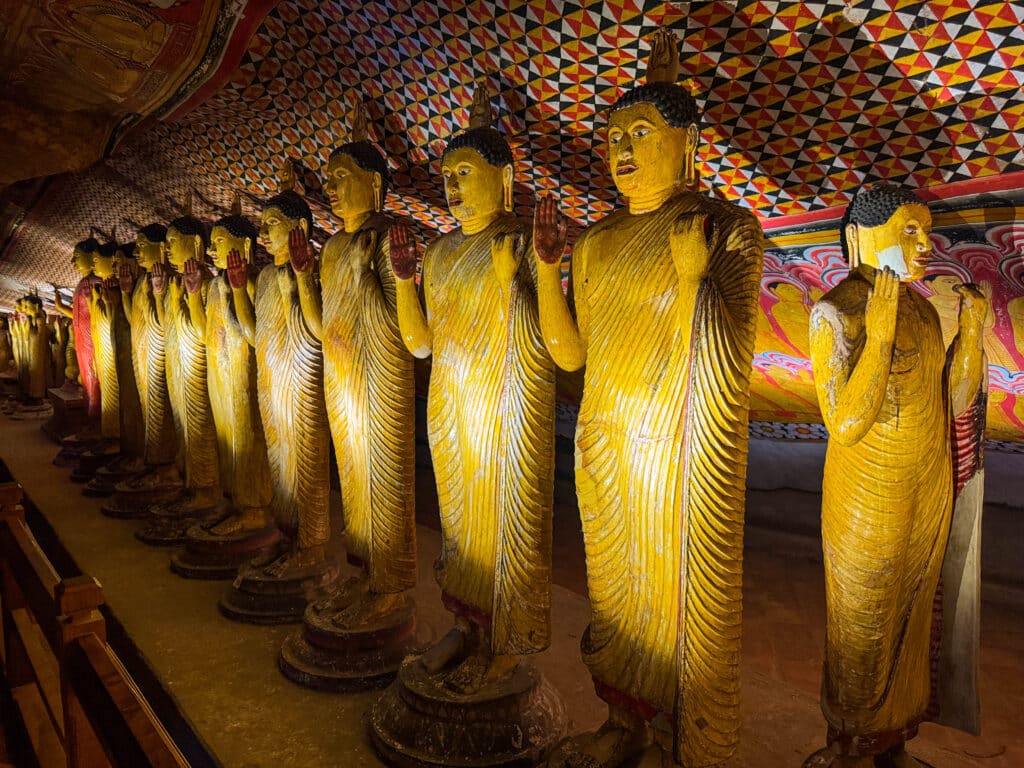
- sacred Buddhist landmarks still actively used today
- vast man-made reservoirs and irrigation systems
- dry-zone landscapes with seasonal wildlife movements
Unlike coastal or hill regions, days in the Cultural Triangle often start early. Heat builds quickly, temples follow specific visiting rhythms, and climbs such as Sigiriya Lion Rock or Pidurangala are best done at sunrise. This gives the region a focused, purposeful pace that contrasts strongly with beach or slow-travel zones elsewhere in the country.

How travellers typically use the Cultural Triangle
Most travellers base themselves in or around Sigiriya or nearby villages and explore the region as a compact loop. Distances between sites are manageable, making it possible to combine cultural landmarks with village scenery and, in certain seasons, wildlife experiences.
The Cultural Triangle is most often:
- combined with Kandy and the Hill Country
- used as a transition region between coast and hills
- visited for 2–3 nights on first-time trips
For travellers with limited time, this region delivers a high concentration of cultural value without long daily drives.
Key bases within the Cultural Triangle
Rather than individual cities acting as standalone destinations, places within the Cultural Triangle function as components of the wider region:
- Sigiriya area — used as a central base, close to multiple landmarks
- Anuradhapura — spiritual and religious centre with vast temple complexes
- Polonnaruwa — open archaeological landscape suited to slow exploration
- Dambulla — natural stopping point between regions, anchored by the cave temples
Each of these places plays a specific role, but none need to be visited in isolation to understand the region as a whole.
Where to stay: Water Garden Sigiriya
Water Garden Sigiriya offers spacious villas in a peaceful setting just outside the main sights. It’s a comfortable base for early visits to Sigiriya and Dambulla, with open views toward Lion Rock and space to unwind after hot sightseeing days.
Seasonality & wildlife connections
From July to October, the dry season increases wildlife activity around reservoirs in and near the Cultural Triangle. This is when nearby parks such as Minneriya become part of the regional experience, with elephants gathering around shrinking water sources.
Outside these months, the region remains culturally rewarding, but wildlife encounters are less predictable and should be seen as an optional addition rather than a guarantee.
How the Cultural Triangle fits into a Sri Lanka itinerary
In most classic Sri Lanka routes, the Cultural Triangle is positioned early in the journey. It naturally follows arrival on the west coast and often comes before moving into the Hill Country. Because distances between sites are manageable, this region works well as a concentrated cultural start before transitioning into slower mountain or coastal areas.
That positioning helps avoid backtracking and allows the route to flow geographically from the north-central plains toward the hills and eventually the coast.
Trade-offs to consider
- Temperatures can be high, especially from late morning onwards
- Cultural sites require respectful clothing and early starts
- Travellers seeking relaxation or nightlife may find the pace intense
For travellers who value history, context and structure, however, the Cultural Triangle provides one of the strongest foundations for understanding Sri Lanka.
For detailed planning, tickets, timing and accommodation advice, see our individual city guide for Sigiriya.
Practical ways to experience the Cultural Triangle
If you’re short on time or prefer to explore the Cultural Triangle without arranging transport yourself, a combined Sigiriya & Dambulla day tour is a practical option. These tours are typically based around Sigiriya as a central hub and allow you to cover two of the region’s key highlights in one well-paced day, without backtracking or early-morning logistics.
Anuradhapura covers a vast area and is best understood with local context. A guided visit helps explain the religious significance, layout and historical layers of the ancient city — especially if you’re visiting as part of a broader Cultural Triangle route rather than focusing on Anuradhapura alone.
The Hill Country: Tea, Trains & Mountain Views
Sri Lanka’s Hill Country is defined less by individual sights and more by pace. Cooler temperatures, winding mountain roads and vast tea estates naturally slow travel down, making this region feel calm and restorative compared to the lowlands and coast.
Within a Sri Lanka itinerary, the Hill Country often acts as a transition zone — a place to catch your breath after cultural sightseeing or before heading to the beach. Distances may look short on the map, but travel takes time here, and that’s exactly why rushing through rarely works.
This region is shaped by:
- rolling tea plantations and misty mountain views
- scenic train journeys through valleys and tunnels
- cooler weather, especially at higher elevations
- a slower daily rhythm, focused on landscapes rather than landmarks
Rather than trying to see everything, most travellers benefit from choosing one or two bases and spending time absorbing the scenery.

How travellers typically experience the Hill Country
The Hill Country is best approached with fewer stops and longer stays. Travel days are part of the experience, especially when using the train rather than private transport.
Most first-time visitors:
- enter the Hill Country via Kandy
- choose either Ella or Nuwara Eliya, not both
- spend 2–4 nights total in the region
Trying to combine Kandy, Nuwara Eliya and Ella in a short timeframe often leads to long days on the road and little time to actually enjoy the landscapes.
Key bases in the Hill Country
Rather than acting as standalone destinations, Hill Country towns function as bases within the wider region:
- Kandy — cultural gateway between lowlands and hills
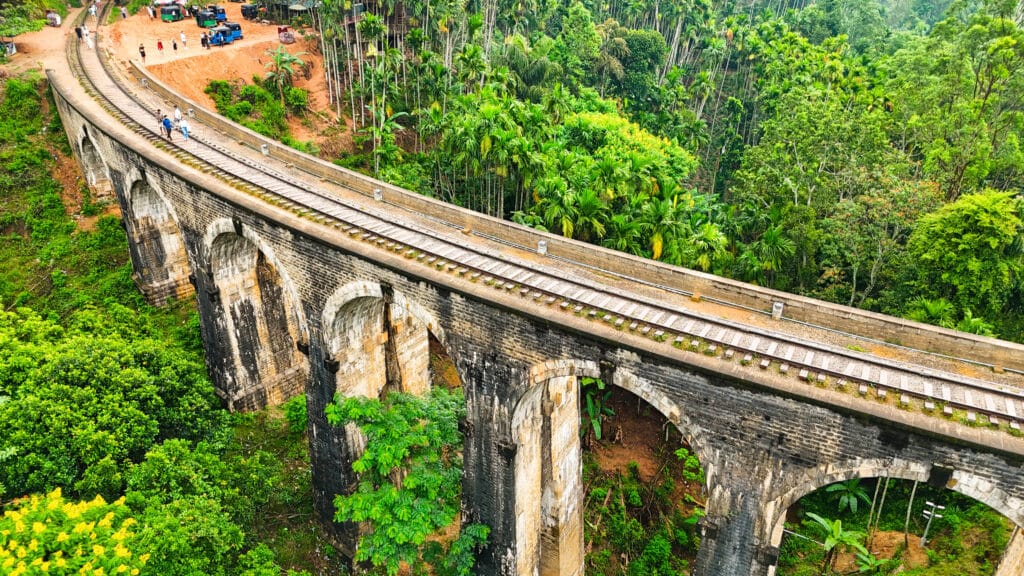
- Ella — relaxed base for viewpoints, short hikes and cafés
- Nuwara Eliya — quieter, cooler base focused on tea estates and colonial heritage
Each serves a different travel style, but they are best seen as alternatives rather than must-visit stops all together.
Where to stay: Nine Arch Lodge
Nine Arch Lodge is a cosy hillside stay with direct views of the famous Nine Arch Bridge. We stayed here ourselves and loved the warm hospitality — especially from Udhay — and the peaceful mornings watching the trains pass through the valley below.
Seasonality in the Hill Country
The Hill Country can be visited year-round, but weather conditions shift subtly with elevation. Higher areas such as Nuwara Eliya are significantly cooler and can feel misty, especially in the mornings and evenings. Rainfall patterns vary depending on the monsoon cycle, and cloud cover is common at certain times of year.
Unlike the coast, the Hill Country is less about finding the “perfect beach season” and more about embracing atmosphere. Mist, drifting clouds and sudden showers are part of the mountain experience and often enhance the scenery rather than diminish it.
How the Hill Country fits into a Sri Lanka itinerary
The Hill Country naturally sits between the Cultural Triangle and the south coast in most classic Sri Lanka routes. It acts as a visual and climatic transition — moving from dry plains to cooler mountains before descending back toward the coast. Because travel times are longer here, this region works best when given breathing space rather than rushed between other stops.
One of the defining experiences of the Hill Country is travelling by train. Routes such as Kandy to Ella are widely considered among the most scenic rail journeys in the world, passing tea fields, villages and mountain valleys at an unhurried pace.
Including a train journey here is not just a transport choice — it’s a core part of how the region is experienced. For many travellers, this slow movement through the landscape becomes one of the highlights of the entire trip.

Trade-offs to consider
- Travel times are longer than expected due to terrain
- Evenings are quiet, especially outside Ella
- Weather can be misty or cool, particularly in Nuwara Eliya
For travellers who enjoy scenery, fresh air and a slower rhythm, the Hill Country offers one of the most rewarding contrasts within Sri Lanka.
For detailed planning, accommodation and activity ideas, see our individual guides for Kandy, Ella and Nuwara Eliya.
Practical ways to experience the Hill Country
The Hill Country is best explored slowly, but depending on your route and time constraints, guided experiences can help add context or simplify logistics without rushing the journey.
Temple of the Sacred Tooth Relic (Kandy)
If your Hill Country route starts in Kandy, a guided visit to the Temple of the Sacred Tooth Relic offers valuable cultural context before heading deeper into the mountains. A guide helps explain the rituals, history and symbolism of one of Sri Lanka’s most important religious sites, without turning it into a hurried stop.
Tea Factory & Tea Plucking experience
Tea estates define both the landscape and daily life of the Hill Country. Visiting a working tea plantation around Nuwara Eliya gives insight into how Ceylon tea is grown, plucked and processed — and helps you better understand the scenery you’ll see throughout this region. This experience fits naturally into a slower travel pace.
Short on time in Ella?
Ella is best enjoyed over several days, but if you’re tight on time and still want to see the main viewpoints, a guided day tour can be a practical alternative. It allows you to cover highlights such as viewpoints and waterfalls without navigating trails or transport on your own — ideal when Ella is a brief stop rather than a base.
The South Coast: Beaches, Surfing & Colonial Flair
Sri Lanka’s South Coast is where many journeys naturally slow down. After cultural sites and mountain travel, this stretch of coastline offers space to unwind — whether that means swimming in calmer bays, watching ocean wildlife, or simply staying in one place for a few nights. Within the wider structure of the island, the south coast acts as a reset point, balancing travel intensity with rest.
Rather than one single destination, the south coast works as a flexible coastal zone. Travellers typically choose one or two bases and explore nearby beaches, towns and viewpoints at a relaxed pace. Distances are short, travel is straightforward, and the region fits easily into most routes without adding logistical stress.
What defines the south coast is variety without pressure. You can be active — surfing, snorkelling or heading out to sea — or do very little at all. The region adapts to your travel rhythm rather than demanding constant movement.

How travellers typically experience the South Coast
The south coast offers a mix of calm beaches, ocean-based experiences and cultural layers shaped by colonial history and fishing communities. Depending on the season and sea conditions, travellers come here for:
- Sheltered bays suited for swimming and snorkelling
- Surf beaches for beginners and intermediate surfers
- Seasonal whale and dolphin sightings offshore
- Walkable historic areas and coastal towns
- Easy, low-effort travel days between stops
Because conditions change throughout the year, choosing where to stay matters more than trying to cover the entire coastline.
Key bases in the South Coast
Instead of moving every night, most travellers benefit from selecting a base that matches their priorities:
- Historic coastal towns work well for culture, food and short walks, especially as a softer travel day.
- Open beaches and surf bays suit travellers who want ocean time and a relaxed daily rhythm.
- Sheltered bays are better for swimming, snorkelling and family-friendly beach days.
The south coast is also one of the easiest regions to adjust on the go. If a place feels too busy or too quiet, nearby alternatives are usually within a short tuk-tuk or transfer ride.
Where to stay: Rockside Cabanas
Rockside Cabanas offers simple beachfront stays in Unawatuna, with direct access to the bay and a relaxed coastal atmosphere. It’s a practical base if you want to combine swimming, snorkelling and short trips to Galle without moving accommodation.
Seasonality in the South Coast
The south coast is best visited between December and April, when seas are generally calmer and rainfall is lower. During the southwest monsoon, conditions can become rougher, especially on more exposed beaches. While travel is still possible year-round, sea conditions play a significant role in swimming, snorkelling and boat-based activities.
Because of this, timing matters more here than in inland regions. Choosing the right stretch of coastline for your travel month can significantly improve your experience.
How the South Coast fits into a Sri Lanka itinerary
The south coast pairs naturally with both the Hill Country and the Cultural Triangle. It works well:
- After mountain travel, as a rest-focused stretch
- Before or after a safari, to balance early starts and travel intensity
- As a final region before heading back towards Colombo or the airport
For most itineraries, three to five nights on the south coast is enough to feel settled without overstaying.
For detailed planning, beach selection and practical tips, see our individual guides for Galle and Unawatuna.
Trade-offs to consider
Some beaches are highly seasonal and may have strong currents outside peak months.
Popular areas can become busier during high season, especially around Galle and Mirissa.
Travellers looking for dramatic landscapes or cooler temperatures may prefer the Hill Country instead.
Practical ways to experience the South Coast

Ocean-based activities are a natural part of the south coast, but they are best approached with flexibility. Sea conditions, seasonality and weather play a big role in what works well at any given time.
- Whale watching is seasonal and highly dependent on sea conditions. Skipping it when conditions aren’t right often leads to a better overall experience.
- Snorkelling works best in calmer bays and around rocky headlands rather than open beaches.
- Surfing is accessible for beginners in certain areas, while more exposed breaks suit experienced surfers.
Rather than treating these as must-do activities, the south coast rewards travellers who adapt plans to conditions and mood.
For travellers seeking balance between movement and rest, the south coast often becomes the most restorative stretch of a Sri Lanka journey.
Wildlife & Nature: Safaris, Seasons & Choosing the Right Park
Wildlife experiences in Sri Lanka are spread across several regions, each offering a very different type of safari. Rather than one single “wildlife area”, Sri Lanka’s national parks are shaped by climate zones, terrain and seasonal movement — and choosing the right park matters far more than simply adding a safari to your route.
Within the structure of the Sri Lanka Regions, wildlife areas usually function as short, focused stops rather than places to linger. Most travellers spend one or two nights near a park, timed around early morning or afternoon safaris, before continuing their journey.
What makes Sri Lanka unique is accessibility. National parks are easy to reach, safaris are relatively short, and wildlife viewing can be intense without requiring long stays or complex logistics. The challenge lies in matching the right park to your travel style, expectations and season.
How travellers typically experience wildlife in Sri Lanka
Sri Lanka’s main safari areas fall into a few broad landscape types:
- Dry-zone plains and grasslands, known for elephant herds and open visibility
- Forest-heavy parks, offering quieter, more immersive experiences
- Mixed terrain parks, where predators, wetlands and coastal ecosystems meet
Each type creates a very different safari experience. Some parks prioritise reliable sightings, while others focus more on atmosphere and scale.
Because distances between parks can be significant, most itineraries include only one wildlife region, occasionally two if the route allows it naturally.
Choosing the right safari experience
Rather than asking “Which park is best?”, it helps to ask “What kind of wildlife experience am I looking for?”
- Elephant-focused safaris work best in open parks with large grasslands and reservoirs, where herds gather throughout the day.
- Predator-focused safaris, particularly for leopards, require patience and realistic expectations, even in parks known for sightings.
- Quiet, immersive safaris suit travellers who value space, fewer vehicles and landscape over guaranteed sightings.
- Seasonal wildlife events offer powerful experiences but are time-sensitive and only worth planning around during specific months.
This distinction is crucial. A well-chosen safari often becomes a highlight of the trip; a poorly matched one can feel rushed or underwhelming.
Key wildlife parks in Sri Lanka
While Sri Lanka has several national parks, a small number stand out because they each offer a clearly different safari experience. Understanding these differences helps you choose one park that truly fits your route and expectations.
- Udawalawe National Park is best known for reliable elephant sightings in open landscapes. Its wide grasslands and reservoirs make wildlife easy to spot, and safaris here work well even on a tight schedule.
- Yala National Park is associated with leopard sightings and diverse terrain, combining scrubland, forest and coastal lagoons. While sightings can be impressive, Yala is also the busiest park and suits travellers who don’t mind a more active safari environment.
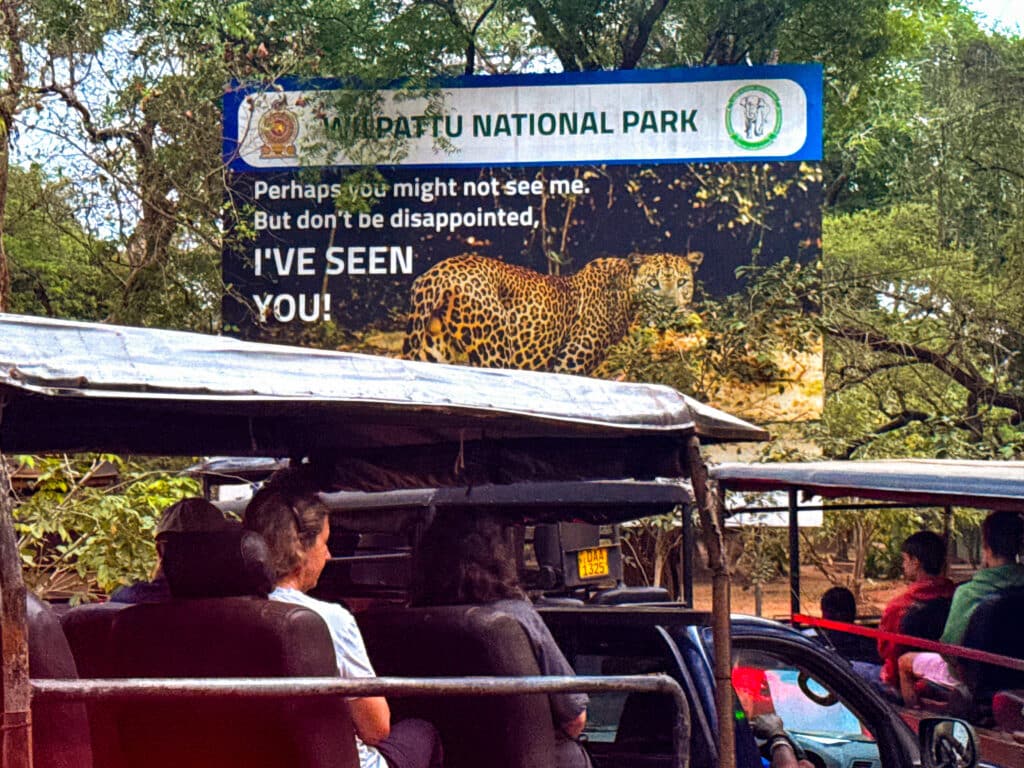
- Wilpattu National Park offers a quieter, more immersive safari experience. As Sri Lanka’s largest national park, it feels spacious and less crowded, with natural lakes (willus) attracting wildlife throughout the year.
- Minneriya National Park plays a seasonal role, becoming famous between July and October for the elephant gathering around Minneriya Lake. Outside this period, it is far less predictable and best treated as a seasonal highlight rather than a year-round safari base.
Where to stay: Thamaravila Wilpattu
Thamaravila is a peaceful lodge-style stay near Wilpattu National Park, set among gardens and open landscapes. It works well for early safari departures while still offering space to relax between game drives.

Seasonality in Sri Lanka’s wildlife regions
Wildlife movement in Sri Lanka is strongly seasonal, particularly for elephants. Water availability, rainfall and vegetation determine where animals gather at different times of year.
Some parks are at their best only during specific months, while others offer reliable sightings year-round. Planning wildlife experiences without considering season often leads to mismatched expectations.
This is especially true for large elephant gatherings, which are spectacular when timed correctly and unpredictable when they’re not.
How wildlife regions fit into a Sri Lanka itinerary
Wildlife regions combine most naturally with:
- The south coast, balancing early safari mornings with relaxed beach time
- The Hill Country, as a transition between mountains and coast
- The Cultural Triangle, where certain parks lie close to ancient sites
For most itineraries, one wildlife region with one to two nights is sufficient to experience Sri Lanka’s biodiversity without dominating the trip.
For detailed planning, safari timing and park-specific advice, see our individual guides for Udawalawe National Park and Wilpattu National Park.
Trade-offs to consider
Safari days shape the rhythm of your itinerary. Early starts, fixed park entry times and heat-sensitive wildlife activity mean that wildlife regions are best placed:
- Between longer travel legs
- Before or after slower regions such as the south coast
- When energy levels allow for early mornings
Trying to combine multiple parks back-to-back often leads to fatigue without adding much value. One strong safari experience usually outweighs several rushed ones.
Practical ways to experience wildlife in Sri Lanka
Booking a safari in advance can simplify logistics, especially during peak travel seasons. Choosing the right park and timing your visit carefully often makes the difference between a rushed experience and a rewarding one. Below are three well-matched safari options based on different travel styles and routes.
For travellers combining the south coast with a safari, Yala is the most convenient and diverse option, known for its varied landscapes and leopard sightings.
If reliable elephant sightings are your priority and you prefer open landscapes with strong visibility, Udawalawe offers one of the most consistent safari experiences in the country.
Travelling during the dry season? Minneriya becomes a seasonal highlight between July and October, when large elephant gatherings take place around the reservoir.
Colombo & West Coast: Easy Arrival & Departure Spots
Colombo and Sri Lanka’s west coast mainly function as gateway regions rather than destinations you build an itinerary around. For most travellers, this part of the island marks either the beginning or the end of a journey — a place to land, recover from travel, or ease back into city life before departure.
Within the wider structure of the island, the west coast plays a practical role. International arrivals, shorter transfer times and a wide range of accommodation options make it an easy place to start or finish a trip without adding unnecessary travel days.
Rather than focusing on major sightseeing, time here is often shaped around simple experiences: settling in after a flight, enjoying local food, taking a short walk along the water or exploring neighbourhoods at a relaxed pace.
How travellers typically experience Colombo & the West Coast
Colombo vs. Negombo: which works better for your trip?
For most travellers, the choice on Sri Lanka’s west coast comes down to Colombo or Negombo. Both serve as practical arrival or departure points, but they offer very different experiences.
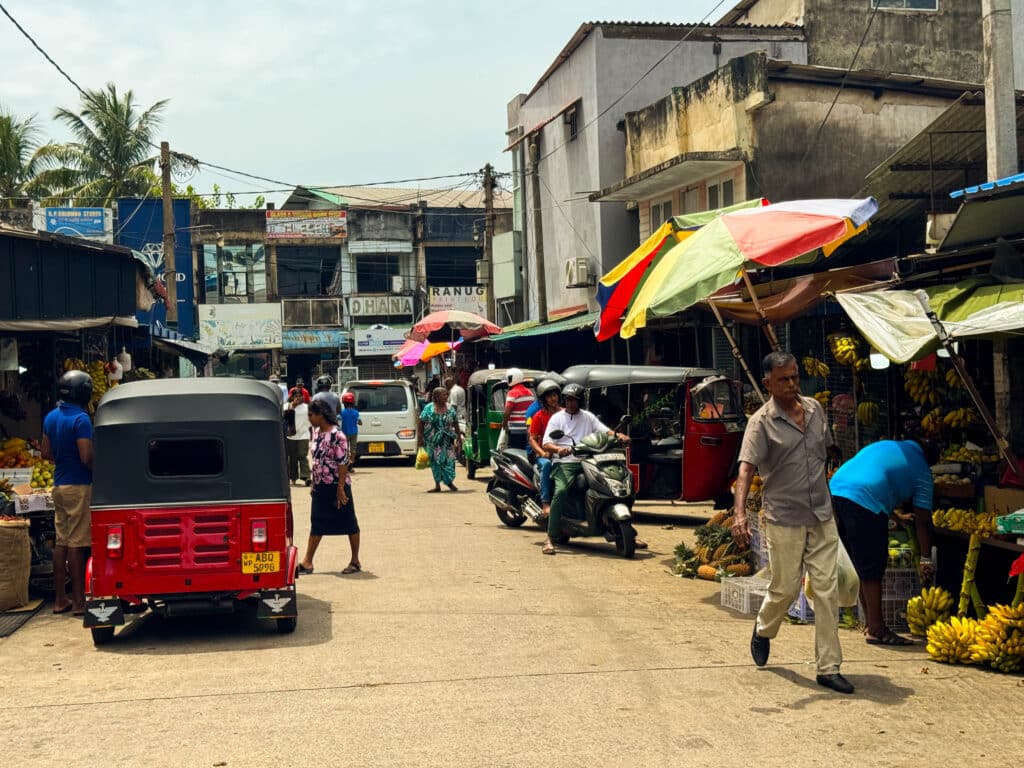
- Colombo works best for travellers who want a brief introduction to city life in Sri Lanka. It offers restaurants, markets, temples and neighbourhoods that show the country’s modern rhythm, but traffic and distances can make it feel intense — especially after a long flight.
- Negombo is the more common choice for first or last nights. Located close to the international airport, it allows for short transfers, a slower pace and an easier landing or exit. Time here is often spent walking along the beach, visiting the fish market or simply recovering from travel.
For most itineraries, Negombo is the easier and more relaxed option, while Colombo suits travellers who deliberately want an urban stop rather than pure convenience.
Key bases in Colombo & the West Coast
Colombo functions as the island’s urban hub, offering restaurants, markets, temples and neighbourhoods that reflect modern Sri Lankan life.
Negombo serves primarily as a practical airport base, with shorter transfers, beachside accommodation and a softer landing or departure experience.
These two bases fulfil very different roles, and most itineraries benefit from choosing one rather than combining both.
Where to stay: Villa Shade Negombo
Villa Shade is a welcoming small hotel close to the airport, yet tucked into greenery in the middle of town. We stayed here ourselves and appreciated the friendly atmosphere, central location and the pool — ideal for a relaxed first or final night in Sri Lanka.
Seasonality in Colombo & the West Coast
The west coast can be visited year-round, but weather patterns shift with the southwest monsoon. Between December and April, conditions are generally drier and more predictable. From May onwards, rainfall becomes more frequent, particularly along the coast.
Because most travellers only spend one night here, seasonality tends to matter less than in beach-focused regions. Its function as a gateway remains consistent throughout the year.
How Colombo & the West Coast fit into a Sri Lanka itinerary
Colombo and the nearby west coast work best when kept flexible and low-key. Travellers typically use this region for:
- An arrival night after a long international flight
- A final night before departure
- A short stop to transition between regions without rushing
Because of traffic and urban sprawl, most travellers avoid packing too much into this part of the trip. One night is often enough, occasionally two if arrival times or onward travel make it practical.

Trade-offs to consider
- This part of the island rarely benefits from extended stays, as most travellers use it primarily for arrival or departure.
- Traffic in Colombo can be intense, especially during peak hours.
- Beaches along this stretch are less scenic than those on the south or east coast.
- Travellers seeking wildlife, mountain scenery or resort-style beach time will usually prefer to move on quickly.
Practical ways to experience Colombo & the West Coast
If you only have a few hours in Negombo — for example on your arrival or departure day — a guided tuk-tuk tour is an easy way to see more than just the beach. These short city tours typically include the fish market, canals, local neighbourhoods and key sights, without the hassle of planning transport yourself.
The East Coast: Quiet Beaches, Space & Seasonal Perfection
Sri Lanka’s east coast feels noticeably different from the rest of the island. It is quieter, more spacious and far less developed than the south and west, with wide beaches, calm seas and a slower daily rhythm. For travellers who value peace, space and a less touristic atmosphere, the east coast can feel like a completely different Sri Lanka.

The east coast is shaped by long, open beaches, small fishing communities and a lower density of tourism infrastructure. Key areas along this stretch include Trincomalee, Nilaveli, Uppuveli and Arugam Bay, each offering a different take on coastal life.
Unlike the south coast, towns here are spread out, nightlife is limited, and days revolve around the sea, local food and simple routines. Rather than hopping between places, most travellers choose one base and stay longer.
How travellers typically experience the East Coast
Rather than moving frequently between towns, most travellers choose one base and settle into a slower coastal rhythm. Days revolve around the sea — swimming, snorkelling, surfing or simply spending time on wide, uncrowded beaches.
Compared to the south coast, nightlife is limited and distances between towns are greater. The east coast rewards travellers who value space, simplicity and longer stays over variety and constant movement.
Key bases in the East Coast
Trincomalee functions as the main hub, offering a balance between local life, beach access and whale watching opportunities.
Nilaveli and Uppuveli provide quieter beach-focused stays with easy access to snorkelling and marine life.
Arugam Bay attracts surfers and travellers seeking a laid-back, seasonal coastal scene.
Seasonality in the East Coast
One of the biggest advantages of the east coast is its opposite travel season. When the southwest monsoon affects much of southern Sri Lanka, the east coast often enjoys sunny weather and calm seas. This makes it an ideal alternative for travellers visiting Sri Lanka during the European summer months.
Because of this seasonal contrast, the east coast works best as a deliberate choice, not a last-minute addition to a south-coast-focused route.
How the East Coast fits into a Sri Lanka itinerary
The east coast works best when chosen deliberately based on season. It pairs naturally with the Cultural Triangle and certain wildlife parks in the north-central region, creating a logical east-focused route.
Because of the longer travel distances involved, it is less suited as a quick add-on to a south-coast itinerary. Travellers who commit to the east coast often benefit from staying several nights rather than moving frequently.
Trade-offs to consider
- The east coast offers fewer accommodation choices and less nightlife than the south coast.
- Distances between towns can feel greater, and public transport options are more limited.
- Travellers looking for café culture, frequent beach clubs or short travel distances may find the south coast a better match.
- The region works best for repeat visitors, longer trips and travellers who prioritise space, calm and authenticity over variety.
Practical ways to experience the East Coast
Booking activities in advance can be helpful during peak east-coast season, particularly for whale watching and surf lessons. Below are two practical options that fit naturally into most east-coast stays.
- Wide, uncrowded beaches with gentle swimming conditions
- Snorkelling and marine life around Nilaveli and Pigeon Island
- Whale watching from Trincomalee during the east-coast season
- Surf lessons in Arugam Bay, suitable for beginners and experienced surfers
- A strong local feel, with fishing villages and everyday coastal life
Northern Sri Lanka: Culture, History & a Different Perspective
Northern Sri Lanka remains one of the least visited regions of the country, yet also one of the most distinctive. Shaped by a different cultural background, language and recent history, this part of the island offers a perspective that contrasts strongly with the rest of Sri Lanka.
Travel here feels slower, more local and less polished. Tourism infrastructure is limited compared to the south or hill country, and the focus is not on highlights or resorts, but on culture, everyday life and regional identity.
The north is centred around Jaffna, with surrounding islands and coastal areas such as Delft Island, Nainativu and parts of the Jaffna Peninsula. Hindu temples, colonial forts, quiet villages and flat, open landscapes define the region.
Cultural traditions here differ noticeably from the rest of Sri Lanka, with strong Tamil influences in food, religion and daily life. Visiting the north adds depth and context to a journey across the island, especially for travellers interested in Sri Lanka beyond its classic travel routes.
How travellers typically experience Northern Sri Lanka
Northern Sri Lanka is not built around sightseeing loops. Distances are greater, attractions are spread out, and travel here requires a more flexible mindset. Rather than moving quickly between places, most travellers choose one base and explore the region gradually.
The reward lies in its authenticity: fewer tourists, meaningful local interactions and a sense of seeing a side of Sri Lanka that many visitors never reach.
Key bases in Northern Sri Lanka
Jaffna functions as the main base, offering access to temples, markets, colonial remnants and surrounding islands.
Delft Island and Nainativu provide slower, more remote day-trip experiences shaped by local life and coastal scenery.
Most travellers benefit from choosing Jaffna as a base and exploring outward rather than changing accommodation frequently.
Seasonality in Northern Sri Lanka
Northern Sri Lanka is generally drier than much of the island, particularly outside the northeast monsoon period. Rainfall patterns differ from the southwest, and the region can feel hot and exposed during peak dry months.
Because the north is less focused on beaches or safari seasons, timing matters slightly less than in coastal regions. Travel here is more about cultural depth than weather-dependent highlights.
How Northern Sri Lanka fits into a Sri Lanka itinerary
Northern Sri Lanka is best added to longer itineraries that already include the Cultural Triangle or east coast. It requires a deliberate routing decision, as distances from Colombo or the south coast are significant.
Rather than acting as a transition region, the north works best as a focused extension — rewarding travellers who allocate dedicated time instead of squeezing it between other stops.
Trade-offs to consider
- Distances between attractions are greater, and transport options are more limited than in the south.
- Tourism infrastructure is simpler, with fewer accommodation choices and organised tours.
- First-time visitors with limited time may prefer regions that fit more naturally into classic travel routes.
- Northern Sri Lanka works best for repeat visitors, longer itineraries and travellers who value cultural depth over convenience.
Practical ways to experience Northern Sri Lanka
Because of its distances and limited transport connections, arranging local transport in advance can simplify your stay in Jaffna. Guided visits can also help provide context around temples and regional history.
How Sri Lanka Regions Come Together in Real Itineraries
Once you understand how each region functions individually, the next step is combining them into a realistic route.
The regions explained in this guide form the building blocks of realistic itineraries. How you combine them depends on:
- Trip length
- Travel season
- Your pace and interests
Instead of including full routes here, we’ve created a separate set of itinerary guides that focus specifically on day-by-day planning, travel times and pacing.
For day-by-day route examples with realistic pacing, start with 10 Days Sri Lanka Itinerary: Explore Culture, Nature & Beaches at the Perfect Pace. If you have more time and want fewer rushed transfers, follow 2 Week Sri Lanka Itinerary: Deep Dive into Culture, Adventure & Relaxation Across the Island.
Getting Around Sri Lanka
Getting around Sri Lanka plays a major role in how the regions fit together. While distances may look short on the map, travel times are often longer than expected due to road conditions, traffic and terrain.
This is why most itineraries work best when they follow a natural regional flow, rather than trying to jump back and forth across the island. Scenic train journeys are ideal in the Hill Country, while private drivers are often the most comfortable option for longer regional transfers. Tuk-tuks work well for short distances and local exploration.
For longer routes between regions, many travellers choose to travel with a private driver. This offers flexibility, comfort and realistic travel days — especially when combining multiple regions or travelling with luggage. We travelled ourselves with Sri Lanka Personal Tour Driver, and found it to be a reliable and relaxed way to move between regions without having to plan transport day by day.
Understanding how transport affects pace and travel days helps you choose regions that realistically fit your time frame — and avoid rushed itineraries.
For detailed transport options, travel times and practical tips, see our complete guide to getting around Sri Lanka.

Frequently Asked Questions Sri Lanka Regions
How many Sri Lanka regions should you visit?
For most trips, two to three Sri Lanka regions is the sweet spot. It keeps travel days realistic and gives you time to actually experience each area, rather than constantly moving. With around 10 days, choose two core regions plus one short add-on. With two weeks, you can add an extra region without the route feeling rushed—especially if you keep your bases limited.
Which Sri Lanka regions are best for first-time travellers?
A classic first-time route combines the Cultural Triangle, the Hill Country, and a beach region. It gives you history, scenery, and downtime, with a natural travel flow across the island. If you’re travelling during the European summer, consider swapping the south coast for the east coast for better beach conditions. Keep it simple: fewer bases usually means a better trip.
Which Sri Lanka regions work best together?
Sri Lanka regions pair best when the geography supports a natural flow. The Cultural Triangle and Hill Country combine easily, and the Hill Country links well with a beach region afterwards. The Cultural Triangle also pairs smoothly with the east coast in the right season. Mixing far-apart regions (for example, north + south + east in one short trip) often creates long transfers and a more tiring pace.
Which Sri Lanka regions are best in which season?
Sri Lanka doesn’t have one single “best season” for the whole island, so plan by region. In general, the south and west coasts (and many Hill Country routes) are most comfortable in the winter and early spring, while the east coast tends to shine in the opposite season, especially during the European summer. Matching your route to seasonal conditions makes beach time, boat trips, and snorkelling far more enjoyable.
Which safari region should you choose in Sri Lanka?
Choose your safari region based on the experience you want, not just the name of the park. Udawalawe is a strong option if you prioritise reliable elephant sightings and an easy, open landscape. Yala is known for leopard potential and varied scenery, but it can feel busy. Wilpattu suits travellers who prefer a quieter, more spacious safari atmosphere, with sightings that can be less predictable day-to-day.
Is it better to plan Sri Lanka by regions or by cities?
Planning by Sri Lanka regions usually leads to a smoother route. Regions help you understand travel flow, pacing, and seasonality first—then you can pick the best bases (towns) within each region for accommodation and day trips. When you plan by cities alone, it’s easy to underestimate travel times and end up with a route that looks good on a map but feels rushed in real life.
Final Thoughts on the Regions of Sri Lanka
If you’ve ever felt pulled in ten directions by Sri Lanka’s highlights, planning around Sri Lanka Regions is what brings everything back into focus. It helps you pick experiences that belong together, travel at a pace that feels good, and avoid the classic mistake of cramming in coastlines and national parks that don’t match your season or route.
This blog is for travellers who want a trip that flows — whether you’re building your first Sri Lanka itinerary or returning with more time and a clearer idea of what you enjoy. Once you’ve chosen your regions, the next step is simple: zoom in on the bases that suit your style, then shape the details around them. For a city-by-city starting point, explore: Best Cities to Visit in Sri Lanka: A Practical Guide to Regions, Routes & City Bases
Related Blogs
Other City blogs
Best Cities to Visit in Sri Lanka: A Practical Guide to Regions, Routes & City Bases
Negombo City: A Coastal Charm Blending Culture and Beaches for Every Traveller’s Taste
Sigiriya Sri Lanka: Complete Guide to Nature, Culture, Lion Rock & Village Life
Kandy Sri Lanka: The Cultural Capital Known for Sacred Temples and Scenic Lake Views
Nuwara Eliya: Sri Lanka’s Cool Hill Station Rich in Tea Plantations and Colonial Elegance
Ella Sri Lanka: The Scenic Hill Town with Stunning Views and Adventure for All Travellers
Udawalawe: Sri Lanka’s Premier Wildlife Safari Hub Famous for Elephant Sightings
Unawatuna: Sri Lanka’s Tropical Paradise Known for Pristine Beaches and Vibrant Marine Life
Galle Sri Lanka: Explore the Historic Fort City’s Colonial Heritage and Coastal Vibes
Other Sri Lanka Blogs
Sri Lanka Travel Itinerary: Custom Plans for Beach Lovers, City Explorers, and Wildlife Adventurers
10 Days Sri Lanka Itinerary: Explore Culture, Nature & Beaches at the Perfect Pace
2 Week Sri Lanka Itinerary: Deep Dive into Culture, Adventure & Relaxation Across the Island
Best Hotels in Sri Lanka: How to choose where to stay — by region, travel style & value
Best Time to Visit Sri Lanka: Weather, Seasons & Travel Tips
Some links on this website are affiliate links. If you choose to book through one of them, I may earn a small commission — at no extra cost to you. This helps support the ongoing creation of independent travel guides and detailed destination content.