


Table of Contents
Few marine encounters feel as humbling as seeing a whale shark appear beneath the surface. In the Maldives, these gentle giants glide slowly along reef edges, sometimes close enough that snorkellers can follow them for a brief moment before they disappear again into the blue.
Yet swimming with whale sharks in Maldives is rarely as simple as booking the first tour you find. Sightings depend on location, monsoon-driven plankton movements, and how operators manage encounters once an animal is spotted. Some areas offer remarkable year-round reliability, while others are known for seasonal feeding events where whale sharks appear only occasionally.
Understanding where these encounters actually happen — and how they unfold in practice — makes a significant difference when planning a wildlife-focused Maldives trip. The sections below explore the two locations where sightings are most realistic, how seasons influence behaviour, what tours cost in practice, and how to choose operators that prioritise both safety and conservation.
In a Rush?
These are my Favourite Hotels to Swim with Whale Sharks
- ⭐️⭐️⭐️ LUX* South Ari Atoll – Resort – Check out Prices & availability
- ⭐️⭐️ Dusit Thani Maldives – Resort – Check out Prices & availability
- ⭐️ White Sand Dhigurah – Dhigurah – Check out Prices & availability
Whale Sharks in the Maldives at a Glance
Not all areas in the Maldives offer the same chances of seeing whale sharks. In practice, reliable encounters are concentrated in just two regions, each with a very different experience in terms of seasonality, regulation, and crowd levels.
This quick overview helps you see at a glance which location best fits your travel plans and expectations before diving into the detailed explanations below.
| Area | Best for | Whale shark reliability | Experience style |
|---|---|---|---|
| South Ari Atoll | First-time encounters | Year-round | Guided. surface-level |
| Baa Atoll (Hanifaru Bay) | Manta rays + chance of whale sharks | Seasonal (May-Nov) | Highly regulated. snorkelling-only |
If seeing a whale shark is high on your Maldives wish list, these guided whale shark excursions are the easiest way to experience a safe and responsible encounter.
Where to Find Whale Sharks in Maldives: The Two Key Hotspots
Finding whale sharks in the Maldives is far less about luck than many travellers assume. While sightings can occasionally occur across different atolls, consistent and repeatable encounters are concentrated in just two areas. Each offers a very different experience — in terms of reliability, crowd levels, regulation, and overall feel. Most travellers specifically searching for whale sharks in Maldives eventually focus on these same two hotspots because sightings are consistently reported there.
Understanding the difference between these two hotspots is essential if you want realistic expectations. One location offers year-round reliability but attracts more boats; the other is seasonal, highly regulated, and far more controlled. Below, we explain how each works, who it suits best, and where expectations often go wrong.
South Ari Atoll (SAMPA): Year-Round Reliability
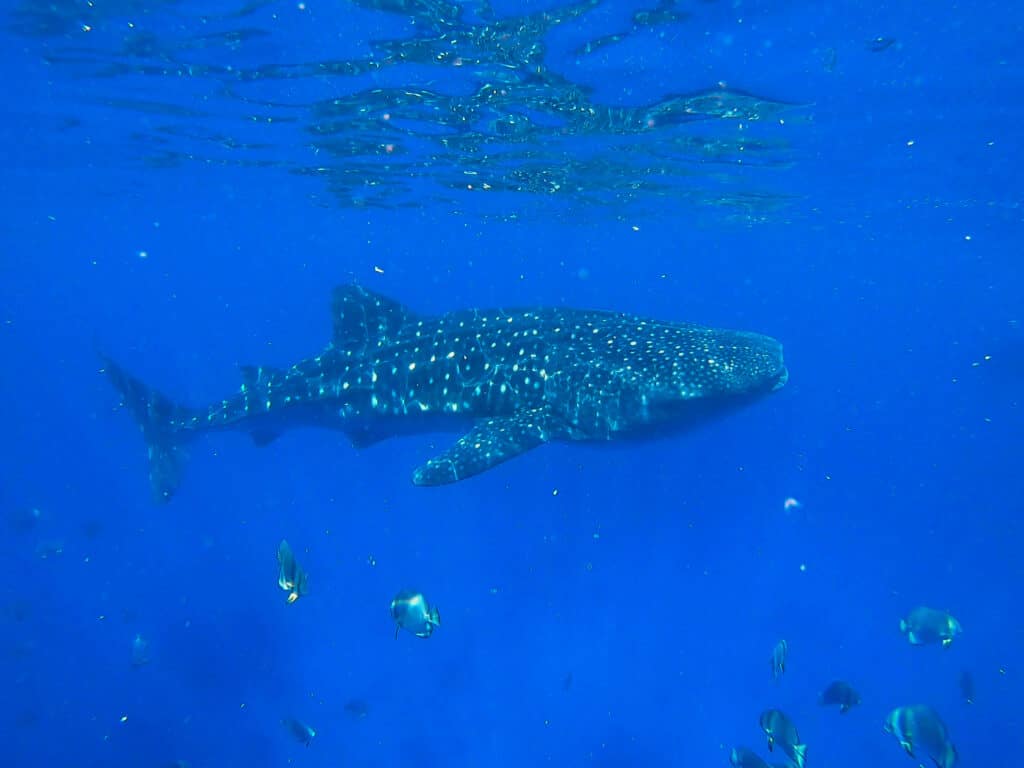
South Ari Atoll is the most reliable place in the Maldives to encounter whale sharks throughout the year. The South Ari Marine Protected Area (SAMPA) was established to safeguard a resident population of mostly juvenile whale sharks that feed regularly in this region, making sightings possible in every month.
What makes South Ari unique is consistency. Unlike many destinations worldwide where whale sharks appear only for a short seasonal window, this area functions as a long-term feeding and nursery ground. That reliability, however, also explains its popularity.
On days when a single whale shark is located, multiple boats from resorts and local islands may converge on the same animal. Encounters can therefore feel busy, especially during peak season. The quality of your experience here depends heavily on operator behaviour: group size limits, controlled water entry, and strict distance rules matter far more than luxury level.
Best access islands and resorts
- Local islands: Dhigurah and Maamigili are the main bases for whale shark excursions in South Ari. They are well suited to travellers who prefer a more affordable and flexible setup, often with smaller groups and guides who spend most days on the water. If you’re still deciding which inhabited island best matches your travel style, budget, and snorkelling priorities, our comparison guide Top 10 Local Islands in the Maldives breaks this down in detail.
- Resorts: LUX* South Ari Atoll, Vilamendhoo, Sun Island, and Outrigger Maldives Maafushivaru Resort all operate regular whale shark excursions, usually as optional add-ons. These trips tend to be more structured, sometimes led by marine-trained staff, and include clear safety briefings. For travellers who prefer an all-inclusive setup with minimal planning, we compare the strongest options in Best Maldives All Inclusive Resorts | Ultimate Guide to Stress-Free Island Stays.
Many excursions depart from Dhigurah, Maamigili, and nearby resorts in South Ari Atoll. These tours focus specifically on the year-round whale shark population found in this protected marine area.
Best time: All year
Sea conditions are typically calmest from December to April, which helps visibility and surface snorkelling. From May to November, plankton levels increase due to monsoon-driven currents. Visibility may be slightly lower, but feeding activity remains strong and sightings continue across different reef sides.
Who South Ari is best for
Travellers who prioritise probability over exclusivity, and first-time visitors who want the highest realistic chance of seeing a whale shark during their trip.
Trade-offs to consider
This is not the place for secluded or prolonged swims. Encounters can be brief, and patience is required on busy days. If you expect a quiet, private experience, South Ari may feel crowded at times.
Baa Atoll (Hanifaru Bay): The Seasonal Feeding Events

Baa Atoll’s Hanifaru Bay is globally known for its seasonal plankton blooms, which attract large numbers of manta rays — and occasionally whale sharks — during the southwest monsoon. Unlike South Ari, this area is not a year-round whale shark location and should be approached with different expectations.
Whale sharks appear here opportunistically during feeding events, rather than as part of a resident population. As a result, sightings are far less predictable. Most travellers come primarily for manta rays, with whale sharks considered a rare but possible bonus.
When whale sharks do appear, encounters tend to be calmer and more controlled. Access to Hanifaru Bay is strictly regulated under UNESCO guidelines: boat numbers are limited, only snorkelling is allowed, and group sizes in the water are tightly managed. This creates a very different atmosphere from South Ari — quieter, more structured, and conservation-led.
First-hand experience
During our stay in Baa Atoll at Dharavandhoo, we joined an excursion after a whale shark was reported nearby. By the time we arrived, the animal had already dived and was no longer visible from the surface. Other guests at our hotel were more fortunate and saw whale sharks on two separate occasions during night outings. These trips only proceed once the animal is clearly visible from the boat, and snorkellers enter the water together, holding a safety line behind the vessel. While controlled and safe, this setup felt too intense for us while travelling with children, so we chose not to join.
Best access islands and resorts
- Local island: Dharavandhoo is the main non-resort base for accessing Hanifaru Bay. It’s a strong choice for travellers who want a quieter, more authentic island experience combined with well-regulated marine excursions. We explain why it works so well as a base for manta rays and occasional whale shark encounters in Dharavandhoo: Maldives’ Best Local Island for Authentic Culture, Budget Stays & Hanifaru Bay Adventures.
- Resorts: Dusit Thani Maldives, Amilla Maldives Resort & Residences, Anantara Kihavah Maldives Villas, Four Seasons Landaa Giraavaru and The Nautilus Maldives all operate excursions under UNESCO regulations. These resorts are particularly well suited to travellers looking for comfort, privacy, and expert-led snorkelling in a highly controlled environment. If you’re exploring higher-end stays in this atoll, our curated overview Best luxury resorts in the Maldives helps compare the strongest options.
During the southwest monsoon, excursions from islands such as Dharavandhoo explore the surrounding waters of Baa Atoll, where manta rays gather and whale sharks occasionally appear during feeding events.
Klook.comBest time: May to November
Peak activity usually occurs between July and October, when plankton concentrations are highest. Visibility can be lower than in the dry season, but marine life density — especially manta rays — is exceptional.
Who Baa Atoll is best for
Travellers visiting during manta season who value controlled, low-impact encounters and are comfortable with whale sharks being a possibility, not a focus.
Trade-offs to consider
This is not the right base if whale sharks are your primary goal. Sightings are not predictable, and diving is not permitted in Hanifaru Bay.
Understanding Whale Shark Season in the Maldives
Many travellers assume there is one fixed “whale shark season” in the Maldives. In reality, whale sharks don’t disappear — they follow plankton, and plankton movement is driven by monsoon patterns. This is why sightings shift location throughout the year rather than stopping altogether. Understanding how whale sharks in Maldives follow plankton patterns is key to choosing the right atoll for your trip.
Understanding how the two monsoon seasons affect currents, visibility, and feeding behaviour helps set realistic expectations and explains why some atolls work better at certain times than others.
Northeast Monsoon (December–April)
This period marks the Maldives’ dry season, with calmer seas, lower humidity, and the clearest underwater visibility of the year. For many travellers, these months offer the most comfortable overall conditions — both on land and in the water.
During the northeast monsoon, plankton tends to concentrate along the western reef edges of atolls such as South Ari. Whale sharks are therefore more commonly encountered on that side, often cruising just below the surface while feeding. These conditions are particularly well suited to snorkelling, underwater photography, and first-time encounters.
The main trade-off is demand. This is peak travel season, which means fuller boats, higher accommodation prices, and less flexibility when booking excursions at short notice.
Best suited for:
Travellers prioritising calm seas, good visibility, and predictable conditions — especially first-time snorkellers.
Southwest Monsoon (May–November)
The southwest monsoon brings more variable weather, with occasional rain, increased cloud cover, and rougher sea conditions on some days. Visibility can be lower compared to the dry season, but this period also drives higher plankton concentrations, which in turn attract feeding whale sharks.
During these months, sightings typically shift toward the eastern reef sides of atolls such as South Ari. Encounters can feel more dynamic and natural, even if water clarity is not always ideal. This season also aligns with peak manta ray activity in Baa Atoll, making it especially appealing for travellers interested in broader marine life rather than just whale sharks.
From a planning perspective, this is often the most cost-effective time to visit. Accommodation prices are lower, boats are less crowded, and availability is generally better — provided you’re flexible with conditions.
Best suited for:
Travellers focused on marine life over perfect weather, repeat visitors, and those combining whale sharks with manta ray season.
What This Means for Planning
There is no single “best” month to see whale sharks in the Maldives. Instead, the key is aligning location and expectations with seasonal conditions:
- For year-round reliability, South Ari Atoll remains the strongest option in any season
- For seasonal feeding events, Baa Atoll works best from May to November
- Weather affects visibility and comfort more than the presence of whale sharks themselves
Understanding this movement pattern helps avoid disappointment and allows you to plan around how whale shark encounters actually happen in the Maldives — not how they’re often marketed.
Why Conditions Matter More Than Dates
Whale shark encounters are always wildlife-based. Calm seas, experienced guides, and responsible operators often matter more than the exact month you travel. Flexible planning — choosing the right atoll for the season and allowing multiple days for excursions — significantly improves your overall experience.
For a broader overview of how weather patterns, sea conditions, and travel seasons affect a Maldives trip as a whole — beyond whale shark encounters — see our pillar guide Best Time to Go to Maldives.
Snorkelling vs. Diving: Which Is Best for a First‑Timer?
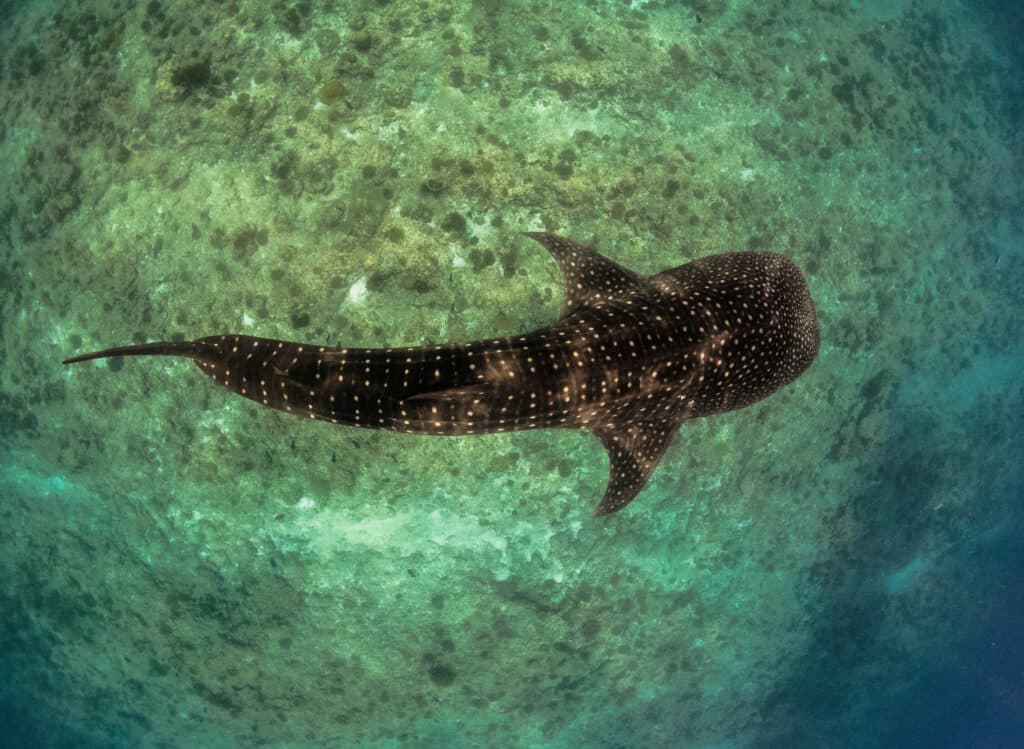
For many first-time travellers, choosing between snorkelling and diving with whale sharks can feel more complicated than expected. Both offer unique perspectives, but in the Maldives the reality is straightforward: most encounters happen at the surface, which makes snorkelling the most common — and often the most rewarding — option.
Understanding how encounters typically unfold helps avoid unnecessary certifications, costs, or unrealistic expectations.
Why Snorkeling Is Recommended
In the Maldives, whale sharks are most often spotted feeding near the surface. This means snorkelling offers clear visibility, longer observation time, and far fewer barriers to entry. No certification is required, and snorkelling is the only permitted method in protected areas such as Hanifaru Bay.
Snorkelling is also less intrusive and easier to control in group settings, which is why responsible operators strongly favour it. For first-time visitors, it provides the best balance between accessibility, safety, and quality of experience.
That said, you should be a confident swimmer. Encounters usually take place in open water rather than sheltered lagoons, and light currents are common. Life vests are often provided and are worth using if you’re unsure.
Best suited for:
First-time visitors, families with older children, and travellers without diving certification.
When Diving Makes Sense
Diving offers a different perspective — observing a whale shark from below can be visually impressive, especially when the animal passes overhead. However, diving encounters are less predictable. Whale sharks often remain close to the surface while feeding, which means divers may actually have fewer opportunities than snorkellers.
Diving is also more restrictive. You’ll need certification, suitable conditions, and an operator willing to adjust plans if a whale shark is sighted. For most travellers, diving works best as a complement to snorkelling rather than a replacement.
Best suited for:
Certified divers already planning dives who are comfortable with the chance of not encountering a whale shark underwater.
The Practical Takeaway
If seeing a whale shark is your main goal, snorkelling is the most realistic and reliable option in the Maldives. Diving can add variety to your trip, but it shouldn’t be relied on as the primary method for whale shark encounters.
For a broader overview of how snorkelling, diving, and other marine activities compare across different atolls, see our guide Top Activities in Maldives: Snorkelling, Diving & Wildlife Encounters.
Whale Shark Tours: Prices, Group Sizes & Expectations
Whale shark tours in the Maldives vary significantly in price, group size, and overall experience. The differences depend less on luxury level and more on departure location, boat logistics, and how operators manage encounters once a shark is found. For travellers hoping to see whale sharks in Maldives, choosing the right departure island often matters more than the price of the tour itself.
Typical price ranges:
- Local islands (e.g. Dhigurah, Dharavandhoo): Approx. $70–150 per person
Tours usually run with small boats and groups of around 4–8 snorkellers. These trips tend to be flexible, wildlife-focused, and cost-effective, particularly when staying close to the main encounter areas. - Popular hubs like Maafushi: Approx. $90–120 per person
Although prices may appear similar, these tours often involve longer boat rides to reach whale shark areas, less flexibility once on the water, and larger groups. The overall experience can feel more rushed once a shark is located. - Resorts: Approx. $150–300+ per person
Resort-based excursions are usually optional add-ons rather than included activities. They are often well organised, include structured briefings, and sometimes involve marine-trained staff. Group sizes can still vary, especially during high season.
What to realistically expect:
Whale shark excursions are always wildlife-based, which means outcomes are never guaranteed. A typical tour involves searching over a wide area, sometimes for several hours, before a sighting occurs.
Once a whale shark is found:
- Entry into the water usually happens only after the animal is clearly visible and calm
- Encounters may last seconds to a few minutes, depending on behaviour, currents, and boat traffic
- Extended swims are rare and should not be expected
In busy areas, operators may rotate snorkellers or limit time in the water to reduce pressure on the animal.
Group Size Matters More Than Price
The single biggest factor influencing experience quality is how many people enter the water at once. Smaller groups are calmer, safer, and far less stressful for the whale shark.
A higher price does not automatically mean a better encounter. A well-run local island tour with strict limits often provides a more respectful and memorable experience than a crowded excursion from a large hub.
Night Tours: What to Know
In certain areas, particularly around Baa Atoll, whale sharks are sometimes spotted in the evening. Night snorkelling trips only proceed if a shark is clearly visible from the boat. Snorkellers typically enter the water together and remain connected by a safety line while observing from above.
These tours are tightly controlled and can be memorable, but they are not suitable for everyone — especially families with young children or travellers uncomfortable in dark, open water.

The Key Takeaway
Whale shark tours in the Maldives are not about duration or guarantees, but about timing, operator behaviour, and expectations. Choosing tours that prioritise small groups, calm water entry, and strict distance rules significantly improves both safety and experience — regardless of budget level.
If you approach tours as a chance encounter rather than a scheduled attraction, you’re far more likely to enjoy what is offered.
How to Choose a Safe & Responsible Whale Shark Tour
Not all whale shark tours are equal. If you want an experience that is safe for you and respectful toward whale sharks in Maldives, it’s worth taking a few minutes to check how an operator works before booking. Choosing the right tour makes a real difference, especially in busy areas where encounters with whale sharks in Maldives can quickly become crowded.
1. Ask about group size (before you book)
Smaller groups are safer and less stressful for the animals. As a guideline, look for tours that limit the number of snorkelers in the water at the same time and avoid operators that send large groups in all at once.
2. Check how water entry is managed
Responsible operators only let guests enter the water once a whale shark is clearly visible and positioned calmly. Avoid tours that encourage jumping in quickly or chasing the animal.
3. Look for clear briefing & rules
Good tours always start with a safety and ethics briefing, covering distance rules (usually 3–4 meters), no touching, no flash photography, and how to approach the whale shark calmly from the side.
4. Ask how they handle busy days
In popular areas like South Ari Atoll, multiple boats may gather around a single whale shark. Ethical operators coordinate entry times, limit numbers in the water, or wait their turn rather than adding to overcrowding.
5. Prefer operators linked to conservation or research
Some resorts and local operators work with marine biologists or research programs and record sightings responsibly. This is a good sign that animal welfare is taken seriously.
6. Read reviews with the right focus
Don’t just look for “we saw a whale shark.” Read reviews that mention calm guidance, clear rules, and feeling safe in the water — these are better indicators of a quality tour.
Whale Shark Code of Conduct: Ethical Encounters
Whale shark encounters in the Maldives rely on responsible behaviour — from operators and visitors. As sightings become more popular, especially in areas like South Ari Atoll, how tours are conducted directly affects both animal welfare and the quality of the experience.
Ethical encounters are not about getting closer or staying longer, but about minimising stress for the animal while allowing safe, controlled observation.
Core Rules Every Snorkeller Should Follow
Reputable operators follow clear guidelines. As a visitor, you should expect — and actively respect — the following rules:
- Keep a minimum distance of 3–4 metres at all times
- Never swim directly in front of the whale shark or block its path
- Do not touch, ride, or attempt to “keep up” with the animal
- Enter the water calmly and avoid splashing or sudden movements
- Flash photography is not permitted
- Always follow your guide’s instructions, even if it shortens the encounter
What Responsible Operators Do Differently
Well-run tours actively manage encounters rather than chasing them. Signs of a responsible operator include:
- Clear briefings before departure, covering safety and behaviour
- Limiting the number of snorkellers in the water at one time
- Coordinating with other boats to avoid overcrowding
- Allowing the animal to approach naturally rather than pursuing it
Some operators and resorts also contribute to research by recording sightings or sharing identification photos with conservation programmes. This adds long-term value beyond the individual encounter.
Why This Matters
Poorly managed tours have led to overcrowding and unsafe situations in parts of the Maldives. Stress caused by repeated disturbance can alter whale shark behaviour and reduce the likelihood of future sightings.
Choosing operators with strict protocols — and behaving responsibly yourself — helps protect whale sharks while also improving your own experience. Calm, well-managed encounters are almost always more memorable than chaotic ones.
Ethical tourism is not a limitation; it is what makes meaningful wildlife encounters possible in the first place.
Frequently Asked Questions about Whale Sharks in Maldives
Are whale sharks dangerous to humans?
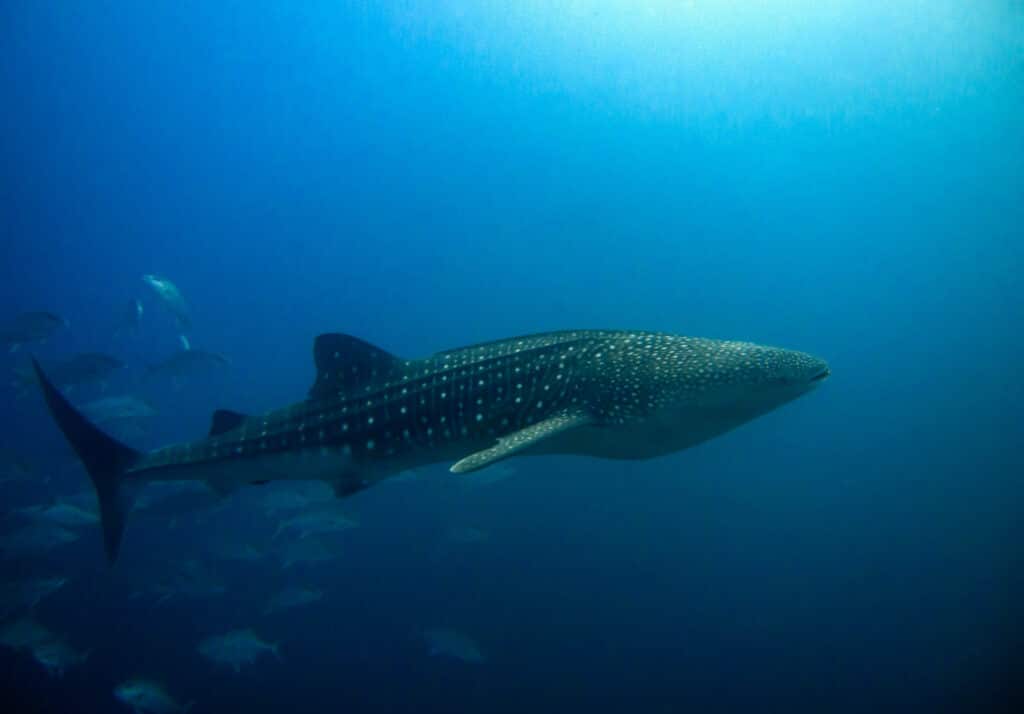
No. Whale sharks are gentle, non-aggressive filter feeders and pose no threat to humans. They feed mainly on plankton and small fish and show little interest in people. When snorkelling with whale sharks in the Maldives, encounters are typically calm and slow-moving. As long as visitors keep a respectful distance and follow their guide’s instructions, these wildlife encounters are considered safe and well managed.
How much does a whale shark excursion cost in the Maldives?
Whale shark tours in the Maldives usually cost around $70–150 per person from local islands such as Dhigurah or Dharavandhoo, while excursions organised by resorts often range from $150–300+ per person. Prices vary depending on group size, travel distance, and guide expertise. In practice, smaller groups and responsible operators often have a greater impact on the overall experience than the price itself.
What is the best month to see both whale sharks and manta rays?
The best chance to see both whale sharks and manta rays together is between July and October, during the southwest monsoon. This is when plankton levels peak in Baa Atoll’s Hanifaru Bay, attracting large manta ray aggregations and occasional sightings of whale sharks in Maldives during feeding events.
Is it possible to see both whale sharks and manta rays on the same trip?
Yes, but it depends on timing and location. South Ari Atoll is known for reliable whale shark sightings, while Baa Atoll is famous for manta ray gatherings between May and November. Travellers visiting during this period sometimes encounter both species, particularly when plankton levels are high. However, sightings of either animal are always wildlife-based and should never be considered guaranteed.
Can beginners snorkel with whale sharks?
Yes, beginners can snorkel with whale sharks in the Maldives as long as they are comfortable swimming in open water. Most encounters take place at the surface, so no diving certification is required. However, conditions can include deeper water and light currents. Responsible operators provide safety briefings and often offer flotation devices, which can help less confident swimmers feel more comfortable.
Is swimming with whale sharks in Maldives ethical?
Swimming with whale sharks can be ethical when strict guidelines are followed. Feeding, touching, or chasing whale sharks is prohibited, and visitors must keep a safe distance at all times. Responsible operators manage group sizes, control water entry, and prioritise animal welfare. Choosing tours that follow conservation guidelines helps protect whale sharks while allowing travellers to observe them safely and respectfully.
Final Thoughts on Swimming with Whale Sharks
Seeing whale sharks in Maldives is rarely about chasing a perfect moment. More often, it’s about being in the right place, choosing the right operator, and allowing wildlife encounters to unfold naturally.
Travellers who prioritise realistic expectations tend to enjoy these experiences the most. Whether that means heading to South Ari Atoll for its year-round reliability or visiting Baa Atoll during the monsoon months when marine life gathers in remarkable numbers, understanding how whale sharks in Maldives behave makes planning far easier.
If this kind of encounter is high on your travel list, the next step is connecting the bigger pieces of your trip — where to stay, which islands offer the best access to excursions, and how seasons shape marine life across the country. Exploring the wider Maldives guides on this site will help you plan a journey where a whale shark encounter becomes part of a much larger island experience.
Related Blogs
Other Activities Blogs
Top Activities in Maldives: Snorkelling, Diving & Swimming with Manta Rays
Snorkelling in Maldives: Best Places to Go & Marine Life
Sandbanks in Maldives: Unmissable Sandbank Adventures & Island Experiences
Swimming with Sea Turtles in Maldives: Best Spots & Tips
Manta Rays in Maldives: Best Places, Season & Ethical Snorkelling Guide
Maldives Diving: Top Dive Sites, Marine Experiences & Tips for Every Diver
Other Maldives Blogs
Best Maldives Resorts by Budget: Top Affordable, Mid-Range & Luxury Island Escapes
Maldives Vacation: How to Plan Your Dream Island Escape for Adventure and Relaxation
Best Time to Go to Maldives: Weather, Climate & Seasonal Tips for Your Perfect Island Vacation
Trip to Maldives: Essential Information on Islands, Visa, Vaccinations & Entry Requirements
Liveaboard Diving Trips in Maldives: Explore Top Dive Sites & Underwater Life with Maldive Dreamers
Best Hotel in Maldives Island: Top Luxury, Boutique & Affordable Stays for Every Traveller
Some links on this website are affiliate links. If you choose to book through one of them, I may earn a small commission — at no extra cost to you. This helps support the ongoing creation of independent travel guides and detailed destination content.