

Table of Contents
Some islands feel like a postcard. Dharavandhoo feels like the Maldives you actually get to live in — slow mornings, barefoot evenings, and that quiet excitement of knowing the best part of the day might happen underwater.
We stayed on Dharavandhoo ourselves, and what stood out most was how effortless it felt to combine local island life with genuinely bucket-list experiences. One moment you’re walking through calm village streets, the next you’re stepping into a lagoon that looks unreal even when you’ve seen the photos.
This Dharavandhoo Maldives guide is for travellers who want the marine magic without resort prices — and who’d rather spend their budget on mantas, reefs, and sandbank days than on polished extras.
In a Rush?
These are my Favourite Hotels on Dharavandhoo
- ⭐️⭐️⭐️ Kiha Beach – Check prices and availability
- ⭐️⭐️ LVIS Blancura – Check prices and availability
- ⭐️ Biosphere Inn– Check prices and availability
Dharavandhoo at a Glance
Before diving into the details, this quick overview highlights what kind of island Dharavandhoo really is — from atmosphere and marine life to costs and travel style. It helps you decide early on whether this local island matches what you’re looking for in the Maldives.
| Topic | What to Expect on Dharavandhoo |
|---|---|
| Best for | Budget travellers. families. manta ray encounters |
| Vibe | Quiet. laid-back. local island life |
| Marine life | Manta rays (seasonal). turtles. house reef snorkelling |
| Accommodation | Local guesthouses and small beachfront hotels |
| Alcohol | ❌ Not available on local islands |
| Typical budget | From ~US$75–150 per night (guesthouses and beachfront stays) |

Why Dharavandhoo Is the Best Island for First‑Time Budget Travellers
Dharavandhoo is particularly well suited to first-time travellers who want to experience the Maldives beyond a resort setting, without losing access to exceptional marine life. For travellers researching Dharavandhoo Maldives as a base for manta ray encounters, the island’s proximity to Hanifaru Bay is one of its biggest advantages.
The island’s strength lies in its location rather than luxury. Dharavandhoo sits within the UNESCO-protected Baa Atoll and offers some of the most practical access to Hanifaru Bay — an experience that many travellers only reach via expensive resort excursions. From here, the same ecosystem can be explored through locally organised trips at a far more accessible price point.
For budget-conscious travellers, this means paying primarily for experiences rather than resort overheads. Accommodation remains affordable, excursions are flexible, and the island layout allows easy movement between beach, village and harbour.
Dharavandhoo is best suited to travellers who prioritise wildlife encounters, snorkelling and a relaxed island rhythm over spa facilities, alcohol or highly curated resort entertainment.
Hanifaru Bay
Hanifaru Bay is the primary reason many travellers choose Dharavandhoo. Access to Hanifaru Bay is strictly regulated, with limited snorkelling windows and controlled group sizes. Staying on Dharavandhoo places you among the closest local islands to the bay, reducing transfer time and making it easier to join excursions when conditions are right.
While whale shark sightings in the Baa Atoll are occasional rather than guaranteed, manta ray encounters during the season are among the most reliable in the Maldives.
Practical island setup
Dharavandhoo is a compact and easy-to-navigate local island where daily needs are well covered despite its small size. Most places can be reached on foot within a few minutes, making it a comfortable base even for families.
The island has:
- several small grocery shops for drinks, snacks and basic essentials
- a number of local cafés and restaurants spread across the village
- a well-kept public park with playgrounds and outdoor fitness equipment
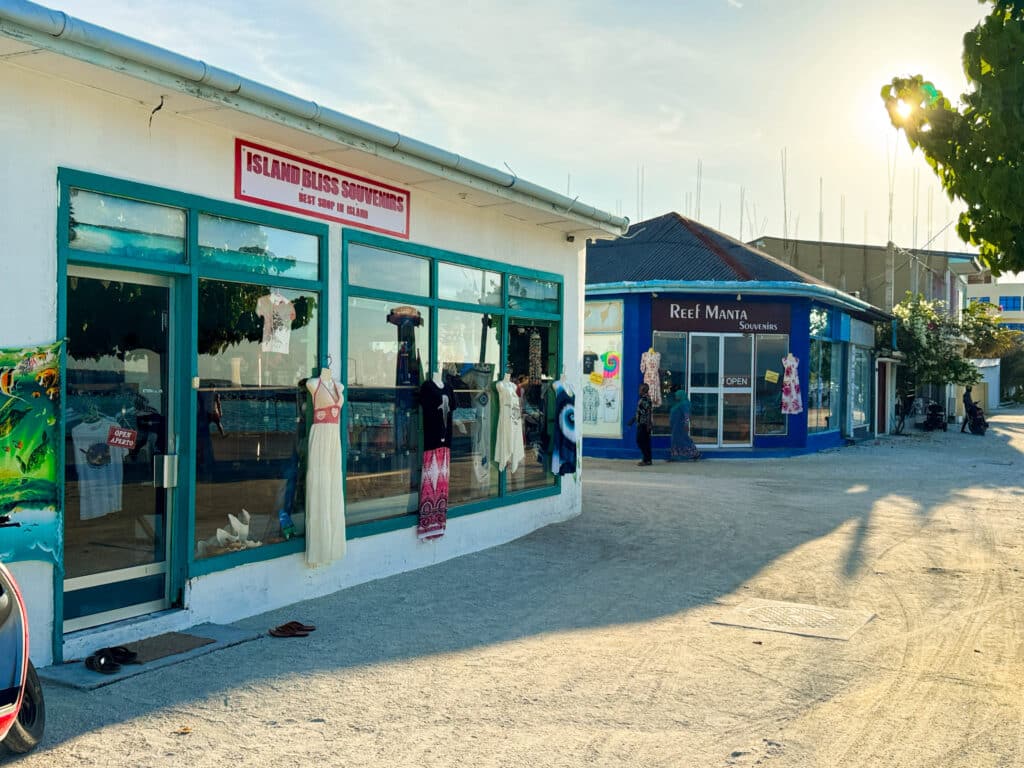
- a few souvenir shops, mainly near the harbour and main streets
There is no large-scale tourism infrastructure, but everything needed for a relaxed stay is available, including excursion desks, dive centres and transport assistance through guesthouses.
Island Atmosphere
The atmosphere on Dharavandhoo can feel noticeably quiet, especially during certain times of the year.
During our stay in August, the island felt calm and almost empty outside of the main areas. We rarely encountered locals walking through the streets, aside from shopkeepers and a small number of residents dining in local restaurants. With schools closed for the holidays, many families appeared to be off-island, which contributed to the tranquil, low-key feeling.
Rather than feeling lifeless, the island felt spacious and unhurried. Days passed quietly, with little street traffic and minimal background noise — a contrast to busier local islands where daily life is more visible.

Beaches & Bikini Beach
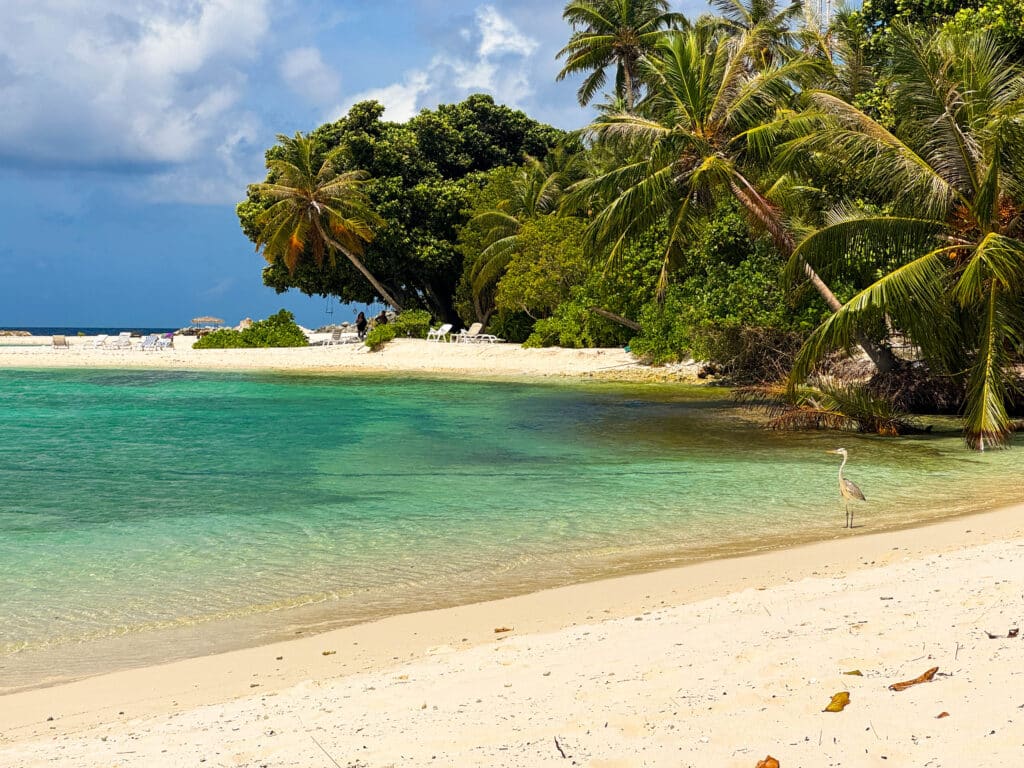
Dharavandhoo has one designated Bikini Beach where swimwear is allowed. This beach is clean, well maintained and protected by a calm lagoon, making it suitable for swimming, snorkelling and families with children.
The water here is shallow and clear, and the house reef starts close to shore. This allows easy snorkelling directly from the beach, with regular sightings of reef fish and occasional turtles — no boat trip required.
While the beach is smaller and less secluded than those on private resort islands, it offers shade, sunbeds near the guesthouses, and reliable conditions for relaxed beach days and sunset swims. For travellers staying on Dharavandhoo, Bikini Beach functions as the island’s main social and swimming area.

Accommodation
Dharavandhoo offers a small but well-balanced range of accommodation options, split between beachfront hotels near Bikini Beach and more budget-friendly guesthouses inside the village.
The choice mainly comes down to comfort level, proximity to the beach and whether you prefer a more hotel-style experience or a simple local guesthouse.
Below, accommodations are grouped by type, with clear notes on value, travel style and who each option is best suited for.
Bikini Beach Hotels (directly on the sand)
These beachfront stays are ideal if you want immediate access to the lagoon and prefer not to walk back and forth with beach gear or children. They offer a more comfortable, hotel-style experience while still keeping costs far below those of private resorts.
Kiha Beach (beachfront)
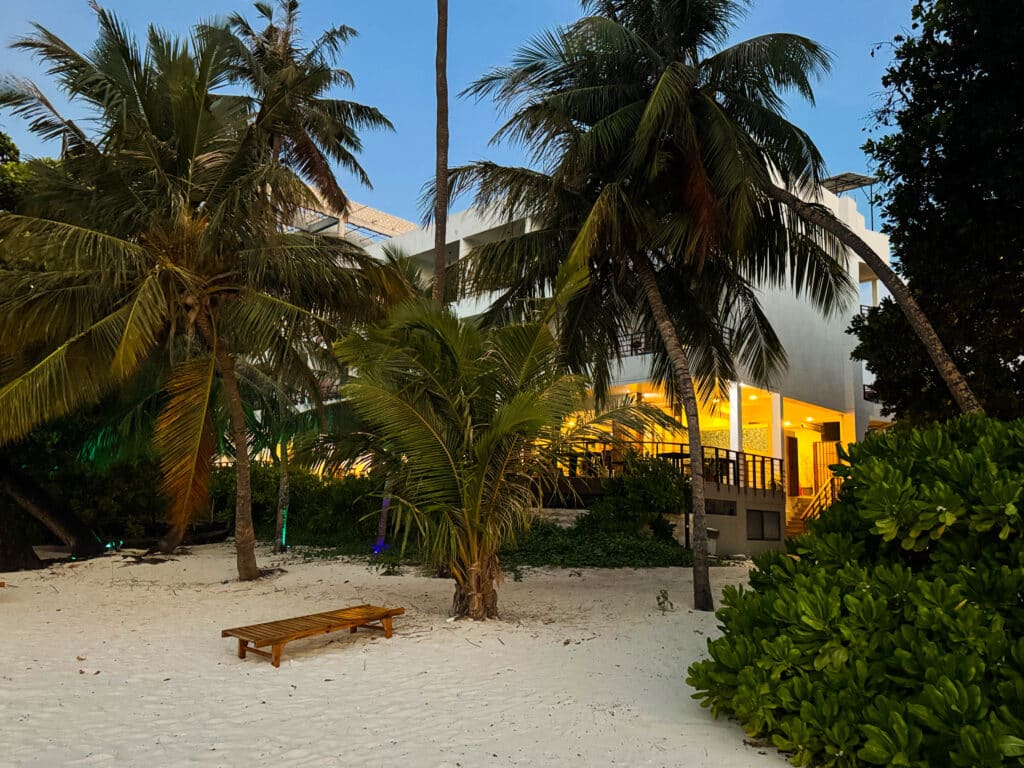
A small beachfront hotel with sea-view rooms, a swimming pool and direct access to Bikini Beach. Particularly well suited for families and travellers who value comfort and convenience without a resort atmosphere.
Rating: 9,4
Price indication: from US$185 per night for two incl. breakfast (2026)
Read our full review of Kiha Beach Maldives: Boutique Hotel Review & Guide for Diving, Relaxation, and Island Charm.
Aveyla Manta Village (beachfront, dive-focused)

A modern beachfront hotel with an established dive centre, popular with travellers visiting Dharavandhoo primarily for manta ray excursions and diving in the Baa Atoll.
Rating: 8,3
Price indication: from US$125 per night for two incl. breakfast (2026)
Note on reviews:
Recent Booking.com reviews mention construction work next to the property (they are building another building for Kiha Beach, next to Avelya Manta Village), related to a second building currently being developed. During our own stay at Kiha Beach, we did not experience any disturbance from these works, but sensitivity may vary depending on room location and construction phase.
LVIS Blancura (beachfront)

A polished and well-maintained beachfront guesthouse known for its clean, bright rooms and calm atmosphere. Best suited for couples and solo travellers looking for a quiet beachfront stay without large hotel facilities.
Rating: 9,5
Price indication: from US$126 per night for two incl. breakfast (2026)
Chak’z Beach (small beachfront guesthouse)
A small, intimate guesthouse located directly on the sand at Bikini Beach. With a limited number of rooms, it appeals to travellers who value a quiet setting and direct beach access over amenities or services.
Rating: 9,4
Price indication: from US$168 per night for two incl. breakfast (2026)
Village Guesthouses (more budget friendly)
If you prefer a local vibe or are travelling on a tighter budget, the village has plenty of welcoming and affordable options. These stays often feel more personal, with staff who are eager to help arrange tours or recommend places to eat.
Biosphere Inn (village guesthouse, excursion-focused)

A friendly, activity-oriented guesthouse known for organising snorkelling trips, turtle reef excursions and sandbank tours. A good option for travellers who prioritise experiences and local support over beachfront accommodation.
Rating: 9,5
Price indication: from US$92 per night for two incl. breakfast (2026)
LVIS Village (village guesthouse)
A simple and comfortable guesthouse in a quieter part of the village, offering good value for travellers who want a calm base within walking distance of the beach and harbour.
Rating: 9,6
Price indication: from US$79 per night for two incl. breakfast (2026)
Bageechaa Stay (comfortable village guesthouse)
A well-kept village guesthouse offering a higher comfort level than most basic budget stays. Suitable for travellers who want a quieter local base with more space and comfort, without paying for a beachfront location.
Rating: 9,6
Price indication: from US$116 per night for two incl. breakfast (2026)
Hanifaru Transit Inn (inland – budget)
A simple, affordable guesthouse aimed at travellers who come primarily for Hanifaru Bay excursions and spend little time at the hotel itself.
Rating: 9.6
Price indication: from US$75 per night for two incl. breakfast (2026)
Whether you choose a beachfront hotel or a village guesthouse, accommodations on Dharavandhoo generally feel warm, safe, and community‑oriented — making it an easy island for first‑time local‑island travellers.
Restaurants on Dharavandhoo
Dharavandhoo has a small but reliable selection of local restaurants and cafés, all within easy walking distance. Dining is informal and relaxed, with a mix of Maldivian dishes, international comfort food and fresh juices. During our stay, we ate at all of the restaurants listed below and found the food consistently good across the board.
Krill Restaurant
A cosy restaurant offering good-value local and international dishes. Service is generally quick, which makes it a practical option on days with excursions. In the evening, the softly lit street creates a warm, relaxed atmosphere.
Garden Restaurant
A comfortable spot for dinner with generous portions and friendly service. The menu combines local flavours with familiar Western options, making it an easy choice after a long day on the water.
Honey Bunny
A casual daytime favourite with a fun location next to the runway. The fresh juices and smoothies are excellent, and watching the small planes land and take off adds a playful element — especially enjoyable when travelling with children.
In addition to these restaurants, there are a few small cafés and takeaway-style places around the island serving snacks, short eats, fresh juices and simple rice or noodle dishes.
Most beachfront hotels also have their own restaurant, which is convenient if you prefer to stay close to Bikini Beach or enjoy a relaxed dinner without walking back into the village.

Shops and Essentials on Dharavandhoo
Dharavandhoo has a handful of small minimarkets, souvenir shops and local cafés spread across the island, all within easy walking distance. You’ll find everyday essentials such as cold drinks, sunscreen, snacks, fresh fruit and basic beach items, including simple toys for children.
The souvenir shops mainly sell small, locally made items such as wooden manta rays and turtles, handcrafted decorations, artwork and colourful sarongs — easy to pack and suitable as lightweight gifts.
While the island is small, it covers all basic needs for a comfortable stay without feeling touristy or overly commercialised.
Top Activities on Dharavandhoo Maldives
Dharavandhoo’s strength as a destination becomes clear once you look at what is possible beyond the island itself. Its location within the UNESCO-protected Baa Atoll allows travellers to access a wide range of marine-focused excursions without changing islands. Many travellers specifically choose Dharavandhoo Maldives because it offers easy access to several of the Baa Atoll’s most famous marine experiences.
From manta ray snorkelling in Hanifaru Bay to turtle reefs, thila diving, sandbank trips and dolphin cruises, many travellers are able to combine several experiences within just a few days thanks to short distances and flexible local operators.
Top 6 Must‑Do Activities
1. Snorkelling Hanifaru Bay (Manta Rays)
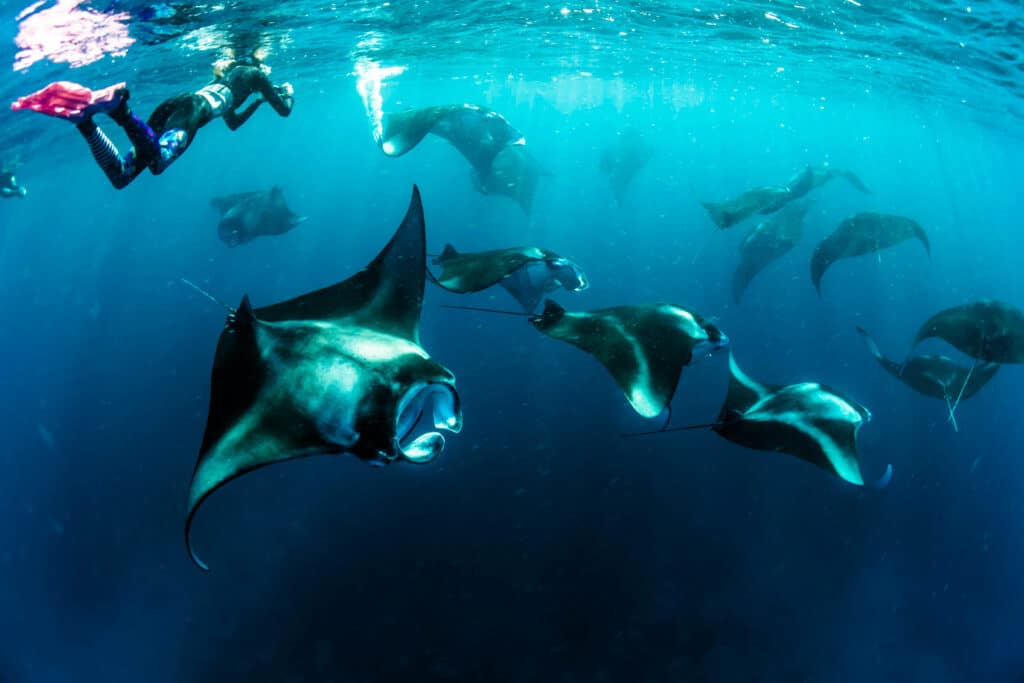
Snorkelling in Hanifaru Bay is the main reason many travellers choose Dharavandhoo. This protected marine area is part of the UNESCO Biosphere Reserve and is known for seasonal plankton blooms that attract large numbers of manta rays.
During the peak season from May to November, mantas can gather here in impressive feeding formations, sometimes with dozens visible at once. Access to the bay is strictly regulated, with limited time slots and controlled group sizes to protect the ecosystem.
We joined a manta snorkelling excursion during our stay. Conditions can vary from day to day — and even within the same morning — which is typical for wildlife experiences. At the first location, sightings were limited, but after relocating based on updated information from the crew, we entered the water surrounded by about 15 mantas gliding just metres below the surface. It was one of the most memorable marine encounters of our time in the Maldives.
Excursions are usually organised early in the morning and depend heavily on weather, plankton density and official permission to enter the bay. Because trips are opportunistic rather than scheduled far in advance, staying on Dharavandhoo increases flexibility compared to islands further away.
Price indication: around US$50 per person (2025), depending on permits, conditions and time spent in the bay.
For travellers planning their trip specifically around manta encounters, it’s worth understanding the seasonality and regulations in advance. You can read our detailed guide here: Manta Rays in Maldives: Best Places, Season & Ethical Snorkelling Guide.
2. Whale Shark Tours & Night Swims
Whale shark encounters in the Baa Atoll are possible, but far less predictable than manta ray sightings.
During our stay on Dharavandhoo, we were placed on an informal “whale shark alert” by our guesthouse. Whenever a sighting was reported nearby, boats would head out quickly in the hope of arriving in time. We joined one of these last-minute attempts, but arrived just too late — a realistic outcome when dealing with wild animals in open ocean conditions.
Some operators in the Baa Atoll also offer night whale shark experiences, where participants float on a rope while whale sharks pass beneath the surface, attracted by light and plankton. We learned about this option late in our stay and didn’t manage to join ourselves, but other travellers consistently described it as a unique and highly memorable experience.
For travellers whose main goal is swimming with whale sharks, Dharavandhoo may not be the most reliable base. However, if you’re visiting primarily for mantas and reef snorkelling, any whale shark encounter here should be seen as a fortunate extra rather than the core reason to choose this island.
Price indication: around US$50 per person (2025), availability dependent and not guaranteed due to the unpredictable nature of sightings.
For a broader overview of where and when whale sharks are most commonly seen, see our full guide: Whale Sharks in Maldives: Best Spots & Tours for Encounters.

3. Scuba Diving
For divers exploring the Baa Atoll, the island offers access to a mix of thilas, channels and reef walls, with access to a mix of thilas, channels and reef walls suitable for both beginner and experienced divers. Visibility is generally good, and marine life is diverse, with regular sightings of reef sharks, turtles, eagle rays and large schools of fish.
Most dive sites are reached within a short boat ride, allowing half-day dive trips that still leave time to enjoy the island. This makes Dharavandhoo particularly appealing for travellers who want to combine diving with snorkelling, beach time or family-friendly activities rather than committing to a full liveaboard schedule.
Local dive centres offer guided dives, refresher courses and beginner programmes, as well as PADI certifications. For certified divers, conditions vary by site and season, with stronger currents in channels and calmer conditions on reef dives.
If diving is a major focus of your trip, Dharavandhoo provides a flexible and cost-effective alternative to resort-based diving, while still offering access to high-quality sites within the UNESCO-protected Baa Atoll.
Price indication: dives typically start from around US$60 per dive (2026), excluding equipment rental if required.
For a wider overview of diving across the country, including how Baa Atoll compares to other regions, see our full guide: Maldives Diving: Top Dive Sites, Marine Experiences & Tips for Every Diver.

4. Turtle Reef Snorkelling
Turtle reef snorkelling is one of the most accessible and relaxed excursions from Dharavandhoo, suitable for both families and travellers who prefer calm conditions. The reefs visited are generally shallow, with limited current, making this an easy and enjoyable experience even for less confident snorkellers.
Turtle sightings are common on these reefs, and encounters tend to be unhurried. Turtles often glide slowly over the coral or surface nearby for air while snorkellers observe from a respectful distance. The focus is on quiet observation rather than chasing sightings, which adds to the overall experience.
Because the turtle reefs are located close to the island, trips are short and can easily be combined with other activities on the same day. Turtle snorkelling is often paired with sandbank visits or additional snorkelling spots, making it a flexible option within a half-day excursion.
This activity is particularly well suited to families with children and travellers who want a high chance of wildlife encounters without long boat rides or physically demanding conditions.
Price indication: around US$25 per person (2025). Turtle snorkelling is often combined with other activities such as sandbank visits or additional snorkelling spots at a small extra fee.
For the full guide of swimming with turtles check our guide: Swimming with Sea Turtles in Maldives: Best Spots & Tips.

5. Sandbank Trip
A sandbank trip is one of the simplest yet most memorable experiences from Dharavandhoo. These small, uninhabited stretches of white sand appear in shallow turquoise water and often feel completely removed from everyday island life.
Sandbank visits are usually relaxed rather than structured. Travellers can walk barefoot across the sand, swim in the shallow lagoon and snorkel around the edges, where small reef fish are often present. Because there is little shade, trips are typically kept short and are best enjoyed during calm weather.
From Dharavandhoo, sandbank trips are often combined with turtle reef snorkelling or additional snorkelling stops, creating a varied half-day excursion without long travel times. This combination works well for families and travellers who want to experience several highlights in a single outing.
Sandbank trips are less about activities and more about atmosphere — quiet, open space and the visual contrast between white sand and clear water that defines the Maldives.
Price indication: A standalone sandbank trip typically costs around US$25 per person (2025). When combined with another activity — such as turtle reef snorkelling — the total price usually increases only slightly. As an example, we paid around US$150 in total for a combined turtle snorkelling and sandbank trip for two adults and two children.
For our full experience on the sandbank check out this blog: Sandbanks in Maldives: Unmissable Sandbank Adventures & Island Experiences.

6. House Reef Snorkelling & Beach Days
One of the understated advantages of staying on Dharavandhoo is how much marine life can be seen without joining an organised excursion. Directly from Bikini Beach, snorkellers can access the house reef, where coral patches, reef fish, rays and the occasional turtle are regularly spotted.
Because snorkelling here is independent and unguided, it allows complete flexibility. You can enter the water for a short swim, return to the beach, and head back out later in the day without planning or time pressure. For many travellers, some of the most relaxed moments on Dharavandhoo happen spontaneously along the house reef rather than on scheduled trips.
This makes house reef snorkelling particularly appealing for families, longer stays and travellers who enjoy mixing active mornings with unplanned beach time. It also offers a good balance to more structured excursions such as manta or turtle trips.
Cost: free when snorkelling independently from Bikini Beach.
Snorkelling equipment can usually be rented on the island for around US$10 per day (2025).

Practical Information
Best Time to Visit
May to November is the best period to visit Dharavandhoo if swimming with manta rays is a priority. During these months, plankton levels rise in the Baa Atoll, increasing the chances of manta rays gathering in Hanifaru Bay. This is also the main reason many travellers plan their trip specifically around this season.
From December to April, seas are generally calmer and days are sunnier, making this a pleasant time for beach days, house reef snorkelling and relaxed excursions. While manta sightings are less reliable during these months, underwater visibility is often excellent.
Because marine life seasonality plays such an important role in the Dharavandhoo experience, it’s worth aligning your travel dates with your priorities rather than choosing purely based on weather. For a broader overview of how seasons affect travel across the country, see our detailed guide: Best Time to Go to Maldives: Weather, Climate & Seasonal Tips for Your Perfect Island Vacation.
Getting There
Domestic Flight
Flying is the fastest and most reliable way to reach Dharavandhoo. Domestic flights from Malé take around 20 minutes and operate several times a day. This option is particularly convenient for families or travellers who want to avoid rough sea conditions.
Travel time: around 20 minutes
Price indication (return, 2025): approximately US$220 for adults and US$120 for children

Public Speedboat (budget option)
The public speedboat is the most affordable sea-based option to reach Dharavandhoo, but it is still subject to weather conditions and schedule changes. Travel time is significantly longer than flying, but much shorter than a traditional ferry, which does not operate on this route.
Travel time: approximately 2–2.5 hours, depending on sea conditions
Price indication (one way, 2025): around US$50
Schedule: does not operate daily and does not run on Fridays; exact departure times are often confirmed the evening before
While the public speedboat offers a more local and budget-friendly way to travel, delays and rough seas are not uncommon. Travellers choosing this option should keep their itinerary flexible and avoid tight international flight connections on the same day.
Our Public Speedboat Experience
Our journey to Dharavandhoo by public speedboat turned out to be memorable — both for the experience itself and for what it taught us about planning buffer time in the Maldives.
The speedboat was scheduled to depart from Malé around midday, but left later than planned, which is fairly common for shared transport. The first part of the journey was manageable, though the sea became rough after about half an hour. As waves started splashing inside, one of the crew members repeatedly opened and slammed the cabin door shut to let fresh air in — sometimes just a second too late. It became an almost comical routine that added a bit of humour to an otherwise bumpy ride.
Waves caused the boat to lift and drop repeatedly, making the journey uncomfortable at times. Seasickness tablets helped, especially for the children, who handled the conditions better than expected. After roughly an hour, the sea calmed and the remainder of the trip was much smoother.
The return journey reinforced the importance of flexibility. Departure was delayed, and once underway, additional stops and changing conditions extended the travel time. In total, we arrived more than 2.5 hours later than planned. The speedboat was scheduled to leave at 8:00 a.m., with our international flight departing at 1:30 p.m. the same day. Had this been our travel day, we would have missed our flight entirely — clearly showing that a buffer night near Malé is not just recommended, but necessary when using public speedboats.
While the public speedboat offers a more affordable alternative to flying, this experience confirmed why it’s always wise to plan a buffer night near Malé before an international flight — especially when travelling with children or during less predictable weather periods.

Dress Code
Dharavandhoo is a Muslim local island, and a modest dress code applies in public areas. Following these guidelines helps ensure a respectful stay and is generally easy to adapt to.
Swimwear is only permitted on Bikini Beach. When walking through the village, shoulders and thighs should be covered. Alcohol is prohibited on all local islands, including Dharavandhoo.
Most travellers quickly find a comfortable rhythm by wearing light, modest clothing during the day and changing into swimwear only at the beach. Adhering to these simple guidelines makes moving around the island straightforward and respectful for both visitors and locals. For travellers who want a bit more background on local customs and daily life, our guide on Maldives culture and religion offers helpful context.
Essentials
Dharavandhoo covers all basic needs for a comfortable stay, but a bit of preparation makes things easier — especially when it comes to cash and connectivity.
ATM & Cash
There is one ATM on the island, but it can occasionally be out of service. It’s wise to arrive with some cash, especially for small shops, restaurants and excursions.
Payments & Currency
Most hotels accept credit cards and USD. Smaller shops and restaurants usually prefer cash, and USD is widely accepted — sometimes even preferred over Maldivian Rufiyaa. Credit cards are less commonly used outside accommodation and organised tours.
eSIM & Connectivity
For connectivity, local SIM cards work well, but eSIMs are often the easiest option for travellers. They can be activated before arrival or as soon as you land, without needing to visit a local shop or show ID.
Providers such as Airalo and BNESIM offer reliable coverage across the Maldives.
• Airalo: good value data-only plans, especially suitable for shorter trips
• BNESIM: flexible data plans, useful if you’re combining the Maldives with other destinations (use code ESIMKGT for 20% discount)
Mobile coverage on Dharavandhoo is generally good, making eSIMs a convenient and hassle-free choice for most travellers.
Everyday Supplies
Basic items such as sunscreen, snacks, drinks and simple beach essentials are available on the island, but choice is limited. If you rely on specific brands or products, it’s best to bring them with you.

Costs
Staying on Dharavandhoo is significantly more affordable than staying on a private resort island, while still offering access to the same marine environment and excursions in the Baa Atoll. Costs remain predictable, especially when choosing locally run accommodation and activities.
Accommodation (per night, indicative)
• Village guesthouses: from around US$50–80
• Comfortable village guesthouses: from around US$80–110
• Beachfront hotels near Bikini Beach: from around US$90–150
Excursions & activities (per person, indicative)
• Manta ray or whale shark snorkelling: around US$50
• Turtle reef snorkelling: around US$25 (often combined with other activities)
• Sandbank trip: around US$25 when booked as a standalone excursion
• Scuba diving: dives typically start from around US$60 per dive
• House reef snorkelling: free (snorkel equipment rental around US$10 per day if needed)
Food & drinks
Eating out on Dharavandhoo is affordable and informal. A typical meal at a local restaurant usually costs around US$5–10 per person, depending on the dish and portion size. Drinks such as soft drinks and water are generally priced between US$1.50 and US$4, while fresh juices and smoothies tend to be slightly more expensive.
Overall, food and drink costs remain low compared to resort islands, making it easy to eat out daily without significantly increasing your budget.
To see where Dharavandhoo fits compared to other islands and resorts, check this full breakdown of how much does it cost to travel to Maldives before you finalize your budget.
How Long to Stay
Three to five nights is ideal for experiencing Dharavandhoo at a relaxed pace. This allows enough time to join one or two key excursions — such as manta or turtle snorkelling — while still leaving space for house reef snorkelling, a sandbank visit and unstructured beach time.
Staying fewer than three nights often feels rushed, especially if weather conditions affect excursion availability. Longer stays work well for travellers who enjoy a slower rhythm, independent snorkelling and flexible day planning.
Travel Time & Buffer Night
Travelling to and from Dharavandhoo involves fixed transport schedules and a degree of unpredictability, particularly when using public speedboats. Delays due to sea conditions or operational changes are not uncommon.
For this reason, planning a buffer night near Malé before an international flight is necessary. Based on our own experience, relying on same-day transfers carries a real risk of delays that could result in missed flights.
Staying overnight near Malé before departure provides flexibility and removes unnecessary stress — especially when travelling with children or during periods of less predictable weather.
Frequently Asked Questions about Dharavandhoo
Is Dharavandhoo expensive?
No — Dharavandhoo is considered one of the more affordable islands in the Maldives. Guesthouses generally range from about US$50–150 per night, meals in local restaurants are inexpensive, and excursions cost far less than comparable activities organised by private resorts. Travellers who prioritise snorkelling, wildlife encounters and simple accommodation can keep overall costs manageable while still experiencing the marine highlights of Baa Atoll.
Can I drink alcohol on Dharavandhoo?
No. As Dharavandhoo is an inhabited local island in the Maldives, alcohol cannot legally be sold or consumed there. Travellers who wish to drink alcohol must visit a private resort island, either by staying overnight or joining a paid day trip where licensed bars are permitted. On Dharavandhoo itself, restaurants typically serve fresh juices, mocktails and soft drinks instead.
Is the beach good on Dharavandhoo?
Yes. Dharavandhoo has a designated Bikini Beach where visitors are allowed to wear swimwear. The beach is clean and well maintained, with shallow turquoise water and calm lagoon conditions that are ideal for swimming. Snorkelling is possible directly from the beach thanks to the nearby house reef. Although smaller than resort beaches, it offers a relaxed and comfortable setting for beach days.
How do you get to Dharavandhoo?
The fastest way to reach Dharavandhoo is by domestic flight from Velana International Airport in Malé to Dharavandhoo Airport, which takes around 20 minutes. A public speedboat is also available and usually takes between two and two and a half hours depending on sea conditions. Most travellers choose the flight for reliability, especially when travelling with children or limited time.
Is Dharavandhoo suitable for families?
Yes, Dharavandhoo works well for families travelling in the Maldives. The island is small and easy to explore on foot, the lagoon is calm for swimming, and many excursions involve short boat rides. Activities such as turtle reef snorkelling and house reef snorkelling are particularly suitable for children, while guesthouses often help organise simple, family-friendly day trips.
Can you snorkel directly from the beach on Dharavandhoo?
Yes. One of the advantages of staying on Dharavandhoo is the accessible house reef near Bikini Beach. Snorkellers can enter the water directly from the shore and often see reef fish, rays and sometimes turtles without joining a boat excursion. This makes it easy to snorkel independently at different times of the day and is especially convenient for longer stays.
How many days should you stay on Dharavandhoo?
Most travellers find that three to five nights is ideal. This allows enough time to join key excursions such as manta snorkelling or turtle reef trips, while still leaving space for house reef snorkelling and relaxed beach days. Staying fewer nights can feel rushed, especially if weather conditions affect excursions, while longer stays suit travellers who enjoy a slower island rhythm.
Is Dharavandhoo Worth it?
Yes — and it’s one of the easiest “yes” answers if you want the Maldives to feel both special and realistic. Dharavandhoo Maldives gives you a rare balance: world-class marine encounters within reach, an island rhythm that stays calm, and costs that don’t spiral the moment you start planning excursions.
It’s best for travellers who care more about snorkelling, wildlife and flexibility than alcohol, spa menus, or curated resort life — and it works especially well if you want a few days that revolve around the sea, with simple comforts on land.
If Dharavandhoo has you tempted, the next step is deciding how it fits into your wider route — whether you pair it with another local island, add a buffer night near Malé, or compare it with a resort-style alternative before you lock anything in.
Related Blogs
Other Local Islands Blogs
Kiha Beach Maldives: Boutique Hotel Review & Guide for Diving, Relaxation, and Island Charm
Other Maldives Blogs
Best Maldives Resorts by Budget: Top Affordable, Mid-Range & Luxury Island Escapes
Maldives Vacation: How to Plan Your Dream Island Escape for Adventure and Relaxation
Best Time to Go to Maldives: Weather, Climate & Seasonal Tips for Your Perfect Island Vacation
Trip to Maldives: Essential Information on Islands, Visa, Vaccinations & Entry Requirements
Liveaboard Diving Trips in Maldives: Explore Top Dive Sites & Underwater Life with Maldive Dreamers
Best Hotel in Maldives Island: Top Luxury, Boutique & Affordable Stays for Every Traveller
Top Activities in Maldives: Snorkelling, Diving & Swimming with Manta Rays

Some links on this website are affiliate links. If you choose to book through one of them, I may earn a small commission — at no extra cost to you. This helps support the ongoing creation of independent travel guides and detailed destination content.